 JAZZPROFILES lives in the music 3,006 Jazz Artists fully Profiled!
Bernard Vitet
Last updated November 15, 2026
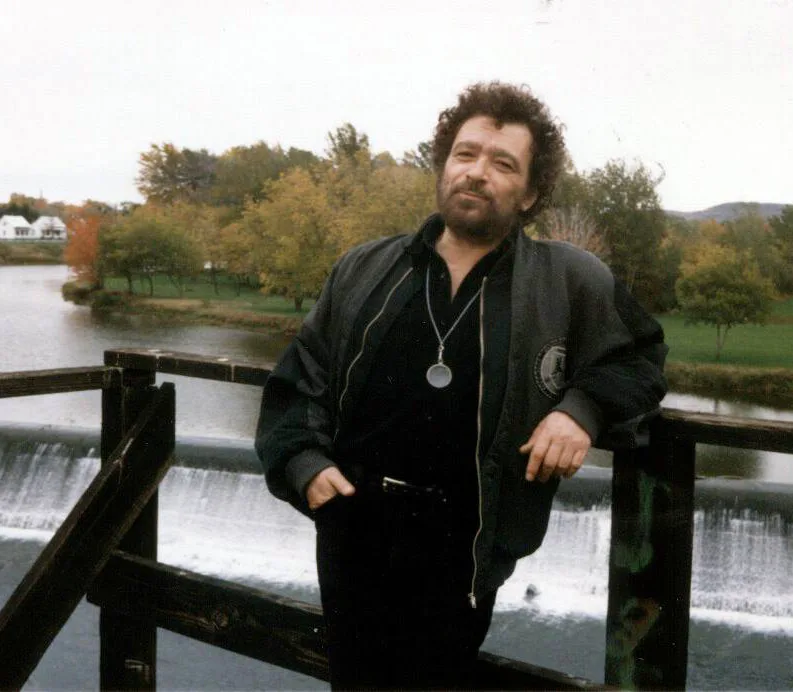
Bernard Vitet at Victoriaville, Québec, photographed in 1990 by Jean-Jacques Birgé, his partner in Un Drame Musical Instantané. CC BY-SA 4.0 (https://creativecommons.org/licenses/by-sa/4.0), released by the photographer, with the permission confirmed by the Wikimedia volunteer response team. — Wikimedia Commons - https://commons.wikimedia.org/wiki/File:Bernard_Vitet.jpg

Bernard Vitet was a Paris-born trumpeter, flugelhorn player, composer and builder of instruments. He was born on May 26, 1934 in the 13th arrondissement and passed away in Paris on July 3, 2013, at the age of 79. English and French Wikipedia credit him with co-founding the first free jazz group in France, in 1964 with the pianist François Tusques. His other main projects were the Unit led by Michel Portal and, from 1976 to 2008, the collective Un Drame Musical Instantané, which he formed with Jean-Jacques Birgé and Francis Gorgé. French Wikipedia says he made nearly 200 records with other musicians.
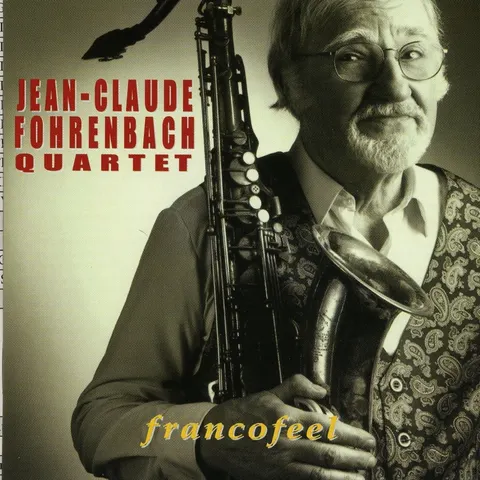
In a 2001 interview with Birgé for the journal of the Allumés du Jazz label collective, he said he heard Dizzy Gillespie in Paris in 1948, picked up a trumpet at fifteen or sixteen and decided to play seriously after hearing Miles Davis. He spent about three years at the Saint-Germain-des-Prés club Le Tabou in the orchestra of the saxophonist Jean-Claude Fohrenbach, whom he called his first musical father, and he remembered a jam there in 1956 with Lester Young, who asked him whether he knew the words to the songs. To earn a living he played dances and picked up work at the musicians' market on Place Pigalle, which took him on tour with Alix Combelle and into gigs with the accordionist Gus Viseur. Roger Guérin steered him toward studio work and into the orchestra of Jacques Hélian, with which he spent two months in Madrid and began to learn to read music. He also recalled a long stretch in the quintet of Chet Baker, where the two played chess on a stool between them during sets at the Chat qui pêche.
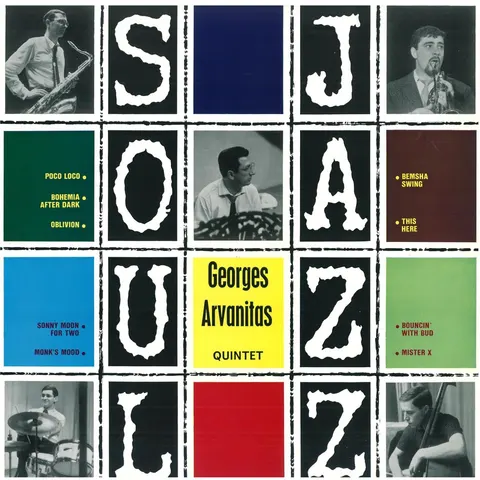
His bugle is on Soul Jazz, the 1960 quintet record by the pianist Georges Arvanitas with François Jeanneau, Michel Gaudry and Daniel Humair. He told Birgé that this record led the radio-orchestra leaders Hubert Rostaing, Jack Diéval and Léo Chauliac to hire him, and that in those years he recorded behind singers including Serge Gainsbourg, Barbara and Yves Montand; French Wikipedia names the same singers, along with Claude François and Brigitte Bardot. Discogs credits him on trumpet and bugle on Enfin !, recorded for Jef Gilson between December 1962 and February 1963, and French Wikipedia lists him on Ivan Jullien's Paris Point Zéro (1966).
The mid-1960s changed his direction. He and Tusques had already played together in trios and quintets, and in 1964 he was in the group that played at the Théâtre de la Vieille-Grille with the cornetist Don Cherry. Free Jazz, recorded for the Mouloudji label in 1965 with Tusques, Jeanneau, Portal, the bassist Beb Guérin and the percussionist Charles Saudrais, has Vitet on trumpet; Tusques has said the band was billed as the Bernard Vitet sextet. In 1968 he told Claude François he was finished with variety work, and afterward he played with the Americans then living in Paris. He is the trumpeter on Sunny Murray's Big Chief, recorded in Paris on January 11, 1969 with Tusques, the saxophonists Ronnie Beer and Kenneth Terroade and the violinist Alan Silva, and on Silva's Luna Surface (BYG, recorded August 17, 1969), where he plays trumpet and French horn beside Archie Shepp, Anthony Braxton, the trombonist Grachan Moncur III and the bassist Malachi Favors. He also took part in an early meeting of jazz and new music with the composer Bernard Parmegiani and Jean-Louis Chautemps, the piece Jazzex of 1966, and handled sound objects at Pierre Schaeffer's Groupe de recherches musicales. With Jac Berrocal he co-founded the production collective Musique 1, which put on multi-day festivals at the Théâtre Mouffetard.
His first record under his own name was La Guêpe (Futura, recorded in Paris in December 1971 and issued in 1972), a setting of a text by the poet Francis Ponge for a small group with Tusques, Beb Guérin and the voice of Françoise Achard, on which he plays trumpet, violin, French horn and vibraphone. In 1972 he was a member of Portal's Unit, whose live record from the Châteauvallon festival, No, No But It May Be, was recorded on August 23, 1972 and issued the next year; Discogs credits him there on trumpet, violin and French horn, alongside the double bassists Beb Guérin and Léon Francioli, the percussionist Pierre Favre and the singer Tamia. He said the group came apart over who should sign the compositions. By then he was also making instruments: a reed trumpet, a multiphonic French horn, a variable-tension double bass and a giant balafon of frying pans and flowerpots, some of them made to order for the composer Georges Aperghis and for Tamia and Françoise Achard.
He met Birgé and Gorgé in 1976, when both were about twenty-three, and the three founded Un Drame Musical Instantané, a collective trio that shared rights and instruments and treated music as one part of a show with film, theatre and spoken word. French Wikipedia says it started the return of the ciné-concert in France, with 24 silent films in its repertoire, among them The Cabinet of Dr. Caligari, and that Birgé and Vitet signed hundreds of pieces together over 32 years. On L'Homme à la caméra (GRRR, 1984), recorded in public at the Théâtre Déjazet in Paris on January 14, 1984, fifteen musicians play live to Dziga Vertov's 1929 film, with Vitet on trumpet, voice and flute and sharing the direction. Gorgé left in 1992, and Birgé and Vitet kept the group going until it ended in 2008. Beside it came the solo record Mehr Licht ! (GRRR, 1979), built from recordings made in Vitet's Paris studio, at the Saint-Ouen flea market and at Ircam; Crasse-Tignasse (Auvidis, 1993), nine songs for children after the German picture book Struwwelpeter, with Birgé and the percussionist Gérard Siracusa; Il était une fois la Fête Foraine (1996), the soundtrack of a fairground exhibition at La Villette; and the song record Carton (1997) with Birgé. He also wrote music for the films Les Cœurs verts by Édouard Luntz and L'Ombre de la pomme by Robert Lapoujade and for the director Jean-Marie Serrault.
Le Monde reported his death on July 6, 2013 and gave respiratory failure as the cause. On September 16, 2013 more than thirty musicians, among them Michel Portal and the cellist Vincent Segal, played a tribute concert for him at La Java in Paris. Birgé has put hundreds of Un Drame Musical Instantané pieces online for free listening.
He described his own roots in the 2001 interview as Varèse, Bartók, Webern, Thelonious Monk, Gus Viseur and Miles Davis, said he thought all music is built on the same principles, and said he had never been at ease in jazz and had always felt like an impostor there; his partner Birgé heard Davis in his tone, though with different phrasing. Birgé remembered a velvety sound, above all on the bugle, and a way of playing that followed the rhythm of speech, with pauses and breaths treated as carefully as the notes. Vitet said his playing did not change much with the setting, and that he went on playing bop and free music even after leaving the clubs and the variety studios in 1968. His work divides into free jazz and improvised music in the 1960s and early 1970s, electro-acoustic and instrument-building experiments, and from 1976 the theatrical, film-linked work of Un Drame Musical Instantané, which is closer to experimental music than to jazz; this profile covers all of it for the part he played in French free jazz. Discogs files his main records under Free Jazz, Avant-garde Jazz and Free Improvisation, and AllMusic lists him under Jazz.
- Soul Jazz (1960, Columbia FPX 193) - Georges Arvanitas's quintet record with Vitet on bugle, François Jeanneau, Michel Gaudry and Daniel Humair, playing tunes tied to Monk, Powell and Rollins. Apple Music - Album Listen
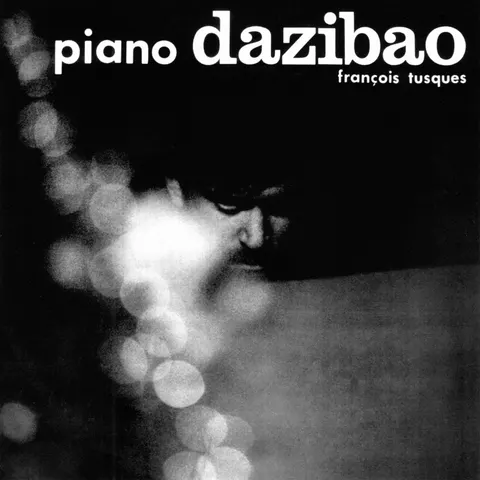
- Free Jazz (1965, Disques Mouloudji EM 13507 S) - François Tusques's sextet record, with Vitet on trumpet, the record French Wikipedia cites for the first French free jazz group.
- Big Chief (1969, Pathé 2C 062-10096) - Sunny Murray's Paris session of January 1969, with Vitet on trumpet beside Alan Silva, Tusques and the saxophonists Ronnie Beer and Kenneth Terroade.
- Luna Surface (1969, BYG 529.312) - Alan Silva's Celestrial Communication Orchestra, recorded in Paris on August 17, 1969, with Vitet on trumpet and French horn among Archie Shepp, Anthony Braxton and Grachan Moncur III. Apple Music - EP Listen
- À Châteauvallon: No, No But It May Be (1973, Le Chant du Monde LDX 74526) - Michel Portal Unit, recorded live on August 23, 1972, with Vitet on trumpet, violin and French horn.
- La Guêpe (1972, Futura SON 05) - his first record as a leader, a setting of Francis Ponge for a small improvising group, recorded in December 1971. Apple Music - Album Listen
- Mehr Licht ! (1979, GRRR) - his solo record of studio, flea-market and Ircam recordings, issued on the GRRR label that Birgé runs.
- L'Homme à la caméra (1984, GRRR 1007) - Un Drame Musical Instantané playing live to Dziga Vertov's film at the Théâtre Déjazet, with fifteen musicians. Apple Music - Album Listen
Bernard Vitet: Full Discography
French trumpeter, flugelhorn player, composer and instrument builder, born May 26, 1934 in Paris, died July 3, 2013. Discogs artist 173615 (https://www.discogs.com/artist/173615-Bernard-Vitet). His dance-band records are filed under a separate Discogs entry, Orchestre Bernard Vitet (4724241), and his group work under Un Drame Musical Instantané (90990), the Michel Portal Unit (850006) and the Celestrial Communication Orchestra (269228).
The first table lists records that carry his own name or that he made with a partner. The second lists Un Drame Musical Instantané, the collective trio he co-founded with Jean-Jacques Birgé and Francis Gorgé in 1976, whose members he was until it ended in 2008. The third is a selection of his sideman credits; Discogs lists about a hundred appearances and French Wikipedia speaks of nearly 200 records, so it is not exhaustive. Years follow Discogs; where a source gives a different year, the Notes cell says so. Catalogue numbers are given as printed on the release record, and personnel and instruments are read from the credits on each release.
Leader and co-leader releases
| Album | Year | Label | Personnel | Notes | Listen | Buy |
|---|---|---|---|---|---|---|
| Surprise-Partie "D" (Orchestre Bernard Vitet) | Not confirmed | G.E.M. GEM 52/D - SP53 (LP) | Not listed on the release record | Thirteen dance tunes, among them "Oye Mambo", "Crazy Rythm" and "I Got You Under My Skin". Discogs files it under Orchestre Bernard Vitet and gives no year or personnel; English Wikipedia lists a record of this title among his own and dates it to 1954. | not found | - |
| La Guêpe | 1972 | Futura SON 05 (LP, stereo) | Bernard Vitet (trumpet, violin, French horn, vibraphone), Jean-Paul Rondepierre (trumpet, marimba), Jouk Minor (soprano and baritone saxophones, violin, transverse clarinet), Jean Guérin (alto saxophone, vibraphone, marimba, percussion), François Tusques (piano), Beb Guérin (double bass), Françoise Achard (voice), Dominique Dalmasso (tape) | Vitet wrote the music and the sleeve notes and recorded it; produced by Gérard Terronès. Recorded in Paris in December 1971. A setting of a text by Francis Ponge. English Wikipedia gives 1971 for the release. Discogs master 234334. | Apple Music | - |
| Mehr Licht ! | 1979 | GRRR SGR 1003 (LP, stereo) | Bernard Vitet (music); no other players are credited | Four pieces: "Mehr Licht !" and "L'Ange du bizarre" were recorded in Vitet's studio in Paris and at the Saint-Ouen flea market, "Le Diable dans le beffroi" at Ircam and in the church of Saint-Nicolas-du-Chardonnet, "La Machine de Marly" near a railway line at Marly-le-Roi. Sleeve prints SGR 1003; some sources give GRRR 1003. | not found | - |
| Supposons le problème résolu (Bernard Vitet and Hélène Sage) | 1984 | GRRR GRRR 1008 (LP) | Bernard Vitet, Hélène Sage (music and text) | Two untitled sides, recorded in public by Jean-Marc Foussat and mixed by Sage. Discogs styles: Free Jazz, Experimental. | not found | - |
| Il était une fois la Fête Foraine (Jean-Jacques Birgé, Bernard Vitet and Alain Monvoisin) | 1996 | Auvidis Tempo A 6217 (CD) | Concept by Vitet and Birgé; performed by Un Drame Musical Instantané, with voice actors and fairground organs | Soundtrack of the exhibition of the same name at the Grande Halle de La Villette, Paris, from September 18, 1995 to January 14, 1996: comedy sketches, organ pieces and transfers of 1950s fairground songs. Not a jazz record. | not found | - |
| Carton (Birgé and Vitet) | 1997 | GRRR GRRR 2021 (CD Extra) | Jean-Jacques Birgé (vocals, synthesizer, piano), Bernard Vitet (vocals, trumpet, saxophone); Un Drame Musical Instantané performing | Fourteen songs, composed by Birgé and Vitet; the disc also carries interactive multimedia for a computer. | not found | - |
| Bateke (Bernard Vitet, François Tusques and Beb Guérin) | 2024 | Finders Keepers Records FKRLATHE06 (7-inch lathe cut) | Vitet, Tusques, Guérin | One piece on a limited single-sided lathe-cut record, released on April 13, 2024. Recording date not confirmed. Discogs master 3486694; style Free Improvisation. | not found | - |
Un Drame Musical Instantané (group releases)
Vitet was one of the three founders of the collective in 1976, with Jean-Jacques Birgé and Francis Gorgé, who left in 1992. The records below are those Discogs lists him on; it gives Birgé and Vitet as the group's constant members to 2008. Years are Discogs years, and several are later releases of older material. Where the label is not shown, it was not confirmed.
| Album | Year | Label | Notes | Listen | Buy |
|---|---|---|---|---|---|
| Trop d'adrénaline nuit | 1979 | Not confirmed | Discogs master 234333. | not found | - |
| Rideau ! | 1981 | Not confirmed | Discogs master 1118447. | not found | - |
| À travail égal salaire égal | 1982 | Not confirmed | Discogs master 1304984. | not found | - |
| Les Bons contes font les bons amis | 1983 | Not confirmed | Discogs master 2733458. | Apple Music | - |
| L'Homme à la caméra | 1984 | GRRR GRRR 1007 (LP) | Recorded in public at the Théâtre Déjazet, Paris, on January 14, 1984, as a live accompaniment to Dziga Vertov's 1929 film. Vitet plays trumpet, voice and flute and is one of the three directors with Birgé and Gorgé; fifteen musicians in all. Later reissued (2017, 2020). | Apple Music | - |
| Carnage | 1985 | Not confirmed | Discogs master 2289268. | Apple Music | - |
| L'Hallali | 1986 | GRRR | Discogs release 781352. | not found | - |
| Sous les mers | 1988 | GRRR | Discogs release 1452281. | not found | - |
| Qui vive ? | 1989 | GRRR | Discogs release 1222764. | not found | - |
| Le K (with Richard Bohringer) | 1990 | Not confirmed | Discogs master 1133326. | Apple Music | - |
| Urgent Meeting | 1991 | No Man's Land, GRRR | Discogs release 767845. | not found | - |
| Jeune fille qui tombe...tombe | 1991 | In Situ, Adda | Discogs release 823235. | not found | - |
| Kind Lieder | 1991 | GRRR | Discogs release 1047999. | not found | - |
| Urgent Meeting 2 : Opération Blow Up | 1992 | GRRR | Discogs release 337873. | not found | - |
| Crasse-Tignasse (with Gérard Siracusa) | 1993 | Auvidis U310043 (CD) | Nine songs for children, after Heinrich Hoffmann's Struwwelpeter in Cavanna's French translation. Vitet plays trumpet, bugle, voice, mouth organ, flexatone, trumpet-horn and reed trumpet, depending on the track. | Apple Music | - |
| Machiavel / Scratch Vidéo Interactif | 1998 | Not confirmed | Discogs master 1661916. | not found | - |
| FLUXUS +/- | 2022 | Psych.KG | Discogs release 21977920; a later release of earlier material. | not found | - |
| Plumes et poils | 2022 | GRRR | Discogs release 28027392. | not found | - |
| Toxic Rice | 2022 | Not confirmed | Discogs master 2695709. | not found | - |
| Tchak | 2024 | Klanggalerie | Discogs release 32101713; a later release of earlier material. | Apple Music | - |
Sideman credits (selection)
| Year | Project (Leader) | Title | Label | Catalog | Role | Notes |
|---|---|---|---|---|---|---|
| 1960 | Georges Arvanitas Quintet | Soul Jazz | Columbia | FPX 193 | Bugle | With François Jeanneau (tenor saxophone), Michel Gaudry (bass) and Daniel Humair (drums). Discogs release 3722486. |
| 1964 | Jef Gilson Big Band | Enfin ! | Disques du Club de l'Échiquier | CED 30 J 1002 | Trumpet, bugle (tracks A1 to A4) | Recorded between December 23, 1962 and February 2, 1963, with Michel Portal, Jean-Louis Chautemps, Henri Texier, Fred Gérard and Jean-Luc Ponty. Discogs release 3411299. |
| 1965 | François Tusques | Free Jazz | Disques Mouloudji | EM 13507 S | Trumpet | With Jeanneau (saxophone, flute), Portal (bass clarinet), Beb Guérin (contrabass) and Charles Saudrais (percussion). Discogs release 2033365. |
| 1966 | Ivan Jullien (Paris Jazz All Stars) | Paris Point Zéro | Riviera | Not confirmed | Trumpet | The band has four trumpeters besides Jullien: Vitet, Fred Gérard, Maurice Thomas and Roger Guérin. Vitet's credit is listed on Discogs (master 716307); catalogue number not confirmed. |
| 1969 | Sunny Murray | Big Chief | Pathé | 2C 062-10096 | Trumpet | Recorded on January 11, 1969 at Studio E.T.A., Paris, with Ronnie Beer, Kenneth Terroade, Alan Silva, Tusques and Beb Guérin. Discogs release 2507921. |
| 1969 | Alan Silva and His Celestrial Communication Orchestra | Luna Surface | BYG Records | 529.312 | Trumpet, French horn | Recorded in Paris on August 17, 1969, with Archie Shepp, Anthony Braxton, Grachan Moncur III, Leroy Jenkins, Dave Burrell and Malachi Favors. Discogs release 516105. |
| 1971 | Alan Silva and the Celestrial Communication Orchestra | Seasons | BYG | Not confirmed | Not confirmed | Discogs lists him in the credits; English Wikipedia dates the record to 1970. Instrument and tracks not checked at release level. Discogs master 41497. |
| 1972 | Colette Magny | Répression | Not confirmed | Not confirmed | Not confirmed | Listed on Discogs (master 408131); French Wikipedia cites it with the Scalen' reissue of 1990. |
| 1973 | Michel Portal Unit | À Châteauvallon: No, No But It May Be | Le Chant du Monde | LDX 74526 | Trumpet, violin, French horn | Recorded live at the Châteauvallon festival on August 23, 1972, with Beb Guérin and Léon Francioli (double basses), Pierre Favre (percussion) and Tamia (voice). Reissued on CD. Discogs master 86263. |
| 1976 | Jac Berrocal | Parallèles | Davantage | Not confirmed | Not confirmed | Listed on Discogs (master 40599) and cited by French Wikipedia. Instrument not checked at release level. |
| 1989 | Hélène Sage | Comme une image | GRRR | GRRR 2014 | Not confirmed | Listed on Discogs (release 308844); catalogue number from French Wikipedia. |
| 2011 | Michel Potage | Occupé | Alga Marghen / d'Avantage | plana-P alga035 / dAv 07 | Bugle, trumpet, reed instruments, violin, voice | Recorded in Paris in 1977, with Jac Berrocal, Claude Parle, Pierre Bastien, Roger Ferlet and others; mixed in 1977 and issued on LP by Alga Marghen in a limited edition of 350 (Discogs year 2011). Discogs release 2694039. |
Wikipedia also cites him on the Art Ensemble of Chicago's Go Home (1970), on Globe Unity's 67 & 70 and on records by Jack Diéval, Jean Guérin and Michel Pascal. The Discogs release credits checked for the Art Ensemble and Globe Unity reissues do not itemise his part, so those are not tabulated.
Other early records include an orchestra compilation from 1959 that Discogs lists under the name Bernard Vitet et son orchestre, C'est arrivé au whisky-club, and Ça tourne rond (1961) by the orchestra of Christian Chevallier, which Apple Music credits to Vitet and Jean-Louis Chautemps.
- François Tusques - co-founded the first French free jazz group with Vitet in 1964; Vitet is the trumpeter on Free Jazz (1965), and Tusques plays piano on La Guêpe (1972) and Big Chief (1969).
- Michel Portal - fellow member of the Unit and bass clarinettist on Free Jazz (1965); Vitet plays on the Unit's No, No But It May Be (recorded 1972).
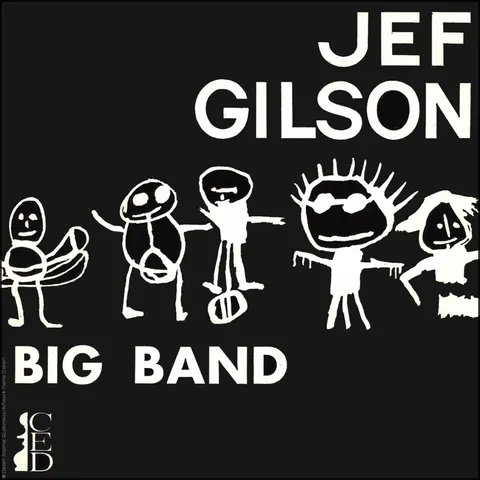
- Jef Gilson - Vitet is credited on trumpet and bugle on Enfin ! (recorded 1962 and 1963); Jean-Louis Chautemps, François Jeanneau, Henri Texier, Fred Gérard and Jean-Luc Ponty are in the same band.
- Georges Arvanitas - Soul Jazz (1960), with Vitet on bugle, alongside Michel Gaudry and Daniel Humair.
- Sunny Murray - drummer on Big Chief (1969), on which Vitet plays trumpet.
- Archie Shepp and Anthony Braxton - saxophonists on Alan Silva's Luna Surface (1969), recorded with Vitet.
- Jac Berrocal - co-founder with Vitet of the Musique 1 production collective, and a player on Occupé by Michel Potage (recorded 1977), on which Vitet also plays.
- Jean-Louis Chautemps - took part with Vitet and Bernard Parmegiani in an early meeting of jazz and contemporary music.
- Ivan Jullien - French Wikipedia lists Vitet on his Paris Point Zéro (1966).
- Jean-Claude Fohrenbach - led the Le Tabou orchestra in which Vitet played for about three years.
- Chet Baker - Vitet recalled a long period in his quintet, with chess played between sets; this is his own account and not a dated credit.
- Jean-Jacques Birgé and Francis Gorgé - fellow founders of Un Drame Musical Instantané in 1976; Birgé was his partner for 32 years and co-wrote Carton.
- Beb Guérin - double bassist on Free Jazz, Big Chief, La Guêpe, Luna Surface and the Portal Unit record.
- Hélène Sage - his partner on the 1984 record Supposons le problème résolu and a performer on L'Homme à la caméra.
- Alan Silva - bandleader and violinist on Big Chief and Luna Surface; Vitet said Silva's example led him to bowed strings and to building instruments.
More Free Jazz Artists
See all 363 Free Jazz artists →More French Jazz Artists
See all 511 French artists →- Apple Music: Bernard Vitet
- Discogs: Bernard Vitet
- Discogs: Un Drame Musical Instantané
- MusicBrainz: Bernard Vitet
- AllMusic: Bernard Vitet
- BnF catalogue: Bernard Vitet
- Citizen Jazz: articles on Bernard Vitet
- Drame.org: Jean-Jacques Birgé's archive of Un Drame Musical Instantané recordings
- Bernard Vitet on JazzProfiles.com
- Wikipedia (English): Bernard Vitet
- Wikipedia (French): Bernard Vitet
- Wikipedia (English): Un Drame Musical Instantané
- Jean-Jacques Birgé: Bernard Vitet, mémoire(s) d'un dilettante (interview from early 2001, republished November 27, 2017)
- Jean-Jacques Birgé: Bernard Vitet ne souffle plus (July 4, 2013)
- Citizen Jazz: Bernard Vitet, Un Drame Musical Instantané
- Le Monde: Mort de Bernard Vitet, compositeur, trompettiste, multi-instrumentiste (July 6, 2013)
- Drame.org: Crasse-Tignasse
- Discogs: Bernard Vitet, artist 173615
- MusicBrainz: Bernard Vitet
- AllMusic: Bernard Vitet
- Wikidata: Bernard Vitet (Q734100)
- Wikimedia Commons: Bernard Vitet.jpg