 JAZZPROFILES lives in the music 2,555 Jazz Artists fully Profiled!
Christian Chevallier
Last updated November 14, 2026
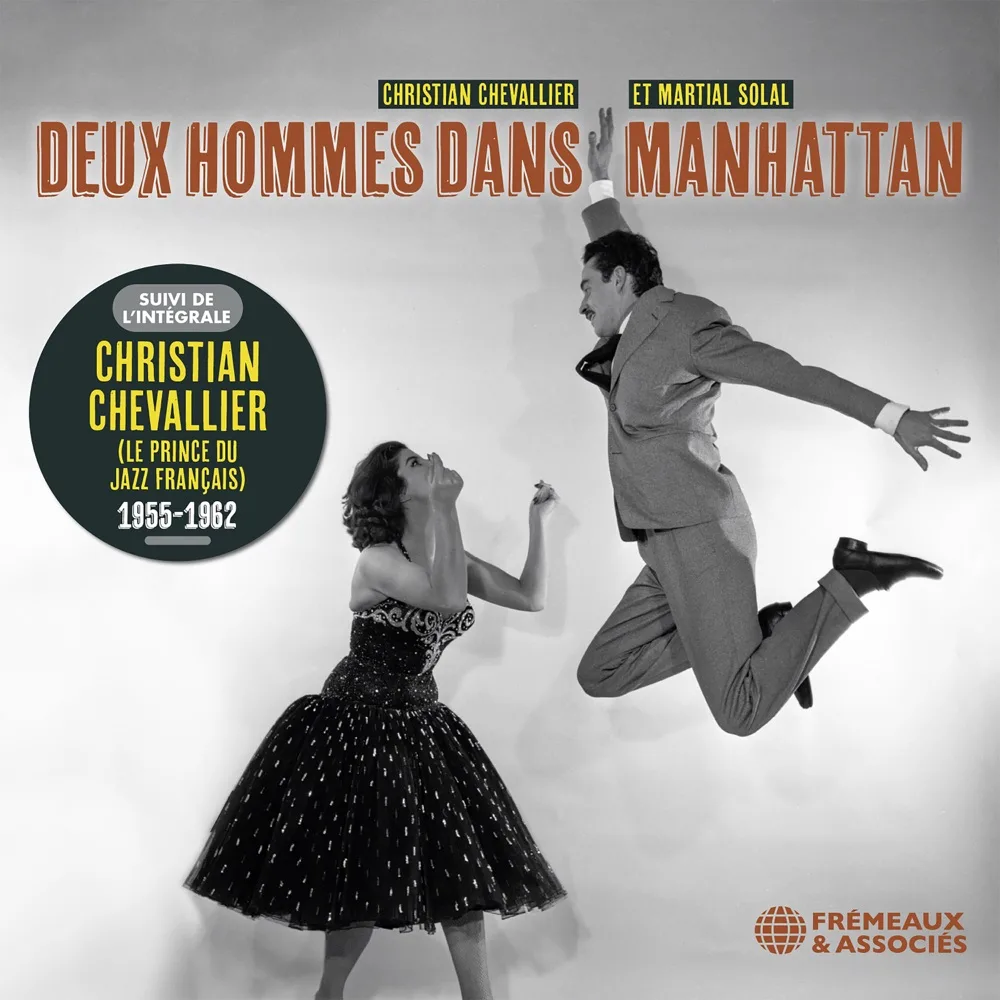
Cover of *Deux hommes dans Manhattan, suivi de l'intégrale Christian Chevallier (Le Prince du jazz français) 1955-1962* (Frémeaux & Associés, 2023). The cover is a studio photograph of a dancing couple; it does not show the artist. Standard copyright, all rights reserved, held by Frémeaux & Associés. This is not a Creative Commons or public-domain image; it is an album cover shown as an honestly disclosed editorial identification image. — Apple Music, https://music.apple.com/fr/album/deux-hommes-dans-manhattan-suivi-de-lintegrale/1693440488
Christian Chevallier was a pianist, arranger and bandleader who, in the mid-1950s, put together one of France's first post-war big bands in the American manner. He was born on July 12, 1930, in Angers. His father sold wine and played piano; his mother sang as an amateur. He began music lessons at eight and entered the conservatoire in Nantes in 1941, taking a second prize in piano two years later. The bombing of Nantes sent the family into the countryside, and for four years he did not touch a keyboard. He returned to music in 1947, when a friend introduced him to jazz and he heard the pianist Jack Diéval on the radio. He decided then to become a jazz musician.
At seventeen he moved to Paris and worked as a pianist in dance halls, then joined trombonist Raymond Fonsèque's band for an engagement in Biarritz. Back in Paris he played modern jazz at the Tabou with Don Byas and Bib Monville, and for a time worked Montmartre cabarets with guitarist Raymond Beau. In 1951 Juliette Gréco offered him the piano chair in the house band of the cabaret-theatre La Rose Rouge in Saint-Germain-des-Prés, replacing Henri Patterson. He stayed four years, sharing the bill with saxophonist Michel de Villers and vibraphonist Géo Daly, and finishing his nights playing jazz with Bobby Jaspar, Fats Sadi and Jimmy Gourley.
His first arrangements were written in 1953 for Géo Daly, recorded with the orchestra of alto saxophonist Tony Proteau. Requests followed from William Boucaya, Pierre Michelot and Jack Diéval, and he contributed to André Hodeir's radio programme on modern French jazz. On June 8, 1953, he married Liliane Konyn, later known as the lyricist Vline Buggy. In 1954 he presented a seven-piece group playing his own pieces at the École Normale Supérieure in Paris and in the Jazz Boom revue at the Apollo theatre, and at the end of that year Henri Renaud asked him to arrange his compositions for a sextet led by Bobby Jaspar.
In 1955 the producer Pierre Hiegel introduced him to Jean-Paul Guiter, head of the jazz department at Columbia and Pathé-Marconi, and a recording career followed. After the EP Musique pour deux for Pathé, he made the 10-inch LP Big and Small for Columbia in the spring of 1955, a big-band side set against a quartet side. In October 1955 he recorded Formidable, which drew on the best soloists in Paris, among them Bobby Jaspar, Fats Sadi, Pierre Michelot and drummer Christian Garros. In 1956 it earned him the Grand Prix du Disque of the Académie Charles Cros and the Académie du Jazz's Prix Django Reinhardt, which Jean Cocteau presented to him in June of that year; the nickname "le prince du jazz français" is credited to Cocteau. The Jazz Hot poll of January 1956 had already named him France's leading arranger and conductor, and Stan Kenton wrote warmly of the Formidable arrangements. Chevallier also wrote arrangements for Lionel Hampton. In November 1957 he recorded 6+6, a twelve-piece album that sits between a big band and a chamber orchestra, with Roger Guérin and Michelot among the players, and in 1958 Kenny Clarke recorded an EP of his compositions.
From the late 1950s the Pathé-Marconi artistic director Jacques Poissonat steered him toward song accompaniment, and he arranged, orchestrated and conducted for Line Renaud, Charles Trenet and François Deguelt, then for Charles Aznavour, Juliette Gréco, Gilbert Bécaud, Nana Mouskouri, Henri Salvador and Hugues Aufray, with a reputation for his string writing. He contributed to the music of Claude Nougaro's "Ô Toulouse". In 1959 he and Martial Solal wrote the score for Jean-Pierre Melville's film Deux hommes dans Manhattan. Through 1962 he also recorded for Columbia with the vocal group Les Angels, including jazz standards and the dance-craze record "The Madison".
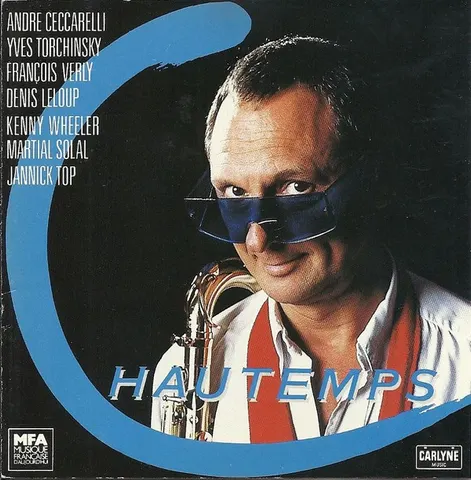
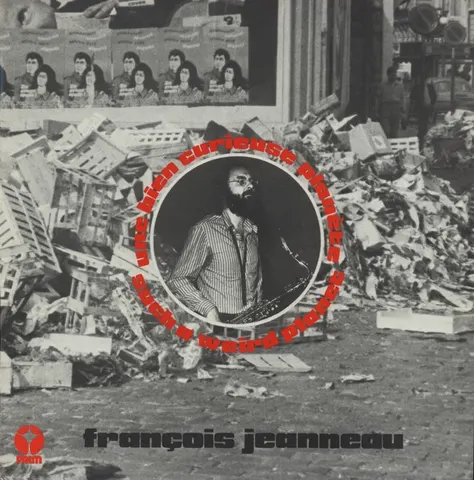
In the 1980s he set up his own studio, Célia, at Savigny-sur-Orge, and his later records are mostly synthesizer and library-music albums. Wikipedia also records a 1986 suite written for the Orchestre national de jazz under François Jeanneau, involving trumpeter Kenny Wheeler. He passed away on September 14, 2008, in Évreux, Normandy. His 1955 to 1962 jazz recordings returned to print in 2016 with the Fresh Sound compilation Le Prince du jazz français and in 2023 with a three-CD set from Frémeaux & Associés that pairs the Deux hommes dans Manhattan score with his complete Columbia output.
Chevallier's jazz work is concentrated in the years 1955 to 1962. Its model was American: the Frémeaux booklet's author, Olivier Julien, describes the writing as inspired by Bill Holman and the Miles Davis nonet, and by the orchestras of Stan Kenton and Count Basie, and credits him with achieving "an American sound". The liner notes to 6+6, by André Hodeir, trace the twelve-piece writing to the Davis Capitol sessions and the light textures of Gil Evans and Gerry Mulligan, while noting his taste for two- and three-part counterpoint. Formidable was made with an unusual method for France at the time: the soloists were recorded separately and placed over full-strength section tracks. Hodeir wrote that other Paris bandleaders followed with large orchestras after Chevallier's first success. After 1957 his career centred on chanson arranging, film music and later electronic and library work, so the jazz side is a distinct and earlier chapter of a wider career. In the 1950s his peers voted him France's top arranger in the Jazz Hot poll, and the 2016 and 2023 reissues have put that body of work back in circulation.
- Big and Small (1955, Columbia) - his first LP, pairing a big-band side with a quartet side and showing the American-influenced writing from the start.
- Formidable (1956, Columbia) - the big-band record that won the Charles Cros Grand Prix du Disque and the Prix Django Reinhardt. Apple Music - Formidable Listen
- 6+6 (1957, Columbia) - a twelve-piece chamber-jazz setting with Roger Guérin, Michel Hausser and Pierre Michelot, and his most structurally ambitious album.
- Kenny Clarke joue Christian Chevallier (1958, Columbia) - an EP of four Chevallier compositions with drummer Kenny Clarke leading a Paris orchestra.
- Deux hommes dans Manhattan (1959, Columbia) - the Melville film score he wrote with Martial Solal.
- Le Prince du jazz français: His Orchestra and Small Groups 1955-1961 (2016, Fresh Sound Records) - a two-CD collection of his orchestral and small-group Columbia sides.
- Deux hommes dans Manhattan, suivi de l'intégrale Christian Chevallier 1955-1962 (2023, Frémeaux & Associés) - the film score plus his complete jazz recordings, with a detailed biographical booklet. Apple Music - Deux hommes dans Manhattan Listen
Christian Chevallier: Full Discography
French pianist, arranger, composer and bandleader, born in Angers on July 12, 1930, who passed away in Évreux on September 14, 2008. Discogs files his releases under artist 463652 (https://www.discogs.com/artist/463652), which lists nearly a thousand entries, most of them singles and albums by singers and other artists on which he is credited. His groups have their own Discogs entries, among them Christian Chevallier Et Son Orchestre (574657), Et Son Ensemble (1449905), Quartet (11079221), Jazz Quartet (3995010), Et Son Whispering Swingers Orchestra (3737908), Tentet (7854004) and Et Son Quintette De La Rose Rouge (6747510), and the pseudonym Kenneth Chambers is entry 1011037. The guitarist David Chevallier (1521231) is his son and a separate musician, and the Discogs entry Christian Chevalier (one L, 554090) is not confirmed as the same person and is not used here. This discography follows the records that carry his name as leader or composer, the jazz records of others that credit his writing, and a summary of his later work. Personnel for the 1950s records follows the reprinted liner notes and credits in the 2023 Frémeaux & Associés set; where a recording date, catalogue number or lineup could not be confirmed, the cell says so.
Role key: Leader means Chevallier led the recording, as pianist, arranger and composer unless noted; Composer means he wrote the music but is not credited as a performer.
Leader and co-leader releases
| Album | Recording Date(s) | Release Date | Label | Catalog Number | Format | Personnel | Role | Notes | Listen | Buy |
|---|---|---|---|---|---|---|---|---|---|---|
| Musique pour deux (Christian Chevallier et son quintette) | Not confirmed | 1955 | Pathé | 45 EA 37 | 7-inch EP | Bobby Jaspar (flute), Fats Sadi (vibraphone), Christian Chevallier (piano), Pierre Michelot (bass), Christian Garros (drums) | Leader (piano) | "Dream Time", "Minor", "A Mountain Sunset", "Quartet Mind". Discogs bills the group as Christian Chevallier Et Son Quintette De La Rose Rouge. | — | — |
| Big and Small | Not confirmed (released spring 1955) | 1955 | Columbia | FP 1056 | 10-inch LP | Big-band side: Fred Gérard, Christian Bellest, Roger Guérin, Lucien Juanico (trumpets), Nat Peck, Charles Verstraete, André Paquinet (trombones), Dave Amram (horn), Jean Aldegon, Bobby Jaspar, Jean-Louis Chautemps (saxophones), Armand Migiani (bass saxophone), William Boucaya (baritone saxophone), Chevallier (piano), Michelot (bass), Garros (drums). Quartet side: Fats Sadi (vibraphone), Chevallier, Michelot, Garros | Leader (piano, arranger) | Big-band side: "Nice Joke", "Aura", "Saxologie", "New Day". Quartet side: "Les Copeos", "Badinage", "Concertino", "Fiction". The booklet's discography lists Amram's instrument as cor anglais, while the reprinted liner note describes his horn playing. | — | — |
| Formidable | October 1955, Paris | 1956 | Columbia | FP 1067 | 10-inch LP | Fred Gérard, Christian Bellest, Roger Guérin, Henri Vanek, Robert Fassin, Vincent Casino, Fernand Verstraete (trumpets), Benny Vasseur, Michel Paquinet, André Paquinet, Gaby Villain (trombones), Armand Migiani, Jean Aldegon (alto saxophones), Bobby Jaspar, Jean-Louis Chautemps (tenor saxophones), William Boucaya (baritone saxophone), Chevallier (piano), Michelot (bass), Garros (drums), Fats Sadi (vibraphone, bongos) | Leader (piano, arranger) | "Night in Tunisia" (Dizzy Gillespie, arranged by Chevallier), "Pierre Speaking", "Olympia", "Dizz Delight", "Vline", "Alpha", "B.S.O.P.". Won the Grand Prix du Disque of the Académie Charles Cros and the Prix Django Reinhardt in 1956. Solos were recorded separately and mixed over full section tracks. | Apple Music | — |
| Prince du jazz français (EP from Formidable) | Not confirmed | 1956 | Columbia | ESDF 1132 | 7-inch EP | Large orchestra including Fred Gérard, Christian Bellest, Roger Guérin (trumpets), Billy Byers, Charles Verstraete (trombones), Allen Eager, Jean Grenu (tenor saxophones), William Boucaya (baritone saxophone), Armand Migiani (bass saxophone), Pierre Michelot (bass), Christian Garros (drums) | Leader | "Fiction", "Street in Saint-Germain", "La Cienega", "Crystal". Discogs lists it under the same title as a 1956 release. The booklet's lineup is partial and is given as listed there. | — | — |
| Volume 2 (Christian Chevallier Jazz Quartet) | Not confirmed | 1956 | Columbia | ESDF 1139 | 7-inch EP | Roger Guérin (trumpet), Chevallier (piano), Michelot (bass), Garros (drums) | Leader (piano) | "Buggy and Soul", "Vline", "Chet", "Mythe". | — | — |
| Rendez-vous à Melbourne | Not confirmed | 1956 | Columbia | ESDF 1148 | 7-inch EP | Roger Guérin (trumpet), André Paquinet (trombone), Hubert Fol (alto saxophone), Arthur Motta or Christian Garros (drums), Les Angels (vocals) | Leader (arranger) | "Marathon Suite" and "Rendez-vous à Melbourne" by Chevallier et son grand orchestre. The booklet lists Les Angels; Discogs credits the instrumentalists only. | — | — |
| 6+6 | November 1957, Paris | 1957 (Discogs dates the LP 1958) | Columbia | FPX 144 | 12-inch LP | Ack Van Rooyen, Christian Bellest (trumpets), Georges Barboteu (horn), Roger Guérin, Aimé Barelli (flugelhorns), Nat Peck (trombone), Jo Hrasko, Jean Aldegon (alto saxophones), Georges Grenu (tenor saxophone), William Boucaya (baritone saxophone), Armand Migiani (bass saxophone), Michel Hausser (vibraphone), Chevallier (piano), Pierre Cullaz (guitar), Michelot (bass), Garros (drums) | Leader (piano, arranger) | "Mad Dog", "Ack's Dilemna", "Labyrinthe", "Witch", "Michel Ange", "Asana", "Aquarium", "Les rois mages", "6+6". Liner notes by André Hodeir. Chevallier plays piano on one track. Also issued as an EP titled Aquarium (Columbia, 1958). | — | — |
| Deux hommes dans Manhattan (bande originale du film) | Not confirmed | 1959 | Columbia | FP 1126 | 10-inch LP | Bernard Hulin (trumpet), Albert Raisner (harmonica), Martial Solal (piano), Chevallier (vibraphone), Art Simmons (piano), Paul Rovère (bass), Kansas Fields (drums) | Composer-leader (with Martial Solal) | Nine "Séquence" pieces for Jean-Pierre Melville's film. The booklet's discography lists the lineup under Christian Chevallier et son orchestre; Discogs credits the music to Chevallier. | Apple Music | — |
| Christian Chevallier et son orchestre avec les Angels (EP series) | Not confirmed | 1959 to 1962 | Columbia | ESRF 1213, ESRF 1258, ESRF 1316, ESRF 1370, ESDF 1431 | 7-inch EPs | Chevallier (piano, vibraphone, timbales, marimba), Paul Rovère (bass), Les Angels (vocals); on ESRF 1370 Bernard Vitet (flugelhorn) and Jean-Louis Chautemps (alto saxophone) | Leader | Jazz standards ("Stormy Weather", "The Man I Love", "'Round Midnight", "Caravan"), Frederick Loewe themes, a Porgy and Bess set, "Whisper Not" and "Jeannine" (ESRF 1370), and "The Madison" in two parts (ESDF 1431, 1962). EP titles are not confirmed. | — | — |
| The Madison (single) | Not confirmed | 1962 (October) | Columbia (Swedish issue) | DS 2210 | 7-inch single | Not confirmed | Leader | "The Madison" and "The Big M". | — | — |
| Christian Chevallier joue avec Gilbert Bécaud | Not confirmed | 1959 | Columbia | ESRF 1201 | 7-inch EP | Chevallier (piano); other musicians not identified | Piano | Four Bécaud songs, including "Le mur" and "Croquemitoufle". | — | — |
Later synthesizer and library records
| Album | Release Date | Label | Catalog Number | Format | Role | Notes | Listen | Buy |
|---|---|---|---|---|---|---|---|---|
| Flash Resonance: Atmosphère | 1979 | Charles Talar Records | Not confirmed | LP | Composer-performer | Library music. Further Flash Resonance volumes followed in 1980 (Space Resonances, with A. Feanch) and 1982 (Light Breeze). | — | — |
| L'Univers musical de Jacques Brel (Christian Chevallier et ses synthétiseurs) | 1980 | ILD | Not confirmed | LP | Arranger-performer | Synthesizer treatments of Jacques Brel songs. | — | — |
| Noëls d'hier et de demain | 1981 | Unidisc | Not confirmed | LP | Leader | Christmas music. | — | — |
| Trailers, Signatures, Underscores (with John Tender) | 1983 | Coloursound Library | Not confirmed | LP | Composer | Library music. | Apple Music | — |
| Dramascope Volume 2 | 1986 | Tele Music | Not confirmed | LP | Composer | Library music. | — | — |
| Contemporary Classical in the Style of Copland | 1987 | Tele Music | Not confirmed | LP | Composer | Library music. | — | — |
Reissues and compilations
| Album | Release Date | Label | Catalog Number | Format | Notes | Listen | Buy |
|---|---|---|---|---|---|---|---|
| Le Prince du jazz français: His Orchestra and Small Groups 1955-1961 | 2016 | Fresh Sound Records | FSRCD 893 | 2 CDs | Remastered collection of Big and Small, Musique pour deux and the Columbia orchestra and small-group sides. Liner notes by Jordi Pujol, Lucien Malson and André Hodeir; inlay illustration by Jean Cocteau. | — | — |
| Deux hommes dans Manhattan, suivi de l'intégrale Christian Chevallier (Le Prince du jazz français) 1955-1962 | 2023 | Frémeaux & Associés | FA 5849 | 3 CDs | The Melville score, the complete Columbia jazz sides and bonus tracks from the Kenny Clarke EP. Booklet by Olivier Julien. | Apple Music | — |
Records of Chevallier's music and arrangements led by others
| Year | Project (Leader) | Title | Label | Catalog | Role | Notes |
|---|---|---|---|---|---|---|
| 1955 | Roy Haynes | Roy Haynes Modern Group | Swing | M.33.337 | Composer | Wrote "Red Rose", "A Mountain Sunset" and "Laffin' and Cryin'". Recorded in Paris on October 26, 1954, with Barney Wilen, Henri Renaud and Jimmy Gourley. |
| 1956 | Chet Baker | Mythe | Barclay | 74020 | Composer | Wrote "Vline". Recorded in Paris on March 15, 1956. |
| 1957 | Chet Baker | Big Band | Pacific Jazz | PJ-1229 | Arranger, composer | Arranged and wrote "Mythe", "Not Too Slow" and "V-Line". Discogs lists him on those three tracks only, not as a performer. |
| 1958 | Kenny Clarke | Kenny Clarke joue Christian Chevallier | Columbia | ESDF 1222 | Composer | Four Chevallier pieces ("Dream Time", "Gold Fish", "Black Knight", "Jean-Paul"). Per the booklet: Roger Guérin, Ack Van Rooyen, Jean Liesse (trumpets), Benny Vasseur, Nat Peck (trombones), Pierre Gossez, Tony Scott, Mickey Nicolas, Hubert Fol, Jean Aldegon (alto saxophones), Georges Grenu (tenor saxophone), Armand Migiani (bass saxophone), Maurice Vander, Raymond Fol (piano), Pierre Michelot (bass), Kenny Clarke (drums). Also in the Fresh Sound set Kenny Clarke Plays the Arrangements of André Hodeir, Pierre Michelot, Christian Chevallier and Francy Boland (FSRCD 864). |
Other credits
Discogs also lists Chevallier on several hundred singles and albums by French singers, among them Richard Anthony, Line Renaud, François Deguelt, Charles Trenet, Henri Salvador and Hugues Aufray, and on film-music releases such as Églantine (with Jean-Jacques Debout, 1972). The booklet describes his work for the singers as arranging, orchestrating and conducting, and it and French Wikipedia also name Charles Aznavour, Juliette Gréco, Nana Mouskouri and Claude Nougaro among the singers he worked with. Those credits are not itemized here. Lionel Hampton's French New Sound record from 1955 is sometimes mentioned with his arranging, but the Discogs release carries no credit for him, so it is not listed.
Sources
- Discogs: artist 463652; masters 3983926, 1631807, 747326, 1444436, 884970, 292879, 768683, 801552, 509990; releases 15827597, 4444763, 7523824, 22543751, 35230261, 6069300, 9046003, 10469327, 14850031, 4171718, 9182744, 6665981, 3217326
- Olivier Julien, booklet for Frémeaux & Associés FA 5849 (2023), with the reprinted liner notes for Big and Small, Formidable and 6+6
- Fresh Sound Records: Christian Chevallier albums page, https://www.freshsoundrecords.com/13255-christian-chevallier-albums
- MusicBrainz: Christian Chevallier, https://musicbrainz.org/artist/2c60de56-eac2-4039-aad6-52fced0ba8b0
- Apple Music (iTunes Lookup) for the listening links
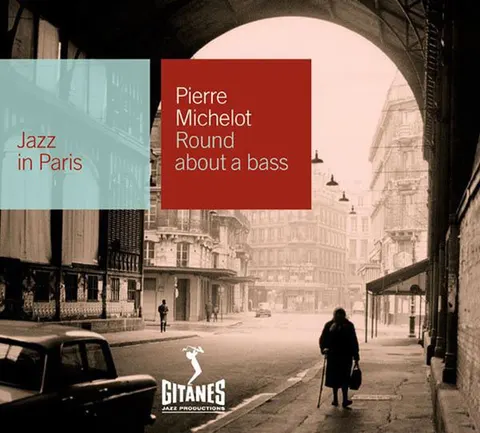
- Pierre Michelot - bassist on Musique pour deux, Big and Small and Formidable, and on the 6+6 and Kenny Clarke sessions.
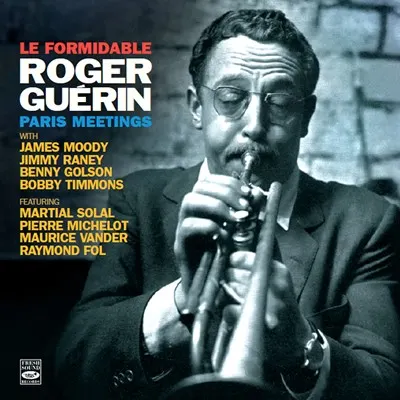
- Roger Guérin - trumpeter and bugler in the Chevallier orchestras of 1955 to 1957.
- Jean-Louis Chautemps - saxophonist, a featured soloist on Big and Small and Formidable, and later on a 1961 Chevallier EP.
- Martial Solal - co-composer and pianist of the 1959 score Deux hommes dans Manhattan.
- Kenny Clarke - drummer on the 1958 EP Kenny Clarke joue Christian Chevallier.
- David Amram - horn player in the Chevallier orchestra on Big and Small.
- Bobby Jaspar, Fats Sadi, Christian Garros - core soloists and rhythm players on Musique pour deux, Big and Small and Formidable.
- Les Angels - vocal group heard on his Columbia EPs of 1959 to 1962.
- Vline Buggy - his first wife, the lyricist Liliane Konyn.
More Big Band Artists
See all 304 Big Band artists →More French Jazz Artists
See all 170 French artists →- Discogs
- MusicBrainz
- AllMusic
- Wikipedia (French)
- Wikipedia (English)
- BnF catalogue
- Christian Chevallier on JazzProfiles.com
- Olivier Julien, booklet for Deux hommes dans Manhattan suivi de l'intégrale Christian Chevallier 1955-1962 (Frémeaux & Associés, FA 5849, 2023), including reprinted 1950s liner notes by Lucien Malson and André Hodeir.
- Wikipedia (English): Christian Chevallier
- Wikipedia (French): Christian Chevallier
- Wikidata: Q1079171
- MusicBrainz: Christian Chevallier
- Discogs: Christian Chevallier