 JAZZPROFILES lives in the music 2,555 Jazz Artists fully Profiled!
Jef Gilson
Last updated November 14, 2026
Listen on Spotify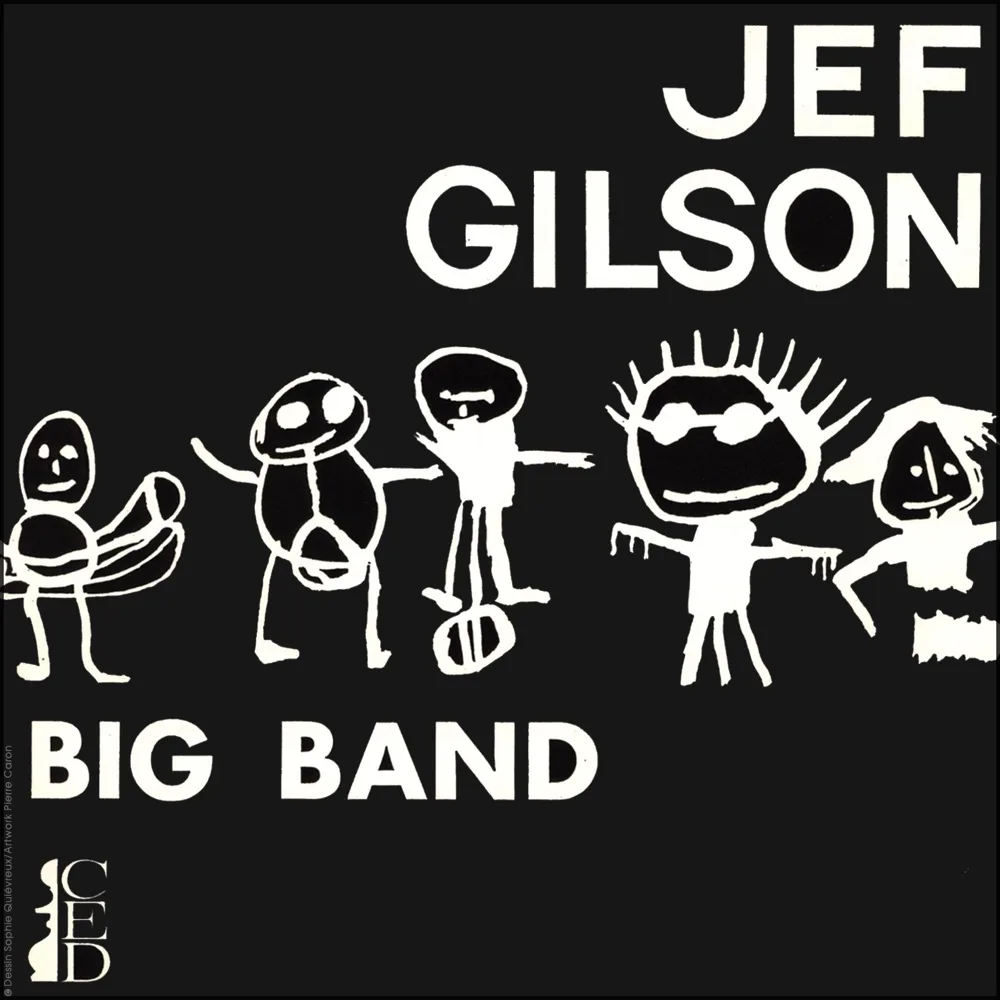
Cover of *Enfin!* by the Jef Gilson Big Band (Disques du Club de l'Échiquier, CED 30 J 1002, 1964). It is a drawing of five musicians, not a photograph of Jef Gilson. Standard copyright, all rights reserved, held by the rights holders of the release. This is not a Creative Commons or public-domain image; it is an album cover shown as an honestly disclosed editorial identification image. — https://music.apple.com/fr/album/enfin/290853206 (Apple Music artwork for Enfin !, Jef Gilson Big Band, 1000 x 1000 version)
Jef Gilson, born Jean-François Quiévreux on July 25, 1926 in Guebwiller in Alsace, was a French pianist, clarinettist, arranger, composer and big band leader who also ran a recording studio, a record shop, a jazz school and one of the most important independent jazz labels in France. He passed away on February 5, 2012, at the age of 85. His music went through four distinct phases: bebop-rooted big band writing in Paris in the early 1960s, modal and free playing, a Madagascar-inspired ethno jazz at the turn of the 1970s, and, from 1973, the productions of his own label, Palm. He had little commercial success while he was active. The reissues that began in 2011 have since made him a reference for collectors of European modal, spiritual and free jazz.
He trained as a classical clarinettist. During the German occupation of Paris he played clarinet with Claude Luter in a group led by Boris Vian, and in 1947 he switched to piano, continuing to play with Vian and with André Hodeir through the late 1940s. French Wikipedia says he studied composition with Hodeir and counts him among the first French composers to turn away from New Orleans jazz toward bebop. The big band of Dizzy Gillespie made him want to lead one himself, and the track "Je me souviens encore du grand orchestre de Dizzy Gillespie en 1948" on a later live album keeps that memory. Bandcamp Daily reports that he took the name Gilson as a nod to the arrangers Gil Evans and Gil Fuller.
Alongside playing he worked as a sound engineer, a record seller and, from 1962 to 1966, a critic for Jazz Hot. He ran a shop, Le Kiosque d'Orphée, on the rue des Beaux-Arts in Paris, and built a small studio in its back room where he recorded Vian and the American multi-instrumentalist Lloyd Miller; The Wire adds that he spent about two decades as a professional engineer with his own studios. The earliest records under his own name are the 1960 EP Jef's Blues on the Kiosque label and the Jef Gilson Septet with Lloyd Miller, issued by Spirit Jazz, whose first side was recorded in Paris in December 1961 and whose second side, according to the release credits, holds a session from October 1958 with the saxophonist Bobby Jaspar, the bassist Doug Watkins and the drummer Art Taylor.
From 1963 he led a succession of big bands that became a workshop for younger French players. Musicians who passed through them include Bill Coleman, Bernard Vitet, Jean-Louis Chautemps, François Jeanneau, Michel Portal, Bernard Lubat, Henri Texier, Ivan Jullien and Jean-Luc Ponty, as well as Lloyd Miller. The records of these years are the big band EP Vol. 1 (1963), Enfin! (Disques du Club de l'Échiquier, 1964) and Œil Vision (1964), with Ponty on violin and Chautemps on tenor saxophone. In the spring of 1965 the American trumpeter Woody Shaw and the saxophonist Nathan Davis played and recorded with the orchestra, and the same year Gilson joined the vocal sextet Les Double Six as a singer, later serving for a time as its musical director. In April 1966 a nonet with Chautemps, Jeanneau and Lubat recorded New Call from France at the Saba studio in Villingen, in the Black Forest; it came out on Saba and was later reissued on MPS. By then he was removing parts of the harmonic framework from his writing, moving toward free jazz, and Jazz Hot ran an article in January 1968 titled "Jef Gilson rejoint l'avant-garde". Over the same years he also wrote religious music: Jazz pour Dieu with the trumpeter Bill Coleman (1966), Louez Dieu (1967) and Messe pour les Halles de Paris (1971). In 1969 he arranged and played piano on an LP for Vogue billed to Philly Joe Jones with Gilson and his ensemble.
In 1968 Gilson went to Madagascar, and he made further trips there until 1970. He met young Malagasy jazz musicians, among them the saxophonist Serge Rahoerson, and encouraged them to build jazz on Malagasy culture and instruments such as the sodina flute and the valiha. The material was recorded between 1969 and 1971, partly in Madagascar and partly in Paris after he came back to France in 1971 with Malagasy musicians. It came out in 1972 on Lumen as Malagasy and was reissued in 1973 as the first release on his own label, Palm. Rahoerson's piece "Avaradoha", on that album, became an anthem of the 1972 youth revolt in Madagascar. The follow-up, At Newport-Paris (Palm, 1973), had Gilson on Fender Rhodes, and in 1974 he recorded Soul of Africa with the American tenor saxophonist Hal Singer.
Palm, founded in 1973, stood for Productions Artistiques Littéraires et Musicales. It was a musician-run label, and Gilson's stated policy was to release only new and indispensable music. Its original series ran to about thirty-two titles. Besides Gilson's own albums it released Byard Lancaster, Khan Jamal, Baikida Carroll, Jacques Thollot, François Jeanneau, André Jaume, Jean-Charles Capon, Philippe Maté, Butch Morris, Frank Lowe, David Murray and David S. Ware, whose From Silence to Music, taped late in 1978, closed the series. Gilson also edited the information bulletin L'Indépendant du jazz from 1974 to 1980, co-founded the Centre d'informations musicales jazz school in Paris in 1976, and wrote the harmony treatise L'Harmonie du jazz, published by Palm in several volumes between about 1978 and 1981. His own large orchestra of the period, Europamerica, recorded the album of that name for Palm (PALM 28, 1977) at a Radio France concert at Cardin on December 23, 1976, with Butch Morris on cornet and Chautemps, Jeanneau, Jaume and Maté among the saxophonists; he received the Prix Boris Vian in 1978. At the end of 1981 Jean-Pierre Graziani's Vendémiaire label reissued the Palm catalogue, and no new original productions by Gilson followed.
Later records are fewer: Pages d'écritures (1982) with the flautist Chris Hayward, Occitania (1989) with the Big Band de Nîmes, which he directed, and Les Touches Noires (1997) with his Jazztet. He lived in seclusion in the Ardèche in his last years and taught harmony at the Centre d'informations musicales. The Jazzman label brought out The Best of Jef Gilson in 2011, The Archives in 2013 and the box Gilson et Malagasy in 2014. Souffle Continu has reissued Le Massacre du printemps (2020), Malagasy and At Newport-Paris (2021) and Workshop (2022), and in 2018 the Palm Unit band recorded Hommage à Jef Gilson for Super-Sonic Jazz.
Gilson wrote for large ensembles from the start, and the elements that recur in the early records are changing tempos, bitonal layers and chromatic themes, which French Wikipedia traces from his bebop beginnings through a gradual removal of harmonic function between 1964 and 1966. His influences, as the sources describe them, were Gillespie's big band, Hodeir's compositional thinking, and the arranging of Gil Evans. Discogs files his best-known records under modal, spiritual and free jazz, and the Malagasy albums under ethno jazz and Malagasy salegy, with the sodina, valiha and Malagasy rhythm sections giving them a sound different from anything else on the French scene of the time. He was equally a producer and a teacher: Palm released records by French and American free and modern players, and Bandcamp Daily credits him with launching the careers of Ponty, Portal, Lubat and others. Sources agree that the commercial breakthrough he hoped for did not come in his lifetime.
- Enfin! (1964, Disques du Club de l'Échiquier CED 30 J 1002) - the big band LP, with Michel Portal on alto saxophone, William Boucaya on baritone, Henri Texier on bass and Claude Lenissois arranging. Apple Music - Enfin! Listen
- Œil Vision (1964, Club de l'Échiquier AF 1) - Gilson, Jean-Luc Ponty, Jean-Louis Chautemps and Daniel Humair, recorded at Europa-Sonor in Paris.
- New Call from France (1966, Saba SB 15 081) - the Nonet with Chautemps, Jeanneau and Lubat, recorded in Villingen in April 1966. Apple Music - New Call from France Listen
- Le Massacre du printemps (1971, Futura GER 33) - a free jazz record on which Gilson plays electric piano and tuba and horns, with Jean-Claude Pourtier on drums.
- Malagasy (1972, Lumen LD 33 908, reissued as Palm PALM 1) - the Madagascar album, with "Avaradoha" and "The Creator Has a Master Plan". Apple Music - Gilson et Malagasy (2014 box) Listen
- At Newport-Paris (1973, Palm PALM 5) - Fender Rhodes, Malagasy and Parisian players, including a "Requiem pour Django".
- Workshop (1973, Palm PALM 7) - two long free pieces with Philippe Maté on alto saxophone and Didier Levallet on bass.
- Soul of Africa (1974, Le Chant du Monde LDX 74556) - with Hal Singer. Apple Music - Soul of Africa
- Europamerica (1977, Palm PALM 28) - the large orchestra recorded for Radio France, with Butch Morris and four saxophonists.
Jef Gilson: Full Discography
French pianist, clarinettist, arranger and big band leader, born July 25, 1926 in Guebwiller, died February 5, 2012. Discogs artist 239566; his groups, among them the Jef Gilson Septet (976124), the Jef Gilson Nonet (636406), the Jef Gilson Big Band (2333252), the Jef Gilson Trio (1618989) and Jef Gilson and His Orchestra (382104), have their own Discogs entries and are included below. Leader and co-leader releases are listed in full, followed by compilations and reissues and by a selection of credits as producer and mixer; his Discogs credit list runs to many more entries, and the full list is on Discogs.
Name variations on record: Gilson, J. Gilson, J. G., Jeff Gilson, Jef, Palm-Jef Gilson, Def Jef Gilson. Real name Jean-François Quiévreux.
Group affiliations on Discogs: Jef Gilson and His Orchestra, Jef Gilson, son orchestre et ses choeurs, Jef Gilson Septet, Jef Gilson Trio, Gilson Unit, Les Double Six, Jef Gilson Sextette, Jef Gilson Jazztet, Jef Gilson Big Band, Le Groupe Jef Gilson.
As Leader / Co-Leader
| Album Title | Recording Date(s) | Release Date | Label | Catalog Number | Format(s) | Personnel | Role | Reissue History | Listen | Buy | Notes |
|---|---|---|---|---|---|---|---|---|---|---|---|
| Jef's Blues (Jef Gilson, The Tracks) | Not confirmed | 1960 | Le Kiosque d'Orphée | Not confirmed | 7" EP | Not confirmed | Leader | - | - | - | Discogs files it under Jef Gilson with the group name The Tracks. Issued on the label of his Paris record shop. |
| Jef Gilson Septet avec Lloyd Miller | Side A: Paris, December 1961. Side B: Paris, October 1958 | 1961 | Spirit Jazz | SJD 1 | 10" LP | Side A: Jef Gilson (piano, composer, arranger), Lloyd Miller (microrgan, balafon), Alain Tabar-Nouval (soprano saxophone), Pierre Caron (tenor saxophone), Henri Texier (bass), Alain Melet (electric bass), Pierre-Alain Dahan (drums). Side B: Bobby Jaspar (tenor saxophone), Roger Guérin (trumpet), Luis Fuentes (trombone), Walter Davis Jr. (piano), Doug Watkins (bass), Art Taylor (drums) | Leader and arranger | Reissued on 10-inch by Kindred Spirits in 2007 as Jef Gilson avec Lloyd Miller & Hal Singer | - | - | Cover by Pierre Caron, photography by Jean-Pierre Leloir. Side A is the septet; side B is a quintet-plus-brass session credited on the release to Jaspar, Watkins and Taylor. |
| Jef Gilson Big Band Vol. 1 | Not confirmed | 1963 | Disques du Club de l'Échiquier | Not confirmed | 7" single | Not confirmed | Leader | - | - | - | The first of the big band records on the Club de l'Échiquier label. |
| Enfin! | Not confirmed | 1964 | Disques du Club de l'Échiquier | CED 30 J 1002 | LP (mono, stereo and promo copies) | Includes Michel Portal (alto saxophone), William Boucaya (baritone saxophone), Henri Texier and Pierre Sim (bass), Claude Lenissois (bass clarinet, arranger); the release lists 27 credits | Leader | Spalax 6837 (1981); unofficial limited reissue by modern silence OI020 (2016) | Apple Music | - | Ten tracks including "Le Grand Bidou", "Fable of Gutenberg", "Three Four One" and "Anamorphose". Wikipedia (French) dates it 1963; Discogs dates it 1964. |
| Œil Vision (Jef Gilson, Jean-Luc Ponty, Jean-Louis Chautemps) | Paris, Europa-Sonor studio; dates not confirmed | 1964 | Disques du Club de l'Échiquier | AF 1 | LP | Jef Gilson (composer, leader), Jean-Luc Ponty (violin), Jean-Louis Chautemps (tenor saxophone), Pierre Caron (tenor saxophone), Jacques Di Donato (alto saxophone), Claude Lenissois (bass clarinet), Joseph Martin (horn), Henri Texier, Guy Pedersen, Pierre Sim and Gilbert Rovère (bass), Daniel Humair and Stéphane Vilar (percussion), Liliane Mazeron (voice) | Leader | Second issue on SFP 13 002 (1968); 2016 unofficial reissue | - | - | Seven tracks: "Œil Vision", "Chant Inca", "Chromatisme", "Jeffology I and II", "Satirique" and a second "Chant-Inca". Producer Henri-Claude Fantapié. Paintings credited to Guy Harloff. |
| Jazz pour Dieu (Bill Coleman and Jef Gilson, son orchestre et ses choeurs) | Not confirmed | 1966 | Unidisc | UD 30145 | LP | Large ensemble and chorus; the release lists 43 credits, among them Hubert Fol (alto saxophone), Claude Lenissois (bass clarinet) and Gilbert Rovère (cello) | Co-leader and conductor | Canadian pressings on Select SP-12.157 (mono) and SSP-24.157 (stereo) | - | - | Sacred music in a jazz setting: Kyrie, Sanctus, Agnus Dei and "Sometimes I Feel Like a Motherless Child". Billed to the trumpeter Bill Coleman. |
| New Call from France (The Jef Gilson Nonet feat. Jean-Louis Chautemps) | April 18 and 19, 1966, Saba-Tonstudio, Villingen | 1966 | SABA | SB 15 081 | LP | Jef Gilson (piano, conductor), Jean-Louis Chautemps (tenor and alto saxophones), François Jeanneau (tenor and soprano saxophones), Pierre Caron (tenor saxophone), Jean-Baptiste Mira (trumpet), Bernard Lubat (vibraphone, percussion), Claude Lenissois (bass clarinet), Gilbert Rovère (bass), Gaetan Dupenher (drums) | Leader | Reissued on MPS; digital release in 2015 | Apple Music | - | "Suite pour San Remo", "I.A.M.", "120 à la noire", "A Free Call" and "Chromatisme". Photography by Jean-Pierre Leloir. |
| Louez Dieu (Christiane Oriol and Jef Gilson) | Not confirmed | 1967 | Jerusalem | J-36709 (Canadian pressing) | LP | Christiane Oriol (vocals), André Dumas (organ), Alain Dumont (drums), Jacqueline Coivous (chorus master); music composed and directed by Jef Gilson | Composer and music director | Part of a Louez Dieu series of EPs and LPs; Louez Dieu No. 10 appeared on Pastorale et Musique in 1970 | - | - | Francophone rhythmic folk spirituals and jazz-tinged gospel, with texts by Maurice Debaisieux and Guy De Fatto. |
| Philly Joe Jones avec Jef Gilson et son ensemble | Paris, January 31 and March 1, 1969 | 1969 | Disques Vogue | CLVLX 357 | LP | Philly Joe Jones (drums), Jef Gilson (piano, arranger), Jean-Louis Chautemps (tenor and soprano saxophones, tracks A4 to B3), Benny Vasseur and Luis Fuentes (trombones), Jean-Charles Capon (cello), Guy Pedersen and Jean-François Catoire (bass) | Arranger and pianist | - | - | - | Includes "Espagnolade", "Tabar Blues" and "Spontaneous Expression". Part of Vogue's Collection Loisirs series. |
| Le Massacre du printemps (Gilson) | Not confirmed | 1971 | Futura Records | GER 33 | LP | Jef Gilson (electric piano, horns, tuba), Pierre Moret (organ), Jean-Claude Pourtier (drums); the release lists 9 credits | Leader | Futura CD reissue (2014); Souffle Continu FFL064 (2020) | - | - | Six tracks, among them "L'Imagination au pouvoir" and "Les Cigales". Listed on Discogs as free jazz. |
| Messe pour les Halles de Paris (Jef Gilson Trio + Montorgueil 46) | Not confirmed | 1971 | Editions Studio S.M. | SM 30-453 | LP | Jef Gilson Trio plus the group Montorgueil 46; full personnel not confirmed | Leader | - | - | - | A liturgical mass for the Les Halles district of Paris; Discogs lists it as modal jazz. |
| Malagasy (Gilson et Malagasy) | 1969 to 1971; side one March and April 1969, last track in Paris in 1971 | 1972 | Lumen, then Palm | LD 33 908 (Lumen); PALM 1 (1973) | LP | Jef Gilson (piano), Jean-Charles Capon (cello), Serge Rahoerson (saxophone), with Raymond Boni (guitar) and Bertrand Gauthier (drums) on the February 1970 sessions; Gilbert Rovère (bass) and Lionel Magal (drums) from the 1968 trip | Leader | Souffle Continu FFL066 (LP, 2021, and CD, 2021); disc 1 of the Jazzman box Gilson et Malagasy (2014) | Apple Music, in the 2014 box | - | Six tracks: "A Tana", "Avaradoha", "Chant Inca", "Sodina", "The Creator Has a Master Plan" and "Malagasy". Cover by Pierre Caron. Palm's first release. |
| Concert à la M.J.C. Colombes (Jean-Luc Ponty, Jean-Charles Capon, Gilbert Rovère, Lionel Magal, Jef Gilson) | Not confirmed | 1972 | Palm | PALM 2 | LP | Jean-Luc Ponty, Jef Gilson (leader), Jean-Charles Capon (cello), Gilbert Rovère and Jef Catoire (bass), Gérard Rakotoarivony (electric bass), Lionel Magal (percussion) | Co-leader | Also pressed on Disques Vendémiaire VDE 055 | - | - | Six tracks including "Sniffin' the Blues", "Espagnolades", "Tears for Billy" and "Chromatisme". |
| At Newport-Paris (Malagasy, Gilson) | Not confirmed | 1973 | Palm | PALM 5 | LP | Jef Gilson (Fender Rhodes), Frank Raholison and Sylvain Marc (drums), Gérard Rakotoarivony (electric bass), Ange "Zizi" Japhet (percussion); the release lists 11 credits | Leader | Souffle Continu FFL068 (LP) and FFLCD068 (CD), 2021; in the Jazzman box Gilson et Malagasy (2014) | - | - | Nine tracks, among them "Newport Bounce", "Salegy Jef", "Requiem pour Django" and "Dizzy 48". |
| Workshop (Philippe Maté and Jef Gilson) | Not confirmed | 1973 | Palm | PALM 7 | LP | Jef Gilson (bass clarinet, organ), Philippe Maté (alto saxophone), Didier Levallet (bass), Bruno Di Gioia (cor anglais, flute, percussion), Jean-Claude Pourtier (drums); the release lists 12 credits | Co-leader | Souffle Continu FFL075 (LP) and FFLCD075 (CD), 2022 | - | - | Two long pieces, "L'Œil" (22:15) and "Vision" (24:00). |
| Soul of Africa (Hal Singer and Jef Gilson) | Not confirmed | 1974 | Le Chant du Monde | LDX 74556 | LP | Hal Singer (tenor saxophone), Jef Gilson, Jacky Samson (bass), Frank Raholison (drums), Del Rabenja (percussion), the ensemble Malagasy Rhythm; the release lists 13 credits | Co-leader | Kindred Spirits KS RE 3 (CD, 2007; LP and CD, 2008); Super-Sonic Jazz SSJ02 (2018); unofficial Russian pressing (2025) | Apple Music | - | Five tracks: "Chant Inca", "Mother Africa", "The High Life", "Libertarian" and "Garvey's Strut". |
| Anthology Jef Gilson 1945/1975 | Compiles recordings from 1945 to 1975 | 1975 | Palm | PALM 18 to 21 | Four LPs (sold as a set and as separate volumes) | Various; Jean-Luc Ponty, Bobby Jaspar and Byard Lancaster are named on the Discogs listings | Leader | - | - | - | Volumes include The Beginning of Jef Gilson and The Big Band Era. |
| Europamerica (L. Butch Morris, J.-L. Chautemps, F. Jeanneau, A. Jaume, Ph. Maté, A. Hatot, M. Richard, J.-C. Capon, J. Gilson, P.-Y. Sorin, G. Brown) | Concert at Cardin for Radio France, December 23, 1976 | 1977 | Palm | PALM 28 | LP | Jef Gilson (piano, conductor), Butch Morris (cornet), François Jeanneau (soprano saxophone), Jean-Louis Chautemps, Alain Hatot, Marc Richard and Philippe Maté (tenor saxophones), André Jaume (tenor saxophone, bass clarinet), Jean-Charles Capon (cello), Pierre-Yves Sorin (bass guitar), George Brown (drums) | Leader and conductor | - | - | - | Six tracks, among them "The Other Side", "Mode de Fa" and "Con Alma". Some copies came with a signed lithograph by Sacha Chimkévitch. Producer André Francis. |
| Pages d'écritures (Jef Gilson and Chris Hayward) | December 21 and 22, 1982 | 1982 | Europamerica | LOCO 0330-02 | LP | Jef Gilson (piano, leader, producer), Chris Hayward (flute, co-leader, producer), Philippe Delettrez (tenor saxophone, on "Philo"), Eric Lagacé (bass), Al Levitt (drums) | Co-leader | - | - | - | Eleven tracks, including "Blues for Al" and "Lo Parpalhon". |
| Occitania (Big Band de Nîmes, direction Jef Gilson) | Not confirmed | 1989 | JAZZ 70 | 70.001 | CD | Big Band de Nîmes directed by Jef Gilson; individual players not confirmed | Conductor | - | - | - | Includes "Summertime", "Chant Inca", "Choro in Blue" and "I Remember Lennie". |
| Les Touches Noires (Jef Gilson Jazztet) | Ribes, February 22 and 23, 1997 | 1997 | Artis | JG 01 | CD | Jef Gilson (piano, leader), Vincent Audigier (tenor saxophone), Guillaume Poncelet (trumpet), Bruno Sisinni (bass), Lionel Moine (drums), Patrick Sibille (percussion on four tracks) | Leader | - | - | - | Twelve tracks, most of them composed by Gilson. |
Compilations, reissue sets and live releases
| Title | Year | Label | Catalog Number | Notes | Listen | Buy |
|---|---|---|---|---|---|---|
| The Best of Jef Gilson | 2011 | Jazzman | JMANCD 042 (CD), JMANLP 042 (2 LP) | Compilation drawing on the Big Band, Sextette, Jazztet and Nonet, the Philly Joe Jones date and the Malagasy recordings. | Apple Music, titled Jef Gilson | - |
| The Archives | 2013 | Jazzman | JMANLP 063 (2 LP), JMANCD 063 (CD) | Nineteen tracks of alternate takes and previously unreleased material, including live versions of "Anamorphose" and "Java pour Raspail". | Apple Music | - |
| Gilson et Malagasy | 2014 | Jazzman | JMANLP 065 (LP box), JMANCD 065 (CD box) | Box set combining Malagasy, At Newport-Paris, the sessions released as Madagascar Now and live and unreleased material. | Apple Music | - |
| Chansons de jazz | 2013 | Jazzman | Not confirmed | 10-inch compilation. | - | - |
| 'Zao (Jef Gilson et Malagasy) | 2004 | Isma'a | Not confirmed | CD compilation of Malagasy-period material. | - | - |
| Live à Gaveau (Jef Gilson Big Band) | 2020 | Sam Records, with INA | SR22/2 | Limited 180 g LP of a 1965 concert at the Salle Gaveau; Discogs credits J.-F. Jenny-Clark (bass) and Jacques Thollot (drums) with Gilson at the piano. | - | - |
| Hommage à Jef Gilson (Palm Unit) | 2018 | Super-Sonic Jazz | Not confirmed | A tribute album by the band Palm Unit. | Apple Music | - |
Producer, mixing and Palm label credits
A selection of credits that were checked on Discogs. They are not performing credits.
| Year | Project (Leader) | Title | Label | Catalog | Role | Notes |
|---|---|---|---|---|---|---|
| 1964 | Ted Curson | Tears for Dolphy | Fontana | 688 310 (Netherlands, 1965) | Producer | Discogs credits Gilson as producer; recorded in Paris on August 1, 1964. |
| 1966 | Bud Powell | Blues for Bouffémont | Fontana | FJL 901 (UK, 1966) | Producer | Discogs credits Gilson as producer; later reissued as The Invisible Cage. |
| 1973 | Georges Arvanitas Trio | Live Again | Not confirmed | Not confirmed | Mixing | Discogs credits Gilson as mixer. |
| 1973 | Jacques Berrocal, Dominique Coster, Roger Ferlet | Musiq Musik | Not confirmed | Not confirmed | Mixing | Discogs credits Gilson as mixer. |
| 1974 | Byard Lancaster | Mother Africa and Us | Palm | Not confirmed | Label owner (Palm) | Palm releases; the credit on each is filed under Appearance on Discogs and the exact role is not confirmed. Collected in the 2024 Souffle Continu box The Complete Palm Recordings 1973-1974. |
| 1974 | Baikida E. J. Carroll | Orange Fish Tears | Palm | Not confirmed | Label owner (Palm) | Palm release; The Wire reports that Gilson called it his best production. |
| 1975 | Jacques Thollot | Watch Devil Go | Palm | Not confirmed | Producer | Discogs credits Gilson as producer. |
| 1975 | Ted Curson | Cattin' Curson | Not confirmed | Not confirmed | Mixing | Discogs credits Gilson as mixer. |
| 1978 | David S. Ware featuring Jean-Charles Capon | From Silence to Music | Palm | Not confirmed | Label owner (Palm) | One of the last releases of the original Palm series. |
| 1979 | Leo Smith Creative Orchestra; Roscoe Mitchell Creative Orchestra | Budding of a Rose; Sketches from Bamboo | Moers Music | Not confirmed | Mixing | Discogs credits Gilson as mixer on both. |
Other appearances
Discogs also lists Gilson on accompanying records such as the 45s by Gilbert Laudato accompanied by Jef Gilson and his orchestra (Fontana), on the singer Christiane Oriol's Louez Dieu series and on several 1970s Palm and Promophone albums by other leaders. Credits on those entries were not itemised by role, so they are not listed here.
- Jean-Luc Ponty - violin on Œil Vision (1964) and a member of the group on the live Concert à la M.J.C. Colombes (Palm, 1972).
- Philly Joe Jones - the American drummer made the 1969 Vogue LP with Gilson and his ensemble: Gilson at the piano, Jean-Louis Chautemps on saxophones, Guy Pedersen or Jean-François Catoire on bass, Jean-Charles Capon on cello.
- Woody Shaw - played and recorded with the Gilson orchestra in the spring of 1965.
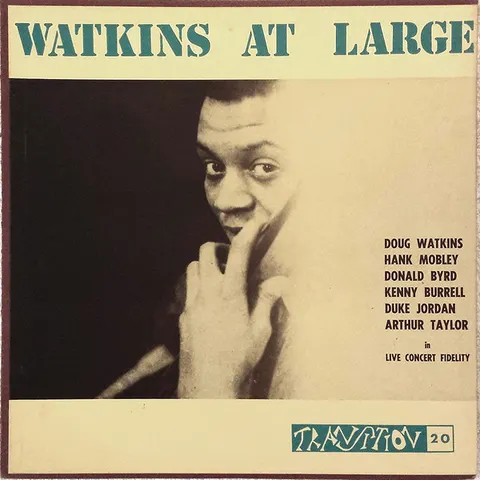
- Doug Watkins - bass on the 1958 session that makes up the second side of the Septet record with Lloyd Miller, with Art Taylor, Bobby Jaspar, Walter Davis Jr. and others.
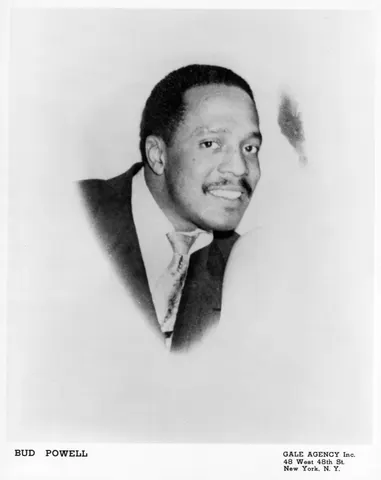
- Bud Powell - Discogs credits Gilson as producer on Powell's Blues for Bouffémont (Fontana, 1966).
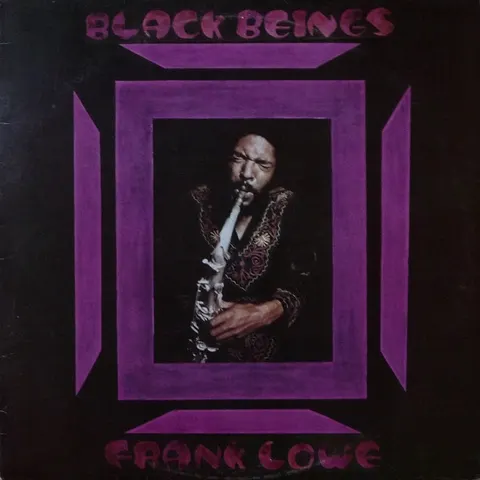
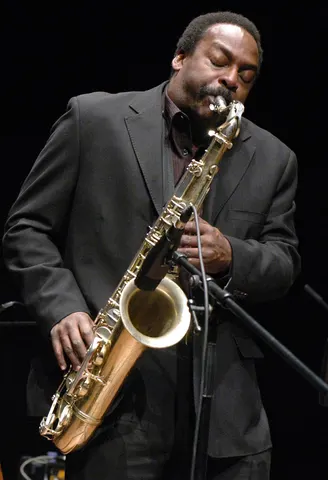
- Frank Lowe and David Murray - both appear in the catalogue of Palm.
- Michel Portal, Jean-Louis Chautemps, François Jeanneau, Bernard Lubat, Ivan Jullien and Roger Guérin - French players who worked in his orchestras or on his records between the early 1960s and 1977.
- Hal Singer, Lloyd Miller, Bill Coleman, Byard Lancaster, Butch Morris - American partners on Soul of Africa, the Septet, Jazz pour Dieu, the Palm catalogue and the Europamerica album.
- Claude Luter, Boris Vian, André Hodeir - the Paris musicians he played with or studied with in the 1940s.
- Serge Rahoerson and the Malagasy musicians - the young players of Madagascar and the Malagasy rhythm section on the Malagasy albums and Soul of Africa.
More Big Band Artists
See all 304 Big Band artists →More French Jazz Artists
See all 170 French artists →- Spotify artist page
- Discogs: Jef Gilson
- MusicBrainz: Jef Gilson
- AllMusic: Jef Gilson
- Wikipedia (English): Jef Gilson
- Wikipedia (French): Jef Gilson
- Bibliothèque nationale de France: Jef Gilson
- Bandcamp Daily: Renaissance Man, the Undervalued Career of Jef Gilson
- The Wire: Jef Gilson's Palm label
- Jef Gilson on JazzProfiles.com
- Wikipedia (English): Jef Gilson
- Wikipedia (French): Jef Gilson
- Wikipedia (English): Palm Records
- Wikidata: Jef Gilson
- AllMusic: Jef Gilson
- MusicBrainz: Jef Gilson
- Discogs: Jef Gilson, artist 239566
- Discogs: Malagasy / Gilson, Malagasy (master 2188522)
- Discogs: Enfin! (master 417250)
- Discogs: Philly Joe Jones avec Jef Gilson et son ensemble, Vogue CLVLX 357
- Discogs: Jef Gilson Septet avec Lloyd Miller, Spirit Jazz SJD 1
- Discogs: Europamerica, PALM 28
- Bandcamp Daily: Renaissance Man, the Undervalued Career of Jef Gilson (2018)
- The Wire: Wire Playlist, Jef Gilson's Palm label (2021)
- Soundohm: Gilson, Malagasy (Souffle Continu reissue)
- Acoustical Swing: Jef Gilson, a selected bibliography
- SFJAZZ blog: Jef Gilson, 1926-2012 (February 6, 2012)
- Apple Music: Jef Gilson albums