 JAZZPROFILES lives in the music 2,555 Jazz Artists fully Profiled!
François Tusques
Last updated November 14, 2026
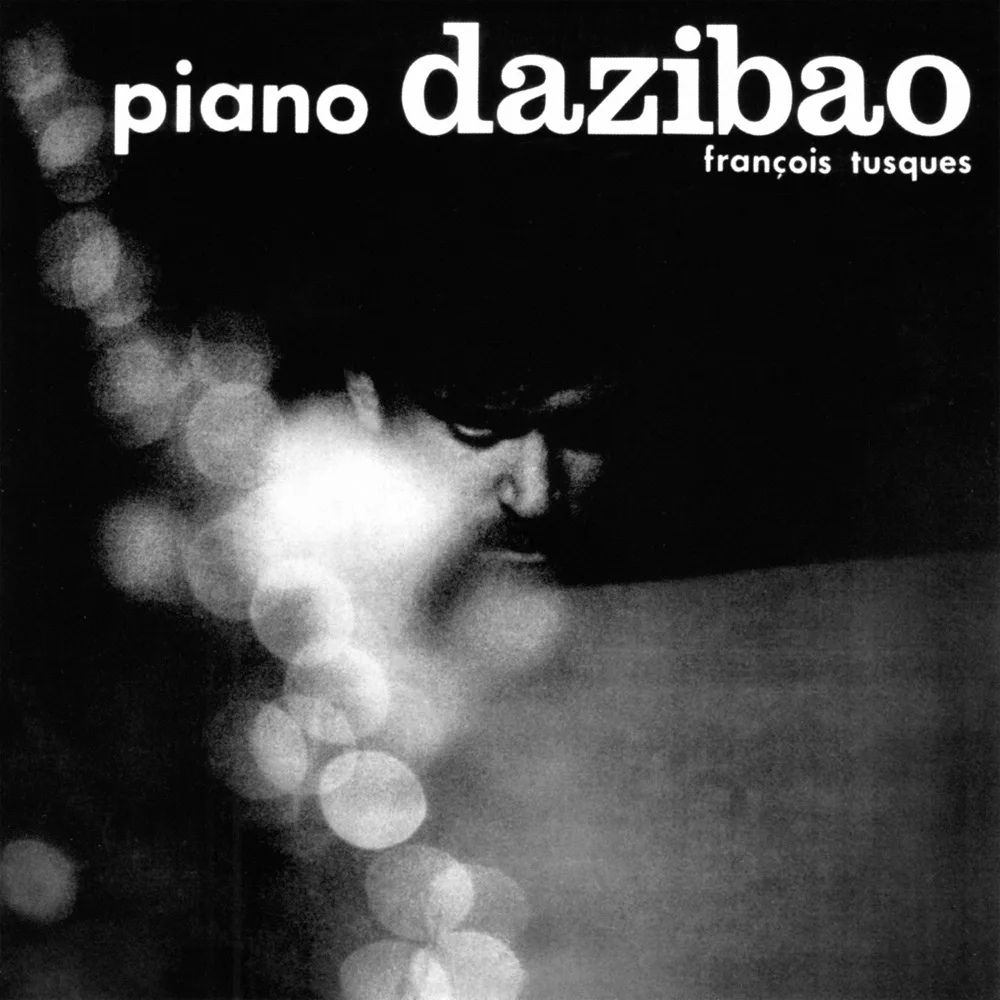
Cover of Piano Dazibao (Futura, 1970), shown in the artwork of its digital reissue, as one of the albums recommended in the profile. It is album artwork, not a photograph of the artist. Standard copyright, all rights reserved, held by the label and rights holders (Atypeek Music and Futura Marge per the Apple Music copyright line). This is not a Creative Commons or public-domain image; it is an album cover shown as an honestly disclosed editorial identification image. — Apple Music - https://music.apple.com/fr/album/piano-dazibao/1458425306
François Tusques was born in Paris on January 27, 1938, and is a pianist and composer who played a central part in the first generation of French free jazz. His family left Paris for Brittany soon after his birth. His father, Jean Tusques, was a physician and professor who took part in the French Resistance, and his mother had been a singer at the Paris Opera. Childhood years in Afghanistan, where his father helped set up a medical faculty in Kabul, and in Dakar came before the family's return to France in 1950. He has said that his awakening to jazz was hearing Sidney Bechet play with Claude Luter at the Olympia that year; he started on clarinet, collected New Orleans records, and in Dakar at 17 or 18 was turned toward Charlie Parker. Back in Nantes he took up the piano seriously, largely self-taught, and in the later 1950s ran a local Hot Club branch and played in dance bands. He has also said that the pianists he learned from by listening included Thelonious Monk and Bud Powell.
After military service in Algeria he settled between Nantes and Paris in the early 1960s, playing with the double bassist Bernard (Beb) Guérin, the trumpeter Bernard Vitet, the drummer Jacques Thollot and the saxophonist François Jeanneau. In 1964 he played at the Théâtre de la Vieille-Grille in Paris with Vitet, Thollot and Aldo Romano, and the American cornetist Don Cherry, then living in Paris, played with the group and strongly influenced its direction. A seven-inch record, La Maison fille du soleil, made in Nantes in December 1964 for an exhibition on Le Corbusier, has Cherry on cornet, Guérin on double bass and Tusques on piano, with a narrator.
In 1965 he recorded Free Jazz for the Disques Mouloudji label with Vitet (trumpet), Jeanneau (saxophone, flute), Michel Portal (bass clarinet), Guérin (bass) and Charles Saudrais (percussion). It is widely described as the first free jazz album made in France. Tusques composed the four tracks and has said that he cut up and reassembled the studio takes at the mixing desk, building the music he imagined rather than the music the band could yet play live. On November 7, 1966 he took part in the « Manifeste de l'Avant-Garde » concert at the Alliance française with Portal, Jeanneau, Barney Wilen and others. Le Nouveau Jazz (Mouloudji, 1967), billed to Tusques with Wilen, followed with Guérin, Jean-François Jenny-Clark and Romano; it was recorded in January and February 1967.
Through the late 1960s he was also the pianist in Paris for visiting Americans. He is on Sunny Murray's Big Chief (recorded in Paris on January 11, 1969) and on Clifford Thornton's The Panther and the Lash, taken from a live concert at the Maison de la Radio on November 7, 1970. He has said that, despite this work, he did not record under his own name between 1967 and 1970. He made Piano Dazibao, a solo record, at home in Paris between May and September 1970, and Dazibao n°2 followed in 1971, a set of four political pieces that includes a version of Elaine Brown's Seize the Time. In May 1971 he recorded Intercommunal Music in Paris with Murray, the cellist Alan Silva, the trumpeter Alan Shorter, the saxophonist Steve Potts and the bassists Guérin and Bob Reid; Tusques also plays musical saw, bowed guitar and maracas on it. After May 1968 he worked texts into his concerts and accompanied the singer Colette Magny, appearing on her album Répression (1972).
In the 1970s he formed the Intercommunal Free Dance Music Orchestra, a changing group meant to bring free jazz closer to dancing and to a wider public, with repertoire opened to African music, revolutionary songs and Basque and Breton regional music. It played in factories on strike and in hostels for immigrant workers, and with a collective called Le Temps des Cerises he self-produced recordings, among them Vol. 1: Concert à Prades-le-Lez (1974) and Après la marée noire (Le Chant du Monde, 1979), made with Breton bombarde players. Le Piano préparé (Le Chant du Monde, 1977) is a piano record. In the 1980s he took part in the Chantenay-Villedieu festival, recorded two records of Federico García Lorca poems with the singer Violeta Ferrer, and wrote the music for Génération, a documentary by Daniel Edinger on the events of May 1968. A trio with the bass clarinettist Denis Colin and the drummer Noël McGhie came next.
His records from the 1990s are often tied to literature: Octaèdre (Axolotl Jazz, 1994) is a homage to the writer Julio Cortázar, with Vitet, the singer Isabel Juanpera and the bandoneon player César Stroscio, and Blue Phèdre (1996) is a large-ensemble session with Vitet, Colin, McGhie, Itaru Oki and the bassist Didier Levallet. Arc Voltaic (In Situ, 2003), recorded at Le Triton in 2002, sets poems by Joan Salvat-Papasseit sung by Carles Andreu. Since 2010 most of his output has been on the Improvising Beings label, including Topolitologie (2010) with McGhie, Near the Oasis, a live duo with the saxophonist Sonny Simmons recorded at the Vision Festival in New York, La Jungle du Douanier Rousseau (2014) with Alexandra Grimal and Sylvain Guérineau, Le Chant du Jubjub (2015) with Oki, the accordionist Claude Parle and Juanpera, and the home-recorded solo album Avants-Derniers Blues (2017). Souffle Continu reissued Piano Dazibao and Dazibao n°2 in 2022, and the writer Pierre Crépon devoted a Wire playlist to his work that year.
He has remained active into his late eighties. Sans détours (2023) marks ten years of work with the trumpeter and pianist Fabien Robbe, and the live LP Tusques is now!, recorded at the Pontivy conservatoire on November 15 and 16, 2024 with Robbe, the drummer Jérôme Gloaguen and the saxophonist Eric Leroux, came out on November 7, 2025. He has said that he wrote more than 200 pieces during the 2020 lockdown. For much of his life he earned a living outside music as a typist and copywriter, and later worked for the newspaper Libération and the magazine Actuel.
Tusques says he relies on attack and rhythm more than on long melodic phrasing, and names Thelonious Monk, Bud Powell, Earl Hines and Jimmy Yancey among the pianists he admired. He credits Don Cherry and Sunny Murray with strengthening a working rule he still follows: if he knows what to say about a piece of music, he discards it, and if he cannot explain it, he keeps it. His 1965 and 1967 records belong to the first European wave of free jazz, and his solo records of 1970 and 1971 attach political titles and subjects to piano improvisation, while the Intercommunal orchestra deliberately aimed at dancers as well as listeners and drew on folk and regional music. Literary and visual subjects recur, from Cortázar and Lorca to Lewis Carroll's The Hunting of the Snark and the painter Henri Rousseau. French Wikipedia credits him with a decisive influence on the emergence of free jazz musicians in France.
- Free Jazz (1965, Disques Mouloudji) - sextet record with Bernard Vitet, François Jeanneau, Michel Portal, Beb Guérin and Charles Saudrais, widely described as the first free jazz album made in France.
- Le Nouveau Jazz (1967, Disques Mouloudji) - Tusques with the tenor saxophonist Barney Wilen, bassists Beb Guérin and Jean-François Jenny-Clark and the drummer Aldo Romano, six tracks.
- Piano Dazibao (1970, Futura) - solo piano recorded at home in 1970, seven pieces with long, politically charged titles. Bandcamp - Piano Dazibao Listen
- Dazibao n°2 (1971, Futura) - four solo piano pieces on political events, among them George Jackson, the Attica prison revolt and Seize the Time. Bandcamp - Dazibao n°2 Listen
- Intercommunal Music (1971, Shandar) - recorded in Paris on May 11, 1971 with Sunny Murray, Alan Silva, Alan Shorter and Steve Potts.
- Octaèdre (1994, Axolotl Jazz) - a homage to Julio Cortázar with Bernard Vitet, Isabel Juanpera and César Stroscio. Apple Music - Octaèdre Listen
- Le Chant du Jubjub (2015, Improvising Beings) - a quartet with Itaru Oki, Claude Parle and Isabel Juanpera, recorded in February 2015. Apple Music - Le Chant du Jubjub
- Avants-Derniers Blues (2017, Improvising Beings) - solo piano pieces recorded at home in 2015 and 2016, several dedicated to musicians and writers. Apple Music - Avants-Derniers Blues Listen
François Tusques: Full Discography
French jazz pianist and composer, born January 27, 1938 in Paris. Discogs artist 365565 (https://www.discogs.com/artist/365565). Related Discogs entities checked: the Intercommunal Free Dance Music Orchestra, whose records are included below, and the groups and names that appear on his own releases. The first table lists records under his own name or a band he leads. The second lists records on which he is billed jointly with others. The third is a selection of sideman credits and later-issued archival recordings, not an exhaustive list. Years follow Discogs, cross-checked against Wikipedia and the release notes; where a source gives a different year, the Notes cell says so. Catalogue numbers are given only where Discogs or a label page shows them, and "Not confirmed" marks anything that could not be checked.
Leader and band-leader releases
| Album | Year | Label | Personnel | Notes | Listen | Buy |
|---|---|---|---|---|---|---|
| Free Jazz | 1965 | Disques Mouloudji EM 13507 S | François Tusques (piano, composer), Bernard Vitet (trumpet), François Jeanneau (saxophone, flute), Michel Portal (bass clarinet), Beb Guérin (double bass), Charles Saudrais (percussion) | Four tracks, one of them in two versions. Art direction by Colette Magny. Widely described as the first free jazz album made in France. | — | — |
| Le Nouveau Jazz (François Tusques avec Barney Wilen) | 1967 | Disques Mouloudji EM 13 517 S | François Tusques (piano, composer), Barney Wilen (tenor saxophone), Beb Guérin (double bass), Jean-François Jenny-Clark (double bass), Aldo Romano (drums) | Six tracks. Wilen, Jenny-Clark and Romano play on tracks A3 and B1 to B3; Guérin on A2 and A3 and B1 to B3. Recorded January 16, 1967 (A1, A2) and February 15, 1967 (A3, B1 to B3). | — | — |
| Piano Dazibao | 1970 | Futura GER 14 | François Tusques (piano, composer) | Solo piano, seven pieces, Paris, 1970 (Discogs gives September; the interview gives May to September). Reissued by Souffle Continu in 2022. | Bandcamp | — |
| Dazibao n°2 | 1971 | Futura GER 32 | François Tusques (piano) | Four pieces on the original LP (the 2022 digital edition lists three). Includes Seize the Time. | Bandcamp | — |
| Intercommunal Music | 1971 | Shandar SR 10 010 | François Tusques (piano, musical saw, bowed guitar, maracas, composer), Sunny Murray (drums), Alan Silva (cello), Alan Shorter (trumpet), Steve Potts (alto saxophone), Beb Guérin (double bass), Bob Reid (double bass), Louis Armfield (percussion) | Ten tracks. Recorded in Paris on May 11, 1971. Laminated gatefold sleeve. | — | — |
| Vol. 1: Concert à Prades-le-Lez (Intercommunal Free Dance Music Orchestra) | 1974 | Le Temps des Cerises 01 | François Tusques (keyboards, composer), Jo Maka (saxophone), Michel Marre (saxophone), Adolf Winkler (trombone), Guem (percussion) | Five tracks. A reissue of Vol. 1 and Vol. 2 as one release is listed for 2026 on Souffle Continu Records. | — | — |
| Le Piano préparé | 1977 | Le Chant du Monde LDX 74483 | François Tusques (piano) | Five tracks; Tusques also wrote the liner notes. Gatefold sleeve. | — | — |
| Après la marée noire: vers une musique bretonne nouvelle (François Tusques, Sonneurs Traditionnels, Intercommunal Free Dance Music Orchestra) | 1979 | Le Chant du Monde LDX 74703 | François Tusques (piano, composer), Jo Maka (soprano saxophone), Michel Marre (trumpet, alto saxophone), Ramadolf (trombone), Tanguy Le Doré (electric bass), Philippe Le Strat, Gabriel Kerdoncuff and Jean-Louis Le Vallégant (bombarde), Sam Ateba (congas, bongos), Kilikus (darbouka), Carlos Andreu (vocals on B3) | Seven tracks, made with traditional Breton players. | — | — |
| Le Cabaret de la dernière chance: piano solo | 1982 | Disques Vendémiaire | François Tusques (piano) | Catalogue number not confirmed. Title and year as listed on Discogs. | — | — |
| Le Musichien (François Tusques, Carlos Andreu, Ramadolf, Intercommunal Free Dance Music Orchestra) | 1983 | Edizione Corsica CP 33135 | François Tusques (piano), Carlos Andreu (vocals), Sylvain Kassap (tenor saxophone), Kilikus (percussion, congas) | Side A recorded June 19, 1981 at 28 rue Dunois; side B at the Festival des Tombées de la nuit, Rennes, July 10, 1982. Further players are listed on Discogs for individual tracks. | — | — |
| Génération | 1988 | Not confirmed | François Tusques (music) | Music for the documentary by Daniel Edinger on the events of May 1968. Year per Discogs and Wikipedia. | — | — |
| Le Jardin des délices | 1992 | Adda / In Situ | François Tusques (piano) | Labels as listed on Discogs; catalogue number not confirmed. | — | — |
| Octaèdre: un hommage à Cortázar | 1994 | Axolotl Jazz AXO 101 | François Tusques (piano), Bernard Vitet (trumpet, flugelhorn), Isabel Juanpera (vocals), César Stroscio (bandoneon) | Recorded June 15 and 16, 1994 at the studio La Muse en Circuit, Paris. Shown on Apple Music as Octaedre: Tusques Plays Cortázar. | Apple Music | — |
| Blue Phèdre | 1996 | Axolotl Jazz AXO 103 | François Tusques (piano), Bernard Vitet (bugle), Denis Colin (bass clarinet), Jef Sicard (reeds), Didier Levallet (double bass), Noël McGhie (drums), Gérard Lavigne (electric bass), Marius Lorenzini (electric guitar), Danièle Dumas (soprano saxophone), Itaru Oki (trumpet), Michel Marre (trumpet) | Recorded July 10 to 13, 1996 at La Muse en Circuit. | — | — |
| Blue Suite (François Tusques Trio) | 2000 | Transes Européennes | François Tusques (piano); trio partners Denis Colin and Noël McGhie per Wikipedia | Year follows Discogs; English Wikipedia lists this title as Blues Suite, 1998. Personnel not itemized on the Discogs entry checked. | — | — |
| L'étang change (mais les poissons sont toujours là) | 2012 | Improvising Beings | François Tusques (piano) | Catalogue number not confirmed. | Apple Music | — |
| Avants-Derniers Blues | 2017 | Improvising Beings ib60 | François Tusques (piano, composer) | Home sessions from 2015 and 2016; tracks dedicated to Alan Shorter, James Baldwin, René Urtreger, Dollar Brand, Thelonious Monk and others. Released May 5, 2017. | Apple Music | — |
| Tusques is now! | 2025 | Self-issued (no label) | François Tusques (piano), Fabien Robbe (piano, trumpet), Jérôme Gloaguen (drums), Eric Leroux (tenor saxophone), Claude Le Baron (bombarde) | Live LP recorded November 15 and 16, 2024 at the conservatoire of Pontivy; released November 7, 2025. | — | — |
Co-led and jointly billed releases
| Album | Year | Label | Personnel | Notes | Listen | Buy |
|---|---|---|---|---|---|---|
| La Maison fille du soleil (Don Cherry, François Tusques, Bernard Guérin) | 1964 | Studio Scriptone Nantes SN-4-64 | Don Cherry (cornet), François Tusques (piano), Beb Guérin (double bass), unnamed narrator | Seven-inch 45 rpm record, two tracks, made for the Le Corbusier exhibition in Nantes, December 1964. | — | — |
| Ça branle dans le manche! (François Tusques, Serge Utgé-Royo) | 1975 | Le Temps des Cerises | François Tusques, Serge Utgé-Royo | Catalogue number and personnel not confirmed. | — | — |
| Poemas de Federico García Lorca (Violeta Ferrer, Raymond Boni, Jacques Di Donato, François Tusques) | 1981 | Nato | Violeta Ferrer (voice), Raymond Boni (guitar), Jacques Di Donato, François Tusques (piano) | Catalogue number not confirmed. Instruments other than Tusques's are not itemized in the sources checked. | — | — |
| Petit disque à effet régulateur de fonds (Tony Coe, Lol Coxhill, Violeta Ferrer, Sylvain Kassap, François Tusques, Raymond Boni, André Jaume) | 1982 | Chantenay Jazz & Images | Multiple artists | Festival release; Tusques's role is not itemized in the sources checked. | — | — |
| Arc Voltaic (François Tusques & Carles Andreu) | 2003 | In Situ IS 236 | François Tusques (piano), Carlos Andreu (vocals), Denis Colin (bass clarinet), Didier Petit (cello), Danièle Dumas (soprano saxophone) | Poems by Joan Salvat-Papasseit. Recorded at Le Triton, engineered by Jacques Vivante and mixed by André Voltz. | — | — |
| Topolitologie (François Tusques, Noël McGhie) | 2010 | Improvising Beings ib02 | François Tusques (piano, composer, producer), Noël McGhie (drums) | Duo recorded by Jacques Vivante at Le Triton, Les Lilas, on April 24, 2010. Released August 19, 2010. | Apple Music | — |
| Near the Oasis (Sonny Simmons, François Tusques) | 2011 | Improvising Beings ib10 | Sonny Simmons (alto saxophone, English horn), François Tusques (piano) | Subtitled Live at Vision Festival 16; limited edition of 500 copies. Released December 12, 2011. | — | — |
| Tango libre (Isabel Juanpera & François Tusques) | 2011 | Improvising Beings | Isabel Juanpera (voice), François Tusques (piano) | Catalogue number and personnel not confirmed. | Apple Music | — |
| La Jungle du Douanier Rousseau (François Tusques, Alexandra Grimal, Sylvain Guérineau) | 2014 | Improvising Beings | François Tusques (piano), Alexandra Grimal (saxophone), Sylvain Guérineau (saxophone) | Catalogue number not confirmed. | Apple Music | — |
| Le Fond de l'air (François Tusques, Mirtha Pozzi, Pablo Cueco) | 2014 | Improvising Beings | François Tusques (piano), Mirtha Pozzi, Pablo Cueco | Catalogue number and instruments not confirmed. | Apple Music | — |
| Laisser l'esprit divaguer (Toullec / Tusques / Zinman) | 2014 | Studio 234 | Not confirmed | Billing as listed on Discogs. | — | — |
| Le Chant du Jubjub (François Tusques, Itaru Oki, Claude Parle & Isabel Juanpera) | 2015 | Improvising Beings ib43 | François Tusques (piano), Itaru Oki (trumpet, flugelhorn, flute), Claude Parle (accordion), Isabel Juanpera (narrator, lead vocals) | Recorded February 28, 2015 at Ackenbush, Malakoff. Released November 30, 2015. | Apple Music | — |
| Oui, mais 68 ! Maybe 68 ? (Juanpera, Oki, Parle, Tusques) | 2023 | Ni-Vu-Ni-Connu | Isabel Juanpera, Itaru Oki, Claude Parle, François Tusques | Year per Discogs; recording date not confirmed. | — | — |
| Sans détours (François Tusques, Fabien Robbe) | 2023 | Gwiriek | François Tusques (piano), Fabien Robbe | Marks ten years of the pair's work together, according to the notes of the later live LP. Catalogue number not confirmed. | — | — |
Sideman credits and later-issued recordings (selection)
| Year | Project (leader) | Title | Label | Catalog | Role | Notes |
|---|---|---|---|---|---|---|
| 1968 | Barney Wilen | Auto Jazz (Tragic Destiny of Lorenzo Bandini) | Not confirmed | Not confirmed | Credit listed on Discogs; role not confirmed | Film soundtrack. |
| 1969 | Sunny Murray | Big Chief | Pathé | 2C 062-10096 | Piano | Recorded January 11, 1969 at Studio E.T.A., Paris; with Ronnie Beer, Kenneth Terroade, Bernard Vitet, Alan Silva and Beb Guérin. |
| 1969 | Kenneth Terroade | Love Rejoice | Not confirmed | Not confirmed | Credit listed on Discogs; role not confirmed | Year per Discogs. |
| 1971 | Clifford Thornton | The Panther and the Lash | America Records | 30 AM 6113 | Piano, celesta, balafon, maracas | Live concert at the Maison de la Radio (ORTF), Paris, November 7, 1970; English Wikipedia dates the record 1970. With Beb Guérin (bass) and Noël McGhie (percussion). |
| 1971 | Sunny Murray | Sunny Murray | Not confirmed | Not confirmed | Credit listed on Discogs; role not confirmed | Year per Discogs. |
| 1971 | Bernard Vitet | La Guêpe | Not confirmed | Not confirmed | Credit listed on Discogs and Apple Music; role not confirmed | With Beb Guérin. |
| 1972 | Colette Magny | Répression | Le Chant du Monde | LDX 74476 | Piano and composer (side A) | With Bernard Vitet, Juan Valoaz (alto saxophone) and Noël McGhie (drums) on side A. |
| 1989 | Celestrial Communication Orchestra, conducted by Alan Silva | My Country | Leo Records | Not confirmed | Credit listed on Discogs; role not confirmed | Year per Discogs. |
| 2001 | Noah Howard | Live in Paris | Altsax | Not confirmed | Credit listed on Discogs; role not confirmed | Year per Discogs. |
| 2019 | Sunny Murray and François Tusques | Intercommunal Dialogue 1&2 | Not confirmed | Not confirmed | Duo (piano) | Later-issued duo session, year per Discogs. |
| 2020 | Robbe Gloaguen Quartet / Intercommunal Free Dance Music Orchestra | Gardez votre sang froid | Mazeto Square | Not confirmed | Composer credit | Quartet plays compositions by Tusques; whether he plays on it is not confirmed. |
| 2023 | François Tusques | Dunois 1981 | Not confirmed | Not confirmed | Leader (archival) | Archival issue, year per Discogs. |
| 2024 | Bernard Vitet, François Tusques, Beb Guérin | Bateke | Not confirmed | Not confirmed | Co-credited (archival) | Archival issue, year per Discogs. |
| 2026 | Intercommunal Free Dance Music Orchestra | Concert à Prades-le-Lez (Vol. 1 Vol. 2) | SouffleContinu Records | Not confirmed | Leader | Reissue of the 1974 concert records, year per Discogs. |
- Don Cherry - American cornetist in Paris in the mid 1960s who played with Tusques's group and is on La Maison fille du soleil (Nantes, December 1964).
- Bernard (Beb) Guérin - double bassist, a partner from the early 1960s in Nantes and Paris and on Free Jazz, Le Nouveau Jazz and Intercommunal Music.
- Bernard Vitet - trumpeter, on Free Jazz, Octaèdre and Blue Phèdre.
- François Jeanneau and Michel Portal - saxophone, flute and bass clarinet on Free Jazz (1965).
- Barney Wilen - tenor saxophone on Le Nouveau Jazz (1967).
- Aldo Romano - drummer on Le Nouveau Jazz and in Tusques's early Paris groups.
- Sunny Murray - drummer, on Intercommunal Music (1971); Tusques is on Murray's Big Chief (1969).
- Clifford Thornton - cornetist and trombonist, leader of The Panther and the Lash (1970 concert), with Tusques on piano, celesta and balafon.
- Alan Silva - cellist on Intercommunal Music.
- Colette Magny - singer for whom Tusques composed and played piano on Répression (1972).
- Noël McGhie and Denis Colin - drummer and bass clarinettist in his trio of the 1990s, McGhie also his duo partner on Topolitologie (2010).
- Itaru Oki, Claude Parle and Isabel Juanpera - the quartet of Le Chant du Jubjub (2015).
- Sonny Simmons - alto saxophonist, partner on Near the Oasis (2011).
- Alexandra Grimal and Sylvain Guérineau - saxophonists on La Jungle du Douanier Rousseau (2014).
- Fabien Robbe - trumpeter and pianist, collaborator on Sans détours (2023) and Tusques is now! (2025).
More Free Jazz Artists
See all 335 Free Jazz artists →More French Jazz Artists
See all 170 French artists →- Apple Music artist page
- Bandcamp - Piano Dazibao
- Discogs
- MusicBrainz
- Wikipedia (English)
- Wikipedia (French)
- Bibliothèque nationale de France
- François Tusques on JazzProfiles.com
- Wikipedia (English): François Tusques
- Wikipedia (French): François Tusques
- Wikidata: François Tusques (Q1451209)
- Discogs: François Tusques
- MusicBrainz: François Tusques
- It's Psychedelic Baby Magazine: François Tusques interview by Klemen Breznikar, July 19, 2022
- Souffle Continu Records on Bandcamp: Dazibao n°2
- Souffle Continu Records on Bandcamp: Piano Dazibao
- Apple Music: François Tusques