 JAZZPROFILES lives in the music 2,555 Jazz Artists fully Profiled!
Les Brown
Last updated November 9, 2026
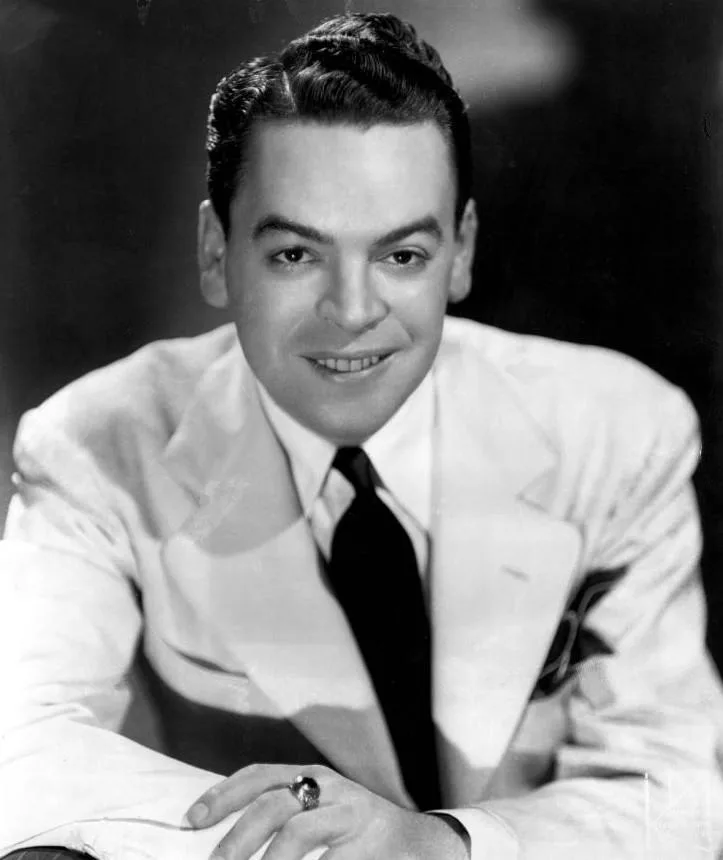
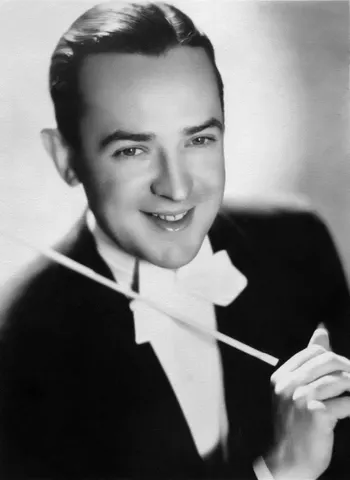
Les Brown in a 1947 publicity portrait by James Kriegsmann, issued through the Associated Booking Corporation (photo dated May 12, 1947) Public domain (published in the United States before 1978 without a copyright notice) — Wikimedia Commons - https://commons.wikimedia.org/wiki/File:Les_Brown_1947.JPG - photographer James Kriegsmann, Associated Booking Corporation (management)

Lester Raymond Brown was born on March 14, 1912, in Reinerton, Pennsylvania, into a baker's family. His father played trombone, and Brown took up the saxophone at seven. The family moved to nearby Lykens, where he left school after ninth grade to enroll in 1926 at the Conway Military Band School (later part of Ithaca College) under the bandleader Patrick Conway. A music scholarship then took him to the New York Military Academy, from which he graduated in 1932. At Duke University, from 1932 to 1936, he led a campus dance band, Les Brown and His Blue Devils, which played on campus and along the East Coast and made its first records for Decca in 1936. After a long summer tour that year, some members went back to school and others stayed on the road with him, and by 1938 the group was the Les Brown Orchestra.
Brown spent a year in New York arranging for Jimmy Dorsey, Isham Jones and Larry Clinton before an RCA executive arranged a booking at the Hotel Edison in Manhattan, provided he could assemble a band. With a loan from his father he put together a twelve-piece group, regular radio broadcasts spread its name, and RCA Victor signed it to its Bluebird label. The band became a fixture on the radio series Spotlight Band, which reached servicemen around the country, and an announcer's 1942 introduction of "Les Brown and His Band of Renown" stuck as its permanent name. A teenage Doris Day was his first big vocalist but left within a year to marry, and her successor Betty Bonney sang on "Joltin' Joe DiMaggio" (1941), the band's first chart hit, a novelty about the Yankee outfielder's hitting streak. Day returned in 1943.
The song that defined the band came next. Brown, Ben Homer and the lyricist Bud Green wrote "Sentimental Journey," and the band recorded it with Day for Columbia on November 20, 1944, after the musicians' recording strike of 1942 to 1944 ended. Issued as Columbia 36769 with "Twilight Time" on the other side, it reached number one on the Billboard chart in 1945 and, arriving as the war in Europe ended, became an unofficial homecoming theme for returning servicemen. In 1946 Brown recorded an instrumental of Irving Berlin's "I've Got My Love to Keep Me Warm," arranged by Skip Martin (Columbia 38324); it became a million-seller and a top-ten record in 1949. In the mid-1940s his soloists included Abe Most and Ted Nash, but they drifted off to other work once Brown stopped touring and settled in Los Angeles.
A Hollywood Bowl engagement in early 1947 led him to rebuild the band from Los Angeles freelancers, and the same engagement started his longest association, with Bob Hope. Brown's band worked with Hope on radio, stage and television for almost fifty years, including 18 USO tours that reached more than three million service members. He led the orchestra on Doris Day's CBS radio show in 1952 and 1953, and the band was the house band on The Steve Allen Show from 1959 to 1961 and The Dean Martin Show from 1965 to 1972. On records he moved from Columbia to Coral and then Capitol, and the Los Angeles jazz players he hired fed other groups: tenor saxophonist Dave Pell, a Brown sideman from 1947 to 1955, formed his well-known octet in 1953 from some of Brown's sidemen.
The late 1950s and early 1960s were his most jazz-facing period on record. Concert Modern and Composer's Holiday (both Capitol, 1958), Stereophonic Suite for Two Bands (Kapp, recorded February 23 and 24, 1959, with Vic Schoen's orchestra) and the Coral LP Jazz Song Book (1960), on which Zoot Sims, Buddy DeFranco, Frank Rosolino and Mel Lewis played, show a band that could handle swing-era standards at a high level. Columbia then issued a run of show-music albums, The Lerner and Loewe Bandbook (1961), Play the Gershwin Bandbook (1961), The Richard Rodgers Bandbook (1962) and The Explosive Sound of Les Brown (1963). AllMusic notes that he was one of the founding members of the Recording Academy in the late 1950s.
The band kept working into old age. Goes Direct to Disc (1977) was cut straight to the lacquer for the audiophile label The Great American Gramophone Company, a 1983 festival album was issued in Japan with Georgie Auld and Buddy DeFranco as guests, and Digital Swing (Fantasy, 1987), recorded on November 21 and December 8, 1986 to mark the band's 50th anniversary, had Mundell Lowe on guitar. Brown led the band until 2000 and passed away from lung cancer on January 4, 2001, at 88, in Pacific Palisades; he is buried at Westwood Village Memorial Park in Los Angeles. He was survived by his wife Evelyn, his son Les Brown Jr. (1940 to 2023), who took over the band, and his daughter Denise. His grandson Jeff "Swampy" Marsh co-created the animated series Phineas and Ferb. Brown was inducted into the North Carolina Music Hall of Fame in 2010, and his hometown renamed a street near his birthplace Les Brown Lane in 2012.
Brown's band is not simple to classify. English Wikipedia calls him an American jazz musician, and AllMusic lists his genres as jazz and vocal, with styles of big band, swing, sweet bands, band music and traditional pop. That last cluster is the honest summary: the Band of Renown was a polished dance band whose biggest sellers were vocal pop records with Doris Day, Betty Bonney and others, and whose steadiest work was on radio, television and USO stages for Bob Hope, Steve Allen and Dean Martin. AllMusic's Scott Yanow calls it a jazz-oriented dance band and also says it was not really a jazz band, but that it used enough jazz elements and enough strong soloists to be taken seriously by jazz players and by the jazz press of the 1940s.
The Blue Devils at Duke modeled their sound on the Casa Loma Orchestra, and from 1940 Brown made more room for his soloists. He seldom featured himself, though AllMusic calls him a good player. His arrangers, among them Skip Martin and Frank Comstock, favored crisp, precise ensemble writing, and several of the Los Angeles jazz players who passed through the band, such as Dave Pell, Ronnie Lang, Ray Sims and Don Fagerquist, went on to West Coast studios and small groups. Critically he is remembered as the leader of an unusually durable and respected swing band rather than as an innovator, which is how Yanow puts it too.
- "Sentimental Journey" (recorded 1944, Columbia 36769) - Doris Day's first number-one record, written by Brown and Ben Homer with lyrics by Bud Green, and the band's signature tune for the rest of its life.
- "I've Got My Love to Keep Me Warm" (1946, Columbia 38324) - Skip Martin's instrumental arrangement of the Irving Berlin song, a million-seller and top-ten hit in 1949.
- Concert at the Palladium (1953, Coral) - Palladium concert recordings issued in volumes on Coral; volumes 1 and 2 reached number 15 on the album chart. Apple Music - Palladium Concert 1953 Listen
- Concert Modern (1958, Capitol) - Five orchestral showpieces including Gershwin's Rhapsody in Blue and An American in Paris, a showcase for the whole band rather than for a vocalist.
- Stereophonic Suite for Two Bands (1959, Kapp) - Brown's band and Vic Schoen's all-star orchestra on a nine-piece suite, recorded on February 23 and 24, 1959.
- Jazz Song Book (1960, Coral) - Standards and swing-era instrumentals with Zoot Sims, Buddy DeFranco, Frank Rosolino, Mel Lewis, Ronnie Lang and Al Porcino in the lineup.
- The Lerner and Loewe Bandbook (1961, Columbia) - Brown's band on the music of Camelot, My Fair Lady, Gigi and Brigadoon, the first of a run of Columbia bandbook albums. Apple Music - The Lerner and Loewe Bandbook Listen
- Digital Swing (1987, Fantasy) - The 50th anniversary album, recorded digitally in late 1986 with Mundell Lowe on guitar and Butch Stone on baritone saxophone and bass clarinet. Apple Music - Digital Swing Listen
Les Brown: Full Discography
Discogs artist: Les Brown (403579) · The band is billed separately as Les Brown And His Band Of Renown (269852) and Les Brown And His Orchestra (341407) · Born March 14, 1912, Reinerton, Pennsylvania
Brown and his band made hundreds of singles and several dozen albums and compilations over more than sixty years, so this is a curated set of the most significant leader releases, not an exhaustive list. A cell that reads "Not confirmed" could not be verified against a release. Years are release years unless noted.
Leader: Studio and Concert Albums
| Album | Year | Label | Personnel & Notes | Charts | Listen | Buy |
|---|---|---|---|---|---|---|
| Sentimental Journey | 1947 | Not confirmed | Charted in 1947 according to Wikipedia's discography table; details not confirmed | No. 5 US albums | — | — |
| Dance Date with Les Brown | 1950 | Not confirmed | Charted in 1950 according to Wikipedia's discography table; details not confirmed | No. 4 US albums | — | — |
| Over the Rainbow | 1951 | Not confirmed | Charted in 1951 according to Wikipedia's discography table; details not confirmed | No. 10 US albums | — | — |
| Le's Dance | 1953 | Coral (CRL 56094) | Ten-inch LP, issued August 1953, with vocalist Lucy Ann Polk and the Rhythmaires | — | — | — |
| Concert at the Palladium | 1953 | Coral (CX-1) | Multi-volume set of Hollywood Palladium concert recordings; volumes 1 and 2 charted | No. 15 US albums (volumes 1 and 2) | Apple Music | — |
| The Cool Classics | 1955 | Columbia (CL 2561) | Ten-inch mono LP of six tracks | — | — | — |
| Dancers' Choice | 1957 | Capitol (T 812) | Twelve-track LP | — | — | — |
| Swing Song Book | 1957 | Coral (CRL 757300, stereo issue of 1959) | Twelve swing-era standards including "Take the 'A' Train," "King Porter Stomp" and "Moten Swing"; arrangements credited to Billy May, Jim Hill and Wes Hensel. The year follows Wikipedia; the stereo pressing is dated 1959 | — | — | — |
| Composer's Holiday | 1958 | Capitol (T 886) | Ten-track LP | — | — | — |
| Concert Modern | 1958 | Capitol (ST 959) | Five pieces: The Nutcracker Suite, Porgy and Bess Overture, Slaughter on Tenth Avenue, Rhapsody in Blue, An American in Paris. Trumpets Conrad Gozzo and Dick Collins, saxophonists Abe Aaron, Billy Usselton and Butch Stone, pianist Donn Trenner | — | — | — |
| Dance to South Pacific | 1958 | Capitol | Show-music dance album | — | Apple Music | — |
| Stereophonic Suite for Two Bands | 1959 | Kapp (KD-7003-S) | Recorded February 23 and 24, 1959, with Vic Schoen and His All Star Band; one rhythm section served both bands (Donn Trenner, Art Ryerson, Arnold Fishkin, Sol Gubin, Bobby Rosengarden) | — | — | — |
| The Les Brown Story: His Greatest Hits in Today's Sound | 1959 | Capitol (ST-1174) | Stereo album of the band's greatest hits, twelve tracks | — | Apple Music | — |
| Jazz Song Book | 1960 | Coral (CRL 757311) | Twelve tracks including "Apple Honey," "Willow Weep for Me" and "Chelsea Bridge." Zoot Sims (tenor), Buddy DeFranco (clarinet), Frank Rosolino (trombone), Al Porcino (trumpet), Ronny Lang (reeds), Mel Lewis, Jack Sperling and Bob Neel (drums), Donn Trenner (piano) | — | — | — |
| The Lerner and Loewe Bandbook | 1961 | Columbia (CS 8394) | Music from Camelot, My Fair Lady, Gigi and Brigadoon | — | Apple Music | — |
| Play the Gershwin Bandbook | 1961 | Columbia (CL 1679) | Gershwin songbook album | — | — | — |
| The Richard Rodgers Bandbook | 1962 | Columbia (CS 8714) | Twelve-track Rodgers songbook album | — | Apple Music | — |
| The Explosive Sound of Les Brown and His Band of Renown: Swingin' the Masters! | 1963 | Columbia (CS 8830) | Swing treatments of classical themes; Lyle Ritz and Emil Richards are credited on it in their own discographies | — | — | — |
| Goes Direct to Disc | 1977 | The Great American Gramophone Company (GADD-1010) | Cut direct to lacquer; nine tracks including "On Green Dolphin Street," "Satin Doll," "Sir Duke" and "Fly Me to the Moon." Rich Aronson (piano), Tim May (guitar), Bob Bertaux (bass), Jerry McKenzie (drums), produced by Glen Glancy | — | — | — |
| Aurex Jazz Festival '83 | 1983 | Eastworld, Japan (EWJ-80267) | Les Brown conducting, with Georgie Auld and Buddy DeFranco as special guests; Jack Sperling (drums), John Raczka (piano), Howard Fallman (reeds), Butch Stone (baritone saxophone and vocals) | — | — | — |
| Digital Swing | 1987 | Fantasy (FCD-9650-2) | 50th anniversary album, recorded November 21 and December 8, 1986. Mundell Lowe (guitar), Jack Sperling (drums), Butch Stone (baritone saxophone, bass clarinet), Eric Doney (piano), Matt Utal, Greg Huckins and Rusty Higgins (reeds); produced by Ralph Jungheim | — | Apple Music | — |
| Live at Elitch Gardens 1959 | 1994 | Status | Concert recorded in 1959 and issued on CD in 1994 | — | — | — |
| Session #55 | 2000 | Doc Hollywood (BG55DH1) | Includes "Mood Indigo," "Drop Me Off in Harlem," "String of Pearls" and "Bolero"; Jane Monheit sings two tracks, per her Wikipedia discography | — | — | — |
Compilations
| Album | Year | Label | Notes | Listen | Buy |
|---|---|---|---|---|---|
| Les Brown and His Great Vocalists | 1995 | Legacy / Columbia | Columbia-era vocal sides | — | — |
| The Complete Doris Day with Les Brown | 1998 | Collectors' Choice Music / Sony Music Special Products | Two-CD set of the Day recordings with the band | — | — |
| The Les Brown Songbook | 1998 | Varèse Sarabande | Compilation | — | — |
| Bandland / Revolution in Sound | 2000 | Collectables / Sony Music | Two early-1960s Columbia albums on one CD | — | — |
| Sweetest Sounds (with Rosemary Clooney) | 1983 | Artistic Records, UK (ART-003) | Archive recordings credited to Les Brown and His Orchestra and Rosemary Clooney | — | — |
Singles of note
| Year | Title | Notes |
|---|---|---|
| 1941 | "Joltin' Joe DiMaggio" | Vocal by Betty Bonney; the band's first chart hit |
| 1944 | "Sentimental Journey" / "Twilight Time" | Columbia 36769, recorded November 20, 1944; Doris Day vocal; number one in 1945 |
| 1946 | "I've Got My Love to Keep Me Warm" | Columbia 38324; instrumental arranged by Skip Martin; top-ten hit in 1949 |
Guest and sideman appearances (selected)
| Year | Project | Notes |
|---|---|---|
| 1983 | Sweetest Sounds with Rosemary Clooney | Les Brown and His Orchestra credited as the accompanying band |
| 2000 | Session #55 with Jane Monheit | Two tracks with the band, per her Wikipedia discography |
The full list is on Discogs.
- Doris Day - vocalist on "Sentimental Journey" and other Columbia hits; she first sang with the band as a teenager and returned in 1943, and Brown later led the orchestra on her CBS radio show in 1952 and 1953.
- Bob Hope - comedian whose radio, stage and television work Brown's band accompanied for almost fifty years, including 18 USO tours.
- Betty Bonney - vocalist on "Joltin' Joe DiMaggio" (1941), the band's first chart hit.
- Dave Pell - tenor saxophonist with Brown from 1947 to 1955 and leader of the Dave Pell Octet, which drew on the band's sidemen.
- Ronnie Lang, Ray Sims, Don Fagerquist, Billy Usselton, Jack Sperling - jazz-oriented sidemen: alto saxophonist Ronnie Lang (1949 to 1950 and 1953 to 1956), trombonist Ray Sims (1947 to 1957), trumpeter Don Fagerquist (1953), saxophonist Billy Usselton (from 1954, on nearly all the Coral and Capitol records) and drummer Jack Sperling.
- Abe Most, Ted Nash (1922 to 2011) - clarinet, alto saxophone and flute soloists of the mid-1940s; Nash's nephew, the saxophonist and composer Ted Nash (born 1960), has a profile on JazzProfiles.com.
- Butch Stone - baritone saxophonist and vocalist, credited on Brown's recordings from 1959 to 1987.
- Skip Martin, Frank Comstock - arrangers; Martin wrote the "I've Got My Love to Keep Me Warm" chart and Comstock arranged for the band from 1943 to 1955.
- Jimmy Rowles - pianist who worked with Brown among his Los Angeles big-band jobs of the 1940s, according to his profile.
- Buddy Rich - drummer who played with Brown at one point in his big-band career, per Wikipedia's biography of Rich.
- Stan Kenton - his band lost the Bob Hope radio job to Brown in the mid-1940s, according to Kenton's profile.
- Tony Bennett - according to Wikipedia, Bob Hope discovered him and his first public performance was with Brown's band.
- Rosemary Clooney - the 1983 UK release Sweetest Sounds credits her with Les Brown's orchestra.
- Jane Monheit - sings "Secret Love" and "Sentimental Journey" with the band on Session #55 (2000), per her Wikipedia discography.
- Frank Sinatra, Ella Fitzgerald, Nat King Cole - three of the major performers with whom Wikipedia says Brown and the band worked.
- Vic Schoen - arranger and bandleader on the two-band Stereophonic Suite (1959).
- Buddy DeFranco, Georgie Auld - clarinetist DeFranco on Jazz Song Book and, with tenor saxophonist Auld, a guest on the 1983 festival album.
More Big Band Artists
See all 304 Big Band artists →More American Jazz Artists
See all 876 American artists →- Wikipedia: Les Brown (bandleader)
- AllMusic: Les Brown, biography by Scott Yanow
- Wikipedia: Sentimental Journey (song)
- Wikipedia: I've Got My Love to Keep Me Warm
- Wikipedia: Dave Pell
- Wikipedia: Ronnie Lang
- Wikipedia: Ray Sims
- Wikipedia: Frank Comstock
- Wikipedia: Billy Usselton
- Wikipedia: Don Fagerquist
- Wikipedia: Abe Most
- Wikipedia: Jack Sperling
- Wikipedia: Jane Monheit
- Wikipedia: Ray Anthony
- Wikipedia: Ted Nash (saxophonist, born 1922)
- Discogs: Les Brown (artist 403579)
- Discogs: Les Brown And His Band Of Renown (artist 269852)
- Discogs: Les Brown And His Orchestra (artist 341407)
- MusicBrainz: Les Brown
- JazzProfiles.com: Jimmy Rowles
- JazzProfiles.com: Stan Kenton
- JazzProfiles.com: Ted Nash