 JAZZPROFILES lives in the music 2,555 Jazz Artists fully Profiled!
Don Ellis
Last updated November 9, 2026
Listen on Spotify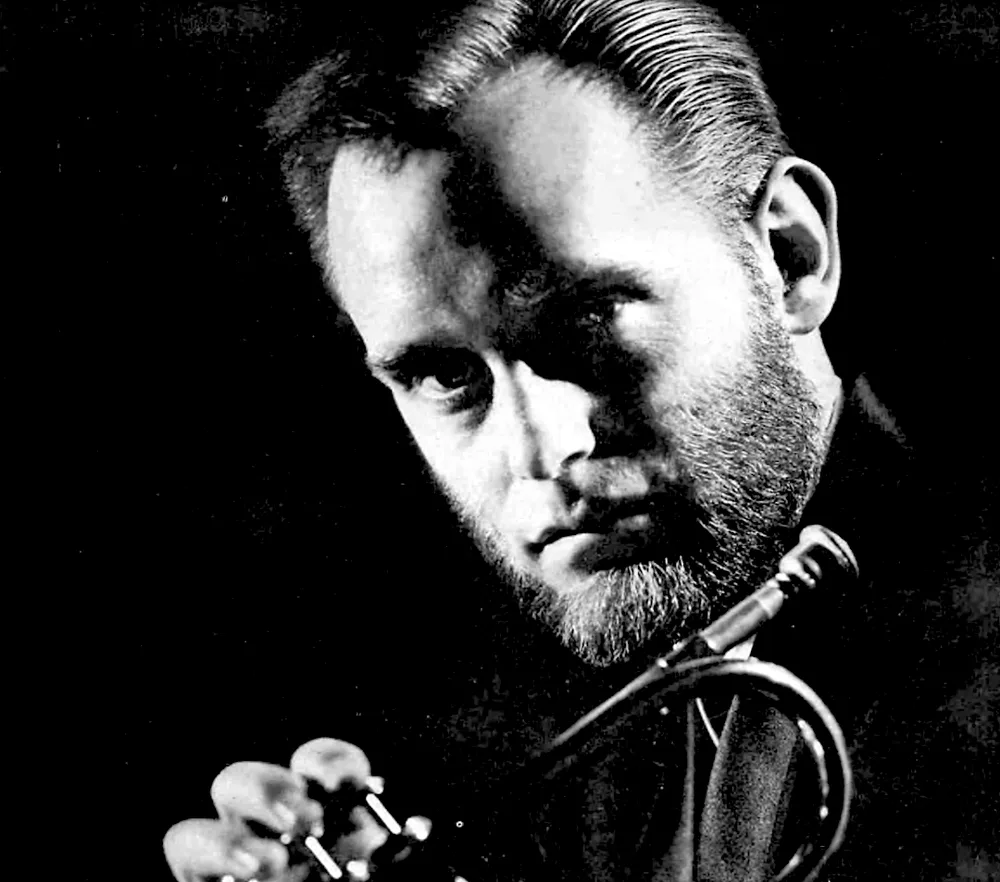
Don Ellis with his four-valve Holton trumpet, from a Holton advertisement in DownBeat magazine dated January 25, 1968 Public Domain (a 1968 magazine advertisement published in the United States without a copyright notice; tagged PD-US-no-notice-ad on Wikimedia Commons) — Wikimedia Commons - https://commons.wikimedia.org/wiki/File:Don_Ellis_Holton_trumpet.jpg

Donald Johnson Ellis was born on July 25, 1934, in Los Angeles, the son of a Methodist minister and a church organist. He went to West High School in Minneapolis, where a Tommy Dorsey big band concert first drew him toward jazz, with Louis Armstrong and Dizzy Gillespie as early inspirations, and he took a music composition degree at Boston University in 1956. His first professional job was with the Glenn Miller orchestra, then directed by Ray McKinley. He left it in September 1956 for the U.S. Army's Seventh Army Symphony Orchestra and Soldiers' Show Company, posted to Frankfurt, Germany, where he met the pianist Cedar Walton and the saxophonists Eddie Harris and Don Menza and wrote for a big band for the first time.
After two years he left the Army band and moved to Greenwich Village, where the work was mostly dance bands and local jobs. He toured briefly with Charlie Barnet and in spring 1959 joined Maynard Ferguson's band for nine months. From there he moved into New York's avant-garde. He recorded with Charles Mingus and spent two years in George Russell's sextet, which made Ezz-thetics (1961), with Eric Dolphy in the front line, and The Outer View (1962). Under his own name he led small-group dates between 1960 and 1962 with players including Jaki Byard, Paul Bley, Gary Peacock, Ron Carter, Charlie Persip and Steve Swallow, ending with Essence in mid-July 1962. On June 3, 1962 he took part in Edgar Summerlin's jazz liturgy Evensong at the First International Jazz Festival in Washington, D.C., with Dolphy, Slide Hampton, Carter and Persip in the ensemble. That October he went to Poland for the Warsaw Jazz Jamboree, where his quartet was partly recorded for a Polish release, and wrote up the trip for Down Beat as "Warsaw Diary" (January 3, 1963). He also played the NDR Jazz Workshop in Hamburg that December, spent early 1963 in Stockholm staging happenings, and on February 10, 1963 launched the Improvisational Workshop Orchestra at the Five Spot in New York, a band that let performers choose events from cards and interpret a painter's work.
In 1964 Ellis began graduate studies in ethnomusicology at UCLA, where the Indian musician Harihar Rao became his teacher. Together they wrote "An Introduction to Indian Music for the Jazz Musician" (1965), and Ellis set out to bring odd meters into Western improvisation. A Rockefeller grant to work at SUNY Buffalo for a year interrupted an early version of his big band, and while in New York he also took part in Third Stream projects: a February 8, 1964 Lincoln Center performance filmed for Leonard Bernstein's Young People's Concerts, and, with the New York Philharmonic, Larry Austin's "Improvisations for Orchestra and Jazz Soloists" and Gunther Schuller's "Journey Into Jazz." His first symphony, "Contrasts for Two Orchestras and Trumpet," was premiered by the Los Angeles Philharmonic under Zubin Mehta in November 1967. Back in California he formed the Hindustani Jazz Sextet with Rao on sitar and tabla and the vibraphonist Emil Richards, generally regarded as the first band of its kind in the United States. It performed "Synthesis," a piece by Ellis, with Stan Kenton's Neophonic Orchestra at the Los Angeles Music Center in February 1966 and opened for the Grateful Dead and Big Brother and the Holding Company at the Fillmore Auditorium on July 14 of that year.
Meanwhile a rehearsal band of his own played Monday nights, first at Club Havana and then at Bonesville in Hollywood, charging a small admission, and a letter-writing campaign won it a place at the 1966 Monterey Jazz Festival. Ellis had received a Holton trumpet with a fourth valve in September 1965 that let him play quarter tones, and the orchestra pushed far past the usual meters, writing in 5/4, 7/8 and 9/4 and then in 19/8 and 27/16. On September 18, 1966 it drew a standing ovation after its first piece, "33 222 1 222," a figure in 19, and went on to play pieces in 7, 9 and 27. Pacific Jazz issued the festival recording in 1967 as 'Live' at Monterey!, followed by Live in 3 2/3/4 Time from the Pacific Jazz Festival (October 1966) and Shelly's Manne-Hole (March 1967).
Producer John Hammond signed the band to Columbia, and Electric Bath was recorded in September 1967. Released in 1968, it was a Grammy nominee and won the Down Beat readers poll for album of the year; "Open Beauty" featured Ellis's trumpet run through an Echoplex. Shock Treatment was recorded in February 1968, followed by Autumn (1968), which carries the twenty-minute "Variations for Trumpet" and "Pussy Wiggle Stomp," and The New Don Ellis Band Goes Underground (1969), with the singer Patti Allen and pop and rock arrangements. Three nights at Bill Graham's Fillmore West in June 1970 became the double LP Don Ellis at Fillmore. In May 1971 Ellis added a string quartet and hired the Bulgarian pianist Milcho Leviev, who stayed five years; the band was recorded that month at Basin Street West in San Francisco for the double album Tears of Joy, which includes "Strawberry Soup," a piece that has been the subject of doctoral dissertations. William Friedkin asked him to score The French Connection (1971), which Ellis wrote for his own orchestra, and his arrangement of its theme won the Grammy for Best Instrumental Arrangement at the 15th annual awards in 1973. He later scored Kansas City Bomber (1972), The Seven-Ups (1973) and French Connection II (1975), and the 1969 film Moon Zero Two carries a score credited to Ellis and Philip Martell. His last Columbia album, Connection (August 1972), set pop songs by Carole King, Yes, Andrew Lloyd Webber and the Carpenters, often in odd meters, beside the film theme and Hank Levy's "Chain Reaction."
In 1973 Ellis recorded Soaring with the orchestra for MPS, with Levy's "Whiplash" and Leviev's "Sladka Pitka," and then Haiku, ten pieces based on Japanese haiku with a core quintet that included Ray Brown and the drummer John Guerin, backed by a string orchestra. In 1974 Ellis toured with the Organic Band, a leaner group with no electronics apart from amplification and a vocal quartet, and began studying Brazilian music. Heart trouble then stopped him: after a series of diagnoses that ended in cardiomyopathy, he went into ventricular fibrillation in May 1975 and survived. He was working again by 1976, and on December 3 the orchestra appeared on a Shirley MacLaine television special, playing his arrangement of "Sweet Georgia Brown" with a solo by Art Pepper. Signed to Atlantic in 1977, he recorded two Star Wars themes for a single and the album Music from Other Galaxies and Planets in a rush, then took the orchestra to the Montreux Jazz Festival, which produced Live at Montreux (1978), his last album as a leader. His last known public performance was on April 21, 1978, at the Westside Room in Century City, after which his doctor told him to stop touring and playing trumpet. On December 17, 1978, after attending a concert by Jon Hendricks, Ellis suffered a fatal heart attack at his North Hollywood home. He was 44 and is buried at Forest Lawn Memorial Park in the Hollywood Hills. He also wrote two books, The New Rhythm Book (1972) and Quarter Tones (1975), and his papers, instruments and Grammy are held in the Don Ellis Collection at the UCLA Ethnomusicology Archive.
Ellis's music joined three things that rarely shared a stage: the rhythmic cycles he studied with Harihar Rao, which he turned into big-band writing in meters such as 7/8, 19/8 and 27/16 and later in Bulgarian and Greek folk rhythms; the avant-garde and Third Stream ideas of his New York years, including the quarter-tone trumpet and experiments with chance and happenings; and, from 1967, electronics and rock. His orchestra was built to match: two drum sets, three double basses, extra percussion, piano and organ at first, then a single electric bass, a string quartet from 1971 amplified with Barcus-Berry pickups, an Echoplex and a ring modulator built for him by Tom Oberheim. In his last years he added the superbone and the firebird, valve instruments that combine trombone and trumpet qualities. His trumpet playing was technically formidable: The Guardian's John Fordham described a sound that joined technical command with classical clarity and old-school brass bravado, even on the strings-backed Haiku. Critical reception has been warm toward the early small-group dates (Down Beat's Pete Welding gave New Ideas five stars in 1962) and toward Electric Bath, Autumn and Tears of Joy, more mixed toward the pop-oriented Connection and The New Don Ellis Band Goes Underground, and sharply negative toward the hurriedly assembled Music from Other Galaxies and Planets. His influence ran through his sidemen and through school bands: Tom Scott, John Klemmer, the trombonist Glenn Ferris and Milcho Leviev went on to careers of their own, while his published charts were taken up by high school and college big bands, Hank Levy's "Whiplash," first recorded by the orchestra, later gave a 2014 film its title, and his books The New Rhythm Book and Quarter Tones set out methods for practising unusual meters and quarter-tone playing.
- New Ideas (1961, New Jazz) - Quartet date with Jaki Byard, Ron Carter, Charlie Persip and the vibraphonist Al Francis, built on shifting time, new chord structures and free improvisation; it won a five-star Down Beat review.
- Essence (1962, Pacific Jazz) - The last of his early small-group dates, recorded in July 1962 with Paul Bley and Gary Peacock; it mixes his own pieces with Carla Bley's "Donkey" and Billy Strayhorn's "Johnny Come Lately."
- 'Live' at Monterey! (1967, Pacific Jazz) - The orchestra's breakthrough at the 1966 Monterey Jazz Festival, with "33 222 1 222," "New Nine" and Hank Levy's "Passacaglia and Fugue."
- Electric Bath (1968, Columbia) - His first studio album with the big band, produced by John Hammond and including "Indian Lady" and the Echoplex solo on "Open Beauty"; a Grammy nominee and Down Beat readers poll winner.
- Autumn (1968, Columbia) - Holds "Variations for Trumpet," a showcase for his playing, and "Pussy Wiggle Stomp," along with live tracks from a Stanford concert in August 1968.
- Tears of Joy (1971, Columbia) - Live double album from Basin Street West with the new string quartet and Milcho Leviev, and the long "Strawberry Soup."
- Connection (1972, Columbia) - Contains the Grammy-winning arrangement of the theme from The French Connection, plus pop covers recast in odd meters and Hank Levy's "Chain Reaction."
- Haiku (1973, MPS) - A quiet change of scene: ten short pieces based on haiku, played by a core quintet with a string orchestra and Ray Brown on bass.
Don Ellis: Full Discography
Discogs artist ID 315552 ("Don Ellis," real name Donald Johnson Ellis, born July 25, 1934, in Los Angeles, died December 17, 1978) was read in full on Discogs, together with the separate entries Discogs keeps for his groups: The Don Ellis Orchestra (artist ID 323251), The New Don Ellis Band (1120455), Don Ellis and Survival (913046), Don Ellis Big Band (3567036), Don Ellis Octet (3792637) and the Quartet and Trio entries (6889203 and 6889205). Several other Discogs entries are numbered Don Ellis (2) through (15); they are different people and none of their credits are included here. The leader table below lists his original albums, his film-score releases and a selection of archive releases that appeared after his death; compilations and reissue packages are not itemized, and the Spotify and Buy columns are left as placeholders. Catalog numbers are the first US pressing where one is listed, with the German or other pressing noted where the US number was not found. Recording dates marked "not confirmed" were not found in a source that could be checked.
As Leader / Co-Leader
| Album Title | Recording Date(s) | Release Date | Label | Catalog Number | Format(s) | Personnel | Role | Reissue History | Spotify | Buy | Notes |
|---|---|---|---|---|---|---|---|---|---|---|---|
| ...How Time Passes... | 1960 (exact dates not confirmed) | 1961 | Candid | CJM 8004 (mono), CJS 9004 (stereo) | LP, album | Don Ellis (trumpet), Jaki Byard (piano, alto saxophone), Ron Carter (bass), Charlie Persip (drums) | Leader | Reissued on LP by Barnaby (BR-5020, 1978); paired with New Ideas on one CD by Fresh Sound in 2015 | — | — | His debut as a leader. |
| New Ideas | 1961 (exact dates not confirmed) | 1961 | New Jazz | NJLP 8257 | LP, album, mono | Don Ellis (trumpet; piano on one track), Al Francis (vibraphone), Jaki Byard (piano), Ron Carter (bass), Charlie Persip (drums) | Leader | Reissued by Prestige (PRST 7607, 1969); paired with How Time Passes on Fresh Sound in 2015 | — | — | Rated five stars in Down Beat by Pete Welding (February 15, 1962). |
| Out of Nowhere | 1961 (exact dates not confirmed) | 1988 | Candid | CS 9032 (Germany), GJS 9032 (Italy) | LP, album, stereo | Don Ellis (trumpet), Paul Bley (piano), Steve Swallow (bass) | Leader | Issued on CD by Candid (CCD 79032) in 1989 | — | — | Standards session recorded in 1961 and left unreleased until 1988. |
| Essence | Mid-July 1962 | 1962 | Pacific Jazz | PJ-55 | LP, album, mono and stereo | Don Ellis (trumpet), Paul Bley (piano), Gary Peacock (bass), Nick Martinis and Gene Stone (drums) | Leader | Reissued on CD by Mighty Quinn (MQP1101, 2005) and Fresh Sound (FSR 1662, 2013) | — | — | Reviewed in Down Beat on January 3, 1963. |
| Jazz Jamboree 1962 Vol. 1 | October 1962, Warsaw | 1963 | Polskie Nagrania Muza | L 0394 | LP, 10-inch | Don Ellis (trumpet), Wojciech Karolak (piano), Roman Dyląg (bass), Andrzej Dąbrowski (drums) | Leader | Reissued on CD by Polskie Radio (PRCD 1590, 2013) | — | — | Issued in Poland from Ellis's quartet set at the Warsaw Jazz Jamboree. |
| 'Live' at Monterey! | September 18, 1966, Monterey Jazz Festival; "Concerto for Trumpet" October 8, 1966, Pacific Jazz Festival, Costa Mesa | 1967 | Pacific Jazz | PJ-10112 (mono), ST-20112 (stereo) | LP, album | Don Ellis (trumpet, arranger); Alan Weight, Ed Warren, Glenn Stuart, Paul Lopez (trumpets); Dave Wells, Ron Meyers (trombones); Terry Woodson (bass trombone); Ruben Leon, Tom Scott, Ira Shulman, Ron Starr, John Magruder (reeds); David MacKay (organ, piano); Frank DeLaRosa, Chuck Domanico, Ray Neapolitan (bass); Alan Estes, Steve Bohannon (drums); Chino Valdes (congas, bongos); Hank Levy (arranger, one track) | Leader (Don Ellis Orchestra) | Expanded CD reissue in 1998 | — | — | The orchestra's festival breakthrough; includes "33 222 1 222" and Levy's "Passacaglia and Fugue." |
| Live in 3 2/3/4 Time | October 8, 1966, Pacific Jazz Festival, Costa Mesa; March 27, 1967, Shelly's Manne-Hole, Los Angeles | 1967 | Pacific Jazz | PJ-10123 (mono), ST-20123 (stereo) | LP, album | Don Ellis (trumpet, arranger); Alan Weight, Ed Warren, Glenn Stuart, Bob Harmon (trumpets); Ron Myers, Dave Wells, Dave Sanchez (trombones); Terry Woodson (bass trombone); Ruben Leon, Tom Scott (1966 tracks), Joe Roccisano (1967 tracks), Ira Shulman, Ron Starr, John Magruder (reeds); David MacKay (piano); Frank DeLaRosa, Chuck Domanico, Ray Neapolitan, Dave Parlato (bass); Alan Estes, Steve Bohannon (drums); Chino Valdes (congas, bongos) | Leader (Don Ellis Orchestra) | CD reissue with additional pieces | — | — | Title taken from "Upstart," in 11/8 with a 3+3+3+2 feel. |
| Electric Bath | September 1967 | 1968 | Columbia | CS 9585 | LP, album, stereo | Don Ellis (trumpet, arranger); Alan Weight, Ed Warren, Glenn Stuart, Bob Harmon (trumpets); Ron Myers, Dave Sanchez (trombones); Terry Woodson (bass trombone); Ruben Leon, Joe Roccisano, Ira Shulman, Ron Starr, John Magruder (reeds); Mike Lang (piano, electric piano, clavinet); Frank DeLaRosa, Dave Parlato, Ray Neapolitan (bass; Neapolitan also sitar); Alan Estes (vibraphone, percussion); Steve Bohannon (drums); Chino Valdes (bongos, congas); Mark Stevens (timbales, percussion, vibraphone) | Leader (Don Ellis Orchestra) | Reissued on CD by Columbia in 1997 | — | — | Produced by John Hammond; Grammy nominee and Down Beat readers poll album of the year in 1968; some pressings are dated 1967 on Discogs. |
| Shock Treatment | February 1968 | 1968 | Columbia | CS 9668 | LP, album, stereo | Don Ellis (trumpet, arranger); Alan Weight, Ed Warren, Glenn Stuart, Bob Harmon (trumpets); Vince Diaz, Ron Myers, Dave Sanchez (trombones); Terry Woodson (bass trombone); Ruben Leon, Joe Lopez, Joe Roccisano, Ira Shulman, Ron Starr, John Magruder (reeds); Mike Lang (piano, electric piano, clavinet); Frank DeLaRosa, Dave Parlato, Ray Neapolitan (bass); Steve Bohannon (drums); Carlos "Patato" Valdes, Chino Valdes (congas); Alan Estes, Mark Stevens, Ralph Humphrey (percussion) | Leader (Don Ellis Orchestra) | Paired with Autumn on one CD by BGO in 2018 | — | — | Ellis objected that the first issue used rejected takes and wrong edits, and the album was later corrected. |
| Autumn | Late 1968; live tracks recorded at Stanford University, August 1968 | 1968 | Columbia | CS 9721 | LP, album, stereo | Don Ellis (trumpet, arranger); Glenn Stuart, Stu Blumberg, John Rosenberg, Bob Harmon (trumpets); Ernie Carlson, Glenn Ferris (trombones); Don Switzer, Terry Woodson (bass trombones); Doug Bixby, Roger Bobo (tuba); Ira Shulman, Frank Strozier, Ron Starr (alto saxophone and reeds); Sam Falzone, John Klemmer (tenor saxophone); John Magruder (baritone saxophone); Pete Robinson, Mike Lang (keyboards); Ray Neapolitan, Dave Parlato (bass); Ralph Humphrey, Gene Strimling (drums); Lee Pastora (congas); Mark Stevens (vibraphone, percussion) | Leader (Don Ellis Orchestra) | Paired with Shock Treatment on one CD by BGO in 2018 | — | — | Includes "Variations for Trumpet" and "Pussy Wiggle Stomp." |
| The New Don Ellis Band Goes Underground | Early 1969 | 1969 | Columbia | CS 9889 | LP, album | Don Ellis (trumpet, flugelhorn, arranger), Patti Allen (vocals), John Klemmer and Hadley Caliman (tenor saxophone, flute), Mike Altschul, Fred Selden, Lonnie Shetter, Sam Falzone (reeds), Doug Bixby (tuba), Stuart Blumberg, John Rosenberg, Glenn Stuart, Jack Coan (trumpets), Jock Ellis, Glenn Ferris (trombones), Dana Hughes (bass trombone), Jay Graydon (guitar), Peter Robinson (piano, electric piano), Jo Julian, Carol Kaye (bass), Ralph Humphrey, Rick Quintinal (drums), Lee Pastora (percussion) | Leader (billed as The New Don Ellis Band featuring Patti Allen) | Paired with Don Ellis at Fillmore on one CD by BGO in 2014 | — | — | Pop and soul arrangements plus "Bulgarian Bulge," in 33/16. |
| Don Ellis at Fillmore | June 1970, Fillmore West, San Francisco | 1970 | Columbia | G 30243 | 2xLP, album | Don Ellis (trumpet, drums), John Klemmer (tenor saxophone), Jay Graydon (guitar), John Rosenberg, Stuart Blumberg, Glenn Stuart, Jack Coan (trumpets), Ernie Carlson, Glenn Ferris (trombones), Don Switzer (bass trombone), Lonnie Shetter, Fred Selden, Jon Clarke, Sam Falzone (woodwinds), Doug Bixby (contrabass trombone, tuba), Tom Garvin (piano), Dennis F. Parker (bass), Ralph Humphrey, Ron Dunn (drums), Lee Pastora (congas) | Leader (Don Ellis Orchestra) | Paired with The New Don Ellis Band Goes Underground on one CD by BGO in 2014 | — | — | Includes a Beatles cover, "Hey Jude," and a second version of "Pussy Wiggle Stomp." |
| Tears of Joy | Late May 1971, Basin Street West, San Francisco | 1971 | Columbia | G 30927 | 2xLP, album | Don Ellis (trumpet, flugelhorn, drums, arranger), Lonnie Shetter, Fred Selden, Sam Falzone, Jon Clarke (reeds), Paul Bogosian, Jack Caudill, Bruce Mackay (trumpets), Kenneth Nelson (French horn), Jim Sawyers (trombone), Ken Sawhill (bass trombone), Doug Bixby (contrabass trombone, tuba), Milcho Leviev (piano, pianet, clavinet), Dennis F. Parker (bass), Ralph Humphrey, Ron Dunn (drums), Lee Pastora (congas), Earle Corry, Alfredo Ebat (violin), Ellen Smith (viola), Christine Ermacoff (cello), Hank Levy (arranger) | Leader (Don Ellis Orchestra) | Paired with Connection on one CD by BGO in 2017 | — | — | First recording with the amplified string quartet; includes "Strawberry Soup." |
| New Rhythms | Not confirmed | 1972 | EME Records | ES-1 | LP | Don Ellis (composer, arranger) | Leader | None listed | — | — | Play-along record that accompanies his book The New Rhythm Book; thirteen play-along tracks in meters from 5/4 to 33/8. |
| Connection | August 1972 | 1972 | Columbia | KC 31766 | LP, album | Don Ellis (trumpet, flugelhorn, arranger), Fred Selden, Vince Denham, Sam Falzone, Gary Herbig (reeds), Paul Bogosian, Bruce Mackay, Gil Rathel, Glenn Stuart (trumpets), Sidney Muldrow (French horn), Glenn Ferris (trombone), Ken Sawhill (bass trombone), Doug Bixby (tuba), Jay Graydon (guitar), Milcho Leviev (keyboards), Dave McDaniel (bass), Ralph Humphrey, Ron Dunn (drums), Lee Pastora (congas), Earle Corry, Joel Quivey (electric violin), Renita Koven (electric viola), Pat Kudzia (electric cello), Hank Levy (arranger) | Leader (Don Ellis Orchestra) | Reissued on CD by Wounded Bird (WOU 1766, 2005); paired with Tears of Joy by BGO in 2017 | — | — | Last Columbia album; includes the Grammy-winning arrangement of the theme from The French Connection. |
| Soaring | 1973 (exact dates not confirmed) | 1973 | MPS | MB 25123 (US), 21 25123-3 (Germany) | LP, album | Don Ellis (trumpet, flugelhorn, drums, arranger), Fred Selden, Vince Denham, Sam Falzone, Gary Herbig (reeds), Jack Caudill, Bruce Mackay, Gil Rathel (trumpets), Sidney Muldrow (French horn), Mike Jamieson (trombone), Ken Sawhill (bass trombone), Doug Bixby (tuba), Jay Graydon (guitar), Milcho Leviev (piano, electric piano, organ, clavinet), Dave McDaniel (bass), Ralph Humphrey, Ron Dunn (drums), Lee Pastora (congas), Earle Corry, Joel Quivey (electric violin), Renita Koven (electric viola), Pat Kudzia (electric cello) | Leader (Don Ellis Orchestra) | Later CD reissues | — | — | First recording of Hank Levy's "Whiplash." |
| Haiku | 1973 (exact dates not confirmed) | 1973 (US), 1974 (Germany) | MPS | MC 25341 and MB-25341 (US), 21 21961-5 (Germany) | LP, album | Don Ellis (trumpet, arranger), Milcho Leviev (keyboards), Larry Carlton (guitar, tracks 2 and 7), David Cohen (guitar, tracks 1, 3, 6, 8), Tommy Tedesco (guitar, tracks 4, 9, 10), Ray Brown (bass), John Guerin (drums), with a string orchestra | Leader | Issued on CD by MPS in 2010 | — | — | Ten pieces based on Japanese haiku. |
| Music from Other Galaxies and Planets | June 1977 | 1977 | Atlantic | SD 18227 | LP, album | Don Ellis (trumpet, firebird trumpet, flugelhorn, superbone, arranger), Ann Patterson, Ted Nash, James Coile, Jim Snodgrass (reeds), Glenn Stuart, Gil Rathel, Jack Coan (trumpets), Sidney Muldrew (French horn), Alan Kaplan (trombone), Richard Bullock (bass trombone), Jim Self (tuba), Randy Kerber (keyboards), Darrel Clayborn (bass), Dave Crigger, Mike Englander (drums), Chino Valdes, Ruth Richie (percussion), Pam Tompkins, Laurie Badessa (violin), Jimbo Ross (viola), Paula Hochhalter (cello) | Leader (billed as Don Ellis and Survival) | Reissued on CD in 2006 | — | — | Includes arrangements of two Star Wars themes; recorded in about a week. |
| Live at Montreux | 1977, Montreux Jazz Festival (exact date not confirmed) | 1978 | Atlantic | SD 19178 | LP, album, stereo | Don Ellis (quarter-tone trumpet, firebird trumpet, flugelhorn, superbone, arranger), Ann Patterson, Ted Nash, James Coile, Jim Snodgrass (reeds), Glenn Stuart, Gil Rathel, Jack Coan (trumpets), Sidney Muldrew (French horn), Alan Kaplan (trombone), Richard Bullock (bass trombone), Jim Self (tuba), Randy Kerber (keyboards), Darrel Clayborn (double bass), Leon Gaer (electric bass), Dave Crigger, Mike Englander (drums), Ruth Richie, Chino Valdes (percussion), Pam Tompkins, Lori Badessa (violin), Jimbo Ross (viola), Paula Hochhalter (cello) | Leader (Don Ellis Orchestra) | Reissued on CD with three added pieces | — | — | His last album as a leader. |
| The French Connection (Original Motion Picture Soundtrack) | Not confirmed | May 2001 | Film Score Monthly | FSM Vol. 4 No. 6 | CD, limited edition | Don Ellis (composer, conductor); full personnel not itemized | Composer, conductor | Also collected in a film-music set by La-La Land Records (LLLCD 1408, 2016) | — | — | Pairs the score for the 1971 film with the score for French Connection II (1975). |
| The Seven-Ups / The Verdict | Not confirmed | July 2007 | Intrada | Special Collection Volume 47 | CD, limited edition | Don Ellis (composer, conductor, The Seven-Ups); Johnny Mandel (The Verdict) | Composer, conductor (shared album) | None listed | — | — | Score for the 1973 film, shared with a score by Johnny Mandel. |
| Pieces of Eight, Live at UCLA | Not confirmed | 2006 | Wounded Bird Records | WOU 6000 | CD, reissue | Don Ellis (trumpet, composer, arranger) leading the Don Ellis Octet; full personnel not confirmed | Leader | Reissue of an earlier release; details not confirmed | — | — | Octet material; recording date not confirmed. |
| Live in India | Not confirmed | 2010 | Sleepy Night Records | SNR003CD | CD, album | Don Ellis (trumpet, composer); full personnel not confirmed | Leader | None listed | — | — | Archive release. |
| The Hindustani Sextet (Live at UCLA) | Not confirmed | July 2022 | Sleepy Night Records | No catalog number listed | CD, limited and numbered edition | Don Ellis (trumpet) leading the Hindustani Jazz Sextet; full personnel not confirmed | Leader | None listed | — | — | Archive release. |
| Live in Europe 1968 | 1968 (exact dates not confirmed) | 2022 | Sleepy Night Records | No catalog number listed | CD | Don Ellis (trumpet) leading the Don Ellis Big Band; full personnel not confirmed | Leader | None listed | — | — | Archive release. |
| Basin Street 1970 | 1970 (exact date not confirmed) | 2023 | Sleepy Night Records | SNRCD029 | CDr, album | Don Ellis (trumpet) leading the Don Ellis Orchestra; full personnel not confirmed | Leader | None listed | — | — | Archive release. |
As Sideman (selected major credits)
A representative set of the recordings on which Ellis played as a sideman or guest soloist, mostly from 1959 to 1967; he also appears on a few later albums by other artists that are not itemized here.
| Year | Project (Leader) | Title | Label | Catalog | Role | Notes |
|---|---|---|---|---|---|---|
| 1959 | Maynard Ferguson | Maynard Ferguson Plays Jazz for Dancing | Roulette | R 52038 (mono), SR 52038 (stereo) | Trumpet | Sits in the trumpet section; the album collects tracks recorded in early 1959. |
| 1959 | Maynard Ferguson | A Message from Birdland | Roulette | R 52027 (mono), SR 52027 (stereo) | Trumpet | Credited as trumpeter; no track restriction listed. |
| 1960 | Maynard Ferguson | Newport Suite | Roulette | R 52047 (mono), SR 52047 (stereo) | Trumpet | Credited as trumpeter; no track restriction listed. |
| 1960 | Charles Mingus | Mingus Dynasty | Columbia | CL 1440 | Trumpet (tracks 1, 5, 8, 9) | Recorded in 1959 and released in May 1960. |
| 1961 | George Russell | George Russell Sextet in K.C. | Decca | DL 4183 (mono), DL 74183 (stereo) | Trumpet | Recorded February 23, 1961, in New York. |
| 1961 | George Russell | Ezz-thetics | Riverside | RLP 375 (mono), RLP 9375 (stereo) | Trumpet | Recorded May 1961; the sextet includes Eric Dolphy and Steve Swallow. |
| 1962 | George Russell | The Stratus Seekers | Riverside | RLP 412 (mono), RLP 9412 (stereo) | Trumpet | Recorded January 31, 1962, with Steve Swallow. |
| 1962 | George Russell | The Outer View | Riverside | RM 440 (mono), RS 9440 (stereo) | Trumpet | Recorded August 27, 1962; the recording debut of vocalist Sheila Jordan on one track. |
| 1965 | Leonard Bernstein and the New York Philharmonic | Leonard Bernstein Conducts Music of Our Time | Columbia Masterworks | MS 6733 (stereo), ML 6133 (mono) | Trumpet (jazz soloist) | Plays in Larry Austin's "Improvisations for Orchestra and Jazz Soloists." |
| 1967 | The Mothers of Invention (Frank Zappa) | Absolutely Free | Verve | V6-5013 | Trumpet (one track) | Plays on "Brown Shoes Don't Make It." |
- Maynard Ferguson - bandleader in whose trumpet section Ellis played in 1959 and 1960, including the albums Maynard Ferguson Plays Jazz for Dancing and Newport Suite.
- Charles Mingus - played trumpet on four tracks of Mingus Dynasty (recorded 1959).
- George Russell - leader of the sextet and septet in which Ellis played on George Russell Sextet in K.C. (1961), Ezz-thetics (1961), The Stratus Seekers (1962) and The Outer View (1962).
- Eric Dolphy - fellow member of the Russell sextet on Ezz-thetics and in the Evensong ensemble of 1962.
- Paul Bley and Gary Peacock - the piano and bass of Essence (1962); Bley and Steve Swallow are also the pianist and bassist of the trio session issued as Out of Nowhere.
- Jaki Byard and Ron Carter - pianist and bassist on How Time Passes and New Ideas, with drummer Charlie Persip.
- Harihar Rao - Indian musician and Ellis's teacher at UCLA, co-author of a 1965 article on Indian music for jazz players, and sitarist and tabla player in the Hindustani Jazz Sextet.
- Hank Levy - arranger and composer whose "Passacaglia and Fugue," "Alone," "Samba Bajada," "Chain Reaction" and "Whiplash" the orchestra recorded.
- Milcho Leviev - Bulgarian pianist in the orchestra from 1971 for five years, a key improviser in odd meters.
- Tom Scott and John Klemmer - saxophonists in the band, Scott on the Monterey recording of 1966 and Klemmer on Autumn, The New Don Ellis Band Goes Underground and Don Ellis at Fillmore.
- Roger Kellaway - pianist who played in the orchestra after moving to Los Angeles in 1966, according to his own profile.
- Ted Nash - Los Angeles saxophonist who, according to his own profile, was already sitting in with Ellis at seventeen.
- Glenn Ferris, Jay Graydon, Ralph Humphrey, Fred Selden, Ray Neapolitan, Steve Bohannon - trombonist, guitarist, drummer, reed player, bassist and drummer whose names recur across the Columbia records.
- Frank Zappa - Ellis played trumpet on "Brown Shoes Don't Make It" on the Mothers of Invention's Absolutely Free (1967).
- Stan Kenton - his Neophonic Orchestra performed Ellis's "Synthesis" in February 1966.
- Ray Brown - bassist on Haiku (1973).
- Art Pepper - soloist with the orchestra on a December 1976 television special.
- Patti Allen - vocalist on The New Don Ellis Band Goes Underground (1969) and co-writer of "Black Baby."
- Cedar Walton and Eddie Harris - Army band colleagues in Frankfurt in the 1950s.
More Big Band Artists
See all 304 Big Band artists →More American Jazz Artists
See all 876 American artists →- Wikipedia: Don Ellis
- Wikipedia: Electric Bath
- Wikipedia: Don Ellis Orchestra 'Live' at Monterey!
- Wikipedia: Tears of Joy (Don Ellis album)
- Wikipedia: Connection (Don Ellis album)
- Wikipedia: Haiku (Don Ellis album)
- Wikipedia: Essence (Don Ellis album)
- Wikipedia: 15th Annual Grammy Awards
- Wikipedia: Moon Zero Two
- Wikipedia: Absolutely Free
- Don Ellis Music: The Don Ellis Memorial Library
- Discogs: Don Ellis (artist 315552)
- MusicBrainz: Don Ellis
- JazzProfiles.com: Roger Kellaway
- JazzProfiles.com: Ted Nash