 JAZZPROFILES lives in the music 2,303 Jazz Artists fully Profiled!
John Klemmer
Last updated November 7, 2026
Listen on Spotify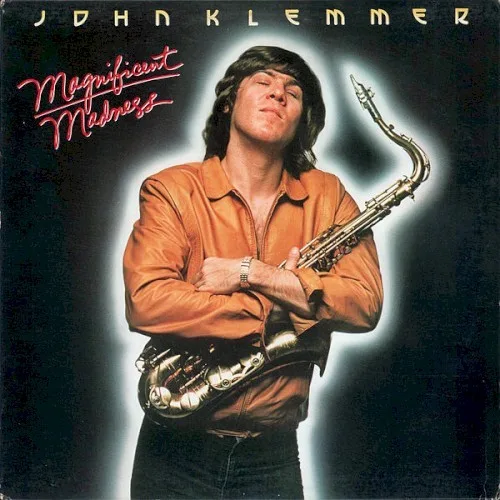
John Klemmer with a tenor saxophone, from the front cover of his album Magnificent Madness (Elektra, 1980) Album cover art (not a CC-licensed artist photo), used as the only available image showing the artist — Cover Art Archive, front cover of the US Elektra 6E-284 pressing of Magnificent Madness (https://coverartarchive.org/release/f2109517-f6d6-4db8-8834-815f66bce236/front)
John Theodore Klemmer was born in Chicago on July 3, 1946. He started on guitar at five, took up alto saxophone at eleven and had moved to tenor by high school, while also studying visual art at the Art Institute of Chicago and attending the National Music Camp at Interlochen. His saxophone and improvisation teacher was the Chicago saxophonist Joe Daley. Early on he played in commercial groups and toured with big bands, and Wikipedia names the road bands of Les Elgart and Woody Herman among them.
Chess Records signed him as he left high school, brought in by the producer Esmond Edwards, and his first record, Involvement (Cadet, 1967), is billed to the John Klemmer Quartets and was produced by Edwards, with Wilbur Campbell on drums, Melvin Jackson on bass, and Sam Thomas on guitar or Jodie Christian on piano depending on the track. Four more albums followed on Cadet and its Cadet Concept imprint: And We Were Lovers (1968), which put standards with strings and brass on one side and straight-ahead originals on the other; Blowin' Gold (1969), co-produced by Marshall Chess and often cited as one of the first jazz-rock fusion albums; and All the Children Cried and Eruptions (both 1970). On Blowin' Gold he began using the Echoplex tape-delay unit, the echo effect that became his trademark. The Chicago players around him in these years included the bassist Cleveland Eaton.
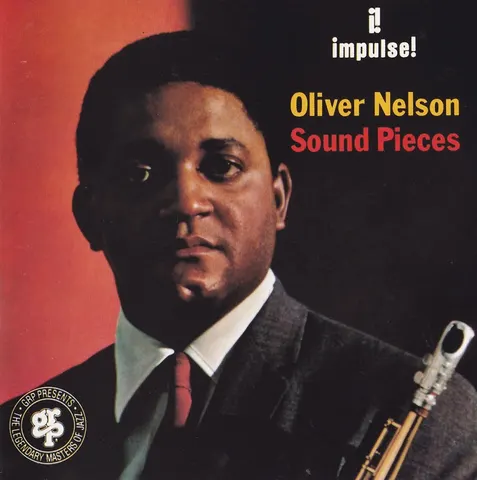
By the end of the decade he had moved to Los Angeles and joined the big band of the trumpeter Don Ellis, where he played tenor saxophone and clarinet on Autumn (Columbia, recorded 1968), tenor saxophone and flute on The New Don Ellis Band Goes Underground (1969) and tenor saxophone on the double LP Don Ellis at Fillmore (1970), which includes two of his own pieces, "Excursion #2" and "Old Man's Tear." He has said in an interview that it was in Ellis's band that he first plugged his horn into an echo unit. In 1969 he was one of the saxophonists in the small group Oliver Nelson took to West Africa on a State Department tour, and he is credited as one of two tenor soloists on the opening track of Nelson's Black, Brown and Beautiful (Flying Dutchman, 1969).
From 1971 he recorded for Impulse!. Constant Throb was cut at Western Recorders in Los Angeles on August 12 and 19, 1971 and released in 1972, with Wilton Felder and Reggie Johnson on bass, Jim Keltner and Shelly Manne on drums, Howard Roberts on guitar, Mike Wofford and Mike Lang on keyboards, Don Menza on alto flute and bass clarinet, and Marni Nixon singing on two tracks. Waterfalls (1972) and Intensity (1973) followed. Intensity contains a "Prayer for John Coltrane" and a "Waltz for John Coltrane," and AllMusic describes him as a very strong, Coltrane-inspired acoustic tenor player. Magic and Movement (1974) joins a June 22, 1972 set at the Ash Grove in Los Angeles, with Mike Nock on electric piano, Wilton Felder on bass and Eddie Marshall on drums, to a July 6, 1973 performance at the Montreux Jazz Festival with Tom Canning on electric piano, Cecil McBee on bass and Alphonse Mouzon on drums, with overdubs added in 1974.
The records that made him widely known came next, on ABC. Touch (1975) was a soft, melodic album built around his echo-treated saxophone, and it became one of the earliest titles in Mobile Fidelity Sound Lab's half-speed audiophile reissue series. Barefoot Ballet (1976), Lifestyle (Living and Loving) (1977), Arabesque (1978), the unaccompanied Solo Saxophone: Cry (1978) and Brazilia (1979) continued in the same direction, and Wikipedia and AllMusic both place the Touch series and the solo saxophone records among the forerunners of smooth jazz and new age music. The shift did not please everyone. Klemmer has said the jazz press began to doubt that he could still play once he had a popular album, and he maintains that the music on Touch and Barefoot Ballet was the most honest he had made. He wrote for other singers as well: with the lyricist David Batteau he wrote "Walk in Love," recorded by The Manhattan Transfer. As a session player he took the tenor solo on "The Caves of Altamira" on Steely Dan's The Royal Scam (ABC, 1976), and Wikipedia credits him on John Lee Hooker's Born in Mississippi, Raised Up in Tennessee (ABC, 1973), Gloria Lynne's I Don't Know How to Love Him (ABC/Impulse!, 1976) and Nancy Wilson's Life, Love and Harmony (Capitol, 1979).
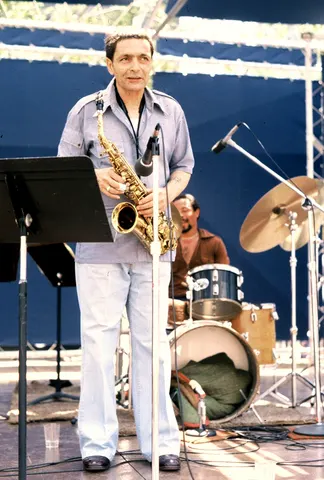
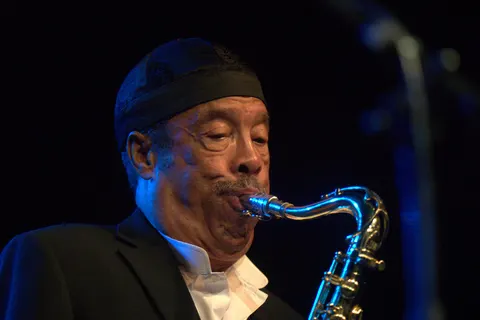
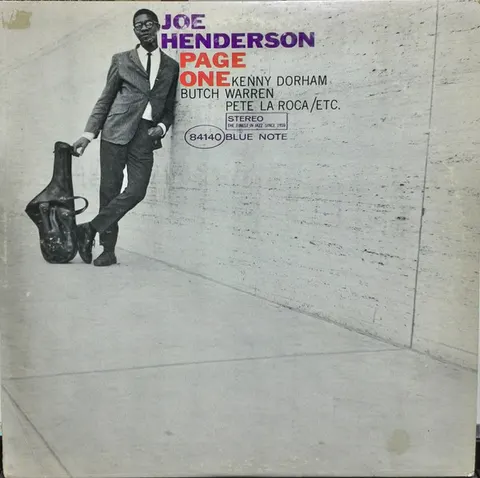
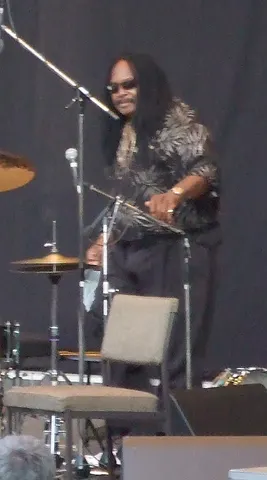
Through the same years he kept returning to straight jazz. He is the tenor soloist on the opening track of Roy Haynes's Thank You Thank You (Galaxy, recorded July 1977 at Fantasy Studios in Berkeley), alongside Bobby Hutcherson on vibraphone, George Cables on electric piano and Ron Carter on bass. In December 1978 he went back to Fantasy for the Galaxy sessions that produced the label's all-star saxophone records, playing in a quartet with the pianist Stanley Cowell, the bassist John Heard and Haynes, and appearing beside Art Pepper, Johnny Griffin, Joe Henderson, Joe Farrell and Harold Land; his "God Bless the Child" was issued on Ballads by Four (1981) and his "'Round Midnight" on 5 Birds and a Monk (1981). His two-LP Nexus for Duo and Trio (Arista/Novus, 1979), with the drummer Carl Burnett and the bassist Bob Magnusson, is the album AllMusic calls his finest jazz set, and he recorded Simpatico with the Brazilian guitarist Oscar Castro-Neves. He also made Straight from the Heart for the audiophile label Nautilus Recordings (1980) and signed with Elektra, for which he recorded Magnificent Madness (1980), then Hush, Solo Saxophone II: Life and Finesse (all 1981), followed by Two Tone (Crusaders Records, 1982), a split LP on which he plays side one with Joe Sample on keyboards and Eddie Harris takes side two.
Music (MCA, 1989) was followed by a long break from touring and recording to concentrate on composing; AllMusic notes that the rumors of ill health at the time were untrue. He founded his own Touch Records label, released Making Love, Vol. 1 in 1998 and appeared as a guest on new age albums by 3rd Force, David Arkenstone and Craig Chaquico. His records, the early Cadet ones in particular, have been sampled by hip-hop producers since the 1990s.
On April 26, 2024 he released Chateau Love on Touch Records, a set of twelve tracks recorded live with the bassist Abe Laboriel Sr., the drummer Harvey Mason and the percussionist Lenny Castro, with Ronnie Foster on keyboards, John Tropea on guitar and the singers Katie Christopher and Darlene Koldenhoven. It is his first album of new material since Making Love, Vol. 1. Klemmer plays tenor and soprano saxophone, synthesizer and piano on it and sings on some tracks.
Klemmer worked at both ends of the line between jazz and pop, and the two bodies of work sound like different players. The Impulse! albums and Nexus show a hard-toned, Coltrane-influenced tenor saxophonist whose early-1970s live sets were long and intense. The ABC records that followed are another proposition: a warm, breathy tone, simple melodies, a rhythm section that stays out of the way, and the Echoplex delay, which lets one saxophone answer itself and gives the playing its chordal, hovering quality. That sound, together with the unaccompanied Cry, is why he is often listed among the precursors of smooth jazz and new age saxophone, and it is also why many of his straight-ahead listeners felt he had left them. His own position is that the later records were the music he most wanted to make, and that the solos on them are not background music.
His Chicago teacher Joe Daley gave him his grounding in improvisation, and John Coltrane is the figure he honors by name on record, in the two dedications on Intensity and in the album Nexus, a duo and trio set he made as a straight-ahead statement. Don Ellis's electrified big band is where he says he first heard what echo could do to a saxophone, and Eddie Harris, another early player of the electric saxophone, was a Chicago colleague and later a recording partner. As a composer he has two lives: the instrumentals for his own records, and pop songs written with others, such as "Walk in Love" with David Batteau.
- Involvement (1967, Cadet) - His debut, two Chicago quartets recorded straight-ahead, and the best document of the tenor player he was before the electric years.
- Blowin' Gold (1969, Cadet Concept) - The rock-and-electronics collision, with his first Echoplex saxophone and the opening "Excursion #2," which he also took into Don Ellis's band.
- Constant Throb (1972, Impulse!) - Cut in Los Angeles in 1971 with Wilton Felder, Shelly Manne and Jim Keltner, the album that opens his Impulse! period.
- Magic and Movement (1974, Impulse!) - Live recordings from the Ash Grove and Montreux, with Alphonse Mouzon and Cecil McBee on the Montreux half, and the fullest picture of his electric quartet.
- Touch (1975, ABC) - The record that made him a crossover name, built on echo-treated saxophone and long melodic lines. Spotify - Touch Listen
- Solo Saxophone: Cry (1978, ABC) - An unaccompanied saxophone album, often cited as a forerunner of solo-saxophone new age music.
- Nexus for Duo and Trio (1979, Arista/Novus) - Two LPs of duets and trios with Carl Burnett and Bob Magnusson, his own most straight-ahead statement of the period. Spotify - Nexus Listen
- Chateau Love (2024, Touch Records) - His first new album in 26 years, recorded live with Harvey Mason, Abe Laboriel Sr. and Lenny Castro. Spotify - Chateau Love Listen
John Klemmer: Full Discography
Discogs artist: John Klemmer (50123) · Real name John Theodore Klemmer · Born July 3, 1946, Chicago, Illinois
Leader: Albums
His records fall into three groups: the Chicago and Los Angeles jazz and jazz-rock albums on Cadet, Cadet Concept and Impulse!; the ABC and MCA records built around echo-treated saxophone; and the later Nautilus, Elektra and Touch Records releases. Catalog numbers are those of the original US pressing as listed on Discogs and MusicBrainz where one could be confirmed, and an unnumbered row means no catalog number could be verified. Release years follow Discogs and MusicBrainz.
| Album | Year | Label (Catalog) | Personnel & Notes | Listen | Buy |
|---|---|---|---|---|---|
| Involvement | 1967 | Cadet (LP 797) | Billed to The John Klemmer Quartets and produced by Esmond Edwards. Seven tracks: "Stand in the Sun," "My Blues," "You Don't Know What Love Is," "Later with Them Woes," "Passion Food," "How Deep Is the Ocean" and "Will 'N' Jug." Wilbur Campbell (drums) and Melvin Jackson (bass) play throughout, with Sam Thomas (guitar) on four tracks and Jodie Christian (piano) on three. Reissued on CD by Verve in 2003. | — | — |
| And We Were Lovers | 1968 | Cadet (LPS-808) | Credited to John Klemmer with quartet and with strings. One side sets standards with strings and brass, the other is straight-ahead quartet material, including "Look to the Sky." | — | — |
| Blowin' Gold | 1969 | Cadet Concept (LPS 321) | Co-produced by Marshall Chess. Opens with "Excursion #2," and includes "Children of the Earth: Flames" and "My Love Has Butterfly Wings," the track on which his Echoplex saxophone first appears. Reissued on CD by GRP in 2010. | — | — |
| All the Children Cried | 1970 | Cadet Concept (LPS-326) | A more spiritual and subdued record than its predecessor, led by the title track. | — | — |
| Eruptions | 1970 | Cadet Concept (LPS 330) | Cosmic, spiritual fusion; includes "Summer Song." Also pressed in Germany by Bellaphon. | — | — |
| Constant Throb | 1972 | Impulse! (AS-9214) | Recorded at Western Recorders, Los Angeles, on August 12 and 19, 1971. Eight tracks: "Constant Throb" (Parts I and II), "Neptune," "Let Me Touch the Wind," "California Jazz Dance," "Rainbows," "Crystaled Tears" and "Precious Leaf." Klemmer plays tenor and soprano saxophone, electric piano, percussion and Echoplex; with Don Menza (alto flute, bass clarinet), Mike Lang (piano, electric piano), Mike Wofford (electric piano, clavinet), Howard Roberts (guitar), Wilton Felder and Reggie Johnson (bass), Jim Keltner and Shelly Manne (drums), Gary Coleman and Mark Stevens (percussion), and Marni Nixon (vocals on two tracks). | — | — |
| Waterfalls | 1972 | Impulse! (AS-9220) | Live album. | — | — |
| Intensity | 1973 | Impulse! (AS-9244) | Tracks 1 to 5 were recorded at The Village Recorder, Los Angeles, on February 23, 1973, and tracks 6 and 7 live at the Kabuki Theatre, San Francisco, on August 14, 1971. Includes "Prayer for John Coltrane" and "Waltz for John Coltrane." Klemmer plays tenor saxophone, Echoplex, vocals and percussion; with Tom Canning (electric piano, tracks 1 to 5), Todd Cochran (electric piano, tracks 6 and 7), Dave Parlato (bass, tracks 1 to 5), James Leary (bass, tracks 6 and 7), Woody Theus (drums and percussion, tracks 6 and 7) and Victor Feldman (percussion, tracks 1 to 5). | — | — |
| Magic and Movement | 1974 | Impulse! (AS-9269) | Live album. Tracks 1 to 4 come from the Ash Grove, Los Angeles, June 22, 1972, with overdubs added on March 19, 1974: Mike Nock (electric piano), Wilton Felder (electric bass), Eddie Marshall (drums), with Peter Ivers (harmonica) and Dean Parks (guitar) overdubbed. Tracks 5 to 8 were recorded at the Montreux Jazz Festival on July 6, 1973: Tom Canning (electric piano), Cecil McBee (bass) and Alphonse Mouzon (drums). | — | — |
| Fresh Feathers | 1974 | ABC (ABCD-836) | Recorded at Sunset Sound, Hollywood, and produced and engineered by John Haeny. Nine tracks, among them "Fresh Feathers," "Make It with You," "Fat Alligator Snap," "Uhmm! It Feels So Good!," "Music for the People" and "Wizard's Revenge." Klemmer plays electric and acoustic tenor saxophone and wrote or arranged all but one track; with Harvey Mason and Gary Mallaber (drums), Wilton Felder (electric bass), Mike Lang, Tom Canning and Gordon DeWitty (keyboards), Art Munson, Danny Weis and Dean Parks (guitar), Peter Ivers (harmonica), King Errisson, Milt Holland and Victor Feldman (percussion), and Clydie King, Sherlie Matthews and Venetta Fields (vocals). Billed as featuring The John Klemmer Inner Voices. | — | — |
| Touch | 1975 | ABC (AB-922) | Eight tracks: "Touch," "Glass Dolphins," "Waterwheels," "Free Fall Lover," "Sleeping Eyes," "Body Pulse," "Tone Row Weaver" and "Walk with Me My Love and Dream." Reissued as a half-speed mastered LP by Mobile Fidelity Sound Lab in 1978 (MFSL 1-006), by MCA in 1985 (MCAD-37152) and by Mobile Fidelity on CD in 1989 (UDCD 522). | Spotify | — |
| Barefoot Ballet | 1976 | ABC (ABCD-950) | Reissued by MCA (MCAD-1583). | Spotify | — |
| Lifestyle (Living and Loving) | 1977 | ABC (AB-1007) | Includes "Let's Make Love," written with David Batteau. Listed on Spotify as Lifestyles (Living and Loving). | Spotify | — |
| Arabesque | 1978 | ABC (AA-1068) | Includes the title track "Arabesque." Reissued by MCA (MCAD-5858). | — | — |
| Solo Saxophone: Cry | 1978 | ABC (AA-1106) | Unaccompanied saxophone. | — | — |
| Simpatico | 1978 | JVC (JVC-2069-2 on CD) | With the Brazilian guitarist Oscar Castro-Neves, who plays acoustic guitar, sings and arranged. Seven tracks: "Bonita," "My Funny Valentine," "What's New," "Picnic," "Early Autumn," "Moonlight in Vermont" and "Simpatico." Klemmer plays tenor saxophone and kalimba. The first six tracks were recorded at Dawnbreaker Studios in San Fernando, California, and the last at Village Recorders in West Los Angeles. The CD edition, produced by Akira Taguchi, is dated 1997 on Discogs. | — | — |
| Brazilia | 1979 | ABC (AA-1116) | Reissued by MCA (MCAD-5864, 1997). | Spotify | — |
| Nexus for Duo and Trio | 1979 | Arista/Novus (AN2 3500) | Two LPs of duets and trios with Carl Burnett (drums) and Bob Magnusson (bass). Reissued by Novus in 2024. | Spotify | — |
| Straight from the Heart | 1980 | Nautilus Recordings (NR4) | Released in April 1980 on the audiophile label Nautilus Recordings. Sources give 1979 or 1980. | — | — |
| Magnificent Madness | 1980 | Elektra (6E-284) | His first Elektra album. | — | — |
| Hush | 1981 | Elektra (5E-527) | Includes "Hush (Reprise)." | Spotify | — |
| Solo Saxophone II: Life | 1981 | Elektra (5E-566) | Second unaccompanied saxophone album. | Spotify | — |
| Finesse | 1981 | Nautilus Recordings / Elektra (NR 22) | Also issued in Germany on Elektra Musician (96.0197-1). Sources differ between 1980 and 1981 for the first release. | Spotify | — |
| Two Tone (with Eddie Harris) | 1982 | Crusaders Records (CRP-16015) | A split LP. Klemmer plays tenor saxophone on side one with Joe Sample (keyboards), Bob Magnusson (bass) and Alex Acuña (drums); Eddie Harris takes side two, with William Henderson (piano), Phil Upchurch (guitar), Larry Gales (bass), Carl Burnett (drums) and Ray Armando (percussion). Titles on the label include "Softly as a Morning Sunrise," "Killer Joe," "Pigeon Toes," "It's a Lucky Day," "It's All We Do" and "Come Dance with Me." Produced by Stephan Goldman. | — | — |
| Music | 1989 | MCA (MCA-6246) | His last album before a long break from touring and recording. | — | — |
| Making Love, Vol. 1 | 1998 | Touch Records (TRCD-1001) | Released on his own label. Eleven tracks, with Klemmer credited as producer and on tenor saxophone, electronic effects, synthesizer and keyboards; engineered by Peter Love. | — | — |
| Chateau Love | 2024 | Touch Records | Released April 26, 2024. Recorded by Bernie Kirsh, live with Abe Laboriel Sr. (bass), Harvey Mason (drums), Lenny Castro (percussion), Ronnie Foster (keyboards), John Tropea (guitar) and the singers Katie Christopher and Darlene Koldenhoven. Tracks include "Love Divine," "Heartbeat," "Smile," "Beautiful Words," "Dreams" and "Islands in the Sun." | Spotify | — |
Compilations
Mosaic: The Best of John Klemmer, Volume 1 (MCA, MCA-28014, 1979) · The Best of John Klemmer, Volume 2: The Saxophone Player (1982) · Priceless Jazz Collection (GRP, 1999) · The Very Best of John Klemmer (Verve, 2005), with three newly recorded bonus tracks · Finesse / Magnificent Madness (Wounded Bird, 2005) · Magic Moments (Chess, 2ACMJ-401, 1976) · Quiet Afternoon (ABC, AB-12301, 1977) · Masters of the Saxophone (ABC, MD11120, 1978), shared with John Coltrane · Foundations (ABC Impulse!, IA-9354/2, 1978), a two-LP Impulse! compilation shared with Tom Scott and Gato Barbieri, drawing on Impulse! recordings made between 1968 and 1973, among them a July 6, 1973 Montreux performance and an August 19, 1971 session at Western Recorders
Guest, Sideman and Session Credits
Selected credits as a saxophonist. Rows marked as listed on Wikipedia come from that site's discography of his sideman work, where the instrument and the tracks he plays on are not itemized.
| Year | Project (Leader) | Title | Label (Catalog) | Role | Notes |
|---|---|---|---|---|---|
| 1968 | Don Ellis | Autumn | Columbia | Tenor saxophone, clarinet | Recorded 1968 with the Don Ellis Orchestra. |
| 1969 | Oliver Nelson | Black, Brown and Beautiful | Flying Dutchman | Tenor saxophone | One of two tenor soloists (with John Gross) on the first track, per the album's session notes. Recorded 1969. |
| 1969 | Don Ellis | The New Don Ellis Band Goes Underground | Columbia | Tenor saxophone, flute | Tenor section with Hadley Caliman. |
| 1969 | Steve Allen | Soulful Brass #2 | Flying Dutchman | Saxophone | Credit as listed on Wikipedia; track scope not itemized. |
| 1970 | Don Ellis | Don Ellis at Fillmore | Columbia | Tenor saxophone | Klemmer wrote "Excursion #2" and "Old Man's Tear." |
| 1973 | John Lee Hooker | Born in Mississippi, Raised Up in Tennessee | ABC | Saxophone | Credit as listed on Wikipedia; track scope not itemized. |
| 1974 | Ray Manzarek | The Whole Thing Started with Rock & Roll Now It's Out of Control | Mercury | Saxophone | Credit as listed on Wikipedia; track scope not itemized. |
| 1976 | Steely Dan | The Royal Scam | ABC | Tenor saxophone | Solo on "The Caves of Altamira." |
| 1976 | Gloria Lynne | I Don't Know How to Love Him | ABC/Impulse! | Saxophone | Credit as listed on Wikipedia; track scope not itemized. |
| 1976 | Tom Snow | Tom Snow | Capitol | Saxophone | Credit as listed on Wikipedia; track scope not itemized. |
| 1977 | Terence Boylan | Terence Boylan | Asylum | Saxophone | Credit as listed on Wikipedia; track scope not itemized. |
| 1977 | Roy Haynes | Thank You Thank You | Galaxy (GXY-5103) | Tenor saxophone | Recorded at Fantasy Studios, Berkeley, July 16 and 18 to 20, 1977. Plays on the title track with Bobby Hutcherson (vibraphone), George Cables (electric piano), Ron Carter (bass) and Haynes (drums). Reissued as Quiet Fire (Galaxy GCD-95005-2, 2004). |
| 1979 | Nancy Wilson | Life, Love and Harmony | Capitol | Saxophone | Credit as listed on Wikipedia; includes the track "Sunshine." |
| 1979 | Lauren Wood | Lauren Wood | Warner Bros. | Saxophone | Credit as listed on Wikipedia; track scope not itemized. |
| 1980 | Osamu Kitajima | Masterless Samurai | Alfa | Saxophone | Credit as listed on Wikipedia; track scope not itemized. |
| 1980 | Dan Siegel | Nite Ride | Inner City | Saxophone | Credit as listed on Wikipedia; track scope not itemized. |
| 1981 | Various (Galaxy all-stars) | Ballads by Four | Galaxy (GXY-5133) | Tenor saxophone | Plays "God Bless the Child" with Stanley Cowell (piano), John Heard (bass) and Roy Haynes (drums); the other horns are Johnny Griffin, Art Pepper and Joe Henderson. Recorded at Fantasy Studios, Berkeley, December 1, 2, 4 and 5, 1978. Expanded as Ballads by Five (Galaxy GCD-95003-2, 1997). |
| 1981 | Various (Galaxy all-stars) | 5 Birds and a Monk | Galaxy (GXY-5134) | Tenor saxophone | Plays "'Round Midnight" from the same December 1978 sessions, with Joe Farrell, Harold Land, Art Pepper, Johnny Griffin and Joe Henderson on the other tracks. Expanded as Birds and Monks (Galaxy GCD-95002-2, 1995). |
| 1996 | David Arkenstone | Return of the Guardians | Narada | Saxophone | Credit as listed on Wikipedia; track scope not itemized. |
| 1997 | Craig Chaquico | Once in a Blue Universe | — | Saxophone | Guest appearance; track scope not itemized. |
| 1999 | 3rd Force | Force Field | Higher Octave Music | Saxophone | Guest appearance; track scope not itemized. |
| 2018 | David Garfield | Jammin' Outside the Box | Creatchy | Saxophone | Includes "Chasing Pavements." |
Songwriting
He co-wrote "Walk in Love" with the lyricist David Batteau, a song recorded by The Manhattan Transfer and issued as a 1978 single, and he has written with Danny O'Keefe.
- Don Ellis - the bandleader whose orchestra brought him to Los Angeles; Klemmer played tenor saxophone on Autumn (1968), The New Don Ellis Band Goes Underground (1969) and Don Ellis at Fillmore (1970), and wrote two of the Fillmore pieces.
- Oliver Nelson - took him to West Africa on a 1969 State Department tour and used him as a tenor soloist on Black, Brown and Beautiful (1969).
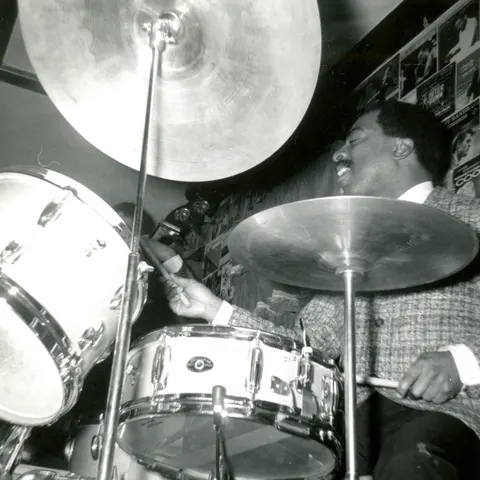
- Roy Haynes - drummer on the Galaxy sessions of 1977 and 1978 on which Klemmer plays, including Thank You Thank You.
- Eddie Harris - Chicago tenor saxophonist who sometimes performed in tandem with him in the late 1960s and shared the split LP Two Tone (1982).
- Harvey Mason - drummer on Fresh Feathers (1974) and on Chateau Love (2024).
- Alphonse Mouzon - drummer on the Montreux half of Magic and Movement (1974).
- Wilton Felder - bassist on Constant Throb (1971 sessions) and on the Ash Grove half of Magic and Movement.
- Shelly Manne - drummer on Constant Throb.
- Cecil McBee - bassist on the Montreux half of Magic and Movement and on Roy Haynes's 1977 date with Klemmer.
- Joe Sample - keyboardist on side one of Two Tone (1982).
- Ronnie Foster - keyboardist on Chateau Love.
- Nancy Wilson - Klemmer is credited on her Life, Love and Harmony (Capitol, 1979).
- Oscar Castro-Neves - Brazilian guitarist and composer, his partner on Simpatico.
- David Batteau - lyricist and co-writer of "Walk in Love."
- Stanley Cowell and John Heard - pianist and bassist in his quartet on the December 1978 Galaxy sessions.
- Carl Burnett and Bob Magnusson - the drummer and bassist of Nexus for Duo and Trio.
- Esmond Edwards and Marshall Chess - Edwards signed him to Chess, and Chess co-produced Blowin' Gold.
More Jazz Fusion Artists
See all 429 Jazz Fusion artists →More American Jazz Artists
See all 820 American artists →- Wikipedia: John Klemmer
- AllMusic: John Klemmer, biography by Scott Yanow
- All About Jazz: John Klemmer
- All About Jazz: Chateau Love
- Discogs: John Klemmer, with the individual releases cited in the discography
- MusicBrainz: John Klemmer
- PS Audio Copper: John Klemmer, Part One: Saxophone Gold (Rudy Radelic, 2022)
- Jazz Weekly: John Klemmer's Touch in the Chateau of Love
- The Urban Music Scene: John Klemmer releases new album Chateau Love (May 2024)
- Wikipedia: Constant Throb, Intensity and Magic and Movement
- Wikipedia: Autumn (Don Ellis album), The New Don Ellis Band Goes Underground and Don Ellis at Fillmore
- Wikipedia: Black, Brown and Beautiful
- Wikipedia: Thank You Thank You (Roy Haynes album)
- Galaxy Records catalog, 5100 and 95000 series (jazzdisco.org)