 JAZZPROFILES lives in the music 1,572 Jazz Artists fully Profiled!
 Bill Laswell
Last updated August 30, 2026
Listen on Spotify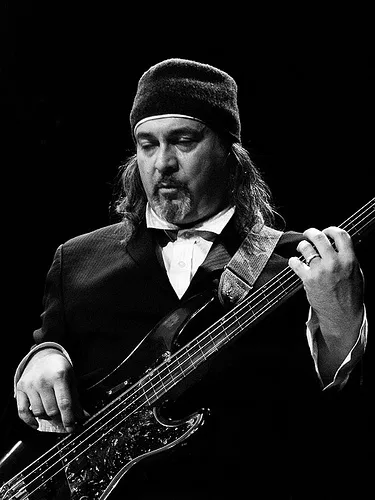
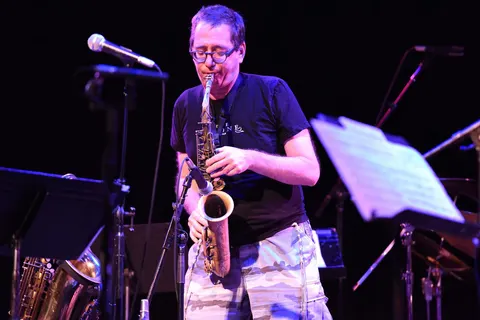
Bill Laswell performing at the Moers Festival, Germany, June 4, 2006. CC BY-SA 2.5 — Wikimedia Commons — https://commons.wikimedia.org/wiki/File:Bill-laswell.jpg
Bill Laswell was born William Otis Laswell on February 12, 1955, in Salem, Illinois. His family relocated often in his early years — Illinois, Kentucky, Texas — before settling, by the late 1950s, in Albion, Michigan, a small factory town roughly two hours west of Detroit, in a neighborhood that was predominantly Black. Albion turned out to be a formative place for a bass player: school gave him a start on baritone saxophone and drums, but bands needed bassists more than anything else, and by his early teens he was gigging locally. He played R&B and funk in Detroit and Ann Arbor as a teenager, caught Iggy and the Stooges, MC5, and Funkadelic on the same regional circuit, and — through jazz records rather than local shows — absorbed John Coltrane, Albert Ayler, and Miles Davis. That combination, hard funk on one side and free jazz on the other, never really left his music.
He moved to New York in the late 1970s and fell in with guitarist Giorgio Gomelsky's downtown loft scene. Material began there almost by accident, as the backing band for Daevid Allen's New York Gong — Laswell on bass, Michael Beinhorn on keyboards, Fred Maher on drums — before becoming a rotating ensemble in its own right, one whose output ranged from angular art-funk to club-ready electro-pop across the group's early-80s run. One Down (1982), Material's best-known album, gave a young Whitney Houston — whose own career is covered in full in her JazzProfiles.com profile — her actual recording debut, singing the ballad "Memories" opposite Archie Shepp's tenor saxophone, three years before her self-titled pop breakthrough. Laswell's own leader debut, Baselines, followed on Elektra Musician in 1983, recorded with a downtown cast that included Fred Frith and Ronald Shannon Jackson.
1983 was also the year Laswell's commercial fortunes changed permanently. He co-wrote and produced "Rockit," the lead single from Herbie Hancock's Future Shock — a collision of Hancock's synthesizers, Laswell's bass, and Grandmixer D.ST's scratching that helped introduce turntablism to a mainstream audience; its Godley & Creme-directed video won five awards at the first-ever MTV Video Music Awards in 1984. Laswell and Material returned the following year to co-produce Hancock's Sound-System (1984), which won Hancock a Grammy for Best R&B Instrumental Performance. The Rockit years made Laswell a name outside the avant-garde circles he'd come from, and major-label production work followed: he produced or co-produced Mick Jagger's She's the Boss (1985), Yoko Ono's Starpeace (1985), Laurie Anderson's Mister Heartbreak (1984), and additional production on tracks from Peter Gabriel's So (1986), while playing bass on several of these sessions himself.
Through the mid-to-late 1980s Laswell kept a foot just as firmly in noise and metal. He produced Motörhead's Orgasmatron (1986) and Rock 'n' Roll (1987), the Ramones' Brain Drain (1989), and Public Image Ltd's Album (1986) — the last a genuine odd-couple triumph, pairing John Lydon with a Laswell-assembled cast that included Steve Vai, Ginger Baker, Tony Williams, Ryuichi Sakamoto, and Bernie Worrell, and the record most PiL historians consider the band's creative high point. At the same time he was building his own noise-and-improv side: Massacre, the trio with Fred Frith and Fred Maher, cut the confrontational Killing Time (1981); Last Exit, formed in 1986 with Peter Brötzmann, Sonny Sharrock, and Ronald Shannon Jackson, turned free jazz up to a volume that made most rock bands sound polite; and the Golden Palominos — the Anton Fier-led group Laswell played on for its entire 1983-1996 run — gave him another outlet for the same collision-music instinct, working alongside Fred Frith, John Zorn, and (in the group's more pop-oriented later years) singers including Syd Straw and John Lydon.
In 1990, Island Records founder Chris Blackwell backed Laswell in launching Axiom Records, giving him a home base — and his own Greenpoint Studio in Brooklyn — for a run of releases that included Material's Burroughs- and Bootsy Collins-featuring records, Ginger Baker, Sonny Sharrock, and world-music artists such as Simon Shaheen and Foday Musa Suso. Axiom also hosted Praxis, Laswell's most explicitly funk-metal project, built around guitarist Buckethead alongside Bootsy Collins and Bernie Worrell; its 1992 debut Transmutation (Mutatis Mutandis) remains the group's definitive statement. The following year, Laswell teamed with John Zorn and grindcore drummer Mick Harris as Painkiller, whose Execution Ground (1994) pushed the avant-metal template Last Exit had established into dub and ambient territory. Axiom folded in 1997 when Blackwell left PolyGram, but Laswell kept working at the same pace under a rotating cast of his own imprints — Subharmonic, Meta, Submeta, Innerhythmic, Black Arc, and others.
Laswell's parallel career as a reconstructor of other people's archives reached its high point with Panthalassa: The Music of Miles Davis 1969–1974 (1998), a remix-and-reassembly of Davis's electric-period master tapes that drew respectful reviews for treating fusion-era Miles as raw material for something genuinely new rather than a straightforward remaster. He married Ethiopian vocalist Ejigayehu Shibabaw, known professionally as Gigi, and produced her recordings extensively, bringing Ethiopian song into conversation with dub, ambient, and jazz arrangement — the same "collision music" method, in his own phrase, that runs through nearly everything he has touched. He also founded Tabla Beat Science with tabla virtuoso Zakir Hussain, released Life Space Death (2001) with trumpeter Toshinori Kondo featuring commentary from the 14th Dalai Lama, and has continued recording prolifically into the 2020s — including further Painkiller records, ongoing work with John Zorn on Tzadik, and new material well past his seventieth birthday — from Orange Music Sound Studios, his longtime base in West Orange, New Jersey.
Laswell's playing and production share a single instinct: put things next to each other that supposedly don't belong together and see what happens. He has called it "collision music," and the catalog bears it out — Coltrane and Ayler's free-jazz vocabulary sits inside the same body of work as Funkadelic-derived groove, Jamaican dub space, Ethiopian and North Indian modal material, and the bluntest hardcore-punk and metal aggression. As a bassist, he favors low-end weight and space over technical display, a foundation player whose job in his own telling is to hold a track together while everything above it goes strange. As a producer, that same appetite for productive friction defined his signature 1980s work: pairing a jazz-fusion legend with turntable scratching on "Rockit," pairing a snarling post-punk frontman with an all-star cast spanning heavy-metal guitar and Japanese avant-pop synthesizer on PiL's Album, pairing free-improv aggression with dub's negative space in Painkiller. His catalog resists a single genre tag by design; jazz, funk, dub, ambient, and noise are not phases in his career so much as materials he keeps returning to and recombining.
- One Down (1982, Material, Elektra/Celluloid) - Whitney Houston's actual recording debut ("Memories," with Archie Shepp on tenor sax), three years before her solo breakthrough. Spotify - One Down Listen
- Baselines (1983, Elektra Musician) - Laswell's leader debut, cut with Fred Frith, Ronald Shannon Jackson, and George Lewis. Spotify - Baselines Listen
- Future Shock (1983, Herbie Hancock, Columbia) - Home of "Rockit," co-written and produced by Laswell with Grandmixer D.ST's turntable scratching; the record that broke him commercially. Spotify - Future Shock Listen
- Killing Time (1981, Massacre, Celluloid) - Laswell's trio with Fred Frith and Fred Maher; confrontational, largely improvised no-wave/free-jazz. Spotify - Killing Time Listen
- Orgasmatron (1986, Motörhead, GWR Records) - Laswell-produced; widely regarded as one of Motörhead's strongest studio records. Spotify - Orgasmatron Listen
- Album (1986, Public Image Ltd, Virgin) - Laswell-produced odd-couple triumph pairing John Lydon with Steve Vai, Ginger Baker, Tony Williams, and Ryuichi Sakamoto; the record most PiL historians call the band's creative peak. Spotify - Album Listen
- Last Exit (1986, Last Exit, Enemy Records) - The self-titled debut of Laswell's free-jazz power group with Peter Brötzmann, Sonny Sharrock, and Ronald Shannon Jackson. Spotify - Last Exit Listen
- Transmutation (Mutatis Mutandis) (1992, Praxis, Axiom) - Funk-metal collision with Buckethead, Bootsy Collins, and Bernie Worrell; Praxis's definitive statement. Spotify - Transmutation (Mutatis Mutandis) Listen
- Execution Ground (1994, Painkiller, Subharmonic) - With John Zorn and Mick Harris; grindcore-rooted avant-metal opening into dub and ambient territory. Spotify - Execution Ground Listen
- Panthalassa: The Music of Miles Davis 1969-1974 (1998, Columbia) - Laswell's remix/reconstruction of Davis's electric-period master tapes. Spotify - Panthalassa: The Music... Listen
Bill Laswell: Full Discography
Identity confirmed via Discogs artist ID 661 ("Bill Laswell," real name William Otis Laswell) — no ID collisions found. Laswell's own artist-page release list runs to roughly 2,447 Discogs entries, of which 127 are "Main"-role master releases under his own name or aliases alone (Automaton, Valis, Sacred System, Rasa, The Colonel, Jazzonia, etc.) — before counting his 60+ group projects (Material, Praxis, Massacre, Last Exit, Painkiller, Golden Palominos, Tabla Beat Science, Method of Defiance, Arcana, Divination, and dozens more) or his hundreds of sideman and production-only credits.
Scope decision: given that volume, this table does not attempt to be exhaustive. It itemizes the recordings that are most significant and best-documented across his career — his own leader debut, the records that made his commercial reputation, and the productions/group albums most consistently cited by critics and reference sources as career landmarks. Additional well-documented production credits mentioned in final-profile.md (Mick Jagger's She's the Boss, Yoko Ono's Starpeace, Laurie Anderson's Mister Heartbreak, Peter Gabriel's So, Sly and Robbie's Rhythm Killers and Language Barrier, Motörhead's Rock 'n' Roll) are not separately tabled here.
As Leader / Co-Leader / Producer (selected)
| Album Title | Recording Date(s) | Release Date | Label | Catalog Number | Format(s) | Personnel | Role | Reissue History | Spotify | Buy | Notes |
|---|---|---|---|---|---|---|---|---|---|---|---|
| One Down | Not specified in Discogs data | 1982 | Elektra / Celluloid | 60206-1 | Vinyl, LP, Album, Stereo | Bill Laswell (electric bass, effects), Michael Beinhorn (synths, drum machine, vocoder), Whitney Houston (lead vocals, "Memories"), Archie Shepp (tenor sax, "Memories"), Nona Hendryx, Bernard Fowler, B.J. Nelson, Noris Night (vocals), Nile Rodgers, Fred Frith, Nicky Skopelitis (guitar) | Producer (as Material) / Bassist | Also issued on CD via the compilation Bill Laswell & Material (2005) | Spotify - One Down | — | Whitney Houston's actual recording debut, three years before her solo breakthrough; "Memories" written by Hugh Hopper (Soft Machine/Wilde Flowers) |
| Baselines | March 1982, OAO Studio, Brooklyn | March 1983 | Elektra Musician | 9 60221-1 | Vinyl, LP, Album, Stereo | Bill Laswell (bass), Fred Frith (guitar, violin), Ronald Shannon Jackson (drums), Martin Bisi (drums, percussion), Phillip Wilson (drums), George Lewis (trombone), Michael Beinhorn (synth), David Moss (voice, percussion), Ralph Carney (bass sax) | Leader | None found | Spotify - Baselines | — | Laswell's leader debut |
| Future Shock | Not specified in Discogs data | 1983 | Columbia | FC 38814 | Vinyl, LP, Album, Stereo | Herbie Hancock (synths, vocoder), Bill Laswell (bass, co-writer), Grandmixer D.ST (turntables), Michael Beinhorn (drum machine), Daniel Ponce (bata) — credits for "Rockit" specifically | Co-writer, Producer (as Material), Bassist | None found | Spotify - Future Shock | — | Home of "Rockit"; the single that made Laswell's commercial reputation |
| Sound-System | Recorded Oct-Dec 1983 | Aug 20, 1984 | Columbia | — | Vinyl, LP, Album | Herbie Hancock (piano, synths), Bill Laswell (bass, co-producer), Wayne Shorter (soprano sax), Foday Musa Suso (kora), Grandmixer D.ST (turntables), Anton Fier (drums), Bernard Fowler (vocals) | Co-producer, Bassist | None found | Spotify - Sound System | — | Won Hancock a Grammy for Best R&B Instrumental Performance |
| Killing Time | Not specified in Discogs data | 1981 | Celluloid | CEL 6597 | Vinyl, LP, Album, Stereo | Bill Laswell (bass, pocket trumpet), Fred Frith (guitar, voice, keyboards), Fred Maher (drums, percussion) | Co-leader (trio, as Massacre) | None found | Spotify - Killing Time | — | Confrontational, largely improvised no-wave/free-jazz trio date |
| Orgasmatron | Not specified in Discogs data | Aug 9, 1986 | GWR Records | GWLP 1 | Vinyl, LP, Album, Stereo | Ian "Lemmy" Kilmister (bass, vocals), Phil Campbell, Würzel (guitar), Pete Gill (drums) | Producer, Engineer | Expanded Edition reissue (Sanctuary/BMG) | Spotify - Orgasmatron | — | Widely regarded as one of Motörhead's strongest studio albums |
| Album | Not specified in Discogs data | Jan 27, 1986 | Virgin | V 2366 | Vinyl, LP, Album, Stereo | John Lydon (vocals), Steve Vai, Nicky Skopelitis (guitar), Tony Williams, Ginger Baker (drums, alternating by track), Ryuichi Sakamoto (synth), Bernie Worrell (organ) | Producer (with John Lydon) | Also issued as Compact Disc / Cassette (same recording, different format-specific titles); Super Deluxe Edition reissue, 2016 | Spotify - Album | — | Widely cited as PiL's creative high point; personnel per Wikipedia/contemporary reviews, not itemized on this Discogs pressing |
| Last Exit | Not specified in Discogs data | 1986 | Enemy Records | EMY 101 | Vinyl, LP, Album | Peter Brötzmann (saxophone), Sonny Sharrock (guitar), Ronald Shannon Jackson (drums, voice), Bill Laswell (electric 6-string bass) | Co-leader (quartet) | None found | Spotify - Last Exit | — | Self-titled debut of the free-jazz power quartet, cut with minimal rehearsal |
| Brain Drain | Not specified in Discogs data | 1989 | Sire | — | Vinyl, LP, Album | Joey Ramone, Johnny Ramone, Dee Dee Ramone, Marky Ramone | Producer | None found | Spotify - Brain Drain | — | Final Ramones album to feature Dee Dee Ramone on bass |
| Transmutation (Mutatis Mutandis) | Not specified in Discogs data | 1992 | Axiom | 314-512 338-2 | CD, Album | Buckethead (guitar, toys), Bootsy Collins (bass, vocals), Bernie Worrell (synth, organ), Brain (drums), Af Next Man Flip (turntables), Bill Laswell (writer, concept) | Producer, Conceiver | None found | Spotify - Transmutation (Mutatis Mutandis) | — | Praxis's definitive funk-metal statement |
| Execution Ground | Not specified in Discogs data | 1994 | Subharmonic | SD 7008-2 | CD, Album | John Zorn (saxophone, voice), Mick Harris (drums, samples, voice), Bill Laswell (bass, samples) | Co-leader (trio, as Painkiller) | None found | Spotify - Execution Ground | — | Two-disc set pairing the "Execution Ground" pieces with ambient versions of the same material |
| Panthalassa: The Music Of Miles Davis 1969-1974 | Not specified in Discogs data | 1998 | Columbia | CK 67909 | CD, Compilation | Miles Davis plus 1969-74 session personnel including Chick Corea, Herbie Hancock, Wayne Shorter, John McLaughlin, Jack DeJohnette, Dave Holland, Joe Zawinul; Bill Laswell (remix, reconstruction, mix translation) | Remixer / Reconstructor | None found | Spotify - Panthalassa: The Music... | — | Reassembles Davis's electric-period master tapes into new compositions |
Selected group projects not separately tabled above
Laswell co-founded or was a core member of dozens of other recording units. The most significant, with their key album:
- Massacre — Killing Time (1981, tabled above)
- Last Exit — self-titled (1986, tabled above); also Iron Path (1988, Venture/Virgin, master 41034), often cited as the group's most fully-produced studio record
- Praxis — Transmutation (Mutatis Mutandis) (1992, tabled above)
- Painkiller — Execution Ground (1994, tabled above)
- Golden Palominos — Laswell produced/performed on the group's early-80s run (self-titled 1983, Visions of Excess 1985) alongside Fred Frith, Anton Fier, and a rotating cast
- Tabla Beat Science — Tala Matrix (2000, Axiom/Palm Pictures), with tabla virtuoso Zakir Hussain
- Sacred System — Laswell's long-running dub/ambient dub-reconstruction alias, e.g. Chapter Two (1997) and Book of Exit: Dub Chamber 4 (2002)
Sideman / bass and mid-1980s major-label production (mentioned in biography, not separately tabled)
Laswell produced and/or played bass on Mick Jagger's She's the Boss (1985, Columbia), Yoko Ono's Starpeace (1985, Polydor/PolyGram), Laurie Anderson's Mister Heartbreak (1984, Warner Bros.), additional production on tracks from Peter Gabriel's So (1986, Charisma/Virgin/Geffen), and Sly and Robbie's Language Barrier (1985, Island) and Rhythm Killers (1987, Island). These are well documented via Discogs and press sources but are not itemized as full table rows here given the scope decision above.
- Whitney Houston - recruited her for her recording debut on Material's One Down (1982); profiled separately on JazzProfiles.com.
- Archie Shepp - tenor saxophone on "Memories," Material's One Down (1982).
- Herbie Hancock - co-wrote and produced "Rockit" (1983) and co-produced the Grammy-winning Sound-System (1984).
- Michael Beinhorn - co-founder of Material; songwriting and production partner through the early-to-mid 1980s.
- Fred Frith - bandmate in Massacre and a recurring collaborator on Laswell's own leader albums, including Baselines.
- Peter Brötzmann, Sonny Sharrock, Ronald Shannon Jackson - co-founders with Laswell of Last Exit (1986).
- John Zorn, Mick Harris - co-founders with Laswell of Painkiller (1991).
- Buckethead, Bootsy Collins, Bernie Worrell - core lineup of Praxis alongside Laswell.
- John Lydon - co-producer/frontman on Public Image Ltd's Album (1986), which Laswell produced.
- Mick Jagger, Yoko Ono, Laurie Anderson, Peter Gabriel - produced and/or played bass on their mid-1980s recordings.
- Gigi (Ejigayehu Shibabaw) - Ethiopian vocalist Laswell married and produced extensively.
- Chris Blackwell - Island Records founder who backed Laswell's Axiom Records (1990-1997).
- Miles Davis - subject of Laswell's Panthalassa reconstruction project (1998).
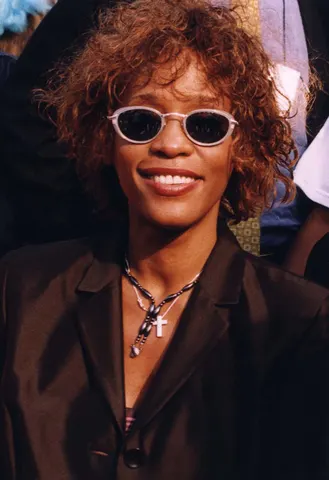
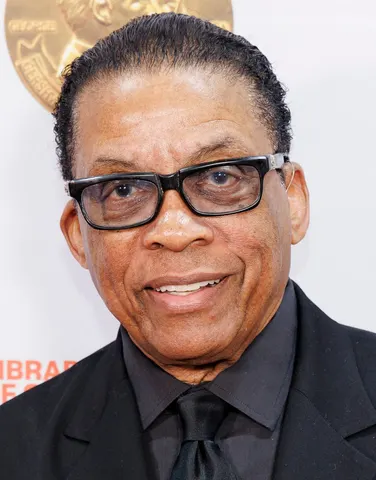

More Avant-Garde Jazz Artists
See all 343 Avant-Garde Jazz artists →More American Jazz Artists
See all 567 American artists →- Wikipedia: Bill Laswell
- AllMusic: Bill Laswell biography
- Discogs: Bill Laswell (artist 661)
- Red Bull Music Academy Daily: Bill Laswell: An Introduction
- Wikipedia: Axiom (record label)
- Wikipedia: Sound-System (album)
- Wikipedia: Album (Public Image Ltd album)
- Wikipedia: Last Exit (free jazz band)
- Wikipedia: Painkiller (band)
- Wikipedia: Gigi (singer)