 JAZZPROFILES lives in the music 1,002 Jazz Artists fully Profiled!
 Woody Shaw
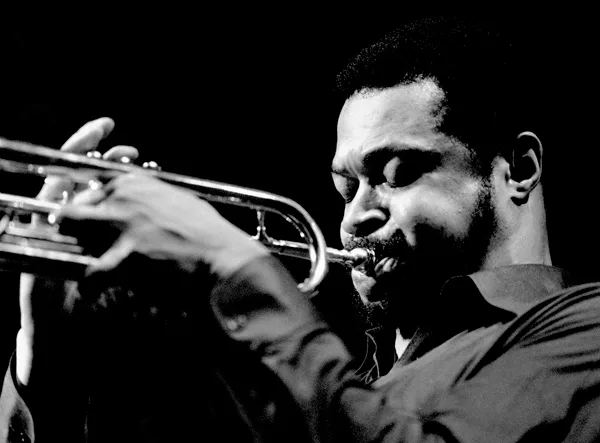
Woody Shaw performing at Keystone Korner, San Francisco, California, November 10, 1979 CC BY-SA 3.0 — Wikimedia Commons — https://commons.wikimedia.org/wiki/File:Woody_Shaw_Keystone.jpg (photo by Brian McMillen)

Woody Louis Armstrong Shaw Jr. was born December 24, 1944, in Laurinburg, North Carolina, and grew up in Newark, New Jersey. His father, Woody Shaw Sr., had sung in the 1930s with the gospel group the Diamond Jubilee Singers and attended North Carolina's Laurinburg Institute alongside a young Dizzy Gillespie; Shaw's mother, Rosalie Pegues, shared Cheraw, South Carolina roots with Gillespie as well. Shaw started on bugle at nine with the Newark Junior Elks drum corps, began formal classical trumpet study at eleven with Jerome Ziering, and attended Newark's Arts High School, alma mater of Sarah Vaughan and Wayne Shorter. Early on he absorbed Louis Armstrong and Harry James from records before turning to the modern language of Gillespie, Clifford Brown, Miles Davis, Kenny Dorham, Booker Little, and Lee Morgan.
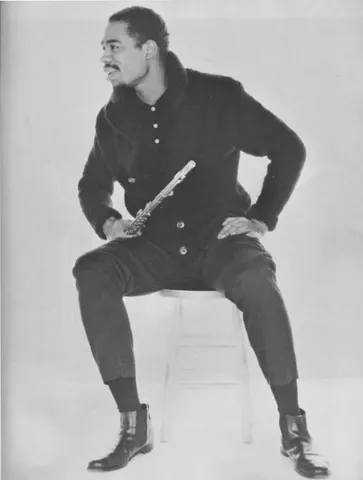
By 1963, still a teenager on Newark's vibrant jazz scene alongside organist Larry Young and trombonist Grachan Moncur III, Shaw was drawing outside attention, finding work with percussionist Willie Bobo and then with alto saxophonist Eric Dolphy. At eighteen, Shaw made his recorded debut on Dolphy's Iron Man, cut at sessions arranged by producer Alan Douglas in July 1963. Dolphy invited Shaw to join him in Paris but died there in 1964 before Shaw could arrive; Shaw went anyway, spending roughly a year in Europe performing with Bud Powell, Kenny Clarke, Johnny Griffin, and saxophonist Nathan Davis, at times bringing over his Newark friends Larry Young and drummer Billy Brooks.
Back in the United States by 1964, Shaw entered a run of formative sideman work: a stint in Horace Silver's quintet (1965-1966, replacing Carmell Jones) that produced his Blue Note debut on Silver's The Cape Verdean Blues (1965), and a place on organist Larry Young's landmark Unity, recorded November 10, 1965, alongside Joe Henderson and Elvin Jones, for which Shaw composed three of the six tracks. The rest of the decade found him recording with Chick Corea, Jackie McLean, Booker Ervin, McCoy Tyner, and Andrew Hill (Grass Roots, 1968), and touring Iran with Max Roach in 1968-69.
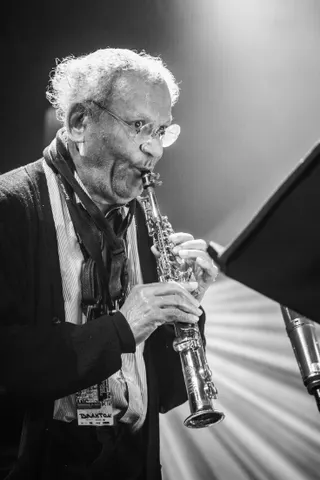
Shaw made his first record as a leader after relocating to the San Francisco Bay Area, where he worked with vibraphonist Bobby Hutcherson and the local scene: Blackstone Legacy, recorded December 8-9, 1970 at A&R Studios in New York with Ron Carter, Lenny White, Bennie Maupin, George Cables, and Gary Bartz, and released in 1971 on Contemporary. Song of Songs followed on the same label in 1973. Back in New York by 1974, Shaw began a productive relationship with Muse Records and producer Michael Cuscuna that yielded The Moontrane (recorded December 1974), Love Dance (1976), Little Red's Fantasy (recorded June 29, 1976), and The Iron Men (recorded April 1977, released 1981), co-billed with Anthony Braxton.
Shaw signed to Columbia Records in 1977 on the strength of an endorsement from Miles Davis. Rosewood, recorded that December at CBS's 30th Street Studio with Henderson and trombonist Steve Turre, was voted Best Jazz Album of 1978 in the DownBeat Readers Poll (which also named Shaw its Best Jazz Trumpeter that year) and drew a Grammy nomination. Columbia followed with the live Stepping Stones: Live at the Village Vanguard (recorded August 1978), Woody III (recorded 1978-79 and named for his newborn son, Woody Louis Armstrong Shaw III), For Sure! (recorded December 1979), and United (recorded March 1981).
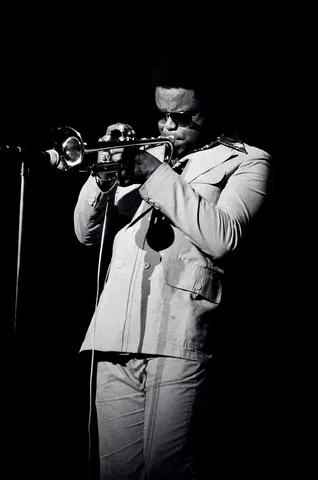
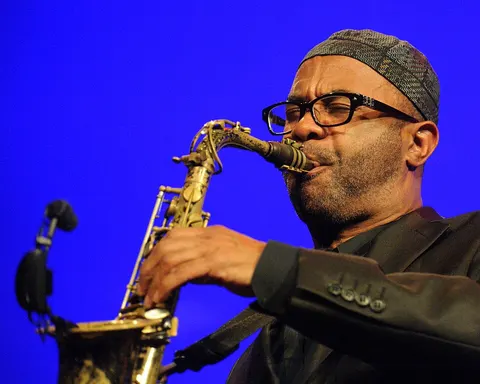
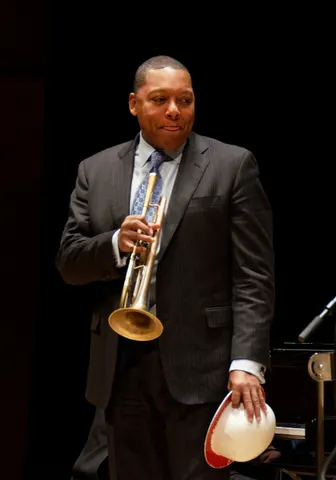
Through the 1980s Shaw kept a heavy recording schedule even as his eyesight failed to retinitis pigmentosa, an incurable degenerative condition. He cut Master of the Art and Night Music from the same February 25, 1982 Jazz Forum date with vibraphonist Hutcherson, Lotus Flower for the German label Enja, and further Muse dates including Setting Standards, Solid, and Imagination, several featuring a young Kenny Garrett on alto saxophone; Shaw also appeared as a sideman on Garrett's own 1985 Criss Cross debut, Introducing Kenny Garrett. He paired with fellow trumpeter Freddie Hubbard for two acclaimed Blue Note "trumpet summit" sessions, Double Take (recorded November 1985) and The Eternal Triangle (recorded June 1987), later combined on The Complete Freddie Hubbard and Woody Shaw Sessions. Shaw taught master classes internationally, held a faculty post alongside Henderson at Jamey Aebersold's summer jazz camps in the 1970s, and mentored younger players including Wynton Marsalis and Terence Blanchard, whose emerging acoustic post-bop movement drew heavily on his harmonic vocabulary. On February 27, 1989, by then in poor health, Shaw was struck by a subway car in Brooklyn, an accident that mangled his left arm and led to its amputation; hospitalized at Bellevue, he developed kidney failure and passed away May 10, 1989, at age 44. DownBeat inducted him into its Hall of Fame that same year.
Shaw fused the harmonic language of John Coltrane and McCoy Tyner with the trumpet lineage of Clifford Brown and Miles Davis, building a personal style around wide melodic intervals (fourths and fifths), polytonal superimpositions, and dense pentatonic runs that few other brass players of his generation attempted at speed. He had perfect pitch and, by multiple accounts, an extraordinary memory for harmony, and he studied the music of Bartok, Schoenberg, and Messiaen alongside Japanese, Indonesian, Indian, and Brazilian traditions, all of which fed a vocabulary critics and later trumpeters treated as a genuine extension of the instrument rather than a stylistic variation. Miles Davis singled him out by name as a player who could "play different from all of them," and Wynton Marsalis credited him with adding directly "to the vocabulary of the trumpet." Arriving after Coltrane's harmonic revolution and ahead of the Young Lions' return to acoustic post-bop in the 1980s, Shaw is widely regarded, including by NPR, as the last major trumpet innovator to emerge from the hard bop and post-bop tradition before that innovation curve flattened.
- Blackstone Legacy (1971, Contemporary) - Shaw's debut as a leader, recorded December 1970 with Ron Carter, Gary Bartz, and George Cables; AllMusic calls it "a pivot point in the history of post-modern music." Spotify - Blackstone Legacy Listen
- The Moontrane (1975, Muse) - A quintet/septet session with Steve Turre, Azar Lawrence, and Victor Lewis, widely cited among Shaw's strongest leader dates.
- Rosewood (1978, Columbia) - Shaw's Columbia debut, voted Best Jazz Album of 1978 in the DownBeat Readers Poll and Grammy-nominated, with Joe Henderson and Steve Turre. Spotify - Rosewood Listen
- Woody III (1979, Columbia) - Named for Shaw's newborn son, built around three suites honoring his father, himself, and the child.
- The Eternal Triangle (1988, Blue Note) - The second of two trumpet-summit sessions with Freddie Hubbard, both later collected on The Complete Freddie Hubbard and Woody Shaw Sessions.
- Iron Man (1963/1968, Douglas International) - As a sideman: Eric Dolphy's album, cut in July 1963, marking Shaw's recorded debut at age eighteen.
- Unity (1965, Blue Note) - As a sideman: organist Larry Young's landmark date with Joe Henderson and Elvin Jones; Shaw composed three of its six tracks. Spotify - Unity
Woody Shaw: Full Discography
Identity confirmed via the live Discogs API - artist ID 255117 ("Woody Shaw," realname Woody Shaw, Jr., born December 24, 1944, Laurinburg, NC; died May 10, 1989, New York City - matching exactly). Discogs also splits a number of posthumous archival/live releases and estate-produced reissues across several namesake entities ("Woody Shaw III" - his son and estate producer; "Woody Shaw Quintet"; "Woody Shaw Quartet"; "The Woody Shaw Concert Ensemble"; "The New Woody Shaw Quintet"; "Louis Hayes - Woody Shaw Quintet"; "Woody Shaw & Joe Farrell Quintet"), all reconciled here; none contained a studio leader album missing from the main artist ID. The table below itemizes Shaw's confirmed leader/co-leader catalog plus a representative set of his most significant sideman dates; it does not attempt to itemize all of his several hundred sideman credits.
As Leader / Co-Leader
| Album Title | Recording Date(s) | Release Date | Label | Catalog Number | Format(s) | Personnel | Role | Reissue History | Spotify | Buy | Notes |
|---|---|---|---|---|---|---|---|---|---|---|---|
| Blackstone Legacy | Recorded December 8-9, 1970, A&R Studios, New York City | 1971 | Contemporary Records | S7627/8 | Vinyl, LP, Album, Stereo | Woody Shaw (trumpet), Gary Bartz (alto, soprano sax), Bennie Maupin (tenor sax, bass clarinet, flute), George Cables (piano, electric piano), Ron Carter (bass), Clint Houston (electric bass), Lenny White (drums) | Leader | Reissued on CD and vinyl multiple times, including a 2023 Craft Recordings vinyl reissue | Spotify - Blackstone Legacy | — | Shaw's debut as a leader; AllMusic awarded 5 stars, calling it "a pivot point in the history of post-modern music" |
| Song Of Songs | Not specified in Discogs data | 1973 | Contemporary Records | S7632 | Vinyl, LP, Album | Woody Shaw (trumpet, composed by), Emanuel Boyd (flute, tenor sax), Bennie Maupin / Ramon Morris (tenor sax), George Cables (piano, electric piano), Henry Franklin (bass), Woody Theus (drums, percussion) | Leader | None found | — | — | Second Contemporary leader date |
| The Moontrane | Recorded December 11 & 18, 1974, Blue Rock Studios, New York City | 1975 | Muse Records | MR 5058 | Vinyl, LP, Album | Woody Shaw (trumpet), Steve Turre (trombone), Azar Lawrence (tenor, soprano sax), Onaje Allan Gumbs (piano, electric piano), Buster Williams / Cecil McBee (bass), Victor Lewis (drums), Guilherme Franco, Tony Waters (percussion) | Leader | Reissued on CD, 1993 (MCD 5472) | — | — | Widely cited among Shaw's strongest leader dates |
| Love Dance | Not specified in Discogs data (jazzdisco.org lists 1975) | 1976 | Muse Records | MR 5074 | Vinyl, LP, Album | Woody Shaw (trumpet), Rene McLean (alto, soprano sax), Billy Harper (tenor sax), Steve Turre (trombone, bass trombone), Joe Bonner (piano), Cecil McBee (bass), Victor Lewis (drums), Tony Waters (congas), Guilherme Franco (percussion) | Leader | None found | — | — | |
| Little Red's Fantasy | Recorded June 29, 1976, Blue Rock Studio, New York City | 1978 | Muse Records | MR 5103 | Vinyl, LP, Album | Woody Shaw (trumpet), Frank Strozier (alto sax), Ronnie Mathews (piano), Stafford James (bass), Eddie Moore (drums) | Leader | None found | — | — | |
| The Iron Men | Recorded April 6 & 13, 1977, Blue Rock Studio, New York City | 1981 | Muse Records | MR 5160 | Vinyl, LP, Album | Woody Shaw (trumpet, cornet, flugelhorn), Anthony Braxton (alto sax, clarinet, soprano sax), Arthur Blythe (alto sax), Muhal Richard Abrams (piano), Cecil McBee (bass), Joe Chambers, Victor Lewis (drums) | Co-leader (with Anthony Braxton) | None found | — | — | Recorded 1977, held for release until 1981 |
| Rosewood | Recorded December 15-19, 1977, CBS 30th Street Studio, New York City | 1978 | Columbia | JC 35309 | Vinyl, LP, Album | Woody Shaw (trumpet, flugelhorn), Joe Henderson, Carter Jefferson (tenor, soprano sax), Steve Turre (trombone, bass trombone), Onaje Allan Gumbs (piano), Clint Houston (bass), Victor Lewis (drums), plus an expanded "concert ensemble" of horns and strings on several tracks | Leader | None found | Spotify - Rosewood | — | Shaw's Columbia debut; voted Best Jazz Album of 1978 in the DownBeat Readers Poll and Grammy-nominated |
| Stepping Stones - Live At The Village Vanguard | Recorded August 5-6, 1978, Village Vanguard, New York City | 1979 | Columbia | JC 35560 | Vinyl, LP, Album | Woody Shaw (cornet, flugelhorn), Carter Jefferson (tenor, soprano sax), Onaje Allan Gumbs (piano), Clint Houston (bass), Victor Lewis (drums) | Leader | Reissued on CD, 2005 (Legacy) | — | — | |
| Woody Three | Recorded August 5, 1978 (one live track) and January 18 & 24, 1979 | 1979 | Columbia | JC 35977 | Vinyl, LP, Album | Woody Shaw (trumpet, cornet, flugelhorn), James Spaulding, Rene McLean (alto sax, flute), Carter Jefferson (tenor sax), Curtis Fuller, Steve Turre (trombone), George Cables, Onaje Allan Gumbs (piano), Buster Williams, Clint Houston (bass), Victor Lewis (drums), Charles Sullivan (trumpet) | Leader | None found | — | — | Named for Shaw's newborn son, Woody Louis Armstrong Shaw III; built as three suites for his father, himself, and his son |
| For Sure! | Recorded December 17, 18, 20 & 27, 1979, CBS 52nd Street Studio B, New York City | 1980 | Columbia | FC 36383 | Vinyl, LP, Album | Woody Shaw (trumpet, flugelhorn), Gary Bartz (alto sax), Carter Jefferson (tenor, soprano sax), James Spaulding (flute), Curtis Fuller, Steve Turre (trombone), Larry Willis (piano), Stafford James (bass), Victor Lewis (drums), Naná Vasconcelos (percussion), plus a string section on two tracks | Leader | None found | — | — | |
| United | Recorded March 7, 9 & 17, 1981, Right Track Studios, New York City | 1981 | Columbia | FC 37390 | Vinyl, LP, Album, Stereo | Woody Shaw (trumpet, flugelhorn), Gary Bartz (alto sax), Steve Turre (trombone), Mulgrew Miller (piano), Stafford James (bass), Tony Reedus (drums) | Leader | None found | — | — | Includes the Wayne Shorter composition "United" |
| Lotus Flower | Recorded January 7, 1982, Vanguard Studios, New York City | 1982 | Enja Records | 4018 | Vinyl, LP, Album | Woody Shaw (trumpet), Steve Turre (trombone), Mulgrew Miller (piano), Stafford James (bass), Tony Reedus (drums) | Leader | None found | — | — | |
| Master Of The Art | Recorded live February 25, 1982, Jazz Forum, New York City | 1982 | Elektra Musician | K 52 402 | Vinyl, LP, Album | Woody Shaw (trumpet, flugelhorn), Steve Turre (trombone), Mulgrew Miller (piano), Stafford James (bass), Tony Reedus (drums), Bobby Hutcherson (vibraphone, guest) | Leader | None found | — | — | Drawn from the same live date as Night Music, different track selection |
| Night Music | Recorded live February 25, 1982, Jazz Forum, New York City | 1983 | Elektra Musician | 60299-1 | Vinyl, LP, Album, Stereo | Woody Shaw (trumpet), Steve Turre (trombone), Mulgrew Miller (piano), Stafford James (bass), Tony Reedus (drums), Bobby Hutcherson (vibraphone) | Leader | None found | — | — | Liner notes by Dizzy Gillespie and Miles Davis; drawn from the same live date as Master Of The Art |
| In The Beginning | Recorded 1965 (unreleased sessions), issued 1983 | 1983 | Muse Records | MR 5298 | Vinyl, LP, Album | Woody Shaw (trumpet, producer), Joe Henderson (tenor sax), Herbie Hancock, Larry Young (piano), Paul Chambers, Ron Carter (bass), Joe Chambers (drums) | Leader (compiler) | None found | — | — | Shaw produced this from his own unreleased 1965 sideman-era sessions |
| Setting Standards | Not specified in Discogs data (jazzdisco.org lists 1983) | 1985 | Muse Records | MR5318 | Vinyl, LP | Woody Shaw (trumpet, flugelhorn), Cedar Walton (piano), Buster Williams (bass), Victor Jones (drums) | Leader | None found | — | — | |
| Double Take | Recorded November 1985, Van Gelder Studio, Englewood Cliffs, NJ | 1985 | Blue Note | BT-85121 | Vinyl, LP, Album | Freddie Hubbard (trumpet, flugelhorn), Woody Shaw (trumpet), Kenny Garrett (alto sax, flute), Mulgrew Miller (piano), Cecil McBee (bass), Carl Allen (drums) | Co-leader (with Freddie Hubbard) | Combined with The Eternal Triangle on The Complete Freddie Hubbard And Woody Shaw Sessions (1995) | — | — | First of two Hubbard/Shaw "trumpet summit" sessions |
| Time Speaks | Not specified in Discogs data | 1985 | Timeless Records | SJP 187 | Vinyl, LP, Album | Benny Golson (tenor sax), Freddie Hubbard, Woody Shaw (trumpet), Kenny Barron (piano), Cecil McBee (bass), Ben Riley (drums) | Co-leader (shared billing) | None found | — | — | Collective billing shared among all six musicians |
| Solid | Not specified in Discogs data (jazzdisco.org lists 1986) | 1987 | Muse Records | MR 5329 | Vinyl, LP, Album | Woody Shaw (trumpet), Kenny Garrett (alto sax), Kenny Barron (piano), Peter Leitch (guitar), Neil Swainson (bass), Victor Jones (drums) | Leader | None found | — | — | |
| In My Own Sweet Way | Not specified in Discogs data (jazzdisco.org lists 1987) | 1987 | IN+OUT Records | 7003-1 | Vinyl, LP, Album | Woody Shaw (trumpet), Fred Henke (piano), Neil Swainson (bass), Alex Deutsch (drums) | Leader | Reissued on CD, 2010 (IOR CD 7003-2); remastered vinyl reissue, 2026 | — | — | Recorded in Europe |
| The Eternal Triangle | Recorded June 1987, Van Gelder Studio, Englewood Cliffs, NJ | 1988 | Blue Note | CDP 7 48017 2 | CD, Album | Freddie Hubbard (trumpet, left channel), Woody Shaw (trumpet, right channel), Kenny Garrett (alto sax), Mulgrew Miller (piano), Ray Drummond (bass), Carl Allen (drums) | Co-leader (with Freddie Hubbard) | Combined with Double Take on The Complete Freddie Hubbard And Woody Shaw Sessions (1995) | — | — | Second Hubbard/Shaw "trumpet summit" session |
| Imagination | Not specified in Discogs data (jazzdisco.org lists 1987) | 1988 | Muse Records | MR 5338 | Vinyl, LP, Album | Woody Shaw (trumpet), Steve Turre (trombone), Kirk Lightsey (piano), Ray Drummond (bass), Carl Allen (drums) | Leader | None found | — | — | Shaw's last studio leader album released in his lifetime |
Discogs also lists several co-billed European studio dates from Shaw's final years with Slovenian saxophonist Tone Janša (Woody Shaw With Tone Jansa Quartet, 1985, and Dr. Chi, released 1989 as by the Tone Janša Kvartet) and a run of posthumous archival live releases (At The Berliner Jazztage, 1977; Tokyo '81; Basel 1980; Live In Bremen 1983; the multi-volume Live series on HighNote) issued by Shaw's estate and specialist reissue labels from the 1990s onward - not itemized exhaustively here.
As Sideman (selected major credits)
| Year | Project (Leader) | Title | Label | Catalog | Role | Notes |
|---|---|---|---|---|---|---|
| 1963 | Eric Dolphy | Iron Man | Douglas International | Trumpet | Recorded July 1963; Shaw's recorded debut at age eighteen | |
| 1965 | Horace Silver | The Cape Verdean Blues | Blue Note (BLP 4220) | Trumpet | Shaw's Blue Note debut | |
| 1965 | Larry Young | Unity | Blue Note (BLP 4221) | Trumpet, composer (3 tracks) | Recorded November 10, 1965, with Joe Henderson and Elvin Jones | |
| 1966 | Horace Silver | The Jody Grind | Blue Note (BLP 4250) | Trumpet | ||
| 1968 | Andrew Hill | Grass Roots | Blue Note (BST 84303) | Trumpet, cornet | ||
| 1973 | Art Blakey & The Jazz Messengers | Anthenagin | Prestige (P-10076) | Trumpet | Co-billed on the sleeve with Cedar Walton alongside Art Blakey's Jazz Messengers | |
| 1985 | Kenny Garrett | Introducing Kenny Garrett | Criss Cross Jazz (Criss 1014 CD) | Trumpet, flugelhorn | Garrett's own leader debut |
Shaw's Discogs sideman log also includes further work with Max Roach, Chick Corea, McCoy Tyner, Booker Ervin, Jackie McLean, Bobby Hutcherson, and dozens of others across the late 1960s and 1970s - not itemized exhaustively here.
- Freddie Hubbard - fellow trumpet innovator; the two paired as co-leaders for Double Take (1985) and The Eternal Triangle (1987), both on Blue Note.
- Michael Cuscuna - produced the great majority of Shaw's Muse, Columbia, Elektra Musician, and Blue Note leader sessions from 1974 onward.
- Steve Turre - trombonist in Shaw's working bands and on most of his Muse-era leader dates through the 1980s, one of the younger musicians Shaw brought into his own groups.
- Kenny Garrett - alto saxophonist on several of Shaw's mid-1980s Muse and Blue Note dates; Shaw returned the favor as a sideman on Garrett's own 1985 leader debut, Introducing Kenny Garrett.
- Bobby Hutcherson - West Coast collaborator in the early 1970s and featured vibraphonist on Shaw's Master of the Art and Night Music (both 1982).
- Larry Young - Newark contemporary; Shaw was a featured composer and soloist on Young's Unity (1965) and brought him to Europe in 1964.
- Horace Silver - hired Shaw for his quintet (1965-1966), the sideman berth that produced Shaw's Blue Note debut on The Cape Verdean Blues.
- Wikipedia: Woody Shaw
- Discogs: Woody Shaw (artist 255117)
- AllMusic: Woody Shaw biography
- Wikipedia: Blackstone Legacy
- Wikipedia: The Moontrane
- Wikipedia: Rosewood (album)
- Wikipedia: Woody III
- Wikipedia: Stepping Stones: Live at the Village Vanguard
- Wikipedia: For Sure! (Woody Shaw album)
- Wikipedia: United (Woody Shaw album)
- Wikipedia: Master of the Art
- Wikipedia: Night Music (Woody Shaw album)
- Wikipedia: Lotus Flower (Woody Shaw album)
- Wikipedia: The Iron Men (album)
- Wikipedia: Unity (Larry Young album)
- Wikipedia: Iron Man (Eric Dolphy album)
- Wikipedia: The Eternal Triangle
- Wikipedia: Double Take (Freddie Hubbard and Woody Shaw album)