 JAZZPROFILES lives in the music 2,555 Jazz Artists fully Profiled!
Ray Ventura
Last updated November 14, 2026
Listen on Spotify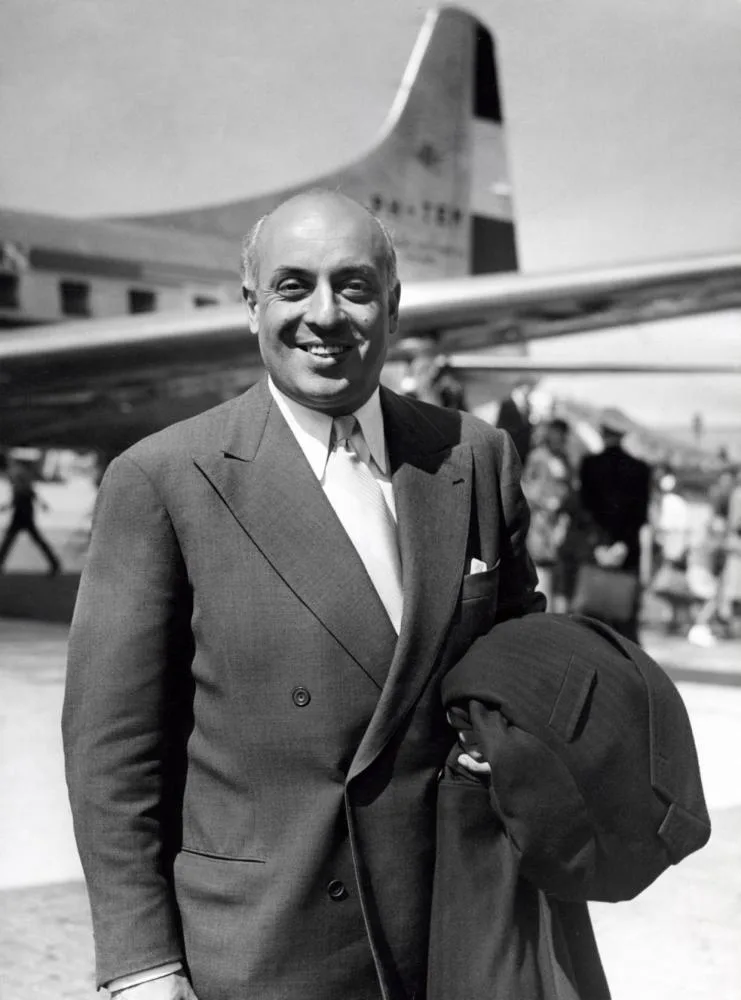
Ray Ventura photographed on August 12, 1950, on his arrival at the national airport of the Netherlands. CC0 1.0 (Creative Commons Zero, public domain dedication), as stated on the Wikimedia Commons file page. — Wikimedia Commons, File:Ray Ventura.jpg - https://commons.wikimedia.org/wiki/File:Ray_Ventura.jpg (original at the Spaarnestad Archive image server; the Commons file is the same image and is also the image property on his Wikidata item)

Ray Ventura (Raymond Ventura) was a Paris-born bandleader and pianist whose orchestra, Ray Ventura et ses Collégiens, was one of the best-known dance bands in France in the 1930s and 1940s. English Wikipedia, citing The New Grove Dictionary of Jazz, calls him a jazz pianist and bandleader who helped popularize jazz in France in the 1930s. His fame with the public rests as much on comic and topical French songs as on jazz, such as "Tout va très bien, Madame la Marquise", so he is a borderline figure: the records below show a real swing and dance-band side beside the novelty hits. He was born on April 16, 1908, and passed away in Palma de Mallorca on March 29, 1979.
French Wikipedia says that while still a schoolboy he formed a jazz band with friends from the Lycée Janson-de-Sailly, which first played at society receptions, and names Paul Whiteman, the Comedian Harmonists and Jack Hylton as the models for the group he built. English Wikipedia has him as the pianist of the Collegiate Five in 1925 and the leader a year later, when the band became a dance orchestra resembling a big band. The earliest dated record under the group's name on Discogs is a Columbia single of 1928, "I'm Afraid of You" and "Sweet Ella May", billed to Ray Ventura and His Collegians; its credits list Bob Vaz at the piano and a front line that includes the clarinettist and saxophonist Danny Polo, so on records he is the leader rather than the keyboard player. The band recorded American dance and hot numbers for Columbia and then Odeon in 1928 and 1929, among them "Can't We Be Friends", "Louise" and "You're the Cream in My Coffee", which were collected on the LP Hot Dance Music from Paris 1928-29 (Wolverine, 1979) and on the first volume of a chronological CD edition (2003). In 1929 the band played the casino at Deauville and was offered a return cruise to New York in exchange for playing on board.
From 1931 the group worked as the Collégiens, with concerts at the Salle Gaveau in 1931 and, from 1932, at the Empire, Bobino, the Olympia and the Casino de Paris, then tours of France; in 1936 Ventura opened his own cabaret on the Champs-Élysées. The sidemen named on English Wikipedia are the tenor saxophonist Alix Combelle, the trumpeter Philippe Brun and the trombonist Guy Paquinet; French Wikipedia adds the pianist and arranger Paul Misraki, the guitarist Loulou Gasté, the singer and drummer Grégoire Aslan (Coco Aslan), the arranger Raymond Legrand and, in later years, the singer Henri Salvador, the saxophonist André Ekyan and the bassist Louis Vola. The repertoire was split. Misraki and the lyricist André Hornez wrote most of the hits that made the band famous with a mass audience, "Tout va très bien, Madame la Marquise" (recorded in 1935 and a hit in 1936), "Ça vaut mieux que d'attraper la scarlatine" (1936) and "Qu'est-ce qu'on attend pour être heureux" (1938), while the band also recorded "St. Louis Blues" and "St. James' Infirmary" for Decca, "I Got Rhythm" and "Margie" in 1938, "Mama, I Wanna Make Rhythm" for Pathé in 1938, and, on a Columbia single of 1939, "Bugle Call Rag" and "After You've Gone".
Ventura was mobilised in September 1939 and, after the defeat of 1940, withdrew to the unoccupied zone. He toured Switzerland in 1941 and in November 1941 left France with part of the orchestra, among them Henri Salvador, Grégoire Aslan, Paul Misraki and Louis Vola, fearing persecution as a Sephardic Jew. They toured Brazil and Argentina and recorded there; the Frémeaux CD L'aventure sud-américaine 1942-1944 gathers twenty of the sides, including "Tico Tico No Fubá", "As Time Goes By" and "You'd Be So Nice to Come Home To". Vola's own profile has him joining the orchestra about 1940 and staying in Argentina until 1948.
The band returned to a triumphant reception at the Liberation and ran a new formation from 1945 to 1949 that had hits with "Maria de Bahia" (1947) and "La mi-août" (1949). Ventura's nephew Sacha Distel, the son of his sister the pianist Andrée Ventura, and Salvador both started out in it. Among the singles billed to his orchestra, Discogs lists a Polydor coupling of "In the Mood" and "Undecided" (undated), a 1946 single of "Hey! Ba-Ba-Re-Bop" and a 1948 one with the title "Armstrong - Duke Ellington - Cab Calloway". In 1947 he co-founded the film company Hoche Productions with Bruno Coquatrix, which produced Nous irons à Paris (1950) and, with Raoul Lévy, Et Dieu... créa la femme. By the 1960s the large sketch orchestra had become too costly to keep on the road; he left the stage for music publishing and helped launch Georges Brassens, and an Atlantic LP of 1958, Hi-Fi Sounds for Young Parisians, has his orchestra playing Brassens songs in arrangements by the trombonist Billy Byers. He is buried in the Batignolles cemetery in Paris. A 1977 revival by Le Grand Orchestre du Splendid brought the old repertoire back, and Distel recorded a tribute album of his uncle's hits around 1993.
The Collégiens were a showband, with sketches, vocal numbers and parodies on stage beside the playing, and French Wikipedia counts them among the first French sketch orchestras. French Wikipedia names the dance and show orchestras of Whiteman and Hylton, and the Comedian Harmonists, as the models. The jazz content is nonetheless real: Discogs files most of the releases billed to the Collégiens under jazz, with swing and big band as the leading styles beside chanson and music hall; the Frémeaux publisher's note describes him as one of the great promoters of jazz in France; and Codamusic names Combelle, Brun and Paquinet as the band's star soloists. A 2013 anthology puts "I'm Afraid of You" (1928) and "I Got Rhythm" (1938) in the same set as the comic hits. The Subgenres above describe that dance-band and swing side only; the humorous songs, the film work and the later publishing are variety rather than jazz and are not tagged.
- "I'm Afraid of You" / "Sweet Ella May" (1928, Columbia D19146) - the band's first record on Discogs, with Danny Polo among the reeds. Apple Music - I'm Afraid of You Listen
- Hot Dance Music from Paris 1928-29 (1979, Wolverine 4) - fifteen hot-dance sides from the first two years, issued as a jazz-collectors' LP. Apple Music - "If I Had You" (1929), one of the tracks on that LP Listen
- "Saint-James Infirmary" (1932) - the band's Decca version of the blues, dated 1932 on the Frémeaux anthology. Apple Music - Saint-James Infirmary Listen
- "Tout va très bien (Madame la Marquise)" (1935) - the song that made the orchestra famous. Apple Music - Tout va très bien Listen
- "I Got Rhythm" (1938) - the Gershwin tune as a swing number, paired with "Margie" on the original single. Apple Music - I Got Rhythm Listen
- Du jazz à la chanson - 1931-1935 (Decca 261031/32, double LP) - early sides including "Saint-Louis Blues", "Saint-James Infirmary" and "Blue Prelude". Apple Music - a compilation of the same title with overlapping tracks Listen
- L'aventure sud-américaine 1942-1944 (2001, Frémeaux FA 5005) - the wartime Brazilian and Argentine recordings. Apple Music - L'aventure sud-américaine Listen
- Ray Ventura et ses Collégiens 1928-1956 (2013, Frémeaux FA 5400) - a three-CD anthology of the whole career. Apple Music - the anthology Listen
Ray Ventura: Full Discography
French bandleader and pianist, born in Paris on April 16, 1908, who passed away in Palma de Mallorca on March 29, 1979. Discogs spreads his records across several entries: Ray Ventura (artist 456381, 325 listings, mostly compilations and appearances on anthologies), Ray Ventura Et Ses Collégiens (659835, 276 listings, including most of the 78 rpm singles) and Ray Ventura Et Son Orchestre (1210053, 99 listings, including the Polydor, Decca and Philips records). Smaller entries for Ray Ventura Y Su Orchestra De Jazz (1496000), Ray Ventura Et Son Nouveau Grand Orchestre (8285153), the Ray Ventura Singers (3035540), a Quatuor and a Sextette were also seen; whether each one is the same man was not confirmed and none of them is itemized here. This is a bandleader's catalogue of 78 rpm singles, with hundreds of reissues, so the first table is a selection of the original records and the second lists the compilations that gather them. The orchestra's output was a mix of jazz and dance-band tunes and humorous French songs; the selection leans toward the jazz and swing titles. Where Discogs lists no players, or a catalog number, date or label could not be confirmed, the cell reads Not confirmed.
Role key: Leader means the record is billed to Ventura, to his Collégiens or to his orchestra.
Selected original records
| Album | Recording Date(s) | Release Date | Label | Catalog Number | Format | Personnel | Role | Notes | Listen | Buy |
|---|---|---|---|---|---|---|---|---|---|---|
| "I'm Afraid of You" / "Sweet Ella May" (billed Ray Ventura and His Collegians) | Not confirmed | 1928 | Columbia | D19146 | 10-inch 78 rpm | Ray Ventura (leader); Discogs credits Alex Renard, Philippe Montégut and Ray Binder (trumpets), Robert Degaille (trombone), Danny Polo, Edouard Stanton, Jacques Bourgas-Rosselli and John Arslanian (reeds), Bob Vaz (piano), Henri Guesde (banjo), Andy Foster (bass saxophone, queried) and Coco Aslan (drums, side A) or Charlie Barnes (drums, side B) | Leader | Marked as a dance-orchestra fox trot on the label. Discogs lists no piano credit for Ventura himself. | Apple Music - I'm Afraid of You | — |
| "You're the Cream in My Coffee" / "Let's Do It" (billed Ray Ventura and His Collegians) | Not confirmed | 1929 | Odeon | Not confirmed | 10-inch 78 rpm | Not confirmed | Leader | Discogs release 23819498. | Apple Music - If I Had You (1929, a related side) | — |
| "Can't We Be Friends" / "With a Song in My Heart" (billed Ray Ventura and His Collegians) | Not confirmed | 1929 | Odeon | Not confirmed | 10-inch 78 rpm | Not confirmed | Leader | Discogs release 23819546. | — | — |
| "Louise" / "Lover Come Back to Me" (billed Ray Ventura and His Collegians) | Not confirmed | 1929 | Odeon | Not confirmed | 78 rpm | Not confirmed | Leader | Discogs release 29656411. | — | — |
| "St. Louis Blues" / "St. James' Infirmary" (billed Ray Ventura Et Son Orchestre) | Not confirmed | Not confirmed | Decca | F. 2915 | 10-inch 78 rpm | Not confirmed | Leader | Discogs gives no year. A 1932 recording of "St-James Infirmary" is dated on the 2013 anthology listed below. | Apple Music - Saint-James Infirmary | — |
| "Tout va très bien" / "Je crois bien que c'est l'amour" | Not confirmed | 1935 | Pathé | PA 624 | 10-inch 78 rpm | Not confirmed | Leader | The coupling that carried the orchestra's best-known song; Discogs files the master under jazz and pop with swing, music hall and chanson as styles. | Apple Music - Tout va très bien (Madame la Marquise) | — |
| "Margie" / "I Got Rhythm" | Not confirmed | 1938 | Pathé | PA 1501 | 10-inch 78 rpm | Not confirmed | Leader | Both sides marked as quick steps on the label; Discogs files the master under jazz and swing. | Apple Music - I Got Rhythm | — |
| "Mama, I Wanna Make Rhythm" / "Pop Corn Man" | Not confirmed | 1938 | Pathé | PA 1412 | 10-inch 78 rpm | Not confirmed | Leader | Filed under jazz on Discogs. | — | — |
| "Bugle Call Rag" / "After You've Gone" (billed Ray Ventura Et Ses Collégiens) | Not confirmed | 1939 | Columbia | DO-1897 | 10-inch 78 rpm | Not confirmed | Leader | Marked as a quick step on the label; Discogs files it under jazz and swing. | — | — |
| "It's a Pity to Say Goodnight" / "Hey! Ba-Ba-Re-Bop" (billed Ray Ventura Et Son Orchestre) | Not confirmed | 1946 | Decca | F 8666 | 10-inch 78 rpm | Not confirmed | Leader | Release year from the Discogs master; the pressing itself carries no year. | — | — |
| "Armstrong - Duke Ellington - Cab Calloway" / "Sans vous" (billed Ray Ventura Et Son Orchestre) | Not confirmed | 1948 | Not confirmed | Not confirmed | Not confirmed | Not confirmed | Leader | Known only from the Discogs master, which dates it to 1948; pressing details were not read. | — | — |
| "Cheveux au vent" / "Boogie Yoghi" (billed Ray Ventura Et Son Orchestre) | Not confirmed | 1948 | Polydor | Not confirmed | 10-inch 78 rpm | Not confirmed | Leader | Discogs release 20215972. | — | — |
| "In the Mood" ("Dans l'ambiance") / "Undecided" ("Indécision") (billed Ray Ventura Et Son Orchestre) | Not confirmed | Not confirmed | Polydor | 560.004 | 10-inch 78 rpm | Not confirmed | Leader | Discogs gives no year; filed under jazz and big band. | — | — |
| Hi-Fi Sounds for Young Parisians (The Music of Georges Brassens Played by Ray Ventura and His Orchestra) | Not confirmed | 1958 | Atlantic | 8011 | LP, mono | Ray Ventura and his orchestra; arranged by Billy Byers | Leader | Songs by Georges Brassens. Discogs files this album under pop and folk, world and country, not jazz. | — | — |
| Ray Ventura à New York | Not confirmed | 1959 | Versailles | Not confirmed | 7-inch EP | Not confirmed | Leader | Discogs release 12931528. | — | — |
| Paris I Love You (billed Ray Ventura and His Orchestra) | Not confirmed | Not confirmed | Society | SOC 934 | LP | Not confirmed | Leader | Ten tracks including "Insensiblement" and "Les Amants de Paris"; Discogs files it under jazz with easy listening as the style, and gives no year. | — | — |
Compilations and reissues
| Album | Recording Date(s) | Release Date | Label | Catalog Number | Format | Personnel | Role | Notes | Listen | Buy |
|---|---|---|---|---|---|---|---|---|---|---|
| Du jazz à la chanson - 1931-1935 (billed Ray Ventura & Ses Collégiens) | 1931-1935 (sides) | Not confirmed | Decca | 261031/32 | Double LP, compilation, mono | Not confirmed | Leader | Thirty-three tracks, among them "Fantastique !", "Saint-Louis Blues", "Saint-James Infirmary", "Blue Prelude", "Draggy Melody" and "La Nuit (Blue Moon)"; liner notes by Daniel Nevers. Discogs files it under jazz with swing and chanson. | Apple Music - a compilation of the same title, overlapping tracks | — |
| Hot Dance Music from Paris 1928-29 | 1928-1929 (sides) | 1979 | Wolverine | 4 | LP, compilation | Not confirmed | Leader | Fifteen sides, among them "I'm Afraid of You", "Makin' Whoopee", "If I Had You", "Button Up Your Overcoat" and "Can't We Be Friends". Filed under jazz on Discogs. | — | — |
| Intégrale chronologique 1928-1931, Volume 1 "I'm Afraid of You" | 1928-1931 (sides) | 2003 | Musiques Archives Documents | M.A.D. JF-CD-2051 / 2052 | 2 CD, compilation | Not confirmed | Leader | Includes two takes of "You're the Cream in My Coffee" and the orchestra's accompaniments for the singer Robert Burnier. Filed under jazz with swing and big band as styles. | — | — |
| L'aventure sud-américaine 1942-1944 | 1942-1944 (sides) | 2001 | Frémeaux & Associés | FA 5005 | CD, compilation | Not confirmed | Leader | Twenty tracks, among them "Tico Tico No Fubà", "As Time Goes By", "You'd Be So Nice to Come Home To" and "People Will Say We're in Love"; sixteen-page French and English booklet. | Apple Music - L'aventure sud-américaine | — |
| Ray Ventura et ses Collégiens 1928-1956 | 1928-1956 (as titled) | 2013 | Frémeaux & Associés | FA 5400 | 3 CD, compilation | Not confirmed | Leader | Compiled by Dany Lallemand. The publisher's note calls him one of the great promoters of jazz in France and says he formed one of the most brilliant orchestras of the music-hall golden age. The tracklist runs from "I'm Afraid of You" (1928) through "I Got Rhythm" (1938) to post-war hits such as "Maria de Bahia". | Apple Music - the anthology | — |
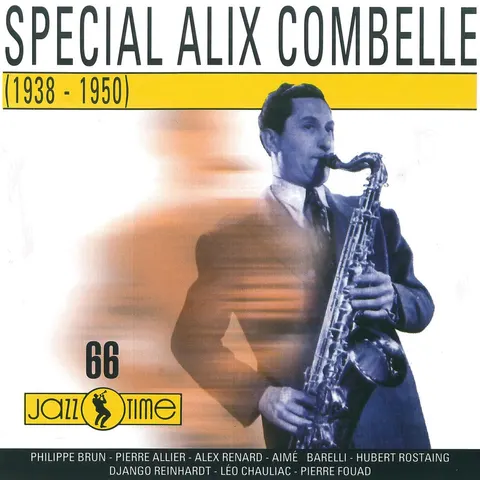
- Alix Combelle - tenor saxophonist and one of the band's named sidemen on English Wikipedia; his own profile says he joined Ray Ventura's orchestra on his return from the United States in the late 1930s.
- Louis Vola - double bassist who joined the orchestra about 1940 and went with it to Brazil and Argentina in 1941.
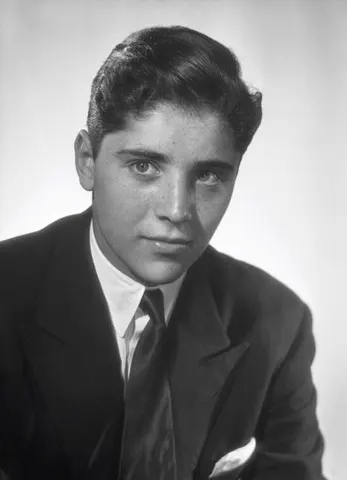
- Sacha Distel - his nephew, the son of his sister Andrée Ventura; he began in the post-war orchestra and took guitar lessons from the band's Henri Salvador in 1947.
- Philippe Brun - trumpeter and soloist from the 1929 recordings, named by English Wikipedia.
- Guy Paquinet - trombonist and soloist, named by English Wikipedia.
- Paul Misraki - pianist, arranger and composer of most of the band's hits.
- Loulou Gasté - guitarist and banjo player, one of the founding Collégiens.
- Grégoire (Coco) Aslan - singer and drummer, credited on drums on the 1928 Columbia single and a member of the group that left for South America in 1941.
- Henri Salvador - guitarist and singer in the post-war orchestra, who went on the South American tour.
- Danny Polo - clarinettist and saxophonist credited on the 1928 Columbia single.
- Raymond Legrand - arranger and orchestrator from 1934.
- Billy Byers - arranger of the 1958 Brassens LP Hi-Fi Sounds for Young Parisians.

More Swing Artists
See all 273 Swing artists →More French Jazz Artists
See all 170 French artists →- Spotify artist page
- Apple Music artist page
- Discogs: Ray Ventura
- Discogs: Ray Ventura Et Ses Collégiens
- MusicBrainz: Ray Ventura
- Wikipedia (English): Ray Ventura (pianist)
- Wikipedia (French): Ray Ventura
- BnF data: Ray Ventura
- Ray Ventura on JazzProfiles.com
- Wikipedia (English): Ray Ventura (pianist)
- Wikipedia (French): Ray Ventura
- Wikidata: Ray Ventura (Q513644)
- MusicBrainz: Ray Ventura
- Wikimedia Commons: File:Ray Ventura.jpg
- Discogs: Ray Ventura, artist 456381
- Discogs: Ray Ventura Et Ses Collégiens, artist 659835
- Discogs: Ray Ventura Et Son Orchestre, artist 1210053
- Discogs: I'm Afraid Of You / Sweet Ella May, Columbia D19146
- Discogs: Hot Dance Music From Paris 1928-29, Wolverine 4
- Discogs: Ray Ventura Et Ses Collégiens 1928-1956, Frémeaux FA 5400
- Discogs: L'aventure Sud-américaine 1942-1944, Frémeaux FA 5005
- Discogs: Hi-Fi Sounds For Young Parisians, Atlantic 8011
- Codamusic: Ray Ventura biography
- Apple Music: Ray Ventura