 JAZZPROFILES lives in the music 2,555 Jazz Artists fully Profiled!
André Hodeir
Last updated November 13, 2026
Listen on Spotify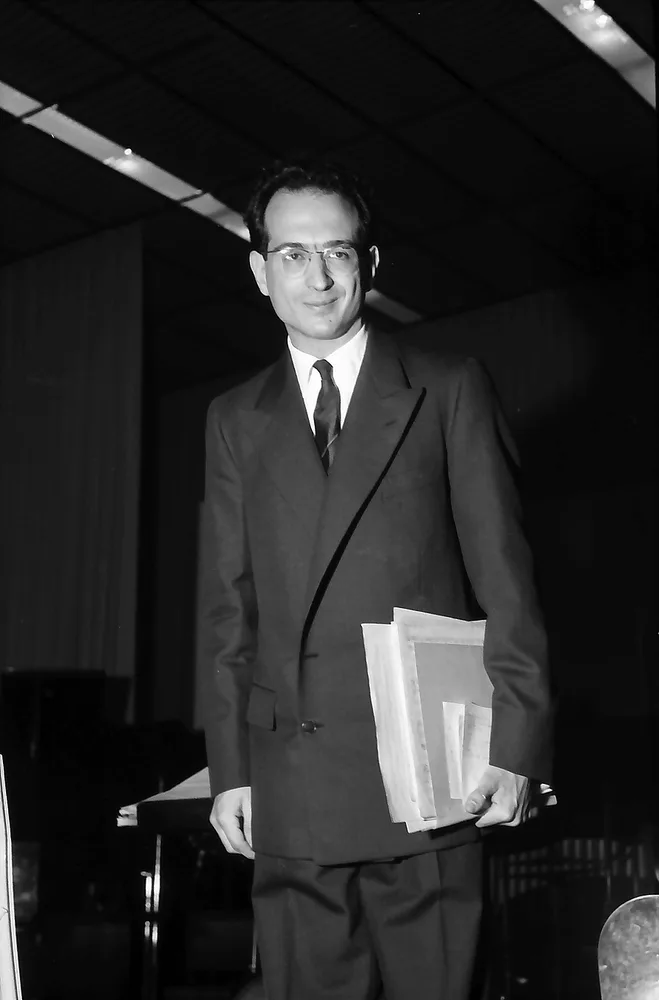
André Hodeir at the conductor's stand at the Donaueschingen Music Days (Donaueschinger Musiktage), Stadthalle, Donaueschingen, West Germany, October 19, 1957. CC BY 4.0 (https://creativecommons.org/licenses/by/4.0) — Wikimedia Commons, https://commons.wikimedia.org/wiki/File:Donaueschingen-_Donaueschinger_Musiktage;_Stadthalle;_Andr%C3%A9_Hodeir_stehend_am_Dirigentenpult_-_LABW_-_Staatsarchiv_Freiburg_W_134_Nr._050031c.jpeg (the image Wikidata lists as the main photograph of André Hodeir; also filed in Commons Category:André Hodeir)

André Hodeir was a Paris-born violinist, composer, arranger and critic who spent his career trying to make written jazz and improvised jazz work as one thing. He was born on January 22, 1921, in the 9th arrondissement of Paris, trained as a classical violinist and composer at the Conservatoire de Paris, and studied analysis in Olivier Messiaen's class. He left with three first prizes, in fugue, harmony and music history. While still a student he found jazz, and the questions it raised about musical form stayed with him for the rest of his life.
In the 1940s he played violin on the Paris jazz scene under the name Claude Laurence, and Discogs lists two Swing label records by Claude Laurence et son orchestre from 1942 and 1943. He also wrote about the music: he contributed to the Bulletin du Hot Club de France from 1945, the year his first book, Le Jazz, cet inconnu, appeared with a preface by Charles Delaunay, and he was editor-in-chief of the magazine Jazz Hot from 1947 to 1951. Introduction à la musique de jazz followed in 1948, and Hommes et problèmes du jazz (Flammarion, 1954) was published in the United States in 1956 as Jazz: Its Evolution and Essence. A second collection, Toward Jazz, appeared in 1961. The University of Michigan Press gathered his English-language jazz writing in The André Hodeir Jazz Reader in 2006.
His own composing found its vehicle in 1954, when he founded the Jazz Groupe de Paris, a small band of Paris-based players that included the tenor saxophonist and flautist Bobby Jaspar, the bassist Pierre Michelot and the trombonist Nat Peck. Hodeir wrote its repertoire, a series of pieces he called Essais (essays, in the sense of trials), and the first of them were recorded in Paris on December 13, 1954. A second set of sessions followed on June 26 and 27 and July 2, 1956, with the trumpeter Roger Guérin in the group among others. The band lasted around fifteen years but made very few records.
In March 1957, at the invitation of Savoy's Ozzie Cadena, Hodeir took the Essais to New Jersey and recorded them with American players: Donald Byrd and Idrees Sulieman on trumpets, Frank Rehak on trombone, Hal McKusick and Jay Cameron on reeds, Bobby Jaspar on tenor saxophone and flute, Eddie Costa on vibraphone, George Duvivier on bass and Bobby Donaldson on drums, with Annie Ross singing wordless obbligato on "The Alphabet". That October he conducted his Jazz Group de Paris at the Donaueschingen Music Days in West Germany, on a bill shared with Eddie Sauter's big band and the Modern Jazz Quartet.
In these same years he was also a busy film composer, often working with the guitarist Henri Crolla, on scores that included Une Parisienne (1957), Les Tripes au soleil (1959) and Saint-Tropez Blues (1961), and he built concert works out of some of the film music. The Fontana album Jazz et Jazz (1960) gathered new pieces including Jazz Cantata and Le Palais idéal. In June 1966 he recorded Anna Livia Plurabelle, a large jazz cantata on the Anna Livia Plurabelle episode of James Joyce's Finnegans Wake, for two women's voices and a jazz orchestra, and in 1972 he wrote Bitter Ending for the Swingle Singers and a jazz quintet. Martial Solal and his orchestra recorded a program of Hodeir's music in 1984, and in 1993 Patrice Caratini conducted a new recording of Anna Livia Plurabelle for Label Bleu.
By the 1980s he had largely given up composing and turned to literature, publishing the novels Play-back (1983) and Musikant (1987), children's books and two collections of short stories. He passed away in Versailles on November 1, 2011, at the age of 90. Pierre Fargeton's study André Hodeir : le jazz et son double (2016) won the Académie du Jazz's book prize in 2017.
Hodeir wrote jazz that was meticulously scored but built to leave room for improvisation, and he was one of the first to treat the problem as a matter of composition rather than arrangement. His pieces lean on counterpoint, shifting textures and small, carefully weighted ensembles, with melodic lines that often grow out of a few notes. In Les Mondes du jazz (1970) he set out twelve principles for the jazz composer through the invented figure of a Finnish composer named Matti Jarvinen, among them that a composer should write what the player can actually play and that if ten instruments are enough, using twelve is a professional fault. His long-form works, the cantata Anna Livia Plurabelle above all, belong to what critics have called Third Stream music, and his writing on the form shaped how French audiences thought about jazz after the war. AllMusic judges his composing and arranging gifts evident while noting that the Third Stream pieces are not easy listening; the pianist and composer John Lewis, quoted in a 1957 Down Beat piece, credited him with giving other musicians ideas and directions to follow. A reviewer of the 1956 Jazz Groupe de Paris reissue singled out his horn writing and distinctive voice.
- Essais (Jazz Groupe de Paris, recorded December 13, 1954, Swing) - the first set of Essais, written for a nine-piece Paris band that included Bobby Jaspar, Nat Peck and Pierre Michelot. Apple Music - Essais par le Jazz Groupe de Paris Listen
- American Jazzmen Play André Hodeir's Essais (1957, Savoy MG 12104) - the same pieces recorded in New Jersey with Donald Byrd, Hal McKusick, Bobby Jaspar and Eddie Costa, plus Annie Ross on "The Alphabet".
- Le Jazz Groupe de Paris joue André Hodeir (recorded 1956, released 1957, Vega) - the second Paris sessions, with Roger Guérin, Jean Liesse, Pierre Michelot and Christian Garros; the album includes "Paradoxe 1", "On a Scale" and "Bicinium". Apple Music - Jazz in Paris Listen
- Jazz et Jazz (1960, Fontana) - new Hodeir works including Jazz Cantata, Le Palais idéal and Flautando. Apple Music - Jazz et Jazz Listen
- Anna Livia Plurabelle (1966, Philips PHS 900-255) - the jazz cantata on the Anna Livia Plurabelle episode of Joyce's Finnegans Wake, sung by Monique Aldebert and Nicole Croisille over an orchestra that included Michel Portal, Roger Guérin, Pierre Michelot, Bernard Lubat and the drummer Franco Manzecchi; Patrice Caratini conducted a new recording in September 1993, released by Label Bleu in 1994 (LBLC 6563). Apple Music - Anna Livia Plurabelle (Caratini recording, Label Bleu)
- Bitter Ending (1972, Epic) - Hodeir's setting of the final pages of Finnegans Wake for the Swingle Singers and a jazz quintet with Roger Guérin and Jean-Louis Chautemps, conducted by Hodeir.
- Kenny Clarke's Sextet, Plays André Hodeir (1956, Philips N 77.312 L) - the drummer Kenny Clarke leading a Paris band through Hodeir's arrangements of bebop-era tunes such as "Bemsha Swing", "'Round About Midnight" and "Jeru", plus three of Hodeir's own pieces, recorded in October and November 1956 with Martial Solal, Billy Byers, Hubert Rostaing and Armand Migiani. Apple Music - Kenny Clarke's Sextet Plays Andre Hodeir
- The Historic Donaueschingen Jazz Concert 1957 (1977, MPS) - the October 1957 concert shared with Eddie Sauter and the Modern Jazz Quartet; the Jazz Groupe de Paris plays "Jordu" and "Paradoxe II". Apple Music - The Historic Donaueschingen Jazz Concert 1957
André Hodeir: Full Discography
French composer, arranger, conductor, violinist and critic, born in Paris on January 22, 1921, who passed away in Versailles on November 1, 2011. Discogs files his releases under artist 258079 (https://www.discogs.com/artist/258079-Andr%C3%A9-Hodeir) and lists 129 entries, most of them compilations, film-music reissues and other artists' records on which he is credited as composer or arranger. His violin pseudonym, Claude Laurence, has its own Discogs entry (artist 752918), and his bands are filed separately as Le Jazz Groupe De Paris (564132), Claude Laurence Et Son Orchestre (4094526) and André Hodeir And His Orchestra (8174722). This discography follows the releases that carry his name as leader or composer and the records on which his arrangements were recorded by others. Where a catalogue number, date or personnel list could not be confirmed, the cell says so.
Role key: Composer-leader means Hodeir wrote the music and conducted or directed the recording; he is not credited as a performing instrumentalist on any release listed here.
Leader and composer-leader releases
| Album | Recording Date(s) | Release Date | Label | Catalog Number | Format | Personnel | Role | Notes | Listen | Buy |
|---|---|---|---|---|---|---|---|---|---|---|
| Musiques de films par André Hodeir (Autour d'un récif, Saint-Tropez) | 1949 (Autour d'un récif); 1952 (Saint-Tropez) | Mid-1950s | Swing | M. 33.343 | 10-inch LP | Not documented | Composer-leader | A jazz ballet on Jacques-Yves Cousteau's underwater images, a suite for ten instruments from Paul Paviot's film score, and "Saint-Tropez". Discogs gives 1953 as the year. | — | — |
| Essais d'André Hodeir (Le Jazz Groupe de Paris) | December 13, 1954, Paris | Not confirmed | Swing | M 33353 | 10-inch LP | Jean Liesse, Buzz Gardner (trumpets), Nat Peck (trombone), Jean Aldegon, Bobby Jaspar, Armand Migiani, Fats Sadi, Pierre Michelot (bass), Jacques David | Composer-leader | The first set of Essais. Reissued in the Fresh Sound set below and on Apple Music as Essais par le Jazz Groupe de Paris. | Apple Music | — |
| Le Jazz Groupe de Paris joue André Hodeir | June 26 and 27 and July 2, 1956, Paris | 1957 | Véga | V 30 M 572 | LP | Roger Guérin, Jean Liesse (trumpets), Nat Peck (trombone), Jean Aldegon, Georges Grenu, Armand Migiani, Fats Sadi, Pierre Michelot (bass), Christian Garros (drums) | Composer-leader | Includes "Paradoxe 1", "Criss Cross", "Jordu", "Milano", "Parisian Thoroughfare", "Évanescence", "Tension détente", "Bicinium", "On a Scale" and "Triades". Reissued by Universal in its Jazz in Paris series (2001). | Apple Music | — |
| American Jazzmen Play André Hodeir's Essais | March 1957, Hackensack, New Jersey | 1957 | Savoy | MG 12104 | LP | Donald Byrd, Idrees Sulieman (trumpets), Frank Rehak (trombone), Hal McKusick (alto saxophone, bass clarinet), Jay Cameron (baritone saxophone, clarinet, bass clarinet), Bobby Jaspar (tenor saxophone, flute), Eddie Costa (vibraphone), George Duvivier (bass), Bobby Donaldson (drums), Annie Ross (voice obbligato) | Composer-leader | Nine tracks: "On a Standard", "On a Riff", "Cross Criss", "Paraphrase", "On a Blues", "The Alphabet", "Esquisse", "Paradoxe 2", "Esquisse 2". Engineered by Rudy Van Gelder; liner notes by Hodeir and Ozzie Cadena. Discogs credits Hodeir with composition and conducting. | — | — |
| On a Riff / Esquisse 1 (single) | Not confirmed | Not confirmed | Savoy | 45-4510 | 7-inch single | Same band as MG 12104 | Composer-leader | Excerpt from the Savoy LP above. Discogs lists 1955, but since it excerpts the 1957 LP the year is not confirmed. | — | — |
| Parisian Thoroughfare / Jordu (single) | Not confirmed | 1957 | Savoy | 45-4524 | 7-inch single | Not documented | Composer-leader | Listed by Discogs under Hodeir's name. | — | — |
| Une Parisienne (extraits de la musique originale du film) | Not confirmed | 1958 | Not confirmed | Not confirmed | Not confirmed | Not confirmed | Composer (with Henri Crolla) | Film score for the Michel Boisrond film, credited jointly to Crolla, Hubert Rostaing and Hodeir on Discogs. | — | — |
| Les Tripes au soleil (bande originale du film) | Not confirmed | 1959 | Fontana | 460.634 ME | 7-inch EP | Le Jazz Groupe de Paris and the Ensemble vocal Christiane Legrand | Composer-leader | Five pieces from Claude Bernard-Aubert's film: "Rythm and Blues nô 1", "Spiritual", "Danse", "Le Désert", "Blues". | — | — |
| Voulez-vous danser avec moi (bande originale du film) | Not confirmed | 1959 | Not confirmed | Not confirmed | Not confirmed | Not confirmed | Composer (with Henri Crolla) | Credited to Henri Crolla and Hodeir on Discogs. | — | — |
| Histoire d'un poisson rouge (bande originale du film) | Not confirmed | 1959 | Not confirmed | Not confirmed | Not confirmed | Not confirmed | Composer (with Henri Crolla) | Film music credited to Crolla and Hodeir on Discogs. | — | — |
| Saint-Tropez Blues (bande originale du film) | Not confirmed | 1960 (EP issued by Fontana in 1961) | Fontana | Not confirmed | EP | Not confirmed | Composer (with Henri Crolla) | Credited to Henri Crolla and Hodeir; MusicBrainz dates the EP to November 1960. | — | — |
| Jazz et Jazz (Nouvelles œuvres d'André Hodeir) | Autumn 1960, Paris (the title piece dates from 1952) | 1960 | Fontana | 680.208 ML | LP | Le Jazz Groupe de Paris (on Jazz Cantata and Le Palais idéal); other players not documented | Composer-leader | "Jazz et Jazz", "Trope à Saint-Trop", Jazz Cantata (7 parts), "Osymetrios I", "Flautando", Le Palais idéal (7 parts), "Osymetrios II". The record is dedicated to the memory of Henri Crolla. | Apple Music | — |
| Anna Livia Plurabelle | June 1966, Paris | 1966 | Philips | PHS 900-255 | LP | Michel Portal (alto saxophone), Hubert Rostaing (clarinet), Raymond Guiot (flute), Roger Guérin (flugelhorn), Bernard Lubat (vibraphone), Pierre Cullaz (guitar), Guy Pedersen and Pierre Michelot (basses), Christian Garros, Daniel Humair, Franco Manzecchi and Roger Fugen (drums), Monique Aldebert and Nicole Croisille (vocals) | Composer-leader (conductor) | A jazz cantata on the Anna Livia Plurabelle episode of James Joyce's Finnegans Wake, in two parts of 24:33 and 28:04. | — | — |
| L'écume des jours (bande originale du film) | Not confirmed | 1968 | Philips | 437.414 BE | 7-inch EP | Not documented | Composer-conductor | Five pieces for the film: "Colin et les orphelines", "L'enlèvement", "Bigle-moi", "La Chambre de Chloé", "Sortie de Chloé". | — | — |
| Bitter Ending | Not confirmed | 1972 (Epic EPC 80544 is a French reissue dated 1974) | Epic | EPC 80544 (reissue) | LP | Les Swingle Singers; Roger Guérin (trumpet), Pierre Gossez (alto saxophone), Jean-Louis Chautemps (tenor saxophone), Jacques Cavallero (bass), Marcel Sabiani (drums) | Composer-leader (conductor) | Two parts of 17:59 and 12:05, on the closing pages of Finnegans Wake. | — | — |
| The Historic Donaueschingen Jazz Concert 1957 (shared with Eddie Sauter's orchestra and the Modern Jazz Quartet) | October 1957, Donaueschingen | 1977 | MPS | MPS 15 479 | LP | Le Jazz Groupe de Paris on "Jordu" and "Paradoxe II": Christian Bellest and Roger Guérin (trumpets), Billy Byers (trombone), Pierre Gossez (alto saxophone), Georges Grenu (tenor saxophone), Armand Migiani (baritone saxophone), Fats Sadi (vibraphone), Guy Pedersen (bass), Christian Garros (drums) | Composer-leader (conductor) | Discogs gives the recording date as October 20, 1957, in mono, remastered in stereo by Hans Georg Brunner-Schwer. | Apple Music | — |
| Solal et son orchestre jouent Hodeir | March 30 and 31 and April 1, 1984, Studio 103, Radio France, Paris | 1984 | Carlyne Music | CAR 008 | LP | Martial Solal (piano, conductor), Jean-Louis Chautemps, François Jeanneau, Pierre Gossez, Jacques Di Donato, Jean-Pierre Debarbat (reeds), Bernard Marchais, Eric Le Lann, Roger Guérin (trumpets), Christian Guizien, Jacques Bolognesi (trombones), Philippe Macé (vibraphone), Frédéric Sylvestre (guitar), Cesarius Alvim (bass), André Ceccarelli (drums) | Composer | Five Hodeir pieces ("Le Désert recommencé", "Transplantation I", "Arte della commedia dell'", "D or No", "Catalyse") and two Thelonious Monk tunes arranged by Hodeir ("Crépuscule with Nelly", "Comin' on the Hudson"). | — | — |
| Anna Livia Plurabelle (Patrice Caratini, conductor) | September 16 to 20, 1993, Studio 104, Radio France, Paris | 1994 | Label Bleu | LBLC 6563 | CD | Patrice Caratini (conductor), Élisabeth Lagneau (contralto) and Valérie Philippin (soprano), Marc Ducret (guitar), Philippe Macé and Christine Lagniel (vibraphones), Jean Gobinet (trumpet), a large ensemble of reeds, brass and strings | Composer | A new recording of the cantata, with Laurent Cugny as music consultant. | Apple Music | — |
| Essais (Complete Paris & New York Sessions) | 1954 to 1960, Paris; March 1957, Hackensack | 2017 | Fresh Sound | FSRCD 945 | 2 CDs (4 LPs) | The Jazz Groupe de Paris and the American band, as above | Composer-leader | Gathers Essais d'André Hodeir, Le Jazz Groupe de Paris joue André Hodeir, Jazz et Jazz and the Savoy LP. | — | — |
Records of Hodeir's music led by others
| Album | Recording Date(s) | Release Date | Label | Catalog Number | Format | Personnel | Role | Notes | Listen | Buy |
|---|---|---|---|---|---|---|---|---|---|---|
| Kenny Clarke's Sextet Plays André Hodeir | October 26, November 21 and November 30, 1956 | 1956 | Philips | N 77.312 L | LP | Kenny Clarke (drums), Martial Solal and René Urtreger (piano), Jean Warland and Pierre Michelot (bass), Hubert Rostaing (alto saxophone), Armand Migiani (baritone saxophone), Billy Byers and Nat Peck (trombones), Roger Guérin (trumpet) | Arranger; composer of "Oblique", "On a Riff" and "Cadenze" | Produced by Boris Vian. Hodeir arranged bebop-era tunes including "Bemsha Swing", "Eronel" and "Jeru". | Apple Music | — |
Other credits
Discogs also lists Hodeir on film-music anthologies, the Jazz in Paris and Jazz & Cinéma reissue series, and records by Martial Solal, Bobby Jaspar, Kenny Clarke, Henri Crolla and others, as well as later compilations of his own music, among them The Vogue Sessions (1999), Jazz et Jazz - Les Tripes au soleil (Fontana, 1988), Henri Crolla & Andre Hodeir (Moochin' About, 2020), Musique classique et jazz 1958-1962 (Frémeaux & Associés, 2020) and Essais transformés ! (a promotional CD given away with issue 735 of Jazz Magazine in February 2021, compiled by Franck Bergerot, drawing on the 1956 and 1960 sessions). Details of those are not itemized here. His recordings as the violinist Claude Laurence are filed under the separate Discogs entry. They include two 78 rpm records by Claude Laurence et son orchestre on the Swing label, "Minor Swing" / "Brumes dans le soir" (1942) and "Le Blues de toujours" / "Toi que j'attendais" (1943), and credits on Kenny Clarke's 1948 Swing sides; the rest of that entry is mostly later compilations and records of Boris Vian songs, and none of it is itemized here.
Sources
- Discogs: artist 258079, masters 276595, 488538, 611107, 718141 and releases 2776893, 2841816, 3034442, 3741888, 3989584, 4312871, 4333597, 4392190, 5277774, 5779073, 6483400, 6744967, 10182679, 17750197
- Fresh Sound Records: Essais (Complete Paris & New York Sessions), https://www.freshsoundrecords.com/andre-hodeir-albums/6639-essais-complete-paris-new-york-sessions-4-lp-on-2-cd.html
- Classical Music magazine: review of Joue André Hodeir, https://www.classical-music.com/features/jazz/joue-andre-hodeir
- MusicBrainz: André Hodeir, https://musicbrainz.org/artist/0f2ee95c-ad09-402a-98a8-98240fa83747
- Apple Music (iTunes Lookup) for the listening links
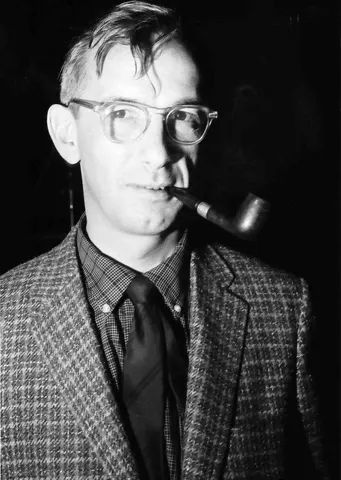
- Jazz Groupe de Paris - the band Hodeir founded and directed from 1954, including Bobby Jaspar, Pierre Michelot, Nat Peck, Roger Guérin, Jean Liesse, Fats Sadi and Christian Garros at different dates.
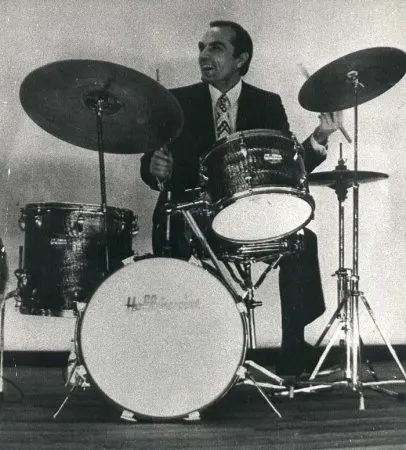
- Franco Manzecchi - one of the four drummers credited on the 1966 recording of Anna Livia Plurabelle.
- Michel Portal, Bernard Lubat and Roger Guérin - credited on Anna Livia Plurabelle (Portal on alto saxophone, Lubat on vibraphone, Guérin on flugelhorn); Guérin also plays trumpet on Bitter Ending and at Donaueschingen.
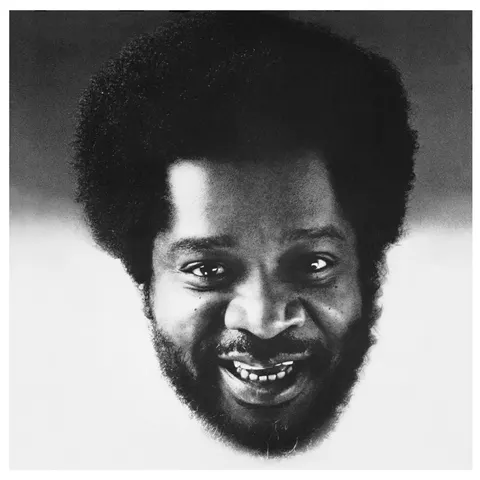
- Jean-Louis Chautemps - tenor saxophone on Bitter Ending.
- Donald Byrd - trumpet on the 1957 Savoy session of Essais.
- George Duvivier - bass on the same Savoy session.
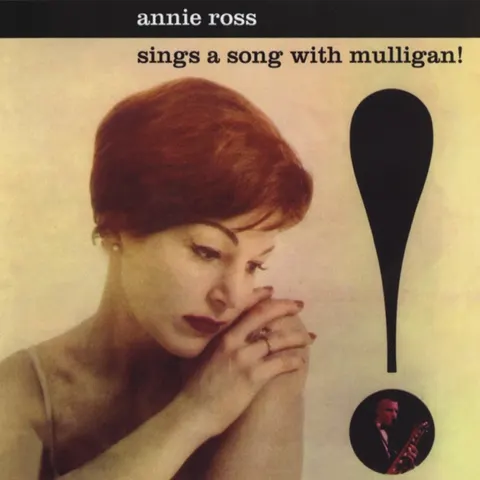
- Annie Ross - wordless vocal obbligato on "The Alphabet", on the same Savoy session.
- Kenny Clarke - leader of the Paris band that recorded Hodeir's arrangements in 1956; Boris Vian produced the date.
- Eddie Sauter - shared the Donaueschingen concert of October 1957.
- Henri Crolla - the guitarist with whom Hodeir wrote a series of film scores in the late 1950s and early 1960s.
- Martial Solal - pianist on the 1956 Kenny Clarke date, and in March and April 1984 recorded an album of Hodeir's music with his orchestra at Radio France in Paris.
- Swingle Singers - the vocal group for Bitter Ending (1972).
- Patrice Caratini - conducted the 1993 recording of Anna Livia Plurabelle released by Label Bleu, with Marc Ducret among the guitarists and soloists.
More Third Stream Artists
See all 141 Third Stream artists →More French Jazz Artists
See all 170 French artists →- Spotify artist page
- Apple Music artist page
- Discogs
- AllMusic
- MusicBrainz
- Wikipedia (English)
- Wikipedia (French)
- André Hodeir on JazzProfiles.com
- Wikipedia (English): André Hodeir
- Wikipedia (French): André Hodeir
- Wikidata: André Hodeir (Q432330)
- MusicBrainz: André Hodeir
- Discogs: André Hodeir, artist 258079
- Discogs: American Jazzmen Play André Hodeir's Essais, Savoy MG 12104
- AllMusic: Andre Hodeir, biography
- musicologie.org: André Hodeir (1921-2011)
- Fresh Sound Records: Essais, Complete Paris & New York Sessions
- Classical Music: Joue André Hodeir
- Slipped Disc: Swingle Singers' composer dies at 90 (November 2, 2011)
- Bibliothèque nationale de France: André Hodeir
- Wikimedia Commons: André Hodeir at the Donaueschingen Music Days, 1957
- JazzProfiles: Eddie Sauter