 JAZZPROFILES lives in the music 2,555 Jazz Artists fully Profiled!
Joseph Reinhardt
Last updated November 14, 2026
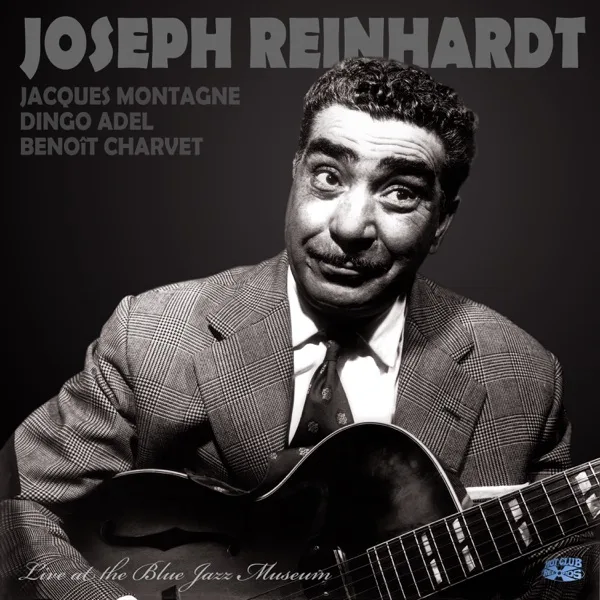
The cover of *Live at the Blue Jazz Museum* (Hot Club Records, 1990), a Joseph Reinhardt album, with a photograph of him seated with an archtop guitar. The same recording is listed on Discogs as *Live in Paris 1966* (HCRCD 66, 1991). Standard copyright, all rights reserved, held by the rights holders of the release. This is not a Creative Commons or public-domain image; it is an album cover shown as an honestly disclosed editorial identification image. — Apple Music artwork for the album, https://music.apple.com/fr/album/485326300
Joseph Reinhardt, nicknamed Nin-Nin, was a French guitarist of the manouche tradition and the younger brother of Django Reinhardt. He was born in Paris on March 1, 1912, in the 12th arrondissement, two years after Django, and passed away in Bondy, east of Paris, on February 24, 1982, at the age of 69. He played rhythm guitar on most of Django's prewar recordings, above all with the Quintette du Hot Club de France between 1934 and 1939, and he was one of the first guitarists in France to play an amplified instrument, performing for years on a home-made guitar of his own design. He is buried in the cemetery at Samois-sur-Seine, beside his brother.
As boys the brothers played together in cafes and dance halls. According to French Wikipedia, Joseph began on banjo in the Romani encampments, on cafe terraces and in the musette dance halls, and when Django lay in hospital after the fire in his caravan it was Joseph who brought him a guitar, since a banjo was too loud for a ward. He discovered jazz in 1931 at the home of the painter and photographer Émile Savitry in Toulon and, by 1932 and 1933, having taken up the guitar himself, he was playing with seasoned musicians, among them Coleman Hawkins.
From 1934 the Quintette du Hot Club de France took up most of his time. The first sessions of the group listed in a French session discography date from September 10 and December 28, 1934, with Joseph and Roger Chaput on rhythm guitars, Louis Vola on bass and Stéphane Grappelli on violin, and his place in the rhythm section later alternated with Pierre "Baro" Ferret and Eugène Vées. He appears on the quintet's Paris sessions through 1939, among them "Minor Swing" and "Viper's Dream" (November 25, 1937) and the March and May 1939 dates with Emmanuel Soudieux on bass. Charles Delaunay, the group's co-founder, described him as his brother's loyal, self-effacing companion, the man who carried the guitar and supplied spare strings, and the brothers' relationship was stormy enough that they sometimes came to blows.
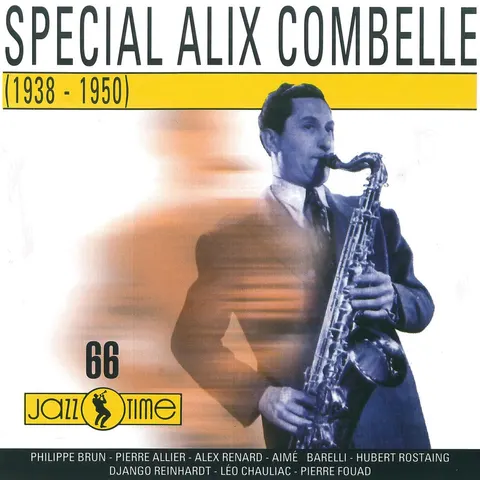
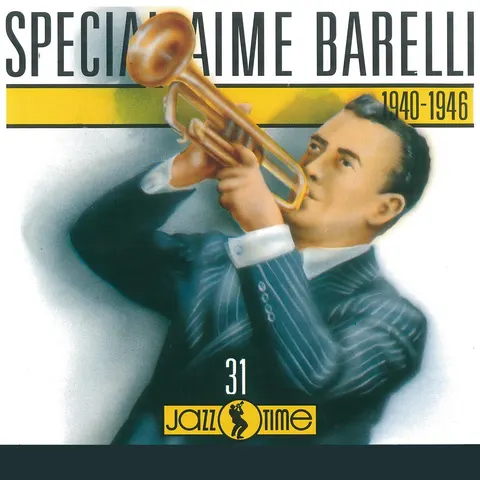
Reinhardt stepped out on his own from 1937. On November 12, 1937 he recorded with the trumpeter Bill Coleman and Grappelli, then made a duo record with the trumpeter Philippe Brun and joined Alix Combelle's Hot Four in January 1938. In 1940 he entered the big band of Aimé Barelli and Combelle's orchestra Le Jazz de Paris, and between December 1940 and 1941 he played guitar on their sessions and on those of Hubert Rostaing, who also took the clarinet chair in the reorganized Quintette du Hot Club de France of October 1940. In 1941 and 1942 he recorded with the accordionist Gus Viseur, with the violinist Michel Warlop's trio and with the harmonica player Dany Kane, and he led an Orchestre Swing Jo Reinhardt on Decca. In December 1943 he recorded with his own ensemble, which included the violinist Claude Laurence, a pseudonym of André Hodeir; in 1944 the rhythm guitarist was Henri Crolla.
He again recorded with his brother in 1944 and 1945 and in 1947 and 1948, among them the March 26, 1947 Quintette session with Grappelli and Jean "Matelot" Ferret on rhythm guitar, the Rostaing quintet dates of July and October 1947, and the November 1947 sessions with Grappelli, Vées and the bassist Fred Ermelin. On October 17, 1947 he was the guitarist, with Chaput on rhythm guitar, on a session billed to Grappelli's Hot Four. After Django's death in 1953 he stopped playing for a time and, French Wikipedia reports, kept an empty chair on stage in his brother's memory. He appeared in Paul Paviot's 1957 documentary film on Django, played an electric guitar of his own construction in the 1950s and 1960s, and led a string quintet with the violinists Pierre Ramonet and Vivian Villerstein in the clubs of the Latin Quarter. Ramonet plays on his 10-inch LP Joseph Reinhardt joue... Django (Les Discophiles Français, 1958), and in October 1959 Decca issued his EP Mon pote le gitan with the singer Jacques Vérieres. His later albums include Hommage à Django Reinhardt and Live in Paris 1966, the latter recorded with the guitarists Jacques Montagne and Henri "Dingo" Adel and the bassist Benoît Charvet and issued on CD by Hot Club Records in 1991. In 1978 he was photographed at the Django Reinhardt Festival in Samois-sur-Seine, where his nephew Lousson, Django's son, also played.
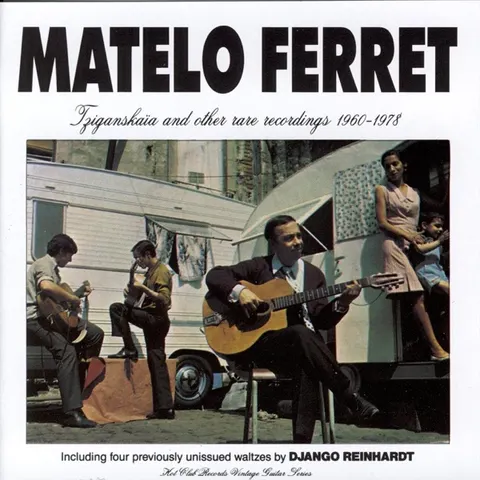
French Wikipedia describes Joseph as a more abrupt and less sophisticated stylist than his brother, and also as a gifted arranger. His role for most of the 1930s was rhythmic: on the Quintette records he is the steady chordal support behind Django's solos, which is why his name appears so often beside Roger Chaput's, Baro Ferret's and Eugène Vées's in the personnel lists. Out from under that role, his own records of the late 1950s and 1960s are mostly his brother's repertoire, "Nuages", "Djangology", "Manoir de mes rêves" and "Minor Swing", alongside pieces of his own such as "Violons", "Bric à Brac", "Triste mélodie" and "Menuet" credited to him on Hommage à Django Reinhardt. French Wikipedia adds that he followed younger guitarists with interest, naming Jimmy Raney and Wes Montgomery, and that Montgomery once answered him in concert with a string bend, a gesture he did not otherwise use but which was a signature of Django. Shortly before his death he told the young Biréli Lagrène that he had the same right hand as his brother. French Wikipedia counts him, with the Ferret brothers (among them Matelo Ferret) and the guitarist Francis-Alfred Moerman, among the players who carried manouche jazz forward, helped by his frequent appearances at the cafe La Chope des Puces in Saint-Ouen. AllMusic classes his work as jazz, with the styles guitar jazz and swing, which is why the Gypsy Jazz and Swing tags are used here.
- Minor Swing / Viper's Dream (Quintette du Hot Club de France, November 25, 1937) - the session that produced the quintet's best-known tune, with Joseph and Eugène Vées on rhythm guitars behind Django Reinhardt and Stéphane Grappelli.
- Rose Room / The Merry-Go-Round Broke Down (Bill Coleman and His Orchestra, November 12, 1937) - a small-group date with Coleman, Grappelli on violin and piano, and Joseph as the guitarist.
- Le Jazz de Paris (Alix Combelle, December 1940 to 1941) - the big-band sessions for Combelle, with Aimé Barelli and Hubert Rostaing in the band and Joseph as guitarist, issued on Swing 78s.
- Joseph Reinhardt joue... Django (1958, Les Discophiles Français) - his own 10-inch LP of Django's tunes with violinist Pierre Ramonet. Apple Music - Joseph Reinhardt joue Django Listen
- Mon pote le gitan (1959, Decca) - the EP with Jacques Vérieres, headed by the title song and "Manouche". Apple Music - Mon pote le gitan Listen
- Hommage à Django Reinhardt (1967, Nouvelles Galeries et Magasins Modernes) - twelve tracks, eight of them credited to Django and four, including "Violons" and "Menuet", to Joseph.
- Live in Paris 1966 (1991, Hot Club Records) - an electric-guitar set with two acoustic guitarists and bass, issued posthumously. Apple Music - Live at the Blue Jazz Museum Listen
Joseph Reinhardt: Full Discography
French manouche guitarist Joseph Reinhardt (born March 1, 1912 in Paris, passed away February 24, 1982 in Bondy), known as Nin-Nin, was the younger brother of Django Reinhardt. Discogs files his releases under the artist entry Joseph Reinhardt (artist 403584), with separate entries for several of his named groups: Joseph Reinhardt Et Son Quintette (1562027), Joseph Reinhardt Et Son Ensemble (567572), Orchestre Swing Jo Reinhardt (567593), Orchestre Joseph Reinhardt (6397105) and Joseph Reinhardt Et Son Quartette (7374072). Name variations on record include Jo Reinhardt, Joe Reinhardt, Jean Reinhart and J. Reinhardt.
The leader list is drawn from those entries and from the release pages for the Les Discophiles Français, Decca, Nouvelles Galeries et Magasins Modernes, Sonopresse and Hot Club Records issues, with labels, catalog numbers and personnel read from the release pages. Where a catalog number, year or musician could not be confirmed, the cell says so. He was above all a sideman on his brother's records, and Discogs lists 371 credited items, mostly 78 rpm sides and reissues of the Quintette du Hot Club de France; the tables below itemize a selection, with session dates and personnel taken from a French session discography of his recordings.
As leader and co-leader
| Album | Year | Label and catalog | Personnel | Notes | Listen | Buy |
|---|---|---|---|---|---|---|
| Un peu de rêve / Sweet Georgia Brown (Joseph Reinhardt et son Ensemble, 78 rpm) | Not confirmed (recorded December 1943) | Disques ABC Paris, catalog not confirmed | Joseph Reinhardt (guitar), Claude Laurence (violin, a pseudonym of André Hodeir), Pierre "Baro" Ferret (rhythm guitar), Emmanuel Soudieux (bass), Gaston Léonard (drums), per the session listing | Recorded in Paris in December 1943; the release page lists no personnel. | not found | — |
| J'attends l'amour / L'Oeil noir (Joseph Reinhardt et son Ensemble, 78 rpm) | 1943 | Decca, catalog not confirmed | Not confirmed | A second 78 under his ensemble's name. | not found | — |
| Zazou-Zazou / Ballade (Orchestre Swing Jo Reinhardt, 78 rpm) | 1942 | Decca, catalog not confirmed | Not confirmed | A March 1942 session billed Ensemble Swing Jo Reinhardt names Gus Viseur (accordion), André Lluis (clarinet), Joseph Sollero (rhythm guitar) and Maurice Speilleux (bass) for "Pam Pam" and "Fantasque"; whether these are the same release is not confirmed. | not found | — |
| Joseph Reinhardt joue... Django (10-inch LP, billed Joseph Reinhardt et son Quintette) | 1958 | Les Discophiles Français 25114 | Joseph Reinhardt (solo guitar), Pierre Ramonet (violin), Jean Maille and Paul Mayer (guitars), Pierre Sim (bass) | Eight tracks: "Djangology", "Le Manoir de mes rêves", "Bric Top", "Nuages", "Bric à Brac", "Sweet Sue", "Triste mélodie" and "I Know That You Know". Sleeve notes by Jacques André, recorded by André Charlin. Discogs master 2817317. Streaming editions from 2010 (Label Ouest) add "Mon pote le gitan", "Manouche" and "Oui, pour vous revoir". | Apple Music (2010 edition) | — |
| Mon pote le gitan (EP, shared with Jacques Vérieres) | 1959 (October) | Disques Decca 450.891 | Joseph Reinhardt et son Quintette on "Mon pote le gitan" and "Manouche"; Jacques Vérieres with Georges Cavano et son Ensemble on "Adieu mon cousin" and "La Nuit de Saint-Ouen" | Four-track 7-inch EP; the session listing dates the recordings to 1958. Streaming services date it 1960. | Apple Music | — |
| Joue: Django Reinhardt (EP) | Not confirmed | Sonopresse EV. 50.004 | Joseph Reinhardt (guitar); other musicians not listed | Four tracks: "Nuages", "Djangology", "Lover Man" and "Swanee River". Discogs master 1346885. | not found | — |
| Hommage à Django Reinhardt (LP) | 1967 (the English Wikipedia discography gives 1965 for the JB edition) | Nouvelles Galeries et Magasins Modernes NG 281; also issued by JB | Joseph Reinhardt (guitar). A session listing of 1965 names Vivian Villerstein (violin), Henri "Dingo" Adel (guitar), Patrice Caratini (bass) and Guy Hayat (drums) for this repertoire | Twelve tracks: "Nuages", "Mélodie au crépuscule", "Minor Swing", "Djangology", "Daphné", "Tears", "Manoir de mes rêves" and "Place de Brouckère" are credited to Django; "Violons", "Bric à Brac", "Triste mélodie" and "Menuet" to Joseph. Discogs master 548876, also listed as À Django: La guitare de Joseph Reinhardt (1973). | not found | — |
| Live in Paris 1966 (CD) | 1991 (recorded 1966) | Hot Club Records HCRCD 66 | Joseph Reinhardt (electric guitar), Jacques Montagne and Henri Adel (acoustic guitars), Benoît Charvet (bass); produced by Alain Antonietto and Jon Larsen | Twelve tracks including "I Know That You Know", "Manouche", "Nuages", "Lover Man" (9:42) and "Viper's Dream" (8:08). Discogs master 2369971. Streaming services list it as Live at the Blue Jazz Museum (1990). | Apple Music | — |
Quintette du Hot Club de France and related sessions as rhythm guitarist (selection)
Dates and personnel are from a French session discography; Joseph's chair is rhythm guitar unless stated.
| Date | Group (leader) | Selected titles | Personnel besides Joseph Reinhardt | Notes |
|---|---|---|---|---|
| September 10, 1934 | Delaunay's Jazz (Quintette du Hot Club de France) | "I Saw Stars", "Confessin'" | Django Reinhardt (guitar), Stéphane Grappelli (violin), Roger Chaput (rhythm guitar), Louis Vola (bass), Bert Marshall (vocal) | Earliest quintet session in the listing. |
| December 28, 1934 | Quintette du Hot Club de France | "Dinah", "Tiger Rag", "Lady Be Good", "I Saw Stars" | Django Reinhardt, Stéphane Grappelli, Roger Chaput, Louis Vola | |
| June 1935 | Quintette du Hot Club de France with Arthur Briggs and Grappelli | "Avalon", "Smoke Rings", "Clouds", "Believe It, Beloved" | Django Reinhardt, Stéphane Grappelli, Pierre "Baro" Ferret (rhythm guitar), Louis Vola | Briggs on trumpet with brass on part of the date. |
| September 2, 1935 | Quintette du Hot Club de France | "Chasing Shadows", "Some of These Days", "Djangology" | Django Reinhardt, Stéphane Grappelli, Baro Ferret, Louis Vola | |
| October 15, 1936 | Quintette du Hot Club de France | "Nagasaki", "Swing Guitars", "Georgia on My Mind", "Shine" | Django Reinhardt, Stéphane Grappelli, Baro Ferret, Louis Vola, Freddy Taylor (vocal) | |
| November 25, 1937 | Quintette du Hot Club de France | "Minor Swing", "Viper's Dream", "Bricktop", "Speevey" | Django Reinhardt, Stéphane Grappelli, Eugène Vées (rhythm guitar), Louis Vola | |
| December 14, 1937 | Quintette du Hot Club de France with brass and strings | "Boléro", "Mabel", "My Serenade" | Django Reinhardt (also arranger), Stéphane Grappelli on part, Eugène Vées, Louis Vola, with trumpets, trombones and violins | |
| June 14, 1938 | Quintette du Hot Club de France | "Billets doux", "Swing from Paris", "Them There Eyes", "Three Little Words" | Django Reinhardt, Stéphane Grappelli, Eugène Vées, Roger Grasset (bass) | |
| March 21 and 23, 1939 | Quintette du Hot Club de France | "Hungaria", "Jeepers Creepers", "Swing 39", "Tea for Two", "Twelfth Year" | Django Reinhardt, Stéphane Grappelli, Baro Ferret, Emmanuel Soudieux (bass) | Eight titles on the first day, seven on the second, with second takes. |
| August 25, 1939 | Quintet of the Hot Club of France | "Undecided", "HCQ Strut", "The Man I Love" | Django Reinhardt, Stéphane Grappelli, Eugène Vées, Emmanuel Soudieux, Beryl Davis (vocal) | |
| October 1 and December 13, 1940 | Le Quintette du Hot Club de France | "Nuages", "Rythme futur", "Begin the Beguine", "Swing 41" | Django Reinhardt, Hubert Rostaing (clarinet), Alix Combelle (clarinet and alto saxophone on December 13), Tony Rovira or Francis Lucas (bass), Pierre Fouad (drums) | The reorganized quintet without violin. |
| March 26, 1947 | Django Reinhardt et le Quintette du Hot Club de France | "R-26", "How High the Moon", "Lover Man", "Blue Lou" | Django Reinhardt, Stéphane Grappelli, Jean "Matelot" Ferret (rhythm guitar), Emmanuel Soudieux | |
| July 6 and October 4, 1947 | Le Quintette du Hot Club de France | "Blues for Barclay", "Danse nuptiale", "Gypsy with a Song", "Topsy" | Django Reinhardt, Hubert Rostaing, Ladislas Czabanyck or Emmanuel Soudieux (bass), André Jourdan (drums) | |
| November 14, 1947 | Django Reinhardt and Stéphane Grappelli with the Quintette du Hot Club de France | "What Is This Thing Called Love", "Ol' Man River", "Si tu savais" | Django Reinhardt, Stéphane Grappelli, Eugène Vées, Fred Ermelin (bass) | |
| February 28 and March 10, 1948 | Le Quintette du Hot Club de France | "Swing 42", "Nuages", "Mike", "Lady Be Good" | Django Reinhardt, Stéphane Grappelli, René "Challain" Ferret (rhythm guitar), Emmanuel Soudieux | The February 28 date was recorded at the Nice festival. |
Other credited appearances (selection)
Labels are as named on the Discogs artist listing; where the catalog number was not read the cell says so.
| Year | Project (leader) | Title | Label | Catalog | Role | Notes |
|---|---|---|---|---|---|---|
| 1935 | Alix Combelle et son orchestre | Session of May to June 1935 (including "What a Difference a Day Made", "The Sheik of Araby") | Not confirmed | Not confirmed | Rhythm guitar | With Stéphane Grappelli (piano), Django Reinhardt, Louis Vola and Jerry Mengo. |
| 1937 | Bill Coleman and His Orchestra | Bill Coleman Blues / Indiana and Rose Room / The Merry-Go-Round Broke Down | Swing | Not confirmed | Guitar | Session of November 12, 1937 with Coleman, Stéphane Grappelli (violin and piano), Wilson Myers (bass) and Ted Fields (drums). |
| 1937 | Orchestre Jean Magnien | "Désespérance", "Doux souvenir" | Not confirmed | Not confirmed | Guitar | Session of June 3 and 4, 1937 with Michel Warlop (violin) and Pierre Zeppilli (piano); Eugène Vées plays rhythm guitar. |
| 1938 | Alix Combelle's Hot Four | When You're Smiling / If I Had You | Swing | Not confirmed | Guitar | Session of January 24, 1938 with Philippe Brun (trumpet) and Louis Vola (bass). |
| 1938 | Brun-Reinhardt | "Broken-hearted Blues" | Not confirmed | Not confirmed | Guitar | Duo with trumpeter Philippe Brun, same date. |
| 1938 | Larry Adler | Lover, Come Back to Me / I Got Rhythm | Regal Zonophone | Not confirmed | Rhythm guitar | Harmonica player Larry Adler with Grappelli, Django Reinhardt and Eugène Vées, May 31, 1938; Discogs lists the 78 as 1939. |
| 1940 | Alix Combelle and His Swing Band | Fast Slow Medium Tempo / Panassié Stomp | Swing | Not confirmed | Rhythm guitar | Session of February 20, 1940 with Django Reinhardt and Charles Delaunay on drums. |
| 1940 to 1941 | Le Jazz de Paris (Alix Combelle) | Midi à Jalopi / Fou, Verlaine / Ambiance and others | Swing | Not confirmed | Guitar | Sessions of December 1940 to March 1941 with Aimé Barelli, Hubert Rostaing, Paul Collot (piano), Tony Rovira (bass) and Pierre Fouad (drums). |
| 1941 | Hubert Rostaing et son orchestre | Horizons / Champs-Élysées, Parc Monceau / L'Oeil noir, Irene / Fa majeur | Swing | Not confirmed | Guitar | Sessions of March to July 1941. |
| 1941 | Michel Warlop Trio; Dany Kane Quintet | Trio and quintet sides, including Fantaisie en do majeur / Oui, c'est ça | Swing | Not confirmed | Guitar | With Emmanuel Soudieux on bass; Dany Kane on harmonica. |
| 1941 | Alex Renard et son orchestre | Petits mensonges / Bois de Boulogne | Swing | Not confirmed | Guitar | Session of February 24, 1941. |
| 1941 | Charles Trénet | "La Cigale et la fourmi" | Not confirmed | Not confirmed | Rhythm guitar | Trénet accompanied by Django Reinhardt and the quintet, March 12, 1941. |
| 1942 | Gus Viseur et son orchestre | Swing 42 / Sextolet Rag, Gus & Gus / Harlem Swing | Decca (Discogs) | Not confirmed | Guitar | Sessions of May and June 1942 and later; Discogs also lists a Decca coupling of 1943. |
| 1944 to 1945 | Django's Music; Django Reinhardt et son orchestre | "Artillerie lourde", "Heavy Guns", "Good Morning Blues" | Not confirmed | Not confirmed | Rhythm guitar | Big-band sessions of November 3, 1944 and February 25, 1945 led by Django Reinhardt. |
| 1947 | Stéphane Grappelli and his Hot Four | "Oui pour vous revoir" | Swing (Discogs) | Not confirmed | Guitar | Session of October 17, 1947 with Roger Chaput (rhythm guitar) and Emmanuel Soudieux (bass). |
| 1948 | Hubert Rostaing et son orchestre | "Ice Cream Blues", "On the Sunny Side of the Street" | Not confirmed | Not confirmed | Electric guitar | Session of January 17, 1948. |
| 1960 | Alex Welsh and His Band | "Nuages", "Montmartre" | Not confirmed | Not confirmed | Guitar | A session listing names Welsh (trumpet), Archie Semple (clarinet), Roy Crimmins (trombone), Diz Disley (guitar), Bill Reid (bass) and Lennie Hastings (drums). |
- Django Reinhardt - his older brother; Joseph was rhythm guitarist on most of the prewar sessions and rejoined him for the post-war recordings of 1944 to 1948.
- Stéphane Grappelli - violinist of the Quintette du Hot Club de France, on the sessions of 1934 to 1939 and the 1947 reunion; Joseph was the guitarist on a Hot Four session of October 17, 1947.
- Roger Chaput - fellow rhythm guitarist in the earliest Quintette sessions of 1934 and 1935.
- Louis Vola - bassist on the quintet's first sessions.
- Pierre "Baro" Ferret and Eugène Vées - rhythm guitarists beside him in the Quintette in different years; Baro Ferret was also in his own December 1943 ensemble.
- Bill Coleman - trumpeter on the November 12, 1937 session.
- Philippe Brun - trumpeter in a duo record of January 1938 billed Brun-Reinhardt.
- Alix Combelle - bandleader of the Hot Four (1938) and Le Jazz de Paris (1940 and 1941).
- Aimé Barelli - trumpeter and bandleader whose orchestra he joined in 1940.
- Hubert Rostaing - clarinetist and bandleader, in the Quintette of 1940 and 1947 and on his own orchestra's sessions of 1941 and 1948.
- Gus Viseur - accordionist, on recordings of 1941 to 1943.
- Michel Warlop and Dany Kane - violinist and harmonica player, with whom he made trio and quintet records in 1941.
- André Hodeir - violinist, billed as Claude Laurence, in his own ensemble of December 1943.
- Henri Crolla - rhythm guitarist in the ensemble of April 1944.
- Pierre Ramonet, Vivian Villerstein - violinists in his string quintet of the late 1950s and 1960s.
- Jacques Vérieres - singer and songwriter, partner on Mon pote le gitan.
- Jacques Montagne and Henri "Dingo" Adel - guitarists on Live in Paris 1966.
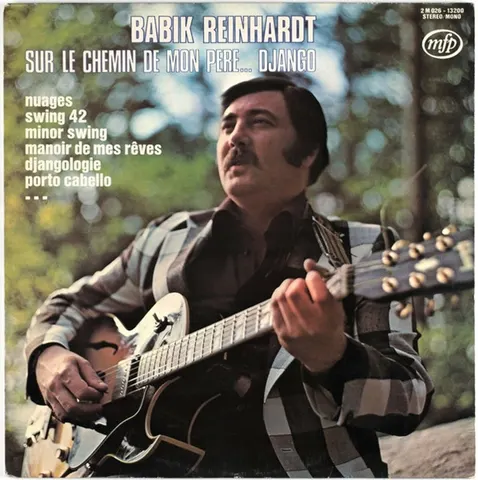
- Babik Reinhardt - his nephew, Django's son and a guitarist; another nephew, Lousson, also played at the Samois festival in 1978.
More Gypsy Jazz Artists
See all 36 Gypsy Jazz artists →More French Jazz Artists
See all 170 French artists →- Apple Music: Joseph Reinhardt
- Discogs: Joseph Reinhardt
- MusicBrainz: Joseph Reinhardt
- AllMusic: Joseph Reinhardt
- Wikipedia: Joseph Reinhardt
- French Wikipedia: Joseph Reinhardt
- BnF data: Joseph Reinhardt
- Joseph Reinhardt on JazzProfiles.com
- Wikipedia: Joseph Reinhardt, for dates, the Quintette years, the 1957 film, the home-made electric guitar and the burial at Samois
- French Wikipedia: Joseph Reinhardt, for the birthplace in the 12th arrondissement of Paris, the place of death, the early career, the 1940s bands and his style
- Discogs: Joseph Reinhardt, with the release pages for the Les Discophiles Français, Decca, Nouvelles Galeries and Hot Club Records issues
- Wikidata: Joseph Reinhardt, for identifiers and birth and death dates
- MusicBrainz: Joseph Reinhardt
- AllMusic: Joseph Reinhardt, for genre and styles
- Discographie de Joseph Reinhardt (Django New Quintet blog), for session dates and personnel
- Apple Music: Joseph Reinhardt, for track lists and release data