 JAZZPROFILES lives in the music 2,555 Jazz Artists fully Profiled!
Lelio Luttazzi
Last updated November 11, 2026
Listen on Spotify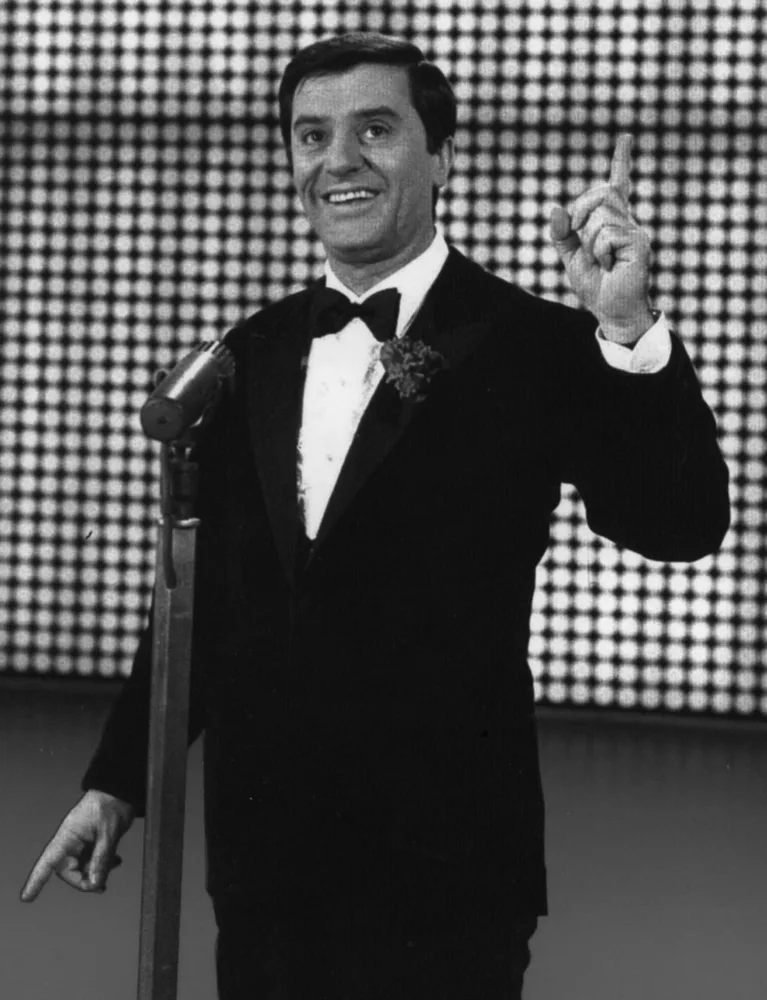
Lelio Luttazzi during a television appearance, probably on Studio Uno, between February 1965 and June 1966 Public domain (Italian photograph more than 20 years old; Commons templates PD-Italy and PD-1996) — Wikimedia Commons - https://commons.wikimedia.org/wiki/File:Luttazzi_1960s.jpg - RAI

Lelio Luttazzi was born in Trieste on April 27, 1923. His father, Mario, died of tuberculosis when Lelio was three, and his mother, Sidonia Semani, an elementary schoolteacher, raised him in the village of Prosecco above the city, where he was the only Italian speaker in a class of Slovene children. The village priest gave him his first piano lessons, and he went on to the Petrarca high school in Trieste.
During the Second World War he enrolled in law at the University of Trieste, passed two exams, and drifted into music instead, playing piano at Radio Trieste and writing his first songs. In 1943 he conducted a student band at the Teatro Politeama to open a concert by the singer Ernesto Bonino, who asked him for a song afterward. The result, "Il giovanotto matto," was recorded by Bonino that year and became a hit. When the war ended, the royalty statement from the Italian authors' society showed 350,000 lire, enough to persuade him to turn professional. In 1948 he moved to Milan to work as artistic director at CGD, the record company founded by his fellow Triestine Teddy Reno, and wrote "Muleta mia" for Reno that year. Several of the CGD 78s of 1948 to 1950 are billed to Luttazzi's own small ensembles, among them "Troppo tardi" and "Benvenuto, Mister Swing," issued in 1948 with Reno singing.
In 1950 he took charge of a RAI orchestra in Turin, where, according to Italian Wikipedia, he built the first rhythmic string orchestra in Italy. In 1954 he moved to Rome to lead one of RAI's light-music orchestras on variety programs. His debut as a television conductor came in 1955 on the weekly show Musica in vacanza, beside Gorni Kramer, and in the 1956 to 1957 season he led the orchestra on the radio variety Rosso e nero. English Wikipedia credits him as one of the first composers to put jazz structures into Italian songs, and Italian Wikipedia describes the songs he wrote in the 1950s as jazz-flavored and full of swing, played by him at the piano and sung in a very personal style. "Chiedimi tutto," "Legata a uno scoglio," "Rabarbaro blues," "Senza cerini" and "Timido twist" are among the best known. For other singers he wrote "Una zebra a pois" (Mina), "Vecchia America" (Quartetto Cetra) and "Eccezionalmente sì" (Jula De Palma), and he scored films, among them the Totò comedies Totò lascia o raddoppia? and Totò, Peppino e la... malafemmina (both 1956) and Dino Risi's Venezia, la luna e tu (1958).
His own jazz piano records come from the same years. Columbia issued Ballate con Lelio Luttazzi in 1956 and In penombra, twelve Gershwin, Rodgers and Kern songs with Luttazzi the only musician credited, on piano, with a back sleeve dated August 1958, along with 7 inch EPs devoted to Rodgers and to Gershwin. Scherzandoci sopra (1958) swings themes from Mozart and from operetta. A 1955 CGD ten-inch album of standards is billed jointly to Luttazzi and the arranger Gianni Ferrio. In 1961 came Lelio Luttazzi presenta 30 anni di swing, a seven-piece band date with Baldo Maestri on clarinet and alto saxophone, Bill Gilmore on trumpet and trombone, Franco Chiari on vibraphone, Libero Tosoni on guitar, Luigi Simeone on bass and Pierino Munari on drums, with tracks titled as tributes to Benny Goodman, Django Reinhardt and Count Basie.
His career as a presenter began in 1962 with Il paroliere questo sconosciuto, where a very young Raffaella Carrà worked beside him, and peaked with Studio Uno (1965 to 1966), on which he appeared with Mina, and with the radio chart show Hit Parade, which he hosted from January 6, 1967. In May 1970, at the height of his fame, he was arrested with the actor Walter Chiari on drug charges, after passing on a phone message from Chiari to a man who turned out to be a dealer. He spent 27 days in jail before being released and cleared without a trial. Renzo Arbore and then Giancarlo Guardabassi hosted Hit Parade in his absence; Luttazzi returned to the program on February 26, 1971 and stayed until its last broadcast on December 31, 1976. The episode led to a memoir, Operazione Montecristo, and to his only film as director, L'illazione (1972), and Italian Wikipedia says it gave Alberto Sordi the idea for Detenuto in attesa di giudizio.
The piano never stopped. We Love Lelio Luttazzi, on Vedette, is a jazz piano album with "Desafinado," "Star Dust," "Basin Street Blues," "Old Man River," "The Girl from Ipanema" and a "Boogie per tre." I miei stati d'animo (E.M.R., 1971) is an instrumental record of short pieces whose titles include "Beat blues mosso" and a tribute, "Ciao Errol Garner!" In 1981 he recorded 30 motivi 30... ti ricordi? as the Lelio Luttazzi Trio, with Giorgio Rosciglione on bass and Roberto Podio on drums: three long piano fantasies, one on his own songs, one on Kramer's and one on other writers'. After a run of jazz concerts in Italy he received the "Una vita per il jazz" prize from the Brass Group of Trapani in 1992, and then withdrew from public life.
From the 2000s he came back in small steps. RAI archive material from his orchestra years appeared as Artistry in RAI (2005). On February 19, 2009 he collected a music prize at the Sanremo festival and accompanied the singer Arisa at the piano on "Sincerità." His last concert, with his sextet, took place on August 15, 2009 in Piazza Unità d'Italia in Trieste, during the Trieste Loves Jazz festival, and was released as Live in Trieste with Gershwin and Cole Porter medleys, "Hello Dolly," "Indiana," "Basin Street Blues" and a Gorni Kramer medley. He passed away at home in Trieste on the night of July 8, 2010, at 87, after a peripheral neuropathy that had worsened over the preceding three months. His ashes were scattered in the Gulf of Trieste from his boat, Oblomov.
A foundation in his name was set up on October 22, 2010, and Pupi Avati's documentary Lelio Luttazzi, il giovanotto matto aired on Rai 5 on October 30, 2011. The 2013 tribute album Per pianoforte e amici gave his songs to a long list of Italian jazz pianists, among them Stefano Bollani, Rita Marcotulli and Danilo Rea as a duo, Renato Sellani, Dado Moroni, Franco D'Andrea, Enrico Intra and Seby Burgio. In 2013 Simona Molinari recorded the last two songs he left unpublished, "Dr. Jekyll Mr. Hyde" and "Buonanotte Rossana." The Premio Lelio Luttazzi, a national competition for jazz pianists aged 16 to 30, carries his name, and events marking the centenary of his birth ran in 2023 and 2024.
In Italy Luttazzi is remembered first as a television and radio host and as a songwriter, and that is stated here plainly: most of his public career was variety shows, film scores and popular songs, and his best-known work, Hit Parade, was a chart program. Jazz was his working language inside all of it. English Wikipedia credits him as one of the first Italian composers to bring jazz structures into songs, and his records ground that claim in repertoire: Gershwin, Rodgers and Kern ballads, standards such as "Indiana," "How High the Moon," "Laura" and "I Can't Get Started," and blues and boogie titles, with tracks named as homages to Benny Goodman, Django Reinhardt, Count Basie and Erroll Garner. The idiom the records document is swing-era and songbook piano, and he sang his own songs at the same keyboard in what Italian Wikipedia calls a very personal style.
- Ballate con Lelio Luttazzi (1956, Columbia) - The first of his Columbia piano albums, standards and popular songs such as "Stranger in Paradise" and "The Tender Trap," with Luttazzi credited on piano.
- In penombra: ballate con Gershwin, Rodgers, Kern (1958, Columbia) - Twelve songbook ballads, including "Someone to Watch Over Me," "My Funny Valentine" and "Where or When."
- Lelio Luttazzi presenta 30 anni di swing (1961, Columbia) - His fullest small-band swing record, with clarinet, trumpet, vibraphone and guitar and homages to Goodman, Reinhardt and Basie.
- We Love Lelio Luttazzi (1968, Vedette) - Jazz piano on "Desafinado," "Star Dust," "Basin Street Blues" and "The Girl from Ipanema."
- I miei stati d'animo (1971, E.M.R.) - Instrumental mood pieces that include the Erroll Garner tribute "Ciao Errol Garner!"
- 30 motivi 30... ti ricordi? (1981, Kontiki) - The trio record with Giorgio Rosciglione and Roberto Podio, built from three long piano fantasies.
- Live in Trieste 15 agosto 2009 (2009, Blue Serge) - His last concert, recorded with his sextet at Trieste Loves Jazz.
- Per pianoforte e amici (2013, Warner Music Italy) - The tribute album in which Bollani, Marcotulli, Rea, Sellani, Moroni, D'Andrea, Intra and others play his songs.
Lelio Luttazzi: Full Discography
Discogs artist: Lelio Luttazzi (306935) · Born April 27, 1923, Trieste
Discogs files his work under several entries: the main one above, Lelio Luttazzi Trio, Lelio Luttazzi E La Sua Orchestra, Lelio Luttazzi E Il Suo Complesso, Lelio Luttazzi E I Suoi Solisti and Lelio Luttazzi E I Suoi "Archi". All of them were checked. Most of his output is songwriting, film scores and television and radio work, so this page covers the jazz and jazz-adjacent records and summarizes the rest. Catalog numbers and track lists come from the individual releases; where a detail is not shown there it is marked as not confirmed. His daughter, the singer Donatella Luttazzi, has a separate entry and is not included.
Leader: Albums
| Album | Year | Label (catalog) | Personnel & Notes | Listen | Buy |
|---|---|---|---|---|---|
| Ballate CGD: Lelio Luttazzi, Gianni Ferrio | 1955 | CGD (MD 0192), 10 inch LP | Jointly billed to Luttazzi and the arranger Gianni Ferrio. Standards and ballads including Smile, 'S Wonderful / Oh, Lady Be Good, The Man I Love / Embraceable You and Laura. Personnel not confirmed | E | E |
| Ballate con Lelio Luttazzi | 1956 | Columbia (QP 4017), 10 inch LP | Luttazzi (piano). Eight tracks, among them Stranger in Paradise, The Tender Trap, We'll Be Together Again, Moritat and his own Musetto and Guaglione. Back sleeve dated December 1956 | E | E |
| In penombra: ballate con Gershwin, Rodgers, Kern | 1958 | Columbia (QPX 8005), LP | Luttazzi (piano), the only musician credited. Twelve songs, including There's a Small Hotel, Someone to Watch Over Me, My Funny Valentine, Yesterdays, Where or When and Bewitched. Back sleeve dated August 1958 | E | E |
| Scherzandoci sopra: classici in swing | 1958 | Columbia (QP 4028), 10 inch LP | Luttazzi (piano). Swing treatments of the Turkish March from Mozart's piano sonata K. 331, operetta numbers and a Johann Strauss waltz. Back sleeve dated February 1958; Italian Wikipedia gives 1959 | E | E |
| Lelio Luttazzi presenta 30 anni di swing | 1961 | Columbia (33QPX 8015), LP | Luttazzi (piano), Baldo Maestri (clarinet, alto saxophone), Bill Gilmore (trumpet, trombone), Franco Chiari (vibraphone), Libero Tosoni (guitar), Luigi Simeone (bass), Pierino Munari (drums). Indiana (tribute to Benny Goodman), When Your Lover Has Gone, One More Blues, Stars Fell on Alabama, Laura, Blue Skies, China Boy, How High the Moon, I Can't Get Started, My Melancholy Baby (tribute to Django Reinhardt), One O'Clock Jump (tribute to Count Basie). Several names are printed in variant forms on the sleeve and labels | E | E |
| We Love Lelio Luttazzi | 1968 | Vedette Records (VRMS 366), LP | Luttazzi (piano). Desafinado, Vecchia America, Star Dust, What Did I Do, When You're Smiling, Boogie per tre, Souvenir d'Italie, Legata ad uno scoglio, Old Man River, Basin Street Blues, The Girl from Ipanema, One More Blues. Italian Wikipedia gives 1969. A later CD, Vecchia America (Replay Music, RMCD 4163), carries the same twelve titles; its year is not shown | E | E |
| I miei stati d'animo | 1971 | E.M.R. (EMR 07), LP | Ten short instrumental pieces: Pigrizia, Fugantino per organo e piano, Beat blues mosso, Malinconia per chitarra, Dubbio, Romanticismo all'americana, Ciao Errol Garner!, Noia, Beat blues lento, Frenesia. Luttazzi is credited for the music and for directing the ensemble; the players are not confirmed | E | E |
| 30 motivi 30... ti ricordi? (Lelio Luttazzi Trio) | 1981 | Kontiki Records (KNT 40.000), LP, distributed by CGD | Luttazzi (concert grand piano), Giorgio Rosciglione (bass), Roberto Podio (drums). Three long fantasies: Fantasia Lelio, Fantasia Kramer, Fantasia autori vari | E | E |
| Artistry in RAI | 2005 | Twilight Music (TWI CD AS 05 22), CD | Fourteen RAI archive recordings, not published before, among them Omaggio a Cole Porter, Fantasia su Parigi, O mia bela Madunina and Il tamburo della banda d'affari. Discogs lists genres Jazz and Pop. Personnel not confirmed | E | E |
| Le mie preferite (Lelio Luttazzi Trio) | 2008 | Rai Trade (RTP0152), CD | Thirty of his songs, among them Canto (anche se sono stonato), Troppo tardi, Muleta mia, Vecchia America, Souvenir d'Italie, Legata ad uno scoglio, El can de Trieste and Estate. Year from Italian Wikipedia; Discogs does not show one. Personnel not confirmed | E | E |
| The Classics in Swing | 2009 | Rai Trade (RTP0196), CD | The same eight titles as Scherzandoci sopra (1958), recorded at the Istituto Luce studio in Rome according to the release notes | E | E |
| Live in Trieste 15 agosto 2009 | 2009 | Blue Serge (BLS-026), CD | Recorded August 15, 2009 in Piazza Unità d'Italia, Trieste, during the Trieste Loves Jazz festival. Gershwin medley, Hello Dolly, Indiana, Basin Street Blues, Cole Porter medley, Gorni Kramer medley, Ritorno a Trieste, El can de Trieste, Il giovanotto matto. His last concert, with his sextet; the players are not named on the release | E | E |
Leader: Singles and EPs
| Release | Year | Label (catalog) | Personnel & Notes | Listen | Buy |
|---|---|---|---|---|---|
| Troppo tardi / Benvenuto, Mister Swing | 1948 | CGD (PV 1249), 78 rpm | Teddy Reno (vocal) with Lelio Luttazzi e i suoi "Archi" and Luttazzi e il suo "Swing 1948". Discogs styles Swing and Chanson | E | E |
| Cheveux dans le vent / September Song | 1950 | CGD (PV 1568), 78 rpm | Jula De Palma (vocal) accompanied by Lelio Luttazzi e il suo Complesso | E | E |
| Guaglione / Musetto | 1956 | Columbia (SCMQ 1044), 7 inch | Two of his own songs; Luttazzi is the only artist credited. Discogs lists Jazz, Pop and Vocal | E | E |
| Luttazzi suona Rodgers | 1958 | Columbia (SEMQ 84), 7 inch EP | Luttazzi (piano). There's a Small Hotel, Bewitched, My Funny Valentine, Where or When | E | E |
| Luttazzi suona Gershwin | Not confirmed | Columbia (SEMQ 85), 7 inch EP | Luttazzi (piano). They Can't Take That Away from Me, Love Is Here to Stay, Someone to Watch Over Me, 'S Wonderful | E | E |
| My Funny Valentine | 1959 | La Voz de su Amo (7 ERL 1280), 7 inch EP | Spanish issue with Spanish song titles: My Funny Valentine, Yesterdays, Love Is Here to Stay, Can't Help Lovin' Dat Man. Luttazzi (piano) | E | E |
Compilations and Tributes
| Year | Title | Label | Catalog | Notes |
|---|---|---|---|---|
| 1990 | Una sera al piano-bar | La Voce del Padrone / EMI | 092 7949052 | Sixteen tracks, among them How High the Moon, My Melancholy Baby, Laura, Moritat, Stars Fell on Alabama and One O'Clock Jump, whose titles match his Columbia albums of 1956 to 1961. Discogs lists Jazz and Blues |
| 2011 | Il cinema di Lelio Luttazzi | Blue Serge / Fondazione Lelio Luttazzi / Titanus / Sugar | BLS-044 | Two-disc set of his film music, produced by Sergio Cossu and compiled by Rossana Luttazzi and Paolo Mosele, with liner notes including Pupi Avati. First-disc cue titles include Congiura Blues, Violino Blues, Calypso in the Rain and Boogie Jazz. Discogs lists it as a soundtrack compilation |
| 2013 | Per pianoforte e amici | Warner Music Italy | 5053105-6272-2-1 | Tribute album. Mina (Chiedimi tutto), Stefano Bollani (Legata ad uno scoglio), Simona Molinari (Dr. Jekyll Mr. Hyde), Fiorello (medley), Renato Sellani and Massimo Moriconi (Vecchia America), Voci di corridoio, Alice and Ellen Kessler, Rita Marcotulli and Danilo Rea (Muleta mia), Lorenzo Hengeller, Dado Moroni (Messaggio), Sophia Loren, Franco D'Andrea (Mi piace), Renzo Arbore (Souvenir d'Italie), Toni Concina, Jula De Palma, Seby Burgio with Urban Fabula (Il favoloso Gershwin), Rossana Casale (Prendimi), Christian De Sica, Enrico Intra (Per Lelio), Antonio Luca Di Bella, Luca Bianchi and Arisa. Discogs lists the genre as Pop |
Other Records
The rest of his recorded output is popular song and film work, listed here only by type. The 1961 and 1962 Columbia singles of his own songs (Chiedimi tutto, Rabarbaro blues, Timido twist), a 1964 single on Disneyland, a 1966 promotional LP of Studio Uno material, the Trieste-dialect singles and album El can de Trieste (1968 to 1976), the Christmas albums Ascoltando Natale (1982) and Buon Natale da Lelio Luttazzi (2007), and the CGD 78s on which his orchestra accompanied Teddy Reno, Jula De Palma and Giorgio Consolini between 1948 and 1950. Film scores run from I due sergenti (1951) to Maschio latino cercasi (1977) and include the Totò comedies of 1956, Venezia, la luna e tu (1958) and Di che segno sei? (1975); in recent years several of the soundtracks have been reissued digitally.
Awards
| Year | Award | Result |
|---|---|---|
| 1991 | San Giusto d'Oro, Friuli-Venezia Giulia journalists | Winner |
| 1992 | "Una vita per il jazz," Brass Group, Trapani | Winner |
| 2009 | Music prize (premio alla musica), Sanremo festival | Winner |
- Teddy Reno - Triestine singer and founder of CGD, who brought him to Milan in 1948 as artistic director and for whom he wrote "Muleta mia."
- Gorni Kramer - bandleader and composer, beside Luttazzi on the 1955 television show Musica in vacanza, and honored by him in the Kramer fantasy on the 1981 trio record and in a medley at the 2009 Trieste concert.
- Gianni Ferrio - arranger billed with him on the 1955 CGD ten-inch album of standards.
- Baldo Maestri, Bill Gilmore, Franco Chiari, Libero Tosoni, Luigi Simeone, Pierino Munari - the seven-piece band on 30 anni di swing (1961), according to the Discogs credits.
- Giorgio Rosciglione and Roberto Podio - bass and drums of the Lelio Luttazzi Trio on 30 motivi 30... ti ricordi? (1981). Rosciglione is also on Barbara Errico's tribute album Sentimentale (2014).
- Mina - appeared with him on Studio Uno (1965 to 1966) and sang his "Una zebra a pois"; he wrote "Ma tu chi sei" for her in 2003.
- Quartetto Cetra and Jula De Palma - singers for whom he wrote "Vecchia America" and "Eccezionalmente sì," respectively; his ensembles also accompanied De Palma on CGD records.
- Renzo Arbore and Giancarlo Guardabassi - the two hosts who filled in on Hit Parade during his 1970 absence.
- Claudio Corvini - trumpeter who began his professional career in 1980 in RAI orchestral productions under conductors including Luttazzi, and who plays on Barbara Errico's 2014 Luttazzi tribute.
- Simona Molinari - recorded his last two unpublished songs in 2013.
- Arisa - the singer he accompanied at the piano on "Sincerità" at Sanremo in 2009.
- Stefano Bollani, Rita Marcotulli, Danilo Rea, Renato Sellani with bassist Massimo Moriconi, Dado Moroni, Franco D'Andrea, Enrico Intra, Seby Burgio and Rossana Casale - tribute performers on Per pianoforte e amici (2013).
- Pupi Avati - director of the 2011 documentary Lelio Luttazzi, il giovanotto matto.
More Swing Artists
See all 273 Swing artists →More Italian Jazz Artists
See all 554 Italian artists →- Spotify artist page
- Discogs
- Lelio Luttazzi on MusicBrainz
- His profile on jazzprofiles.com
- r/CrossoverJazz
- Wikipedia: Lelio Luttazzi
- Wikipedia (Italian): Lelio Luttazzi
- Wikidata: Lelio Luttazzi
- Discogs: Lelio Luttazzi
- Discogs: Lelio Luttazzi Trio
- MusicBrainz: Lelio Luttazzi
- Wikimedia Commons: Luttazzi 1960s.jpg
- Il Post: Luttazzi obituary, July 8, 2010
- Mentelocale: Finale del Premio Lelio Luttazzi 2025
- inTrieste: A Tribute to Lelio Luttazzi, Celebrating a Century of Musical Genius