 JAZZPROFILES lives in the music 1,572 Jazz Artists fully Profiled!
 James Blood Ulmer
Last updated September 7, 2026
Listen on Spotify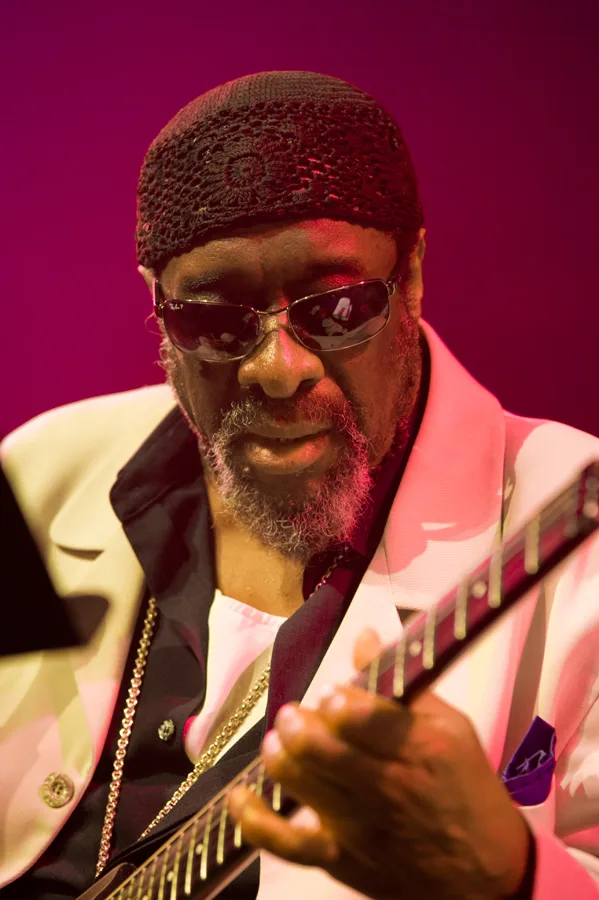
James "Blood" Ulmer performing at the moers festival, Moers, Germany, May 26, 2012 CC BY-SA 3.0 (Creative Commons Attribution-ShareAlike 3.0), photograph by Nomo / Michael Hoefner, own work — Wikimedia Commons — https://commons.wikimedia.org/wiki/File:James_Blood_Ulmer_05N0026.jpg

Willie James Ulmer was born February 8, 1940, in St. Matthews, South Carolina, the eldest of eight children of a Baptist preacher who handed him his first guitar at four. By seven he was singing baritone and playing in his father's gospel quartet, the Southern Sons, and he stayed with the group until he was thirteen. His mother disapproved of secular blues, which did nothing to stop him from absorbing it. He left the South in 1959 for Pittsburgh, where he backed pop and doo-wop acts including the Del-Vikings, worked the organ-trio circuit, and picked up the nickname that followed him for the rest of his life: locals called him "Youngblood," which got shortened to "Blood."
In 1963 he moved to Columbus, Ohio, and formed Blood and the Bloodbrothers, a working band with a steady room at the 502 Club backing touring singers. He found the commercial repertoire confining and got more out of playing with organist Hank Marr, whose quartet he toured Europe with and recorded alongside on Sounds from the Marr-Ket Place (King, 1968). A 1967 move to Detroit changed his playing permanently. He taught guitar at the Metropolitan Art Complex, studied reading and composition, ran a free-jazz group called Focus Novii with drummer Doug Hammond, and worked out the tuning that became his signature: he abandoned standard tuning and set his strings in unison, which stripped the guitar of the piano-derived chord voicings he had come to distrust and left him with a clanging, open, unresolved sound that nobody else was making.
Ulmer arrived in New York in 1971. Playing his own material at Minton's Playhouse in Harlem, where he had been hired to play blues, he met Rashied Ali, and it was Ali who introduced him to Ornette Coleman. The introduction reorganized his career. Ulmer moved into Coleman's loft and studied harmolodics, Coleman's theory that harmony, movement and melody carry equal weight and that every instrument in an ensemble is simultaneously a melodic and a rhythmic voice. It matched the atonal experiments Ulmer had already been running in Detroit, and he spent the rest of his life saying so: he told interviewers he followed harmolodic theory and still followed it, and that to follow it properly he had to become a harmolodic person rather than merely play harmolodic music. He performed with Coleman through the mid-1970s, including dates at the Ann Arbor Blues and Jazz Festival in 1974 and the Five Spot in 1975, but the partnership was never documented on a Coleman leader album. Its studio record runs the other direction, on Ulmer's own.
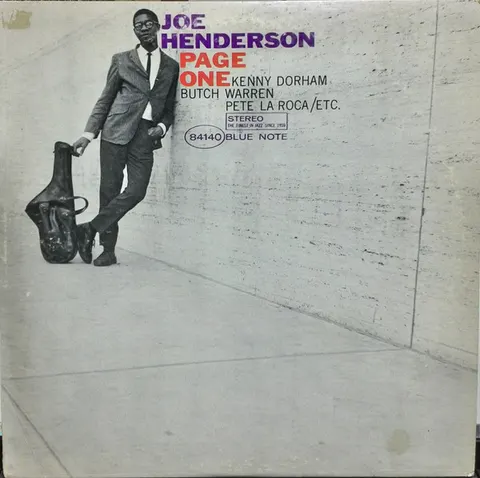
The sideman work of those years put him in unusual rooms. In 1973 he became the first guitarist Art Blakey ever hired for the Jazz Messengers, briefly; he played on organist Larry Young's Lawrence of Newark (Perception, 1973) and on Joe Henderson's Multiple (Milestone, recorded January 1973), and later on Arthur Blythe's Lenox Avenue Breakdown (Columbia, 1979) and Illusions (1980). He also cut a two-track LP with Rashied Ali for Ali's own Survival Records: the Rashied Ali Quintet album (SR-102, 1973), recorded at Marzette Watts's studio with John Dana on bass, Bob Ralston on tenor and Earl Cross on trumpet. Its B side is a piece credited to Ulmer called "Theme for Captain Black," six years before he made it the title track of his debut.
That debut, Tales of Captain Black, was recorded December 5, 1978, at R.P.M. Sound Studios and released on Artists House in 1979 with Ornette Coleman on alto saxophone, Coleman's son Denardo on drums, and Jamaaladeen Tacuma on electric bass. Are You Glad to Be in America?, cut in a single day on January 17, 1980, added David Murray, Oliver Lake and Olu Dara to a rhythm section of Amin Ali and Grant Calvin Weston, put Ulmer's flat, conversational singing at the front, and came out on Rough Trade in Britain, an unusual home for a jazz guitarist and a sign of where his audience actually was. Columbia signed him in 1981 and got three albums: Free Lancing (1981), Black Rock (1982), and Odyssey (1983), the last of them a trio with violinist Charles Burnham and drummer Warren Benbow that finished twentieth in the Village Voice Pazz and Jop critics' poll for 1983 and is the record most often named as his best. It was also his last for a major label.
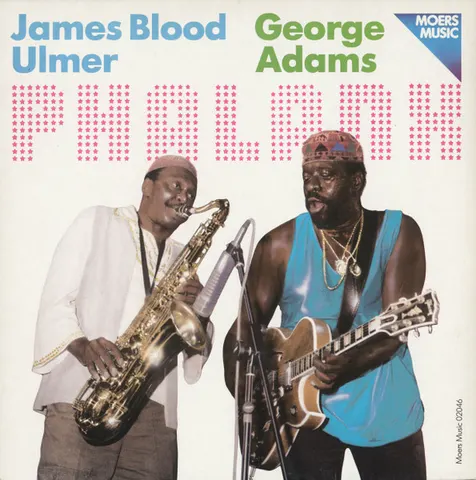
Dropped by Columbia, Ulmer built the rest of his career out of ensembles and independent labels. The Music Revelation Ensemble, which had made No Wave for Moers Music in 1980 with David Murray, Amin Ali and Ronald Shannon Jackson, became a standing project on the Japanese label DIW from 1988, its horn section rotating through Murray, Jamaaladeen Tacuma, Arthur Blythe, Hamiet Bluiett, Sam Rivers, Pharoah Sanders and John Zorn across seven albums. Phalanx, the quartet he co-led with saxophonist George Adams, ran from 1985 to 1988 and put Rashied Ali and bassist Sirone in the rhythm section for its two DIW records. Odyssey the Band reconvened the Odyssey trio for Reunion (Knitting Factory, 1998) and Back in Time (Pi, 2005). The James Blood Ulmer Blues Experience made Blues Allnight (1990) and Live at the Bayerischer Hof (1994) for German labels, and Third Rail, with Bill Laswell, Bernie Worrell, Amina Claudine Myers and Joseph "Zigaboo" Modeliste, made South Delta Space Age in 1995.
The last act was the blues, played straight. Guitarist Vernon Reid produced four albums that turned Ulmer back toward the material he had grown up around: Memphis Blood: The Sun Sessions, cut over three days in April 2001 at Sun Studio in Memphis and nominated for the 2002 Grammy for Best Traditional Blues Album; No Escape from the Blues: The Electric Lady Sessions (2003); Birthright (2005), a solo record of voice, guitar and flute; and Bad Blood in the City: The Piety Street Sessions (2007), eleven songs recorded in New Orleans about the aftermath of Hurricane Katrina. In 2009 he started his own label, American Revelation, and used it to issue live tapes from his own archive, including the 1986 Bremen concert that finally documented the first Phalanx lineup. He played his last concert at the Detroit Jazz Festival on September 1, 2024, and died peacefully in New York on June 3, 2026, at eighty-six, survived by six children, twelve grandchildren and thirteen great-grandchildren.
Ulmer's sound came from a decision most guitarists never make: he retuned the instrument in unison and stopped voicing chords the way a pianist would, which left him playing lines and clusters that ring against each other without resolving. Onto that he grafted Ornette Coleman's harmolodics, and the result was a rhythm-and-lead instrument at once, capable of stating a theme, comping and soloing in the same phrase. Critic Greg Tate placed him "between Jimi Hendrix and Wes Montgomery on one hand, and P-Funk and Mississippi Fred McDowell on the other," which is a fair map of the four traditions he was working: rock volume and distortion, jazz harmony, funk time, and Delta blues form. Newsweek called him the most original guitarist since Hendrix and Montgomery in 1981, and the phrase followed him through four decades of reviews. He sang in a flat, unhurried Southern voice that critics found either the weakest or the most affecting thing about his records, and he never entirely reconciled his two constituencies: by the mid-1990s he was saying openly that he wanted to stop mixing his styles and perfect them separately, which is roughly what the Vernon Reid blues albums and the DIW avant-garde records did. His influence ran mainly through the downtown New York and free-funk generations rather than through mainstream jazz guitar, and it is audible in Reid's own playing with Living Colour and across the Knitting Factory scene.
- Tales of Captain Black (recorded Dec. 5, 1978; released 1979, Artists House) - His debut, with Ornette Coleman on alto, Denardo Coleman on drums and Jamaaladeen Tacuma on bass, and the only studio document of the Ulmer/Coleman partnership. Not confirmed on Spotify.
- Are You Glad to Be in America? (recorded Jan. 17, 1980; released 1980, Rough Trade) - Cut in one day with David Murray, Oliver Lake and Olu Dara, the record that introduced his singing and made him a name outside jazz. Not confirmed on Spotify.
- Odyssey (1983, Columbia) - The guitar/violin/drums trio with Charles Burnham and Warren Benbow, twentieth in the 1983 Pazz and Jop poll and generally treated as his masterpiece. Spotify - Odyssey Listen
- Free Lancing (1981, Columbia) - His major-label debut, a ten-track set with Murray, Lake, Dara and backing singers that pushed harmolodics toward something close to a pop record. Spotify - Free Lancing Listen
- No Wave (recorded June 1980; released 1980, Moers Music) - The first Music Revelation Ensemble album, a quartet with David Murray, Amin Ali and Ronald Shannon Jackson recorded in Düsseldorf. Not confirmed on Spotify.
- Original Phalanx (recorded Feb. 1987; released 1987, DIW) - The co-led quartet with George Adams, Sirone and Rashied Ali, mixed live to two-track; the band has its own JazzProfiles.com profile. Not confirmed on Spotify.
- Memphis Blood: The Sun Sessions (recorded April 2001; released 2001, Label M) - Fourteen blues standards cut at Sun Studio with Vernon Reid producing, nominated for the 2002 Grammy for Best Traditional Blues Album. Spotify - Memphis Blood: The Sun Sessions Listen
- Bad Blood in the City: The Piety Street Sessions (2007, Hyena) - Post-Katrina New Orleans blues, the last and best-reviewed of the four Reid-produced records. Spotify - Bad Blood In The City Listen
James Blood Ulmer: Full Discography
Identity confirmed via the live Discogs API, artist ID 149965 ("James Blood Ulmer," realname Willie James Ulmer, alias "Damu Mustafa Abdul Musawwir," birth and death dates matching every obituary source). Discogs credits that page with 246 releases in total: 39 in a "Main"/leader role, 13 as producer, 110 sideman "Appearance" credits, 55 track-level "TrackAppearance" credits and 29 unofficial pressings.
That personal page understates his leader catalog, because a large part of it is filed under separate group entities. Those were fetched separately and are folded into the table below: Music Revelation Ensemble (artist 341074, 10 releases, 7 as Main), Odyssey The Band (artist 907490, 5 releases, 3 as Main), The James Blood Ulmer Blues Experience (artist 907468, 10 releases, 3 as Main), Third Rail (3) (artist 225209), Phalanx (4) (artist 915919, 4 releases) and James 'Blood' Ulmer's Black Rock Revival (artist 1487891).
Ulmer was a prolific leader across roughly forty-five years, so this is a curated discography rather than an exhaustive one: it lists the studio and live albums that carry his name or one of his group names, and skips singles, promos, unofficial live pressings, various-artists compilations, and the self-released Bill Laswell archive downloads. The sideman table below it is likewise a representative selection of his most significant credits, not all 165 of them. The Buy column is — throughout: no affiliate program is set up for this site yet.
As Leader / Co-Leader
| Album Title | Recording Date(s) | Release Date | Label | Catalog Number | Format(s) | Personnel | Role | Reissue History | Spotify | Buy | Notes |
|---|---|---|---|---|---|---|---|---|---|---|---|
| Tales of Captain Black | Recorded December 5, 1978, R.P.M. Sound Studios, NYC; mixed December 18, 1978, Electric Lady | 1979 | Artists House | AH 7 | Vinyl, LP, Album, gatefold with 8-page booklet | James Blood Ulmer (electric guitar), Ornette Coleman (alto saxophone), Jamaaladeen Tacuma (electric bass), Denardo Coleman (drums) | Leader | Reissued 1996 on DIW with a new Joe Ferla mix | Not confirmed on Spotify | — | Produced by John Snyder and Ornette Coleman, mastered by Rudy Van Gelder. The booklet includes Ulmer's harmolodic guitar clef. AllMusic 5 stars, Christgau A-minus, DownBeat 4.5 stars. Title track had first been recorded in 1973 on the Rashied Ali Quintet LP |
| Are You Glad to Be in America? | Recorded January 17, 1980, RCA Studios, NYC | 1980 (UK LP); 1981 (US, remixed) | Rough Trade (UK); Artists House (US) | ROUGH 16 (UK); RT 045 (7" single) | Vinyl, LP, Album | James Blood Ulmer (guitar, vocals), David Murray (tenor saxophone), Oliver Lake (alto saxophone), Olu Dara (trumpet), Billy "Spaceman" Patterson (rhythm guitar, one track), Amin Ali (electric bass), Grant Calvin Weston and Ronald Shannon Jackson (drums) | Leader | US remix on Artists House, 1981; Japanese DIW reissue, 1995. A two-track Rough Trade 7" (RT 045) preceded the LP | Not confirmed on Spotify | — | An A.R.M. production with Rough Trade; co-mixed by label head Geoff Travis and Mayo Thompson. AllMusic 4 stars, Christgau B-plus |
| Free Lancing | Not specified in the Discogs data | 1981 | Columbia | ARC 37493 | Vinyl, LP, Album | James Blood Ulmer (guitar, vocals), Oliver Lake (alto saxophone), David Murray (tenor saxophone), Olu Dara (trumpet), Ronald "Head" Drayton (second guitar), Amin Ali (electric bass), Grant Calvin Weston (drums), Irene Datcher / Diane Wilson / Zenobia Conkerite (backing vocals) | Leader | None found | Spotify - Free Lancing | — | His major-label debut, all ten tracks written and arranged by Ulmer. Sleeve credits thank Ornette Coleman |
| Black Rock | Recorded at the Power Station, NYC | 1982 | Columbia | ARC 38285 | Vinyl, LP, Album | James Blood Ulmer (guitar, vocals), Amin Ali (electric bass), Grant Calvin Weston (drums) and guests | Leader | None found | Not confirmed on Spotify | — | Compositions credited jointly to "James Blood Ulmer" and "Damu Mustafa Abdul Musawwir," his own Muslim name, on the same sleeve |
| Odyssey | Recorded March to May 1983, Power Station, NYC | 1983 | Columbia | BFC 38900 | Vinyl, LP, Album | James Blood Ulmer (guitar, vocals), Charles Burnham (violin), Warren Benbow (drums) | Leader | Multiple later CD reissues | Spotify - Odyssey | — | His last major-label album and the one most often called his best. No. 20 in the Village Voice 1983 Pazz and Jop critics' poll; AllMusic 5 stars, Christgau A, Rolling Stone Jazz Record Guide 5 stars. The trio later re-formed as Odyssey the Band |
| Part Time | Recorded live at the Montreux Jazz Festival, July 1983 | 1984 | Rough Trade | ROUGH 65 | Vinyl, LP, Album | James Blood Ulmer (guitar, vocals), Charles Burnham (violin), Warren Benbow (drums) | Leader | None found | Spotify - Part Time | — | The Odyssey trio live; sleeve photography by Anton Corbijn |
| Live at the Caravan of Dreams | Recorded live at the Caravan of Dreams, Fort Worth, Texas (exact date not specified in the Discogs data) | 1986 (labels read 1985) | Caravan of Dreams Productions | CDP85004 | Vinyl, LP, Album | James Blood Ulmer (guitar, vocals), Charles Burnham (violin), Amin Ali (bass), Warren Benbow (drums) | Leader | None found | Not confirmed on Spotify | — | Recorded at the Fort Worth venue that opened in 1983 with Ornette Coleman's Prime Time. Eight tracks, all Ulmer compositions |
| America: Do You Remember the Love? | Recorded at the Power Station, Quadrosonic and RPM, NYC | 1987 | Blue Note / Manhattan | BT 85136 | Vinyl, LP, Album | James Blood Ulmer (guitar, vocals), Nicky Skopelitis (12-string guitar, banjo), Bill Laswell (4-, 6- and 8-string bass), Ronald Shannon Jackson (drums), Bernard / Fred / Muriel Fowler (backing vocals) | Leader | None found | Spotify - America - Do You Remember The Love? | — | Produced by Bill Laswell with Ulmer; six tracks, all Ulmer originals. His only Blue Note/Manhattan album |
| Revealing | Recorded 1977, New York City | 1990 | In+Out Records | 7007-1 | Vinyl, LP, Album | James Blood Ulmer (guitar), George Adams (tenor saxophone), Cecil McBee (bass), Doug Hammond (drums) | Leader | CD issue on In+Out | Spotify - Revealing | — | A 1977 session shelved for thirteen years, and the earliest documented Ulmer/George Adams recording, eight years before Phalanx. Doug Hammond had run the Focus Novii band with Ulmer in Detroit |
| Blues Allnight | Recorded May 1989, Calren Studios, West Germany | 1990 | Bellaphon | 290·07·151 | CD, Album | The James Blood Ulmer Blues Experience: James Blood Ulmer (lead vocals, guitars), Ronald "Head" Drayton (guitars, backing vocals), Amin Ali (bass, backing vocals), Grant Calvin Weston (drums, backing vocals), Winnie Leyh (keyboards) | Leader (billed to the Blues Experience) | Licensed by In+Out Records | Spotify - Blues Allnight | — | Filed on Discogs under the separate "James Blood Ulmer Blues Experience" artist page, not his personal one. Spotify bills it simply to James Blood Ulmer |
| Black and Blues | Recorded October 24-25 and November 6-7, 1990, Power Station, NYC | 1991 | DIW | DIW-845E | CD, Album | James Blood Ulmer (electric guitar, vocals), Ronald "Head" Drayton (guitar), Amin Ali (bass), Grant Calvin Weston (drums) | Leader | None found | Not confirmed on Spotify | — | Mixed by Robert Musso; the first of four DIW leader albums under his own name |
| Blues Preacher | Recorded September to November 1992, Sound On Sound, NYC | 1993 | DIW | DIW-869 | CD, Album | James Blood Ulmer (guitar, flute, vocals), Ronald "Head" Drayton (guitar), Mark Peterson (electric bass), Aubrey Dayle (drums) | Leader | Reissued 1994 on DIW/Columbia in the US with different cover art | Not confirmed on Spotify | — | Liner notes by Chip Stern. Ten tracks including a remake of "Jazz Is the Teacher" |
| Live at the Bayerischer Hof | Recorded live April 25, 1994, Bayerischer Hof Club, Munich | 1994 | In+Out Records | IOR 77018-2 | CD, Album | The James Blood Ulmer Blues Experience: James Blood Ulmer (guitar, vocals), Amin Ali (electric bass), Aubrey Dayle (drums) | Leader (billed to the Blues Experience) | None found | Spotify - Live at the Bayerischer Hof | — | Recorded live to two-track at 24-bit direct to hard disc, which the label's own notes call a world premiere in live recording technology |
| Plays the Music of Ornette Coleman: Music Speaks Louder Than Words | Recorded December 18-19, 1995, Eastside Sound, NYC | 1996 | DIW | DIW-910 | CD, Album | James Blood Ulmer (guitar, vocals), Michael Mustafa Ulmer (keyboards), Amin Ali (electric bass), Calvin Jones (acoustic bass), Rashied Ali and Aubrey Dayle (drums) | Leader | None found | Not confirmed on Spotify | — | Includes "Lonely Woman," "Sphinx" and "Skies of America." One of only two Ulmer leader dates featuring Rashied Ali on drums. Wikipedia lists Music Speaks Louder than Words (1995) and Plays the Music of Ornette Coleman (1996) as two separate albums; Discogs shows a single release carrying both phrases as one title |
| Harmolodic Guitar with Strings | Recorded June 29, July 9 and July 18, 1993, Eastside Sound, NYC | 1997 (©1993) | DIW | DIW-878 | CD, Album | James Blood Ulmer (guitar, vocals) with Quartette Indigo: Gayle Dixon (first violin), John Blake (second violin), Ron Lawrence (viola), Akua Dixon (cello) | Leader | A live restaging was issued in 2013 on American Revelation with the Koehne Quartet, Quartet Indigo and the Conservatoire Strausberg Strings | Spotify - HARMOLODIC GUITAR WITH STRINGS | — | Arranged by Ulmer with Alice E. McClelland; a suite structure with recurring "Arena," "Church" and "Page One" movements, closing with "Theme from Captain Black" |
| Forbidden Blues | Recorded July 30-31 and September 8, 1996, Avatar, NYC | 1998 | DIW | DIW-932 | CD, Album | James Blood Ulmer (guitar, flute, vocals), Charles Burnham (violin), Michael Mustafa Ulmer (keyboards), Amin Ali (electric bass), Calvin Jones (acoustic bass), Grant Calvin Weston (drums), Dana Manno (vocals) | Leader | None found | Not confirmed on Spotify | — | His last DIW leader album |
| Reunion | Recorded at Knitting Factory Studios, NYC | 1998 | Knitting Factory Records | KFR-220 | CD, Album | Odyssey the Band: James Blood Ulmer (guitar, vocals), Charles Burnham (electric violin), Warren Benbow (drums) | Leader (billed to Odyssey The Band) | None found | Not confirmed on Spotify | — | The 1983 Odyssey trio reconvened after fifteen years; liner notes by poet Steve Dalachinsky. Filed on Discogs under the "Odyssey The Band" artist page |
| Blue Blood | Recorded at Orange Music, Orange, New Jersey | 2001 | Innerhythmic | INR-005 | CD, Album | James Blood Ulmer (guitar, vocals), Bill Laswell (bass), Bernie Worrell and Amina Claudine Myers (keyboards), Jerome Brailey (drums) | Leader | None found | Spotify - Blue Blood | — | Produced by Bill Laswell; effectively a Third Rail personnel regrouping under Ulmer's own name. Nine tracks, all Ulmer originals |
| Memphis Blood: The Sun Sessions | Recorded April 10-12, 2001, Sun Studio, Memphis, Tennessee | 2001 | Label M / PDSE Records | 495728 | CD, Album | James Blood Ulmer (guitar, vocals), Vernon Reid (guitar), Charles Burnham (electric violin, slide mandolin), David Barnes (harmonica), Rick Steff (piano, Wurlitzer, Hammond B-3, accordion), Mark Peterson (bass), Aubrey Dayle (drums) | Leader (billed "James Blood Ulmer / Memphis Blood") | None found | Spotify - Memphis Blood: The Sun Sessions | — | Produced by Vernon Reid. Fourteen blues standards (Willie Dixon, John Lee Hooker, Howlin' Wolf, Son House, Sonny Boy Williamson). Nominated for the 2002 Grammy for Best Traditional Blues Album, losing to Jimmie Vaughan's Do You Get the Blues? |
| Guitar Music | Not specified in the Discogs data | 2003 | Dernière Bande | CD, Album | James Blood Ulmer and Rodolphe Burger (guitars) | Co-leader (billed "Blood & Burger") | None found | Spotify - Guitar music | — | A duo record with the French guitarist Rodolphe Burger | |
| No Escape from the Blues: The Electric Lady Sessions | Recorded April 23-25, 2003, Electric Lady Studios, NYC | 2003 | Hyena Records | TMF 9312 | CD, Album | James Blood Ulmer (guitar, vocals), Vernon Reid (guitar, electric sitar, banjo), Charles Burnham (electric violin, mandolin), David Barnes (harmonica), Leon Gruenbaum (keyboards), Mark Peterson (bass), Aubrey Dayle (drums) | Leader | None found | Not confirmed on Spotify | — | The second Vernon Reid-produced blues album, cut at Jimi Hendrix's old studio. Includes a blues rearrangement of Ulmer's own "Are You Glad to Be in America" |
| Birthright | Recorded at Gigantic Studios, NYC | 2005 | Hyena Records | TMF 9335 | CD, Album | James Blood Ulmer (vocals, guitar, flute), solo | Leader | None found | Not confirmed on Spotify | — | Produced by Vernon Reid, who does not play on it. A solo record of twelve songs, seven of them Ulmer originals including "White Man's Jail" and "Geechee Joe" |
| Back in Time | Recorded May 12, 13 and 18, 2005, Orange Bear Studios, West Orange, New Jersey | 2005 | Pi Recordings | PI18 | CD, Album | Odyssey the Band: James Blood Ulmer (electric guitar, vocals), Charles Burnham (violin), Warren Benbow (drums) | Leader (billed to Odyssey The Band) | None found | Spotify - Back In Time | — | Recorded and mixed by Robert Musso. Ten tracks revisiting Ulmer's own book, including "Little Red House" and "Love Nest" |
| Bad Blood in the City: The Piety Street Sessions | Recorded 2006, Piety Street Studios, New Orleans | 2007 (May 8) | Hyena Records | HYN 9355 | CD, Album | James Blood Ulmer (guitar, vocals), Vernon Reid (electric and acoustic guitar), Charles Burnham (electric fiddle, mandolin), David Barnes (harmonica), Leon Gruenbaum (Rhodes, piano, Hammond B-3, mellotron, clarinet), Mark Peterson (bass), Aubrey Dayle (drums, percussion) | Leader | None found | Spotify - Bad Blood In The City | — | The last Reid-produced blues album and the best reviewed: AllMusic 4 of 5 (Thom Jurek called it the strongest of their collaborations), Penguin Guide 3 of 4. Eleven tracks on the post-Katrina city, including "Survivors of the Hurricane" and "Katrina" |
| Black Rock Reunion | Recorded live January and February 2009 across Austria, the Netherlands, France and Germany | 2009 | American Revelation Music, Inc. | A.R.M.-001 | CD, Album, Limited Edition | James Blood Ulmer (guitar, flute, vocals), Mark Peterson (electric bass), Grant Calvin Weston (drums, voice) | Leader | None found | Not confirmed on Spotify | — | The first release on Ulmer's own American Revelation label, assembled from six European dates; edited and mixed by his son Michael Mustafa Ulmer. A factory-pressed CD sold at gigs and through his website |
| In and Out | Recorded August 15-16, 2008, Klangstudio Leyh | 2009 | In+Out Records | IOR CD 77100-2 | CD, Album | James Blood Ulmer (guitar, vocals, flute), Mark Peterson (electric and acoustic bass), Aubrey Dayle (drums) | Leader | None found | Spotify - In and Out | — | A trio date whose title puns on the label's name; ten Ulmer originals |
| Blues Odyssey: Odyssey the Band in Concert | Recorded live September 25, 2009, Duke University | 2010 | American Revelation Music, Inc. | A.R.M-002 | CD, Album | Odyssey the Band: James Blood Ulmer (guitar, vocals), Charles Burnham (violin), Warren Benbow (drums) | Leader | None found | Not confirmed on Spotify | — | Ten tracks, all Ulmer compositions, mixing the Odyssey book with the later blues material ("Katrina," "Survivors of the Hurricane") |
| Blues Legacy: Solo Live | Not specified in the Discogs data | 2010 | American Revelation Music, Inc. | CD, Album | James Blood Ulmer, solo | Leader | None found | Not confirmed on Spotify | — | A self-released solo live document | |
| Freelancing Live | Not specified in the Discogs data | 2013 | American Revelation Music, Inc. | CD, Album, Limited Edition | James Blood Ulmer with band (personnel not itemized in the Discogs data) | Leader | None found | Not confirmed on Spotify | — | Self-released archival live recording of the Free Lancing material | |
| Harmolodic Guitar with Strings: Live Performance | Not specified in the Discogs data | 2013 | American Revelation Music, Inc. | CD, Album | James Blood Ulmer with the Koehne Quartet, Quartet Indigo and the Conservatoire Strausberg Strings | Leader | None found | Not confirmed on Spotify | — | A live counterpart to the 1993/1997 DIW studio album | |
| Baby Talk (Live at Molde International Jazz Festival 2015) | Recorded live 2015, Molde International Jazz Festival, Norway | 2017 | (see Discogs master 1233957) | CD / digital | James Blood Ulmer with The Thing: Mats Gustafsson, Ingebrigt Håker Flaten, Paal Nilssen-Love | Co-leader | None found | Spotify - Baby Talk | — | A four-track live meeting with the Scandinavian free-jazz trio The Thing, who had also backed him on Two Bands and a Legend (2007) and Now and Forever (2008) |
Music Revelation Ensemble (the group Ulmer led, filed separately on Discogs)
| Album Title | Recording Date(s) | Release Date | Label | Catalog Number | Format(s) | Personnel | Role | Reissue History | Spotify | Buy | Notes |
|---|---|---|---|---|---|---|---|---|---|---|---|
| No Wave | Recorded June 1980, Studio 57, Düsseldorf | 1980 | Moers Music | Moers Music 01072 / momu 01072 | Vinyl, LP, Album, Stereo | James Blood Ulmer (guitar, vocals), David Murray (tenor saxophone, and bass clarinet on "Time Table," uncredited on the sleeve), Amin Ali (electric bass), Ronald Shannon Jackson (drums, percussion) | Leader | None found | Not confirmed on Spotify | — | Produced by Burkhard Hennen, founder of the Moers festival, who also produced the first Phalanx record five years later. Four tracks, all Ulmer compositions |
| Music Revelation Ensemble | Recorded February 3-4, 1988, A&R Recording, NYC | 1988 | DIW | DIW-825 | CD, Album | James Blood Ulmer (electric guitar), David Murray (tenor saxophone), Jamaaladeen Tacuma (bass), Ronald Shannon Jackson (drums) | Leader | None found | Not confirmed on Spotify | — | Produced by Kazunori Sugiyama, recorded by Jim Anderson, the same team behind the Phalanx DIW sessions. Six tracks, 58:36. AllMusic 4 stars |
| Elec.Jazz | Recorded March 12-13, 1990, A&R Recording, NYC | 1990 | DIW | DIW-839 | CD, Album | James Blood Ulmer (guitar), David Murray (tenor saxophone), Amin Ali (electric bass), Cornell Rochester (drums) | Leader | None found | Not confirmed on Spotify | — | Rochester replaces Ronald Shannon Jackson; this rhythm section held for the next three albums |
| After Dark | Recorded October 9-10, 1991, Power Station, NYC | 1992 | DIW | DIW-855 | CD, Album | James Blood Ulmer (electric guitar), David Murray (tenor saxophone), Amin Ali (electric bass), Cornell Rochester (drums) | Leader | None found | Spotify - AFTER DARK | — | The only Music Revelation Ensemble album confirmed on Spotify. Seven tracks; "Back Talk" is a variation on "Baby Talk" from No Wave |
| In the Name Of... | Recorded December 6-7, 1993, Eastside Sound, NYC | 1994 | DIW | DIW-885 | CD, Album | James Blood Ulmer (guitar), Arthur Blythe (alto saxophone), Hamiet Bluiett (baritone saxophone), Sam Rivers (flute, soprano and tenor saxophone), Amin Ali (electric bass), Cornell Rochester (drums) | Leader | None found | Not confirmed on Spotify | — | David Murray is replaced by a three-horn front line. Liner notes by Steve Dalachinsky and Kazutomi Aoki |
| Knights of Power | Recorded April 15-16, 1995, Eastside Sound, NYC | 1996 | DIW | DIW-905 | CD, Album, Limited Edition | James Blood Ulmer (guitar), Arthur Blythe (alto saxophone), Hamiet Bluiett (baritone saxophone), Amin Ali (electric bass), Cornell Rochester (drums) | Leader | None found | Not confirmed on Spotify | — | Issued in a gatefold card sleeve. Eight tracks, all Ulmer compositions |
| Cross Fire | Recorded December 17-18, 1996, Avatar, NYC | 1997 | DIW | DIW-927 | CD, Album | James Blood Ulmer (guitar), John Zorn (alto saxophone), Pharoah Sanders (tenor saxophone), Calvin Jones (bass), Cornell Rochester (drums) | Leader | None found | Not confirmed on Spotify | — | The last Music Revelation Ensemble album, and the only one to pair Zorn and Sanders. Compositions by Ulmer and Ayesha Fatima |
Third Rail and Phalanx
| Album Title | Recording Date(s) | Release Date | Label | Catalog Number | Format(s) | Personnel | Role | Reissue History | Spotify | Buy | Notes |
|---|---|---|---|---|---|---|---|---|---|---|---|
| South Delta Space Age | Recorded and mixed at Greenpoint, Brooklyn | 1995 | Antilles | 533 965-2 | CD, Album | Third Rail: James Blood Ulmer (electric guitar, voice), Bill Laswell (bass), Bernie Worrell (Hammond B-3, clavinet), Amina Claudine Myers (Hammond B-3, electric piano, voice), Joseph "Zigaboo" Modeliste (drums, percussion) | Co-leader (band billing) | Later Bill Laswell self-released live sets: Wings (2020), The North Sea Jazz Festival (2020), Live in San Francisco (2021), Live at Bimbo's (2023) | Spotify - South Delta Space Age | — | Produced by Bill Laswell and Ulmer; artwork by Tadanori Yokoo. Includes "In the Name Of," shared with the Music Revelation Ensemble book |
| Got Something Good for You; Original Phalanx; In Touch; Phalanx Live | 1985-1988, plus a 1986 tape issued in 2013 | 1986-2013 | Moers Music; DIW; American Revelation | momu 02046; DIW-8013; DIW-8026 / DIW-826; A.R.M.-005 | Vinyl LP and CD | Phalanx, co-led by Ulmer with George Adams; rhythm sections of Amin Ali and Grant Calvin Weston (1985-1986) or Sirone and Rashied Ali (1987-1988) | Co-leader | Original Phalanx reissued on CD in 1994 (32DIW 801CD) with a restored track | Not confirmed on Spotify | — | Detailed row-by-row in the band's own JazzProfiles.com profile and its discography-full.md; summarized here to keep Ulmer's leader catalog complete rather than duplicated |
As Sideman (selected major credits)
| Year | Project (Leader) | Title | Label | Catalog | Role | Notes |
|---|---|---|---|---|---|---|
| 1968 | Hank Marr | Sounds from the Marr-Ket Place | King Records | Guitar | His earliest confirmed studio credit, from the Columbus organ-quartet years | |
| 1969 | John Patton | Accent on the Blues | Blue Note | Guitar | Also collected on The Organization! The Best of 'Big' John Patton (1994) and Memphis to New York Spirit (1996) | |
| 1973 | Larry Young | Lawrence of Newark | Perception Records | PLP 34 | Guitar | A large-ensemble electric date; one of Ulmer's first New York studio appearances |
| 1973 | Joe Henderson | Multiple | Milestone | M-9050 | Guitar | Recorded January 30-31, 1973 at Mercury Sound Studios with Dave Holland and Jack DeJohnette |
| 1973 | Rashied Ali Quintet | Rashied Ali Quintet | Survival Records | SR-102 | Guitar | Recorded at Watts Studio, NYC, with John Dana (bass), Bob Ralston (tenor saxophone) and Earl Cross (trumpet). Two tracks: "Adrees" (written by Ali) and "Theme for Captain Black," written by Ulmer and later the title track of his 1979 debut |
| 1979 | Arthur Blythe | Lenox Avenue Breakdown | Columbia | JC 35638 | Guitar | With Cecil McBee, Jack DeJohnette, James Newton and Bob Stewart; liner notes by Stanley Crouch |
| 1980 | Arthur Blythe | Illusions | Columbia | JC 36583 | Electric guitar | Ulmer plays on the electric half of a split-band album |
| 1983 | Jamaaladeen Tacuma | Show Stopper | Gramavision | Guitar | Reunion with his Tales of Captain Black bassist | |
| 1985 | David Murray | Children | Black Saint | Guitar | Also on Recording NYC 1986; both later collected in Murray's Black Saint/Soul Note box, Volume 3 (2016) | |
| 1988 | Grant Calvin Weston (with Ulmer and Jamaaladeen Tacuma) | Dance Romance | Moers Music | Guitar | Billed as "Grant Calvin Weston with James 'Blood' Ulmer and Jamaaladeen Tacuma"; effectively a co-led trio | |
| 1990 | George Adams / James "Blood" Ulmer Quartet | Jazzbühne Berlin '85 | Repertoire Records | Guitar | A 1985 Berlin concert issued five years later; a separate document of the Ulmer/Adams partnership outside the Phalanx billing | |
| 1994 | Karl Berger (with Ulmer, Ray Anderson, Carlos Ward, Dave Holland, Mark Feldman, Ingrid Sertso) | Conversations | In+Out Records | Guitar | A large-cast improvising session | |
| 1997 | Ry Cooder | The End of Violence (score) | Outpost | Guitar | Wim Wenders film score | |
| 2001 | The Thing with Joe McPhee | She Knows... | Crazy Wisdom | Guitar | First of several meetings with The Thing, continuing through Two Bands and a Legend (2007) and Now and Forever (2008) | |
| 2002 | The Roots | Phrenology | MCA | Guitar | His most widely heard sideman appearance, on a platinum-selling hip-hop album | |
| 2003 | Various | Martin Scorsese Presents the Blues: The Soul of a Man | Columbia / Legacy | Guitar, vocals | Ulmer is a featured performer in Wim Wenders's The Soul of a Man episode of the Scorsese blues series | |
| 2006 | World Saxophone Quartet | Political Blues | Justin Time | Guitar | With Hamiet Bluiett, a Music Revelation Ensemble colleague | |
| 2006 | Rashied Ali Quintet | Judgment Day, Vol. 1 and Vol. 2 | Survival Records | Guitar (track appearance) | Ulmer appears on Ali's reconstituted quintet recordings, thirty-three years after their first Survival date | |
| 2011 | The Frank Wright Quartet | Blues for Albert Ayler | ESP-Disk | Guitar | An archival 1970s free-jazz session with saxophonist Frank Wright, released decades later | |
| 2012 | Juma Sultan's Aboriginal Music Society | Whispers from the Archive | Porter Records | Guitar | Archival loft-era recordings |
Notes on completeness
- Discogs credits the personal James Blood Ulmer page (149965) with 165 sideman credits (110 "Appearance" plus 55 "TrackAppearance"). Only the twenty above are itemized. Not itemized: dozens of various-artists compilations, European festival samplers, magazine cover-mount discs, and the Bill Laswell self-released Stone Residency download sets.
- Wikipedia's leader discography lists Live at Birdland (American Revelation, 2010) as an Ulmer album. Discogs files that release under The New Art Jazz Quartet, with Ulmer credited as an appearance rather than the leader, so it is not in the leader table above.
- Wikipedia also lists Music Speaks Louder than Words (DIW, 1995) and Plays the Music of Ornette Coleman (DIW, 1996) as two albums. Discogs shows one release, DIW-910, whose full title is Plays the Music of Ornette Coleman: Music Speaks Louder Than Words, recorded December 1995 and issued 1996. Treated here as a single record.
- Wikipedia's Music Revelation Ensemble article lists four albums and one fixed lineup. Both are wrong: there are seven albums, and the personnel changed on almost every one. The per-album credits above come from the Discogs release data.
- No Ornette Coleman leader album from the 1970s credits Ulmer. A scan of Coleman's Discogs page (artist 224506, 600 releases fetched) and a reverse scan of Ulmer's own 246 credits both come up empty for the Prime Time period. The partnership is documented on Ulmer's records, not Coleman's.
- The Buy column is
—throughout: no affiliate program is set up for this site yet.
- Ornette Coleman - the association that defined his playing. Ulmer moved into Coleman's loft in 1973, studied harmolodics there, and performed with him through the mid-1970s; Coleman then played alto on and co-produced Ulmer's 1979 debut, Tales of Captain Black.
- Rashied Ali - introduced Ulmer to Coleman around 1971-1973, hired him for the Rashied Ali Quintet LP on Survival Records (1973), co-led Phalanx with him from 1987 to 1988, and played drums on Ulmer's Plays the Music of Ornette Coleman: Music Speaks Louder Than Words (DIW, 1996).
- David Murray - tenor saxophonist on Are You Glad to Be in America? (1980) and Free Lancing (1981), and Ulmer's co-principal soloist in the Music Revelation Ensemble across No Wave (1980), the 1988 self-titled album, Elec.Jazz (1990) and After Dark (1992).
- George Adams - tenor saxophonist, first documented alongside Ulmer on a 1977 New York session issued much later as Revealing (In+Out, 1990), then co-leader of Phalanx from 1985 until Adams left the scene; the band is profiled separately on JazzProfiles.com.
- Amin Ali - Rashied Ali's eldest son and Ulmer's regular electric bassist from 1980, on Are You Glad to Be in America?, Free Lancing, Black Rock, Live at the Caravan of Dreams, Black and Blues, Forbidden Blues, the Blues Experience records and five Music Revelation Ensemble albums.
- Grant Calvin Weston - drummer alongside Amin Ali on most of the same records, from Are You Glad to Be in America? through Black Rock Reunion (2009).
- Charles Burnham and Warren Benbow - violin and drums in the Odyssey trio (1983) and in Odyssey the Band on Reunion (1998), Back in Time (2005) and Blues Odyssey (2010); Burnham also played on all four Vernon Reid-produced blues albums.
- Vernon Reid - producer and second guitarist on Memphis Blood (2001), No Escape from the Blues (2003), Birthright (2005) and Bad Blood in the City (2007).
- Ronald Shannon Jackson and Jamaaladeen Tacuma - Prime Time alumni who played drums and bass on Tales of Captain Black, Are You Glad to Be in America?, No Wave and the 1988 Music Revelation Ensemble album.
- Bill Laswell - producer and bassist on America: Do You Remember the Love? (Blue Note, 1987) and Blue Blood (2001), and Ulmer's bandmate in Third Rail.
- Arthur Blythe, Hamiet Bluiett, Sam Rivers, Pharoah Sanders and John Zorn - the horn players who passed through the Music Revelation Ensemble on In the Name Of... (1994), Knights of Power (1996) and Cross Fire (1997).
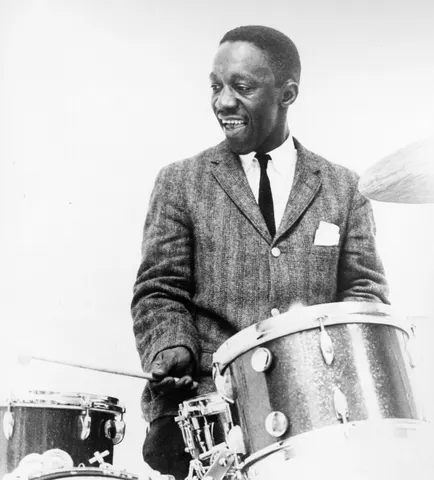
- Art Blakey, Larry Young, Joe Henderson, Hank Marr - the leaders he worked under before his own recording career, from Marr's Columbus organ quartet in the 1960s through a brief 1973 stint as the first guitarist in Blakey's Jazz Messengers.
- Michael Mustafa Ulmer - his son, who played keyboards on Plays the Music of Ornette Coleman and Forbidden Blues and engineered and mixed the American Revelation archival releases.
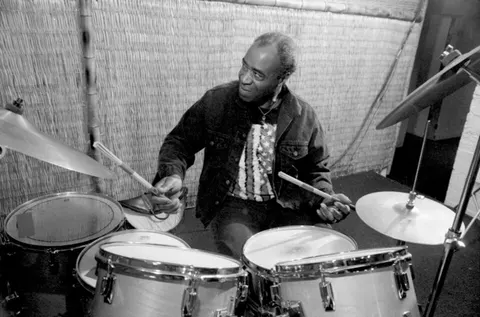
More Free Funk Artists
See all 11 Free Funk artists →More American Jazz Artists
See all 567 American artists →- Wikipedia: James Blood Ulmer
- Discogs: James Blood Ulmer (artist 149965)
- NPR: James Blood Ulmer, avant-garde electric guitarist and singer, has died at 86 (June 8, 2026)
- DownBeat: In Memoriam, James Blood Ulmer, 1940-2026
- Rolling Stone: James Blood Ulmer, Innovative Guitarist Who Fused the Avant-Garde to Blues, Dead at 86
- Clash: James Blood Ulmer Has Died
- Ted Panken: R.I.P. James Blood Ulmer (February 8, 1940 - June 3, 2026)
- Encyclopedia.com (Contemporary Musicians): James Blood Ulmer
- Wikipedia: Tales of Captain Black
- Wikipedia: Are You Glad to Be in America?
- Wikipedia: Odyssey (James Blood Ulmer album)
- Wikipedia: Bad Blood in the City: The Piety Street Sessions
- Wikipedia: Grammy Award for Best Traditional Blues Album (2002 nominees)
- Wikipedia: Music Revelation Ensemble
- Wikipedia: Phalanx (band)
- Wikipedia: Prime Time (band)