 JAZZPROFILES lives in the music 2,555 Jazz Artists fully Profiled!
Natalino Otto
Last updated November 11, 2026
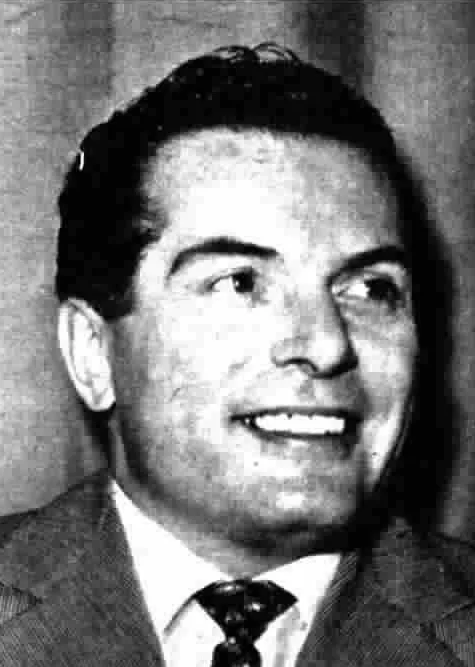
Natalino Otto, portrait from Radiocorriere magazine, January 24, 1954 Public domain (Italian photograph of an unknown author; Commons templates PD-Italy and PD-1996) — Wikimedia Commons - https://commons.wikimedia.org/wiki/File:Natalino_Otto_1954.jpg - from Radiocorriere magazine, issue 4, year XXXI

Natalino Otto was born Natale Codognotto on December 24, 1912, in Cogoleto, a small town on the Ligurian coast west of Genoa. Italian Wikipedia says he was the second youngest of five children and that he started out as a tailor in Genoa while taking music lessons and playing drums in local groups. At sixteen he went to sea as the drummer on the liner Conte di Savoia, where he took his stage name and sang the choruses through a megaphone. English Wikipedia says the crossings, on routes between Europe and North America, were where he first got to know American jazz and swing. Italian Wikipedia adds that on a 1935 stay in New York he met Gene Krupa, who found him a booking with an Italian-American radio station, and befriended the violinist Joe Venuti, who urged him to move to America. He came home to Genoa on November 18, 1935, with records, sheet music and a microphone to replace the megaphone.
Back in Italy he sang and played drums with the dance orchestra of the violinist Franco Grassi, then with Armando Fragna in Rome and with the saxophonist Ettore Pierotti in Milan. In Turin he was the drummer in Pierotti's Orchestra di Swing at the Salone de La Stampa, in a lineup with Aldo Frazzi on piano, Amedeo D'Ambrosio on harmonica, Fausto Turchini on bass and Pierotti on saxophone and violin, and he made his first 78 rpm records for Columbia with the orchestra of the saxophonist Antonio Mulazzi. He met the pianist, accordionist and arranger Gorni Kramer in 1937, and their long partnership began in the summer of 1939 in Viareggio with a repertoire of jazz numbers. In January 1940, according to the Italian newspaper Avvenire, he signed with the Fonit label under his stage name.
The repertoire was the problem. Under the Fascist regime anything foreign was discouraged, so he translated titles and lyrics: "St. Louis Blues" became "Le tristezze di San Luigi" and "Mister Paganini" was sold as "Maestro Paganini." The state broadcaster EIAR kept his records off the air, and English Wikipedia says he became one of the few Italian singers of the period, perhaps the only one, to succeed on records alone. Italians danced to his swing numbers and called him the "Re del ritmo," the King of Rhythm. Italian Wikipedia says he and Kramer reached the radio in 1938 and were soon removed from it, toured abroad, and had their passports confiscated on their return. His daughter Silvia, interviewed by Avvenire, thinks the story of persecution is overstated and says the underlying obstacle was that American music was kept off state radio while Italy was at war with the United States. His records with Kramer's orchestra and soloists include the 1942 Fonit 78 "Polvere di stelle" with "Biri eiriei," the 1947 Fonit 78 of "Sweet and Lovely" and "As Time Goes By," and the 1948 Fonit 78 of "Harlem Notturno," whose 1997 reissue credits Franco Cerri on bass and Aldo Rossi on saxophone.
After the war the repertoire widened. His first great hit, "In cerca di te," dates from 1944, and "Mamma, voglio anch'io la fidanzata," "Ho un sassolino nella scarpa," "Op op trotta cavallino" and "La classe degli asini" followed. English Wikipedia says he recorded more than two thousand songs in all. He starred in Riccardo Freda's film Tutta la città canta in 1945, appeared in La casa senza tempo and Carosello del varietà, and entered the Sanremo Festival five times in the 1950s, finishing fourth in 1954 with "Notturno" and third in 1955 with "Canto nella valle." In 1950 he founded the publishing house Edizioni Bolero, which Italian Wikipedia says was the first to accept songs by Fred Buscaglione, a close friend. He married the singer Flo Sandon's on June 2, 1955, and their daughter Silvia was born in 1956. On the night of September 24, 1958, the couple heard a teenage singer with the Happy Boys at a dance hall in Cremona and offered her a trial recording session, and a month later the first single of Mina came out.
In 1960 he started the record company Telerecord, which Avvenire describes as jazz-oriented, and spent his last working years remaking his old songs with a small group called the Gentlemen. Italian Wikipedia names its players as Pupo De Luca on drums, Paolo Salonia or Giorgio Azzolini on bass, Cerri or Alberto Pizzigoni on guitar, Enrico Intra on piano, Giancarlo Barigozzi on flute and Glauco Masetti on saxophone. Fonit issued "Laura" and a new "Polvere di stelle" with the Gentlemen in 1960, and Telerecord issued the single "Tu, lei, lui" with them in 1961. He appeared with Flo Sandon's in television commercials in 1960 and, by his daughter's account, retired from performing in 1962 because he felt he had said what he had to say. He passed away in Milan on October 4, 1969, after a second heart attack a week after the first.
His songs lived on. Articolo 31 sampled the chorus of "Mamma, voglio anch'io la fidanzata" for their 1998 single "La fidanzata," the pianist Italo Salizzato recorded the tribute "A spasso con Natalino Otto" in 1983, and his daughter published the book and double CD Vendo ritmo in 2011. In 2024, on the 55th anniversary of his death, the Fidanza Jazz Combo released No Jazz: Omaggio a Natalino Otto, fifteen of his songs. Avvenire notes that Stefano Bollani is among later musicians who have named him as an influence.
Otto was first of all a popular singer, and that is stated here plainly: after the swing years of 1939 to 1945 most of his output was Italian pop, Sanremo songs, novelty numbers, Latin rhythms and television work, and his recorded catalogue is overwhelmingly 78s and 45s of light song. The jazz thread is real and documented. He was a working drummer before he was a singer, he learned his repertoire on transatlantic liners and in New York, and both English and Italian Wikipedia credit him with bringing swing to Italy; Italian Wikipedia calls him the father of Italian swing. Fonit pressed him singing American standards in Italian and in English, he recorded with Kramer's orchestra and soloists, and Discogs files several of his records under Jazz with the style Swing, among them the 1942 "Polvere di stelle" 78, the 1957 Fonit album I grandi successi di Natalino Otto and the 1961 Telerecord singles with the Gentlemen. Italian swing anthologies carry his sides beside Alberto Rabagliati, Fred Buscaglione, the Quartetto Cetra and the Trio Lescano. On the records he is a dance-band and radio vocalist singing swing songs with a light, rhythmic delivery and an occasional scat line such as the one in his debut "Biriei," not an improviser. Avvenire describes him as a crooner with a swing sense who loved jazz, and later swing-pop songwriters such as Sergio Caputo name the Italian swing of Otto's era among their models.
- "Tristezze di S. Louis" / "Illusione" (1941, Fonit 8630) - An early Fonit 78 whose A side is the Italian-titled "St. Louis Blues," the clearest example of the censorship-era translation habit.
- "Polvere di stelle" / "Biri eiriei = Canta così" (1942, Fonit 8589) - A swing 78 with Kramer e i suoi Solisti credited, filed on Discogs under Jazz and Swing.
- "Sweet and Lovely" / "As Time Goes By" (1947, Fonit 12518) - Two American standards sung with Gorni Kramer's orchestra, the second of them in English according to the label note on Discogs.
- "Harlem Notturno" / "Laguna addormentata" (1948, Fonit 12967) - Kramer's orchestra on the Italian version of "Harlem Nocturne," with Franco Cerri and Aldo Rossi credited on the 1997 reissue.
- No Jazz! (1958, Fonit EP 4300) - A four-song 7 inch EP led by his own "No Jazz!," filed on Discogs under Jazz, Pop and Stage and Screen.
- I grandi successi di Natalino Otto (1957, Fonit LP 243) - A ten-inch LP with "Mister Paganini," "Tristezze," "Op op trotta cavallino" and "Che ritmo, senti che ritmo," filed on Discogs under Jazz, Rock and Pop with the styles Swing and Rock and Roll.
- "Tu, lei, lui ..." / "Bonjour, Carlotta" (1961, Telerecord SP 611) - A single on his own label with the Gentlemen credited as accompanying group, filed on Discogs under Jazz, Rock and Pop.
- Vendo ritmo (2011, Edizioni Sabinae) - A book-and-CD set by his daughter with fifty original recordings and a documentary DVD, filed on Discogs under Jazz and Swing.
Natalino Otto: Full Discography
Discogs artist: Natalino Otto (281968) · Born December 24, 1912, Cogoleto · Died October 4, 1969, Milan
He recorded more than two thousand songs, nearly all of them 78 rpm and 7 inch singles and EPs for Fonit and, from 1961, for his own Telerecord label, so this page lists a selection: the swing-era 78s, the albums and EPs that carry his jazz and swing material, the records made with the Gentlemen, and the later compilations and tributes. Catalog numbers and years come from Discogs, and where a detail could not be confirmed it is marked as not confirmed. Discogs also files his real name, Natale Codognotto, as a separate entry, and namesakes are not included. Listen and Buy links were not individually confirmed.
Albums and EPs
| Release | Year | Label (catalog) | Personnel & Notes | Listen | Buy |
|---|---|---|---|---|---|
| Sole giallo (EP) | 1956 | Fonit (EP. 4114), 7 inch EP | With Orchestra Mojoli. Filed on Discogs under Jazz and Pop with the style Vocal | — | — |
| I più grandi successi di Natalino Otto | 1956 | Fonit (LP. 167), 10 inch LP | Eight songs, among them L'ultima volta che vidi Parigi, Un romano a Copacabana and O baby kiss me, with Orchestra Mojoli. Filed on Discogs under Latin and Pop | — | — |
| I grandi successi di Natalino Otto | 1957 | Fonit (LP. 243), 10 inch LP | Mister Paganini, Tristezze, Mamma voglio anch'io la fidanzata, Op op trotta cavallino, Natalino canta, Mia (solamente mia), Pinocchio and Che ritmo, senti che ritmo. Filed on Discogs under Jazz, Rock and Pop with the styles Swing and Rock and Roll; liner notes signed A.L. | — | — |
| No Jazz! (EP) | 1958 | Fonit (EP. 4300), 7 inch EP | No Jazz!, La barca dei sogni, Ma l'amore no and Ti dirò, with Franco Mojoli e il suo Complesso and the vocal group Il Poker di Voci. The last two songs come from film soundtracks. Filed on Discogs under Jazz, Pop and Stage and Screen | — | — |
| Vendo ritmo | 2011 | Edizioni Sabinae, 2 CD with DVD | Fifty original recordings and a documentary, issued with the book by his daughter Silvia Codognotto Sandon; not sold separately. Filed on Discogs under Jazz and Swing | — | — |
Selected singles
| Single | Year | Label (catalog) | Notes | Listen | Buy |
|---|---|---|---|---|---|
| Tristezze di S. Louis / Illusione | 1941 | Fonit (8630), 78 rpm | The A side is the Italian translation of St. Louis Blues. Discogs credits Alberto Semprini e la sua Orchestra and files the record under Jazz and Pop | — | — |
| Polvere di stelle / Biri eiriei (Canta così) | 1942 | Fonit (8589), 78 rpm | Kramer e i suoi Solisti credited. Filed on Discogs under Jazz with the style Swing | — | — |
| Birimbo birambo / Ho trovato il ritmo | 1943 | Elektroton (No. 439), 78 rpm | Filed on Discogs under Jazz and Pop with the styles Swing and Vocal | — | — |
| Perduto amore | 1944 | Fonit (12144), 78 rpm | The 1944 hit also known as In cerca di te. Sciorilli e la sua Orchestra credited; the listing shows this one title | — | — |
| La scuola del ritmo / Vorrei rivederti ancora | 1945 | Fonit (12187), 78 rpm | Luciano Zuccheri e la sua Orchestra credited | — | — |
| Sweet and Lovely / As Time Goes By | 1947 | Fonit (12518), 78 rpm | Gorni Kramer e la sua Orchestra accompanying. The label note marks the second song as a slow number in English | — | — |
| Harlem notturno / Laguna addormentata | 1948 | Fonit (12967), 78 rpm | Gorni Kramer e la sua Orchestra; fox trot on the A side, slow waltz on the B side. The 1997 Fonit Cetra reissue Made in Italy, Volume 2 credits Franco Cerri on bass and Aldo Rossi on saxophone on Harlem notturno | — | — |
| La classe degli asini / La grande pioggia | 1948 | Fonit (12731), 78 rpm | Gorni Kramer e la sua Orchestra credited | — | — |
| Johnny Guitar / Fischio un blues | 1954 | Fonit (14710), 78 rpm | Franco Mojoli e il suo Complesso accompanying. Filed on Discogs under Blues and Pop | — | — |
| Ci ciu ci / Canto nella valle | 1955 | Fonit (14820), 78 rpm | Alberto Semprini e il suo Sestetto Azzurro credited, with the Trio Aurora as chorus. Canto nella valle finished third at Sanremo in 1955 | — | — |
| Mister Paganini / Tristezze | 1958 | Fonit (SP. 30217), 7 inch | Luciano Zuccheri on guitar | — | — |
| Il tuo bacio è come un rock / Tutto made in Italy | 1959 | Fonit (SP. 30601), 7 inch | Billed with Mario Pezzotta e il suo Complesso. Filed on Discogs under Jazz, Rock and Pop with the styles Rock and Roll, Swing and Big Band | — | — |
| Laura / Polvere di stelle | 1960 | Fonit (SP. 30802), 7 inch | Complesso I Gentlemen credited as backing band | — | — |
| Tu, lei, lui ... / Bonjour, Carlotta | 1961 | Telerecord (SP. 611), 7 inch | Complesso I Gentlemen credited as accompanying group. Bonjour, Carlotta is from the musical comedy Il marito in collegio. Filed on Discogs under Jazz, Rock and Pop with the styles Swing and Rock and Roll | — | — |
| Autumn in London / Sono al bar | 1961 | Telerecord (SP. 629), 7 inch | Seven Eight credited as accompanying group. Filed on Discogs under Jazz, Latin and Pop with the styles Vocal and Swing | — | — |
| Mister Paganini / Serenata a Daina | 1973 | Fratelli Fabbri Editori (CPB-34), 7 inch | A reissue single that pairs him with Alberto Rabagliati | — | — |
Compilations, anthologies and tributes
| Release | Year | Label (catalog) | Notes | Listen | Buy |
|---|---|---|---|---|---|
| I grandi successi | 1980 | Fonit Cetra (PL 521), LP | Twelve songs from the 1940s and 1950s, among them Che ritmo, senti che ritmo, Mamma voglio anch'io la fidanzata and Laura | — | — |
| Made in Italy, Volume 2 | 1997 | Fonit Cetra (CDM 5008), CD | Various artists; mostly Gorni Kramer. His track is Sweet and Lovely, with Kramer's orchestra, and Harlem notturno carries his vocal. Filed on Discogs under Jazz with the style Swing | — | — |
| Swing italiano | 1999 | Warner Fonit (3984 2961 1-2), CD | Eighteen tracks, among them Illusione, Tristezze di S. Louis, Mister Paganini, Polvere di stelle and La classe degli asini | — | — |
| I grandi successi dello swing italiano Vol. 1 | 2005 | Warner Music Italy (5050467-6787-2-9), CD | Various artists. His track is Mamma voglio anch'io la fidanzata; the disc also has Fred Buscaglione, Alberto Rabagliati, the Quartetto Cetra and the Trio Lescano. Filed on Discogs under Jazz with the style Swing | — | — |
| Le più belle canzoni di Natalino Otto | 2007 | Rhino Records (5051442-0870-2-4), CD | Eighteen tracks, essentially the same selection as Swing italiano | — | — |
| Che ritmo! | 2009 | Hobby & Work Italiana Editrice (GCA.C.010), CD | Fourteen tracks, among them No Jazz, Ho comprato un piano elettrico and Hey! Ba ba re bop | — | — |
| No Jazz. Omaggio a Natalino Otto (Fidanza Jazz Combo) | 2024 | Ars Spoletium Publishing & Recording (AS0256CP), CD | A tribute album by another act, released on October 4, 2024, the 55th anniversary of his death: fifteen of his songs, among them No Jazz, Op op trotta cavallino and Birimbo birambo. Filed on Discogs under Jazz and Swing | — | — |
- Gorni Kramer - bandleader, accordionist and arranger whom he met in 1937 and began working with in 1939; Kramer's orchestra and soloists accompany him on many of his Fonit 78s of the 1940s.
- Ettore Pierotti and Antonio Mulazzi - saxophonist-bandleaders in Milan and Turin whose orchestras he sang and played drums with, Mulazzi's on his first records for Columbia.
- Pippo Barzizza - the bandleader English Wikipedia names beside Kramer as one of the two he recorded with after being banned from the radio.
- Gene Krupa and Joe Venuti - American musicians Italian Wikipedia says he met in New York in 1935.
- Franco Cerri and Aldo Rossi - bass and saxophone credits on "Harlem Notturno" (1948), recorded with Kramer's orchestra.
- The Gentlemen - his small group of the 1960s, with Pupo De Luca, Enrico Intra, Cerri, Giancarlo Barigozzi, Glauco Masetti and Giorgio Azzolini named by Italian Wikipedia as members at various times.
- Flo Sandon's - singer, his wife from 1955, with whom he was signed by RAI and who appeared with him in the 1960 commercials.
- Mina - the singer he and Flo Sandon's offered a first recording session in 1958.
- Franco Mojoli and Luciano Zuccheri - bandleader and guitarist credited on his Fonit records of the 1950s.


More Swing Artists
See all 273 Swing artists →More Italian Jazz Artists
See all 554 Italian artists →- Wikipedia: Natalino Otto
- Wikipedia (Italian): Natalino Otto
- Avvenire: Natalino Otto, pioniere dello swing
- Wikidata: Natalino Otto
- Discogs: Natalino Otto
- MusicBrainz: Natalino Otto
- Discogs: Made in Italy, Volume 2 (Fonit Cetra, 1997)
- Discogs: No Jazz! (Fonit, 1958)
- Discogs: I Grandi Successi Dello Swing Italiano Vol. 1
- Wikimedia Commons: Natalino Otto 1954.jpg