 JAZZPROFILES lives in the music 2,555 Jazz Artists fully Profiled!
Fred Buscaglione
Last updated November 11, 2026
Listen on Spotify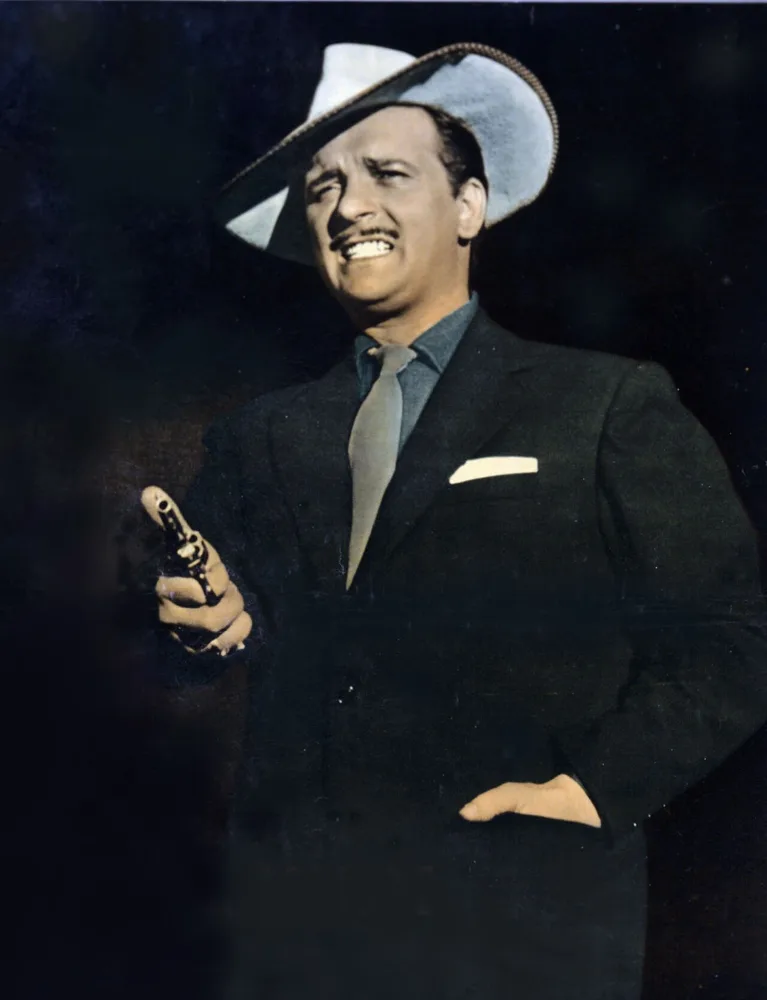
Fred Buscaglione in a still from the film *I ladri* (1959) Public domain (tagged PD-Italy and PD-1996 on Wikimedia Commons; frame from a 1959 Italian film) — Wikimedia Commons - https://commons.wikimedia.org/wiki/File:Fred_Buscaglione_1959.jpg - Fénix Cooperativa Cinematográfica / I.C.M. Roma

Ferdinando "Fred" Buscaglione was born in Turin on November 23, 1921, to a house-painter father and a mother who worked as a building concierge and gave piano lessons, both from the village of Graglia. At eleven he was admitted to the Giuseppe Verdi Conservatory in Turin and left after three years, uninterested in the classical curriculum and needed at work by a family with little money. He took jobs as a delivery boy and a dental technician's apprentice and learned his trade at night. By his teens he was singing jazz in Turin nightclubs and playing double bass and violin, and Italian sources add piano and trumpet.
Jazz reached him early. On January 15, 1935, when he was thirteen, he went to Louis Armstrong's concert at the Teatro Politeama Chiarella in Turin with a friend, the accordionist Renato Germonio. The two later worked as an accordion duo, and Buscaglione moved in the circle around the Hot Club Torino, the city's jazz society. In the late 1930s and early 1940s he played double bass in small orchestras at venues such as the Fortino, the Stadium and the Hotel Ligure, and a law student named Leo Chiosso, who loved crime novels, heard him at the Gran Caffè Ligure and became his lyricist for life.
Italy entered the war in June 1940 and Buscaglione was called up and posted to Sardinia. Captured by the Americans, he was allowed to join the orchestra of the Allied radio station in Cagliari, which gave him access to American music that the Fascist regime had banned. With the brothers Franco and Berto Pisano he led the Quintetto Aster, which played for the Allied radio and for Radio Sardegna.
Back in Turin after the war he played bass in dance-hall orchestras, taking violin solos and singing standards. Italian Wikipedia credits him as the double bassist, under the name Nando Buscaglione, on the 1946 78 rpm Body and Soul / Don't Get Around Much Anymore by the Complesso Swing sotto l'egida dello Hot Club Torino; the label notes say it was recorded on May 6, 1946. The wartime quintet became the Asternovas, with trumpeter Giulio Libano and saxophonist Sergio Valenti among its members, and the group worked nightclubs across Europe, starting from a Swiss engagement in 1948. In Switzerland in 1949 he met the performer Fatima Robin's, who later became his wife and sang beside him on stage. His first recordings, in 1952 for La Voce del Padrone, were jazz standards, and no label then wanted the original songs he and Chiosso were writing.
The turn came with Gino Latilla, a Cetra recording artist who had scored a hit with "Tchumbala-bey," written by the Chiosso and Buscaglione team, and who pressed the label's director to record them. The result was a 78 rpm single in 1955, "Che bambola!!" backed with "Giacomino," which sold close to a million copies with almost no promotion. The stage character was complete by then: a pinstriped, mustachioed tough guy with a wide-brimmed hat, drawn from Clark Gable, from Mickey Spillane and from the gangsters of Damon Runyon's stories, singing comic songs about Chicago, whisky and women with the Asternovas behind him. Cetra released ten-inch LPs with the group from 1956 to 1958 that mix his own songs with standards such as "Making Whoopee," "Margie" and "Too Marvelous for Words," and he scored a run of hits with Chiosso including "Teresa non sparare," "Eri piccola così," "Whisky facile" and "Love in Portofino."
By 1959 he was everywhere in Italian entertainment, in advertising, on television and in a run of films that included I ladri, I ragazzi del juke-box, Poveri milionari and, opposite Totò and Scilla Gabel, Noi duri. In the early hours of February 3, 1960, at 38, he was driving his Ford Thunderbird toward his hotel in Rome when he collided at a crossing with a Lancia Esatau truck loaded with porphyry. The truck driver flagged down a bus to carry him to hospital, and he was gone when it arrived. Hours earlier he had dined with friends and met Mina, who had made her Sanremo Festival debut, and the two had talked about working together. Tens of thousands attended his funeral in Turin on February 6, and he is buried in the city's Cimitero Monumentale. Noi duri opened on February 24 and ran for months.
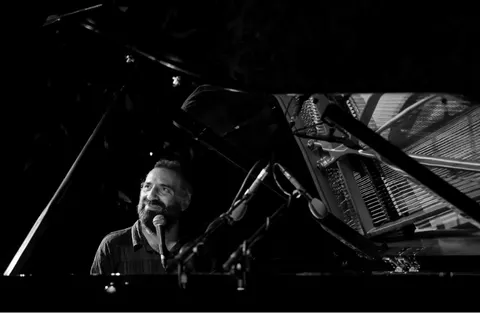
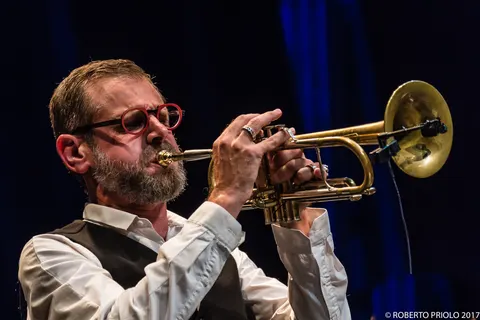
His songs outlived the character. In 1980 RAI marked the twentieth anniversary of his passing with a tribute in which several singers performed his hits with an orchestra led by Gorni Kramer. In 2008 he was named one of the immortals of the "Pantheon of Italian Swing," part of the Sultanato dello Swing project created by Freddy Colt under the patronage of the pianist Stefano Bollani. Raphael Gualazzi issued an EP of his songs, Buonasera, Fred!, in 2021, and on December 5, 2023 the stage show Fred!, directed by Arturo Brachetti, opened at the Teatro Carignano in Turin with trumpeter Fabrizio Bosso among the participants. A commemorative plaque was unveiled on April 4, 2025 at the building in Via Bava where he lived and wrote.
Buscaglione was a nightclub entertainer first and a jazz musician second, and the jazz is the foundation rather than the headline. The records are swing in the Italian dance-band manner: a small combo with trumpet and saxophone, a rhythm section, a leader who also played bass and violin, and a repertoire that sets Chiosso's comic originals beside American standards, mambos and the occasional rock and roll number. Discogs files most of his releases under Jazz and Swing. The posthumous Ricordo di Fred (1960) includes an unreleased double bass solo and the standard "Ain't Misbehavin'" alongside his own hits, which is the clearest document of the instrumentalist behind the persona.
The jazz lineage is documented in his youth rather than inferred. He heard Louis Armstrong in Turin at thirteen, absorbed the Hot Club Torino scene, and learned American swing and big-band sounds on the Allied radio in Sardinia when the music was banned at home. The persona itself came from American crime fiction and film, not from a jazz source, and the humor is what sold the records. He mattered for later Italian swing: Sergio Caputo and Tonino Carotone are among those who cite or echo his manner, and Raphael Gualazzi recorded a whole EP of his songs.
- "Che bambola!!" / "Giacomino" (1955, Cetra) - The 78 rpm single that sold close to a million copies and made him a national name. Spotify - Che bambola Listen
- Fred Buscaglione e i suoi Asternovas (1956, Cetra LPA 47) - A ten-inch LP that pairs "Teresa non sparare" and "Io piaccio" with "Margie," "Mister Sandman" and "Making Whoopee," the most direct statement of the swing-combo side.
- Balliamo con Fred Buscaglione (1957, Cetra LPA 93) - A dance-band record built on standards such as "Too Marvelous for Words," with a rock and roll number ("Rock Right") and "Armen's Theme" alongside.
- "Eri piccola così" (1958, Cetra) - One of the Chiosso songs that defined his repertoire, tender where the others are comic. Spotify - Eri piccola così Listen
- "Guarda che luna" (1959, Cetra) - The melodic ballad that points to where he was heading before his death. Spotify - Guarda che luna Listen
- "Love in Portofino" (1958, Cetra) - His signature slow song, a late-1950s Italian standard. Spotify - Love in Portofino Listen
- Ricordo di Fred (1960, Fonit Cetra LPF 1) - The posthumous tribute LP with his spoken asides, an unreleased bass solo, "Dixieland '53" and "Ain't Misbehavin'."
Fred Buscaglione: Full Discography
Discogs artist: Fred Buscaglione (360695) and Fred Buscaglione e i suoi Asternovas (1226304) · Born November 23, 1921, Turin · Passed away February 3, 1960, Rome
His recording career ran from 1952 to 1960, almost all of it on Cetra with the Asternovas, and Italian Wikipedia counts his output as large for so short a career. The tables below list the albums, a selection of the singles and the film appearances, with years taken from Discogs and Wikipedia. Where a detail could not be confirmed the cell says Not confirmed.
Leader: Albums
| Album | Year | Label | Personnel & Notes | Charts | Listen | Buy |
|---|---|---|---|---|---|---|
| Fred Buscaglione e i suoi Asternovas | 1956 | Cetra (LPA 42) | Ten-inch LP. Opens with a Dixieland-titled number and includes "Che bambola," "Giacomino," "Porfirio Villarosa," "Niente visone," "Pensa ai fatti tuoi," "Tango delle capinere" and "Silbando mambo." Personnel not confirmed | Not charted | — | — |
| Fred Buscaglione e i suoi Asternovas | 1956 | Cetra (LPA 47) | Ten-inch LP. "Margie," "Mister Sandman," "Teresa non sparare," "Making Whoopee," "Frankie and Johnny," "Le rififi," "Io piaccio," "Aster-Mambo." Personnel not confirmed | Not charted | — | — |
| Le nuove canzoni di Fred Buscaglione | 1957 | Cetra (LPA 92) | Ten-inch LP, Discogs styles Swing and Rock & Roll. "Il siero di Strokomogoloff," "La cambiale," "Whisky facile," "Five 'O Clock Rock," "Troviamoci domani a Portofino," "'A coda 'e cavallo," "Supermolleggiata," "Moreto moreto." Songs credited to Buscaglione and Leo Chiosso | Not charted | — | — |
| Balliamo con Fred Buscaglione | 1957 | Cetra (LPA 93) | Ten-inch LP. "Armen's Theme," "Voglio scoprir l'America," "5 10 15 Hours," "Parlami d'amore Mariù," "Too Marvelous for Words," "Pericolosissima," "Bonsoir (Bonsoir jolie madame)," "Rock Right" | Not charted | — | — |
| Fred Buscaglione e i suoi Asternovas | 1958 | Cetra (LPA 108) | Ten-inch LP built around the 1958 Sanremo festival songs, including "Nel blu dipinto di blu," "Non potrai dimenticare" and "Fantastica," with "Vocca rossa," "Cocco bello," "Vecchio boxeur" and "Eri piccola così" | Not charted | — | — |
| Fred Buscaglione e i suoi Asternovas | 1958 | Cetra (LP16 N. 3) | 16 rpm release. Track list not confirmed | Not charted | — | — |
| 16 successi di Fred Buscaglione | 1959 | Cetra (LPB 35007) | Compilation of earlier hits. Track list not confirmed | Not charted | — | — |
| Fred Buscaglione e i suoi Asternovas | 1959 | Cetra (LP16 N. 5) | 16 rpm release. Track list not confirmed | Not charted | — | — |
Posthumous Albums
| Album | Year | Label | Personnel & Notes | Listen | Buy |
|---|---|---|---|---|---|
| Ricordo di Fred | 1960 | Fonit Cetra (LPF 1) | Stereo tribute compilation with spoken interludes. Includes excerpts of "Ogni notte così," "Che bambola" and "Eri piccola così," an unreleased double bass solo by Buscaglione, "Dixieland '53," "Ain't Misbehavin'," "Whisky facile," "Dors mon amour" and "Guarda che luna" | — | — |
| Che bambola! | 1961 | Vene Vox / Cetra (LPB-3501) | Compilation, Discogs styles Jazz and Swing. "Che bambola," "Porfirio Villarosa," "Niente visone," "Eri piccola così," "Cocco bello," "Guarda che luna," "Tu che ne dici," "Whisky facile," "Sogno d'estate," "Ninna nanna del duro," "Che notte," "Che bella cosa sei" | — | — |
Selected Singles and EPs
| Title | Year | Label | Notes | Listen | Buy |
|---|---|---|---|---|---|
| "Che bambola!!" / "Giacomino" | 1955 | Cetra | Shellac 78 rpm. His first single for the label, sold close to a million copies | Spotify | — |
| "Teresa non sparare" / "Frankie and Johnny" | 1955 | Cetra | Shellac 78 rpm | — | — |
| "Io piaccio" / "Dixieland 53" | 1956 | Cetra | Shellac 78 rpm | — | — |
| "Teresa non sparare" / "Porfirio Villarosa" | 1957 | Cetra | 7 inch | — | — |
| "Armen's Theme" / "Too Marvellous for Words" | 1957 | Cetra | 7 inch | — | — |
| "Five O' Clock Rock" / "Voglio scoprir l'America" | 1957 | Cetra | Shellac 78 rpm | — | — |
| "Non partir" / "Love in Portofino" | 1958 | Cetra | Shellac 78 rpm | Spotify: Love in Portofino | — |
| "Eri piccola così" / "Vocca rossa" | 1958 | Not confirmed | Listed on Discogs as a 1958 release | Spotify: Eri piccola così | — |
| "Il dritto di Chicago" | 1959 | Cetra | 7 inch | — | — |
| "Guarda che luna" / "Strade" | 1959 | Cetra | 7 inch | Spotify: Guarda che luna | — |
| "Siamo gli evasi" / "Criminalmente bella" | 1959 | Cetra | 7 inch | — | — |
| "Noi duri" / "Cielo dei bars" | 1960 | Cetra | 7 inch | — | — |
As Sideman
| Year | Project (Leader) | Title | Label | Catalog | Role | Notes |
|---|---|---|---|---|---|---|
| 1946 | Complesso Swing sotto l'egida dello Hot Club Torino | "Body and Soul" / "Don't Get Around Much Anymore" | Hot Club Torino / Sonovox | H.C.T. 3 | Double bass | Shellac 78 rpm. Label notes give the recording date as May 6, 1946. Italian Wikipedia credits Buscaglione, as Nando Buscaglione, on double bass; the release's own credit block names no individual players |
| 1952 | Himself | Jazz standards | La Voce del Padrone | Not confirmed | Not confirmed | His earliest recordings, per Italian Wikipedia, now close to unobtainable. Titles not confirmed |
Film Appearances
Per Wikipedia, his films were made in 1959 and 1960: Poveri milionari, I ladri, Guardatele ma non toccatele, Noi siamo due evasi, Il moralista, I ragazzi del juke-box, La duchessa di Santa Lucia and La cento chilometri in 1959, then Noi duri and Tu che ne dici? in 1960. Noi duri, his last, was shot with Totò and Scilla Gabel and opened in cinemas on February 24, 1960, three weeks after his passing.
- Leo Chiosso - lyricist and closest collaborator from their meeting at the Gran Caffè Ligure in Turin until Buscaglione's death in 1960; together they wrote the hits and shaped the gangster persona.
- The Asternovas - his backing group from the postwar years, growing out of the wartime Quintetto Aster; Italian sources name trumpeter Giulio Libano and saxophonist Sergio Valenti, with Franco Pisano among the founding members.
- Renato Germonio - accordionist and vibraphonist, his friend from adolescence, with whom he heard Louis Armstrong in 1935 and played as an accordion duo; both were associated with the Hot Club Torino.
- Franco and Berto Pisano - fellow musicians in the Quintetto Aster at the Allied radio station in Cagliari during the war.
- Gino Latilla - singer who persuaded Cetra to record Buscaglione's songs in 1955.
- Fatima Robin's - the performer he met in 1949 in Switzerland, later his wife, who joined his act as a singer.
- Mina - the young singer he met hours before his death; a planned collaboration never happened.
- Totò and Scilla Gabel - co-stars in Noi duri (1960), his last film.
More Swing Artists
See all 273 Swing artists →More Italian Jazz Artists
See all 554 Italian artists →- Spotify artist page
- Discogs
- Discogs: Fred Buscaglione e i suoi Asternovas
- AllMusic
- His profile on jazzprofiles.com
- r/CrossoverJazz
- Wikipedia: Fred Buscaglione
- Wikipedia (Italian): Fred Buscaglione
- Discogs: Fred Buscaglione
- Discogs: Fred Buscaglione e i suoi Asternovas
- Discogs: Complesso Swing sotto l'egida dello Hot Club Torino, Body and Soul
- MusicBrainz: Fred Buscaglione
- Doppiozero: Fred Buscaglione, dal whisky facile
- Rivista Savej: Nella Torino swing di Fred Buscaglione
- The New World: Fred Buscaglione, Great European Lives