 JAZZPROFILES lives in the music 2,555 Jazz Artists fully Profiled!
Lonnie Johnson
Last updated November 14, 2026
Listen on Spotify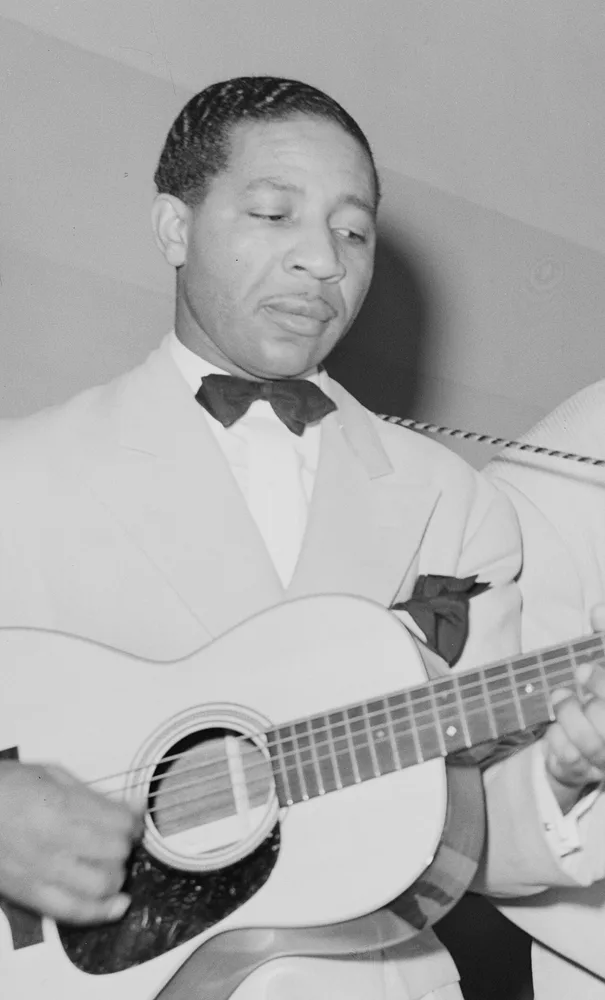
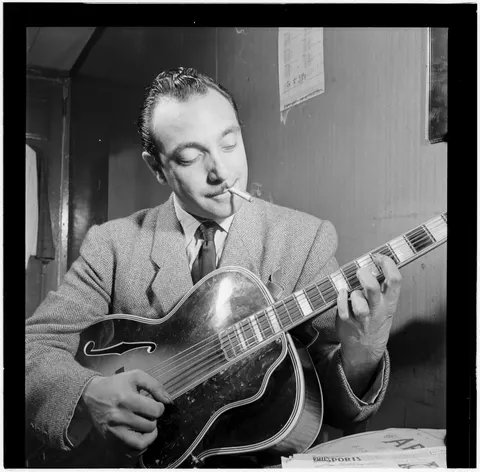
Lonnie Johnson playing guitar at a tavern in Chicago, April 1941, photographed by Russell Lee for the Farm Security Administration Public domain (work of a U.S. federal government photographer, Farm Security Administration / Office of War Information; Library of Congress copy) — Wikimedia Commons — https://commons.wikimedia.org/wiki/File:LonnieJohnsonByRussellLee1941Crop.jpg — Russell Lee, original caption "Entertainers at Negro tavern. Chicago, Illinois"; cropped from https://commons.wikimedia.org/wiki/File:LonnieJohnsonTrioRussellLee1941.jpg


Alonzo "Lonnie" Johnson was born in New Orleans on February 8, 1899, into a family of musicians. He studied violin, piano and guitar as a child and picked up other instruments, among them the mandolin, but he concentrated on guitar for the whole of his professional career. In 1917 he joined a revue that toured England. When he came home in 1919 he found that every member of his family except his brother James had died in the influenza epidemic of 1918. The brothers settled in St. Louis in 1921 and worked as a duo, and Johnson also played on riverboats and in the orchestra of Charlie Creath.
In 1925 he won a blues contest at the Booker T. Washington Theatre in St. Louis, and the prize was a recording contract with Okeh. Between 1925 and 1932 he made about 130 recordings for the label, most of them blues vocals, and he became one of Okeh's best-selling artists. He recorded in New York with blues singers such as Victoria Spivey and the country blues singer Texas Alexander, and he toured with Bessie Smith in 1929. His wife Mary, whom he married in 1925, began a blues career of her own; the couple never recorded together and divorced in 1932. Alongside the vocal records, Okeh also let him record guitar solos and duets, and it used him as a guest on its jazz sessions, which is the side of his work that most reaches jazz listeners.
In December 1927 he joined Louis Armstrong's Hot Five in Chicago, paired with the banjoist Johnny St. Cyr, and played on "I'm Not Rough," "Savoy Blues" and "Hotter Than That." In 1928 he recorded "Hot and Bothered," "Move Over" and "The Mooche" with Duke Ellington for Okeh, and he also recorded with McKinney's Cotton Pickers under the name the Chocolate Dandies. His guitar duets with Eddie Lang, made for Okeh between 1928 and 1929, are regarded as among the earliest integrated jazz recordings: Lang, who was white, was billed as Blind Willie Dunn on the label's race series, the writing was credited to "Johnson-Dunn," and the pair also recorded with King Oliver as Blind Willie Dunn and His Gin Bottle Four. After the Bessie Smith tour he moved to Chicago and recorded for Okeh with the stride pianist James P. Johnson.
The Depression ended the recording boom. Johnson worked in a steel mill in Peoria, Illinois, and in 1932 moved to Cleveland, where he lived for the rest of the decade, played on radio and sometimes with the band behind the singer Putney Dandridge. By the late 1930s he was back in Chicago recording for Decca with Roosevelt Sykes and Blind John Davis, among others. In 1939, at a Bluebird session with the pianist Joshua Altheimer, he played an electric guitar for the first time, and over the next five years he cut 34 sides for Bluebird, including "He's a Jelly Roll Baker" and "In Love Again." After the war he moved toward rhythm and blues at King Records in Cincinnati. "Tomorrow Night," a ballad written by Sam Coslow and Will Grosz and recorded with piano and background singers, topped the Billboard race records chart for seven weeks in 1948, reached number 19 on the pop chart and sold three million copies. "Pleasing You," "So Tired" and "Confused" followed as R&B hits.
He toured England in 1952, where the young musician Tony Donegan, on the same bill, took the stage name Lonnie Donegan in his honor, and then settled in Philadelphia and worked in a steel foundry and as a janitor. In 1959 the disc jockey Chris Albertson found him working at the Benjamin Franklin Hotel and produced Blues by Lonnie Johnson for the Bluesville label in 1960, with the tenor saxophonist Hal Singer, the pianist Claude Hopkins, the bassist Wendell Marshall and the drummer Bobby Donaldson. More Prestige sessions followed, among them Blues & Ballads with the banjoist and guitarist Elmer Snowden, who had helped Albertson locate him, and Idle Hours (1961) with Victoria Spivey. A Chicago engagement at the Playboy Club followed, and he guested with Ellington at a folk concert. In 1963 he toured Europe with the American Folk Blues Festival and recorded an album with Otis Spann in Denmark.
In May 1965 he played a Toronto club to an audience of four, and a few weeks later a larger crowd at another club encouraged him to move there. He opened his own club, Home of the Blues, on Yorkville Avenue in 1966; it failed, and he was let go by the man who became its owner. He kept recording and touring in Canada through the rest of the decade. In March 1969 he was hit by a car while walking in Toronto and suffered a broken hip and kidney injuries from which he never fully recovered. After a benefit concert on May 4, 1969, he made a last stage appearance at Massey Hall on February 23, 1970, walking with a cane and singing a couple of songs with Buddy Guy, and he received a standing ovation. He passed away on June 16, 1970. A funeral was held at Mount Hope Cemetery in Toronto, but his family had his body moved to Philadelphia for burial. A nonprofit that places headstones on unmarked blues graves bought one for him around 2014. Smithsonian Folkways issued The Complete Folkways Recordings in 1993.
Johnson is a blues and rhythm and blues figure first: most of his records are vocal blues and ballads, and that is the career that gave him a chart-topping record and a 1960s revival. His jazz importance rests on a narrower body of work from 1927 to 1930, when he played single-note, pick-played guitar solos with string bends and vibrato, often on twelve-string guitar, and brought them to Armstrong's and Ellington's records and to the Eddie Lang duets. The blues historian Gerard Herzhaft called him the creator of the note-by-note guitar solo that became standard in jazz, blues, country and rock, and writers have listed Django Reinhardt, T-Bone Walker and virtually every later electric blues guitarist among those who learned from him; Charlie Christian's profile notes that Christian drew more from horn players than from guitarists like Lang or Johnson. B.B. King cited Johnson as a formative influence, and in his autobiography he said Johnson and Blind Lemon Jefferson hit him hardest as a boy because their voices sounded so natural and believable. Bob Dylan, who met him in New York, said he learned from watching him, and Robert Johnson's "Malted Milk" is often heard as a reworking of Lonnie Johnson songs. The writer Elijah Wald points out that in the 1920s and 1930s Johnson was known mainly as a sophisticated, urbane singer rather than as a guitarist: none of the forty ads for his records that ran in the Chicago Defender between 1926 and 1931 mentioned the guitar. His lyrics treated the social conditions of urban Black life ("Racketeers' Blues," "Hard Times Ain't Gone Nowhere," "Fine Booze and Heavy Dues") and the nuances of love between men and women without Tin Pan Alley sentiment. Elvis Presley's early version of "Tomorrow Night" borrowed his phrasing, and Jerry Lee Lewis recorded the song in 1957.
- Hotter Than That / Savoy Blues (Louis Armstrong and His Hot Five, 1928, Okeh) - The first release from the December 1927 Chicago session on which Johnson guested on guitar and vocals, with "Hotter Than That" the most famous of his three sides there.
- Hot and Bothered / The Mooche (Duke Ellington, 1928, Okeh) - Johnson takes a guitar solo on "The Mooche," one of Ellington's best-known early pieces.
- Two Tone Stomp / Have to Change Keys to Play These Blues (Lonnie Johnson and Blind Willie Dunn, 1929, Okeh) - Guitar duets with Eddie Lang, recorded November 17, 1928, among the earliest integrated jazz records.
- Playing with the Strings (1928, Okeh) - A guitar solo recorded in Memphis on February 21, 1928, from the period when he was extending the guitar's solo role.
- Tomorrow Night (1948, King) - The ballad that topped the race records chart for seven weeks and sold three million copies.
- Blues by Lonnie Johnson (1960, Prestige Bluesville) - The comeback album Chris Albertson produced after finding him working as a hotel janitor, with a quintet that includes Hal Singer and Claude Hopkins. Spotify - Blues by Lonnie Johnson Listen
- Blues, Ballads, and Jumpin' Jazz, Vol. 2 (1990, Prestige Bluesville) - Previously unissued material from an April 5, 1960 session with Elmer Snowden and Wendell Marshall, mixing standards such as "Lester Leaps In," "C-Jam Blues" and "Stormy Weather" with blues and ballads.
- Steppin' on the Blues (1990, Columbia) - A 19-track compilation of his Okeh years, 1925 to 1932, with liner notes by Pete Welding, including "6/88 Glide" and the Eddie Lang duet "Guitar Blues."
Lonnie Johnson: Full Discography
Discogs lists him as artist 307232 ("Lonnie Johnson (2)," real name Alonzo Johnson, born February 8, 1899, in New Orleans, died June 16, 1970, in Toronto). He is not to be confused with the other Discogs entries named Lonnie Johnson, nor with the organist Lonnie Smith or the pianist Lonnie Liston Smith. Records billed to his groups sit under separate Discogs entries: the Lonnie Johnson Trio (3104342) and Blind Willie Dunn and His Gin Bottle Four (1393521), which carry the Eddie Lang duets. His own entry runs to roughly 1,480 credits, most of them reissues and track appearances, so this list is a selection: the key Okeh singles and duets, the King singles, the Bluesville albums of 1960 to 1962, the Folkways material, and the principal chronological collections. Catalog numbers are those of the pressing Discogs treats as the main release or, where noted, the original issue, and where a detail could not be confirmed the cell says so.
As Leader / Co-Leader
| Album Title | Recording Date(s) | Release Date | Label | Catalog Number | Format(s) | Personnel | Role | Reissue History | Spotify | Buy | Notes |
|---|---|---|---|---|---|---|---|---|---|---|---|
| Baby You Don't Know My Mind / A Good Happy Home | May 14, 1926, St. Louis | 1926 | Okeh | 8340 | Shellac, 10-inch, 78 rpm | Lonnie Johnson (vocals, violin), James Johnson (piano) | Leader | Falls within the date range of the first volume of the Document chronological series (see the Complete Recorded Works row below) | — | — | His own blues vocals from his first Okeh year; Discogs credits his instrument on the record as violin (fiddle). |
| To Do This You Got to Know How / Nile of Genago | January 20, 1926 (B side) and August 12, 1926 (A side) | 1926 | Okeh | 40695 | Shellac, 10-inch, 78 rpm | Lonnie Johnson (guitar); James Johnson (second guitar) on the B side | Leader | Not itemized | — | — | An early instrumental coupling: a guitar solo on one side and a guitar duet waltz on the other. |
| Playing with the Strings / Stompin' 'Em Along Slow | February 21, 1928, Memphis | 1928 | Okeh | 8558 | Shellac, 10-inch, 78 rpm | Lonnie Johnson (guitar) | Leader | "Playing with the Strings" is also on the 1990 Columbia compilation Steppin' on the Blues | — | — | Two guitar solos. |
| Two Tone Stomp / Have to Change Keys to Play These Blues | November 17, 1928, New York | 1929 | Okeh | 8637 | Shellac, 10-inch, 78 rpm | Lonnie Johnson (guitar), Eddie Lang as Blind Willie Dunn (guitar) | Co-leader (billed with Blind Willie Dunn) | Collected on the Swaggie LPs Eddie Lang and Lonnie Johnson Volumes 1 and 2 | — | — | Guitar duets; on the label the writing is credited to Johnson and Dunn. |
| Bullfrog Moan / A Handful of Riffs | May 7 and 8, 1929, New York | 1929 | Okeh | 8695 | Shellac, 10-inch, 78 rpm | Lonnie Johnson (guitar), Eddie Lang as Blind Willie Dunn (guitar) | Co-leader (billed with Blind Willie Dunn) | Collected on the Swaggie LP Eddie Lang and Lonnie Johnson, Volume 2 | — | — | Guitar duet. |
| Guitar Blues / Blue Guitars | 1928 to 1929, New York (exact dates not confirmed) | August 1929 | Okeh | 8711 | Shellac, 10-inch, 78 rpm | Lonnie Johnson (guitar), Eddie Lang as Blind Willie Dunn (guitar) | Co-leader (billed as Blind Willie Dunn's Gin Bottle Four) | "Guitar Blues" is also on Steppin' on the Blues (1990) | — | — | Guitar duets issued under a group name. |
| Hot Fingers / Deep Minor Rhythm Stomp | October 9, 1929, New York | 1930 | Okeh | 8743 | Shellac, 10-inch, 78 rpm | Lonnie Johnson (guitar), Eddie Lang as Blind Willie Dunn (guitar) | Co-leader (billed with Blind Willie Dunn) | "Hot Fingers" is on the Swaggie LP Eddie Lang and Lonnie Johnson, Volume 1 | — | — | Guitar duets. |
| Midnight Call / Blue Room | October 9, 1929, New York | September 1930 | Okeh | 8818 | Shellac, 10-inch, 78 rpm | Lonnie Johnson (guitar), Eddie Lang as Blind Willie Dunn (guitar) | Co-leader (billed with Blind Willie Dunn) | Not itemized | — | — | Guitar duets from the same session as Hot Fingers. |
| Lazy Woman Blues / In Love Again | Not confirmed | 1941 | Bluebird | B-8748 | Shellac, 10-inch, 78 rpm | Lonnie Johnson (vocals, guitar) with piano and bass | Leader | Not itemized | — | — | One of his Bluebird hits; Discogs describes the A and B sides as a blues singer with guitar, piano and bass. |
| Tomorrow Night / What a Woman | Not confirmed | 1948 | King | 4201 | Shellac, 10-inch, 78 rpm; Discogs's main release is the later 45 rpm reissue | Lonnie Johnson (vocals, guitar) with piano, bass and background singers | Leader | Reissued in 1954 on a 7-inch 45 rpm single with the same catalog number | — | — | Written by Sam Coslow and Will Grosz; topped the Billboard race records chart for seven weeks in 1948. |
| Pleasing You (As Long as I Live) / Feel So Lonesome | Not confirmed | 1948 | King | 4245 | Shellac, 10-inch, 78 rpm | Lonnie Johnson (vocals) with piano, guitar and bass | Leader | Not itemized | — | — | A follow-up R&B hit to Tomorrow Night. |
| Lonesome Road | Not confirmed | 1958 | King | 395-520 | Vinyl, LP | Lonnie Johnson (vocals, guitar) | Leader | Not itemized | — | — | An LP from his King years. |
| Blues by Lonnie Johnson | 1960, New York (Rudy Van Gelder studio engineer) | 1960 | Prestige Bluesville | BVLP 1007 | Vinyl, LP, album | Lonnie Johnson (guitar, vocals), Hal Singer (tenor saxophone), Claude Hopkins (piano), Wendell Marshall (bass), Bobby Donaldson (drums) | Leader | Reissued on CD in the Original Blues Classics series in 1991, and again in 2018 paired with Losing Game | Spotify - Blues by Lonnie Johnson | — | The comeback album, supervised by Chris Albertson. |
| Blues & Ballads | 1960, New York | 1960 | Prestige Bluesville | BVLP 1011 | Vinyl, LP, album, mono | Lonnie Johnson (electric guitar, vocals), Elmer Snowden (guitar), Wendell Marshall (bass) | Leader (billed with Elmer Snowden) | Reissued on CD by Fantasy in the Original Blues Classics series | — | — | Sleeve notes by Chris Albertson. |
| Losing Game | 1960 or 1961 (sources differ) | 1961 | Prestige Bluesville | BV 1024 | Vinyl, LP, album, mono | Lonnie Johnson (guitar, piano, vocals) | Leader | Reissued on CD in the Original Blues Classics series and in 2018 paired with Blues by Lonnie Johnson | — | — | A solo outing that mixes his own blues with standards such as "What a Diff'rence a Day Makes" and "Summertime." |
| Idle Hours | July 13, 1961 | 1962 | Prestige Bluesville | BV 1044 | Vinyl, LP, album, mono | Lonnie Johnson (guitar, vocals), Victoria Spivey (vocals, piano), Cliff Jackson (piano) | Co-leader (billed with Victoria Spivey) | Reissued on CD in the Original Blues Classics series | — | — | Spivey is featured on part of the album. |
| Another Night to Cry | 1962 | 1962 | Bluesville | BVLP 1062 | Vinyl, LP, album, mono | Lonnie Johnson (guitar, vocals) | Leader | Reissued on CD in the Original Blues Classics series (Spotify lists a 1992 remaster) | Spotify - Another Night to Cry | — | Produced by Kenneth S. Goldstein; sleeve notes by Pete Welding; all songs are his. |
| Stompin' at the Penny | Not confirmed | 1965 | Columbia | EL 110 | Vinyl, LP, mono | Lonnie Johnson (guitar, vocals) with Jim McHarg's Metro Stompers | Featured guest (billed Jim McHarg's Metro Stompers featuring Lonnie Johnson) | Listed by AllMusic as a Columbia/Legacy title | — | — | Traditional jazz repertoire including "West End Blues" and "Canal Street Blues." |
| Swingin' the Blues | Not confirmed | 1966 | XTRA | XTRA 1037 | Vinyl, LP, album | Lonnie Johnson (vocals, guitar) | Leader | Not itemized | — | — | British release of material produced by Folkways. |
| Sings 24 Twelve Bar Blues | 1940s and 1950s King sessions | 1966 | King | King 958 | Vinyl, LP, compilation, mono | Lonnie Johnson (vocals, guitar) | Leader | Not itemized | — | — | A compilation of his King recordings. |
| Eddie Lang and Lonnie Johnson, Volume One | April 1927 to October 1929, New York and Memphis | 1967 | Swaggie | S1229 | Vinyl, LP, compilation | Lonnie Johnson (guitar), Eddie Lang (guitar) | Co-leader (billed with Eddie Lang) | Reissued by BGO in 1997 as Blue Guitars Volumes I & II | — | — | Collects duets and solos by both guitarists; Brian Rust wrote the liner notes. Volume Two followed in 1970 (S1276). |
| Mr. Trouble (Blues and Ballads) and Tears Don't Fall No More: Blues and Ballads | 1967 | 1982 | Folkways | FS 3578 and FS 3577 | Vinyl, LP, album | Lonnie Johnson (vocals, guitar) | Leader | Collected in 1993 as The Complete Folkways Recordings | — | — | Two LPs from 1967 recordings, issued after his death. |
| Blues, Ballads, and Jumpin' Jazz, Vol. 2 | April 5, 1960, New York | 1990 | Prestige Bluesville | OBCCD-570-2 | CD, album | Lonnie Johnson (guitar, vocals), Elmer Snowden (guitar), Wendell Marshall (bass) | Leader (billed with Elmer Snowden) | First issued on CD; all selections were previously unissued | — | — | Includes "Lester Leaps In," "C-Jam Blues," "On the Sunny Side of the Street" and "Stormy Weather." |
| Steppin' on the Blues | 1925 to 1932 | 1990 | Columbia | CK 46221 | CD, compilation | Lonnie Johnson (guitar, vocals); Eddie Lang (guitar), Texas Alexander (vocals), Victoria Spivey (vocals), Clarence Williams (piano) and others on selected tracks | Leader | Not itemized | — | — | Nineteen Okeh tracks with liner notes by Pete Welding, including "6/88 Glide" and "Guitar Blues." |
| Complete Recorded Works 1925-1932 in Chronological Order, Volumes 1 to 7 | November 4, 1925 to August 12, 1932 | 1991 | Document Records | DOCD-5063 to DOCD-5069 | CD, compilation (seven discs) | Lonnie Johnson (vocals, guitar) with the accompanists on each session | Leader | Not itemized | — | — | The Okeh years in session order; his later Chicago and Cincinnati years are collected on RST Records' Complete 1937 to June 1947 Recordings in Chronological Order, issued from 1992. |
| The Complete Folkways Recordings | 1967 | 1993 | Smithsonian Folkways | SF 40067 | CD, compilation, remastered | Lonnie Johnson (vocals, guitar) | Leader | Combines the two 1982 Folkways LPs with a spoken interview track | — | — | Compiled with liner notes by Samuel B. Charters. |
| Four Classic Albums Plus | 1958 to 1962 | 2024 | Avid Roots | Not confirmed | CD, compilation, remastered | Lonnie Johnson (vocals, guitar); Victoria Spivey on selected tracks | Leader (billed with Victoria Spivey) | Gathers Blues by Lonnie Johnson, Lonesome Road, Woman Blues and Another Night to Cry | Spotify - Four Classic Albums Plus | — | Spotify lists the album as Lonnie Johnson and Victoria Spivey. |
As Sideman (selected major credits)
His guest work on other artists' records is a smaller part of the catalog than his own sides; the table lists the jazz-session dates and the main blues collaborations.
| Year | Project (Leader) | Title | Label | Catalog | Role | Notes |
|---|---|---|---|---|---|---|
| 1928 | Louis Armstrong and His Hot Five | "Hotter Than That" / "Savoy Blues" | Okeh | 8535 | Guitar and vocals | From the December 1927 Chicago session; released January 1928. |
| 1928 | Louis Armstrong and His Hot Five | "I'm Not Rough" / "Got No Blues" | Okeh | 8551 | Guitar and vocals on "I'm Not Rough" | From the same December 1927 session. |
| 1928 | Duke Ellington and His Orchestra | "Hot and Bothered" / "The Mooche" | Okeh | 8623 | Guitar | Johnson's solo on "The Mooche" follows Barney Bigard's clarinet and precedes the scat vocal by Baby Cox. |
| 1928 | Harlem Footwarmers (Duke Ellington) | "Harlem Twist" / "Move Over" | Okeh | 8638 | Guitar | Released December 1928 under the Harlem Footwarmers name; Johnson is documented on "Move Over." |
| 1928 to 1930 | Victoria Spivey | "New Black Snake Blues" (1928), "Furniture Man Blues" (1929), "Toothache Blues" (1930) and others | Okeh | Not confirmed | Guitar and vocals | Duets with Spivey; Discogs lists these Okeh releases under both names. |
| 1929 to 1930 | Spencer Williams; Clarence Williams | "It Feels So Good" (1929), "Monkey and the Baboon" (1930), "The Dirty Dozen" (1930) and others | Okeh | Not confirmed | Guitar and vocals | Duet and trio sides billed jointly with the Williamses. |
| 1962 | Victoria Spivey | Woman Blues | Prestige Bluesville | Not confirmed | Guitar | Listed as a sideman credit in reference discographies. |
| 1964 | Roosevelt Sykes, Big Joe Williams, Lonnie Johnson, Victoria Spivey | Three Kings and the Queen | Spivey Records | Not confirmed | Guitar and vocals | A four-artist blues album billed with all four names. |
| 1965 | Victoria Spivey | The Queen and Her Knights | Spivey Records | Not confirmed | Guitar | Also features Little Brother Montgomery, Memphis Slim and Sonny Greer. |
- Eddie Lang - guitarist who recorded duets with him for Okeh in 1928 and 1929 under the name Blind Willie Dunn; the pair are credited as "Johnson-Dunn" on the compositions.
- Louis Armstrong - Johnson was a guest on guitar and vocals at the Hot Five session of December 1927 that produced "I'm Not Rough," "Savoy Blues" and "Hotter Than That."
- Duke Ellington - Johnson recorded "Hot and Bothered," "Move Over" and "The Mooche" with Ellington's band in 1928, and was reunited with him at a folk concert in the early 1960s.
- Victoria Spivey - Okeh duet partner from 1928 to 1930 and again on Idle Hours (1961); he also appears on her albums Woman Blues (1962) and The Queen and Her Knights (1965).
- Texas Alexander - country blues singer whom Johnson accompanied on guitar during his Okeh years.
- King Oliver - recorded with Johnson and Lang as Blind Willie Dunn and His Gin Bottle Four.
- James P. Johnson - stride pianist with whom Johnson recorded for Okeh in Chicago around 1929.
- Bessie Smith - Johnson toured with her in 1929 on the Theater Owners Booking Association circuit.
- Elmer Snowden - banjoist and guitarist, former Duke Ellington bandleader, who helped locate Johnson in 1959 and recorded Blues & Ballads with him in 1960.
- Chris Albertson - Philadelphia disc jockey and Prestige producer who rediscovered him and supervised his Bluesville albums.
- Hal Singer, Claude Hopkins, Wendell Marshall, Bobby Donaldson - tenor saxophonist, pianist, bassist and drummer on Blues by Lonnie Johnson (1960).
- Clarence Williams, Spencer Williams - Okeh duet partners in 1929 and 1930; Clarence Williams is the pianist on "Toothache Blues" with Spivey.
- Joshua Altheimer, Roosevelt Sykes, Blind John Davis - pianists on his Bluebird and Decca sessions of the late 1930s and 1940s.
- Jim McHarg's Metro Stompers - the band on Stompin' at the Penny (1965).
- Otis Spann, Buddy Guy - Spann recorded an album with him in Denmark in 1963, and Guy joined him on stage at Massey Hall in February 1970.
More Jazz Blues Artists
See all 70 Jazz Blues artists →More American Jazz Artists
See all 876 American artists →- Wikipedia: Lonnie Johnson (musician)
- Wikipedia: Louis Armstrong and His Hot Five
- Wikipedia: The Mooche
- Wikipedia: Eddie Lang
- Wikipedia: Victoria Spivey
- Wikipedia: Elmer Snowden
- Wikipedia: Blues by Lonnie Johnson
- Wikipedia: Losing Game
- Wikipedia: Idle Hours (album)
- AllMusic: Lonnie Johnson biography by Bill Dahl
- Discogs: Lonnie Johnson (artist 307232)
- MusicBrainz: Lonnie Johnson
- Wikidata: Lonnie Johnson
- Julia Simon, The Inconvenient Lonnie Johnson: Blues, Race, Identity (Penn State University Press, 2022)
- JazzProfiles.com: Charlie Christian
- JazzProfiles.com: B.B. King