 JAZZPROFILES lives in the music 2,303 Jazz Artists fully Profiled!
King Oliver
Last updated November 7, 2026
Listen on Spotify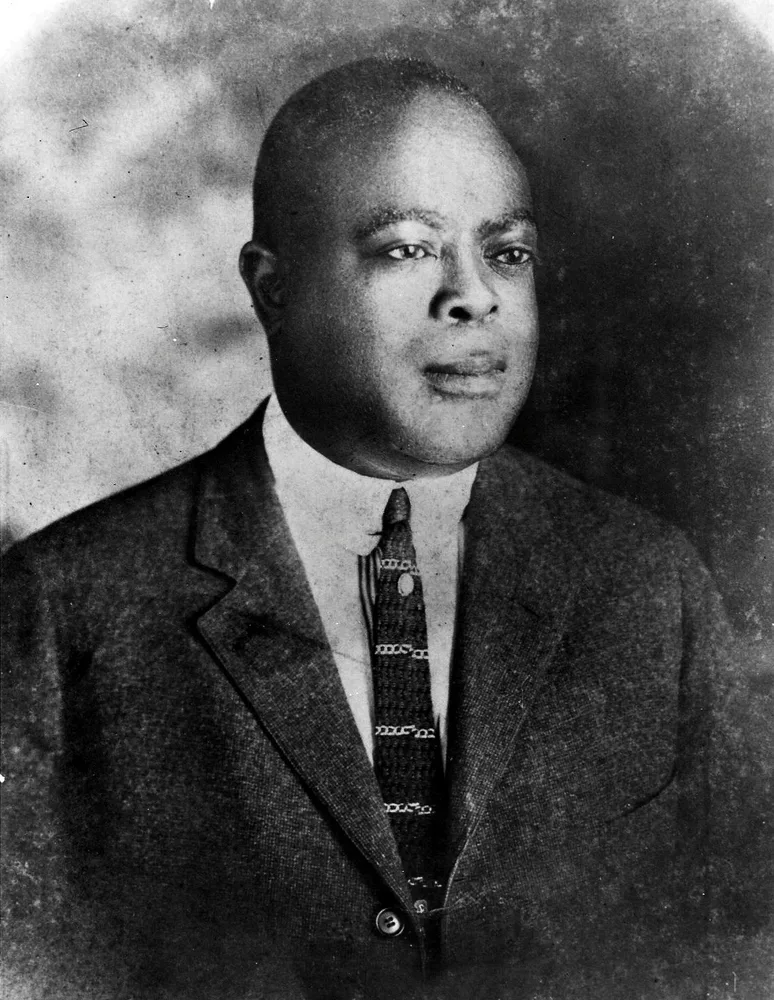
King Oliver, studio portrait photograph, circa 1915; photographer unknown Public Domain (photograph of about 1915 by an unknown photographer, tagged on Wikimedia Commons as a public-domain scan of a work whose United States copyright has expired) — Wikimedia Commons — https://commons.wikimedia.org/wiki/File:King_Oliver_(1915_portrait).jpg

Joseph Nathan Oliver was born on December 19, 1881, in Aben, Louisiana, near Donaldsonville in Ascension Parish, to Nathan Oliver and Virginia "Jinnie" Jones. He gave 1881 as his birth year on his September 1918 draft registration, but some census records and other sources suggest 1884 or 1885. He moved to New Orleans in his youth, studied trombone first, and then switched to cornet. From 1908 to 1917 he played cornet in the city's brass bands, in dance bands, and in the red-light district known as Storyville, and in the late 1910s a band he co-led with trombonist Kid Ory was considered one of the best and hottest in New Orleans. He married Estelle "Stella" Dominick there in September 1911. He was in demand across economic and racial lines, and he taught and mentored the young Louis Armstrong, giving him his chair in Ory's band when Oliver left for Chicago.
Oliver moved to Chicago in 1918 with his wife and stepdaughter, Ruby Tuesday Oliver. There he found work with fellow New Orleanians including clarinetist Lawrence Duhé, bassist Bill Johnson, trombonist Roy Palmer, and drummer Paul Barbarin, and he took over leadership of Duhé's band at a number of Chicago clubs. In January 1920 he formed a band at the Dreamland that gathered the players who became the core of his Creole Jazz Band, among them clarinetist Johnny Dodds and trombonist Honoré Dutrey. In the summer of 1921 he took a group to the West Coast for engagements in San Francisco and Oakland, where the band worked in the vaudeville tradition.
Back in Chicago in 1922, the group opened at the Lincoln Gardens as King Oliver and His Creole Jazz Band. Oliver played first cornet, with his protege Armstrong on second cornet, Baby Dodds on drums, Johnny Dodds on clarinet, Lil Hardin on piano, Honoré Dutrey on trombone, and Bill Johnson on bass. The band recorded in 1923 for Gennett, Okeh, Paramount, and Columbia. Its first Gennett session, held in Richmond, Indiana, in April 1923, produced nine sides, among them "Canal Street Blues," "Snake Rag," and "Dippermouth Blues," and it was Armstrong's recording debut. Because the acoustic process cut directly from the horn to the disc, Armstrong had to stand in the corner of the room, since his powerful tone could throw the needle off the master. Further sessions followed for Okeh on June 22 and 23, for Columbia on October 15 and 16, and for Gennett again on October 5, 1923. White musicians came to Lincoln Gardens to learn from the band, listening from outside the door because the club was in a Black neighborhood and admitted only Black patrons. A planned tour of the Midwest ended up breaking the band apart in 1924.
In the mid-1920s Oliver enlarged his group to nine pieces as King Oliver and His Dixie Syncopators, with more written arrangements and room for jazz solos, playing the Plantation Café in direct competition with Armstrong's Sunset Stompers at the Sunset Café. The band recorded for Vocalion and Brunswick from March 1926, and those sessions include "Sugar Foot Stomp" and "Wa Wa Wa" (May 29, 1926), "Dead Man Blues" and "Snag It" (September 17, 1926), and "Doctor Jazz" (April 22, 1927). He also played cornet behind blues singers on Okeh, among them Butterbeans and Susie in September 1924 and Sippie Wallace in February 1925. In 1927 the band went to New York, where he disbanded it for freelance work, although Brunswick kept recording a Dixie Syncopators lineup under his name there through 1928. Gum disease was making playing harder, so he began giving solos to younger players, including his nephew Dave Nelson, Louis Metcalf, and Red Allen. He held out for more money than New York's Cotton Club would pay, and Duke Ellington took the engagement instead. Oliver reunited his band in 1928 and recorded for Victor from January 1929, cutting more than thirty sides by September 1930, including "West End Blues," "Call of the Freaks," "Too Late," and "Struggle Buggy." He was still recording for Brunswick in January and February 1931.
The Great Depression ended the good years. A succession of managers had stolen his money, he lost his savings when a Chicago bank failed, and bookings dried up while his periodontal disease progressed; by 1935 he could no longer play the trumpet at all. Stranded in Savannah, Georgia, he pawned his trumpet and his best suits, briefly ran a fruit stall, and then worked as a janitor at Wimberly's Recreation Hall on West Broad Street. He passed away in a Savannah rooming house on or about April 10, 1938, of arteriosclerosis, too poor to pay for treatment. His sister paid to have his body brought to New York, and he was buried at Woodlawn Cemetery in the Bronx, with Armstrong and other musician friends in attendance. In 2007 he was inducted as a charter member of the Gennett Records Walk of Fame in Richmond, Indiana.
Oliver was admired above all for his use of mutes. He pioneered the rubber plumber's plunger, the derby hat, bottles, and cups as ways of altering a horn's voice, and his muted solo on "Dippermouth Blues," for which he favored a small metal mute made by C. G. Conn, was composed in advance and played the same way on both 1923 recordings. His "Wa Wa Wa" with the Dixie Syncopators is credited with giving the name wah-wah to such effects, and his pieces "Eccentric" and "Call of the Freaks" built whole performances on the growls and cries of that "freak" style. His Creole Jazz Band set the model on record for New Orleans collective improvisation, with two cornets weaving around a clarinet and a trombone, and his compositions "Dippermouth Blues," "Canal Street Blues," "Sweet Like This," "Doctor Jazz," and "Snag It" stayed in the traditional jazz repertory for decades. Don Redman reworked "Dippermouth Blues" as "Sugar Foot Stomp" for Fletcher Henderson's orchestra in 1925, and swing bands recorded Oliver's piece too, among them Artie Shaw in 1936 and Benny Goodman in 1937. Oliver named the early cornetist Buddy Bolden as an influence, and in turn he shaped Tommy Ladnier, Paul Mares, Muggsy Spanier, Johnny Wiggs, Frank Guarente, and Louis Panico, whose book The Novelty Cornetist illustrates the mute techniques he learned from Oliver, and above all Armstrong, who called him his idol and wrote that jazz would not be what it is without him. Young white musicians such as Bix Beiderbecke went to hear the Creole Jazz Band in Chicago.
- The April 1923 Gennett sessions (1923, Gennett) - Nine sides cut in Richmond, Indiana, including "Canal Street Blues," "Snake Rag," and "Chimes Blues," with Louis Armstrong on second cornet in his recording debut.
- "Dippermouth Blues" (1923, Gennett and Okeh) - Recorded for Gennett in April and for Okeh on June 23, 1923, with Oliver's pre-composed muted solo, one of the most imitated of its generation.
- Off the Record: The Complete 1923 Jazz Band Recordings (2006, Archeophone) - Collects the Creole Jazz Band's 1923 recordings in a modern restoration of the acoustic-era sound.
- "Wa Wa Wa" and "Sugar Foot Stomp" (1926, Vocalion and Brunswick) - Recorded by the Dixie Syncopators on May 29, 1926; the first title gave wah-wah playing its name.
- "Doctor Jazz" (1927, Brunswick) - Oliver's own recording of April 22, 1927, of a tune he wrote in 1926 that Jelly Roll Morton had already cut with his Red Hot Peppers on December 16, 1926.
- "West End Blues" (1928-29) - Oliver's composition, recorded by his Dixie Syncopators for Brunswick on June 11, 1928, by Louis Armstrong's Hot Five on June 28, 1928, and again by Oliver's orchestra for Victor on January 16, 1929.
- "Call of the Freaks" (1929, Victor) - A February 1, 1929 session piece built on the freak mute style he helped invent. Spotify - Call of the Freaks (Take 2) Listen
- "Don't You Think I Love You" (1930, Victor) - One of the Victor sides of May 22, 1930, from the last stretch of his major-label recording career. Spotify - Don't You Think I Love You Listen
King Oliver: Full Discography
King Oliver recorded between 1923 and 1931, in the era of 78 rpm discs, so no original albums were issued in his lifetime; his work is heard today through reissue compilations and session-by-session collections. Discogs artist ID 309984 ("King Oliver," real name Joseph Nathan Oliver) carries his own billing, and Discogs files his band names under separate entries: King Oliver's Creole Jazz Band (artist ID 309966), King Oliver's Jazz Band (326832), King Oliver and His Dixie Syncopators (253853), and King Oliver and His Orchestra (373788). Because every release is a compilation of the same sessions, the first table is a curated selection of principal CD reissues rather than an exhaustive list; the second table lists his recording sessions by date, label and matrix number, with recording dates taken from the Discography of American Historical Recordings. Reissue label and catalog numbers are as listed on MusicBrainz, and a cell says so where no catalog number was found.
As Leader / Co-Leader
| Album Title | Recording Date(s) | Release Date | Label | Catalog Number | Format(s) | Personnel | Role | Reissue History | Spotify | Buy | Notes |
|---|---|---|---|---|---|---|---|---|---|---|---|
| Off the Record: The Complete 1923 Jazz Band Recordings | April 5-6, June 22-23, October 5, October 15-16, and October 1923 | 2006 | Archeophone Records (Off the Record series) | ARCH OTR-MM6-C2 | CD | King Oliver (cornet), Louis Armstrong (cornet), Honoré Dutrey (trombone), Johnny Dodds (clarinet), Lil Hardin (piano), Baby Dodds (drums), Bill Johnson (banjo, bass) | Leader | First issue in this form | — | — | All of the Creole Jazz Band's 1923 recordings in a modern restoration. |
| Sugar Foot Stomp: Vocalion & Brunswick Recordings, Vol. 1 | 1926-1927 | 2000 | Frog Records | DGF 34 | CD | King Oliver (cornet, trumpet) leading his Dixie Syncopators and later orchestras; the lineup changed from session to session and is not itemized here | Leader | First issue in this form | — | — | First of two Frog volumes of the Dixie Syncopators' Vocalion and Brunswick sides. |
| Farewell Blues: Vocalion & Brunswick Recordings, Vol. 2 | 1927-1931 | 2000 | Frog Records | Not found | CD | King Oliver (cornet, trumpet) leading his Dixie Syncopators and later orchestras; the lineup changed from session to session and is not itemized here | Leader | First issue in this form | — | — | Second Frog volume; its title track was recorded October 14, 1927. |
| Complete Vocalion / Brunswick Recordings 1926-1931 | 1926-1931 | 1991 | Affinity | AFS 1025-2 | CD | King Oliver (cornet, trumpet) leading his Dixie Syncopators and later orchestras; the lineup changed from session to session and is not itemized here | Leader | Not found | — | — | Collects the Chicago and New York sides for Vocalion and Brunswick. |
| The New York Sessions (1929-1930) | January 16, 1929 to September 19, 1930 | 1989 | Bluebird | ND 90410 | CD | King Oliver (cornet, trumpet) and his orchestra; personnel varied by session | Leader | Issued under the RCA and BMG imprints in some territories | — | — | His Victor sides, among them "West End Blues," "Call of the Freaks," and "Struggle Buggy." |
| King Oliver 1929-30 | 1929-1930 | 1991 | JSP Records | Not found | 2xCD | King Oliver (cornet, trumpet) and his orchestra; personnel varied by session | Leader | First issue in this form | — | — | Two-disc set of the Victor period. |
| Dippermouth Blues: His 25 Greatest | 1923-1930 | 1996 | ASV Living Era | CD AJA 5218 | CD | King Oliver with the Creole Jazz Band, the Dixie Syncopators, and later orchestras | Leader | First issue in this form | — | — | A single-disc overview from 1923 to 1930. |
| Great Original Performances 1923-1930 | 1923-1930 | 1998 | Louisiana Red Hot Records | RP2CD 607 | CD | King Oliver with the Creole Jazz Band, the Dixie Syncopators, and later orchestras | Leader | First issue in this form | — | — | A career overview in two parts. |
| A Career Anthology 1923-31 | 1923-1931 | 2024 | Acrobat | Not found | 5xCD | King Oliver with the Creole Jazz Band, the Dixie Syncopators, and later orchestras | Leader | First issue in this form | — | — | A five-disc survey that comes close to complete. |
| King Porter / Tom Cat (single) | 1924 | 1925 | Autograph Records | 617 | 78 rpm single | King Oliver (cornet), Jelly Roll Morton (piano) | Co-leader (billed with Jelly Roll Morton) | Not found | — | — | The cornet-and-piano duet of "King Porter Stomp"; the flip side is not itemized here. |
Recording Sessions and Sideman Credits (selected)
| Year | Project (Leader) | Title | Label | Catalog | Role | Notes |
|---|---|---|---|---|---|---|
| April 5-6, 1923 | King Oliver's Creole Jazz Band | Just Gone; Canal Street Blues; Mandy Lee Blues; I'm Going Away to Wear You Off My Mind; Chimes Blues; Weather Bird Rag; Dippermouth Blues; Froggie Moore; Snake Rag | Gennett | Matrixes 11383 to 11391 | Leader, cornet | Armstrong's recording debut, made in Richmond, Indiana. Matrix 11389 is listed under the title Sugar Foot Stomp. |
| June 22-23, 1923 | King Oliver's Jazz Band | Snake Rag; Sweet Lovin' Man; High Society Rag; Sobbin' Blues; Where Did You Stay Last Night?; Dipper Mouth Blues; Jazzin' Babies' Blues | Okeh | Matrixes 8391 to 8394, 8401 to 8403 | Leader, cornet | Dipper Mouth Blues was recorded June 23 with the same composed solo as the Gennett version. |
| October 5, 1923 | King Oliver's Creole Jazz Band | When You Leave Me Alone to Pine; Alligator Hop; That Sweet Something, Dear; Zulu's Ball; Working Man Blues; Someday, Sweetheart; Krooked Blues; If You Want My Heart | Gennett | Matrixes 11632 to 11639 | Leader, cornet | Second Gennett date. |
| October 15-16, 1923 | King Oliver's Jazz Band | Chattanooga Stomp; Junk Man Blues; London (Café) Blues; Camp Meeting Blues; New Orleans Stomp | Columbia | Matrixes 81300 to 81304 | Leader | The band's Columbia session. |
| October 1923 | King Oliver's Jazz Band | Buddy's Habit; Tears; I Ain't Gonna Tell Nobody; Room Rent Blues; Riverside Blues; Sweet Baby Doll; Working Man Blues; Mabel's Dream | Okeh | Matrixes 8475 to 8478, 8484 to 8487 | Leader | Only Buddy's Habit (October 25) has a day listed; the rest are dated October 1923. |
| September 12, 1924 | Butterbeans and Susie, with Clarence Williams | Kiss Me Sweet; Construction Gang | Okeh | Matrixes S-72816, S-72817 | Cornet (sideman) | Oliver credited as Joe Oliver; Clarence Williams on piano. |
| February 1925 | Sippie Wallace, with Hersal Thomas | Morning Dove Blues; Devil Dance Blues | Okeh | Matrixes 8964, 8965 | Cornet (sideman) | Cornet and piano accompaniment to the singer. |
| March 11, 1926 | King Oliver's Jazz Band | Too Bad; Snag It | Vocalion | Matrixes E2632 to E2635 | Leader | The first of the Chicago Vocalion dates. |
| April 21-23, 1926 | King Oliver and His Dixie Syncopators | Deep Henderson; Jackass Blues | Vocalion / Brunswick | Matrixes C195-C196, C225-C227 | Leader; cornet on Jackass Blues | Jackass Blues features a female vocalist. |
| May 29, 1926 | King Oliver and His Dixie Syncopators | Sugar Foot Stomp; Wa Wa Wa; The Hobo's Prayer | Vocalion / Brunswick | Matrixes C369 to C374 | Leader, composer (Sugar Foot Stomp) | "Wa Wa Wa" is credited with giving wah-wah playing its name. |
| July 23, 1926 | King Oliver and His Dixie Syncopators | Someday, Sweetheart; Messin' Around; Tack Annie | Vocalion / Brunswick | Matrixes C530 to C533 | Leader | |
| September 17, 1926 | King Oliver and His Dixie Syncopators | Someday Sweetheart; Dead Man Blues; New Wang Wang Blues; Snag It | Vocalion / Brunswick | Matrixes C656 to C663 | Leader, composer (Snag It) | |
| April 22 and 27, 1927 | King Oliver and His Dixie Syncopators | Doctor Jazz; Showboat Shuffle; Every Tub; Willie, the Weeper; Black Snake Blues | Vocalion / Brunswick | Matrixes C800 to C809, C834 to C836 | Leader, composer (Doctor Jazz, Showboat Shuffle, Every Tub) | |
| July to November 1927 | King Oliver and His Dixie Syncopators | Aunt Jemima; Doctor Jazz (remake, July 15); Sobbin' Blues; Tin Roof Blues; Aunt Hagar's Blues; Farewell Blues; Stack O'Lee Blues | Brunswick | Matrixes E6212 to E6811, E23879-E23880 | Leader | New York sessions on July 8 and 15, October 13 and 14, and November 18. |
| February to November 1928 | King Oliver and His Dixie Syncopators | Tin Roof Blues; Aunt Hagar's Blues; Who Threw That Rug; Crab House Blues; West End Blues; Sweet Emmalina; Lazy Mama; Speakeasy Blues; Janitor Sam; Slow and Steady and others | Brunswick | Matrixes E7172 to E7187, E27684 to E28757 | Leader, arranger, composer | Sessions on February 25, March 3, June 11, August 13, September 10 and 12, and November 14, 1928. |
| June to November 1928 | Clarence Williams' groups, Victoria Spivey, and Texas Alexander | Lazy Mama; Mountain City Blues; My Handy Man; Organ Grinder Blues; Tell Me Woman Blues; 'Frisco Train Blues; In the Bottle Blues; What Ya Want Me to Do? | Okeh | Matrixes W400818 to W401391 | Cornet (sideman) | Oliver also played cornet behind Lizzie Miles for Columbia on June 12, 1928. |
| January 16 to February 25, 1929 | King Oliver and His Orchestra | West End Blues; Freakish Light Blues; I've Got That Thing; Easy Goin'; Call of the Freaks; The Trumpet's Prayer; Can I Tell You?; Uncle Joe's Stomp; My Good Man Sam; I Can't Be Worried Blues | Victor | Matrixes BVE-48332 to BVE-50526 | Leader (director) | Sessions on January 16, February 1, and February 25, 1929. |
| October 8, 1929 to September 19, 1930 | King Oliver and His Orchestra | What You Want Me to Do; Sweet Like This; Too Late; I'm Lonesome, Sweetheart; New Orleans Shout; St. James Infirmary; Rhythm Club Stomp; Edna; Boogie Woogie; Mule Face Blues; Struggle Buggy; Don't You Think I Love You?; Olga; Shake It and Break It; Stingaree Blues; Nelson Stomp; Stealing Love | Victor | Matrixes BVE-56756 to BVE-64014 | Leader, cornet and trumpet | Sessions on October 8, November 6, and December 30, 1929, and January 28, March 18, April 10, May 22, September 10 and 19, 1930; a September 12, 1930 session was billed to George Bias with Oliver on trumpet. |
| January 9 and February 18, 1931 | King Oliver and His Orchestra (billed on one title as the Savannah Syncopators) | Papa-de-da-da; Who's Blue; Stop Crying; Where That Old Man River Flows; Sugar Blues; I'm Crazy 'Bout My Baby | Brunswick | Matrixes E35910 to E36103 | Leader | The last sessions listed under his name. |
- Louis Armstrong - his protege in New Orleans, second cornet in the Creole Jazz Band from 1922 and on its 1923 recordings, and the player Oliver's reputation is most often tied to; the two later competed as bandleaders in Chicago.
- Lil Hardin Armstrong - pianist in the Creole Jazz Band at the Lincoln Gardens and on its 1923 recordings, later Armstrong's wife.
- Johnny Dodds and Baby Dodds - clarinetist and drummer brothers in the Creole Jazz Band and on its 1923 records; Johnny was in Oliver's Dreamland band by 1920.
- Honoré Dutrey and Bill Johnson - trombonist and bass or banjo player in the Creole Jazz Band.
- Kid Ory - trombonist who co-led one of New Orleans's best late-1910s bands with Oliver, and in whose band Armstrong took Oliver's chair when Oliver left for Chicago.
- Lawrence Duhé - New Orleans clarinetist whose Chicago band Oliver took over after arriving in 1918.
- Jelly Roll Morton - pianist who recorded a 1924 duet of "King Porter Stomp" with Oliver (issued on Autograph in 1925), and whose Red Hot Peppers recorded "Doctor Jazz" in December 1926.
- Sidney Bechet - clarinetist and soprano saxophonist who, according to his profile, played with Oliver in the Olympia Band in 1913 and 1914.
- Dave Nelson, Louis Metcalf, Red Allen - the nephew and the younger trumpeters to whom Oliver handed solos as his gums failed in the later 1920s.
- Fletcher Henderson and Don Redman - Redman's arrangement of "Dippermouth Blues" as "Sugar Foot Stomp" was recorded by Henderson's orchestra with Armstrong on May 29, 1925.
- Duke Ellington - took the Cotton Club engagement that Oliver lost in a pay dispute.
- Clarence Williams - bandleader and pianist on whose Okeh dates of 1928 (as the Clarence Williams Orchestra, Blue Five, and Novelty Four) Oliver played cornet.
- Sippie Wallace, Butterbeans and Susie, Lizzie Miles, Victoria Spivey, Texas Alexander - blues singers he accompanied on cornet on records from 1924 to 1928.
More Dixieland Artists
See all 54 Dixieland artists →More American Jazz Artists
See all 820 American artists →- Wikipedia: King Oliver
- Wikipedia: Dippermouth Blues
- Wikipedia: Doctor Jazz
- Discography of American Historical Recordings: King Oliver
- 64 Parishes: King Oliver
- Discogs: King Oliver (artist 309984)
- MusicBrainz: King Oliver
- JazzProfiles.com: Louis Armstrong
- JazzProfiles.com: Jelly Roll Morton
- JazzProfiles.com: Sidney Bechet
- JazzProfiles.com: Duke Ellington
- JazzProfiles.com: Fletcher Henderson
- JazzProfiles.com: Acker Bilk