 JAZZPROFILES lives in the music 1,572 Jazz Artists fully Profiled!
 James P. Johnson
Last updated September 7, 2026
Listen on Spotify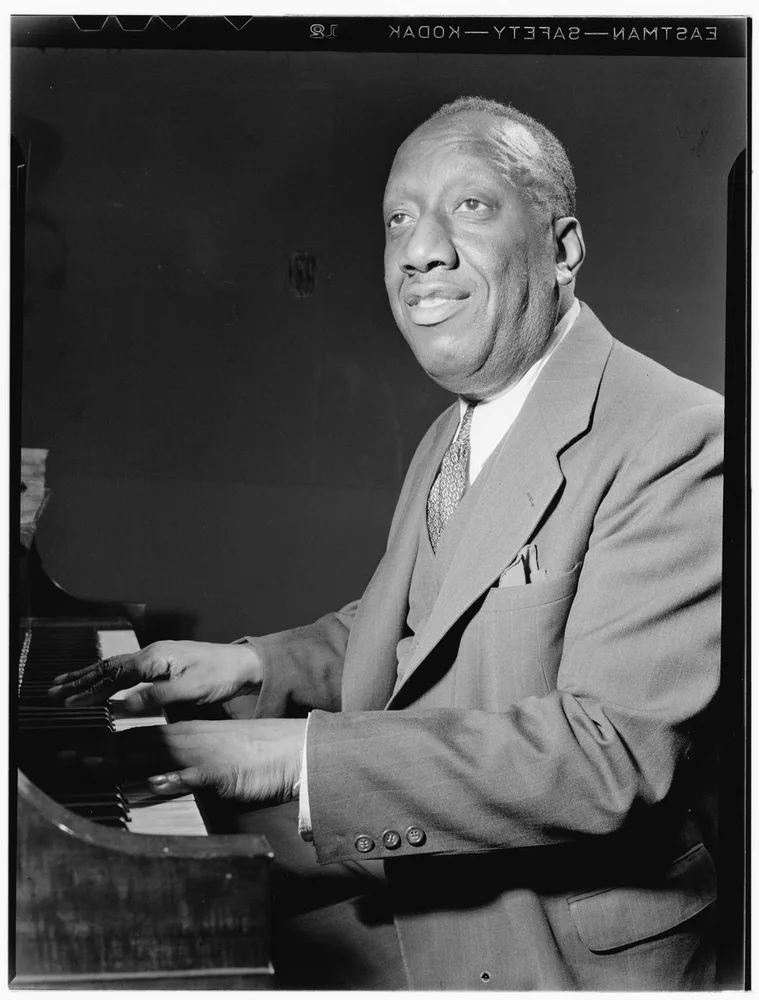
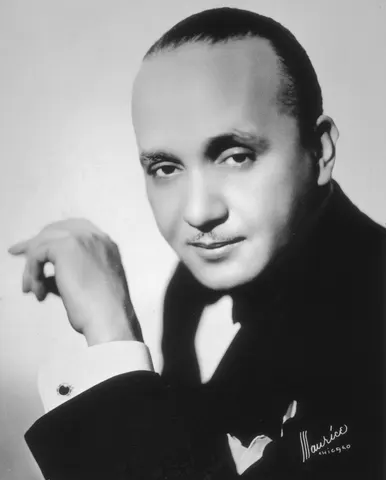
James P. Johnson, New York, ca. May 1946. Portrait by William P. Gottlieb, Gottlieb Collection Assignment No. 154. Public Domain (no known copyright restrictions). William P. Gottlieb dedicated his entire photographic collection to the public domain, effective February 16, 2010, in accordance with his own wishes; the Commons file page carries the Flickr Commons "No known copyright restrictions" tag and the Library of Congress's own no-known-restrictions statement, and the Commons metadata records Copyrighted: False. — Wikimedia Commons — https://commons.wikimedia.org/wiki/File:(Portrait_of_James_P._(James_Price)_Johnson,_New_York,_N.Y.(%3F),_ca._May_1946)_(LOC)_(5019794127).jpg
_Johnson,_New_York,_N.Y.(%3F),_ca._May_1946)_(LOC)_(5019794127).jpg)
James Price Johnson was born February 1, 1894, in New Brunswick, New Jersey, to William H. Johnson, a store helper and mechanic, and Josephine Harrison, a maid who sang in her Methodist church choir and played piano by ear. His mother taught him first. The family moved to Jersey City and then, around 1908, to the San Juan Hill district of Manhattan's West Sixties, a dense Black and Afro-Caribbean neighborhood where Johnson heard ragtime, the shouts and ring dances brought north by Southern migrants, and the Harlem "ticklers" who played rent parties for a share of the door. He took his first professional job at Coney Island in the summer of 1912 and was working New York clubs steadily by 1913. From 1913 to 1916 he also studied formally with the Italian-born instructor Bruto Giannini, who drilled him in harmony, counterpoint, and classical fingering, and Johnson spent the rest of his life writing music that assumed both traditions.
The room that shaped his most famous piece was the Jungles Casino, a basement dance hall on West 62nd Street licensed as a dance school. Its regulars were Gullah and Geechee stevedores from Charleston, South Carolina, and the Sea Islands, working the Ward Line docks, and Johnson built his accompaniments around the dances they brought with them. He said plainly that the beat of "The Charleston" came out of that room. Beginning in May 1917 he cut player-piano rolls at a punishing rate for Metro Art, Universal, Perfection, Artempo, Rhythm, Arto, and eventually QRS: "Caprice Rag" and "Steeplechase Rag" that first month, "Daintiness Rag" in July, an Artempo roll of "Carolina Shout" in February 1918, and a QRS run through the early 1920s that carried his music to pianists who would never hear him play live. Scott E. Brown and Robert Hilbert's discography documents 37 roll sessions between May 1917 and February 1927, the last a duet with his former student Fats Waller. Johnson married Lillie Mae Wright in 1917, having met her in Newark three years earlier.
His disc career opened around August 1921 with "The Harlem Strut" for Black Swan (BS 2026), and on October 18, 1921, he returned to the studio for Okeh and recorded "Keep Off the Grass" and "Carolina Shout" (Okeh 4495, matrices 70259 and 70260). That coupling is routinely cited as the first jazz piano solo committed to disc, predating Jelly Roll Morton's Gennett solos by two years, and "Carolina Shout" became the test piece a young pianist had to pass. Duke Ellington and Fats Waller both learned it note for note off the QRS roll, slowing the mechanism and following the depressed keys with their fingers. Johnson led his own Harmony Eight for Okeh in December 1921, went to England with the "Plantation Days" revue in March 1923, and then wrote the score that made him famous: Runnin' Wild, with lyrics by Cecil Mack, which opened at the New Colonial Theatre on October 29, 1923 and introduced "The Charleston" to Broadway. The song outran the show, the decade, and its composer's control of it.
Through the middle and late 1920s Johnson was the accompanist Harlem's best singers asked for. On February 17, 1927 he and Bessie Smith recorded "Preachin' the Blues" and "Back-Water Blues" as a bare voice-and-piano duo (Columbia 14195-D), still among the most admired vocal accompaniments in jazz, and he returned to her on three further 1927 and 1929 dates. He backed Ethel Waters on "Guess Who's in Town" and "My Handy Man" in August 1928, and Waters later wrote that playing with him made a singer want to sing until her tonsils fell out. On April 27, 1928, W.C. Handy staged Carnegie Hall's first full evening of Black concert music, and its centerpiece was Johnson's Yamekraw: A Negro Rhapsody, orchestrated by William Grant Still. Johnson was contractually stuck in the pit conducting Keep Shufflin' that night, so Waller played the piano part. Johnson's own solo playing peaked on disc at a Brunswick session of January 21, 1930 that produced "You've Got to Be Modernistic," "Jingles," "Crying for the Carolines," and "What Is This Thing Called Love?" (Brunswick 4712 and 4762), four sides many collectors still treat as the summit of his recorded work.
He spent most of the 1930s composing rather than playing. Harlem Symphony came in 1932, Concerto Jazz-a-mine in 1935, an American Symphonic Suite built on Handy's "St. Louis Blues," and the one-act blues opera De Organizer, written with Langston Hughes around 1940 and given only one verified complete performance, at Carnegie Hall in May 1941. Almost none of this music was published or played again in his lifetime, and much of it was lost; the De Organizer manuscript surfaced only in 1997 in the Bentley Historical Library at the University of Michigan and was performed there in 2002. Johnson came back to the bandstand in 1939, playing solo at Cafe Society, appearing at both of John Hammond's From Spirituals to Swing concerts at Carnegie Hall (December 23, 1938 and December 24, 1939), and cutting a Columbia solo session on June 14, 1939 that yielded "Blueberry Rhyme," "The Mule Walk," and "If Dreams Come True." Columbia shelved most of it. Illness stopped him in the summer of 1940.
The war years brought his best-documented burst of recording. He cut solos for Moses Asch in July 1942, then two Blue Note solo dates on November 17 and December 15, 1943 that produced "Backwater Blues," "Carolina Balmoral," "Mule Walk," "Caprice Rag," and "Improvisation on Pinetop's Boogie Woogie." On March 4, 1944 he led James P. Johnson's Blue Note Jazzmen, with Sidney De Paris, Vic Dickenson, Ben Webster, and Sid Catlett, through "Victory Stride" and "Blue Mizz." Waller's death in December 1943 prompted two Decca sessions in April 1944 devoted entirely to Waller's songs, and two more in August and September 1944 devoted to his own. He played Eddie Condon's Town Hall concerts, appeared as a regular guest on Rudi Blesh's This Is Jazz broadcasts in 1947, and shared a Town Hall stage with Sidney Bechet, Pops Foster, and Baby Dodds in September 1946. A stroke that October knocked him out until the spring of 1947.
Johnson went to Los Angeles in 1949 for a production of his revue Sugar Hill, sat in with Kid Ory's Creole Jazz Band on a June 28 radio broadcast from the Beverly Cavern, and cut a handful of West Coast solos that August or September. His last preserved performance, a concert with a Sidney Bechet group on March 5, 1950, survives only on unissued acetates. A severe stroke in 1951 paralyzed him and ended his playing for good. He lived on his songwriting royalties, stayed at home for three years, and spent his final days in a Queens hospital, passing away on November 17, 1955 at 61. He was buried at Mount Olivet Cemetery in Maspeth, Queens, in a grave that stayed unmarked until 2009, when the James P. Johnson Foundation raised the money for a headstone. He had joined ASCAP in 1926; the Songwriters Hall of Fame took him in 1970, the Down Beat Jazz Hall of Fame in 1973, and the U.S. Postal Service issued a 32-cent James P. Johnson stamp on September 16, 1995. "Carolina Shout" entered the Grammy Hall of Fame in 2020.
Johnson took ragtime's written left hand and made it swing: a bass note on beats one and three answered by a mid-register chord on two and four, then deliberately broken up, so the pattern lurches into bass-bass-chord-bass sequences that throw the accent where the ear does not expect it. That elasticity is what separates stride from the ragtime it grew out of, and Johnson invented most of it. Over the top he ran orchestral right-hand writing, long chromatic runs, trills, tenths, and tightly constructed melodic strains built like rag sections rather than improvised choruses. He was also, uniquely among the early Harlem pianists, a trained composer who kept trying to write for orchestra, and the strain between the rent-party pianist and the symphonist runs through his whole career. Waller was his student outright and carried the technique forward; Ellington and Basie learned from his rolls and records; Art Tatum worked out his solos as a teenager in Toledo; and the stride left hand under Thelonious Monk's dissonances came out of the same tradition, learned in the same San Juan Hill blocks where Johnson had worked twenty years before Monk grew up there. Bud Powell, Oscar Peterson, and Teddy Wilson all sit downstream of him. The musicologist David Schiff called him "The Invisible Pianist," and the label has stuck for a reason: his songs are far better known than his name.
- Snowy Morning Blues (rec. 1930 and 1944, rel. 1991, Decca/GRP) - The single best entry point: the four astonishing 1930 Brunswick solos ("You've Got to Be Modernistic," "Jingles," "Crying for the Carolines," "What Is This Thing Called Love?") followed by the complete 1944 Decca solo sessions, eight Fats Waller tunes and eight of Johnson's own. Spotify - Snowy Morning Blues Listen
- "Keep Off the Grass" / "Carolina Shout" (rec. October 18, 1921, Okeh 4495) - The record that put jazz piano on disc, and the piece every Harlem pianist of the next generation had to learn. Collected on most Johnson anthologies. Spotify - Harlem Stride Piano 1921-1929 Listen
- The Original James P. Johnson: 1942-1945, Piano Solos (rec. 1942-1945, rel. 1996, Smithsonian Folkways) - Twenty solos cut for Moses Asch, who let Johnson record whatever he wanted, including his own piano reductions of Yamekraw and the Jazzamine Concerto; eight tracks were previously unissued. Spotify - The Original James P. Johnson Listen
- Father of the Stride Piano (rec. 1921-1939, rel. 1962, Columbia CL 1780) - Columbia's posthumous anthology, built around the shelved June 14, 1939 solo session ("Blueberry Rhyme," "The Mule Walk," "Lonesome Reverie") with liner notes by Duke Ellington. Spotify - Father Of The Stride Piano Listen
- Blue Note solo sessions (rec. November 17 and December 15, 1943, Blue Note 24 to 27) - Eight 12-inch sides cut at 49, including "Backwater Blues," "Carolina Balmoral," "Caprice Rag," and "Mule Walk"; the fullest studio document of his late playing. Reissued on Reminiscing at Blue Note (1994); not located on Spotify.
- Classic James P. Johnson Sessions (1921-1943) (rel. 2016, Mosaic MD6-262) - The scholarly edition: six CDs, 158 tracks, every Johnson session for the Sony-controlled labels plus his major accompaniment work, with alternate takes. Limited edition, not on streaming.
- "Preachin' the Blues" / "Back-Water Blues" (rec. February 17, 1927, Columbia 14195-D) - As accompanist: Bessie Smith and Johnson alone, no band, the benchmark for voice-and-piano blues recording.
- Victory Stride: The Symphonic Music of James P. Johnson (rec. 1992 and 1994, rel. 1994, Musicmasters) - World premiere recordings of Harlem Symphony, Concerto Jazz-a-mine, and the American Symphonic Suite, by the Concordia Orchestra under Marin Alsop with Leslie Stifelman at the piano; the only serious survey of the concert music. Spotify - Victory Stride Listen
James P. Johnson: Full Discography
Scope, and what "discography" means for this artist
James P. Johnson's recording career ran from May 1917 to March 1950. It ended before the LP became the normal unit of jazz release, so he has almost no "albums" in the modern sense. What he has instead is three separate bodies of work:
- Player-piano rolls, May 1917 to February 1927. Brown and Hilbert's discography documents 37 roll sessions across Metro Art, Universal, Perfection, Artempo, Rhythm, Arto, and QRS. Rolls are not sound recordings and are not indexed by Discogs; the list below is drawn from Brown/Hilbert as reproduced in K.-B. Rau's session discography.
- 78 rpm sides, August 1921 to 1949, issued two at a time on Black Swan, Okeh, Columbia, Victor, Brunswick, Asch, Signature, Blue Note, Decca, Black & White, and Circle, plus unissued masters, broadcast transcriptions, and concert acetates.
- Posthumous LP and CD anthologies, from Riverside's early-1950s piano-roll transfers through the 2016 Mosaic box.
Discogs credits Johnson on 2,659 releases under artist ID 313035: 125 in a "Main" (leader) role, 2,188 sideman "Appearance" credits, 326 track-level "TrackAppearance" credits, and 20 unofficial releases. Almost all 125 "Main" entries are either original 78 couplings or posthumous compilations. Itemizing 2,188 sideman credits is neither possible nor useful, so the sideman table below is a representative selection of his significant accompaniment and band work, not an exhaustive list.
Session dates, matrix numbers, personnel, and original catalog numbers below come from K.-B. Rau's The Recordings of James P. Johnson (harlem-fuss.com, revised March 2024), which is built on Scott E. Brown and Robert Hilbert's James P. Johnson: A Case of Mistaken Identity (1986), Brian Rust's Jazz Records 1897-1942, Jepsen's Jazz Records 1942-1967, and Trolle. Where Rau's reading and another source disagree, the conflict is noted in james-p-johnson_notes.md.
Buy is — throughout: no affiliate program is set up for this site, and no Amazon or retailer links have been invented. Where no Spotify release could be confirmed, the cell says so rather than pointing at a plausible-looking substitute.
As Leader: original-issue sessions, 1921-1949
| Album Title | Recording Date(s) | Release Date | Label | Catalog Number | Format(s) | Personnel | Role | Reissue History | Spotify | Buy | Notes |
|---|---|---|---|---|---|---|---|---|---|---|---|
| "The Harlem Strut" / "Unknown Blues" | c. August 1921, New York | 1921 | Black Swan | BS 2026 (matrix P-151-1) | Shellac, 10" | James P. Johnson (piano) | Leader, solo | Chronological Classics 658; Mosaic MD6-262 | Not confirmed as a standalone release | — | His first disc recording, on W.C. Handy and Harry Pace's Black Swan label |
| "Keep Off the Grass" / "Carolina Shout" | October 18, 1921, New York | 1922 | Okeh | OK 4495 (matrices 70259-D, 70260-C) | Shellac, 10" | James P. Johnson (piano) | Leader, solo | Reissued on Jazz Society 10"; Chronological Classics 658; Mosaic MD6-262; and effectively every Johnson anthology | Both titles appear on Harlem Stride Piano: 1921-1929 | — | Widely cited as the first jazz piano solo issued on disc |
| "Dear Old Southland" / "Bandana Days" | December 5, 1921, New York | 1922 | Okeh | OK 4504 (matrices 70350-B, 70351-C) | Shellac, 10" | Unknown (possibly June Clark) trumpet/cornet, unknown trombone, unknown clarinet, unknown alto, Walter Watkins (tenor), James P. Johnson (piano), unknown banjo | Leader, billed as James P. Johnson's Harmony Eight | Chronological Classics 658 | Not found | — | Personnel beyond Johnson and Watkins is not documented; Rau hears a hot cornet he suspects is June Clark |
| "Scouting Around" / "Toddlin'" | July 25, 1923 per Rau (Rust); August 8, 1923 per Discogs (matrices 71741-A, 71742-A) | 1923 | Okeh | OK 4937 | Shellac, 10" | James P. Johnson (piano) | Leader, solo | Chronological Classics 658 | Not found as a standalone release | — | Two Johnson originals, both 12-bar blues built on his "broken rhythm" left hand. Rau places the session in Camden, N.J.; Discogs's release note says New York. Discogs also prints a release year of 1922, which cannot be right if the recording is from 1923 |
| "Bleeding Hearted Blues" / "You Can't Do What My Last Man Did" | July 25, 1923, Camden, N.J. (matrices 28196-4, 28197-6; a July 17 attempt at the same two titles was rejected) | 1923 | Victor | 19123 | Shellac, 10" | James P. Johnson (piano) | Leader, solo | Chronological Classics 658 | Not found | — | His only issued Victor solo date. Victor rejected him three times: a January 23, 1922 test of "Four A.M. Shout," the July 17, 1923 session, and a February 3, 1928 session ("Mournful Thoughts," "Ebony Dreams"), none of which survive on issue |
| "Weeping Blues" / "Worried and Lonesome Blues" | June 28, 1923, New York (matrices 81099-2, 81100-2) | 1923 | Columbia | A-3950 | Shellac, 10" | James P. Johnson (piano) | Leader, solo | Chronological Classics 658; an unissued take 1 of "Weeping Blues" appears on Mosaic MD6-262 | Both titles appear on Father Of The Stride Piano | — | The start of his Columbia relationship. A February 28, 1923 Columbia session ("Papa Blues," "Railroad Man," "Caprice Rag," "Glory Shout") had been rejected in full |
| "All That I Had Is Gone" / "Snowy Morning Blues" | March 7, 1927, New York (a February 25, 1927 attempt was rejected) | 1927 | Columbia | 14204-D (matrices 143531-5, 143532-6) | Shellac, 10" | James P. Johnson (piano) | Leader, solo | Chronological Classics 658; Mosaic MD6-262 | Both on Father Of The Stride Piano | — | First recording of "Snowy Morning Blues," a piece he returned to for the rest of his life. "All That I Had Is Gone" is a Perry Bradford composition |
| "Riffs" / "Feelin' Blue" | January 29, 1929, New York (matrices 401565-B, 401566-A) | Discogs dates the issue to 1930 | Okeh | OK 8770 | Shellac, 10" | James P. Johnson (piano) | Leader, solo | Reissued on Parlophone (UK) as "Riffs" / "Royal Garden Blues" and on Parlophon (Italy) as "Riffs" / "Trombone Cholly"; Chronological Classics 671 | Not confirmed as a standalone release | — | |
| "Crying for the Carolines" / "What Is This Thing Called Love?" and "You've Got to Be Modernistic" / "Jingles" | January 21, 1930, New York | 1930 | Brunswick | Br 4712 and Br 4762 (matrices E-39156 to E-39159) | Shellac, 10" (two discs) | James P. Johnson (piano) | Leader, solo | Chronological Classics 671; the four sides open Decca/GRP's Snowy Morning Blues CD | All four on Snowy Morning Blues | — | The single most admired solo session of his career. Two originals and two pop tunes, including Cole Porter |
| "I've Found a New Baby" / "How Could I Be Blue" | Not resolved | 1930 | Columbia | 14502-D | Shellac, 10" | James P. Johnson (piano) | Leader, solo | Chronological Classics 671 | "How Could I Be Blue" on Father Of The Stride Piano | — | Catalog number confirmed via Discogs release 4029897. Rau's session list carries no entry matching this coupling, so the recording date is unconfirmed |
| Columbia solo session (issued as "The Mule Walk," "A-Flat Dream" and, decades later, the rest) | June 14, 1939, New York | "A-Flat Dream" issued on Columbia 37333; the other six sides held back | Columbia | 37333 (matrices 24757 to 24762) | Shellac, 10"; later LP/CD | James P. Johnson (piano) | Leader, solo | Chronological Classics 711; the core of Columbia CL 1780 Father of the Stride Piano (1962); Mosaic MD6-262 carries an unissued alternate of "If Dreams Come True" | Five of the seven titles on Father Of The Stride Piano | — | Seven titles cut, six shelved at the time: "If Dreams Come True" (two takes), "Fascination," "The Mule Walk," "Lonesome Reverie," "Blueberry Rhyme" |
| "Boogie Woogie Stride" / "Impressions"; "Snowy Morning Blues" | July 2, 1942, New York | 1942 | Asch | Asch 1001 (12"), Asch 350-3 (matrices 300-1, 301-1, 322) | Shellac, 12" and 10" | James P. Johnson (piano) | Leader, solo | Chronological Classics 711; Smithsonian Folkways SF CD 40812 carries an alternate of "Snowy Morning Blues" | On The Original James P. Johnson: 1942-1945 | — | The first of the Moses Asch solo dates; Asch let Johnson choose his own material |
| "J.P. Boogie" / "Gut Stomp"; "Backwater Blues" / "Carolina Balmoral" | November 17, 1943, New York | 1944 | Blue Note | BN 24 and BN 25 (matrices BN777 to BN780) | Shellac, 12" (two discs) | James P. Johnson (piano) | Leader, solo | Chronological Classics 824; Reminiscing at Blue Note (Blue Note CDP 7243 8 28893 2 8, 1994); The Blue Note Jazzmen (1998) | Not found on Spotify | — | Blue Note's 12-inch format let him stretch past the three-minute limit |
| "Mule Walk (Stomp)" / "Arkansas Blues"; "Caprice Rag" / "Improvisation on Pinetop's Boogie Woogie" | December 15, 1943, New York | 1944 | Blue Note | BN 26 and BN 27 (matrices BN781 to BN784) | Shellac, 12" (two discs) | James P. Johnson (piano) | Leader, solo | Chronological Classics 824; Reminiscing at Blue Note (1994) | Not found on Spotify | — | "Caprice Rag" reaches back to his first piano roll of May 1917 |
| "Blueberry Rhyme" / "Blues for Fats" | December 20, 1943, New York | 1944 | Signature | Sig 28105 (matrices T1914, T1915) | Shellac, 10" | James P. Johnson (piano) | Leader, solo | Chronological Classics 824 | Not found as a standalone release | — | Two further titles from this date, "Old Fashioned Love" and "Over the Bars," were not issued. "Blues for Fats" is a Waller elegy recorded four days after Waller's funeral month |
| "Blue Mizz" / "Victory Stride" | March 4, 1944, New York | 1944 | Blue Note | BN 32 (matrices BN950, BN951) | Shellac, 12" | Sidney De Paris (trumpet), Vic Dickenson (trombone), Ben Webster (tenor sax), James P. Johnson (piano), Jimmy Shirley (guitar), John Simmons (bass), Sid Catlett (drums) | Leader, billed as James P. Johnson's Blue Note Jazzmen | Chronological Classics 824; alternate takes on Mosaic MR6-109 (LP) | Not found on Spotify | — | The strongest band Johnson ever led on record. "Victory Stride" later became the title piece of the 1994 symphonic album |
| Decca Fats Waller tribute solos (eight titles) | April 12 and April 20, 1944, New York | Issued as 78s, then collected on Decca DL 5228 | Decca | DL 5228 (matrices 71979 to 71982, 72007 to 72010) | Shellac 10"; later 10" LP | James P. Johnson (piano) | Leader, solo | Chronological Classics 824 and 835; Decca/GRP Snowy Morning Blues CD (1991) | All eight on Snowy Morning Blues | — | Eight Waller songs recorded four months after Waller's death: "Ain't Misbehavin'," "Honeysuckle Rose," "Squeeze Me," "Keepin' Out of Mischief Now," "My Fate Is in Your Hands," "Blue Turning Grey Over You," "I've Got a Feelin' I'm Fallin'," "I'm Gonna Sit Right Down and Write Myself a Letter" |
| "Hesitation Blues," "The Boogie Dream," "Four O'Clock Groove," "The Dream (Slow Drag)," "Hot Harlem" | June 12, 1944, New York | 1944 | Asch | Asch 551-2, 551-3 (matrices MA 1242 to MA 1248) | Shellac, 10" (album set) | Frankie Newton (trumpet), James P. Johnson (piano, vocal on "Hesitation Blues"), Al Casey (guitar), Pops Foster (bass), Eddie Dougherty (drums) | Leader, billed as James P. Johnson's New York Orchestra | Chronological Classics 835 | Not found on Spotify | — | The only issued sides on which Johnson sings. Several unissued alternates survive on acetate |
| Decca 1944 solo and duo sides with drums (Waller tribute repeats and originals) | June 8, June 28, August 15, and September 22, 1944, New York | 1944 to 1945 | Decca | 23593 to 23596 singles; album collected as DL 5190 (matrices 72233 to 72236, 72311 to 72312, 72386 to 72393) | Shellac 10"; later 10" LP | James P. Johnson (piano), Eddie Dougherty (drums) | Leader | Chronological Classics 835 and 856; Decca/GRP Snowy Morning Blues CD (1991) | The DL 5190 titles are on Snowy Morning Blues | — | The August and September dates are all Johnson originals: "Snowy Morning Blues," "The Carolina Shout," "Keep Off the Grass," "Old Fashioned Love," "If I Could Be With You," "A Porter's Love Song," "Over the Bars," "Riffs" |
| "Tishomingo Blues," "Walking the Dog," "Easy River," "At the Ball" | October 26, 1944, New York | 1945 | Blue Note | BN 7012, BN 9287 (matrices BN993 to BN996) | Shellac, 10" | Sidney De Paris (trumpet), Vic Dickenson (trombone), Edmond Hall (clarinet), James P. Johnson (piano), Arthur Shirley (guitar), Al Lucas (bass), Arthur Trappier (drums) | Leader, James P. Johnson's Blue Note Jazzmen | Chronological Classics 1027; alternates on Mosaic MR6-109 (LP) | Not found on Spotify | — | Second and last band date under his own name for Blue Note |
| "Daintiness Rag," "Mama and Papa Blues," "Ain't Cha Got Music," "Old Fashioned Love," "I'm Crazy 'Bout My Baby" | June 5, 1947, New York | 1947 and later | Circle; Riverside | Cir 3005; Riv RLP 1056 (matrices NY 29 to NY 34) | Shellac 10"; later LP | James P. Johnson (piano) | Leader, solo | Chronological Classics 1059 | Not found on Spotify | — | Produced by Rudi Blesh for Circle. A sixth title, "Wild Cat Rag," was not issued, though a test pressing exists |
| Los Angeles solos ("Sugar," "Sugar Hill Theme / You Can't Lose a Broken Heart," "Over the Waves") | August or September 1949, Los Angeles | 1970s | Pumpkin Productions | Pumpkin 117 (LP) | Vinyl, LP | James P. Johnson (piano) | Leader, solo | None found | Not found as a standalone release; "You Can't Lose a Broken Heart" is one of his most-streamed tracks on Spotify | — | Cut during the West Coast run of his revue Sugar Hill. Among the last studio solos he made |
Piano rolls, 1917 to 1927 (selected from 37 documented sessions)
Rolls are listed by cutting date, company, and roll number, from Brown/Hilbert via Rau. Biograph reissued roughly 60 of them on LP and later CD, principally on BLP 1003Q and BLP 1009Q; Riverside issued transfers on RLP 12-105, RLP 1011, and RLP 151 (Backwater Blues: The Stride Piano of James P. Johnson, 1961). Buy: — throughout.
| Date | Location | Title(s) | Company / Roll No. | Reissue | Notes |
|---|---|---|---|---|---|
| May 1917 | New York | "After Tonight" | Universal 2191 | Biograph BLP 1009Q | Piano duet with William A. Farrell |
| May 1917 | New York | "Caprice Rag"; "Steeplechase Rag" | Metro Art 203176; Universal 203179 | Biograph BLP 1009Q | His earliest documented rolls as a solo artist |
| June to July 1917 | Orange and Newark, N.J. | "When It's Cherry Time in Tokio"; "After To-Night"; "Caprice Rag"; "Daintiness Rag"; "Monkey Hunch"; "Mama's Blues" | Perfection 87019, 87020, 87023; Universal 203107, 2235; Artempo 12286 | Biograph BLP 1009Q (part) | Cutting for four companies in two months |
| August to November 1917 | New York, Belleville N.J. | "Stop It"; "Fascination"; "Mama's Blues"; "Innovation"; "Twilight Rag" | Rhythm H 100253; Universal 203205, 203227, 2335, 20255; Arto 228 | Biograph BLP 1009Q | Two are piano duets with Edwin E. Wilson |
| February 1918 | Newark, N.J. | "Carolina Shout"; "Eccentricity" | Artempo 12975, 12997 | Biograph BLP 1009Q | The first "Carolina Shout," three and a half years before the Okeh disc |
| May 1921 | Newark, N.J. | "Carolina Shout"; "Eccentricity"; "Don't Tell Your Monkey Man"; "It Takes Love to Cure the Heart's Disease"; "Loveless Love" | QRS 100999, 101000, 1338, 1339, 1340 | Biograph BLP 1003Q | The QRS "Carolina Shout" is the roll Ellington and Waller learned from |
| June 1921 to April 1922 | New York | "Doctor Jazzes Raz-Ma-Taz"; "Roumania"; "Arkansas Blues"; "Cry Baby Blues"; "Gipsy Blues"; "Baltimore Buzz"; "The Down Home Blues"; "Joe Turner Blues"; "Ole Miss Blues"; "Muscle Shoals Blues"; others | QRS 1473 to 1888 | Biograph BLP 1003Q; Riverside RLP 12-105; Sounds LP 1204 | The densest stretch of his roll output |
| June 1922 to November 1923 | New York | "Harlem Strut"; "Buzz Mirandy"; "Birmingham Blues"; "Don't Mess With Me"; "Farewell Blues"; "Railroad Man"; "Black Man (Be On Your Way)" | QRS 101014, 1952, 1994, 2202, 2244, 2302, 2351 | Sounds LP 1204; London AL 3540 | Several have no known LP or CD transfer |
| March 1924 | New York | "Runnin' Wild" Medley: "Charleston," "Old Fashioned Love," "Open Your Heart," "Love Bug" | QRS 101027 | Riverside RLP 12-105 | Johnson playing his own Broadway score |
| June 1925 to February 1927 | New York | "Charleston"; "Harlem Choc'late Babies on Parade"; "Make Me a Pallet on the Floor"; "He's My Man Blues"; "Sugar"; "Black Bottom Dance"; "Cryin' For My Used To Be" | QRS 3143 to 3800 | Sounds LP 1204; Riverside RLP 12-105, RLP 1011 | The final roll, QRS 3800, is a duet with Fats Waller |
Modern anthologies and reissues (selected)
| Title | Coverage | Release | Label | Catalog | Format | Spotify | Buy | Notes |
|---|---|---|---|---|---|---|---|---|
| Backwater Blues: The Stride Piano of James P. Johnson | Piano rolls, May 1917 to June 1927 | 1961 | Riverside | RLP 151 | LP | Not found | — | Twelve roll transfers. Riverside's liner dates differ from The Jazz Discography's; Discogs prints the discography dates |
| Father of the Stride Piano | Solos, 1921 to 1939 | 1962 | Columbia | CL 1780 | LP | A 2019 public-domain digital edition exists: Father Of The Stride Piano (Grey December, 16 tracks) | — | Liner notes by Duke Ellington. The Spotify edition is a licensed-out PD reissue, not Columbia's own |
| Snowy Morning Blues | Brunswick 1930 solos plus the complete 1944 Decca solo sessions | 1991 | Decca / GRP (MCA) | GRD-604 | CD | Spotify | — | 20 tracks, 57:33. The best single-disc introduction |
| Victory Stride: The Symphonic Music of James P. Johnson | Concert works, recorded February 1992 and January 1994 | 1994 | Musicmasters | 5172763 | CD | Spotify | — | Concordia Orchestra, Marin Alsop conducting, Leslie Stifelman piano. World premiere recordings of Harlem Symphony, Concerto Jazz-a-mine, American Symphonic Suite, "Drums: A Symphonic Poem," and "Victory Stride" |
| Reminiscing at Blue Note | Blue Note piano sides by Earl Hines (1939), Pete Johnson (1939), and James P. Johnson (1943) | 1994 | Blue Note | CDP 7243 8 28893 2 8 | CD | Not found | — | Tracks 9 to 16 are Johnson's November 17 and December 15, 1943 solo sessions complete |
| The Original James P. Johnson: 1942-1945, Piano Solos | Asch and Folkways solos | 1996 | Smithsonian Folkways | SF CD 40812 | CD | Spotify | — | 20 solos, eight previously unissued, including Johnson's own piano versions of Yamekraw and the Jazzamine Concerto |
| James P. Johnson chronological series, 8 volumes | 1921 to 1947 | 1992 to 1999 | Classics (France) | 658, 671, 688, 711, 824, 835, 856, 1027, 1059 | CD | Not found | — | The standard chronological survey. Rau cites these volumes throughout |
| The James P. Johnson Collection 1921-49 | Career overview | 2015 | Acrobat | FADCD2052 | 2xCD | Not found | — | 47 tracks |
| Classic James P. Johnson Sessions (1921-1943) | Every session for the Sony-controlled labels (Black Swan, Okeh, Columbia, Victor, Vocalion, Bluebird, Signature) plus major accompaniment dates | 2016 | Mosaic | MD6-262 | 6xCD box, limited edition | Not on streaming | — | 158 tracks with alternate takes. The definitive scholarly edition. Mosaic's own website page describes it as a 7-CD set covering "1921-1943"; the catalog number and the Discogs entry both say six discs |
| Yamekraw: A Negro Rhapsody (William Grant Still orchestration) | Concert work | 2011 | Naxos | 8.559647 | CD | Not verified | — | Not a Johnson performance; listed here because it is the standard modern recording of the orchestral Yamekraw |
As Sideman and Accompanist (selected major credits)
| Year | Project (Leader) | Title | Label | Catalog | Role | Notes |
|---|---|---|---|---|---|---|
| 1921 | Alice Leslie Carter (billed as Jimmie Johnson's Jazz Boys) | "Dangerous Blues," "Cry Baby Blues," and three others | Arto | 9086, 9095, 9096 | Piano (barely audible) | Rau notes Johnson may only have been conducting; the piano does not register on these early acoustics |
| 1925 | Perry Bradford's Jazz Phools | November 2, 1925 session | Various | Piano | ||
| 1927 | Bessie Smith | "Preachin' the Blues," "Back-Water Blues" | Columbia | 14195-D (matrices 143490, 143491) | Piano, sole accompanist | Recorded February 17, 1927. The most celebrated voice-and-piano pairing in classic blues |
| 1927 | Bessie Smith | "Sweet Mistreater," "Lock and Key" | Columbia | 14260-D, 14232-D | Piano, sole accompanist | April 1, 1927. Both songs are Creamer/Johnson compositions |
| 1927 | Original Jazz Hounds; Evelyn Thompson; Rosa Henderson; Sadie Jackson | various | Various | Piano | A steady run of accompaniment dates through 1926 and 1927 | |
| 1928 | Dunn's Original Jazz Hounds | "What's the Use of Being Alone?," "Original Bugle Blues" | Vocalion | 1176 | Piano (with Fats Waller also on piano) | March 26, 1928. Both Johnson and Waller on the date |
| 1928 | Louisiana Sugar Babes | March 27, 1928 session | Victor | Piano | With Fats Waller on organ, Jabbo Smith on cornet, Garvin Bushell on reeds | |
| 1928 | Ethel Waters | "Guess Who's in Town," "My Handy Man," "Do What You Did Last Night" | Columbia | 14353-D, 14380-D | Piano | August 20, 1928. Johnson plays three of the four titles; J.C. Johnson plays "Lonesome Swallow" |
| 1928 to 1929 | Clarence Williams (and his Jazz Kings, Washboard Band, Orchestra) | multiple sessions | Various | Piano | Recurring across 1928 to 1930 | |
| 1929 | Bessie Smith | sessions of August 20, October 1, October 11, 1929 | Columbia | Piano | Also musical director for her 1929 film short St. Louis Blues | |
| 1929 | King Oliver and his Orchestra | November 6, 1929 session | Victor | Piano | ||
| 1930 | McKinney's Cotton Pickers | July 28 and 29, 1930, Camden, N.J. | Victor | Piano | ||
| 1938 | New Orleans Feetwarmers (Sidney Bechet, Tommy Ladnier) | "Weary Blues," "Milenberg Joys," "I Wish I Could Shimmy Like My Sister Kate" | Vanguard (concert issue) | 3VCD 169/71-2 | Piano | From Carnegie Hall, From Spirituals to Swing, December 23, 1938, with Walter Page and Jo Jones |
| 1938 | Mezz Mezzrow and his Orchestra | November 21, 1938 session | Various | Piano | ||
| 1938 | Pee Wee Russell's Rhythmakers | August 31, 1938 session | Hot Record Society | Piano | ||
| 1939 | Frankie Newton and Orchestra | January 13, 1939 session | Various | Piano | ||
| 1939 | Ida Cox, her All-Star Band; Helen Humes | October 31 and December 24, 1939 sessions | Vocalion; Vanguard (concert) | Piano | The December date is the second Spirituals to Swing concert | |
| 1943 | Eddie Condon's Barrelhouse Gang | "Squeeze Me," "That's a Plenty" | Signature | 28130 | Piano | November 20, 1943, with Yank Lawson and Pee Wee Russell |
| 1943 | Yank Lawson's Jazz Doctors / Jazz Band | November 20 and December 20, 1943 sessions | Signature | 28103 | Piano | |
| 1944 | Sidney De Paris' Blue Note Jazzmen | "Everybody Loves My Baby," "Ballin' the Jack," "Who's Sorry Now," "The Call of the Blues" | Blue Note | 40, 41, 6501 | Piano | June 21, 1944, with Vic Dickenson, Edmond Hall, Sid Catlett |
| 1944 | Max Kaminsky and his Jazz Band | June 22, 1944 session | Commodore | Piano | ||
| 1944 | Rod Cless Quartet | "Froggie Moore," "Make Me a Pallet on the Floor," "I Know That You Know" | Black & White | 29, 30 | Piano | September 1, 1944, with Pops Foster |
| 1944 | Eddie Condon Town Hall concerts | "Carolina Shout," "Just Before Daybreak," "Euphonic Sounds," "If Dreams Come True" and others | Jazzology (concert issues) | JCECD 1001, JCD 1007, JCD 1010 | Piano, featured soloist | Broadcast recordings from May, August, and September 1944 |
| 1946 | Concert at Town Hall (Sidney Bechet, Mezz Mezzrow) | "China Boy," "Maple Leaf Rag," "Snowy Morning Blues," others | Xtra | 1003 (LP) | Piano, featured soloist | September 21, 1946, with Pops Foster and Baby Dodds |
| 1947 | Rudi Blesh's This Is Jazz broadcasts (programs 3, 10, 15, 17, 18, 19) | various | Jazzology | JCD 1033, JCD 1034 and others | Piano, featured soloist | With Wild Bill Davison, Albert Nicholas, Jimmy Archey, Danny Barker, Pops Foster, Baby Dodds |
| 1947 | Bechet-Mezzrow Feetwarmers; Hamilton College Concert; Nick and his Creole Serenaders | various | Various | Piano | ||
| 1949 | Sidney Bechet and his Circle Seven | "I Got Rhythm," "September Song," "Who" | Circle | J1057, J1058 | Piano (3 of 4 titles) | January 27, 1949 |
| 1949 | Kid Ory's Creole Jazz Band | "Four or Five Times" | KGFJ radio transcription | D-56736 | Piano | June 28, 1949, Beverly Cavern, Los Angeles. Johnson sat in for regular pianist Buster Wilson on this one tune |
| 1950 | Sidney Bechet Stompers | "Muskrat Ramble," "Summertime," "Old Fashioned Love," six others | Unissued acetates | Piano | Vernon Hall concert, March 5, 1950. The last James P. Johnson performances known to be preserved |
Concert and stage works
Not recordings, but the second half of his output. Dates are composition dates unless a premiere is given.
| Work | Date | Notes |
|---|---|---|
| Plantation Days (revue) | 1922 | Musical director; toured to England for four months from March 1923 |
| Runnin' Wild (Broadway musical) | 1923 | Score by Johnson, lyrics by Cecil Mack. Opened at the New Colonial Theatre, New York, October 29, 1923. Introduced "The Charleston" |
| Keep Shufflin' (Broadway musical) | 1928 | Written with Fats Waller; Johnson conducted the pit orchestra |
| Yamekraw: A Negro Rhapsody | composed 1927 | Orchestrated by William Grant Still. Premiered at Carnegie Hall, April 27, 1928, in W.C. Handy's concert of Black music, with Fats Waller at the piano because Johnson was conducting Keep Shufflin' that night. Used as the score of a 1930 Vitaphone short of the same name |
| Harlem Symphony (also "Symphony Harlem") | 1932 | Four movements: Subway Journey, April in Harlem, Night Club, Baptist Mission. Recorded complete in 1994 on Victory Stride |
| Concerto Jazz-a-mine (Jasmine Concerto) | 1935 | Two movements. Recorded on Victory Stride; Johnson's own piano reduction appears on the Folkways solo album |
| American Symphonic Suite / "Lament," on Handy's "St. Louis Blues" | 1937 | Recorded on Victory Stride |
| De Organizer (one-act blues opera) | c. 1940 | Libretto by Langston Hughes. One verified complete performance, Carnegie Hall, May 1941. The manuscript was found in 1997 at the University of Michigan's Bentley Historical Library; the U-M University Symphony Orchestra gave two concert performances in 2002 |
| Sugar Hill (revue) | 1949 (Los Angeles production) | Johnson was in Los Angeles for the run and recorded the "Sugar Hill Theme" ("You Can't Lose a Broken Heart") there |
What is not resolved here
- Exact catalog numbers for the three Camden, New Jersey Victor sessions of July 1923 and for the January 23, 1922 Okeh coupling beyond what Discogs prints. Several masters from those dates were rejected and never issued; the surviving issue numbers are inconsistently reported.
- Personnel for the pre-1925 band sides. Rau, Rust, Brown/Hilbert, and Delaunay disagree on almost every player behind Johnson on the Arto and early Okeh band dates. Only Johnson, Walter Watkins, and (probably) June Clark are documented.
- The 1930 Columbia coupling 14502-D ("I've Found a New Baby" / "How Could I Be Blue") has a Discogs entry but no session date that I could confirm against Rau's session list.
- Spotify coverage is partial and mostly indirect. Johnson's 78s are public domain, so streaming services carry dozens of overlapping budget compilations of the same transfers, many with wrong dates and wrong personnel. Only releases whose tracklists I could match against the session data are linked above. The Blue Note 1943 and 1944 material, the Signature sides, the Asch band sides, and the Circle solos returned no confirmable Spotify release and are marked "Not found" rather than pointed at a look-alike compilation.
- No Buy links exist for anything here. Several of these titles (the Mosaic box in particular) are out of print in physical form.
- Fats Waller - student from around 1920, then lifelong friend and colleague. Johnson taught him stride, got him his first piano roll and recording work, put him on the Keep Shufflin' score in 1928, had him play the premiere of Yamekraw at Carnegie Hall in April 1928, and cut a QRS roll duet with him in February 1927. After Waller's death Johnson recorded two Decca sessions of nothing but Waller tunes, in April 1944.
- Bessie Smith - her accompanist on four Columbia sessions between February 1927 and October 1929, including the duo sides "Back-Water Blues" and "Preachin' the Blues," and musical director for her 1929 film short St. Louis Blues.
- Ethel Waters - accompanist on Columbia dates from 1928, and her stated favorite pianist.
- Willie "The Lion" Smith and Luckey Roberts - the other two pillars of Harlem stride; Johnson and Smith were still cutting each other in Greenwich Village piano contests from August to December 1944.
- Sidney De Paris, Vic Dickenson, Edmond Hall, Ben Webster, Sid Catlett - the front line and rhythm of James P. Johnson's Blue Note Jazzmen on the March 4 and October 26, 1944 sessions.
- Eddie Condon, Yank Lawson, Wild Bill Davison, Rod Cless, Albert Nicholas, Pops Foster, Baby Dodds - the integrated New York traditional-jazz circle he worked inside from 1943 to 1949: Condon's Town Hall concerts and club, Signature and Blue Note dates, and Rudi Blesh's This Is Jazz broadcasts.
- Sidney Bechet - bandmate at the December 1938 Spirituals to Swing concert with the New Orleans Feetwarmers, at the September 21, 1946 Town Hall concert, on Circle sessions in January 1949, and on Johnson's last preserved performance in March 1950.
- Clarence Williams, Perry Bradford, King Oliver, Ida Cox, Clara Smith, Rosa Henderson, Eva Taylor, Frankie Newton - leaders and singers he recorded behind across the 1920s and 1930s.
- W.C. Handy, William Grant Still, Langston Hughes, Cecil Mack - his collaborators outside the jazz studio: Handy programmed Yamekraw at Carnegie Hall, Still orchestrated it, Hughes wrote the libretto for De Organizer, and Mack wrote the lyrics for Runnin' Wild.
More Stride Jazz Artists
See all 11 Stride Jazz artists →More American Jazz Artists
See all 567 American artists →- Wikipedia: James P. Johnson
- Wikipedia: Carolina Shout
- Wikipedia: Charleston (1923 song)
- Wikipedia: Yamekraw
- Discogs: James Price Johnson (artist 313035)
- K.-B. Rau, "The Recordings of James P. Johnson: An Annotated Tentative Personnelo-Discography" (harlem-fuss.com, rev. March 2024), itself drawn from Scott E. Brown and Robert Hilbert, James P. Johnson: A Case of Mistaken Identity (Scarecrow Press / Institute of Jazz Studies, 1986), Brian Rust's Jazz Records 1897-1942, Jorgen Grunnet Jepsen's Jazz Records 1942-1967, and Frank H. Trolle's James P. Johnson, Father of the Stride Piano
- Mosaic Records: James P. Johnson
- Britannica: James P. Johnson
- Lincoln Center: The Makings of a Broadway Hit: The "Charleston," James P. Johnson, and San Juan Hill
- The Syncopated Times: James P. Johnson
- Ethan Iverson, "James P. Johnson (1)"
- Smithsonian Folkways: The Original James P. Johnson: 1942-1945, Piano Solos
- University of Michigan: First recording of lost James P. Johnson blues opera "De Organizer"