 JAZZPROFILES lives in the music 1,002 Jazz Artists fully Profiled!
 Bobby McFerrin
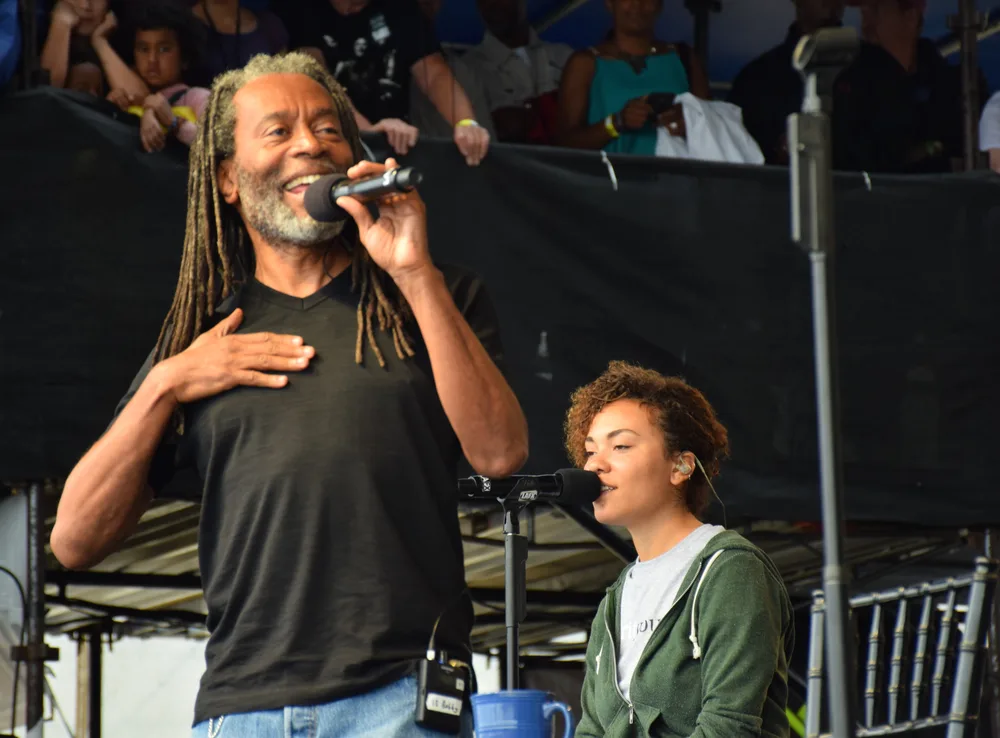
Bobby McFerrin headlining the final day of the 2014 Newport Jazz Festival on the Ertegun Fort Stage, Fort Adams State Park, Newport, Rhode Island, August 3, 2014 CC BY-SA 2.0 (Creative Commons Attribution-ShareAlike 2.0 Generic), photograph by Todd Van Hoosear — Wikimedia Commons — https://commons.wikimedia.org/wiki/File:Bobby_McFerrin_at_the_Newport_Jazz_Festival_2014_(14825732181).jpg
.jpg)
Robert Keith McFerrin Jr. was born March 11, 1950, in Manhattan, into a household where singing was a profession rather than a pastime. His father, Robert McFerrin Sr., was the first African American man to sing leading roles at the Metropolitan Opera, joining the company in 1955; his mother, Sara Copper McFerrin (1924 to 2019), was a singer who later taught voice at Fullerton College. The family moved to Los Angeles in 1958, where McFerrin took piano lessons, studied clarinet and music theory, and attended Cathedral High School. He formed a group called the Bobby Mack Quartet in his high school years, which toured nationally with the Ice Follies, and went on to Cerritos College and California State University, Sacramento. For most of his twenties he worked as a pianist rather than a singer, playing lounge and dance-band gigs, and in 1978 joined the New Orleans fusion group Astral Project.
The turn came in 1977, when McFerrin decided, as he has described it in interviews, that he was meant to be a singer. He then spent roughly six years building a vocal identity from scratch, and for the first two of those years deliberately avoided listening to other singers at all so that he would not absorb anyone else's phrasing. Touring with the vocalese lyricist Jon Hendricks around 1980 gave him his first sustained exposure in the jazz world. A 1980 appearance at the Playboy Jazz Festival at the Hollywood Bowl and a 1981 set at New York's Kool Jazz Festival brought him to wider notice and led to a contract with Elektra/Musician, which released his self-titled debut in 1982 (Elektra Musician E1-60023). That first record was a conventional band date: Victor Feldman on Fender Rhodes, John Guerin on drums, Larry Klein on bass, and a studio cast around a singer still finding his frame.
He abandoned the frame almost immediately. In 1983 McFerrin went out on a solo European tour with no band, no accompaniment, and no set list, and the album drawn from those concerts, The Voice (Elektra Musician, 1984), was the first solo vocal jazz album for a major label recorded with no accompaniment and no overdubbing. It was captured across four German concerts in March 1984: Cologne on the 17th, Mannheim's Rosengarten on the 19th, Hamburg's Musikhalle on the 21st, and Stuttgart's Liederhalle on the 26th. The technique it documented, a four-octave range crossed with vocal percussion struck on his own chest, bass lines sung under melody lines, and rapid register jumps that let one throat imply a rhythm section, became the thing McFerrin was known for. Spontaneous Inventions (Blue Note, 1986) followed, with Wayne Shorter guesting on soprano saxophone on a single track, and the concert film of the same name was shot at the Aquarius Theatre in Hollywood on February 28, 1986.
The awards accumulated quickly, and nearly all of them were jazz awards. Guesting on "Another Night in Tunisia" from the Manhattan Transfer's Vocalese (Atlantic, 1985) won him a Grammy for Best Jazz Vocal Performance, Male, shared with Jon Hendricks, plus a second for Best Vocal Arrangement. His reading of Thelonious Monk's "'Round Midnight" on the soundtrack to Bertrand Tavernier's film Round Midnight (Columbia, 1986), where he sang over Herbie Hancock's piano, took another Best Jazz Vocal Performance, Male, and he won the same category again for "What Is This Thing Called Love" from Spontaneous Inventions. A fourth jazz vocal Grammy came for "Brothers," his duet with bassist Rob Wasserman on Wasserman's Duets (MCA, 1988), a track McFerrin also co-wrote and helped mix.
Then came the anomaly. "Don't Worry, Be Happy," recorded in about three hours with McFerrin supplying every sound on the track, including the bass, the percussion and the whistling, was released as the lead single from Simple Pleasures (EMI-Manhattan, 1988) and became the first a cappella recording to reach number one on the Billboard Hot 100, where it stayed two weeks. Its video featured Robin Williams and Bill Irwin. At the 1989 ceremony the song took Record of the Year, Song of the Year, and Best Pop Vocal Performance, Male, and McFerrin walked out with four Grammys that night, the fourth being the jazz vocal award for "Brothers." When George H. W. Bush's presidential campaign began using the song without authorization, McFerrin, a Dukakis supporter, declined a dinner invitation from the campaign and publicly objected; he subsequently dropped the song from his concerts, and it has never been the centre of his working repertoire. The hit is a single in a career, not the career.
What he did with the visibility was turn further inward toward improvisation. He devised circle singing in 1986, a practice in which a leader gives each section of a group a short repeating figure and improvises over the resulting layered ostinato, and in 1989 assembled Voicestra, a ten-voice improvising ensemble that carried the score for the Oscar-winning documentary Common Threads: Stories from the Quilt (1989) and dominated his album Medicine Music (EMI, 1990). Circlesongs (Sony Classical, 1997) is a full record of wordless group improvisation with no instruments at all. In parallel he took up conducting at forty, making his debut with the San Francisco Symphony in 1990 and serving as creative chair of the Saint Paul Chamber Orchestra from 1994, and he has since conducted the New York Philharmonic, the Chicago Symphony, the Cleveland Orchestra and the Vienna Philharmonic. That work has stayed conversant with the jazz side rather than separate from it: The Mozart Sessions (Sony Classical, 1996) has McFerrin conducting the Saint Paul Chamber Orchestra in two Mozart piano concertos with Chick Corea as soloist, and opens and closes each concerto with a free vocal and piano improvisation by the two of them.
The Corea partnership is the most sustained collaboration of his career. Play (Blue Note, 1992), drawn from concerts at Wolf Trap in Vienna, Virginia on June 23, 1990 and Carnegie Hall on June 27, 1990, is a duo record of standards and originals in which Corea's piano and McFerrin's voice trade lines as equals; its version of "'Round Midnight" won McFerrin his tenth Grammy for Best Jazz Vocal Performance, seven years after the same tune had won him one with Hancock. The two toured as a duo for decades afterward. McFerrin's later records kept widening the frame without leaving improvisation: Hush (Sony Masterworks, 1992) is a duo set with cellist Yo-Yo Ma recorded August 22 to 25, 1991; Bang!Zoom (Blue Note, 1995) is a band record cut with the core of the Yellowjackets; VOCAbuLarieS (Emarcy, 2010) is a large-scale multi-tracked choral work built with composer and producer Roger Treece over several years; and spirityouall (Sony Masterworks, 2013) reworks spirituals from his father's repertoire with arranger Gil Goldstein, Esperanza Spalding and Larry Grenadier splitting the bass chair. He was named an NEA Jazz Master in 2020 and given a Grammy Lifetime Achievement Award in 2023, the same year he disclosed a Parkinson's disease diagnosis and moved from Philadelphia to San Francisco. His children Taylor and Madison McFerrin are both working musicians.
McFerrin's instrument is a four-octave voice used as an entire ensemble rather than as a melody line, and the technical vocabulary is unusually wide: scat, overtone and polyphonic singing, vocal percussion struck against his own chest, sung bass figures alternating with sung melody fast enough that the ear hears two parts, and abrupt octave leaps used as rhythmic articulation rather than display. What separates him from the vocalese tradition he came out of, and from Jon Hendricks in particular, is that he largely abandoned lyrics: the material is improvised in real time and mostly wordless, closer in method to a horn player's approach to a chord sequence than to a singer's approach to a song. The a cappella solo concert, which McFerrin essentially invented as a viable jazz format with The Voice and his 1983 European tour, remains his signature setting, and his practice of conducting an audience as an improvising choir has been copied widely enough to be a genre of its own. His father's operatic training and his own conservatory-adjacent grounding in piano and clarinet show in the pitch accuracy and breath control, but the framework is jazz improvisation throughout, including in the classical work, where he routinely opens a Mozart concerto with a free improvisation. The two strands that sit outside jazz are real but narrow: "Don't Worry, Be Happy" is one enormously successful single, and the conducting career is a second occupation he took up at forty and has always run alongside, not instead of, the improvising. Seven of his ten competitive Grammys are in jazz and children's categories, and the National Endowment for the Arts named him a Jazz Master in 2020.
- The Voice (rec. March 1984, rel. 1984, Elektra Musician) - The first solo vocal jazz album for a major label recorded with no accompaniment and no overdubbing, taken from four German concerts; the record that defined the unaccompanied vocal concert as a jazz format. Spotify - The Voice Listen
- Play (rec. June 1990, rel. 1992, Blue Note) - A duo record with Chick Corea drawn from concerts at Wolf Trap and Carnegie Hall; its "'Round Midnight" won McFerrin his tenth Grammy. Spotify - Play
- Spontaneous Inventions (1986, Blue Note) - His second solo-voice record, with Wayne Shorter guesting on one track; "What Is This Thing Called Love" from it won Best Jazz Vocal Performance, Male. Spotify - Spontaneous Inventions Listen
- Circlesongs (1997, Sony Classical) - Wordless group improvisation with no instruments, documenting the circle-singing practice McFerrin devised in 1986. Spotify - Circlesongs Listen
- Simple Pleasures (1988, EMI-Manhattan) - The multi-tracked pop record that produced "Don't Worry, Be Happy," the first a cappella single to top the Billboard Hot 100. Spotify - Simple Pleasures Listen
- Hush (rec. August 1991, rel. 1992, Sony Masterworks) - A voice-and-cello duo album with Yo-Yo Ma that crosses the repertoire lines in both directions. Spotify - Hush
- spirityouall (2013, Sony Masterworks) - Spirituals from his father's repertoire rebuilt with a jazz band, arranged by Gil Goldstein, with Esperanza Spalding and Larry Grenadier on bass. Spotify - spirityouall Listen
- Round Midnight original motion picture soundtrack (1986, Columbia) - McFerrin's vocals on the title track and on "Chan's Song (Never Said)," with Herbie Hancock leading the date; the title performance won a Grammy for Best Jazz Vocal Performance, Male.
Bobby McFerrin: Full Discography
Identity confirmed via the live Discogs API, artist ID 29990, distinct from his father Robert McFerrin (artist 1006720) and from his children Taylor McFerrin (614845) and Madison McFerrin (5041028). Discogs credits McFerrin on approximately 1,740 releases, of which 64 carry him as the main artist. The overwhelming majority of the remainder is "Don't Worry, Be Happy" appearing on hit compilations and various-artists collections issued across dozens of countries between 1988 and 1992, plus cover versions filed against his artist page. This table does not itemize that. It lists the leader and co-leader albums and the sideman sessions of genuine musical significance, with catalog numbers, session dates and personnel taken from individual Discogs release records rather than from summary listings.
Where a credit is restricted to specific tracks, that restriction is stated. Several of McFerrin's guest appearances are one-track or few-track cameos that would read as album-wide chairs if taken from a summary listing.
As Leader / Co-Leader
| Album Title | Recording Date(s) | Release Date | Label | Catalog Number | Format(s) | Personnel | Role | Reissue History | Spotify | Buy | Notes |
|---|---|---|---|---|---|---|---|---|---|---|---|
| Bobby McFerrin | 1982 | 1982 | Elektra Musician | E1-60023 | Vinyl, LP, Album | Bobby McFerrin (vocals, Fender Rhodes on B1), Victor Feldman (Fender Rhodes), John Guerin (drums), Larry Klein (bass), Peter Maunu (acoustic guitar), Steve Erquiaga (guitar), Kenneth Nash (percussion), and others varying by track; backing vocals on B3 by Debbie, Brenda and Taylor McFerrin | Leader | Reissued on CD and in EMI's 4 Albums box (2011) | Spotify - Bobby McFerrin | — | A conventional band date, unlike everything that followed; personnel change track by track |
| The Voice | March 17, 19, 21 and 26, 1984, live in Cologne, Mannheim, Hamburg and Stuttgart | 1984 | Elektra Musician | 60366-1-E | Vinyl, LP, Album, Stereo | Bobby McFerrin (solo voice) | Leader | Reissued on CD; included in EMI's 4 Albums box (2011) | Spotify - The Voice | — | The first solo vocal jazz album for a major label recorded with no accompaniment and no overdubbing; the Discogs credit reads "Vocals [Live Acapella]." Produced by Linda Goldstein |
| Spontaneous Inventions | 1985-1986, live and studio | 1986 | Blue Note | BT 85110 (LP); CDP 7 46298 2 (CD) | Vinyl, LP, Album; CD, Album | Bobby McFerrin (voice), with Wayne Shorter (soprano saxophone) on one track and a small number of other guests | Leader | Reissued on CD by Blue Note; the concert film was issued separately on laserdisc (Pioneer Artists PS-87-015), filmed at the Aquarius Theatre, Hollywood, February 28, 1986 | Spotify - Spontaneous Inventions | — | "What Is This Thing Called Love" from this album won the Grammy for Best Jazz Vocal Performance, Male. Shorter's contribution is a single track, not an album-wide chair |
| Simple Pleasures | 1988 | 1988 | EMI-Manhattan Records | CDP-7-48059-2 | CD, Album | Bobby McFerrin (all voices, vocal percussion, vocal bass) | Leader | Reissued repeatedly; in EMI's 4 Albums box (2011) and Blue Note's 5 Original Albums (2018) | Spotify - Simple Pleasures | — | Produced by McFerrin and Linda Goldstein at Power Station, New York and Fantasy Studios, Berkeley. Source of "Don't Worry, Be Happy," the first a cappella single to top the Billboard Hot 100 |
| Medicine Music | 1990 | 1990 | EMI | 062 79 20481 (European pressing) | Vinyl, LP, Album | Bobby McFerrin (voice), Voicestra | Leader | Reissued on CD | Spotify - Medicine Music | — | Written, arranged and produced by McFerrin; the first record to feature Voicestra, the ten-voice ensemble he formed in 1989 |
| Play (with Chick Corea) | June 23, 1990, Wolf Trap, Vienna, Virginia; June 27, 1990, Carnegie Hall, New York | 1992 | Blue Note | CDP 7 95477 2 | CD, Album | Bobby McFerrin (voice), Chick Corea (piano) | Co-leader | Reissued on CD; in Blue Note's 5 Original Albums (2018) | Spotify - Play | — | Recorded live in 1990 and released in 1992; the two dates are two years apart and are frequently conflated. Its "'Round Midnight" won McFerrin his tenth Grammy, for Best Jazz Vocal Performance |
| Hush (with Yo-Yo Ma) | August 22-25, 1991 | 1992 | Sony Masterworks | SK 48177 | CD, Album | Bobby McFerrin (voice), Yo-Yo Ma (cello) | Co-leader | Reissued on CD | Spotify - Hush | — | Produced by McFerrin and Steve Epstein; liner notes by both performers |
| Bang!Zoom | 1995 | 1995 | Blue Note | CDP 7243 8 31677 2 2 | CD, Album | Bobby McFerrin (voice), Russell Ferrante (piano, synthesizer), Jimmy Haslip (bass), William Kennedy (drums), Bob Mintzer (saxophone, bass clarinet, EWI), Paul Jackson Jr. (guitar), Paulinho Da Costa (percussion), Scott Wendholt (trumpet, track 4 only), Paul Nagel (Fender Rhodes, track 6 only) | Leader | Reissued on CD | Spotify - Bang! Zoom | — | Co-produced with Russell Ferrante and built on the core of the Yellowjackets. Track 4 is a Miles Davis composition |
| The Mozart Sessions (with Chick Corea and the Saint Paul Chamber Orchestra) | February 5-7, 1996, Bethel College, St. Paul; May 21, 1996, Masonic Grand Lodge, New York | September 1996 | Sony Classical | SK 62601 | CD, Album | Bobby McFerrin (conductor, vocals), Chick Corea (piano), the Saint Paul Chamber Orchestra | Co-leader / conductor | Reissued on CD | Spotify - The Mozart Sessions | — | Two Mozart piano concertos, each opened and closed by a free a cappella vocal and piano improvisation by McFerrin and Corea |
| Circlesongs | 1997 | 1997 | Sony Classical | SK 62734 | CD, Album | Bobby McFerrin (voice, direction) with an unaccompanied improvising vocal ensemble | Leader | Reissued on CD | Spotify - Circlesongs | — | Produced by Linda Goldstein; wordless group improvisation with no instruments, documenting the circle-singing practice McFerrin devised in 1986 |
| Beyond Words | 2002 | 2002 | Blue Note | 7243 5 34201 2 3 | CD, Album | Not documented in the Discogs credit block for this release | Leader | Reissued on CD; in Blue Note's 5 Original Albums (2018) | Spotify - Beyond Words | — | The Discogs record for this release carries no personnel or production credits at all, which is a gap in the data rather than an indication that McFerrin performed alone |
| VOCAbuLarieS | 2003-2010 | March 15, 2010 | Emarcy / Universal Music Group International | 0602527255569 | CD, Album | Bobby McFerrin (voice), a large multi-tracked vocal ensemble; Roger Treece (co-composition, production, engineering, mixing) | Leader | Reissued on CD | — | — | Built over several years from layered vocal takes. One movement premiered at Walt Disney Concert Hall, Los Angeles, November 16, 2003, another at the Ravinia Festival with the Chicago Symphony Orchestra |
| spirityouall | 2013 | May 14, 2013 | Sony Masterworks | MSWK 545686 | CD, Album, Digipak | Bobby McFerrin (vocals, Fender Rhodes), Gil Goldstein (arrangements, production, accordion, Fender Rhodes, guitar, violin), Esperanza Spalding (bass; vocals on tracks 1, 2, 7 and 11), Larry Grenadier (bass), Charley Drayton (drums), Larry Campbell (guitar, mandolin, violin), Ali Jackson (percussion, drums), Lisa Fischer, Joey Blake, Latanya Hall and Marlon Saunders (backing vocals) | Leader | Reissued on CD | Spotify - spirityouall | — | Recorded at Avatar Recording and Shelter Island Sound. Spalding sings on four tracks only; the bass chair is split between her and Grenadier |
Live and video releases issued under McFerrin's name, including Live in Montreal (2005), the Chick Corea & Bobby McFerrin Duet concert release (2006), and the Vienna Konzert für Europa / The Schönbrunn Concert (2004), are not itemized above.
As Sideman (selected major credits)
| Year | Project (Leader) | Title | Label | Catalog | Role | Notes |
|---|---|---|---|---|---|---|
| 1980 | Pharoah Sanders | Journey to the One | Theresa Records | TR108/109 | Vocals, two tracks | McFerrin's earliest verified studio credit: vocals on "You've Got to Have Freedom" and "Think About the One." A track-level credit, not an album-wide one |
| 1982 | Grover Washington Jr. | The Best Is Yet to Come | Elektra | 60215 | Lead and backing vocals, one track | Lead and backing vocals on "Things Are Getting Better." The credit is absent from several Discogs pressings of this album and present on others; it was confirmed by checking multiple pressings rather than the first one returned |
| 1984 | The Charles Lloyd Quartet | A Night in Copenhagen | Blue Note | BT 85104 | Vocals, one track | Vocals on "Third Floor Richard," recorded live by Danmarks Radio at the Copenhagen Jazz Festival on July 11, 1983 |
| 1985 | Weather Report | Sportin' Life | Columbia | FC 39908 | Vocals, four tracks | Vocals on four of the album's tracks, recorded and mixed at Crystal Recording, Hollywood |
| 1985 | The Manhattan Transfer | Vocalese | Atlantic | 781 266-1 | Vocals, one track | Vocals on "Another Night in Tunisia" only. This single track won McFerrin two Grammys, Best Jazz Vocal Performance, Male (shared with Jon Hendricks) and Best Vocal Arrangement |
| 1986 | Herbie Hancock and various artists | Round Midnight: Original Motion Picture Soundtrack | Columbia | SC 40464 | Featured vocals, two tracks | Vocals on "'Round Midnight" and "Chan's Song (Never Said)." The title performance won Best Jazz Vocal Performance, Male |
| 1986 | Joe Zawinul | Dialects | Columbia | FC 40081 | Improvised voice | Credited album-wide as "Vocals [Improvised Voice]" on a record otherwise built from solo synthesizers |
| 1987 | Jack Nicholson (narrator) | The Elephant's Child | Windham Hill Records / Rabbit Ears Productions | WH-0701 (LP); WD-0701 (CD) | Music and vocals | A Rudyard Kipling story record narrated by Jack Nicholson with McFerrin's music; won the Grammy for Best Recording for Children |
| 1988 | Rob Wasserman | Duets | MCA Records | MCA-42131 | Vocals, co-writing, mixing, one track | "Brothers," a McFerrin and Wasserman duet that won the Grammy for Best Jazz Vocal Performance. McFerrin is also credited as a writer and mixer on that track |
| 1989 | Quincy Jones | Back on the Block | Qwest Records | 1-26020 | Featured vocals and body percussion, one track | "Wee B. Dooinit," where McFerrin is credited for vocals plus "chest slaps and funky yodel" |
| 1989 | Laurie Anderson | Strange Angels | Warner Bros. Records | 925 900-2 | Vocals, three tracks | Vocals on "Monkey's Paw," "Ramon" and "The Dream Before" |
| 1990 | Jon Hendricks and Friends | Freddie Freeloader | Denon | COCY-6302 | Vocals, one track | McFerrin sings Wynton Kelly's recorded piano solo as a vocalese line on the title track, alongside George Benson, Al Jarreau, the Manhattan Transfer, the Count Basie Orchestra, Wynton Marsalis, Stanley Turrentine, Tommy Flanagan, Rufus Reid, George Mraz and Jimmy Cobb |
| 1992 | Dizzy Gillespie | To Bird with Love | Telarc Jazz | CD-83316 | Vocals, one track | Vocals on a single track of Gillespie's Charlie Parker tribute |
McFerrin's appearances on various-artists collections, hit compilations and film soundtracks, along with the very large number of releases carrying "Don't Worry, Be Happy," are not itemized here. A credit checked against a Discogs summary listing rather than an individual release record cannot distinguish a one-track cameo from an album-wide chair, and several of the entries above are one-track appearances that would otherwise read as full sessions.
- Chick Corea - duo partner from 1990 onward; co-led the live album Play (Blue Note, 1992) from June 1990 concerts, was the piano soloist on The Mozart Sessions (Sony Classical, 1996) under McFerrin's baton, and toured with him as a duo for decades.
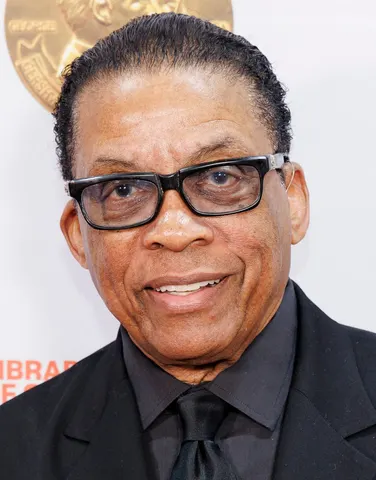
- Herbie Hancock - led the Round Midnight film soundtrack (Columbia, 1986) on which McFerrin sang the title track and "Chan's Song (Never Said)," the former winning McFerrin a Grammy.
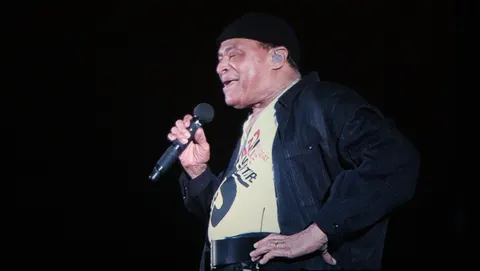
- Jon Hendricks - the vocalese lyricist McFerrin toured with around 1980, his entry point into the jazz world; the two shared the 1985 Grammy for Best Jazz Vocal Performance, Male, for "Another Night in Tunisia," and McFerrin later sang Wynton Kelly's piano solo on the title track of Hendricks's Freddie Freeloader (Denon, 1990).
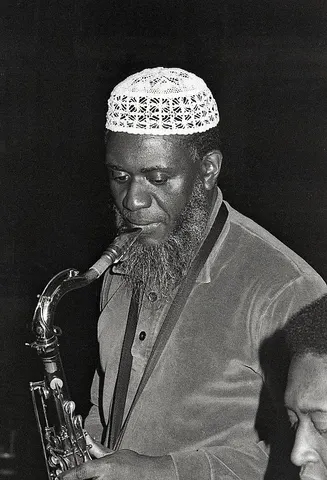
- Pharoah Sanders - McFerrin's earliest verified recorded appearance, singing on "You've Got to Have Freedom" and "Think About the One" from Sanders's Journey to the One (Theresa, 1980).
- Joe Zawinul - McFerrin sang on four tracks of Weather Report's Sportin' Life (Columbia, 1985) and supplied improvised voice across Zawinul's solo album Dialects (Columbia, 1986).
- The Manhattan Transfer - McFerrin guested on "Another Night in Tunisia" from Vocalese (Atlantic, 1985), the single track that won him his first two Grammys. No profile yet exists for the group on JazzProfiles.com.
- Grover Washington Jr. - McFerrin took lead and backing vocals on "Things Are Getting Better" from Washington's The Best Is Yet to Come (Elektra, 1982), cut the same year as his own debut and on the same label.
- Rob Wasserman - bassist whose Duets (MCA, 1988) carries "Brothers," a McFerrin co-write and vocal that won the 1988 Grammy for Best Jazz Vocal Performance.
- Yo-Yo Ma - cellist and duo partner on Hush (Sony Masterworks, 1992), recorded August 22 to 25, 1991.
- Voicestra - the ten-voice improvising ensemble McFerrin formed in 1989, heard on Medicine Music (EMI, 1990) and on the score to the documentary Common Threads: Stories from the Quilt (1989).
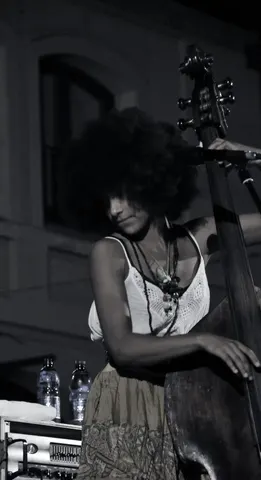
- Gil Goldstein - arranger, producer and multi-instrumentalist on spirityouall (Sony Masterworks, 2013), alongside Esperanza Spalding and Larry Grenadier sharing the bass chair.
- Quincy Jones - McFerrin is the featured vocalist and body percussionist on "Wee B. Dooinit" from Back on the Block (Qwest, 1989).
- Charles Lloyd - McFerrin sang on "Third Floor Richard" from the Charles Lloyd Quartet's A Night in Copenhagen (Blue Note, 1984), recorded live at the Copenhagen Jazz Festival on July 11, 1983. No profile yet exists for him on JazzProfiles.com.
- Roger Treece - co-composer, co-producer and engineer of VOCAbuLarieS (Emarcy, 2010), a multi-year build of layered choral improvisation.
- Linda Goldstein - McFerrin's manager and the producer of The Voice, Simple Pleasures, Play and Circlesongs, a constant behind the records from 1984 onward.
- Wikipedia: Bobby McFerrin
- National Endowment for the Arts: Bobby McFerrin, 2020 NEA Jazz Master
- Encyclopedia.com (Contemporary Musicians): Bobby McFerrin
- GRAMMY.com: Bobby McFerrin Honored With Recording Academy Special Merit Award
- GRAMMY.com: GRAMMY Rewind, Bobby McFerrin Wins Best Jazz Vocal Performance
- Wikipedia: Don't Worry, Be Happy
- Wikipedia: Circlesongs
- Discogs: Bobby McFerrin (artist 29990) - identity, catalog numbers, session dates and track-level personnel verified release by release against the live Discogs API
- Wikimedia Commons: File:Bobby McFerrin at the Newport Jazz Festival 2014 (14825732181).jpg - portrait license and provenance
- Album titles, release years and Spotify identifiers were checked one by one against the Spotify catalogue; Britannica and AllMusic refuse automated fetches and contributed nothing.