 JAZZPROFILES lives in the music 1,002 Jazz Artists fully Profiled!
 Roger Kellaway
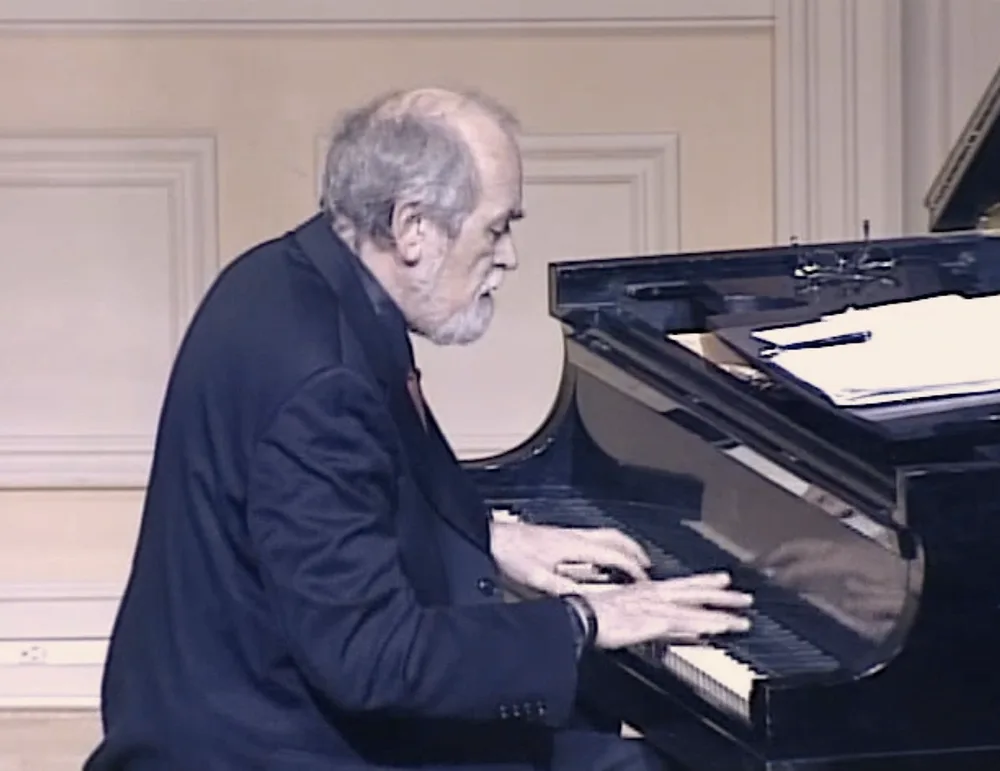
Roger Kellaway at the grand piano, a video frame from his Library of Congress concert with the clarinetist Eddie Daniels in the Coolidge Auditorium, Washington, D.C., on February 25, 2011. The concert was issued the same year as the album *Live at the Library of Congress* (IPO Recordings). Public domain. The Wikimedia Commons file record carries the {{PD-USGov}} template, with the Commons API returning LicenseShortName and UsageTerms both as "Public domain" and the categories PD US Government and CC-PD-Mark. The work is a United States federal government work, authored by the Library of Congress. Verified on the file record itself, not from a search snippet. — Wikimedia Commons, File:Roger Kellaway 2011.jpg — https://commons.wikimedia.org/wiki/File:Roger_Kellaway_2011.jpg (original at https://upload.wikimedia.org/wikipedia/commons/9/9e/Roger_Kellaway_2011.jpg; source of record https://www.loc.gov/item/2021688615/)


Roger Kellaway was born on November 1, 1939, in Waban, a village of Newton, Massachusetts. He has described it as a town with one policeman, one drugstore, one bank and one market, where the trains were still pulled by steam. Formal piano lessons began at seven. At eleven he bought the sheet music to George Shearing's "I'll Remember April" and kept it as his solo piece for years; after Shearing he listened to Billy Taylor, Oscar Peterson and Horace Silver, on top of a listening diet that was still mostly classical. In junior high school eight children auditioned for the orchestra's piano chair, so he taught himself the upright bass instead, and four years later played fourth bass in the Massachusetts All-State Orchestra under Frederick Fennell. At Newton High School he took college-level theory and played double bass and percussion in the orchestra, and on the side played jazz bass in a local band called the King's Men alongside the cornetist Dick Sudhalter, who pushed him toward Dixieland while a tenor player named Dave Schreier pushed him toward modern jazz.
He entered the New England Conservatory in 1957 and studied piano, double bass and composition there for two years. The formative figures were not faculty but two multi-instrumentalists he played with, Dick Wetmore and Leroy "Sam" Parkins. With Wetmore he worked the basement of Boston's Hotel Buckminster on a mixture of Dixieland and modern jazz, and every other Sunday accompanied readings of E. E. Cummings with improvisations built on Wetmore's twelve-tone rows. With Parkins he took a Dixieland job on Cape Cod where the drummer was Tommy Benford, a veteran of two world tours with Fats Waller. He left the Conservatory in 1959 to play bass with Jimmy McPartland, and by the time he reached New York in 1960 he was still primarily a bassist. He sat in on bass with Jimmy Giuffre and Jim Hall, and Giuffre offered him the gig, which personal circumstances made him turn down. Giuffre's next trio took Steve Swallow instead. Kellaway then switched to piano for good.
The New York years came fast. He plays piano on Mark Murphy's That's How I Love the Blues (Riverside, 1963), a date conducted and arranged by Al Cohn with Jim Hall on guitar, Clark Terry and Snooky Young on trumpets and Dick Hyman on organ; Kellaway himself dates the session to 1962. That same year he wrote every arrangement for the Clark Terry Sextet's More (Theme from Mondo Cane) on Cameo, with Ben Webster on tenor. Between 1963 and 1965 he worked with Kai Winding, with Cohn and Zoot Sims, and for roughly two and a half years with the Clark Terry and Bob Brookmeyer Quintet, whose Mainstream albums Tonight and The Power of Positive Swinging both appeared in 1965 with Bill Crow and Dave Bailey completing the rhythm section. The sideman credits from those three years are the ones listeners still know him by: Oliver Nelson's More Blues and the Abstract Truth, cut over two days in November 1964 with Pepper Adams, Phil Woods, Thad Jones and Ben Webster; Webster's own See You at the Fair (1964), where he plays half the album and was made to use an electric harpsichord on two tracks he still dislikes; Wes Montgomery's Bumpin', rehearsed for four days in May 1965 under Don Sebesky's supervision because Montgomery did not read music; Kenny Burrell's Guitar Forms, where his piano is confined to three tracks of Gil Evans's orchestration; and Sonny Rollins's Alfie (1966), on which he took a second solo in the middle of "Transition Theme" after Rollins stepped away from the microphone. He also spent a stretch at the Half Note subbing for Wynton Kelly in Montgomery's group with Paul Chambers on bass, the only time the two played together. His own first records came in parallel: a Regina LP with Jim Hall in 1963 and The Roger Kellaway Trio for Prestige in 1965.
In 1966 he moved to Los Angeles, played in Don Ellis's orchestra, and moved into studio and screen work without leaving the jazz side of his catalog behind. A year as musical director for the comedian Jack E. Leonard led, on drummer Stan Levey's recommendation, to the same job with Bobby Darin from 1967. Darin handed him Leslie Bricusse's songs from Doctor Dolittle, named a studio and a 35-piece orchestra, and gave him three weeks; the resulting Bobby Darin Sings Doctor Dolittle (Atlantic, 1967) is an album Kellaway still names among his proudest work. His own Stride! and Spirit Feel, the latter a quartet with Tom Scott, Chuck Domanico and John Guerin, both appeared in 1967. Arranging work followed for Melanie, Carmen McRae, Liza Minnelli, Diane Schuur and Robben Ford, who has named Kellaway and Tom Scott as the two major influences on his music. Kellaway produced McRae's I Am Music (Blue Note, 1975) outright, arranged and conducted most of it, and put his own "I Have the Feeling I've Been Here Before," with lyrics by Alan and Marilyn Bergman, at its center.
The record that changed his standing was built in his own living room. In 1969 he was writing pieces for cello and piano and asked his favourite studio cellist, Edgar Lustgarten, to come over and read through them. He added Chuck Domanico on bass and Emil Richards on percussion because he wanted the group to sound like wood, and because all but one of them could improvise in odd meters. Herb Alpert green-lit the project at A&M and Stephan Goldman produced it. The Roger Kellaway Cello Quartet (A&M, 1971) has "Sunrise" in 15/8 and "Esque" in 5/4, and Joe Pass on two tracks. The name was a filing accident: the music for the group sat in a stack labelled "Cello Quartet," the way another stack was labelled "Sax Quartet," and the label stuck even though there was only ever one cellist. The Center of the Circle (1972) and Come to the Meadow (1974) followed on A&M, and the title tune of the latter became the theme for NPR's Selected Shorts. In 1978 the band expanded to a quintet with the drummer Joe Porcaro for the direct-to-disc Nostalgia Suite. The three A&M records got Kellaway called the father of crossover, a description he has said he will happily take.
The television credit that made him famous outside jazz arrived the same way, by referral. Dave Grusin, busy with a film for Norman Lear's partner Bud Yorkin, passed the job along. Kellaway read the pilot script for All in the Family and wrote a theme without knowing that Lee Adams and Charles Strouse had already been hired to write "Those Were the Days," then played his piece in Hollywood for the director John Rich, Norman Lear and Carroll O'Connor. They took it at once. For the first six episodes both themes ran over the closing credits until his wife Jorjana suggested telling Lear that one would do, which made "Remembering You" the show's closer and, by Kellaway's account, made All in the Family the first American series with different opening and closing themes. O'Connor received a lyric credit, though the words were never used at the end. The theme carried over into Archie Bunker's Place. Around twenty film scores followed, among them Paper Lion (1968), The Mouse and His Child (1977), The Mafu Cage (1978), The Silent Scream (1980), Evilspeak (1981) and Breathless (1983), and his adaptation score for the 1976 A Star Is Born, with Barbra Streisand, brought an Academy Award nomination. Concert commissions ran alongside: PAMTGG, a ballet for George Balanchine and New York City Ballet that premiered at the New York State Theater on June 17, 1971 and was built out of a Pan Am television jingle by Stan Applebaum and Sid Woloshin, plus orchestral pieces for the New York Philharmonic, the Los Angeles Philharmonic and the Cincinnati Symphony, and chamber works for Yo-Yo Ma, the Juilliard String Quartet, James Galway and the tuba player Roger Bobo.
From the mid-1980s he turned back to jazz nearly full-time, and the partnership that defined the next stretch was with the bassist Red Mitchell, who had settled in Stockholm. Kellaway counts eight years and eight records together, several of them taped in Mitchell's own apartment: Alone Together (Dragon, 1988), Some O' This and Some O' That with the clarinetist Putte Wickman (Dragon, 1990) and That Was That with the trumpeter Jan Allan (Dragon, 1991). Concord issued his solo Live at Maybeck Recital Hall, Volume Eleven in 1991 and, the following year, Life's a Take, a duo with Mitchell recorded in the same room. In 1988 he won the Grammy for Best Instrumental Arrangement for Eddie Daniels's Memos from Paradise, an album subtitled "The Music of Roger Kellaway." He served as musical director for a Carnegie Hall tribute to Oscar Peterson and for Stéphane Grappelli's eightieth-birthday concert, at which Yo-Yo Ma made his jazz debut; the studio album that came out of that association, "Anything Goes" (CBS, 1989), credits Kellaway with the arrangements, the music direction and the piano.
His late catalog belongs largely to IPO Recordings, much of it made at his own Kellaway LightWorks studio in Ojai, California: I Was There, drawn from the Bobby Darin songbook (2004), Remembering Bobby Darin (2005), Heroes (2006), a tribute to the Oscar Peterson trio that won the French Jazz Academy's Prix du Jazz Classique, and Live at the Jazz Standard (2008), a quintet with Russell Malone, Jay Leonhart, Stefon Harris and the cellist Borislav Strulev. A long duo relationship with Eddie Daniels produced A Duet of One (2008), Live at the Library of Congress, recorded in the Coolidge Auditorium on February 25, 2011, and Duke at the Roadhouse: Live in Santa Fe, which took the same academy's Grand Prix. He led the band for Van Morrison's Astral Weeks concerts at the Hollywood Bowl on November 7 and 8, 2008. He marked his eightieth birthday in November 2019 with two nights at New York's Birdland Theater backed by the guitarist Roni Ben-Hur and the bassist Jay Leonhart. In 2023 the SmallsLIVE Foundation gave him its Living Masters award, which came with two nights at Mezzrow and a recording; Live at Mezzrow (Cellar Music, 2024), taped on May 5, 2023 with Leonhart, the drummer Dennis Mackrel and Ben-Hur as special guest, is his most recent album.
Kellaway is one of the very few players whose technique is large enough to make the question of category irrelevant, which is exactly why his career reads as scattered until you listen to it. The line runs from Fats Waller and stride through George Shearing, Billy Taylor, Oscar Peterson and Horace Silver, and then straight into Stravinsky, Schoenberg, Messiaen, Berio, Varese and John Cage, all of which he was absorbing simultaneously as a teenager and a Conservatory student who spent alternate Sundays improvising twelve-tone accompaniments to poetry readings. Accompanying is the skill the older players hired him for. Asked how he approached Ben Webster, his answer was to listen to every note and stay out of the way of the sound, and the same discipline is audible behind Wes Montgomery, Sonny Rollins and Carmen McRae. As a writer he works from an ensemble idea rather than a chord sheet, which is what produced the Cello Quartet, a group with no precedent and no imitators that put him at the head of what the industry later called crossover, and it is why a Balanchine ballet, an All in the Family theme and a solo recital at Maybeck Recital Hall can sit in the same catalog without any of them sounding like a detour. The Penguin-era consensus on his solo playing holds up: he is a maximalist who never loses the tune, and reviewers of the Maybeck record and the Red Mitchell duos keep returning to the same two things, an orchestral left hand and a wit that comes out in the way he reharmonizes a standard mid-chorus.
- The Roger Kellaway Trio (1965, Prestige) - His first trio record under his own name, with Russell George on bass and Dave Bailey on drums, cut while he was working nightly with Clark Terry and Bob Brookmeyer at the Half Note.
- Spirit Feel (1967, Pacific Jazz) - The quartet with Tom Scott, Chuck Domanico and John Guerin, with four Kellaway originals and Paul Beaver contributing musique concrete on tape. The clearest early statement of how far he was willing to take a jazz group.
- The Roger Kellaway Cello Quartet (1971, A&M) - The record that gave him a genre. Edgar Lustgarten on cello, Domanico on bass, Emil Richards on percussion, Joe Pass on two tracks, and originals in 15/8 and 5/4.
- More Blues and the Abstract Truth (1965, Impulse!) - As a sideman: Oliver Nelson's sequel session of November 1964, with Ben Webster, Phil Woods, Pepper Adams and Thad Jones. Kellaway names it among his own three favourite records he plays on.
- Alfie (1966, Impulse!) - As a sideman: Sonny Rollins with an orchestra conducted by Oliver Nelson, Kenny Burrell on guitar and Walter Booker on bass. "Transition Theme" carries two Kellaway solos, the second of them improvised into a gap Rollins left.
- Live at Maybeck Recital Hall, Volume Eleven (1991, Concord Jazz) - His entry in Concord's solo-piano series and the record most often used to argue his case as a solo pianist.
- Inside & Out (1996, Concord Jazz) - The duo with the cornetist Ruby Braff, a musician he had first met as a teenager, and one of the albums he names as a personal favourite.
- Live at Mezzrow (2024, Cellar Music) - The album that came with the SmallsLIVE Living Masters award, recorded on May 5, 2023 with Jay Leonhart, Dennis Mackrel and Roni Ben-Hur guesting on guitar.
Roger Kellaway: Full Discography
Identity confirmed via the live Discogs API, artist ID 296954 ("Roger Kellaway," American jazz pianist, composer and arranger, born November 1, 1939 in Waban, Massachusetts), cross-referenced against MusicBrainz artist 0b4a1b81-a926-4c0f-9da1-12a1207a5640, which gives Newton, Massachusetts as his begin area, and Wikidata Q725791. One other Discogs artist shares the surname, a British drum and bass producer credited simply as "Kellaway"; none of that person's releases appears here. Four further Discogs entities are band names for the same pianist and hold releases that do not sit on his main artist page: The Roger Kellaway Trio (6388954), The Roger Kellaway Cello Quartet (3020565), Roger Kellaway Quartet (2761856) and Roger Kellaway And The Duo (9542467).
Discogs credits Kellaway on 425 releases, of which 55 carry a leader or co-leader billing. The figure he and his labels use is more than 250 albums plus over twenty film scores. The leader table below aims to be complete for albums issued under his own name or a band he led, setting aside compilations, various-artists anthologies and unofficial releases; the sideman table is a curated selection of the most significant and best-documented credits rather than an exhaustive list.
Every release described below was fetched at the individual release level and its credit block read directly, rather than characterised from the coarser per-artist credit list, which carries no track data at all. That distinction matters repeatedly here. Kellaway's piano on Kenny Burrell's Guitar Forms is restricted to three of that album's tracks and his piano on Gerry Mulligan's The Age of Steam to three of its nine, facts that exist only in the individual release records. In the other direction, the per-artist list files Orrin Evans's The Red Door (2023) as an appearance when the release itself shows Kellaway only as the composer of one song, and dates Art Pepper's Unreleased Art, Vol. II to 1991 when the release is a 2007 issue of a 1982 concert. Where Discogs, Wikipedia, Apple Music and Kellaway's own recollection disagree on a year, a title or a label, the disagreement is stated rather than silently resolved. Apple Music entries were checked one by one against the keyless iTunes Lookup API. Spotify's catalogue could not be searched at all, so no Spotify URL is asserted and every cell in that column reads —.
As Leader / Co-Leader
| Album Title | Recording Date(s) | Release Date | Label | Catalog Number | Format(s) | Personnel | Role | Reissue History | Spotify | Buy | Notes |
|---|---|---|---|---|---|---|---|---|---|---|---|
| A Jazz Portrait Of Roger Kellaway | Not stated on the release | 1963 | Regina Records | R 298 | Vinyl, LP, Album | Roger Kellaway (piano), Jim Hall (guitar), rhythm section not given on the release | Leader | A Fresh Sound CD edition exists | — | — | His first album. Liner notes by Billy Taylor. Wikipedia titles it A Portrait of Roger Kellaway, without "Jazz"; the sleeve and the Discogs entry both carry the longer title. The main Discogs release record has no year field; the per-artist listing dates it 1963 |
| The Roger Kellaway Trio | Not stated on the release | 1965 | Prestige | PR 7399 / PRST 7399 | Vinyl, LP, Album | Roger Kellaway (piano), Russell George (bass), Dave Bailey (drums) | Leader (The Roger Kellaway Trio) | A Prestige CD edition carries a 1997 copyright | — | — | Produced by Lew Futterman, cover design and photography by Don Schlitten. The sleeve mistimes track B4 |
| Stride! | Not stated on the release | 1967 | World Pacific Records | WPS-21861 | Vinyl, LP, Album | Roger Kellaway (piano, arranger), Red Mitchell (bass), John Guerin (drums), with strings and brass | Leader (The Roger Kellaway Trio) | None found | — | — | Produced by Richard Bock. Wikipedia and Apple Music both date it 1966; the Discogs release and the record's own copyright line say 1967 |
| Spirit Feel | Not stated on the release | 1967 | Pacific Jazz | ST-20122 | Vinyl, LP, Album | Roger Kellaway (piano, four compositions, part of the liner notes), Tom Scott (alto and tenor saxophone), Chuck Domanico (bass), John Guerin (drums), Paul Beaver (tape, musique concrete) | Leader, billed "Roger Kellaway Featuring Tom Scott" | None found | — | — | Kellaway wrote A2, A4, B2 and B4. Wikipedia adds Red Mitchell on bass for one track; the release credit block does not list him |
| Say That Again | Not stated on the release | 1978 | Dobre Records | DR 1045 | Vinyl, LP, Album | Roger Kellaway (solo piano, vocals on two tracks) | Leader | Remastered CD, Essential Media Group, 2005 | — | — | Wikipedia and Apple Music both date the album 1970; the Discogs release and the Dobre catalogue number place it in 1978 alongside Solo Piano. Three song titles are printed wrongly on the sleeve, including his own "Remembering You," which is labelled "Am I Blue?" |
| Solo Piano | Not stated on the release | 1978 | Dobre Records | DR 1027 | Vinyl, LP, Album | Roger Kellaway (solo piano) | Leader | None found | — | — | The companion Dobre solo record |
| The Roger Kellaway Cello Quartet | Not stated on the release | 1971 | A&M Records | SP-3034 | Vinyl, LP, Album | Roger Kellaway (piano), Edgar Lustgarten (cello), Chuck Domanico (acoustic bass), Emil Richards (percussion), Erno Neufeld (violin), Joe Pass (guitar on two tracks) | Leader | Verve CD reissues | — | — | Produced by Stephan Goldman for A&M. Kellaway dates the album 1970 and Apple Music dates it 1972; the Discogs release says 1971. "Sunrise" is in 15/8 and "Esque" in 5/4 |
| The Center Of The Circle | Not stated on the release | 1972 | A&M Records | SP-3040 | Vinyl, LP, Album | Roger Kellaway (piano) with the Cello Quartet; the release credit block names only the writers | Leader | None found | — | — | Produced by Stephan Goldman. Songwriting credits include Arthur Hamilton and Melanie Safka alongside Kellaway. The release carries no instrumental personnel at all, which is a gap in the record rather than evidence about who played |
| Come To The Meadow | Not stated on the release | 1974 | A&M Records | SP-3618 | Vinyl, LP, Album | Roger Kellaway (piano), Edgar Lustgarten (cello), Chuck Domanico (acoustic bass), Emil Richards (percussion) | Leader, billed "The Roger Kellaway Cello Quartet" | None found | — | — | The title tune became the theme music for NPR's Selected Shorts. Wikipedia lists Richards on drums; the release credits him on percussion |
| Nostalgia Suite | Not stated on the release | 1978 | Discwasher Recordings | DR 003 DD | Vinyl, LP, Album, direct-to-disc | Roger Kellaway (piano) and the Cello Quintet, the quartet expanded with the drummer Joe Porcaro | Leader, billed "Roger Kellaway & The Cello Quintet" | None found | — | — | A direct-to-disc audiophile recording. The front cover reads "Roger Kellaway's Nostalgia Suite. Ingredients: The Cello Quintet"; the spine gives the billing used here |
| Live At Michael's Pub | July 24 and 25, 1981, Michael's Pub, New York City | 1992 | JazzMania Records | JCD-6007 | CD, Album | Roger Kellaway (piano, producer), Dick Hyman (piano) | Co-leader, two-piano duo billed "Dick Hyman & Roger Kellaway" | None found | — | — | Wikipedia files this under 1981, the recording year, and under the label Jazz Mania; the disc was issued in 1992 |
| Creation | Van Gelder Studios, July and August 1984 | 1984 | Greene Street Records | GS 2003 | Vinyl, LP, Album | Roger Kellaway (keyboards, synthesizer), Houston Person (tenor saxophone) and others | Leader, billed "Roger Kellaway Featuring Houston Person" | Discogs carries a second 1984 entry of the same title billed to Roger Kellaway featuring Eek-A-Mouse; whether that is a duplicate of this record or a separate Greene Street release could not be established | — | — | An electric outlier in the catalog, cut at Rudy Van Gelder's studio. Side one is mixed continuously with no gaps between tracks |
| Ain't Misbehavin' | Not stated on the release | 1986 | Choice | CRS 6833 | Vinyl, LP, Album | Roger Kellaway (solo piano) | Leader | None found | — | — | Apple Music dates it January 1986 and credits the copyright to Candid Productions, which acquired the Choice catalogue |
| In Japan | June 5 and 6, 1986, PS.C. Studio, Tokyo | 1991 (first issued in Japan in 1986) | All Art Jazz | AAJ-11002 | CD, Album, reissue | Roger Kellaway (piano), John Goldsby (bass), Terry Clarke (drums), Valery Ponomarev (trumpet) | Leader | The Discogs entry is itself a reissue of the original Japanese release | — | — | Wikipedia dates this 1986 and describes it as solo, trio and quartet; Discogs holds only the 1991 reissue. Kellaway says the album was originally to be called Kellaway Plays Broadway and that the Japanese producers changed it |
| Fifty / Fifty | February 10, 1987 | 1987 | Stash Records | ST-271 | Vinyl, LP, Album | Roger Kellaway (piano), Red Mitchell (bass), Brad Terry (whistling) | Co-leader, billed "Roger Kellaway, Red Mitchell" | None found | — | — | Wikipedia gives the title as Fifty-Fifty |
| The Art Of Interconnectedness | January 18, 1987, the Vineyard Theatre, New York City | 1997 | Challenge Records | CHR 70042 | CD, Album | Roger Kellaway (solo piano) | Leader | A 2021 digital edition appears on Apple Music as Live at the Vineyard on Baseline Jazz | — | — | Wikipedia files it under 1987, the concert year, and the label Challenge; the CD came out ten years after the performance |
| Alone Together | July 2 and 3, 1988, Red Mitchell's apartment, Stockholm | 1988 | Dragon | DRCD 168 | CD, Album | Roger Kellaway (piano), Red Mitchell (bass) | Co-leader, piano and bass duo | None found | — | — | The first of three Dragon albums recorded in Mitchell's flat |
| Some O' This And Some O' That | June 27 and 28, 1989, Red Mitchell's apartment, Stockholm | 1990 | Dragon | DRCD 187 | CD, Album | Roger Kellaway (piano), Putte Wickman (clarinet), Red Mitchell (bass) | Co-leader | None found | — | — | Wikipedia and Apple Music both date the album 1989, the recording year; the disc was issued in 1990 |
| Live At Maybeck Recital Hall, Volume Eleven | Maybeck Recital Hall, Berkeley, California; the release gives no date, Apple Music says March 10, 1991 | 1991 | Concord Jazz | CCD-4470 | CD, Album | Roger Kellaway (solo piano) | Leader | None found | — | — | His entry in Concord's solo-piano concert series, with liner notes by Leonard Feather. Apple Music titles it The Maybeck Recital Series, Vol. 11 |
| That Was That | January 21 and 22, 1991, Red Mitchell's apartment, Stockholm | 1991 | Dragon | DRCD 201 | CD, Album | Roger Kellaway (piano), Jan Allan (trumpet), Red Mitchell (bass) | Co-leader | None found | — | — | Total playing time 71:59 |
| Roger Kellaway Meets The Duo: Gene Bertoncini And Michael Moore | February 27 and 28, 1992, Van Gelder Recording Studio, Englewood Cliffs, New Jersey | 1992 | Chiaroscuro Records | CR(D) 315 | CD, Album | Roger Kellaway (piano), Gene Bertoncini (guitar), Michael Moore (bass) | Leader | None found | — | — | Recorded, edited and mastered by Rudy Van Gelder. Kellaway names it as one of his five favourite records of his own, and as his first piano, guitar and bass date |
| Life's A Take | May 31, 1992, live at Maybeck Recital Hall, Berkeley, California | 1992 | Concord Jazz | CCD-4551 | CD, Album | Roger Kellaway (piano), Red Mitchell (bass) | Co-leader, piano and bass duo | None found | — | — | Recorded in the same hall as his solo volume the year before |
| Windows | Not stated on the release | 1994 | Angel Records | CDC 0777 7 54903 2 9 | CD, Album | Roger Kellaway (piano), Emil Richards (marimba), Chuck Domanico (bass), Joe Porcaro and Bob Zimmitti (percussion), Fred Seykora (cello) | Leader | None found | — | — | Subtitled "Music for Cello & Jazz Quartet." Wikipedia dates it 1993; the Discogs release says 1994. The personnel above comes from Wikipedia, since the release carries no credit block |
| Inside & Out | Not stated on the release | 1996 | Concord Jazz | CCD-4691 | CD, Album | Roger Kellaway (piano), Ruby Braff (cornet) | Co-leader, billed "Ruby Braff, Roger Kellaway" | None found | — | — | Kellaway dates it 1995 and Apple Music gives February 27, 1996 |
| Soaring | Not stated on the release | 1996 | Chintamani | CM9601 | CD, Album | Roger Kellaway (solo piano) | Leader | Reissued digitally in 2014 on Barking Green Music | — | — | Described on the release as "Ambient Classical Jazz" |
| Lenny By Julian Barry (Original Stage Score) | Not stated on the release | 1999 | Send In The New Boy Productions | Not stated | CD, Album | Roger Kellaway and cast | Composer | None found | — | — | His score for the West End production of Lenny, directed by Peter Hall |
| British-American Blue | June 18, 1978, the Music Centre at Wembley, London | 2000 | Between The Lines | btl 007 | CD, Album | Roger Kellaway (piano, compositions, producer, liner notes), Tony Coe (reeds) | Co-leader, billed "Tony Coe / Roger Kellaway" | None found | — | — | A 1978 London tape held back for 22 years and mastered in California in March 2000 |
| I Was There: Roger Kellaway Plays From The Bobby Darin Songbook | September 28 to 30, 2004, the American Academy of Arts and Letters, New York City | 2004 | IPO Recordings | IPOC1006 | CD, Album | Roger Kellaway (solo piano) | Leader | None found | — | — | Wikipedia dates the album 2005, matching the Apple Music street date of January 25, 2005; the disc carries a 2004 copyright and the Discogs release says 2004 |
| Remembering Bobby Darin | November 6 to 9, 2004, Kellaway LightWorks Studio, Ojai, California | 2005 | IPO Recordings | IPOC1008 | CD, Album | Roger Kellaway (piano, producer), Bruce Forman (guitar), Dan Lutz (bass) | Leader, billed "The Roger Kellaway Trio" | None found | — | — | Apple Music misspells the title as Remebering Bobby Darin |
| Heroes | November 4 and 5, 2005, Kellaway LightWorks Studio, Ojai, California | 2006 | IPO Recordings | IPOC1010 | CD, Album | Roger Kellaway (piano, arranger, producer), Bruce Forman (guitar), Dan Lutz (bass) | Leader, billed "The Roger Kellaway Trio" | None found | — | — | A tribute to the Oscar Peterson trio, and winner of the French Jazz Academy's Prix du Jazz Classique. Wikipedia lists the bassist as "Brad Lutz," which is an error for Dan Lutz |
| Live At The Jazz Standard | May 25 to 28, 2006, the Jazz Standard, New York City | 2008 | IPO Recordings | IPOC1014 | 2xCD, Album | Roger Kellaway (piano), Russell Malone (guitar), Jay Leonhart (bass), Stefon Harris (vibraphone), Borislav Strulev (cello) | Leader | None found | — | — | A double album from a four-night run |
| A Duet Of One, Live At The Bakery | Not stated on the release | 2008 | IPO Recordings | IPOC 1015 | CD, Album | Roger Kellaway (piano), Eddie Daniels (clarinet) | Co-leader, billed "Eddie Daniels, Roger Kellaway" | None found | — | — | Recorded at the Jazz Bakery, Los Angeles. The release carries no credit block |
| Two Pianos (At The Jazz Bakery) | Not stated on the release | 2008 | The Jazz Bakery | Not stated | CD, Album | Roger Kellaway (piano), Dick Hyman (piano) | Co-leader | None found | — | — | A second two-piano meeting with Hyman, 27 years after Michael's Pub |
| Live At The Library Of Congress | February 25, 2011, the Library of Congress, Washington, D.C. | 2011 | IPO Recordings | IPOC1021 | CD | Roger Kellaway (piano, producer), Eddie Daniels (clarinet) | Co-leader, billed "Eddie Daniels, Roger Kellaway" | None found | — | — | The Library of Congress catalogues the concert as "Eddie Daniels, Roger Kellaway & the American Songbook," in the Coolidge Auditorium |
| Cleopatra's Dream | June 14, 2000, West World Studio, Los Angeles | November 16, 2011 | M & I | MYCJ-30609 | CD, Album | Roger Kellaway (piano) | Leader | None found | — | — | A Japanese release of a session that sat unissued for eleven years |
| Duke At The Roadhouse: Live In Santa Fe | Not stated on the release | 2013 | IPO Recordings | IPO1024 | CD, Album | Roger Kellaway (piano), Eddie Daniels (clarinet, tenor saxophone), James Holland (cello) | Co-leader | None found | — | — | Winner of the French Jazz Academy's Grand Prix. Kellaway dates it 2012; the disc says 2013 |
| Just Friends: Live At The Village Vanguard | November 26, 1988, the Village Vanguard, New York City | September 29, 2017 | Resonance Records | HCD-2028 | CD, Album | Roger Kellaway (piano, liner notes), Eddie Daniels (clarinet, liner notes), Buster Williams (bass, liner notes), Al Foster (drums, liner notes) | Co-leader, billed "Eddie Daniels & Roger Kellaway" | None found | — | — | A 29-year-old tape restored and issued by Zev Feldman and George Klabin. Cover photograph by William Claxton |
| New Jazz Standards Vol. 3 | February 20 and 21, 2017, the Hideaway, Los Angeles; track 13 recorded in 1994 | 2018 | Summit Records | DCD 716 | CD, Album | Roger Kellaway (piano, liner notes), Jay Leonhart (bass, tracks 1 to 12), Peter Erskine (drums, tracks 1 to 12), Buster Williams (bass, track 13), Santo Savino (drums, track 13) | Leader, billed "Roger Kellaway Trio" | Followed by a second Summit CD edition | — | — | An album of Carl Saunders compositions, with liner notes by Saunders, Kellaway and Scott Yanow. Track 13 is a bonus selection from a 1994 session with a different rhythm section |
| The Mafu Dances | 1978 | January 2019 | Wyrd War | WYRD WAR 11 | Vinyl, LP, limited | Roger Kellaway (composer, performer) | Composer and performer | None found | — | — | The first release of his score for Karen Arthur's 1978 film The Mafu Cage. Limited to 500 copies |
| The Many Open Minds Of Roger Kellaway | August 2010, the Jazz Bakery, Santa Monica, California | November 1, 2019 | IPO Recordings | 2-010 CD | CD, Album | Roger Kellaway (piano, producer), Bruce Forman (guitar), Dan Lutz (bass) | Leader | None found | — | — | Issued for his eightieth birthday. The JazzWax interview published the same day dates the concert to 2009; the release says August 2010 |
| Live At Mezzrow | May 5, 2023, Mezzrow, New York City | May 17, 2024 | Cellar Music | CMSLF009 | CD, Album | Roger Kellaway (piano, arranger, liner notes), Jay Leonhart (bass), Dennis Mackrel (drums), Roni Ben-Hur (guitar, credited as special guest) | Leader | None found | — | — | The ninth album in the Smalls Living Masters series, made after the SmallsLIVE Foundation gave Kellaway its 2023 Living Masters award. Executive producers Spike Wilner and Cory Weeds; produced by Pat Philips Stratta. The release credits Ben-Hur across the album without naming tracks, while the label's own announcement says Kellaway arranged two Ettore Stratta pieces, "Pages of Life" and "Good Morning Bahia," for the guest guitar. Wikipedia additionally lists a 2024 Cellar Music album called Live at Smalls under Kellaway's name; that record is Jack Walrath's, the eighth in the same series, and does not belong in this discography |
As Sideman (selected major credits)
| Year | Project (Leader) | Title | Label | Catalog | Role | Notes |
|---|---|---|---|---|---|---|
| 1963 | Mark Murphy | That's How I Love The Blues | Riverside Records | 441 | Piano | Conducted and arranged by Al Cohn, with Jim Hall (guitar), Clark Terry, Nick Travis and Snooky Young (trumpets), Dick Hyman and Bernie Leighton (organ), Ben Tucker (bass) and Dave Bailey (drums). Kellaway dates the session to 1962 and says an earlier, possibly unissued Murphy side with the Al Cohn Orchestra came first |
| 1963 | Clark Terry Sextet featuring Ben Webster | More (Theme From Mondo Cane) | Cameo | C-1064 | Piano, all arrangements | With Ben Webster (tenor saxophone), Bill Crow (bass) and Dave Bailey (drums). Kellaway wrote every chart on the date |
| 1963 | Charlie Mariano | A Jazz Portrait Of Charlie Mariano | Regina Records | LPR-286 | Piano | A companion to Kellaway's own Regina debut of the same year |
| 1964 | Clark Terry | The Happy Horns Of Clark Terry | Impulse! | AS-64 | Piano | Terry's Impulse! date with Phil Woods and Ben Webster |
| 1964 | Ben Webster | See You At The Fair | Impulse! | AS-65 | Piano | Kellaway and Hank Jones share the piano credit with no track split given on the release. Kellaway says he played half the album and was made to use an electric harpsichord on two tracks. With Richard Davis (bass) and Osie Johnson (drums) |
| 1965 | Oliver Nelson | More Blues And The Abstract Truth | Impulse! | A-75 | Piano | Recorded November 10 and 11, 1964 at Van Gelder Studios. With Phil Woods (alto), Ben Webster and Phil Bodner (tenors), Pepper Adams (baritone), Thad Jones and Danny Moore (trumpets), Richard Davis (bass) and Grady Tate (drums). One of the three albums Kellaway names as his own favourites among his sideman work |
| 1965 | Kenny Burrell | Guitar Forms | Verve Records | V6-8612 | Piano (tracks A1, A3 and B5 only) | Arranged and conducted by Gil Evans, recorded December 4 and 15, 1964 and April 5 and 12, 1965. A track-restricted credit that the per-artist listing gives no way of seeing. The same orchestra carries Lee Konitz, Steve Lacy, Ron Carter, Elvin Jones and Jimmy Knepper |
| 1965 | Wes Montgomery | Bumpin' | Verve Records | V6-8625 | Piano | Recorded at Van Gelder Studios in May 1965, arranged and conducted by Don Sebesky, with Bob Cranshaw (bass), Grady Tate and Helcio Milito (drums) and Candido on congas. Kellaway names it a personal favourite and says the band rehearsed four days so Montgomery could memorise the music |
| 1965 | Clark Terry / Bob Brookmeyer Quintet | Tonight | Mainstream Records | S/6043 | Piano | With Bill Crow (bass) and Dave Bailey (drums), the working band Kellaway spent about two and a half years in at the Half Note |
| 1965 | Clark Terry / Bob Brookmeyer Quintet | The Power Of Positive Swinging | Mainstream Records | S/6054 | Piano | Same quintet, recorded in New York in 1965, produced by Bob Shad with liner notes by Nat Hentoff |
| 1965 | The Russian Jazz Quartet | Happiness | Impulse! | AS-80 | Piano | Boris Midney's group. Wikipedia dates the session 1964; the release says 1965 |
| 1965 | Kai Winding | Rainy Day | Verve Records | V-8620 | Piano | One of several Winding dates in this period |
| 1965 | Herbie Mann | The Roar Of The Greasepaint, The Smell Of The Crowd | Atlantic | 1437 | Piano | A show-tune project |
| 1966 | Sonny Rollins with orchestra conducted by Oliver Nelson | Original Music From The Score "Alfie" | Impulse! | A-9111 | Piano | Recorded at Van Gelder Studios, produced by Bob Thiele, with Kenny Burrell (guitar), Walter Booker (bass), Frankie Dunlop (drums), Phil Woods, J. J. Johnson and Jimmy Cleveland. Kellaway takes two solos on "Transition Theme," the second grabbed when Rollins moved off the microphone mid-solo |
| 1966 | Wes Montgomery | Goin' Out Of My Head | Verve Records | V6-8642 | Piano (about half the album) | Kellaway says his tracks are outtakes and alternates from the Bumpin' sessions, and that only the opening left-hand octaves clearly identify him rather than Herbie Hancock, who plays the rest |
| 1966 | Sonny Stitt | Broadway Soul | Colpix Records | SCP-499 | Piano | A show-tune date under Stitt's name |
| 1967 | Jimmy Witherspoon | Blues For Easy Livers | Prestige (the Discogs main entry is the Transatlantic pressing) | PR 7475 | Piano | With the blues singer, on a mostly small-group session |
| 1967 | Bobby Darin | Bobby Darin Sings Doctor Dolittle | Atlantic | 8154 | Arranger, conductor | Kellaway's arrangements for a 35-piece orchestra, written in three weeks on Darin's instruction. He was Darin's musical director from 1967. His own biography dates the album 1968; the Discogs release and the Atlantic catalogue number both put it in 1967 |
| 1969 | J. J. Johnson and Kai Winding | Betwixt & Between | A&M / CTI Records | SP 3016 | Piano, electric keyboard, one arrangement | Recorded at Van Gelder Studios across five dates from October to December 1968, with transitional music added January 9, 1969. The release credit block lists neither Kellaway nor any rhythm section, so the piano credit and the arrangement of "Just a Funky Old Vegetable Bin" rest on Kellaway's own account |
| 1968 | Oliver Nelson and Steve Allen | Soulful Brass | Impulse! / ABC | AS-9168 | Keyboards | One of four Nelson projects Kellaway appears on |
| 1970 | Oliver Nelson | Black, Brown And Beautiful | Flying Dutchman | FDS-116 | Piano | Nelson's large-ensemble suite |
| 1972 | Gerry Mulligan | The Age Of Steam | A&M Records | SP 3036 | Piano (tracks A2, A3 and B1 only) | Recorded in Hollywood between February and July 1971. Mulligan plays piano himself elsewhere on the record. The band includes Bud Shank, Tom Scott, Bob Brookmeyer, Harry "Sweets" Edison, Chuck Domanico, John Guerin and Emil Richards |
| 1974 | George Harrison | Dark Horse | Apple Records | PAS 10008 | Piano | Released December 20, 1974. The Discogs credit block for this release is thin and does not name the session players; Wikipedia's discography carries the credit |
| 1975 | Carmen McRae | I Am Music | Blue Note | BN-LA462-G | Producer, arranger, orchestrator, conductor, piano | Kellaway produced the whole album, arranged, orchestrated and conducted A2 to A5, B1, B4 and B5, and played piano on A4 and A5. It includes his own "I Have the Feeling I've Been Here Before," with lyrics by Alan and Marilyn Bergman |
| 1975 | Supersax | Supersax Plays Bird With Strings | Capitol Records | ST-11371 | Not confirmed | The Discogs per-artist listing files Kellaway under this album, but the release credit block names Lou Levy on piano and does not mention him anywhere. The nature of the credit could not be established |
| 1976 | Barbra Streisand and Kris Kristofferson | A Star Is Born | Columbia | JS 34403 | Adaptation score | Kellaway's adaptation score brought an Academy Award nomination |
| 1978 | Denny Zeitlin | Invasion Of The Body Snatchers (Original Motion Picture Soundtrack) | United Artists Records | UA-LA940-H | Orchestra conductor | Zeitlin composed the score and Greig McRitchie orchestrated it; Kellaway conducted. Kellaway's own website lists this film among his scores, which overstates his role as the release itself records it |
| 1980 | Zoot Sims and Harry "Sweets" Edison | Just Friends | Pablo Records | 2310-841 | Piano | With John Heard on bass and Jimmie Smith on drums, the drummer from the Wes Montgomery Half Note band |
| 1981 | Milcho Leviev | Music For Big Band And Symphony Orchestra | Philippopolis Records | PH-101 | Producer | One of eight releases where Discogs files Kellaway as producer rather than performer |
| 1987 | Eddie Daniels | To Bird With Love | GRP | GR-1034 | Piano | The first of the Daniels albums |
| 1988 | Eddie Daniels | Memos From Paradise: The Music Of Roger Kellaway | GRP | GR-1050 | Composer, arranger, producer | Kellaway won the Grammy for Best Instrumental Arrangement for this album. The Discogs release carries no credit block at all, which is a gap in the record rather than evidence about who played |
| 1988 | Jay Leonhart | The Double Cross | Sunnyside | SSC 1032D | Piano | The first of two Leonhart leader dates Kellaway appears on |
| 1989 | Stephane Grappelli and Yo-Yo Ma | "Anything Goes" | CBS | MK 45574 | Piano, arranger, music director | A Paris studio session conceived and produced by Ettore Stratta, with Marc Fosset (guitar), Jon Burr (bass) and Daniel Humair (drums). It grew out of the Grappelli eightieth-birthday concert Kellaway directed, at which Yo-Yo Ma made his jazz debut |
| 1987 | Dianne Reeves, Randy Brecker, Tom Scott and others | Echoes Of Ellington, Vol. 1 | NEC Avenue | A32C-1003 | Piano | A two-volume Ellington tribute; Kellaway is on both. The Discogs per-artist listing dates this one 1989; the release says 1987 |
| 1991 | Rob McConnell & The Boss Brass | The Brass Is Back | Concord Jazz | CCD-4458 | Piano | With the Toronto big band |
| 1993 | Diane Schuur | Love Songs | GRP | GRP 97032 | Arranger | One of several arranging credits for singers on GRP |
| 2007 | Art Pepper | Unreleased Art, Vol. II: The Last Concert, May 30, 1982, Kennedy Center, Washington, D.C. | Widow's Taste | APMC 07001 | Piano | Recorded for Voice of America at the Kool Jazz Festival, with David Williams (bass) and Carl Burnett (drums). Pepper's last concert. The Discogs per-artist listing dates this 1991; the release itself is a 2007 issue |
| 2009 | Van Morrison | Astral Weeks Live At The Hollywood Bowl | Listen To The Lion Records | 50999 6 93423 2 5 | Grand piano | Recorded November 7 and 8, 2008, with Kellaway leading the band and Jay Berliner, the guitarist from the 1968 studio album, alongside him |
| 2023 | Orrin Evans | The Red Door | Smoke Sessions Records | SSR-2305 | Composer only | The Discogs per-artist listing files this as an appearance. The release itself credits Kellaway only as co-writer, with Alan and Marilyn Bergman, of the closing track, "I Have the Feeling I've Been Here Before." He does not play on it |
| 2023 | Ben Powell | New Jazz Standards Volume 6: The Music Of Carl Saunders | Summit Records | DCD 810 | Piano | A return to the Carl Saunders songbook series he had led volume three of |
- Clark Terry and Bob Brookmeyer - the quintet Kellaway held the piano chair in for roughly two and a half years at New York's Half Note, with Bill Crow and Dave Bailey. On Tonight and The Power of Positive Swinging (both Mainstream, 1965), and earlier on the Clark Terry Sextet's Cameo date with Ben Webster, for which Kellaway wrote all the arrangements.
- Ben Webster - three albums together, none of them social: the Cameo sextet date, More Blues and the Abstract Truth and See You at the Fair (Impulse!, 1964), on which Kellaway shares the piano credit with Hank Jones and plays roughly half the record.
- Oliver Nelson - arranger and conductor on the two Impulse! sessions that put Kellaway on the map, More Blues and the Abstract Truth (1964) and Sonny Rollins's Alfie (1966), and again on Soulful Brass (1968) and Black, Brown and Beautiful (1970).
- Wes Montgomery - piano on Bumpin' (Verve, 1965) and on the half of Goin' Out of My Head (1966) drawn from the same sessions, plus a live stretch at the Half Note subbing for Wynton Kelly with Paul Chambers on bass.
- Bobby Darin - musical director from 1967, on the road and on Bobby Darin Sings Doctor Dolittle (Atlantic, 1967), which Kellaway arranged for a 35-piece orchestra in three weeks. Two later IPO albums, I Was There (2004) and Remembering Bobby Darin (2005), return to the songbook.
- Edgar Lustgarten, Chuck Domanico and Emil Richards - the Cello Quartet, together on The Roger Kellaway Cello Quartet (1971), The Center of the Circle (1972) and Come to the Meadow (1974), and expanded to a quintet with Joe Porcaro for Nostalgia Suite (1978).
- Red Mitchell - by Kellaway's own count eight years and eight records, beginning with Stride! in 1967 and running through Fifty/Fifty (Stash, 1987), Alone Together (1988), Some O' This and Some O' That (1990), That Was That (1991) and the Maybeck duo Life's a Take (1992). Three of the Dragon albums were taped in Mitchell's Stockholm apartment.
- Eddie Daniels - the longest-running partnership of his later career. Kellaway wrote and arranged Memos from Paradise (GRP, 1988), which won him a Grammy, and the two recorded as a duo and trio on A Duet of One (2008), Live at the Library of Congress (2011), Duke at the Roadhouse (2013) with the cellist James Holland, and Just Friends: Live at the Village Vanguard (Resonance, 2017), a 1988 tape with Buster Williams and Al Foster.
- Dick Hyman - two pianos at Michael's Pub in New York on July 24 and 25, 1981, issued as Live at Michael's Pub, and again at the Jazz Bakery for Two Pianos (2008).
- Ruby Braff - the cornetist Kellaway had known since he was a teenager, co-billed on Inside & Out (Concord, 1996).
- Carmen McRae - Kellaway produced I Am Music (Blue Note, 1975), arranged, orchestrated and conducted seven of its tracks and played piano on two.
- Jay Leonhart - bassist across three decades of Kellaway's bands, from Live at the Jazz Standard (2008) through New Jazz Standards Vol. 3 (2018) with Peter Erskine to the Birdland eightieth-birthday nights of 2019 and Live at Mezzrow (2024).
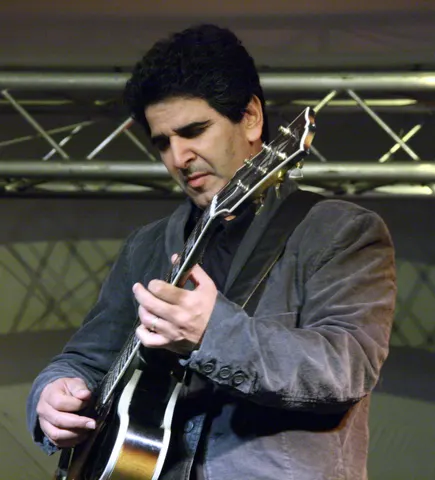
- Roni Ben-Hur - the guitarist backed Kellaway with Jay Leonhart at Birdland Theater on November 15 and 16, 2019, and appears on Live at Mezzrow (Cellar Music, 2024) billed as special guest, with Kellaway arranging two Ettore Stratta pieces, "Pages of Life" and "Good Morning Bahia," around him.
- Tom Scott - the saxophonist's first recorded work as a teenager was with Kellaway on Spirit Feel (1967); the two later played together on Great Scott!, Tom Scott in L.A. and both volumes of Echoes of Ellington.
- Gerry Mulligan - piano on three tracks of The Age of Steam (A&M, 1972), a date that also carries Bud Shank, Bob Brookmeyer, Chuck Domanico, John Guerin, Emil Richards and Tom Scott.
- Also recorded with: Kenny Burrell, Sonny Rollins, Stan Getz, Sonny Stitt, Herbie Mann, Art Pepper, Maynard Ferguson, Charlie Mariano, Mark Murphy, Zoot Sims, Harry "Sweets" Edison, J. J. Johnson, Kai Winding, Bobby Hackett, Jimmy Witherspoon, Helen Merrill, Blossom Dearie, Karin Krog, Diane Schuur, Rob McConnell, Jean-Yves Thibaudet, Stephane Grappelli, Yo-Yo Ma, George Harrison, Joni Mitchell, Van Morrison, Orrin Evans and Ben Powell.
- Roger Kellaway, official site
- Roger Kellaway on Discogs
- Roger Kellaway on Wikipedia
- Roger Kellaway on Bandcamp
- Roger Kellaway on Apple Music
- Roger Kellaway on MusicBrainz
Spotify's catalogue could not be searched while this profile was compiled, so no Spotify link is asserted anywhere in it.
- Wikipedia: Roger Kellaway (birth date and place, New England Conservatory, Cello Quartet formation, All in the Family theme, Academy Award nomination, Grammy, Van Morrison concerts, discography skeleton).
- Marc Myers, "Interview: Roger Kellaway," JazzWax, November 1, 2019, read in full through the Internet Archive (Waban, the piano and bass years, Frederick Fennell and the All-State Orchestra, Dick Sudhalter, Dick Wetmore and Sam Parkins, Jimmy Giuffre's offer, the Mark Murphy and Ben Webster sessions, the Bumpin' rehearsals, the Alfie solo, Jack E. Leonard and Stan Levey, the Doctor Dolittle commission, the origin and naming of the Cello Quartet, the full account of how "Remembering You" was written and placed, and his own five favourite albums).
- Roger Kellaway, Biography and Compositions (Newton High School, the move to Los Angeles, the Balanchine and orchestral commissions, the film list with directors and years, the Carnegie Hall and Grappelli music directorships, the French Jazz Academy prizes, the McCartney premiere in Buenos Aires).
- Discogs API, artist 296954. Every release described here was fetched at the individual release level and its credit block read directly rather than characterised from the coarser per-artist list.
- MusicBrainz, artist 0b4a1b81-a926-4c0f-9da1-12a1207a5640 (identity cross-reference, birth date, Newton as the begin area).
- iTunes Lookup and Search API (Apple Music release dates and billing for Live at Mezzrow, the Maybeck volume, Heroes, Soaring, Ain't Misbehavin', Inside & Out, Say That Again, Stride!, New Jazz Standards Vol. 3 and others).
- Lydia Liebman Promotions, Live At Mezzrow release announcement, March 7, 2024 and the album's Bandcamp page (personnel, the Living Masters award, the recording date, the two Ettore Stratta arrangements written around the guest guitar).
- New York City Ballet, PAMTGG (premiere date and the Applebaum and Woloshin source material).
- Library of Congress item 2021688615, "Concert: Eddie Daniels, Roger Kellaway & the American Songbook," Coolidge Auditorium, February 25, 2011, read through the Internet Archive (the source and context of the portrait photograph).
- AllMusic and All About Jazz refuse automated fetches and contributed nothing to this profile.