 JAZZPROFILES lives in the music 2,059 Jazz Artists fully Profiled!
Son Soo-gil
Last updated October 27, 2026
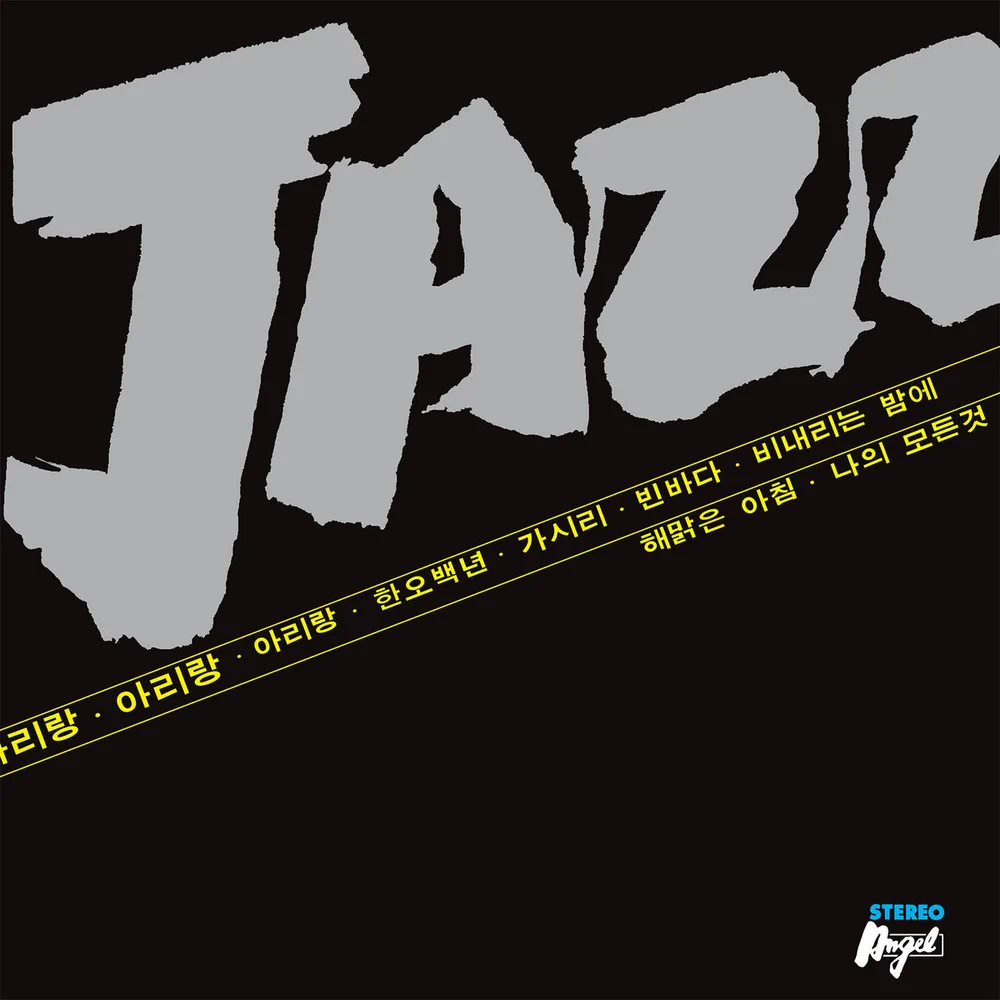
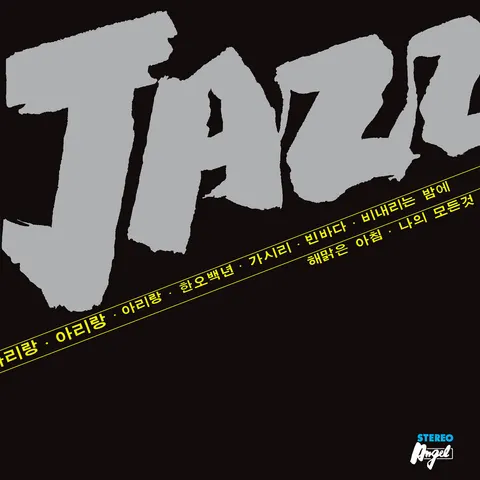
Cover of Plays Arirang & Other Assorted Classics by Lee Pan-geun & The Korean Jazz Quintet '78 (Cobra Rose Records, 2013 reissue of the 1979 Dai Han LP), the album on which Son Soo-gil plays piano and one of the albums recommended in this profile. Album artwork, shown for identification; it is not a photograph of the artist and is not Creative Commons. Standard copyright, all rights reserved (Bandcamp page notice: 1979, 2013 Eom Jin Estate; 2013 Beatball Music Group; Cobra Rose Records is a division of Beatball Music Group). This is not a Creative Commons or public-domain image; it is an album cover shown as an honestly disclosed editorial identification image. — https://leepangeunkoreajazzquintet.bandcamp.com/album/plays-arirang-and-other-assorted-classics-aka-jazz-jazz-wondrous-jazz-jazz (cover art, bcbits image a1990724880)
Son Soo-gil (손수길) is a Korean pianist who played jazz in Seoul in the 1970s and is known today for one record: the quintet LP that Lee Pan-geun arranged for the producer Eom Jin (엄진), recorded in 1978 at a studio in Majang-dong, Seoul, and issued in February 1979. Discogs files him as Son Soo Gil (artist 4846732, with the Hangul variation 손수길) and, on the 2018 anniversary edition, as Sohn Soo-Kil, a separate entry (6878157). The 2013 reissue credits print Son Soo-kil, while the liner essay on the same release, and the Korean press write Son Soo-gil, the form used here.
Almost everything printed about him dates from the weeks around that reissue in October 2013. Tenasia, which covered it on October 25, 2013, wrote that he was little known even within Korean jazz but played superbly on the record, that he had been called a genius while still very young, and that through the 1970s he worked in the band of a saxophonist named Lee Jeong-sik (이정식). When Lee died, the article says, Son stepped away from jazz and joined the KBS orchestra, where he kept working as a musician. The liner essay of the reissue, signed by the DJ and critic Park Min-jun, agrees on the outline: it calls him a jazz prodigy who is better known as a regular member of the KBS orchestra, and says his way of playing jazz would have stayed a matter of oral tradition without this record. The two accounts are the only ones found, and neither gives dates for his years in the band or at the orchestra.
The bandleader is a different man from the living saxophonist Lee Jung-sik, born in 1961: the Hankook Ilbo, in its 2010 profile of Lee Pan-geun, calls the 1970s bandleader the late 이정식 and says that Lee Pan-geun played bass and wrote arrangements in his band. If it is the same bandleader, Lee and Son came to the 1978 session from the same bandstand, though neither article says so in as many words.
The record itself came from the pop side of the industry. Eom Jin, a producer who in the 1970s had made hits for Han Dae-soo, Yoon Bok-hee and other pop singers, asked Lee to put together an ensemble for a jazz record, and Lee chose the repertoire of Korean folk songs, pop songs and standards, with two of Eom's own songs among them. Lee gathered Kang Dae-gwan on trumpet, Kim Soo-yeol on tenor saxophone, Son on piano, Lee Soo-young (이수영) on bass and Choi Se-jin on drums, and the 2013 credits add Ryu Bok-sung on bongo. Discogs lists the 2018 edition with Ryu on percussion and Son under the spelling Sohn Soo-Kil. Seven tracks were cut, among them a ten-minute "Arirang", "Gasiri", "Han-o-baek-nyun" and a jazz setting of "My Favorite Things". The LP appeared as 재즈로 들어본 우리 가요 민요 팝송 (Dai Han AG-0003, with a cassette as AG-111) at a time when, Tenasia says, public awareness of jazz was weak, and it faded from memory. The critic Hwang Deok-ho passed a copy to Lee Bong-soo of Beatball Music around 2010, and Beatball reissued it in October 2013 as Lee Pan-geun & Korean Jazz Quintet '78, a name the unnamed band had never had; vinyl editions followed in 2015 and 2018.
What the people who made the record said about Son's part is the main evidence of what kind of player he was. Lee told GQ Korea in October 2013 that he made the record largely out of his expectations for Kim Soo-yeol and Son. He singled out the opening of "My Favorite Things", where the piano has to split the half beat or the phrase turns classical, and said Son played it exactly right, and he said Son played "Bin Ba-da" tremendously, with a melody that did not follow the chord changes and a very good touch. Lee recalled that Son was probably nineteen at the time and that the band called him McCoy Tyner; that is a memory from thirty-five years later, not a record, and no source gives a birth year. The reissue essay quotes Lee calling Son a genuine genius in an interview and hears unpredictable piano playing on the opening "Arirang".
Beyond the studio, the Hankook Ilbo's 2010 profile names the pianist Son Soo-gil among the players of Lee's monthly concerts at the Seoul jazz club Janus, which opened in 1978, beside Kang Dae-gwan, Choi Se-jin, the guitarist Cho Jeong-su (조정수), Kim Soo-yeol, the drummer Yu Yeong-su (유영수) and the singer Park Seong-yeon. The paper does not say how long he stayed. When Lee Bong-soo prepared the reissue he met Lee, Kim and Son in person to piece together how the session had gone, and he told Tenasia that Son, who had left the jazz world, still hoped to put out a jazz album of his own. No such album has been found.
Discogs files one more credit under the same entry: piano on four tracks of Kim Min-ki's debut LP 김민기 (Taedo EU 716, October 21, 1971), a folk record on which Jung Sung-jo arranged and played flute and saxophone. Only Discogs ties that credit to the pianist of 1978, and since Lee remembered the 1978 pianist as about nineteen, the player of 1971 would have been a child, so the link is unconfirmed.
What is not known is most of a life. No source gives his birth date or birthplace, his teachers, the years he spent in Lee Jeong-sik's band or at the KBS orchestra, or whether he is still living; the latest account, from 2013, has the reissue's producer meeting him in person. He has no recording under his own name, and no photograph of him has been found.
Only one record survives, so this section rests on what critics and Lee Pan-geun said about it. The critic Hwang Deok-ho, quoted by Tenasia, hears the modal jazz of John Coltrane's 1960s and the jazz-rock of Miles Davis's 1970s mixed unevenly, with Korean folk music running through both and the sound of the psychedelic pop recording of the day. The reissue essay hears the opening "Arirang" as a spiritual intro leading into jazz-funk drum breaks and a driving electric bass line, and compares it to labels such as Black Jazz and Strata East. Son's piano is the unpredictable element in that picture.
Lee's own praise concerns touch and rhythmic placement: splitting the half beat at the start of "My Favorite Things", and a melodic line that floats over changing chords in "Bin Ba-da". The McCoy Tyner nickname his bandmates gave him is the only named influence, and it is a nickname, not a statement of what he studied. Nothing else about his training or models has been published.
- Lee Pan-geun & The Korean Jazz Quintet '78, Plays Arirang & Other Assorted Classics (Dai Han AG-0003, 1979; recorded 1978; reissued 2013, 2015 and 2018) - the only jazz record that credits him, seven tracks with Son on piano. Bandcamp - Plays Arirang And Other Assorted Classics · YouTube - full album Listen
- "Arirang" (10:19) - the opener, where the reissue essay hears his unpredictable piano. YouTube - Arirang Listen
- "Bin Ba-da" (5:41) and "My Favorite Things" (8:45) - the two tracks Lee singled out for his playing; both are on the same album. YouTube - full album Listen
- Kim Min-ki, 김민기 (Taedo EU 716, 1971) - folk debut album on which Discogs credits Son Soo Gil with piano on four tracks; the credit is unconfirmed as the same player. YouTube - 종이연 (1971 first press) Listen
Son Soo-gil (손수길) - Full Discography
Korean pianist, active in Seoul from the 1970s; later a member of the KBS orchestra. Birth date and place not published. Discogs files him as Son Soo Gil (artist 4846732, Hangul variation 손수길), with a second entry, Sohn Soo-Kil (artist 6878157), on the 2018 anniversary edition of his one jazz record.
Name variations on record: Son Soo Gil (Discogs), Sohn Soo-Kil (Discogs, 2018 edition), Son Soo-kil (2013 Bandcamp credits), Son Soo-gil (2013 liner essay), 손수길 (Korean press and Discogs).
Releases under his own name: none found. He is credited as sideman on one jazz record, in several editions, and on one folk record whose credit is unconfirmed.
The 1978 quintet session
| Year | Release | Billed artist | Label and catalogue | Role and personnel | Notes | Listen | Buy |
|---|---|---|---|---|---|---|---|
| 1979 (recorded 1978) | 재즈로 들어본 우리 가요 민요 팝송 (reissued as Plays Arirang & Other Assorted Classics) | 이판근과 코리안 째즈 퀸텟 '78 (Lee Pan-geun & The Korean Jazz Quintet '78) | Dai Han (Angel Production), AG-0003 (LP), AG-111 (cassette) | Son Soo Gil (piano), Lee Pan-geun (arranger, producer), Kang Dae-gwan (trumpet), Kim Soo-yeol (tenor and soprano saxophones), Choi Se-jin (drums), 이수영 Lee Soo-young (bass guitar), Ryu Bok-sung (bongo, percussion; credited in the 2013 liner credits and on the 2018 edition), Eom Jin (executive producer, designer, composer of "Bin Ba-da" and "Gasiri") | Released February 27, 1979 per Discogs; recorded at Majang-dong Studio, Seoul, in 1978. Seven tracks, with durations from the Bandcamp listing: "Arirang" (10:19), "Bin Ba-da" (5:41), "Bi Nae-ri-neun Bam-e", i.e. "Rainy Night in Georgia" (5:03), "Hae Mal-geun A-chim", i.e. "Softly, as in a Morning Sunrise" (2:55), "Gasiri" (6:43), "Han-o-baek-nyun" (7:01), "Na-ee Mo-den-geot", i.e. "My Favorite Things" (8:45). Discogs master 940759; main release 7945983. | Full album on YouTube · "Arirang" on YouTube | not found |
Editions of the 1978 session
| Year | Edition | Label and catalogue number | Format | Notes | Listen | Buy |
|---|---|---|---|---|---|---|
| 1979 | Original LP | Dai Han, AG-0003 | LP, stereo | Discogs release 7945983; the note on the release says it was actually recorded in 1978. Credits Son Soo Gil on piano. | not found | not found |
| 1979 | Original cassette | Dai Han, AG-111 | Cassette | Discogs release 27599958; only Eom Jin is credited. | not found | not found |
| 2013 | Cobra Rose reissue, remastered | Cobrarose Records, CR69023 | CD in LP miniature sleeve | Released October 25, 2013 per Discogs (Bandcamp gives October 24). Remastered by Masao Maruyama; liner notes by Hwang Deok-ho and DJ Soulscape; reissue produced by Lee Bong-soo. Credits Son Soo Gil on piano. Discogs release 17387890. | Bandcamp | Bandcamp |
| 2013 | Japanese edition, Lee Pan-Geun & Jazz Quintet '78 Jazz Arirang | Production Dessinée PDCD-126; Vivid Sound VSCD-9457 | CD, paper sleeve | Released November 13, 2013. Discogs release 7954167; no personnel listed. | not found | not found |
| 2015 | Yellow vinyl | Cobrarose Records, CR69024 | LP | Released February 1, 2015. Credits Son Soo Gil on piano. Discogs release 7576328. A Japanese pressing (Beatball CR 60024, Discogs release 9293020) followed. | not found | Amazon |
| 2018 | Black vinyl | Cobrarose Records, CR69024 | LP | Discogs release 12934972. | not found | Amazon |
| 2018 | 40th anniversary edition | Beatball CR69024-RE; Cobrarose Records CR 69024RE | Gatefold LP with 12-page booklet, transparent blue vinyl | Released November 19, 2018. New artwork by Jaime Zuverza. This edition credits the pianist as Sohn Soo-Kil (Discogs artist 6878157) and Ryu Bok-sung on percussion. Discogs release 12958294. | Full album on YouTube | Amazon |
Other credit on Discogs (unconfirmed as the same player)
| Year | Release | Billed artist | Label and catalogue | Role and personnel | Notes | Listen | Buy |
|---|---|---|---|---|---|---|---|
| 1971 | 김민기 (Kim Min-ki's debut album) | 김민기 (Kim Min-ki) | Taedo, EU 716 (LP, mono) | Son Soo Gil (piano) on "아하 누가 그렇게...", "바람과 나", "길" and "종이연", with 조원익 (bass guitar), Young-Soo Yoo (drums) and Jung Sung-jo (flute, saxophone, arranger) | Released October 21, 1971. A folk record, listed on Discogs under the same artist entry as the 1978 pianist. Lee Pan-geun recalled the 1978 pianist as about nineteen, which would make the 1971 player a child, and no other source ties the two, so the match is unconfirmed. Discogs release 17940178 (master 1432819). | "종이연" on YouTube | not found |
Sources
- Discogs: Son Soo Gil, artist 4846732
- Discogs: Sohn Soo-Kil, artist 6878157
- Discogs: master 940759, 재즈로 들어본 우리 가요 민요 팝송
- Discogs: Dai Han AG-0003 (1979), release 7945983
- Discogs: Cobrarose CR69023 (2013), release 17387890
- Discogs: Plays Arirang & Other Assorted Classics, 2018 edition, release 12958294
- Discogs: 김민기 (Taedo EU 716, 1971), release 17940178
- Bandcamp: Plays Arirang And Other Assorted Classics, credits and liner essay
- Tenasia: 1978 quintet reissue (October 25, 2013)
- GQ Korea: interview with Lee Pan-geun (October 25, 2013)
- Lee Pan-geun (이판근) - arranger and producer of the 1978 session, who praised Son's playing to GQ Korea. The Hankook Ilbo says he played bass and wrote arrangements in the band of the late Lee Jeong-sik, in whose band Tenasia says Son also played.
- Kang Dae-gwan (강대관) - trumpeter on the 1978 session.
- Kim Soo-yeol (김수열) - tenor saxophonist on the 1978 session; Lee said he built the record largely around his expectations for Kim and Son.
- Choi Se-jin (최세진) - drummer on the 1978 session.
- Ryu Bok-sung (류복성) - credited on bongo in the 2013 liner credits and on percussion on the 2018 Discogs edition, which also lists Son as Sohn Soo-Kil.
- Lee Soo-young (이수영) - bassist on the 1978 session.
- Eom Jin (엄진) - producer and designer of the 1978 album and composer of "Bin Ba-da" and "Gasiri".
- Jung Sung-jo (정성조) - flutist, saxophonist and arranger on the 1971 Kim Min-ki LP on which Discogs credits Son Soo Gil with piano.
- Lee Jeong-sik (이정식) - saxophonist and bandleader of the 1970s, now deceased, in whose band Son played according to Tenasia; not the living saxophonist Lee Jung-sik.
More Modal Jazz Artists
See all 74 Modal Jazz artists →More South Korean Jazz Artists
See all 197 South Korean artists →- Discogs: Son Soo Gil
- Discogs: Sohn Soo-Kil
- Discogs: 재즈로 들어본 우리 가요 민요 팝송, master 940759
- Lee Pan-geun and The Korean Jazz Quintet '78 on Bandcamp
- YouTube: Plays Arirang & Other Classics, full album
- Tenasia: 1978 quintet reissue (October 25, 2013)
- GQ Korea: interview with Lee Pan-geun (October 25, 2013)
- Son Soo-gil on JazzProfiles.com
- Tenasia: 10초점, 전설의 코리안 째즈, 35년 만에 다시 빛을 보다 (October 25, 2013)
- GQ Korea: 돌아보면 언제나 네가 있었다, interview with Lee Pan-geun (October 25, 2013)
- Hankook Ilbo: [사람과 희망] 한국 재즈의 대부 이판근씨 (October 28, 2010)
- Bandcamp: Plays Arirang And Other Assorted Classics, credits and liner essay
- Maeil Shinmun: 우리 가락은 어떻게 그루브를 얻었나 (June 2026)
- Discogs: Son Soo Gil, artist 4846732
- Discogs: Sohn Soo-Kil, artist 6878157
- Discogs: master 940759
- Discogs: Dai Han AG-0003 (1979), release 7945983
- Discogs: Cobrarose CR69023 (2013), release 17387890
- Discogs: Plays Arirang & Other Assorted Classics, 2018 edition, release 12958294
- Discogs: 김민기 (Taedo EU 716, 1971), release 17940178