 JAZZPROFILES lives in the music 1,773 Jazz Artists fully Profiled!
Choi Se-jin
Last updated October 24, 2026
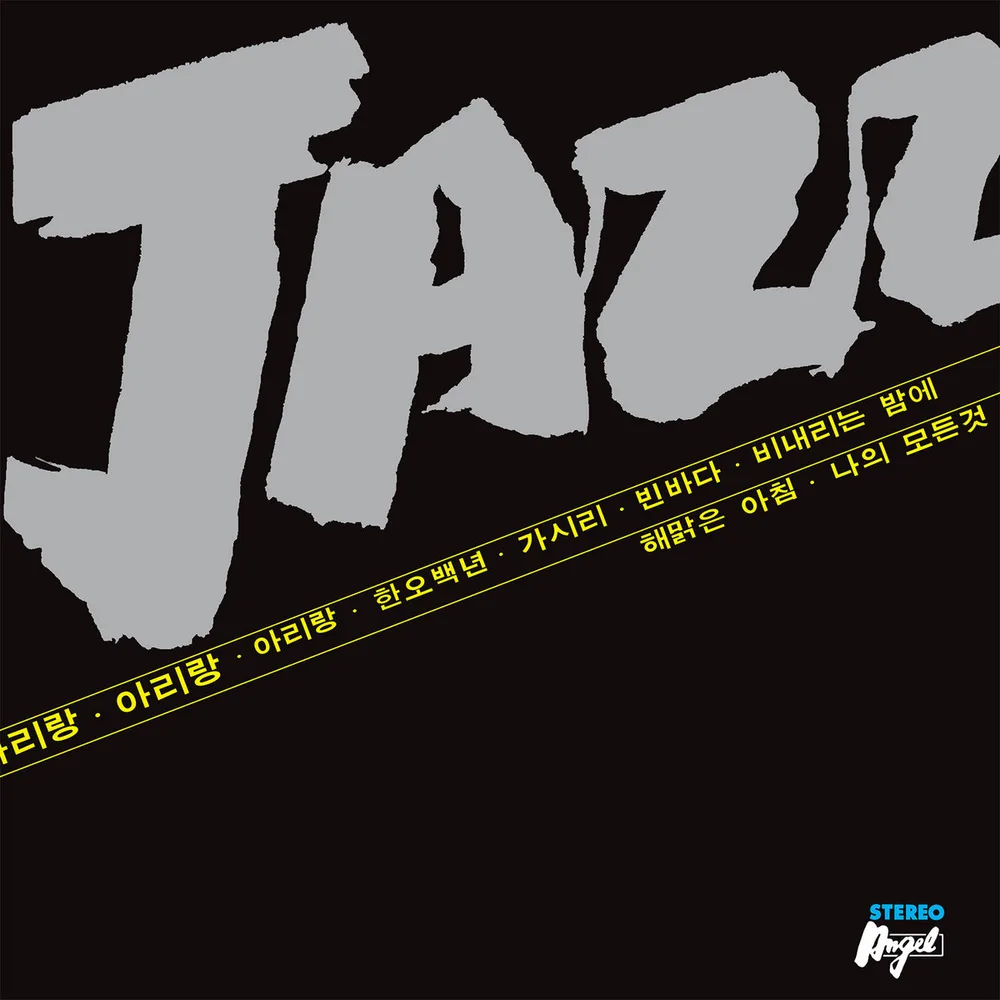
Cover of Plays Arirang & Other Assorted Classics by Lee Pan-geun & The Korean Jazz Quintet '78 (Cobra Rose Records, 2013 reissue of the 1979 Angel LP), the album on which Choi Se-jin plays drums and one of the albums recommended below. Album artwork, shown for identification; it is not a photograph of the artist and is not Creative Commons. Standard copyright, all rights reserved (Bandcamp page notice: 1979, 2013 Eom Jin Estate; 2013 Beatball Music Group; Cobra Rose Records is a division of Beatball Music Group). This is not a Creative Commons or public-domain image; it is an album cover shown as an honestly disclosed editorial identification image. — https://leepangeunkoreajazzquintet.bandcamp.com/album/plays-arirang-and-other-assorted-classics-aka-jazz-jazz-wondrous-jazz-jazz (cover art, bcbits image a1990724880)
Choi Se-jin (최세진) was a South Korean jazz drummer, counted among the first generation of Korean jazz musicians, who passed away in 2008. MusicBrainz lists his birth as September 5, 1931, in North Chungcheong Province. Korean newspapers fit that year: a 1999 article gave his age as 69 and a 2000 article reported his 70th birthday, in the traditional Korean way of counting. He should not be confused with the Joseon-era scholar of the same name, born in 1468.
Most of what is written about him comes from two newspaper profiles. In September 2000 the Seoul Shinmun reported that he had spent 53 years in jazz and had never regretted choosing it. According to that article he started in 1947, while still a teenager, drumming on tin cans in an alley in Insa-dong, Seoul, where the singer Kim Jeong-gu noticed him and took him into a song troupe called Taepyeongyang Gagokdan (태평양가곡단). That was the beginning of his life as a drummer. The article also says he helped found the Korea Jazz Association with Gil Ok-yoon and Jeong Seong-jo, and that he put on jazz concerts at the Gonggan Sarang (공간사랑) arts venue with the late architect Kim Swoo-geun (김수근). It gives no dates for either.
The same profile says that when disco pushed jazz off Korean stages in the 1980s he moved to Hong Kong and stayed for 16 years, a stretch the article calls painful for him but valuable for the international connections it brought. It does not say when he came back. He also taught in the Practical Music Department of Dongduk Women's University.
The record that carries his name into jazz history was made in 1978. Lee Pan-geun (이판근), now revered as the "godfather of Korean jazz", gathered a quintet at a studio in Majang-dong, Seoul: Kang Dae-gwan (강대관) on trumpet, Kim Soo-yeol (김수열) on saxophone, Son Soo-gil (손수길) on piano, Lee Soo-young (이수영) on bass and Choi on drums, with Ryu Bok-sung (류복성) credited on percussion on the later reissues. Tenasia describes these players as men who had spent some twenty years on U.S. Eighth Army stages and in clubs after the customers had left, and who were now recording jazz for the first time. The producer was Um Jin (엄진), a pop-record planner of the 1970s who asked only that Lee play two of his own songs, "Bin Ba-da" and "Gasiri", as jazz; the lineup, repertoire and arrangements were left to Lee. The album came out in February 1979 on the Dai Han label under the title 재즈로 들어본 우리 가요 민요 팝송 ("Korean pop songs, folk songs and popular songs heard through jazz"). It sets Korean folk songs such as "Arirang", "Gasiri" and "Han-o-baek-nyun" beside jazz readings of "Rainy Night in Georgia", "Softly, as in a Morning Sunrise" and "My Favorite Things". The band was never given a name on the original release.
The album then disappeared. Tenasia reported in 2013 that the critic Hwang Deok-ho first heard of it from Choi himself, whom he met at a radio station in 1999: Choi insisted that it was probably the first Korean modern jazz album. Hwang asked around and could not find a copy; even the musicians who played on it did not own one. A cassette turned up in the office of the magazine MM Jazz, and Hwang, stunned by the playing, passed it around 2010 to Lee Bong-soo of Beatball Music, who traced the producer's family (Um Jin had died in 1988, and the master tapes were gone) and took the sound from surviving LPs. The result was issued in October 2013 as Lee Pan-geun & Korean Jazz Quintet '78, a name given to the otherwise nameless band. Hwang called it the first recording of modern jazz, meaning bebop and what followed, by Korean players, and said the album mixes Coltrane-style modal playing and Miles Davis-style jazz-rock with the taste of Korean folk music. Choi had passed away five years earlier. A vinyl edition followed in 2015 and a 40th anniversary edition in 2018, and in 2026 a Maeil Shinmun article still named him among the pioneering players on it.
Discogs also credits him, as Choi Se Jin, on two tracks of the 1992 live album from the first Korea Jazz Festival (대한민국재즈페스티발 1, Doremi Records), "Spiritual" and "Caravan", billed with the saxophonist Kim Soo-yeol and two other musicians whose names appear there only in Hangul, 이영경 and 장응규.
By 1999 he was playing at Once in a Blue Moon, a live club in Cheongdam-dong that opened on April 1, 1998. The Seoul Shinmun wrote in April 1999 that the Choi Se-jin Quartet was one of the club's most popular acts, that the 69 year old (by Korean count) was strikingly energetic, and that on nights he played the room, which seats 140, was packed and regulars phoned ahead to check the schedule. His 70th birthday concert, "Choi Se-jin and Korean All Stars 2000", took place at LG Arts Center on September 5, 2000, at 8 p.m., with about 80 musicians on the bill. The concert was first planned for a small club until Im Jae-hong, the owner of Once in a Blue Moon, booked LG Arts Center instead. Among those scheduled were first-generation figures such as Kim Soo-yeol, Choi Sun-bae, Jeong Seong-jo, Shin Kwan-woong and Ryu Bok-sung, and younger players including his students Yang Jun-ho, Woongsan and Kim Hyun-jung. The article describes him practicing four to five hours a day and quotes him saying that you grow old the moment you step off the stage. He urged younger musicians to study hard, aim to matter internationally and stay together in a band for at least two or three years. In April 2004, at 72, he was still playing the club, at its sixth anniversary event with Hong Duck-pyo, Lee Dong-ki, Kim Jun, Park Sung-yeon, Kim Soo-yeol, Choi Sun-bae and Shin Kwan-woong, according to the Korea JoongAng Daily.
His only documented record as a leader is Back To The Future (Rudy Jazz, 2007), a 15 track CD of standards such as "Bemsha Swing", "Social Call", "Now's the Time", "Speak Low" and "I'm Beginning to See the Light", with a medley of two Korean songs, "여수" and "오빠생각", and a video bonus of "Sing Sing Sing". One track is subtitled in Korean "Battle of the master and the pupil". The personnel are not listed in any source found. In October 2006 he visited the drum school Doctor Drum and met its students, and the school later posted video of that visit, of his instruments and of his "Sing Sing Sing" performance and interview from the album.
He passed away in 2008. Tenasia stated this plainly in 2013, a 2021 Newstomato article names him among the Korean jazz pioneers who have since died, and MusicBrainz gives the date as July 4, 2008. In August 2018 Doctor Drum posted videos from a tribute concert held ten years after his death.
No interview in which he names his influences was found, so this section sticks to what his records and the press describe.
He is a mainstream, swing-rooted drummer by repertoire: the 2007 album is built from standards that run "Bemsha Swing" and "Now's the Time" to the big-band showpiece "Sing Sing Sing", with Korean songs placed beside them. The Seoul Shinmun presents him as a veteran who led a working quartet and taught younger players, and the 2000 article quotes his advice to them about keeping a band together.
The 1978 session shows another side. Discogs files that album under Free Jazz, Post Bop, Jazz-Funk and Modal, and the label's own description says its "Arirang" moves from a spiritual introduction into jazz-funk. Choi is the drummer in a quintet playing Korean folk melodies in that idiom, on what the critic Hwang Deok-ho calls the first recording of modern jazz by Korean musicians.
- Lee Pan-geun & The Korean Jazz Quintet '78, Plays Arirang & Other Assorted Classics (1979, Dai Han AG-0003; reissued 2013 and 2018) - the 1978 quintet session with Kang Dae-gwan, Kim Soo-yeol, Son Soo-gil and Lee Soo-young, Choi on drums. Bandcamp - Plays Arirang And Other Assorted Classics · YouTube - full album Listen
- Lee Pan-geun & The Korean Jazz Quintet '78, "Arirang" - the ten minute opener. YouTube - Arirang Listen
- Choi Se-jin, Back To The Future (2007, Rudy Jazz RDJCD-0702) - his own CD of standards and Korean songs. YouTube - Sing Sing Sing, from the album's video track Listen
- Various artists, 대한민국재즈페스티발 1 실황음반 (1992, Doremi Records DRM-1092) - live recording of the first Korea Jazz Festival, with Choi on "Spiritual" and "Caravan".
Choi Se-jin (최세진) - Full Discography
South Korean jazz drummer, born 1931, passed away 2008. Discogs files his credits under two artist pages, Choi Se-Jin (6878159) and Choi Se Jin (4846733); both carry the Hangul name variation 최세진, and both are covered below.
Name variations on record: Choi Se-Jin, Choi Se Jin, 최세진.
Leader
| Album | Year | Label | Personnel | Notes | Listen | Buy |
|---|---|---|---|---|---|---|
| Back To The Future (billed as 최세진) | 2007 | Rudy Jazz, RDJCD-0702 | Choi Se-jin (drums); other musicians are not listed in the sources found | CD, South Korea. Fifteen tracks: "Bemsha Swing", "Four Brothers" (printed on the release as "Four Borther"), "Social Call", "The Lonely One", "Now's the Time (스승과 제자의 Battle)", "I'm Beginning to See the Light", "Futurity", "La Golondrina", "Breezing Along", "I Love You for Sentimental Reasons", "Somewhere My Love", "Speak Low", "Peanut Vendor", a medley of "여수" and "오빠생각", and "Sing Sing Sing" as a video special track. Discogs release 25856506. | "Sing Sing Sing" video, on YouTube | Amazon |
Sideman and guest appearances
Chronological. Discogs lists three entries under the two artist pages; editions of the same album are folded into one row.
| Year | Release | Actual leader | Label | Choi's credit and details | Listen | Buy |
|---|---|---|---|---|---|---|
| 1979 | 재즈로 들어본 우리 가요 민요 팝송 (also issued as Jazz: Plays Arirang & Other Assorted Classics, aka Jazz! Jazz! & Wondrous Jazz!) | Lee Pan-geun (이판근), billed as 이판근과 코리안 째즈 퀸텟 '78 | Dai Han, AG-0003 (LP); AG-111 (cassette) | Drums. Recorded in 1978 at a studio in Majang-dong, Seoul; released 27 February 1979 per Discogs. Personnel: Lee Pan-geun (arranger), Kang Dae-gwan (trumpet), Kim Soo-yeol (tenor saxophone), Son Soo-gil (piano), Lee Soo-young (bass), Choi Se-jin (drums); Ryu Bok-sung (percussion) is credited on the later reissues. Produced by Um Jin (엄진), who is also credited as composer of "Bin Ba-da" and "Gasiri". Seven tracks: "Arirang", "Bin Ba-da", "Rainy Night in Georgia", "Softly, as in a Morning Sunrise", "Gasiri", "Han-o-baek-nyun", "My Favorite Things". Reissued as Lee Pan-geun & The Korean Jazz Quintet '78: CD on Cobrarose Records CR69023 (October 2013), Japanese CD on Production Dessinée PDCD-126 and Vivid Sound VSCD-9457 (13 November 2013), LP on Cobrarose CR69024 (2015) and a 40th anniversary LP on Beatball CR69024-RE (2018, with a 12 page English booklet). Liner notes by DJ Soulscape and Hwang Duk Ho. Discogs master 940759; releases 7945983, 27599958, 17387890, 7954167, 7576328 and 12958294. | Full album on YouTube · Bandcamp | Amazon |
| 1992 | 대한민국재즈페스티발 1 실황음반 | Various artists | Doremi Records, DRM-1092 (LP) | Credited as Choi Se Jin on A3 "Spiritual" (9:13) and B3 "Caravan" (12:00), both billed to Kim Soo Yeol, 이영경, 장응규 and Choi Se Jin. Live recording; the other tracks are billed to other musicians. Discogs release 22964660. | not found | Amazon |
Video
Not records, but documented performances: the drum school Doctor Drum posted a video of his October 2006 visit, a video of his instruments and a video of his "Sing Sing Sing" with an interview, taken from his 2007 album. In August 2018 it posted clips from a tribute concert held ten years after his death.
- Lee Pan-geun (이판근) - arranger and leader of the 1978 quintet session, released in 1979 and reissued under the name Lee Pan-geun & The Korean Jazz Quintet '78. Choi is credited on drums.
- Kim Soo-yeol (김수열) - saxophonist on the 1978 session and, billed with Choi, on "Spiritual" and "Caravan" from the 1992 festival album. They shared the stage again at Once in a Blue Moon in 2004 and on the bill of Choi's 70th birthday concert in 2000.
- Kang Dae-gwan (강대관) - trumpeter on the 1978 session.
- Son Soo-gil (손수길) - pianist on the 1978 session.
- Lee Soo-young (이수영) - bassist on the 1978 session.
- Ryu Bok-sung (류복성) - percussionist credited on the later reissues of the 1978 album and listed among the first generation players on the bill of the 2000 concert.
- Um Jin (엄진) - producer of the 1978 album, who is also credited as composer of "Bin Ba-da" and "Gasiri".
- Hwang Deok-ho (황덕호) - critic who wrote liner notes for the 2013 reissue and, by Tenasia's account, met Choi at a radio station in 1999.
- Gil Ok-yoon (길옥윤) and Jeong Seong-jo (정성조) - named by the Seoul Shinmun as his co-founders of the Korea Jazz Association.
- Kim Jeong-gu (김정구) - the singer who, by the Seoul Shinmun's account, discovered him in 1947.
- Choi Sun-bae (최선배), Shin Kwan-woong (신관웅), Hong Duck-pyo (홍덕표) and Lee Dong-ki (이동기) - fellow veterans on the bill of the 2000 and 2004 events at which he played.
- Yang Jun-ho (양준호), Woongsan (웅산) and Kim Hyun-jung (김현정) - younger musicians, described by the Seoul Shinmun as his students or juniors, who appeared at his 70th birthday concert.
More Mainstream Jazz Artists
See all 415 Mainstream Jazz artists →More South Korean Jazz Artists
See all 9 South Korean artists →- Discogs: Choi Se-Jin (artist 6878159)
- Discogs: Choi Se Jin (artist 4846733)
- MusicBrainz: 최세진
- Bandcamp: Lee Pan-geun & Korean Jazz Quintet '78, Plays Arirang And Other Assorted Classics
- YouTube: Doctor Drum, Choi Se-jin plays "Sing Sing Sing" and is interviewed
- Seoul Shinmun, September 4, 2000: profile ahead of his 70th birthday concert
- Tenasia, October 25, 2013: the 1978 album and its reissue
- Choi Se-jin on JazzProfiles.com
- Discogs: Choi Se-Jin, artist 6878159
- Discogs: Choi Se Jin, artist 4846733
- Discogs: 최세진, Back To The Future, Rudy Jazz RDJCD-0702
- Discogs: 이판근과 코리안 째즈 퀸텟 '78, 재즈로 들어본 우리 가요 민요 팝송, Dai Han AG-0003
- Discogs: Lee Pan Geun & The Korean Jazz Quintet '78, Plays Arirang & Other Assorted Classics, 2018 edition
- Discogs: 대한민국재즈페스티발 1 실황음반, Doremi Records DRM-1092
- MusicBrainz: 최세진, born 1931-09-05, died 2008-07-04
- Seoul Shinmun, September 4, 2000: 재즈 드러머 최세진 70th birthday concert
- Seoul Shinmun, April 30, 1999: 라이브클럽서 인생을 즐기세요
- Tenasia, October 25, 2013: 1978 recording of the first Korean modern jazz album
- Korea JoongAng Daily, April 2, 2004: Jazz masters to celebrate Blue Moon anniversary
- Newstomato, May 3, 2021: 웅산, 한국 정체성 담긴 재즈, 전 세계 알려야
- Maeil Shinmun, June 26, 2026: 재즈, 아리랑을 번역하다
- Doctor Drum on YouTube: Choi Se-jin visits the school, October 2006
- Doctor Drum on YouTube: Choi Se-jin's instruments
- Doctor Drum on YouTube: tribute concert marking ten years since his death, interview