 JAZZPROFILES lives in the music 1,765 Jazz Artists fully Profiled!
Teru Sakamoto
Last updated October 21, 2026
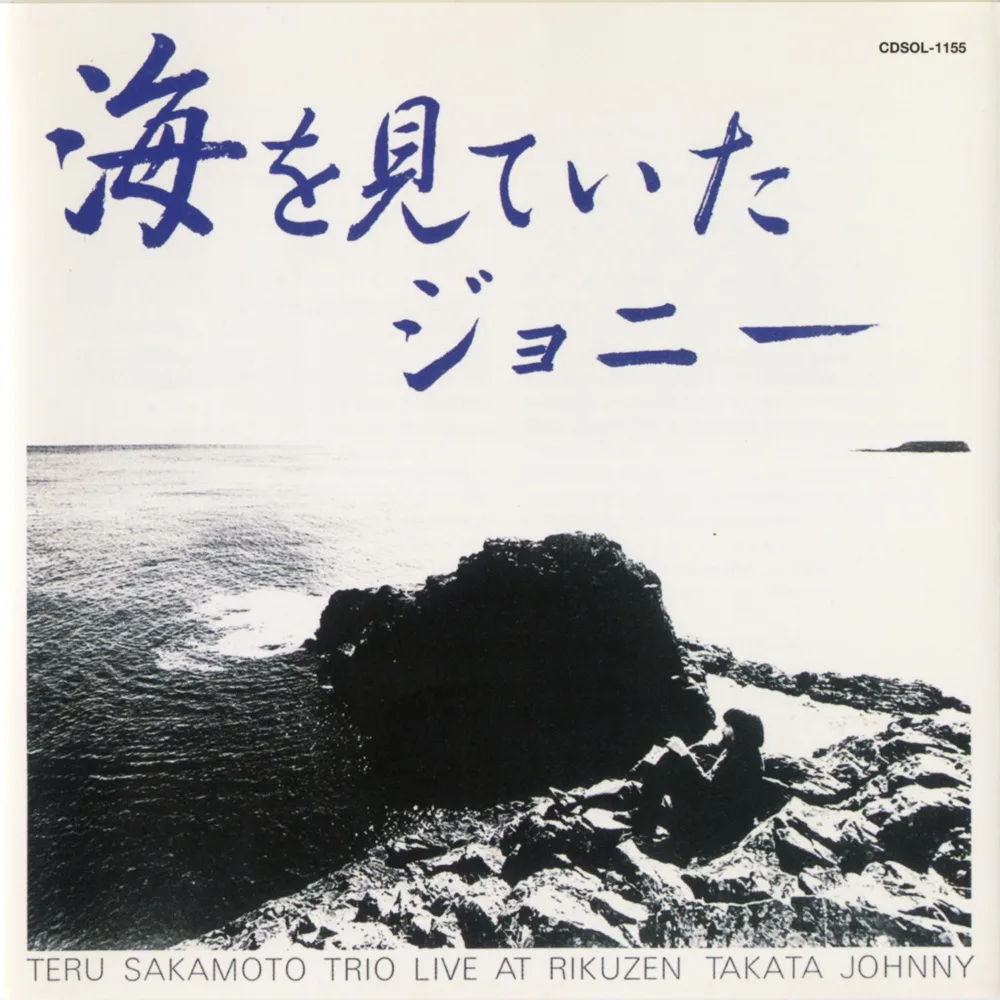
Cover of *海を見ていたジョニー* (*Farewell My Johnny / Left Alone*) by the Teru Sakamoto Trio, Johnny's Disk Record, 1980, as reissued on CD by Ultra Vybe (CDSOL-1155, 2007). Shown for identification; it is a photograph of a seashore, not of the artist. Standard copyright, all rights reserved, held by Johnny's Disk Record / Solid Records. This is not a Creative Commons or public-domain image, and it is not presented as one. It is an album cover shown as an honestly disclosed editorial identification image. — The front cover of 海を見ていたジョニー as served by Apple Music for the 2007 Ultra Vybe CD edition (iTunes collection 1493765414, https://music.apple.com/jp/album/%E6%B5%B7%E3%82%92%E8%A6%8B%E3%81%A6%E3%81%84%E3%81%9F%E3%82%B8%E3%83%A7%E3%83%8B%E3%83%BC/1493765414), downloaded at its 1000 x 1000 rendition and saved locally as portrait.jpg in this folder, not hotlinked. It was not taken from Discogs.
Teru Sakamoto (坂元輝, Sakamoto Teru) is a Tokyo jazz pianist and teacher whose records have appeared under two names. As the Teru Sakamoto Trio he made four instructional LPs for Victor in 1977 and 1978, a studio album in 1983, and a live album, Farewell My Johnny (海を見ていたジョニー), recorded in a small-town jazz café in 1980. As the Terry Herman Trio, a name Nippon Columbia gave his group, he made a long series of jazz piano albums of classical themes, film music, chanson, Beatles songs and Japanese pop between 1973 and 1996. Discogs gives his birth year as 1949 and his birthplace as Echizen, Fukui Prefecture; a full birth date has not been published. One point of spelling matters when searching for him: the second character of the family name is 元, not 本. He has written that retailers and even the back of the CD print 坂本 by mistake, and that 坂元 is correct. He is a different musician from Ryuichi Sakamoto.
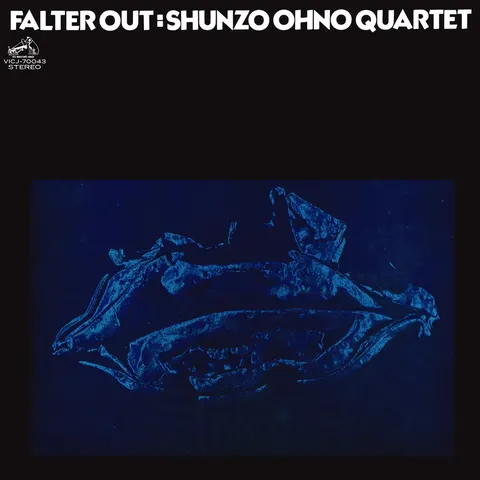
By his own account he decided in the third year of junior high school to become a musician, and in the second year of high school to become a jazz pianist, with no guarantee that anyone would ever listen. His own profile dates his professional start to age 21, in Sadao Watanabe's Rehearsal Orchestra, and his first work with his own piano trio in Tokyo live houses to age 22. The earliest credit that can be checked in print is a live record. On 21 July 1973 the fifth Nemu Jazz Inn live record was taped, and Yamaha issued it as a promotional LP marked not for sale. Discogs credits Sakamoto on piano on two tracks, "The Plunger" and "Carnaval," in an eighteen-player big band with Sadao Watanabe credited as performer, Kazumi Watanabe on guitar, Hiroshi Fukumura and Shigeharu Mukai among the trombones, Hidefumi Toki and Kohsuke Mine among the saxophonists, and Shunzo Ohno on trumpet. The credit does not name the Rehearsal Orchestra.
The record that started his second name came when he was 23. He has described the session as one booked for a car-stereo tape label, to be sold at petrol stations, where, he supposes, an unknown pianist just past twenty was hired because a small fee would do. The director liked the result and took the tape to Nippon Columbia, and, without his knowledge, the decision was made to release it under a foreign-sounding name. It came out in 1973 as Blue Aranjuez by the Terry Herman Trio (Columbia YZ-4-N, a gatefold LP): eight jazz readings of classical pieces, among them Rodrigo's Aranjuez concerto at 10:45, the Pathetique sonata, Rachmaninoff's Second Piano Concerto, Chopin's Fantaisie-Impromptu and an Etude, with Takao Neichi on bass and Takeshi Watanabe on drums. A second Columbia LP of classical themes, Blue Swan, followed in January 1975. He has written that Blue Swan never made it to CD, that he has no equipment to play the LP, and that he has hardly heard it since.
Teaching and playing ran together from the start. In 1977 and 1978 Victor issued Let's Play Jazz Piano Vols. 1 to 4 (SJX-2144 to SJX-2147) as part of its Jazz Master Series, credited to the Teru Sakamoto Trio, with Sakamoto on piano, arranging and writing the liner notes, and Masahiko Satoh credited with liner notes on all four. A Japanese dealer describes the third volume as an instructional record. Volumes 1 and 2 pair him with Tsuneo Shibata on bass and Kazunori Kondo on drums; Volume 3 uses Mitsuaki Furuno or Akira Kato on bass, Michael Kawai on drums and Kiyohiko Semba on percussion on two tracks; Volume 4 uses Furuno and Kawai. The repertoire mixes standards ("Autumn Leaves" in trio and solo versions, "Satin Doll," "Misty," "My Favorite Things," "So What") with Beyer piano-lesson pieces and the children's song "Teru-Teru Bozu," which appears on Volume 3 as "Teru-Teru Bozu (Black Keys)." That track was chosen in 2019 for BBE's J Jazz: Deep Modern Jazz From Japan 1969-1983 (Volume 2), which credits the group as the Teru Sakamoto Trio plus One and describes the cut as sparse, minimal acoustic funk. His own profile says a book of the same title, Let's Play Jazz Piano Vol. 1, appeared when he was 28, that by his count fourteen books for the publisher Ongaku no Tomo Sha followed, now out of print, and that two more came from Chuo Art Shuppan.
The record he is now best known for was made in the autumn of 1980. On 13 October 1980 the trio played live at Johnny, a jazz café in Rikuzentakata, Iwate Prefecture, named after a mid-1960s story by Hiroyuki Itsuki. With Neichi on bass and Watanabe on drums, they played four pieces: "Left Alone" (8:40), "My Favorite Things" (9:43), the children's song "Yuyake Koyake" (5:58) and "Autumn Leaves" (12:25). Sakamoto wrote that "Left Alone" recreated a scene from Itsuki's story in the café itself. It was released on the café's own Johnny's Disk Record (JD-05), produced by the café's master, Ken Terui (照井顕), with liner notes by Itsuki, Kan Mikami and Toshihiro Asakura. Sakamoto has written that the original LP was a privately made record that was never sold in ordinary shops. In 2007, 27 years after the recording, he learned from a student, who brought a newspaper clipping, that his trio had a CD out. On 10 August 2007 he found it on a Tower Records shelf in Shinjuku under a divider bearing his name, and a shop comment at Disk Union told him that collectors called the record "Kai-Joni" (海ジョニ). That CD was Ultra Vybe CDSOL-1155. A paper-sleeve HQCD edition limited to 1,000 copies followed in 2011, an LP reissue in 2017, a low-priced CD re-release in December 2018, and, by January 2026, an SACD hybrid edition in a paper sleeve, with a remastered edition on streaming services from 4 February 2026. The Japanese Communist Party newspaper Akahata ran the album in its "Kyo no Choryu" column on 10 July 2011, describing the playing as springy and carefully heartfelt, and noting that the March 2011 tsunami had swept the café away. Sakamoto adds that the bearded man photographed on the CD packaging is the café's master, not himself. Some retail copy places the café in Morioka; Discogs, Akahata and Sakamoto's own blog place the recording at Johnny in Rikuzentakata, which is the account followed here.
In parallel, the Terry Herman albums became a steady Nippon Columbia series, issued on the company's Denon label. Each took a single repertoire: classical themes (Blue Aranjuez, re-recorded 24 and 25 January 1980 and released that August, YX-7262-ND), film music (Blue Feeling, February 1981), standards (Blue Stardust, 1981), chanson (Blue Chanson d'Amour, recorded 22 and 29 September 1981), the Beatles (Blue Michelle, recorded 8 and 20 April 1982), Latin standards (Begin the Beguine, recorded 13 and 14 December 1982 and issued 21 March 1983), Japanese pop (Silhouette Romance, September 1983), songs of the new-music generation (Glass no Ringo, December 1984), a Seiko Matsuda songbook (Sweet Memories, recorded 8 to 12 March 1984), Stevie Wonder (Sunshine, October 1985) and Japanese children's songs (Nippon no Uta, December 1985). In 1986 came three albums credited to Terry Herman alone: Dandelion (songs by Yumi Matsutoya, also known as Yumi Arai), a Keisuke Kuwata songbook, and Sand Beige, a set of Japanese pop songs, among them pieces by Naoya Matsuoka ("Mi Amore") and Masayoshi Takanaka ("Ten Commandments (1984)"), played with electric guitar, electric bass, drums and synthesizer, with Sakamoto producing and playing piano. That year he also made The Man I Love with the vocalist Hatsumi Shibata (Columbia AF-7409, April 1986). Beyer Jazz followed on 21 February 1988, eleven reworkings of Beyer exercises that Sakamoto had been arranging for about a decade, and Wakaba no Koro (a Bee Gees album) on 21 June 1996. A two-disc summing-up, W Deluxe, appeared on 21 May 1987, and CD Journal's note on it described fourteen leader albums in fourteen years; Sakamoto's own profile counts nineteen albums after Blue Aranjuez. By 2014 fifteen of the titles were again available as on-demand CDs from Nippon Columbia, and many are now on Apple Music.
He kept teaching throughout. His professional profile says he taught at An Jazz School (アン・ジャズ・スクール) in Tokyo and Kyoto and also privately, and he describes about sixty years of jazz-piano teaching. He now runs Teru-sensei's Jazz Piano Classroom in Takadanobaba, Shinjuku, with individual lessons in jazz piano (centred on improvisation), harmony and jazz theory, composition and arrangement, analysis of solos and of classical piano works, jazz vocals and, more recently, online lessons, plus a Kyoto classroom under the name Dream Music Academy. His blog was still being updated in January 2026, when he wrote about the reissue of the 1980 live album, and the blog's categories include extended analysis series on Bill Evans, Gershwin, Kapustin and Hiromi Uehara.
Two ideas run through Sakamoto's recorded work: jazz as a way of reworking material that is not jazz, and the long live performance as the place where he stretches out. The Terry Herman series is built on the first. Each album chooses a repertoire outside the usual standards (a Rachmaninoff concerto, a Rodrigo concerto, Stevie Wonder, Seiko Matsuda, Japanese lullabies) and plays it as a piano trio, with rhythm sections that changed over the years: Neichi and Watanabe first, Kazuyo Yamaguchi and Takahiro Suzuki from 1982, Furuno and Ozu in 1985. Sakamoto has noted that those studio albums, with about ten tracks each, forced a limit of roughly five minutes per piece, while the live album had none. The tracks on Farewell My Johnny run from nearly six to twelve and a half minutes. Sakamoto himself describes the "Left Alone" performance as jazz played with the heart of enka, which he says jazz normally forbids.
Discogs tags the catalogue with Post Bop for the 1973 Blue Aranjuez, Modal for the 1980 live album, Latin Jazz for Begin the Beguine, and Cool Jazz and Smooth Jazz for the chanson and Seiko Matsuda records. The Terry Herman albums are also labeled Easy Listening in places, and the series is aimed at a wider audience than the live album; the jazz identity is nonetheless the one the sleeves, the Discogs genre tags and the instructional LPs all carry, and it is the one in which the Akahata column, BBE's compilation and the Japanese jazz reissue market present him. Another habit that runs through the catalogue is reworking the Beyer piano-lesson pieces as jazz: "Beyer No. 98" is on Let's Play Jazz Piano Vol. 1, "Beyer No. 90" on Fancy Jazz Piano, and the whole of Beyer Jazz, with matching sheet-music books by Sakamoto, among them Jazz Fu ni Hiku Beyer (CJ92) and Jazz Fu ni Hiku Nippon no Uta (CJ93).
No interview naming his own teachers has been published that could be found. The only mentor-level connection he cites is Sadao Watanabe's Rehearsal Orchestra, where he says he turned professional at 21.
- Farewell My Johnny / 海を見ていたジョニー (1980, Johnny's Disk Record JD-05) - Live at Johnny, Rikuzentakata, 13 October 1980, with Takao Neichi and Takeshi Watanabe. Four long performances: "Left Alone," "My Favorite Things," "Yuyake Koyake," "Autumn Leaves." YouTube - full album · Apple Music - 海を見ていたジョニー Listen
- Blue Aranjuez (1973, Columbia YZ-4-N, as the Terry Herman Trio) - The first record under the second name, eight classical themes as a jazz trio. YouTube - the 1973 version · Apple Music - the 1980 re-recording Listen · Buy
- Let's Play Jazz Piano Vol. 3 (1978, Victor SJX-2146) - The volume that holds "Teru-Teru Bozu (Black Keys)," later picked for BBE's J Jazz compilation. YouTube - full album Listen
- Fancy Jazz Piano (1983, CTA JD-1001) - A trio studio date with Kazuyo Yamaguchi and Takahiro Suzuki, recorded 25 August 1983. YouTube - full album Listen · Buy
- Begin the Beguine (1983, Denon YX-7321-ND, as the Terry Herman Trio) - The Latin set, recorded December 1982. Apple Music - Begin The Beguine Listen · Buy
- Beyer Jazz (1988, as the Terry Herman Trio) - Eleven Beyer lesson pieces reworked as jazz. Apple Music - Beyer Jazz Listen · Buy
Teru Sakamoto (坂元輝) - Full Discography
Japanese jazz pianist and teacher. Born 1949, Echizen, Fukui (birth year and place per Discogs; full date not published). Discogs artist 2951984.
Name variations on record: 坂元輝, 坂元 輝, Teru Sakamoto Trio, Teru Sakamoto Piano Trio, and the alias Terry Herman (Discogs artist 14518021), billed as the Terry Herman Trio (Discogs artist 2951985) on most of his Nippon Columbia and Denon albums. The Teru Sakamoto Trio has its own Discogs entry (artist 2581059). The family name is written 坂元, with 元; some retailers print 坂本.
Sources for entries not on Discogs: a few titles below (Itoshi no Ellie, W Deluxe, Beyer Jazz, Wakaba no Koro and the 2012 digital compilations) are documented on his own blog and on Apple Music rather than on Discogs; they are marked in the Notes column.
Leader (as Teru Sakamoto Trio)
| Album | Year | Label | Personnel | Notes | Listen | Buy |
|---|---|---|---|---|---|---|
| Let's Play Jazz Piano Vol.1 | 1977 | Victor, SJX-2144 (Jazz Master Series) | Teru Sakamoto (piano, arranger), Tsuneo Shibata (bass), Kazunori Kondo (drums) | Six tracks: "Autumn Leaves" (trio), "Beyer No.98," "The Gentle Rain," "Autumn Leaves" (solo), "Left Alone," "Satin Doll." Liner notes by Masahiko Satoh and by Sakamoto. Issued with obi. | Full album on YouTube | Amazon |
| Let's Play Jazz Piano Vol.2 | 1977 | Victor, SJX-2145 (Jazz Master Series) | Teru Sakamoto (piano, arranger), Tsuneo Shibata (bass), Kazunori Kondo (drums) | Six tracks: "Softly, As in a Morning Sunrise" (two trio takes), "All the Things You Are," "Misty," "Natsu no Omoide" (Yoshinao Nakada), "La Chanson d'Orphee" (Luiz Bonfa). Liner notes by Masahiko Satoh and by Sakamoto. | Full album on YouTube | Amazon |
| Let's Play Jazz Piano Vol.3 | 1978 | Victor, SJX-2146 (Jazz Master Series) | Teru Sakamoto (piano, arranger), Mitsuaki Furuno (bass, A1 and A2), Akira Kato (bass, B1 to B3), Michael Kawai (drums), Kiyohiko Semba (percussion, A1 and A2) | Five tracks: "Les Parapluies de Cherbourg," "Teru-Teru Bozu (Black Keys)," "I'll Close My Eyes," "In a Sentimental Mood," "My Favorite Things." Liner notes by Masahiko Satoh and by Sakamoto. A Japanese dealer lists the year as 1977 and describes the record as instructional. "Teru-Teru Bozu (Black Keys)" was reissued on BBE's J Jazz Volume 2 (2019). | Full album on YouTube | Amazon |
| Let's Play Jazz Piano Vol.4 | 1978 | Victor, SJX-2147 (Jazz Master Series) | Teru Sakamoto (piano, arranger), Mitsuaki Furuno (bass), Michael Kawai (drums) | Seven tracks: "Aranjuez, Mon Amour," "Yuyake Koyake," "Hush-a-Bye," "The Days of Wine and Roses," "My One and Only Love," "So What," "Blue in F." Liner notes by Masahiko Satoh and by Sakamoto. | Full album on YouTube | Amazon |
| 海を見ていたジョニー (Farewell My Johnny / Left Alone) | 1980 | Johnny's Disk Record, JD-05 | Teru Sakamoto (piano), Takao Neichi (bass), Takeshi Watanabe (drums) | Recorded live at Johnny, Rikuzentakata, Iwate, on 13 October 1980. Four tracks: "Left Alone" (8:40), "My Favourite Things" (9:43), "Yuyake Koyake" (5:58), "Autumn Leaves" (12:25). Produced by Ken Terui; liner notes by Hiroyuki Itsuki, Kan Mikami and Toshihiro Asakura; photography by Toshihiro Asakura; mixed by Takahiro Chiba; assistant engineer Shinichi Murakami; mastered at Kojima Rokuon; pressed by Victor Company of Japan. Reissued on CD by Ultra Vybe (CDSOL-1155, 2007), as a limited paper-sleeve HQCD by Solid Records (2011, 1,000 copies), as an Ultra Vybe HMV LP (SOLID1025, 2017, four tracks), as a low-priced CD (December 2018), as an SACD hybrid in a paper sleeve (by January 2026) and as a remastered streaming edition (Johnny's Disk, 4 February 2026). Discogs master 1178415. | Full album on YouTube · Apple Music | Amazon |
| Fancy Jazz Piano | 1983 | CTA, JD-1001 (CD) | Teru Sakamoto (piano), Kazuyo Yamaguchi (bass), Takahiro Suzuki (drums) | Recorded 25 August 1983 at Central Studio. Eight tracks: "Wave," "Hey Paula," "Cute," "Un Buco Nella Sabbia," "Ai no Suichuuka," "Beyer No.90," "Onna Hitori," "The Shadow of Your Smile." Discogs master 934627. | Full album on YouTube | Amazon |
| 恋のアランフェス (as the Teru Sakamoto Piano Trio) | year not given | CTA, CC-1106-1 (cassette) | Teru Sakamoto (piano), Takao Neichi (bass), Takeshi Watanabe (drums) | Eight tracks, among them "Aranjuez," "Alone Together," "I Love You," "My Way," "Blue Bossa," "Over the Rainbow" and "Someday My Prince Will Come." Discogs release 36322255. | not found | not found |
Leader (as the Terry Herman Trio, or as Terry Herman)
Issued by Nippon Columbia, on its Denon label from 1980. Each album takes a single repertoire.
| Album | Year | Label | Personnel | Notes | Listen | Buy |
|---|---|---|---|---|---|---|
| Blue Aranjuez | 1973 | Columbia, YZ-4-N (gatefold LP) | Teru Sakamoto (piano), Takao Neichi (bass), Takeshi Watanabe (drums) | Eight classical themes as a jazz trio: "Blue Aranjuez (Aranjuez Concerto)" (10:45), "Sonata Pathetique" (9:20), "Autumn Concert (Piano Concerto No.2)" (5:45), "Serenade" (2:54), "Fantaisie Impromptu" (6:34), "Waltz Triste (Etude Op.10 No.3)" (7:36), "Song of Lullaby" (3:35), "Sunset of Village (From Ten Easy Pieces)" (7:07). Never issued on CD. Discogs master 2619572. | YouTube - the 1973 version | Amazon |
| Blue Swan | 1975 (January) | Columbia, RQ-7506-N | not credited on Discogs | Seven classical themes: "Swan Concerto," "Sweetheart Concerto," "Prince Igor," "Air for G String," "A Night on the Bare Mountain," "Scheherazade - The Young Prince and the Young Princess," "The Swan Lake." Never issued on CD. | One track on YouTube | Amazon |
| Blue Aranjuez (re-recording; Discogs title PCM/Blue Aranjuez) | 1980 (25 August) | Denon, YX-7262-ND; CD 30CY-1233 | Teru Sakamoto (piano), Takao Neichi (bass), Takeshi Watanabe (drums) | Recorded 24 and 25 January 1980 at Nippon Columbia Studio 1, PCM digital recording. Eight tracks: "Blue Aranjuez," "Melancholic Waltz," "Autumn Concerto," "To Love Again," "White Sicilienne," "Fantaisie-Impromptu," "Pathetique Sonata," "Farewell Song." Discogs master 934640. | Apple Music | Amazon |
| Blue Feeling | 1981 (25 February) | Denon, YX-7288-ND | Teru Sakamoto (piano), Takao Neichi (bass), Takahiro Suzuki and Takeshi Watanabe (drums, not split by track) | Film themes: "The Way We Were," "Feeling," "East of Eden," "The Summer Knows," "Days of Wine and Roses," "Love Story," "Romeo and Juliet," "Stella by Starlight." Japan pressing with obi and insert. Discogs master 809052. | One track on YouTube | Amazon |
| Blue Stardust | 1981 (August) | Denon, YX-7294-ND | not credited on Discogs | Standards: "Johnny Guitar," "Stardust," "On the Sunny Side of the Street," "My Foolish Heart," "Too Young," "Love Letters," "It's a Sin to Tell a Lie," "Thou Swell." With obi and insert. Discogs master 854379. | One track on YouTube | Amazon |
| Blue Chanson d'Amour | 1982 (February) | Denon, YX-7310-ND | Teru Sakamoto (piano), Takao Neichi (bass), Takeshi Watanabe (drums) | Chanson. Recorded 22 and 29 September 1981 at Nippon Columbia Studio No.1. Eight tracks, among them "Les Feuilles Mortes," "Hymne a l'Amour," "Tombe la Neige" and "Isabelle." Directed by Tamako Tanaka; cover design Haruo Koguchi; cover painting Masahiko Fujii; mixed by Norio Okada. Discogs master 2224783. | Full album on YouTube | Amazon |
| Blue Michelle | 1982 (August) | Denon, YX-7319-ND | Teru Sakamoto (piano), Kazuyo Yamaguchi (bass), Takahiro Suzuki (drums) | Nine Beatles songs, among them "Michelle," "Can't Buy Me Love," "If I Fell," "And I Love Her," "Yesterday" and "P.S. I Love You." Recorded 8 and 20 April 1982 at Nippon Columbia Studio No.1; engineer Norio Okada; recording supervisor Yoshiharu Kawaguchi; commentary in English enclosed. Discogs master 839396. | One track on YouTube | Amazon |
| Begin the Beguine | 1983 (21 March) | Denon, YX-7321-ND; CD 30CY-1234 | Teru Sakamoto (piano), Kazuyo Yamaguchi (bass), Takahiro Suzuki (drums) | Latin standards, recorded 13 and 14 December 1982, digital recording. "Begin the Beguine," "Historia de un Amor," "El Reloj," "Quiereme Mucho," "Besame Mucho," "Maria Elena," "Tabu," "Cuando Calienta el Sol." Discogs master 1464441. | Apple Music | Amazon |
| Silhouette Romance | 1983 (21 September) | Denon, YX-7325-ND | Teru Sakamoto (piano), Kazuyo Yamaguchi (bass), Takahiro Suzuki (drums) | Japanese pop standards: "Mizuiro no Ame," "Silhouette Romance," "Dozo Konomama," "Shiroi Parasol," "Koibito yo," "Yume no Tochu," "Itoshi no Eriie," "Ano Hi ni Kaeritai." Recorded 28 and 29 June 1983 at Nippon Columbia 2nd Studio. LP only until an on-demand CD in 2014. | not found | Amazon |
| Sweet Memories | 1984 (21 May) | Denon, YX-7335-ND | Teru Sakamoto (piano), Takao Neichi and Kazuyo Yamaguchi (bass), Takeshi Watanabe and Takahiro Suzuki (drums), split between tracks | A Seiko Matsuda songbook, ten tracks: "Natsu no Tobira," "Sweet Memories," "Nagisa no Balcony," "Rock'n Rouge," "Cherry Blossom," "Aoi Sangosho," "Akai Sweet Pea," "Hitomi wa Diamond," "Shiosai," "Hadashi no Kisetsu." Recorded 8 to 12 March 1984 at Nippon Columbia 1st Studio, PCM digital recording; directed by Takashi Baba. Discogs master 1408561. | Side A on YouTube | Amazon |
| Glass no Ringo | 1984 (December) | Denon, YX-7348-ND | not credited on Discogs | Songs of the new-music generation, ten tracks, among them "Glass no Ringo," "Umi wo Miteita Gogo," "Ride on Time" and "Sayonara." Promo copy listed on Discogs. Discogs master 3743658. | not found | Amazon |
| Sunshine | 1985 (21 October) | Denon, YX-7369-ND; CD 33C38-7655 | Teru Sakamoto (piano), Mitsuaki Furuno (bass), Masahiko Ozu (drums) | Stevie Wonder songs, ten tracks: "Voyage to India," "You and I," "You Are the Sunshine of My Life," "Ribbon in the Sky," "Ai no Sono," "Sir Duke," "I Just Called to Say I Love You," "Isn't She Lovely," "Another Star," "Send One Your Love." PCM digital recording. Discogs master 2477104. | Apple Music | Amazon |
| Nippon no Uta | 1985 (1 December) | Denon, YX-7374-ND; CD 33C38-7768 | Teru Sakamoto (piano), Mitsuaki Furuno (bass), Masahiko Ozu (drums), as listed on his blog | Ten Japanese children's songs and school songs, among them "Aoi Me no Ningyo," "Natsu no Omoide," "Hana," "Kojo no Tsuki," "Hamabe no Uta," "Yuyake Koyake" and "Teruteru Bozu." A sheet-music book, Jazz Fu ni Hiku Nippon no Uta (CJ93), holds the themes and Sakamoto's solos. | Apple Music | Amazon |
| The Man I Love (Hatsumi Shibata with Terry Herman Trio) | 1986 (April) | Columbia, AF-7409 | Hatsumi Shibata (vocals), Teru Sakamoto (piano), Tsuneo Shibata (bass), Hajime Ishimatsu (drums) | Twelve standards, among them "I Left My Heart in San Francisco," "Misty," "The Man I Love," "My Funny Valentine," "Take the A Train" and "Night in Tunisia." Produced by Ken Okada; recorded and mixed by Norio Okada; cover by Haruo Koguchi. Obi strip and a four-page insert with lyrics in English. Discogs master 4320579. | Side 1 on YouTube · Side 2 | Amazon |
| Dandelion (credited to Terry Herman) | 1986 | Denon, YX-7415 | Terry Herman (Teru Sakamoto) | A songbook of Yumi Matsutoya (Yumi Arai) songs. Sakamoto wrote the liner notes. Discogs release 30152894. | Apple Music | Amazon |
| Sand Beige (credited to Terry Herman) | 1986 | Denon, YX-7417; CD 32CY-1224 | Terry Herman (piano, producer), Haruhiko Kawakami (electric guitar), Osamu Matsuura (electric bass), Misao Hashimoto (drums), Tomoko Matsui (synthesizer) | Ten Japanese pop songs, among them "Mi Amore" (Naoya Matsuoka), "Slow Motion" and "North Wing" (Takao Kisugi), "So Long" (Toshiki Kadomatsu), "Southern Wind" (Koji Tamaki) and "Ten Commandments (1984)" (Masayoshi Takanaka). Directed by Ken Okada; recorded and mixed by Hiroshi Goto; photography by Wolf von dem Bussche. The record came with an insert in which Sakamoto writes about the creation of this album and two other Terry Herman albums. Discogs master 3437228. | Apple Music | Amazon |
| Itoshi no Ellie: Keisuke Kuwata Sakuhinshu (credited to Terry Herman) | 1986 (December) | Nippon Columbia | Terry Herman (Teru Sakamoto) | A songbook of Keisuke Kuwata songs, as listed on Apple Music. | Apple Music | Amazon |
| W Deluxe (2 CD, credited to Terry Herman) | 1987 (21 May) | Nippon Columbia, 50CY-1615/6 | Terry Herman Trio | A summing-up of the Terry Herman albums, with liner notes by Sakamoto. CD Journal's note described it as a collection of fourteen leader albums from fourteen years. Out of print. | not found | not found |
| Beyer Jazz | 1988 (21 February) | Nippon Columbia, 32CY-2133 | Terry Herman Trio | Eleven reworkings of Beyer piano-lesson pieces, among them "Rocking Chair" (No.90), "Lunch Time" (No.46), "Moonlight Honey" (No.102), "Blue Beyer" (No.93), "Windy Afternoon" (No.98) and "Terry's Dream" (No.18). A sheet-music book, Jazz Fu ni Hiku Beyer (CJ92), holds the arrangements and solos. | Apple Music | Amazon |
| Wakaba no Koro: Terry Herman Plays the Bee Gees | 1996 (21 June) | Nippon Columbia, COCY-80175 | Terry Herman Trio | Bee Gees songs, including "Melody Fair" and "First of May." | Apple Music | Amazon |
Guest and compilation appearances
Chronological.
| Year | Release | Actual leader | Label | Notes | Listen | Buy |
|---|---|---|---|---|---|---|
| 1973 | Nemu Jazz Inn | Various (Sadao Watanabe big band on the Sakamoto tracks) | Yamaha, YDD-3002 (promo LP, not for sale) | The fifth Nemu Jazz Inn live record, recorded 21 July 1973. Sakamoto plays piano on "The Plunger" and "Carnaval" with Sadao Watanabe (performer), Kazumi Watanabe (guitar), Mitsuaki Furuno (bass), Arihide Kurata (drums), saxophonists Hidefumi Toki, Hideo Miyata, Hideyuki Kikuchi, Kohsuke Mine and 早野武雄, trombonists Haruo Ochi, Hiroshi Fukumura, Shigeharu Mukai and Takashi Imai, and trumpeters Kenji Nakazawa, Shunzo Ohno, 小原正勝 and 小谷浩. | not found | not found |
| 1976 | Aranjuez = 恋のアランフェス / ブルー・アランフェス | Various | Columbia, YX-7154-N (gatefold LP) | Discogs credits the Terry Herman Trio on this compilation. | not found | not found |
| 1982 | Denon Player Demonstration Record | Various | Denon, ST-6018 | Demonstration LP; Discogs credits the Terry Herman Trio. | not found | not found |
| 1983 | Wednesday 6 P.M. at Champs-Elysees | Various | Columbia, YZ-175-N | Compilation; Discogs credits the Terry Herman Trio. | not found | not found |
| 1983 | Library of Digital-Sounds: Favourite Popular Pieces | Various | Lo-D / Denon, GES-9002 (promo CD) | Discogs credits the Terry Herman Trio. | not found | not found |
| 1983 | The Sunset in the Aegean Sea | Various | Look Bon Voyage / Columbia, YZ-176-N | Compilation; Discogs credits the Terry Herman Trio. | not found | not found |
| 2007 | Shibuya Jazz Classics: Piano X 11 | Various | Solid Records, CDSOL-1154 | Includes "My Favorite Things" as track 7; Discogs credits the Teru Sakamoto Trio. | not found | not found |
| 2010 | Shibuya Jazz Classics Presents Johnny's Underground: Best of Johnny's Disk | Various | Solid Records, CDSOL-1373/4 (2 CD, 22 October 2010) | Includes "My Favorite Things" (9:39) on the Jazz Ground disc; Discogs credits the Teru Sakamoto Trio. | not found | not found |
| 2012 | ジャズ酔い ~ ピアノ・トリオで聴く美メロ50 | Various | Nippon Columbia, COKM-31272 (digital, 30 May 2012) | Twenty-six of the fifty tracks are by the Terry Herman Trio; the others are by trios including Akiko Grace's. Documented on the artist's blog. | not found | not found |
| n.d. | もふもふおうちJAZZ ~ まったりティータイムBGMセレクションBEST50 | Various | Nippon Columbia (digital) | Thirty-seven of the fifty tracks are by the Terry Herman Trio, thirteen by the New Roman Trio. Documented on the artist's blog. | not found | not found |
| n.d. | 和ジャズ PLAYS ビートル・スウィング 白盤 | Various | not stated | The Terry Herman Trio plays "And I Love Her" (track 12) in a Beatles compilation of Japanese jazz that includes Sadao Watanabe, Takeshi Inomata, Nobuo Hara and others. Documented on the artist's blog. | not found | not found |
| n.d. | Drums Demonstration: Percussion & Vocal | Various | GL Record, G-2825 (Indonesian unofficial cassette) | Discogs credits the Terry Herman Trio. | not found | not found |
| 2019 | J Jazz: Deep Modern Jazz From Japan 1969-1983 (Volume 2) | Various, compiled by Tony Higgins and Mike Peden | BBE, BBE470CCD (6 September 2019) | "Teru-Teru Bozu (Black Keys)" (CD 2, track 4) from Let's Play Jazz Piano Vol.3, with Mitsuaki Furuno (bass), Michael Kawai (drums) and Kiyohiko Semba (percussion); BBE bills it as Teru Sakamoto Trio plus One. | BBE on Bandcamp | Amazon |
| 2020 | Scenery of Japanese Jazz | Various | Solid Records, CDSOL-1886 (13 May 2020) | "My Favorite Things" (track 2) from the 1980 live album, with Takao Neichi (bass) and Takeshi Watanabe (drums); arranged by Sakamoto. | Apple Music | Amazon |
Books and sheet music
Documented on Sakamoto's own profile and blog; not part of the Discogs record.
- By his own count, fourteen instructional books from Ongaku no Tomo Sha, beginning with Let's Play Jazz Piano Vol.1 when he was 28; all now out of print.
- Two further books from Chuo Art Shuppan.
- Jazz Fu ni Hiku Beyer (CJ92, listed on Amazon Japan with a date of 1 February 2002) and Jazz Fu ni Hiku Nippon no Uta (CJ93), sheet-music books that print the chords and Sakamoto's improvised solos for the Beyer Jazz and Nippon no Uta albums.
Sources
- Discogs: Teru Sakamoto, artist 2951984
- Discogs: Terry Herman, artist 14518021
- Discogs: Teru Sakamoto Trio, artist 2581059
- Discogs: Terry Herman Trio, artist 2951985
- Discogs: Farewell My Johnny / Left Alone, JD-05
- Discogs: Blue Aranjuez, Columbia YZ-4-N
- Discogs: Nemu Jazz Inn, Yamaha YDD-3002
- Sakamoto's blog, category "Terry Herman Trio"
- Sakamoto's blog, category "テルさんのCDと教則本"
- Sakamoto's official site, profile page
- Apple Music: 坂元輝
- BBE: J Jazz Volume 2
- Sound Shelter: Farewell My Johnny / Left Alone LP, SOLID1025
- Sadao Watanabe - his own profile says he turned professional at 21 in Watanabe's Rehearsal Orchestra; Discogs credits both men on the 21 July 1973 Nemu Jazz Inn live recording ("The Plunger" and "Carnaval"), with Watanabe listed as performer.
- Kazumi Watanabe, Hiroshi Fukumura, Shigeharu Mukai, Hidefumi Toki, Kohsuke Mine and Shunzo Ohno - fellow members of the same big-band line-up on the same two Nemu Jazz Inn tracks (guitar, trombone, trombone, alto saxophone, saxophone and trumpet respectively).
- Masahiko Satoh - credited with liner notes on all four Let's Play Jazz Piano LPs (Victor, 1977 and 1978).
- Kiyohiko Semba - percussion on two tracks of Let's Play Jazz Piano Vol. 3 (Victor, 1978), including "Teru-Teru Bozu (Black Keys)."
- Masahiko Ozu - drums on the Terry Herman Trio's Sunshine (Denon, 1985); Sakamoto's blog lists him on Nippon no Uta as well.
- Takao Neichi (bass) and Takeshi Watanabe (drums) - his rhythm section on Blue Aranjuez (1973), the 1980 live album and several Terry Herman albums into the 1980s.
- Kazuyo Yamaguchi (bass) and Takahiro Suzuki (drums) - his trio from Blue Michelle (1982) through Fancy Jazz Piano (1983).
- Mitsuaki Furuno, Michael Kawai, Tsuneo Shibata, Kazunori Kondo, Akira Kato - bass and drums on the Let's Play Jazz Piano LPs.
- Hatsumi Shibata - vocalist on The Man I Love (Columbia, 1986), with Tsuneo Shibata on bass and Hajime Ishimatsu on drums.
- Ken Terui - producer of Farewell My Johnny; Sakamoto identifies him as the master of the Johnny café.
More Modal Jazz Artists
See all 72 Modal Jazz artists →More Japanese Jazz Artists
See all 262 Japanese artists →- Teru-sensei's Jazz Piano Classroom (official site)
- Teru-sensei's jazz piano blog
- Discogs: Teru Sakamoto
- Discogs: Terry Herman (alias)
- Apple Music: 坂元輝
- YouTube: Teru Sakamoto Trio - Topic
- YouTube: Terry Herman Trio - Topic
- Teru Sakamoto on JazzProfiles.com
- r/JapaneseJazz
- Teru-sensei's Jazz Piano Classroom: profile page (坂元輝)
- Teru-sensei's jazz piano blog: profile sidebar and archive
- Blog: "海を見ていたジョニー" 坂元輝トリオ, 25 January 2026
- Blog: category "Terry Herman Trio" (CD histories, 2013 and 2014 posts)
- Blog: category "テルさんのCDと教則本"
- Blog: category "Live backstage stories" (2007 posts on finding the CD)
- Akahata, "Kyo no Choryu," 10 July 2011
- Discogs: Teru Sakamoto, artist 2951984
- Discogs: Farewell My Johnny / Left Alone, Johnny's Disk Record JD-05
- Discogs: Terry Herman Trio, Blue Aranjuez, Columbia YZ-4-N, 1973
- Discogs: Nemu Jazz Inn, Yamaha YDD-3002, 1973
- Discogs: Let's Play Jazz Piano Vol. 1, Victor SJX-2144
- BBE: J Jazz Volume 2, Deep Modern Jazz From Japan 1969-1983
- Universounds: Let's Play Jazz Piano Vol. 3
- Sound Shelter: Farewell My Johnny / Left Alone LP reissue, SOLID1025
- Apple Music: 海を見ていたジョニー (Remastered 2026)