 JAZZPROFILES lives in the music 1,002 Jazz Artists fully Profiled!
 James Genus
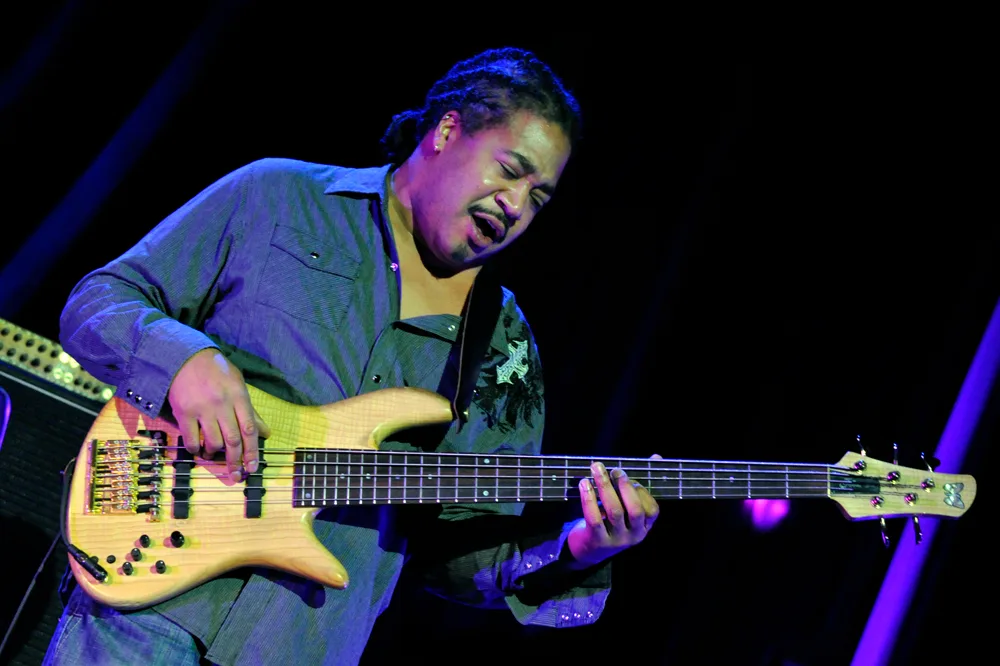
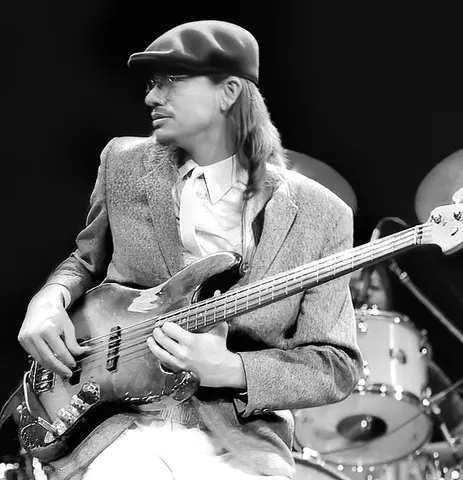
James Genus playing five-string electric bass in Warsaw, Poland on November 29, 2010, on the tour for Herbie Hancock's The Imagine Project. Photograph by the Wikimedia Commons contributor Kotoviski (Henryk Kotowski), released as own work. Licensed CC BY-SA 3.0. CC BY-SA 3.0 (Creative Commons Attribution-ShareAlike 3.0 Unported), dual-licensed with the GNU Free Documentation License — Wikimedia Commons - https://commons.wikimedia.org/wiki/File:JamesGenus20101129.jpg

James Genus was born in Hampton, Virginia on January 20, 1966. He started on guitar at six and moved to bass at thirteen, and his teenage apprenticeship was less a jazz education than a working one: talent shows around the Virginia peninsula with the Wooten brothers, all-night jam sessions, a long-running gig at Busch Gardens Williamsburg, and a stint in a country band, taken alongside every other job he could get. He studied at Virginia Commonwealth University from 1983 to 1987 and picked up the double bass in his sophomore year for the plainest of reasons: the degree required it. By his own account it was rough at first, since he was still playing electric constantly, but he ended up devoted to the instrument, and the doubling became the thing his whole career is built on.
He moved to New York after graduating and was working almost immediately. Between 1988 and 1992 he passed through the young-lions band OTB, Horace Silver's group, and bands led by Roy Haynes, Don Pullen, Nat Adderley, Greg Osby, Jon Faddis, T.S. Monk, Benny Golson, David Kikoski and Bob Berg. His first significant recorded appearance is Don Pullen's Random Thoughts, cut digitally at A&R Recording Studio in New York on March 23, 1990 for Blue Note in a trio with Lewis Nash. Within eighteen months he had recorded Nat Adderley's The Old Country at Clinton Studio on December 5 and 6, 1990, Jon Faddis's Hornucopia for Epic (where he splits the record between acoustic bass on five tracks and electric on four, and co-wrote "Dewey's Dance" with Faddis, Renee Rosnes and Billy Drummond), T.S. Monk's Take One at Van Gelder Studio on October 16, 1991, and the Benny Golson Quintet's Domingo, made in Paris on November 11, 12 and 13, 1991 with Curtis Fuller, Kevin Hays and Tony Reedus.
The association that widened his audience began with a phone call. Genus was on the road when Michael Brecker rang to say he was one of the bassists under consideration for the Brecker Brothers reunion, a band whose records Genus had grown up on; Don Grolnick's Hearts and Numbers was, he later said, his favourite Brecker recording of all. He plays acoustic and electric bass on five of the eleven tracks of Return of the Brecker Brothers (GRP, 1992) and on six of the nine on Out of the Loop (GRP, 1994), which won the Grammy for Best Contemporary Jazz Album at the 37th ceremony, sharing the bass chair on both with Armand Sabal-Lecco. He went on to make Michael Brecker's own Two Blocks from the Edge (Impulse!, 1998) in a quartet with Joey Calderazzo, Jeff "Tain" Watts and Don Alias, and he was in the Steps Ahead line-up Mike Mainieri assembled for Vibe in 1995.
His longest and most closely documented jazz relationship is with Dave Douglas. It runs from In Our Lifetime, recorded at the Power Station on December 7 and 8, 1994, through Stargazer (1996), Magic Triangle (1997), Moving Portrait (1997), Leap of Faith (1998) and Soul on Soul (1999), the last of them a Mary Lou Williams project on which Genus plays twelve of the thirteen pieces. From 2001 the relationship settled into a working quintet with Uri Caine on Fender Rhodes, Clarence Penn on drums, and Chris Potter, later Rick Margitza and Donny McCaslin, on tenor. That band made The Infinite at Avatar Studios on December 16, 17 and 18, 2001, Strange Liberation in January 2003 with Bill Frisell added on guitar, Live at the Bimhuis in Amsterdam, Meaning and Mystery at Bear Tracks on February 1, 2006, and Live at the Jazz Standard, taped across six nights in December 2006. Alongside it he worked steadily for Caine's own projects, playing on the trio record Blue Wail (1997), the street-recorded Sidewalks of New York: Tin Pan Alley (1999) and, as one of four bassists spread across a 72-piece set, The Goldberg Variations (2000).
A second standing group ran through the same years in Japan. Genus and Clarence Penn were the rhythm section of Makoto Ozone The Trio from Pandora (2000) to Dimensions (2017), by way of Treasure (2002, which added Chick Corea, Michael Brecker, Gary Burton and Jon Hendricks), Reborn (2003), New Spirit (2004), Real (recorded April 18 to 20, 2005), First Decade (2006) and the Blue Note Tokyo live set Alive!! (2007). That band is also the only place his writing appears with any regularity: he co-produced Real and wrote two of its ten pieces, "Central Booking" and "October Song," while "Caminos de Abrojos" and "Three the Hard Ways" are his as well. The same trio, with the teenage Julian Lage added on guitar, is the band on Gary Burton's Generations, recorded at Fantasy Studios in Berkeley in September 2003.
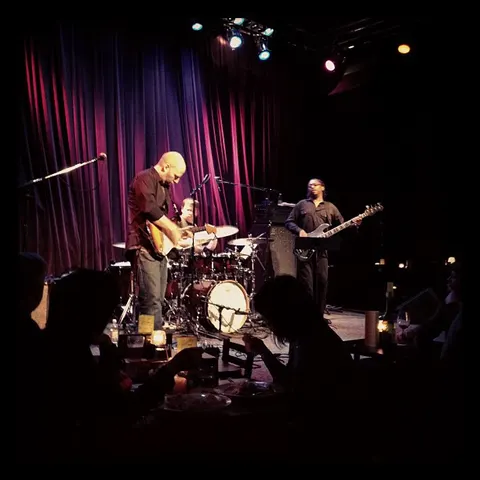
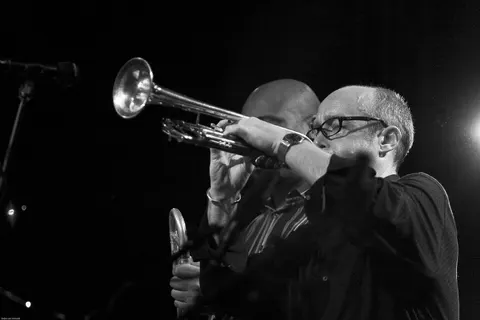
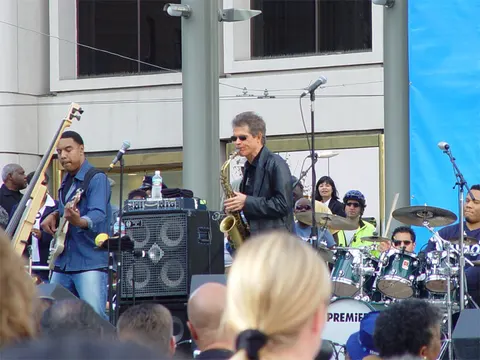
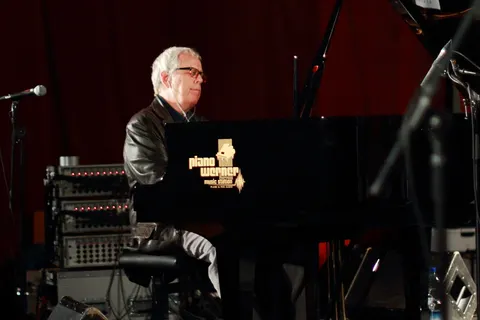
In 2000 he took the electric bass chair in the Saturday Night Live Band, first heard on the season premiere of October 7, 2000, and he has held it since, which makes him one of the most widely heard jazz bassists in the United States and one of the least often named. The television job sits beside a heavy commercial session book, and it did not displace the jazz work. He recorded three albums with Ravi Coltrane between 1999 and 2012, played on Alice Coltrane's comeback Translinear Light (2004) opposite Charlie Haden, and made James Carter's Present Tense (2008), Bob James and David Sanborn's acoustic quartet album Quartette Humaine (2013) with Steve Gadd, Dianne Reeves's Beautiful Life (2013) and Tia Fuller's Diamond Cut (2018), where he and Bill Stewart hold half the record and Dave Holland and Jack DeJohnette the other half. He began working in Herbie Hancock's band in 2008 and was still touring with it more than a decade later, photographed in the group in Warsaw in November 2010 on the Imagine Project tour and at the Zelt-Musik-Festival in Freiburg in July 2017. He also plays bass on six of the thirteen tracks of Daft Punk's Random Access Memories (2013), and has been the bassist of the New York art-rock band Elysian Fields since their first record in 1996.
The most recent chapter has brought him back to straight-ahead playing. He appeared on five Oz Noy records between 2003 and 2020, always as one of two or three rotating bassists, before becoming the sole bassist on Fun One, cut for Criss Cross Jazz at Samurai Hotel Recording Studio on July 26 and 27, 2024 in a quartet with David Kikoski and Clarence Penn. Around it sit Kenny Werner's Church on Mars, recorded for Newvelle on October 8, 2018 with Dave Liebman and Terri Lyne Carrington, Clarence Penn's Behind the Voice (Origin, 2024), and the Brooklyn band Forq's Big Party (2024). After close to four decades and several hundred sessions he has never made an album under his own name alone. Asked about it in 2009 he said he had been asked many times, did not want to do it just to do it, and wanted to be sure that whatever he put out said "this is me." Nothing has appeared since.
Genus is the rare bassist whose reputation rests equally on both instruments, and he describes the doubling as something that happened to him rather than something he planned: he took up the double bass because a degree required it, and when he arrived in New York a lot of people did not know he played electric at all. What he brings to either is a deep, unhurried, notably quiet authority. He has said the first thing he does in any situation is establish a connection with the drummer, that the push and pull between the two is where the feel actually lives, and that if that connection is not made nothing else will sound right, which is a fair description of what the Dave Douglas quintet records sound like from the bottom up. He is also unusually genre-agnostic for a player of his standing, having spent twenty-five years alternating between a Blue Note hard bop date, a network television house band, a Bach recomposition and an electronic pop record without any audible change of manner. His own formulation is that he tries to be literally the bass player and to react to the music in front of him rather than bring a style to it. On the acoustic instrument, as on Douglas's Meaning and Mystery, the tone is broad and woody and the time enormous; on the five-string electric he is a groove player of the school that Anthony Jackson and Marcus Miller made possible, felt more than heard. He writes rarely, but the four tunes he has contributed to Makoto Ozone's trio records suggest the reticence is a choice rather than a limit.
- Random Thoughts (1990, Blue Note) - Don Pullen's piano trio with Lewis Nash, recorded in one day in March 1990 and the first major record Genus appears on. Spotify - Random Thoughts
- Domingo (1992, Dreyfus Jazz) - The Benny Golson Quintet in Paris with Curtis Fuller and Kevin Hays, and the earliest record whose sleeve bills Genus by name. Spotify - Domingo Listen
- Out of the Loop (1994, GRP) - The Brecker Brothers album that won the Grammy for Best Contemporary Jazz Album; Genus plays six of its nine tracks on acoustic and electric bass. Spotify - Out Of The Loop Listen
- Two Blocks from the Edge (1998, Impulse!) - Michael Brecker's quartet with Joey Calderazzo and Jeff "Tain" Watts, the tightest small-group setting of their partnership. Spotify - Two Blocks From The Edge
- The Infinite (2002, Bluebird) - The first studio album by the Dave Douglas quintet with Chris Potter, Uri Caine and Clarence Penn, recorded direct to two-channel DSD. Spotify - The Infinite
- Strange Liberation (2003, Bluebird) - The same band with Bill Frisell added, and the record on which Genus's switching between acoustic and electric bass is most exposed. Spotify - Strange Liberation Listen
- Real (2005, Verve) - Makoto Ozone The Trio, on which Genus is co-producer as well as bassist and contributes two of the ten compositions. Spotify - Real Listen
- Meaning and Mystery (2006, Greenleaf Music) - A single-day Dave Douglas quintet session with Donny McCaslin, and the record most often cited for Genus's double bass sound. Spotify - Meaning and Mystery
- Quartette Humaine (2013, Okeh) - Bob James and David Sanborn's acoustic quartet with Steve Gadd, a deliberate answer to their fusion records of the 1980s. Spotify - Quartette Humaine Listen
- Fun One (2024, Criss Cross Jazz) - Oz Noy's straight-ahead quartet with David Kikoski and Clarence Penn, cut over two July days and the first Noy record Genus plays from end to end. Spotify - Fun One
James Genus: Full Discography
James Genus has never recorded an album as sole leader, and there is therefore no leader table below. Asked about it in a 2009 interview he said he had been asked many times, did not want to make a record just to have made one, and wanted to be certain that whatever he released said "this is me." Nothing has appeared in the seventeen years since. Everything he has recorded is either a sideman date or a collectively credited one, and the two tables here divide his catalogue on exactly that line: the first covers the albums whose sleeve billing carries his name, the second is a selected set of his most significant sideman credits.
The selection is necessary. Identity confirmed via the live Discogs API: artist ID 272435 ("James Genus," American bassist, born January 20, 1966 in Hampton, Virginia), which credits him on 354 releases, of which 312 are tagged as appearances, 29 as unofficial releases, 7 as main credits, 4 as track appearances and 2 as production. Every one of those 354 entries was fetched at release level and read, with each entry of type master resolved through its main release and the returned title checked against the title requested before any label, catalogue number or personnel was written down. What follows is roughly a sixth of the whole, weighted towards jazz dates, towards the leaders he worked with repeatedly, and towards records where the credit is substantial rather than a single track. Pop, R&B and film session work is a real and large part of his working life and is deliberately under-represented here, because it is not jazz discography.
Six mechanical notes for anyone extending these tables.
First, the Discogs Main tag is not a leader catalogue here, and reading it as one would invent a leader career that does not exist. Seven entries carry it. Not one is a record Genus leads. They are a Masabumi Kikuchi trio album billed to all three players, a Benny Golson quintet date whose sleeve lists the sidemen, a six-way Danish co-billing, two Japanese co-operative quintet records, an Aaron Choulai album issued in Australia with all five names on the front, a Bob James and David Sanborn album that adds "featuring Steve Gadd, James Genus," and a Robben Ford and Bill Evans album that does the same. Every billing was read on the release itself before the row was placed.
Second, the single most productive check on this artist was enumerating other pressings. Twenty-six of his 354 credits return no credit at all on the release the master points at. Seventeen of those were re-checked against the album's other pressings, and all seventeen turned up a real, well-formed playing credit on a different pressing, usually a European or Japanese one. Steps Ahead's Vibe is the clearest case: the American CD carries three credits and no musicians, while the German and Japanese pressings of the identical album carry a full block showing Genus on bass on tracks 2, 5 and 8 and acoustic bass on 11. Jeff "Tain" Watts's Bar Talk, Bob James's Playin' Hooky and Morning, Noon & Night, Greg Osby's Man-Talk for Moderns Vol. X, Bob Berg's Virtual Reality, Michel Camilo's Two Much, Makoto Ozone's So Many Colors and Grégoire Maret's first album all behave the same way. A single-pressing check on this artist produces confident false negatives at a rate of better than one in twenty.
Third, the release-level credit block is frequently not where the personnel lives. Dianne Reeves's Beautiful Life has nine release-level credits, all of them producers and engineers, and Genus's name appears only in the track list, on five of twelve pieces. The whole of Oz Noy's Oz Live, Ha!, Fuzzy and Snapdragon is filed the same way, with the band listed track by track and nothing at album level. Where a credit does carry an explicit track string it is reliable and is reproduced here; where it is empty on a release whose other credits are also empty, the field carries no information and the row says so rather than claiming an album-wide chair.
Fourth, almost nothing in this catalogue is a non-performing credit, which is unusual and worth recording, because the check was run rather than assumed. Every credit string on all 354 releases was scanned. The performing roles account for all but four rows: "Bass" 296 times, "Acoustic Bass" 51, "Electric Bass" 28, plus double bass, contrabass, bass guitar and combinations. The exceptions are a "Featuring" tag on Bob Berg's Enter the Spirit that sits beside a full bass credit, a "Featuring" tag on a Harald Weinkum bass anthology that resolves to a playing credit on one track, a bare "Musician" tag on Daft Punk's Random Access Memories that resolves to bass on six of thirteen tracks, and an "Engineer" tag on Jason Miles's 100 Miles for Miles Davis (2026) that is a data-entry error: nine of that release's performers, Genus among them, are tagged as engineers at album level, and the track list shows him playing bass on two of the eight pieces. There is one genuine production credit, shared: he co-produced Makoto Ozone The Trio's Real with Ozone and Clarence Penn. He also carries six writing credits, all noted in the tables.
Fifth, no second Discogs entity for this musician was found, and the name variations attached to the one that exists are not usable as a search key. The artist record lists three: "J. Genus," "James 'Genius' Genus" and the bare first name "James," the last of which matches thousands of unrelated people. Every row here was accepted on the numeric artist ID and never on a name string. A Discogs search for the full name returns exactly one artist entity plus a misspelling, "James Gemus," which holds nothing.
Sixth, his Spotify presence is split across two artist pages, 5f9fJGC5O6La0pTAD1sjFb and 7bfaLCEZO2JUMTkx9NtxnT, both genuinely his. The first is the larger and is the one linked from this profile. Album links below were confirmed one by one; where an album could not be found on Spotify the cell reads the same placeholder the Buy column uses, rather than a guess.
As Co-Leader / Co-Billed
Nine albums carry his name in the sleeve billing. None of them is a record he leads; the "Role" column says what the billing actually is in each case.
| Album Title | Recording Date(s) | Release Date | Label | Catalog Number | Format(s) | Personnel | Role | Reissue History | Spotify | Buy | Notes |
|---|---|---|---|---|---|---|---|---|---|---|---|
| Domingo | Paris, November 11, 12 and 13, 1991 | 1992 | Dreyfus Jazz | 191 132-2 | CD, Album | Benny Golson (tenor saxophone), Curtis Fuller (trombone), Jean-Loup Longnon (trumpet), Kevin Hays (piano), James Genus (bass), Tony Reedus (drums) | Sideman, named in the sleeve billing | (none listed) | Spotify - Domingo | — | Discogs bills the release "Benny Golson Quintet With Curtis Fuller, Kevin Hays, Tony Reedus, James Genus," which is why the tag reads as a main credit. It is a Golson album. Spotify carries the same billing verbatim in the album title. |
| Feel You | The Studio, New York, August 1992 to January 1993 | March 24, 1993 | Paddle Wheel | KICJ 141 | CD, Album | Masabumi Kikuchi (piano), James Genus (bass), Victor Jones (drums); mastered by Seiji Kaneko | Co-billed trio, three-way sleeve billing | (none listed) | Spotify - Feel You | — | Nine pieces. The only record in his catalogue billed to three equal names, and the closest thing he has to a leader date. |
| New York Sessions | Sear Sound, New York, April 1999 | 1999 | Stunt Records | STUCD 19910 | CD | Poul Reimann (piano, arrangements), Benjamin Koppel (alto saxophone 1, 7, 8; soprano 3, 5), David Sanchez (tenor saxophone 1, 2, 8), Randy Brecker (flugelhorn 4, 7; trumpet 8), James Genus (bass), Ignacio Berroa (drums 1, 4, 6 to 8), Claes Brondal (drums 2, 3, 10) | Co-billed, six names on the sleeve | (none listed) | — | — | A Danish and American meeting recorded in one month at Sear Sound. Every horn credit carries an explicit track string; Genus's does not, and he is the only bassist on the date. |
| The Quintet: Jordu | Not listed on Discogs | 2003 | Videoarts Music | VACM1224 | CD | Ryan Kisor (trumpet), Andy Snitzer (tenor saxophone), Alain Mallet (piano), James Genus (bass), Victor Lewis (drums) | Co-operative band, five-way billing | (none listed) | — | — | The first of two records by a co-operative quintet assembled for the Japanese label Videoarts. Nine tracks. |
| A Night in Tunisia Plays "A Night at Birdland" | Chung King Studio, New York, March 25, 2004 | 2004 | VACM | VACM-1248 | CD | Ryan Kisor (trumpet), Grant Stewart (tenor saxophone), Sam Yahel (piano), James Genus (bass), Victor Lewis (drums); produced by Shigeyuki Kawashima | Co-operative band, billed as The Quintet | (none listed) | — | — | The same co-operative with Grant Stewart and Sam Yahel replacing Snitzer and Mallet, playing the Art Blakey Birdland repertoire. Nine tracks, cut in a single day. |
| Place | Copyright 2003 | 2003 (Sunnyside); 2004 (Move) | Sunnyside; Move Records | 1131; MD 3285 | CD, Album | Aaron Choulai (piano, all compositions), Tim Ries (soprano and tenor saxophone), Scott Wendholt (trumpet), James Genus (bass), Clarence Penn (drums) | Co-billed on the Australian pressing | Issued twice: the American Sunnyside pressing bills Choulai alone, the Australian Move pressing bills all five players | — | — | Eight pieces, all Choulai's. The two pressings are the same album with different sleeve billing, which is the whole reason one of them is tagged as a main credit for Genus and the other is not. |
| Real | April 18 to 20, 2005 | July 21, 2005 (SACD); 2006 (promo CD) | Verve Records | UCGJ-7005; 9894772 | SACD; CD, Album, Promo | Makoto Ozone (piano, electric piano, producer), James Genus (bass, electric bass, producer), Clarence Penn (drums, percussion, producer); recorded and mixed by Joe Ferla, executive producer Tomohide Ishikawa | Band member, co-producer and composer | (none listed) | Spotify - Real | — | Ten pieces, all originals by the three members. Genus wrote "Central Booking" and "October Song"; Penn wrote "The Blue Zone" and "Dalì"; the other six are Ozone's. The only album on which Genus holds a production credit. |
| Quartette Humaine | Not listed on Discogs | 2013 | Okeh | 88765484712 | CD, Album | Bob James (piano), David Sanborn (alto and soprano saxophone), James Genus (bass), Steve Gadd (drums), Javier Diaz (percussion) | Sideman, named in the sleeve billing | (none listed) | Spotify - Quartette Humaine | — | Billed on the sleeve as "Bob James & David Sanborn Featuring Steve Gadd, James Genus." An acoustic quartet album made as a deliberate counterweight to the pair's fusion records of the 1980s. |
| The Sun Room | "The Sun Room" at House of Blues, Nashville, Tennessee; mastered at Airshow Mastering, Boulder | July 26, 2019 | Ear Music | 0214041EMU | CD, Album | Robben Ford (guitars, vocals 4, producer, written-by 1, 4, 5, 8), Bill Evans (saxophones, vocals 7, written-by 2, 3, 6, 7, 9), Robert Aries (keyboards), James Genus (bass), Keith Carlock (drums), Laurie Wheeler (guest vocals 1, 6) | Sideman, named in the sleeve billing | (none listed) | Spotify - The Sun Room | — | A blues and funk date. The Bill Evans here is the saxophonist who played in Miles Davis's 1980s bands, not the pianist. |
As Sideman (selected major credits)
| Year | Project (Leader) | Title | Label | Catalog | Role | Notes |
|---|---|---|---|---|---|---|
| 1990 | Don Pullen | Random Thoughts | Blue Note (CDP 7 94347 2) | Bass | Recorded digitally at A&R Recording Studio, New York on March 23, 1990. Trio with Lewis Nash; all seven pieces are Pullen's; liner notes by Stanley Crouch. His earliest major recorded appearance. | |
| 1991 | Kevin Hays Quintet | SweetEar | SteepleChase (SCCD 31282) | Bass | Recorded at SteepleChase Digital Studio in January 1991, with Vincent Herring, Eddie Henderson and Joe Chambers. | |
| 1991 | Jon Faddis | Hornucopia | Epic (EK 46958) | Acoustic Bass (1, 4, 5, 7, 9); Electric Bass (2, 3, 6, 8); Written-By (6) | Released February 12, 1991. Genus splits the album between the two instruments track by track, and co-wrote "Dewey's Dance" with Faddis, Renee Rosnes and Billy Drummond. Dizzy Gillespie guests on track 5. | |
| 1991 | Greg Osby | Man-Talk for Moderns Vol. X | Blue Note (CDP 7 95414 2) | Bass | The credit exists only on the European pressing; the American, Japanese and promotional pressings carry no personnel at all. | |
| 1991 | New York Voices | Hearts of Fire | GRP (GRD-9653) | Bass (6) | One of five bassists on the record, each credited by track. | |
| 1992 | Nat Adderley Quintet featuring Vincent Herring | The Old Country | Enja (ENJ-7027 2) | Bass | Recorded at Clinton Studio, New York on December 5 and 6, 1990, with Nat Adderley, Vincent Herring, Rob Bargad and Billy Drummond. | |
| 1992 | T.S. Monk | Take One | Blue Note (CDP 7 99614 2) | Bass | Recorded October 16, 1991 at Van Gelder Studio, Englewood Cliffs, with Don Sickler, Bobby Porcelli, Willie Williams and Ronnie Mathews. | |
| 1992 | Steve Wilson Quintet | New York Summit | Criss Cross Jazz (Criss 1062 CD) | Bass | Recorded December 19, 1991. Wilson's leader debut, with Mulgrew Miller, Tom Williams and Carl Allen. | |
| 1992 | Vincent Herring | American Experience | Musicmasters (5037-2-C) | Bass (1, 2, 4 to 6, 9, 10) | Two sessions at RCA Studios, New York, April 17, 1986 and October 12, 1989; Genus plays the seven tracks from the later date. | |
| 1992 | Geoff Keezer Trio | World Music | DIW / Columbia (CK 52958) | Bass | Trio with Tony Reedus, plus Rudy Bird's percussion on three tracks. | |
| 1992 | James Williams | James Williams Meets the Saxophone Masters | Columbia / DIW (472973 2) | Bass | With Joe Henderson, George Coleman and Billy Pierce across three tenor chairs, dedicated to Clifford Jordan. | |
| 1992 | The Brecker Brothers | Return of the Brecker Brothers | GRP (GRD-9684) | Acoustic Bass, Electric Bass (4, 7, 8, 10, 11) | Five of eleven tracks, sharing the bass chair with Armand Sabal-Lecco. The album that came out of the reunion tour Michael Brecker telephoned him about. Also documented on the concert video Live in Barcelona (GRP Video GRP-96843). | |
| 1993 | Bob Berg | Enter the Spirit | Stretch / GRP (STD-1105) | Bass; Featuring | Recorded at Skyline Studios, New York. Chick Corea plays piano on three tracks, David Kikoski on four and Jim Beard on one; all five players carry a "Featuring" tag alongside their instrument. | |
| 1993 | The Bob Belden Ensemble | Puccini's Turandot | Blue Note (TOCJ-5731) | Electric Bass | A large-cast reworking of the opera; one of two electric bassists among a hundred-odd musicians. | |
| 1993 | Terumasa Hino, Masahiko Togashi, Masabumi Kikuchi | Triple Helix | Somethin' Else (TOCJ-5554) | Bass | Recorded live on April 18, 1993 at the second Yamaha Jazz Festival in Hamamatsu. | |
| 1994 | The Brecker Brothers | Out of the Loop | GRP (GRD-9784) | Bass, Acoustic Bass (1, 3, 4, 7 to 9) | Six of nine tracks. Winner of the Grammy for Best Contemporary Jazz Album at the 37th ceremony. | |
| 1994 | The Lee Konitz Quartet | Jazz Nocturne | Evidence (ECD-22085-2) | Bass | Recorded at Sound On Studio, New York on October 5, 1992, with Lee Konitz, Kenny Barron and Kenny Washington. | |
| 1994 | James Williams | Up to the Minute Blues | DIW (DIW-882) | Bass (2 to 5) | Four of six tracks; Ray Drummond plays the other two. | |
| 1994 | Steve Masakowski | What It Was | Blue Note (CDP 0777 7 80591 2 7) | Electric Bass | ||
| 1995 | Dave Douglas | In Our Lifetime | New World Records (80471-2) | Bass | Recorded at the Power Station, New York on December 7 and 8, 1994, mixed that January. Sextet with Chris Speed, Joshua Roseman, Marty Ehrlich, Uri Caine and Joey Baron. The first of eleven Douglas records. | |
| 1995 | Steps Ahead | Vibe | NYC Records (NYC 6012 2) | Bass (2, 5, 8); Acoustic Bass (11) | Four of eleven tracks, with Victor Bailey and Reggie Washington taking the rest. The credit appears only on the German and Japanese pressings; the American pressing that the Discogs master points at lists three names, none of them a musician. Mike Mainieri leads; Clarence Penn is the drummer. | |
| 1995 | Joey Calderazzo | Secrets | AudioQuest Music (2-AQM-1036) | Bass | Recorded in New York on January 26 and 27, 1995, with Clarence Penn, Tim Hagans and Tim Ries; arranged by Bob Belden. | |
| 1995 | John McLaughlin | The Promise | Verve (314 529 828-2) | Bass (6, 10) | Two tracks of a many-sessions album; track 6 also has Michael Brecker and Dennis Chambers, track 10 David Sanborn. | |
| 1995 | Michael Philip Mossman | Springdance | Claves Jazz (CD 50-1094) | Bass | Recorded May 9 and 10, 1994, with David Sanchez, Kenny Drew Jr., Marvin "Smitty" Smith and Bobby Sanabria. | |
| 1995 | Terumasa Hino / Masabumi Kikuchi Quintet | Acoustic Boogie | Somethin' Else (TOCJ-5574) | Electric Bass | Recorded at Clinton Studio, New York on May 2 and 3, 1995, with Greg Osby and Billy Kilson. | |
| 1996 | Didier Lockwood | Storyboard | Dreyfus Jazz (FDM 36582-2) | Bass | Recorded at Clinton Studios, New York, April 21 to 25, 1996, in a quartet with Steve Gadd and Joey DeFrancesco. | |
| 1997 | Dave Douglas | Stargazer | Arabesque Jazz (AJ0132) | Bass | Recorded at Systems Two, Brooklyn on December 30, 1996. Subtitled "Music by and for Wayne Shorter." Not found on Spotify. | |
| 1997 | Dominique Eade | When the Wind Was Cool | RCA Victor (09026 68858-2) | Bass (1 to 5, 7 to 13) | Twelve of thirteen tracks. | |
| 1998 | Michael Brecker | Two Blocks from the Edge | Impulse! (IMPD-260) | Bass | Recorded and mixed at Avatar Studios, New York. Billed as the Michael Brecker Quartet, with Joey Calderazzo, Jeff "Tain" Watts and Don Alias. | |
| 1998 | Dave Douglas | Magic Triangle | Arabesque Jazz (AJ0139) | Bass | Recorded at Systems Two on May 12 and 13, 1997, in a quartet with Chris Potter and Ben Perowsky. Spotify issues it paired with Leap of Faith as a twenty-track set. | |
| 1998 | Dave Douglas | Moving Portrait | DIW (DIW-934) | Bass | Recorded at Avatar, New York on December 29 and 30, 1997, with Bill Carrothers and Billy Hart. Not found on Spotify. | |
| 1998 | Conrad Herwig Quintet | Osteology | Criss Cross Jazz (Criss 1176 CD) | Bass | Recorded at Systems Two on December 20, 1998. A two-trombone date with Herwig and Steve Davis, plus David Kikoski and Jeff "Tain" Watts. | |
| 1998 | Walt Weiskopf Sextet | Sleepless Nights | Criss Cross Jazz (Criss 1147 CD) | Bass | Recorded in Brooklyn on December 16, 1996, with Andy Fusco, Conrad Herwig, Joel Weiskopf and Billy Drummond. | |
| 1998 | Michael Philip Mossman Sextet | Mama Soho | TCB Records (TCB 98102) | Bass | Recorded at Systems Two on December 3 and 4, 1995, with Bob Mintzer, Kenny Drew Jr., Mark Walker and Bobby Sanabria. | |
| 1998 | Pat Martino & Joyous Lake | Stone Blue | Blue Note (7243 8 53082 2 2) | Electric Bass | Pat Martino's fusion reunion band, with Eric Alexander, Delmar Brown and Kenwood Dennard. | |
| 1998 | Various | Who Loves You: A Tribute to Jaco Pastorius | JVC (VICJ-60185) | Bass (3 of 12 tracks) | The three Jaco Pastorius tribute pieces he plays on include John Patitucci's "Fall'n Star" and Peter Erskine's "Song for Jaco." | |
| 1999 | Dave Douglas | Leap of Faith | Arabesque Jazz (AJ0145) | Bass | Recorded and mixed at Avatar, New York, September 19 and 20, 1998; the same quartet as Magic Triangle. | |
| 1999 | Uri Caine Trio | Blue Wail | Winter & Winter (910 034-2) | Bass | Recorded at Avatar Studios on December 1 and 2, 1997, mixed the following January. Piano trio with Ralph Peterson. | |
| 1999 | Uri Caine Ensemble | The Sidewalks of New York: Tin Pan Alley | Winter & Winter (910 038-2) | Bass | Recorded February 4 to 10, 1999 on the roof garden of the Gramercy Park Hotel, in Central Park, at Avatar and around New York. Twenty-seven pieces, with Dave Douglas, Don Byron, Bob Stewart and Ben Perowsky. | |
| 1999 | Terumasa Hino | Re-Cover | Sweet Basil (TECW-28821) | Bass | With Oliver Lake, Joey Calderazzo, Louis Hayes and Billy Kilson. | |
| 2000 | Dave Douglas | Soul on Soul | RCA Victor (09026 63603 2) | Bass (1 to 11, 13) | Recorded August 11 and 12, 1999; a Mary Lou Williams project with Uri Caine, Joey Baron, Chris Speed, Gregory Tardy and Joshua Roseman. Twelve of thirteen pieces. Not found on Spotify. | |
| 2000 | Ravi Coltrane | From the Round Box | RCA Victor / BMG France (74321739232) | Bass | Recorded at Systems Two on September 29, September 30 and December 7, 1999, with Geri Allen, Andy Milne, Ralph Alessi and Eric Harland. | |
| 2000 | Uri Caine Ensemble | The Goldberg Variations | Winter & Winter (910 054-2) | Bass (1-21, 1-33, 1-36, 2-12, 2-18) | Five pieces of a 72-part double album marking the 250th anniversary of Bach's death. One of four bassists on the project, alongside Drew Gress, Reid Anderson and Reggie Washington. | |
| 2000 | Makoto Ozone The Trio | Pandora | Verve (549 629-2) | Bass | The first of eight albums by the trio with Ozone and Clarence Penn. | |
| 2000 | Conrad Herwig | Unseen Universe | Criss Cross Jazz (Criss 1194 CD) | Bass | Recorded in Brooklyn on December 18, 1999 by Max Bolleman, with Seamus Blake, Alex Sipiagin, David Kikoski and Jeff "Tain" Watts. | |
| 2001 | David Kikoski Trio | Surf's Up | Criss Cross Jazz (CRISS 1208 CD) | Bass | Recorded at Systems Two on January 18, 2001. | |
| 2002 | Dave Douglas | The Infinite | Bluebird / RCA Victor (09026 63918-2) | Bass | Recorded direct to two-channel DSD at Avatar Studios, December 16 to 18, 2001. The first studio album by the quintet with Chris Potter, Uri Caine and Clarence Penn. | |
| 2002 | Ravi Coltrane | Mad 6 | Eighty-Eight's / Columbia (510884 2) | Bass (2, 3, 7, 8, 9) | Recorded May 26 and 27, 2002; five of ten tracks, with Darryl Hall on the rest. | |
| 2002 | Jeff "Tain" Watts | Bar Talk | Columbia (508157 2) | Bass (1, 3, 6, 7, 8, 10) | Six of ten tracks. The credit exists only on the European pressing; the American, Japanese and promotional pressings list no musicians. | |
| 2002 | Clarence Penn | Saomaye | Verve (UCCJ-1004) | Acoustic Bass; Electric Bass; Written-By (12) | A large-cast Penn leader date with Makoto Ozone, Edward Simon, Richard Galliano, Claudia Acuña and Luciana Souza. Genus co-wrote the closing "Ceundalae" with Penn. | |
| 2002 | Steve Coleman and Five Elements | Alternate Dimension Series I | Not on label | Acoustic Bass (1, 4, 5, 7, 8) | Recorded March 13 and 14, 2002; a promotional-only release. Five of eight tracks, alternating with Reggie Washington and Anthony Tidd. Steve Coleman leads. | |
| 2002 | Makoto Ozone | Treasure | Verve (021906-2) | Bass | The Ozone trio expanded by Chick Corea, Michael Brecker, Gary Burton and Jon Hendricks. | |
| 2003 | Dave Douglas | Strange Liberation | Bluebird (82876-50818-2) | Acoustic Bass, Electric Bass | Recorded to eight-channel DSD at Right Track 509 Studio, New York in January 2003, with Bill Frisell added to the quintet. | |
| 2003 | Joe Locke | 4 Walls of Freedom | Sirocco Music (SJL 1021) | Acoustic Bass | Recorded at Systems Two in September 2002, with Bob Berg, Gerard Presencer and Gary Novak. One of Berg's final sessions; he was killed in a road accident that December. | |
| 2003 | Jean-Michel Pilc | Cardinal Points | Dreyfus Jazz (FDM 36649-2) | Acoustic Bass, Electric Bass (1 to 8) | Eight of twelve tracks. | |
| 2004 | Alice Coltrane | Translinear Light | Impulse! (0602498619292) | Bass (2, 4, 7) | Three of eleven tracks, with Charlie Haden on the rest. Produced by Ravi Coltrane; Jack DeJohnette and Jeff "Tain" Watts share the drums. | |
| 2004 | Gary Burton | Generations | Concord Jazz (CCD-2217-2) | Bass | Recorded at Fantasy Studios, Berkeley, September 16 to 18, 2003, with the Ozone trio as the rhythm section and the teenage Julian Lage on guitar. | |
| 2004 | Bob James Trio | Take It from the Top | Koch Records (KOC-CD-9519) | Bass | ||
| 2004 | Makoto Ozone The Trio | New Spirit | Verve (UCGJ-7004) | Bass; Written-By (7) | Genus wrote "Caminos de Abrojos." | |
| 2005 | Dave Douglas Quintet | Live at the Bimhuis | Greenleaf Music (GRE-P-01) | Bass | Recorded at the Bimhuis, Amsterdam by Dutch radio; the first release in the Greenleaf Paperback Series, with Rick Margitza on tenor. | |
| 2005 | Yosvany Terry | Metamorphosis | Ewe Records (KRM 1117) | Bass | ||
| 2006 | Dave Douglas | Meaning and Mystery | Greenleaf Music (GRE-04) | Contrabass | Recorded at Bear Tracks, Suffern, New York on February 1, 2006, with Donny McCaslin replacing Margitza. | |
| 2006 | Makoto Ozone The Trio | First Decade | Verve (UCCJ-2051) | Bass; Composed By (4) | Genus wrote "Three the Hard Ways." | |
| 2006 | Bob James | Urban Flamingo | Koch Records (KOC CD 9979) | Bass (2) | One track of ten. Earl Klugh and Nathan East appear on others. | |
| 2006 | Taylor Eigsti | Lucky to Be Me | Concord Jazz (CCD-2299-2) | Bass (4, 5, 10, 11) | Four of twelve tracks, alternating with Christian McBride. | |
| 2007 | Dave Douglas Quintet | Live at the Jazz Standard | Koch Records (KOC-CD-5574) | Contrabass | Recorded live December 5 to 10, 2006 at the Jazz Standard, New York. Greenleaf also issued the complete run of twelve sets, and two bonus sets, as downloads. | |
| 2007 | Manuel Valera | Vientos | Anzic Records (Anzic 8101) | Bass, credited as a member of The Quartet | With Joel Frahm and Ernesto Simpson, plus a five-piece woodwind group including Anat Cohen on seven of the twelve tracks. | |
| 2007 | Makoto Ozone The Trio | Alive!! Live at Blue Note Tokyo | Verve (UCBJ-9001) | Acoustic Bass, Electric Bass; Written-By (two pieces) | A DVD and CD set. | |
| 2008 | James Carter | Present Tense | EmArcy (0602517584495) | Bass | Recorded at Avatar Studios, New York, September 21 to 23, 2007, with D.D. Jackson, Rodney Jones, Victor Lewis and Dwight Adams; produced by Michael Cuscuna. | |
| 2009 | Manuel Valera | Currents | MAXJAZZ (MXJ 220) | Acoustic Bass, Electric Bass | Trio with Ernesto Simpson. | |
| 2012 | Ravi Coltrane | Spirit Fiction | Blue Note (509999 18937 2 7) | Bass (2, 5, 8, 9) | Four of eleven tracks, in the quintet half of the album with Ralph Alessi, Geri Allen and Eric Harland; Drew Gress plays the quartet half. Co-produced with Joe Lovano. | |
| 2013 | Daft Punk | Random Access Memories | Columbia (88883716861) | Bass (6 of 13 tracks) | The release-level credit reads only "Musician"; the track list carries the actual bass credits. | |
| 2013 | Dianne Reeves | Beautiful Life | Concord Records (CRE-34171-02) | Bass (5 of 12 tracks) | Produced by Terri Lyne Carrington and Raymond Angry. Genus is absent from the release-level block entirely and appears only track by track. | |
| 2017 | Makoto Ozone The Trio | Dimensions | Verve (UCCJ-2144) | Bass | Released August 2, 2017; the last of the trio's albums to date. | |
| 2018 | Tia Fuller | Diamond Cut | Mack Avenue (MAC1127) | Bass (1 to 3, 6, 10, 12) | Six of twelve tracks, with Bill Stewart on drums; Dave Holland and Jack DeJohnette play the other six. | |
| 2019 | Kenny Werner | Church on Mars | Newvelle Records (NV023) | Bass | Recorded and mixed October 8, 2018; the fifth release of Newvelle's fourth season, issued on vinyl only, with Dave Liebman and Terri Lyne Carrington. Not found on Spotify. | |
| 2019 | Oz Noy | Booga Looga Loo | Abstract Logix (ABLX060) | Bass (4, 7) | Two of eight tracks, with Dave Weckl on the same two; John Patitucci and Will Lee take the rest. | |
| 2020 | Oz Noy | Snapdragon | Abstract Logix (ABLX 063) | Bass (5, 7, 8) | Three of nine tracks. The release-level block holds only Noy; the band is listed track by track. | |
| 2023 | Usein Bekirov | SATO | Tlsg Digital | Bass (4, 7, 8, 9, 10) | Five of ten tracks by the Crimean Tatar pianist, with Randy Brecker, Mike Stern, Dennis Chambers and Ada Rovatti; Hadrien Féraud plays the other five. | |
| 2024 | Clarence Penn | Behind the Voice | Origin Records (82897) | Bass (2, 3) | Two of nine tracks, one of them with Kurt Elling singing and Gilad Hekselman on guitar. | |
| 2024 | Oz Noy | Fun One | Criss Cross Jazz (Criss 1422 CD) | Bass | Recorded July 26 and 27, 2024 at Samurai Hotel Recording Studio, New York; released November 29, 2024. Quartet with David Kikoski and Clarence Penn, nine tracks, liner notes by Ted Panken. The only Oz Noy album on which Genus is the sole bassist. | |
| 2024 | Forq | Big Party | Forq Music (005) | Bass | The Brooklyn band led by Henry Hey; one of four bassists on the record. | |
| 2025 | Harvey Mason | Changing Partners | Evosound (EVSA2937) | Bass (1, 6, 9, 10) | A trio record built on a rotating bass chair: seven bassists across twelve tracks, including Stanley Clarke and Buster Williams. Genus's four tracks were cut at Sear Sound. An earlier Harvey Mason album of the same title (Videoarts, 2006) also carries him, on four of ten tracks. |
Beyond these tables the Discogs log runs to a further two hundred and fifty releases, most of them outside jazz: R&B and pop dates for Anita Baker, Vanessa Williams, Will Downing, Freddie Jackson, Jaheim and Jennifer Hudson, boy-band sessions for 98 Degrees, Japanese pop for SMAP, film and television scores including Ocean's 8 and American Gangster, and twenty-odd years with the New York art-rock band Elysian Fields, whose bassist he has been since their first album in 1996. Twenty-nine further entries are unofficial live pressings, among them three broadcast recordings of Herbie Hancock's band from 2017 and 2022 and several of the Brecker Brothers reunion tour, which are the only recorded documents of some of his longest-running working associations.
- Dave Douglas - his longest jazz association, eleven albums between 1994 and 2007, first in the sextet with Joey Baron and Uri Caine and then as the bassist of the working quintet from 2001 to 2007.
- Clarence Penn - the drummer he has partnered longest: the Dave Douglas quintet, Makoto Ozone The Trio from 2000 to 2017, Gary Burton's Generations, Penn's own Saomaye (2002) and Behind the Voice (2024), and Oz Noy's quartet on Fun One.
- Makoto Ozone - eight trio albums between 2000 and 2017, plus a co-production credit and four compositions of Genus's own.
- Uri Caine - pianist in the Dave Douglas bands and leader of three of his own records Genus plays on, including the Goldberg Variations project of 2000.
- Michael Brecker and Randy Brecker - the Brecker Brothers reunion band from 1992, its two studio albums and its live documents, and Michael Brecker's Two Blocks from the Edge in 1998.
- Oz Noy - six albums between 2003 and 2024, from two tracks of Oz Live to the whole of Fun One.
- Bob James - a working relationship since the mid-1990s across Playin' Hooky (1997), Morning, Noon & Night (2002), the Bob James Trio's Take It from the Top (2004), Urban Flamingo (2006) and Quartette Humaine (2013).
- Ravi Coltrane - bassist on From the Round Box (2000), on five tracks of Mad 6 (2002) and on four of Spirit Fiction (2012).
- David Kikoski - from Persistent Dreams in 1991 through the Criss Cross trio Surf's Up (2001) and the Conrad Herwig quintets to Fun One thirty-three years later.
- Conrad Herwig - the trombonist's Criss Cross rhythm section on Osteology (1998, alongside Steve Davis), Unseen Universe (1999), Hieroglyphica (2001) and Land of Shadow (2002), mostly with Kikoski and Jeff "Tain" Watts.
- Michael Philip Mossman - bassist on both of the trumpeter's own sextet records, Springdance (1994) and Mama Soho (1995).
- Steve Wilson - the saxophonist's Criss Cross debut New York Summit (1991) and Blues for Marcus (1993), and later Soulful Song (2003).
- Manuel Valera - the quartet on Vientos (2007) with Joel Frahm and the trio on Currents (2009).
- Terumasa Hino and Masabumi Kikuchi - a run of Japanese dates from the co-billed trio album Feel You (1993) through Triple Helix, Acoustic Boogie and Re-Cover.
- Herbie Hancock - bassist in his touring band from 2008, on the Imagine Project tour and after.
- Alice Coltrane - three tracks of Translinear Light (2004), the record her son produced to bring her back to the studio, sharing the bass duties with Charlie Haden.
- Ryan Kisor, Victor Lewis, Sam Yahel and Grant Stewart - the co-operative bands billed as The Quintet, which made Jordu in 2003 and A Night in Tunisia in 2004 for the Japanese label Videoarts.
- The Saturday Night Live Band - bass chair since 2000, alongside Lenny Pickett, Steve Turre, Leon Pendarvis, Shawn Pelton and Alex Foster.
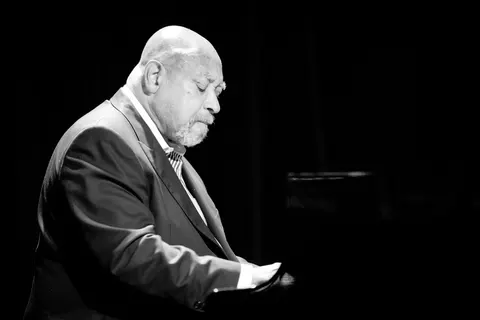
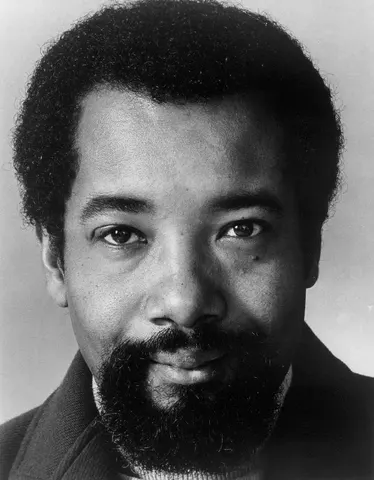
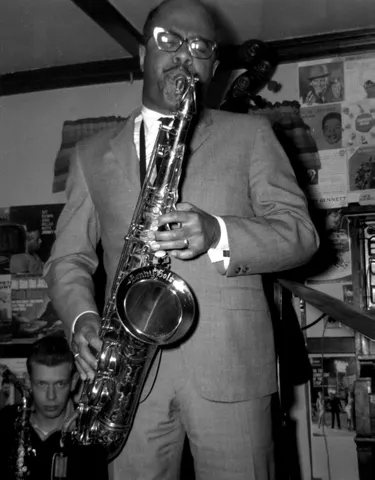
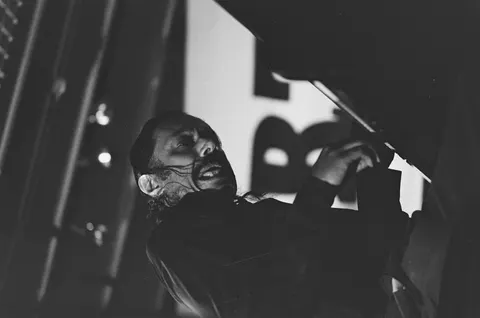
- Wikipedia: James Genus - used for the birth date and birth place, the guitar-to-bass switch, the Virginia Commonwealth University dates, and the chronology of employers between 1988 and 2013
- Wikipedia: Saturday Night Live Band - the source for the 2000 start date of his bass chair, cited there to the closing credits of the October 7, 2000 season premiere
- Discogs: James Genus - used for identity verification (artist ID 272435) and for every recording date, label, catalogue number, personnel list and track-level credit in this profile, via the live Discogs API, with each album's other pressings checked before any absence was recorded
- All About Jazz: James Genus - used for the jazz studies degree and for the assessment of his double bass playing on Meaning and Mystery and Urban Flamingo
- Jake Kot, "Conversation With James Genus," Bass Musician Magazine, April 1, 2009 - the source for the Wooten brothers, Busch Gardens and the country band, for taking up the double bass in his sophomore year, for the Michael Brecker phone call and the Hearts and Numbers remark, for his account of connecting with the drummer, and for his position on making a record of his own. The article is no longer live at its original address and was read through the Internet Archive
- Wikimedia Commons: File:JamesGenus20101129.jpg and File:Herbie Hancock (ZMF 2017) IMGP9605.jpg - dated photographs placing him in Herbie Hancock's band in Warsaw in 2010 and in Freiburg in 2017
- Spotify catalogue, used to confirm release dates and to source every album link in this profile
_IMGP9605.jpg)