 JAZZPROFILES lives in the music 1,765 Jazz Artists fully Profiled!
Tetsu Saitoh
Last updated October 21, 2026
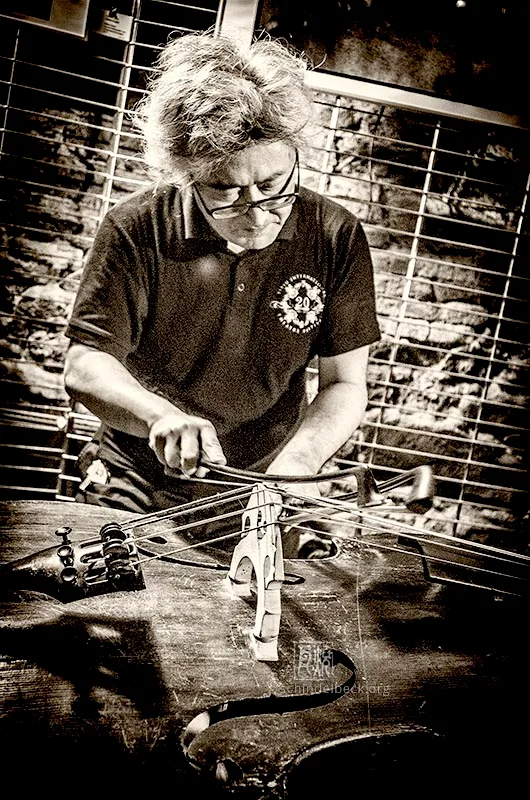
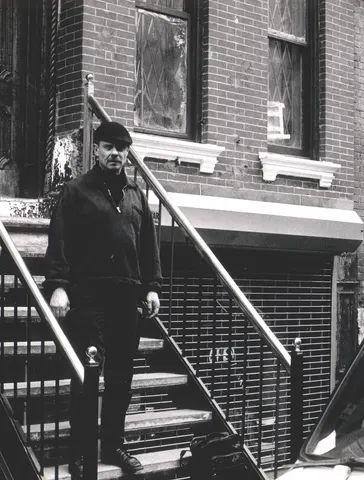
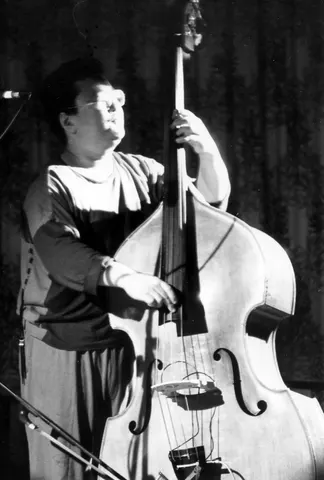
Tetsu Saitoh playing double bass. CC BY-SA 4.0 — https://commons.wikimedia.org/wiki/File:Tetsu-Saito-photo-schindelbeck-IMGP4992_190518_800p.jpg

Tetsu Saitoh (齋藤徹) was a Tokyo-born double bassist, composer and bandleader who spent four decades moving between free improvisation, Argentine tango, Brazilian choro, Korean shamanic music and Japanese traditional instruments, and who served as a frequent bridge between the Japanese improvised-music scene and its European counterpart. He was born on October 27, 1955, and passed away on May 18, 2019, after a long battle with cancer.
He came to the instrument late. He began playing the bass at 22, taught himself at first, and then studied with Keizo Mizoiri, a former high school classmate, and with Nobuyoshi Ino, to whom Mizoiri introduced him. By day he practiced at Gaya, an art gallery and live music club in his neighborhood. The owner liked what he heard and put him on stage in the evenings, and so Saitoh began playing free jazz in front of an audience about twice a month, alongside the alto saxophonist Kazutoki Umezu, the pianists Yoriyuki Harada and Katsuyuki Itakura, and the baritone saxophonist Shoji Ukaji. In the early 1980s he was also a member of Kuchu Sampo (Walk in the Cosmos), a collective of artists, musicians and dancers.
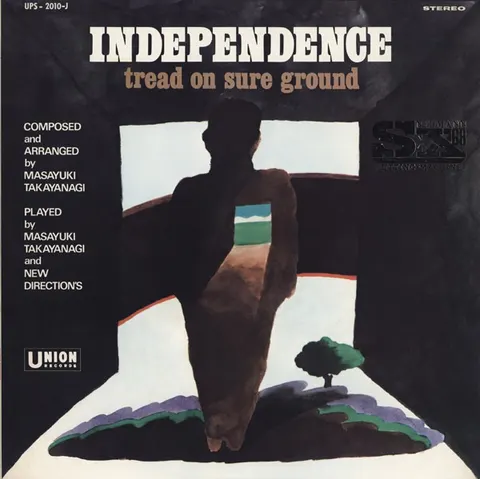
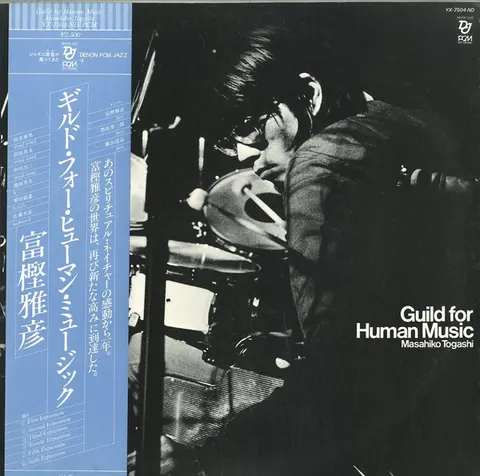
Gaya closed in 1984. According to his own biography, Saitoh then spent six months in the group of the percussionist Masahiko Togashi before moving to the group led by the guitarist Masayuki Takayanagi. One tape of that period survives: on December 8, 1985, at Aketa no Mise in Tokyo, Takayanagi was recorded live with Ino and Saitoh as his two bassists, and the set was issued in 2025 as Holy Holy by Takayanagi's Angry Waves. On May 7, 1986, at Vario Hall at the Shobi College of Music in Tokyo, he recorded his first album, the unaccompanied Tokio Tango. Two lasting commitments began the same year. On the advice of the cellist Keiki Midorikawa he started playing tango, joining a tango orchestra as bassist and arranger, and he had the chance to play with Osvaldo Pugliese when the orchestra performed in Buenos Aires. He also became musical director of the theater group TAO, a post he held for every one of its productions through at least 1996. In 1989 he formed a group to play the music of Astor Piazzolla, recorded as Tetsu Plays Piazzolla at Kuchu Sampo Kan in Yugawara in February 1990.
The next few years show how wide his range had become. In December 1988 he recorded Coloring Heaven with Barre Phillips, the American bassist who became one of his most frequent partners, plus the drummer Sabu Toyozumi and the 17-string koto player Hideaki Kuribayashi; Phillips sits in the right channel and Saitoh in the left. He toured North America in 1988 with a free jazz trio of himself, Ukaji and Toyozumi. In 1990 he founded the String Quartet of Tokio, with Kuribayashi, the tsugaru shamisen player Michihiro Satoh and the guitarist Koichi Hiroki, then expanded it into an eleven-piece orchestra that added sho, hichiriki and biwa. For TAO's staging of White-Whiskered Lear he assembled seven koto players around his bass, and the music was recorded as Blue Poles of Lear (TAO, 1992).
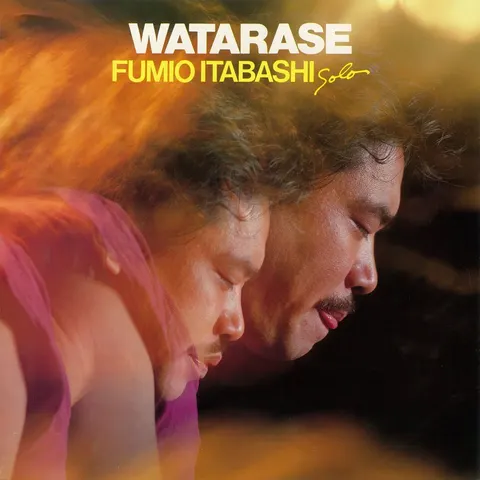
Korea changed his rhythm. In May 1992 he and Umezu traveled to Chindo and Seoul to record with Korean shamans, an encounter that produced a track on Umezu's Shin Myong (JVC, 1992) and introduced Saitoh to the shaman musician Kim Suk Chul. He organized the first Eurasian Echoes concert in Tokyo in July 1992, conducting a 14-piece band of bass, oboe, guitar and Japanese and Korean traditional instruments playing his compositions, and took the project to Seoul in 1993 and 1994 with the pianist Fumio Itabashi and the koto player Kazue Sawai. Itabashi's album Tuki-no-tubo, recorded at Kuchu Sampo Kan in December 1992 with Saitoh and Sawai among the players, appeared in 1993, and the same name was given to the Tsuki no Tsubo trio of Saitoh, Itabashi and Sawai, which toured Korea, Laos and Thailand in November 1994. Eurasian Echoes was later performed in Japan, Korea and Singapore.
From 1994 Europe became a second home. That year he and Sawai formed the group Fifth Season with Phillips, the percussionist Alain Joule and the soprano saxophonist Michel Doneda, toured France, Belgium and Switzerland, and in August he took part in the Avignon International Contrabass Festival directed by Phillips. In 1995 he formed the trio ARC with Doneda and Joule. The partnership with Doneda lasted roughly thirty years and produced the long-running Spring Road duo series. On October 13, 1996, at the Yokohama Jazz Promenade Festival, he played a duo with Joëlle Léandre, released by Omba Records in 1998. In October 2000 he recorded across Japan in a bass trio with Phillips and Ino, which became October Bass Tri-logue. On May 23, 2003, at the Festival International de Musique Actuelle de Victoriaville in Quebec, he joined Phillips, Léandre and William Parker for a four-bass set dedicated to the memory of Peter Kowald, released as After You Gone; four days earlier he had played the same festival in a quintet with Doneda, Sawai, the guitarist Kazuo Imai and the percussionist Lê Quan Ninh.
At home he built an infrastructure of his own. His Travessia label began with Orbit 1 (TRV-001) in 2006 and reached Travessia (TRV-020) in 2016, documenting his duos with the guitarist Kazuo Imai and the violinist Naoki Kita, his encounters with Doneda and Phillips, and his partnership with the German bassist Sebastian Gramss, with whom he recorded Raku on a German tour in June 2013. He appeared at the Hawai'i Contrabass Festival in Honolulu in 2006, played solo at ORT in Wuppertal in 2010, and worked repeatedly with the dancers Jean Sasportes and Ryotaro Yahagi, including projects with disabled performers. Other work included two double concertos for the Kanagawa Philharmonic, five television programs about improvisation for NHK, and lectures at Sophia and Waseda universities.
His last decade was shaped by song. With Kita on violin and the vocalist Junko Satoh he formed the Looking for Songs trio, which recorded Flooded Forest and Mugasariuta in 2010 and 2011 and a live album from the Pole Pole Za space in Tokyo in 2012. Its tango-flavored song cycle Operita, released in 2016 as a CD and DVD recorded at the Gewand Hotel in Hiroshima, was written while he was mourning his mother's death.
In April 2016 he recorded a session at Radio France in Paris with Doneda and the pianist Frédéric Blondy, which came out in 2021 as Spring Road 16, his first posthumous release. He celebrated his 60th birthday with a solo concert at Sonorium in Tokyo on July 8, 2016, released as Travessia, and described it as a possible fresh start; soon afterward cancer symptoms limited his activity for several months. He kept working, and his last video collaboration was with the traditional musician Shun'ichiro Hisada. Tetsu Saitoh passed away on Saturday, May 18, 2019, shortly before noon. Free Jazz Blog's obituary quoted his credo: "I will always try to sing my own song."
Saitoh played an 1880s bass he had found in Belgium, a lion-head instrument that he said was famous for its carved scroll, and he was known for unusual tunings and for techniques he taught to younger bassists. His solo playing leaned on gut strings, harmonics, extended bowing and prepared bass, with percussion (a Korean gong, the ching) often within reach. He described improvisation in terms of three elements, now, here and myself, and saw the pursuit of free improvisation as a road toward what he called "anonymous universality."
The repertoire around that core was unusually broad. There was Piazzolla and nuevo tango, including a reading of "Escualo" on Travessia; Brazilian choro, with Pixinguinha pieces on Choros & Improvisations Live (2016, with the saxophonist Taiichi Kamimura) and Baden Powell's "Berimbau"; the Bach Cello Suite No. 6 Allemande; "Baron Mingus," a swinging original quoting Charles Mingus; and "69Q" by Anthony Braxton, which the Ohrai Trio played on Clouds Move (2000). He also drew on Korean shamanic music (Kim Suk Chul and the Chindo musicians), Okinawan and Yaeyama folk songs, gagaku and koto music, butoh and theater.
His relationship to the word jazz was complicated. In a 1992 interview in the magazine Jazz Hihyo, he recalled being asked abroad why a Japanese musician played jazz, said he did not think he had been playing jazz, and added that traditional Japanese instrumentalists understood him better than jazz musicians did. His records nonetheless sit squarely in the jazz and free-improvisation world, filed under jazz on Discogs, released on labels such as Les Disques Victo and Relative Pitch, and reviewed in the jazz press. This profile treats him as a free-jazz and improvised-music bassist whose work absorbed a large share of the world's folk traditions, rather than the other way around.
- Tokio Tango: Bass Solo Improvisations (1986, ALM Records AL-5002) - His debut and a statement of intent, an unaccompanied bass record made on May 7, 1986. Discogs - Tokio Tango
- Joëlle Et Tetsu: Live at Yokohama Jazz Promenade Festival 1996 (1998, Omba Records OMBA-003CD) - A duo with Joëlle Léandre, recorded October 13, 1996 at Kanagawa Kenmin Hall. Discogs - Joëlle Et Tetsu Buy
- October Bass Tri-logue (2001, PJL / Jazzbank MTCJ-1018) - Three basses (Saitoh, Barre Phillips, Nobuyoshi Ino), recorded in Saitama, Hyogo and Hiroshima over a week in October 2000. Discogs - October Bass Tri-logue Buy
- After You Gone (2004, Les Disques Victo VICTO cd 091) - Phillips, Léandre, William Parker and Saitoh in a four-bass set, recorded live at Victoriaville on May 23, 2003. Apple Music - After You Gone Listen · Buy
- Une Chance Pour L'Ombre (2004, Les Disques Victo VICTO cd 094) - The quintet with Kazue Sawai, Michel Doneda, Kazuo Imai and Lê Quan Ninh, recorded live at Victoriaville on May 19, 2003. Apple Music - Une Chance Pour L'Ombre Listen · Buy
- Raku: Double the Double Bass #3 in Germany 2013 (2014, Travessia TRV-015, with Sebastian Gramss) - Two basses, recorded in four German cities in June 2013, with Harald Kimmig on violin and Phillips as guests. Bandcamp - Raku Listen · Buy
- Travessia (2016, Travessia TRV-020) - His last solo album, recorded live at Sonorium, Tokyo, on July 8, 2016, for his 60th birthday. YouTube - sound clips from the CD Listen · Buy
- Spring Road 16 (2021, Relative Pitch RPR 1121, with Michel Doneda and Frédéric Blondy) - A Radio France session from April 16, 2016, released after his death. Apple Music - Spring Road 16 Listen · Buy
Tetsu Saitoh (齋藤徹) - Full Discography
Japanese double bassist and composer, born in Tokyo on 27 October 1955; passed away on 18 May 2019. Discogs artist 372527.
Name variations on record: Tetsu Saito, Saitoh Tetsu, Saito Tetsu, T. Saito, Tetsu Saïtoh, 斎藤徹, 斉藤徹, 斎藤 徹, 齋藤 徹, 齋藤徹. He preferred the spelling Saito, and Discogs files his releases under Saitoh.
Group affiliations: Une Chance Pour L'Ombre, Sebastian Gramss BassMasse, Bass Ensemble Gen311, 往来トリオ (Ohrai Trio), Looking For Songs Trio, Tetsu Saitoh Tango Groove Collective.
Leader
Solo records and records under his own name, in order of release.
| Album | Year | Label | Personnel | Notes | Listen | Buy |
|---|---|---|---|---|---|---|
| Tokio Tango: Bass Solo Improvisations (ベース ソロ インプロヴィゼイションズ) | 1986 | ALM Records, AL-5002 | Tetsu Saitoh (bass) | His first album. Unaccompanied. Recorded on 7 May 1986 at Vario Hall, Shobi College of Music, Tokyo. Seven tracks: "Tokio Tango," "Watch Out The Bullets," "The Line Of Desire," "For Apple Sally," "Mai Dance Lesson," "Running To Bird," "Strange March To....." Discogs master 2648153. | not found | Amazon |
| Coloring Heaven (彩天) | 1990 | Aketa's Disk, AD-27CD | Tetsu Saitoh (bass, left channel), Barre Phillips (bass, right channel), Sabu Toyozumi (drums, percussion), Hideaki Kuribayashi (17-string koto) | Recorded in December 1988 at Kuchu-Sanpokan, Yugawara. Eleven tracks including "To The Promenade," two "Coloring Heaven" pieces, "Okinawa Mama" and "Invitation." Liner notes by Hyokichi Ohnari and Saitoh. | not found | Amazon |
| Tetsu Plays Piazzolla | 1990 | ALM Records, ALCD-5003 | Tetsu Saitoh (bass, producer), Yoshihiro Tanabe (bandoneon, guitar), Koichi Hiroki (guitar), Ryojiro Furusawa (percussion, melodica) | Recorded at Kuchu Sampo Kan, Yugawara, on 19 and 20 February 1990. Nine Piazzolla pieces including "Fuga y Mysterio," "Oblivion" and "Resurreccion Del Angel." | not found | Amazon |
| Blue Poles Of Lear | 1992 | TAO, TAO-001 | Tetsu Saitoh (bass, percussion, synthesizer, producer), Koichi Hiroki (guitar), eight koto and 17-string koto players: Ayako Kawai, Hideaki Kuribayashi, Kazuhiro Iseki, Keita Naritsuka, Noriko Tsuboi, Shinobu Higashiyama, Shoko Hikage, Yasuhisa Murayama | Music for the theater group TAO's staging of White-Whiskered Lear, Part II. Eleven tracks including "The Sea," "Battle," "Demon" and "Storm." Reissued with catalog number LMCD-1309. | not found | Amazon |
| The String Quartet Of Tokio & Orchestra | 1992 | TAO, TAO-002 | Tetsu Saitoh (bass, composer, producer), Keizo Mizoiri (bass), Koichi Hiroki (guitar), Hideaki Kuribayashi (17-string koto), Michihiro Satoh (tsugaru shamisen), Junko Ueda (biwa, voice), Wil Offermans (flute), Yumiko Mizoiri (hichiriki, oboe, English horn), Kenichiro Muraoka and Ko Ishikawa (sho), Kazuko Habu (percussion) | Six string quartet pieces plus orchestral works including "Line For Orchestra" and "King Lear Part. 1." | not found | Amazon |
| Panari | 1996 | JABARA, JAB-03 | Tetsu Saitoh (contrabass), Katsumi Nakamori (flute), Akira Kurushima (voice, shamisen), Chohkyuu Miyata (voice, shamisen) | Recorded 26 February 1996. Original pieces plus Korean and Yaeyama traditional songs. Produced by Mori Jun. | not found | Amazon |
| Stone Out (with Koto Vortex) | 1996 | Omba Records, OMBA-002 | Tetsu Saitoh (contrabass, ching, glockenspiel, composer, producer), Keita Itoh (contrabass), Kyoko Kuroda (piano, ching, glockenspiel), Koto Vortex (koto ensemble) | Includes "Stone Out" (1995), commissioned by the koto group Koto Vortex and first performed in April 1995, and "Just Accept" (1994). Produced by Saitoh and Yoshiyuki Kitazato. | not found | Amazon |
| Solo [Contrabajeando] | 1997 | JABARA, JAB-04 | Tetsu Saitoh (contrabass) | Twelve solo pieces including "Contrabajeando," "Verano Portenio," "Berimbau" and a Bach "Sarabande." Discogs master 1149760. | not found | Amazon |
| InvitAtion: Contrabass Solo (インヴィテイション) | 1999 | Ohrai Records, ORCD-001 | Tetsu Saitoh (contrabass, composer) | Performed on 30 November 1998 at Eniss Hall, Nogi. Eleven tracks including "Invitation," "Cyclo," "Tsuru - Crane" and "Ne Me Quitte Pas." | not found | Amazon |
| Strings & The Moon (Kadima Collective Triptych #4) | 2012 | Kadima Collective | Tetsu Saitoh (double bass); Bass Ensemble Gen311: Kazuhiro Tanabe, Masao Tajima, Pearl Alexander, Takashi Seo (double bass); Kazue Sawai (13-string koto, 17-string bass koto); Lauren Newton (vocals) | CD, DVD and 76-page art book. The CD was recorded at Izuruba, Tokyo, on 17 October 2005; the DVD documents Bass Ensemble Gen311 on 5 and 6 May 2011 at Izuruba and Kid Ailack Art Hall. | not found | Amazon |
| Contrabass Solo At Ort | 2012 | Travessia, TRV-009 | Tetsu Saitoh (contrabass) | Eight untitled solo improvisations recorded at ORT, Wuppertal, Germany, on 2 and 10 June 2010. | not found | Amazon |
| Travessia | 2016 | Travessia, TRV-020 | Tetsu Saitoh (double bass) | Recorded live at Sonorium, Tokyo, on 8 July 2016, at his 60th birthday concert. Ten tracks: "Theme Of Queen Medea," selections from "Stone Out," "Invitation," "Night" from Flooded Forest Suite, "Naquelle Tempo," "Baron Mingus," "Escualo," the Allemande from Bach's Cello Suite No. 6, "Kiri No Naka No Fukei" and "Toda Mi Vida." | YouTube (sound clips) | Amazon |
Co-Leader and Collaborative Releases
Releases billed jointly with other leaders, groups or ensembles, in order of release.
| Album | Year | Label | Co-billed with | Personnel | Notes | Listen | Buy |
|---|---|---|---|---|---|---|---|
| Shin Myong (神命) | 1993 | Cantabile / Seoul Records, SRCD-1088 | Kim Suk Chul, Ahn Sook Sun, Lee Kwang Soo | Kim Suk Chul, Ahn Sook Sun, Lee Kwang Soo and Tetsu Saitoh | Five tracks of Korean shaman music including "Salpuri Kuum" and "Hochuk Sanjo"; recorded 22 November 1992 at '91 Studio, Seoul. Reissued in 2000 on Woongjin Music as Shinmyung (WJAC0376). | not found | Amazon |
| Yaeyama Yugyoh (八重山遊行) | 1996 | JABARA, JAB-01/02 | Kazue Sawai | Tetsu Saitoh (contrabass), Kazue Sawai (koto, 17-string koto) | Two CDs. Recorded on 24 February 1996 at atelier YU, Ishigaki, Okinawa. | not found | Amazon |
| M'uoaz | 1997 | Scissors, SCISSORS-002 | Michel Doneda, Alain Joule | Michel Doneda (soprano and sopranino saxophones), Tetsu Saitoh (double bass), Alain Joule (percussion) | Recorded 20 and 21 November 1995 at the Talvera studios, Cordes-sur-Ciel, France. Four tracks. | not found | Amazon |
| Joëlle Et Tetsu: Live At Yokohama Jazz Promenade Festival 1996 | 1998 | Omba Records, OMBA-003CD | Joëlle Léandre | Joëlle Léandre (double bass, voice), Tetsu Saitoh (double bass, percussion) | Recorded 13 October 1996 at Kanagawa Kenmin Hall. Six tracks including "Promenade, Promenade," "Requiem For Egoism" and "Yokohama Sweets." Produced by Jun-ichi Morita and Yoshiyuki Kitazato. | not found | Amazon |
| Ohrai (往来) (as Ohrai Trio) | 1999 | Ohrai Records, ORCD-002 | Eiichi Hayashi, Shota Koyama | Eiichi Hayashi (alto saxophone, percussion), Tetsu Saitoh (contrabass, percussion), Shota Koyama (drums, percussion, harmonica) | Eleven tracks including "Lotus Blossom," "Come Sunday," "My One And Only Love" and "Goodbye Pork Pie Hat." | not found | Amazon |
| Pagan Hymn | 2000 | JABARA, JAB-12 | Michel Doneda, Chon Chul-Gi, Noriko Tsuboi, Zai Kuning | Tetsu Saitoh (bass, ching, percussion), Michel Doneda (soprano saxophone), Chon Chul-Gi (janggu, ching), Noriko Tsuboi (17-string koto, ching), Zai Kuning (voice, harmonium) | Five parts recorded on 11, 14 and 16 November 1999 at Iwakuni (Yamaguchi), Kashima (Saga) and Naima (Ohita). | not found | Amazon |
| Live At Hall Egg Farm | 2000 | Sparkling Beatnik Records, sbr0020 | Kazue Sawai, Michel Doneda | Tetsu Saitoh (string bass, prepared bass, Korean ching), Kazue Sawai (koto, bass koto, ajaeng), Michel Doneda (soprano saxophone, bells) | Recorded at a concert on 30 October 1999 near Tokyo. Four parts of "Three Day Moon." Liner notes by Brett Larner. | not found | Amazon |
| Koh-Kan: Live At Seitan Music Hall (星誕音楽堂) | 2000 | Ohrai Records, ORCD-003 | Michel Doneda | Tetsu Saitoh (contrabass, Korean gong, percussion), Michel Doneda (soprano and sopranino saxophones) | Live recording of 3 November 1999 at Seitan Music Hall; mastered 9 December 1999. Five parts titled "Kaze No ..." (wind). | not found | Amazon |
| Clouds Move (as Ohrai Trio) | 2000 | Ohrai Records, ORCD-005 | Eiichi Hayashi, Shota Koyama | Eiichi Hayashi (alto and sopranino saxophones), Tetsu Saitoh (double bass, percussion), Shota Koyama (drums) | Recorded live at Aketa no Mise, Tokyo, 21 June 2000. Mostly Saitoh originals, plus Anthony Braxton's "69Q" and Baden Powell and Vinicius de Moraes's "Berimbau." | not found | Amazon |
| Syunchan-ponpon | 2000 | Ohrai Records, ORCD-06 | Syunchan (Shunichiro Hisada), Kazue Sawai, Masanori Hoashi, Nozomu Machinaga | Syunchan, Shunichiro Hisada, Tetsu Saitoh, Kazue Sawai, Masanori Hoashi, Nozomu Machinaga | Five tracks including "La Danaide" and "Moon Pot." | not found | Amazon |
| Shinmyung (신명) | 2000 | Woongjin Music, WJAC0376 | Ahn Sook Sun, Kim Suk Chul, Lee Kwang Soo | Ahn Sook Sun, Kim Suk Chul, Lee Kwang Soo, Tetsu Saitoh | Korean reissue of the 1993 Shin Myong recordings. | not found | Amazon |
| Unicorn (無翼鳥) | 2000 | Woongjin Music / Sound Space, WJAC0383 | Kim Suk Chul and Korean musicians, Fumio Itabashi, Kazue Sawai | Kim Suk Chul, Sim Sangnam, Lee Tae Baek, Jeong Cheolgi, Kim Jung-Hee, Gim Seonga, Tetsu Saitoh, Fumio Itabashi, Kazue Sawai | Five tracks including "Prologue." One of the Seoul studio recordings made alongside the Eurasian Echoes concerts. | not found | Amazon |
| October Bass Tri-logue | 2001 | PJL / Jazzbank, MTCJ-1018 | Barre Phillips, Nobuyoshi Ino | Barre Phillips, Nobuyoshi Ino, Tetsu Saitoh (basses) | Seven tracks recorded 9 October 2000 at Yamaneko Studio, Ogose, Saitama; 14 October at Your Sign, Ashiya, Hyogo; and 16 October at Aster Plaza, Hiroshima; mastered 7 March 2001. Saitoh produced and wrote the Japanese liner notes. | not found | Amazon |
| Spring Road 01 | 2002 | Scissors, SCISSORS-003 | Michel Doneda | Michel Doneda (soprano and sopranino saxophones), Tetsu Saitoh (contrabass, harmonium, Korean gong) | First of the Spring Road duo recordings. Six tracks named for the days of a late May and early June session. | not found | Amazon |
| Salp'uli (살풀이) | 2002 | Starmax / Sound Space, SMCD-040 | Kim Suk Chul, Park Byeong Cheon, Kim Dae Re | Kim Suk Chul, Park Byeong Cheon, Kim Dae Re, Tetsu Saitoh; track 5 adds Ahn Sook Sun, Kazue Sawai and Fumio Itabashi | Six pieces of Korean shaman music, recorded in Korea. Saitoh plays bass on tracks 1, 3, 4, 5 and 6. | not found | Amazon |
| 弦打 Session | 2002 | Starmax / Sound Space, SMCD-038 | Gim Seonga, Kim Myeong Dae, Lee Tae Baek, Jeong Cheolgi | Gim Seonga, Kim Myeong Dae, Lee Tae Baek, Jeong Cheolgi, Tetsu Saitoh | Three long tracks: "Han-Obaeknyon," "Neok-Puri" and "Sal-Puri." | not found | Amazon |
| After You Gone | 2004 | Les Disques Victo, VICTO cd 091 | Barre Phillips, Joëlle Léandre, William Parker | Barre Phillips, Joëlle Léandre, William Parker, Tetsu Saitoh (double bass, voice) | Recorded live on 23 May 2003 at the 20th Festival International de Musique Actuelle de Victoriaville, in memory of Peter Kowald. Six tracks. Liner notes by Bert Noglik. | Apple Music | Amazon |
| Une Chance Pour L'Ombre | 2004 | Les Disques Victo, VICTO cd 094 | Kazue Sawai, Michel Doneda, Kazuo Imai, Lê Quan Ninh | Michel Doneda (soprano and sopranino saxophones), Kazue Sawai (koto), Kazuo Imai (acoustic guitar), Lê Quan Ninh (percussion), Tetsu Saitoh (double bass) | Recorded live on 19 May 2003 at the 20th Festival International de Musique Actuelle de Victoriaville. Two tracks. A second release of the quintet, recorded 28 May 2003 at Lorgues, France, appeared on Bab-Ili (LEF 02) the same year. | Apple Music | Amazon |
| Percussive Roman (パーカッシブ・ロマン) | 2004 | Aketa's Disk, MHACD-2610 | Shoji Aketagawa, Midori Onaga | Shoji Aketagawa (piano, ocarina), Tetsu Saitoh (bass), Midori Onaga (percussion) | Recorded live at Aketa no Mise, Tokyo, on 3 February 2004. Includes "St. Thomas" and "Airegin Rhapsody." | not found | Amazon |
| Bass Duet | 2005 | Senkoji, SENCD-002 | Nobuyoshi Ino | Nobuyoshi Ino, Tetsu Saitoh (basses) | Three long tracks ("Sethu," "Dan," "A Um"), recorded 3 March 2004. | not found | Amazon |
| Orbit 1 | 2006 | Travessia, TRV-001 | Kazuo Imai, Michel Doneda | Tetsu Saitoh (contrabass), Kazuo Imai (guitar), Michel Doneda (soprano saxophone) | Recorded live at Plan-B, Nakano, Tokyo, on 1 March 2006. The first Travessia release. | not found | Amazon |
| Orbit 2: Voyaging Antipodes | 2006 | Travessia, TRV-002 | Kazuo Imai, Barre Phillips, Lauren Newton, Jacques Demierre, Urs Leimgruber | Tetsu Saitoh (contrabass), Kazuo Imai (guitar), Barre Phillips (bass), Lauren Newton (voice), Jacques Demierre (piano), Urs Leimgruber (saxophone) | Recorded live, with no edits, at Asahi Art Square on 6 October 2005. | not found | Amazon |
| Carré Bleu: In Memory Of Bernard Prouteau | 2007 | Travessia, TRV-003 | Frédéric Blondy, Michel Doneda | Tetsu Saitoh (contrabass), Frédéric Blondy (piano), Michel Doneda (soprano saxophone) | Recorded live at Carré Bleu, Poitiers, France, on 1 February 2007. | not found | Amazon |
| Spring Road: Duo Japan Tour 2003 | 2007 | Travessia, TRV-004 (DVD) / TRV-005 (CD) | Michel Doneda | Michel Doneda (soprano saxophone), Tetsu Saitoh (double bass) | A 39-minute DVD documentary directed by Mai Saitoh plus a seven-track CD recorded 15 March to 15 April 2003 in Ashiya, Tokyo, Hakata, Yokohama and Hiroshima. | not found | Amazon |
| Orbit Zero | 2011 | Travessia, TRV-007 | Kazuo Imai | Tetsu Saitoh (contrabass), Kazuo Imai (guitar) | Recorded live at PlanB, Nakano, Tokyo, on 28 December 2009. | not found | Amazon |
| SoNAISH Gut Bass Duo | 2011 | Sonaish, sonaish 001 | Nobuyoshi Ino | Tetsu Saitoh (contrabass, left channel), Nobuyoshi Ino (contrabass, right channel) | Recorded at Izuruba on 8 December 2005. Nine tracks including "Moon Pot," "Saudade," "Contrabajeando" and two versions of "Ombak Hitam." | not found | Amazon |
| Flooded Forest (浸水の森) | 2011 | Travessia, TRV-008 | Naoki Kita, Yoshiaki Sato | Tetsu Saitoh (contrabass, composer), Naoki Kita (violin), Yoshiaki Sato (accordion) | Recorded live on 22 December 2010 at space&cafe Polepole-za, Higashi-nakano. Composed on commission from the painter Yuji Kobayashi, whose painting is the cover. | not found | Amazon |
| Mugasariuta (むがさり唄) | 2011 | Marmelo, MML-001 | Naoki Kita, Junko Satoh | Tetsu Saitoh (contrabass, music director, arranger), Naoki Kita (violin), Junko Satoh (vocals) | Recorded at Izuruba, Tokyo, in October 2010. Fourteen tracks including "Bengawan Solo," "Gracias A La Vida" and "La Golondrina." | not found | Amazon |
| Looking for Songs: Live At Pole Pole Za (うたをさがして) | 2012 | Travessia, TRV-010 | Naoki Kita, Junko Satoh | Tetsu Saitoh (contrabass), Naoki Kita (violin), Junko Satoh (vocals) | Twelve tracks including "Landscape In The Mist" (霧の中の風景) and "O Gloriosa Domina." | not found | Amazon |
| Schwarm (as Sebastian Gramss Bassmasse) | 2013 | gligg Records, 080 | Sebastian Gramss; featuring Barre Phillips, Achim Tang, Robert Landfermann, Ulrich Phillipp | A large ensemble of double bassists led by Sebastian Gramss, including Barre Phillips and Tetsu Saitoh | Recorded live at the Museum für angewandte Kunst, Cologne, during the 2012 Kölner Musiknacht. Six parts of a Gramss composition. | not found | Amazon |
| Jean Sasportes & Tetsu Saitoh With Friends In Tokyo, May 2012 | 2013 | Travessia, TRV-012 | Jean Sasportes | Jean Sasportes (dance), Tetsu Saitoh (contrabass), with guests | DVD of three Tokyo performances: 19 May at Pole Pole Za, 21 May at Kid Ailack Art Hall and 27 May at the Tokyo Metropolitan Museum. | not found | Amazon |
| Raku: Double The Double Bass #3 In Germany 2013 | 2014 | Travessia, TRV-015 | Sebastian Gramss | Tetsu Saitoh, Sebastian Gramss (double bass); guests Harald Kimmig (violin, track 4), Barre Phillips (double bass, track 7) | Eight tracks, about 49 minutes, recorded in June 2013 in Darmstadt, Munich, Freiburg and Heidelberg. Liner notes gloss raku as enjoyment. | Bandcamp | Amazon |
| Duo Improvisation Live At Kid Ailack Hall (Mei) | 2014 | Travessia, TRV-014 | Naoki Kita | Tetsu Saitoh (contrabass), Naoki Kita (violin) | Two long improvisations, "Moonlight Through Window" and "The Sun And The Moon." | not found | Amazon |
| Six Trios Improvisations With Tetsu & Naoki | 2016 | Travessia, TRV-018 | Naoki Kita | Tetsu Saitoh (contrabass), Naoki Kita (violin), with five guest musicians across the sessions | Eight tracks recorded between July 2014 and October 2015 at Super-Deluxe, Kid Ailack Hall, Studio Es, Ko-en Dori Classics and Pole Pole Za, ending with a special track based on Article 9 of the Constitution of Japan. | not found | Amazon |
| Choros & Improvisations Live | 2016 | Travessia, TRV-019 | Taiichi Kamimura | Taiichi Kamimura (tenor and soprano saxophones), Tetsu Saitoh (contrabass) | Recorded live at Kid Ailack Art Hall on 27 January 2016. Nine tracks, mostly Brazilian choro, including "Cheguei," "Naquele Tempo" and "Desvairada." | not found | Amazon |
| Spring Road 16 | 2021 | Relative Pitch Records, RPR 1121 | Michel Doneda, Frédéric Blondy | Michel Doneda (soprano and sopranino saxophones), Frédéric Blondy (grand piano), Tetsu Saitoh (double bass) | Recorded by France Musique at Radio France, Paris, on 16 April 2016. Two tracks, "No End Road Pt 1" and "Pt 2." Released posthumously and dedicated to his family. | Apple Music | Amazon |
| Hier, C'etait L'Anniversaire De Tetsu | 2022 | Otooto, OTOOTO0007-202210 | Tetsu Nagasawa | Tetsu Saitoh (contrabass), Tetsu Nagasawa (drums) | Two CDs recorded at OTOOTO on 28 October 2017, the day after his 62nd birthday. Mastered by Toshimaru Nakamura. | not found | Amazon |
Guest, sideman and compilation appearances
Chronological. Credits as listed on Discogs artist 372527.
| Year | Release | Actual leader | Label | Listen | Buy |
|---|---|---|---|---|---|
| 1987 | El Jaguar Del Bandoneon | Morio Agata | Discogs master 654217 | not found | Amazon |
| 1992 | Shin Myong | Kazutoki Umezu | Zen / JVC, VICG-8027 | not found | Amazon |
| 1993 | Tuki-no-tubo (月の壺) | Fumio Itabashi | Mix Dynamite, MD-004 | not found | Amazon |
| 1993 | Eurasian Echoes | Eurasian Echoes | Discogs master 4000207 | not found | Amazon |
| 1996 | Eurasian Echoes '94 | Eurasian Echoes | Discogs master 1554444 | not found | Amazon |
| 1999 | Indistancing | Brett Larner / Shoko Hikage / Philip Gelb | Leo Lab | not found | Amazon |
| 1999 | The King Of Bass (低音王) | Various | Discogs master 3283591 | not found | Amazon |
| 2001 | Sakura: Ohrai Trio Live | Ohrai Trio | Sakura Records | not found | Amazon |
| 2001 | Improvised Music From Japan (10-CD box) | Various | Improvised Music From Japan | not found | Amazon |
| 2001 | Deluxe Improvisation Series Vol. 1: 2000 | Various | ASE | not found | Amazon |
| 2002 | Deluxe Improvisation Festival 2001: Day One | Various | ASE | not found | Amazon |
| 2004 | Improvised Music From Japan 2004 | Various | Improvised Music From Japan | not found | Amazon |
| 2004 | Poem Song (Joy In The Universe) | Joseph Jarman | Discogs master 1444112 | not found | Amazon |
| 2005 | Life Time | Shoji Aketagawa / Tetsu Saitoh Duo | Aketa's Disk | not found | Amazon |
| 2005 | Musique Pour 30 Chaises: Festival Musique Action 2001 / 2003 | Various | off/recordings | not found | Amazon |
| 2013 | Ftarri Collection | Various | Meenna (7-CD set) | not found | Amazon |
| 2013 | Live At Space Who | Barre Phillips / Bass Ensemble Gen311 | Travessia | not found | Amazon |
| 2014 | Thinking Of ... (homage to Stefano Scodanibbio) | Sebastian Gramss | WERGO | Apple Music | Amazon |
| 2016 | Ftarri Collection 4 | Various | Meenna | not found | Amazon |
| 2025 | Holy Holy (as Takayanagi's Angry Waves; recorded live at Aketa no Mise, 8 December 1985, with Nobuyoshi Ino on the second bass) | Masayuki Takayanagi | Jinya Disc, B-39 | not found | Amazon |
- Kazutoki Umezu - fellow regular at the Gaya club in Saitoh's early years, and the saxophonist who traveled with him to Chindo and Seoul in May 1992. Saitoh plays bass on "Che-Sok-Kut," recorded in Chindo on May 17, 1992, on Umezu's Shin Myong (JVC, 1992).
- Fumio Itabashi - pianist in the Tsuki no Tsubo trio with Saitoh and Kazue Sawai; Saitoh plays bass and percussion on Itabashi's Tuki-no-tubo (Mix Dynamite, 1993), recorded at Kuchu Sampo Kan in Yugawara on December 20, 1992, and both are credited artists on the 2000 Korean release Unicorn.
- Joëlle Léandre - duo partner on Joëlle Et Tetsu (Omba, 1998), and one of the four bassists on After You Gone (2004).
- William Parker - one of the four bassists on After You Gone (Les Disques Victo, 2004), recorded at Victoriaville on May 23, 2003.
- Barre Phillips - the bassist closest to him on the international scene: Coloring Heaven (recorded 1988), October Bass Tri-logue (2001), After You Gone (2004), Orbit 2: Voyaging Antipodes (2006), Raku (as a guest, 2014) and the Bass Ensemble Gen311 date Live at Space Who (2013).
- Michel Doneda - the soprano saxophonist with whom he recorded for some three decades, from M'uoaz (1997) and Spring Road 01 (2002) through Carré Bleu (2007) and Spring Road 16 (2021).
- Nobuyoshi Ino - his teacher, and later his partner on October Bass Tri-logue (2001), Bass Duet (2005) and SoNAISH Gut Bass Duo (2011).
- Sabu Toyozumi - the drummer on Coloring Heaven and in Saitoh's 1988 North American free jazz trio.
- Kazue Sawai - the koto player in the Tsuki no Tsubo trio, the Fifth Season group, Yaeyama Yugyoh (1996) and Une Chance Pour L'Ombre (2004).
- Kazuo Imai - the guitarist of the Orbit series (2006 to 2011) and the quintet on Une Chance Pour L'Ombre.
- Naoki Kita and Junko Satoh - violin and voice in the Looking for Songs trio: Flooded Forest (2011), Mugasariuta (2011), Live at Pole Pole Za (2012) and the Kita duo albums of 2014 and 2016.
- Sebastian Gramss - fellow bassist, with Raku (2014) and the Bassmasse recording Schwarm (gligg, 2013), recorded live at Cologne's Museum of Applied Arts in 2012.
- Masayuki Takayanagi - the guitarist and bandleader whose group he joined after Gaya closed in 1984; Saitoh and Nobuyoshi Ino are the two bassists on Holy Holy (Takayanagi's Angry Waves, Jinya Disc, 2025), recorded live at Aketa no Mise on December 8, 1985.
- Masahiko Togashi - the percussionist in whose group he spent six months after Gaya closed, according to his own biography.
- Taiichi Kamimura, Shunichiro Hisada, Jean Sasportes, Ryotaro Yahagi - the saxophonist (Choros & Improvisations Live, 2016), the traditional singer and drummer, and the dance partners of his later years.
- Ryojiro Furusawa - percussion and melodica on Saitoh's Tetsu Plays Piazzolla (ALM, 1990), recorded at Kuchu Sampo Kan, Yugawara, on 19 and 20 February 1990.
- Kyoko Kuroda - pianist on Stone Out (Omba Records, 1996), where she also plays ching and glockenspiel, and on Ausencias: Astor Piazzolla (Jabara, 1998).
More Avant-Garde Jazz Artists
See all 379 Avant-Garde Jazz artists →More Japanese Jazz Artists
See all 262 Japanese artists →- Discogs: Tetsu Saitoh
- Travessia on YouTube
- Tetsu Saitoh at Improvised Music from Japan
- Tetsu Saitoh on JazzProfiles.com
- r/JapaneseJazz
- Improvised Music from Japan: Tetsu Saitoh profile (last updated April 1996)
- Improvised Music from Japan: Tetsu Saitoh interview, from Jazz Hihyo no. 75 (1992)
- Free Jazz Blog: "Rest in Peace Sensei Tetsu Saitoh (1955-2019)"
- Free Jazz Blog: "The Art of Japanese Double Bass Master" (November 2016)
- Free Jazz Blog: Tetsu Saitoh, Travessia (April 2017)
- Squidco: Michel Doneda / Frédéric Blondy / Tetsu Saitoh, Spring Road 16
- Honolulu Advertiser: "Contrabass masters connect" (March 24, 2006)
- Schott Music: Tetsu Saitoh
- Discogs: Tetsu Saitoh, artist 372527
- Discogs: Takayanagi's Angry Waves, Holy Holy (Jinya Disc B-39, 2025)
- Wikimedia Commons: Tetsu Saito photograph by Frank Schindelbeck