 JAZZPROFILES lives in the music 1,765 Jazz Artists fully Profiled!
Shigenori Kamiya
Last updated October 21, 2026
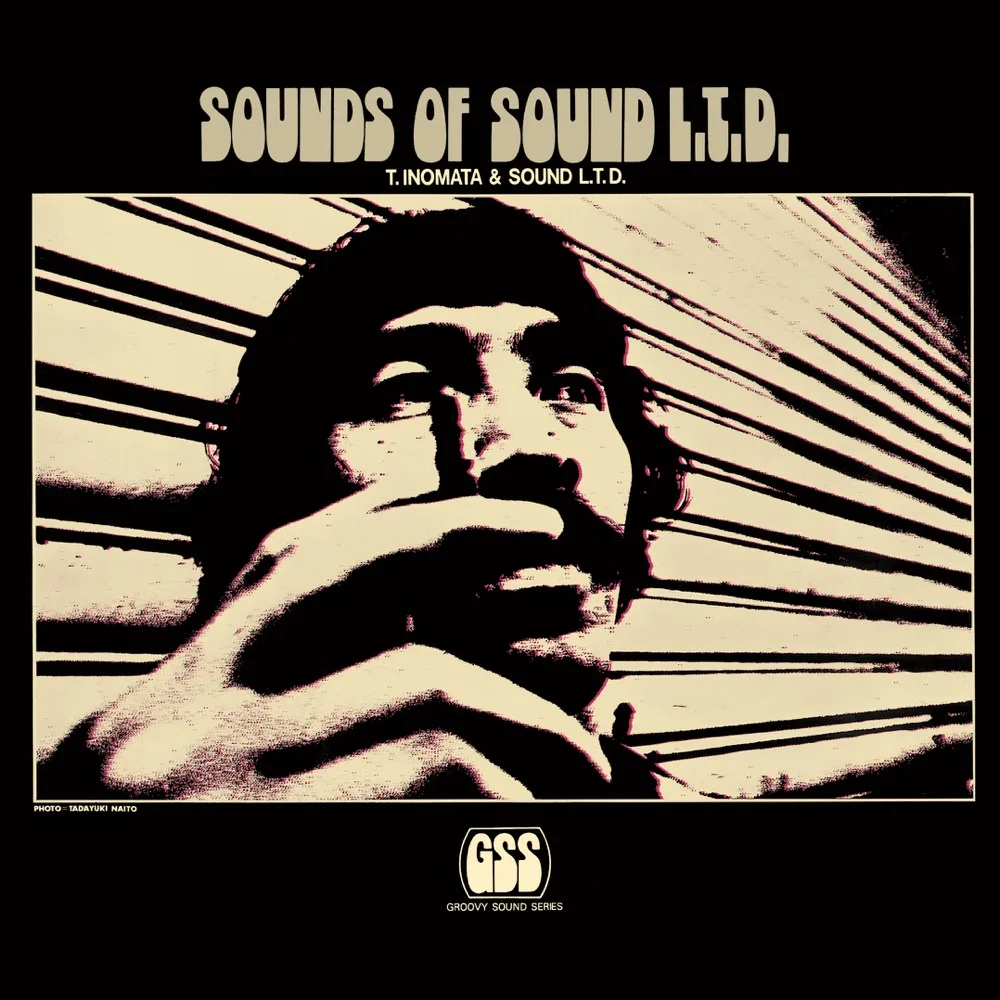
Cover of *Sounds of Sound L.T.D.* (Columbia HS-7001-CT, 1970), by Takeshi Inomata and Sound Limited, on which Shigenori Kamiya plays electric guitar. Standard copyright, all rights reserved, held by Nippon Columbia Co., Ltd. This is not a Creative Commons or public-domain image; it is an album cover shown as an honestly disclosed editorial identification image. — https://music.apple.com/us/album/sounds-of-sound-l-t-d/1721496903 (Apple Music artwork, 1000 x 1000)
Shigenori Kamiya (神谷重徳) is a Japanese guitarist and synthesizer player whose career runs in two bursts of jazz-adjacent work with a long commercial-music stretch in between. The first burst is 1970 to 1972, when he was an electric guitarist in the jazz-rock band of the drummer Takeshi Inomata and a regular on the Tokyo studio scene. The second is 1980 to 1983, when he was making synthesizer records under his own name and playing guitar and synthesizer in the saxophonist Akira Sakata's group Wha-ha-ha. His birth date and birthplace are not publicly documented, so the header above carries no Born field. What is known about his early life comes almost entirely from the liner notes of his own records.
Those notes, as translated on the Rabbit Ears blog, describe a man from a family of artists: the 1982 essay in the Pharaoh no Haka LP names his grandfather as the sculptor Yokoe Yoshizumi, whose works share space with the synthesizers in his renovated Tokyo studio. At Aoyama Academy (Aoyama Gakuin) he fell in love with the guitar and, in the words of the 1980 Mu notes, soon mastered it; the same essay says he also sang in the school chapel for sixteen years and studied science and engineering. The Mu notes say he worked in college with the guitarist Ryo Kawasaki and others, and describe him as a racing driver, both car and motorcycle, whose serious crash in practice left him near death. The 1982 essay dates a racing accident to 1966, after a sixth-place finish at the Japan Grand Prix.
His first documented recordings are from 1970. In March of that year, at Tokyo Studio Centre from the 25th to the 27th, Inomata's Sound Limited recorded its debut, Sounds of Sound L.T.D. (Columbia), with Ryo Kawasaki and Kamiya on electric guitars, Shunzo Ohno and Takashi Kumagai on trumpets, Takao Uematsu on tenor saxophone, Toshiaki Yokota on flute and Yusuke Hoguchi on organ. He is credited again on the Express LP Sound Ltd., recorded on April 4, 11 and 25, 1970, and on "Mustache", the band's track on the live double album Sensational Jazz '70, recorded at Shibuya Public Hall on April 30, 1970. On the June 22, 1970 session for New Rock in Europe: Sound Ltd. 2 (Express), made at Toshiba's studio with the television show Young 720, he is one of two guitarists, with Kimio Mizutani, and he is credited as arranger on Sound Limited's Denon release Sound Special '70 / Popular Hit! Hit! Hit!. Discogs lists Sound Limited among his groups.
Around the same time he turned up in other jazz-rock settings. He plays electric and acoustic guitar on the CBS/Sony Christmas record Rock-In X'mas by the band Love Live Life (1971), with Hideo Ichikawa on keyboards, and for Love Live Life's 10 Chapters of Murder (CBS/Sony, 1972) he is credited with Kosuke Ichihara for composition and arrangement; Discogs tags that record Free Jazz and Jazz-Rock. On the Exciting Up-tight Band's Young A Go Go (CBS/Sony, 1972) he plays electric guitar and organ and arranges, alongside Jun Fukamachi on piano and organ, Shunzo Ohno on trumpet and Toshiaki Yokota on flute. He is the guitarist on Fukamachi's own debut, A Portrait of a Young Man (Polydor, November 1971), with Motohiko Hino on drums. His credits from these years also include folk and pop sessions: Hideko Fujiwara's Watashi no Blues (URC, 1970), Yuzo Kayama's Trip of David (1971), Alice's single "Hashitte Oide Koibito yo" (1972) and an Electone album for Yamaha.
The synthesizer enters the story in 1972. According to Moriaki Takebe's essay in the Pharaoh no Haka LP, Kamiya bought his first synthesizer, an ARP 2600, that year, took it apart to understand it, and was drawn to making his own sounds; the same essay credits him with writing more than 10,000 computer programs. Credits for synthesizer, programming and arranging begin to appear in 1979, with the Makoto Highland Band's Injection (CBS/Sony), where he is credited on synthesizer and as arranger, an operator credit on the Plastic Zoo's Skateboard Junction, and a programming credit on the group Chakra's 1980 album for Victor.
Mu (Canyon, 1980) is the earliest of his albums whose credits and liner notes are documented in detail: he is credited as composer, arranger and synthesizer player. Its sleeve lists a bank of Roland System 700 and System 100 units, a Jupiter 4 and an SH-1, ARP 2500, Omni 2 and Odyssey synthesizers, a Prophet 5, two Roland vocoders and an Apple II computer, and the notes present it as a response to the magazine MU; the engineer Takafumi Fuse is credited with operating the equipment. Discogs files it under Electronic and Jazz, with Fusion, Jazz-Funk and Ambient as styles. Two years later he made Digital Trip: Pharaoh no Haka - Synthesizer Fantasy (Columbia, May 1982), a nine-piece synthesizer interpretation of Keiko Takemiya's manga for the label's Digital Trip series, and he contributed the track エステーリア戦記 to the 1983 compilation Digital Trip Catalogue. In 1982 he and the drummer Shuichi "Ponta" Murakami were co-billed on four Victor LPs in the Rhythm Ware series of numbered rhythm tracks; Discogs describes the Jungle volume as purely drum-machine beats.
Between those records he was in Akira Sakata's circle. In 1980 Sakata, Kamiya and the producer Taku Kashiwabara made the 10-inch Tenoch Sakana for Better Days: Sakata wrote the two tracks on side A and Kamiya the two on side B, "Meuniere" and "Panco", and all three are credited as producers. That same year saw the formation of Wha-ha-ha, a seven-piece group led by Sakata with the vocalist Mishio Ogawa, the keyboardist Shuichi Chino, the percussionist Kiyohiko Senba, the computer operator Fuse, and Kamiya on guitar. The group's records on Better Days are Shinu Toki wa Betsu (April 1981, Kamiya on guitar), Live Dub (recorded live in April 1981, Kamiya on guitar) and Getahaitekonakucha (December 1981), on which he plays synthesizer and voice beside Murakami on drums and Tamio Kawabata on bass. The Getahaitekonakucha sessions were recorded at Columbia Studio and at Kamiya's own studio, which Discogs gives as "abramen", in September and October 1981. A Recommended Records compilation, Wha ha ha (RR 17), followed, bringing the group to Western listeners. In 1981 he also served as synthesizer operator on Hideo Ichikawa and Kidoshu's Yoseiden (Better Days).
The Mu notes say that Kamiya concentrated mainly on music for commercials and won the ACC Award more than once, for clients that include Shiseido, Suntory and Toyota. Two of his pieces, one of them titled for Shiseido, appear on the 2001 compilation Electronic Music in Japan. His later Discogs credits are reissue-era: "Meuniere" appears on Tokyo Rare Groove (1995) and More Better Days (2016), and in 2018 Columbia issued Sakata's Early 1980's, which collects the Tenoch Sakana tracks and the Wha-ha-ha and Sakata Sextet EPs, with Kamiya credited on synthesizer, as composer and as producer.
Kamiya is a guitarist who became a synthesist, and the two instruments mark two different bodies of work. As a guitarist in 1970 to 1972 he plays in the electric jazz-rock idiom of Sound Limited and the Exciting Up-tight Band, where Discogs tags the records Jazz-Rock and Jazz-Funk; with Wha-ha-ha in 1981 the guitar and synthesizer sit inside Sakata's free-leaning, art-rock-tinged setting, tagged Free Jazz. His own albums are another matter: Mu and Pharaoh no Haka are programmed synthesizer music built around a theme (a magazine, a manga), closer to soundtrack and ambient work than to a jazz quartet record, and the Rhythm Ware LPs are drum-machine rhythm collections.
The question of how primarily jazz he is deserves a plain answer. In his favour: of the 52 releases Discogs ties to him, 28 carry a Jazz genre tag; his sideman and group work in 1970 to 1972 and 1980 to 1983 sits in Inomata's, Sakata's and Fukamachi's circles; the 1980 Mu notes themselves describe him as "a jazz guitar player and synthesizer manipulator"; and Discogs files Mu and three of the four Rhythm Ware LPs partly under Jazz. Against: his own leader output is electronic, and by the 1980 notes' account his career went largely to advertising music. The Subgenres above reflect the jazz and jazz-adjacent records that carry his name as player, not the whole of his output.
- Sounds of Sound L.T.D. (Takeshi Inomata and Sound Limited, 1970, Columbia HS-7001-CT) - His first documented session, recorded March 25 to 27, 1970, with Kamiya and Ryo Kawasaki on electric guitars. YouTube - full album · Apple Music Listen · Buy
- Sound Ltd. (Takeshi Inomata and Sound Limited, 1970, Express EP-7761) - The follow-up, recorded in April 1970 with the same two guitarists. YouTube - "South California Purples" Listen · Buy
- New Rock in Europe: Sound Ltd. 2 (Takeshi Inomata and Sound Limited, 1971, Express EP-7776) - Recorded June 22, 1970, with Kamiya and Kimio Mizutani on guitars. YouTube - full album Listen · Buy
- 10 Chapters of Murder (Love Live Life, 1972, CBS/Sony SOLL-74002) - Concept record for which he shares composing and arranging credit with Kosuke Ichihara. YouTube - "St. Valentine's Day Massacre" Listen
- Mu (1980, Canyon C25R0037) - His first album as a synthesist, built on ARP 2500, Roland System 700 and an Apple II. YouTube - full album Listen
- Tenoch Sakana (Akira Sakata, 1980, Better Days YP-2502-N) - Ten-inch record on which Kamiya writes and produces the second side. YouTube - full 10-inch Listen
- Shinu Toki wa Betsu (Wha-ha-ha, 1981, Better Days YF-7018-AX) - The group's first album, with Kamiya on guitar. YouTube - full album Listen
- Digital Trip: Pharaoh no Haka - Synthesizer Fantasy (1982, Columbia CX-7052) - Nine synthesizer pieces after a Keiko Takemiya manga. YouTube - full album Listen
Shigenori Kamiya (神谷重徳) - Full Discography
Japanese guitarist and synthesizer player. Birth date and birthplace are not publicly documented. Discogs artist 1309874.
Name variations on record: Kamiya, S. Kamiya, Sigenori Kamiya, 神谷 重徳, 神谷重徳, 神谷重德.
Group affiliations: Takeshi Inomata and Sound Limited. He is also credited on the records of Wha-ha-ha, the group led by Akira Sakata.
Genre note: Discogs files 28 of the 52 releases tied to his name under Jazz; the rest are electronic, rock, pop and folk. The tables below are grouped by his role, not by genre.
Leader and co-leader
| Album | Year | Label | Personnel | Notes | Listen | Buy |
|---|---|---|---|---|---|---|
| Mu (ムー) | 1980 | Canyon, C25R0037 | Shigenori Kamiya (composer, arranger, synthesizer); Takafumi Fuse (equipment operation, engineer); Atsuko Hayashida (co-operation, score); Ikuo Hara (producer) | Eleven tracks: "First Step", "MU Crystal", "Time Trip", "Appalachian Road", "Message", "UFO Dance (Introduction)", "UFO Dance", "Concentration", "Barbarella", "MU Opacity", "Day Dream". Gear listed on the sleeve: Roland System 700, System 100, Jupiter 4 and SH-1; ARP 2500 System, Omni 2 and Odyssey; Sequential Circuits Prophet 5; Roland VP-330 and SVC-350 vocoders; Roland MC-8 Micro Composer; Apple II (used on "Message"). Liner notes by Norihiko Wada and 南山宏; cover illustration by Noriyoshi Ohrai. Discogs genres Electronic and Jazz; styles Fusion, Jazz-Funk, Ambient. | Full album on YouTube | Amazon |
| Digital Trip: Pharaoh no Haka - Synthesizer Fantasy (ファラオの墓 シンセサイザー・ファンタジー) | 1982 | Columbia, CX-7052 | Shigenori Kamiya (composer, synthesizer); Takafumi Fuse (engineer); Keiko Takemiya (original story) | Released May 1982 in Columbia's Digital Trip series. Nine pieces: "ファラオの墓", "砂漠の鷹", "ナイルキアの夢", "ムーラの踊り", "エステーリア戦記", "永遠のナイル", "ギゼーの月", "ムーラの洞穴", "美しきアンケスエン". Liner essays by Keiko Takemiya and Moriaki Takebe. Discogs genre Electronic; styles New Age, Soundtrack. | Full album on YouTube | Amazon |
| Enkei (遠景) | 1978 | Victor, SJX-20079 | Shigenori Kamiya | Promotional LP. Ten tracks: "黄昏の街", "子守唄", "自鳴琴(オルゴール)", "杏", "落日", "悲しみに追いこされて", "ほたる", "星屑", "まなざし", "遠景". Discogs files it under Folk, World, and Country. | not found | Amazon |
| Hoshikuzu (星屑) | 1978 | Victor, SV-6427 | Shigenori Kamiya | 12-inch 45 rpm stereo EP with two tracks, "星屑" and "子守歌", both credited to him as composer and writer. | Hoshikuzu on YouTube | Amazon |
Co-billed releases
| Album | Year | Label | Co-billed with | Notes | Listen | Buy |
|---|---|---|---|---|---|---|
| Rhythm Ware - Rock | 1982 | Victor, SJX-2234 | Shuichi "Ponta" Murakami | Part of the Rhythm Ware series of numbered rhythm tracks, 24 tracks with numeric titles. Discogs genres Jazz and Funk / Soul. | not found | Amazon |
| Rhythm Ware - Tight | 1982 | Victor, SJX-2235 | Shuichi "Ponta" Murakami | Part of the same series, 22 numbered tracks. Discogs genres Jazz and Funk / Soul. | not found | Amazon |
| Rhythm Ware - Jungle | 1982 | Victor, SJX-2236 | Shuichi "Ponta" Murakami | Ten numbered tracks; Discogs notes describe it as purely drum-machine beats of varying styles. Takafumi Fuse is credited with programming. Discogs genre Electronic; style Experimental. | not found | Amazon |
| Rhythm Ware - Byoki | 1982 | Victor, SJX-2237 | Shuichi "Ponta" Murakami | Promotional LP of 18 numbered tracks. Discogs genres Electronic and Jazz; style Fusion. | not found | Amazon |
Group member and sideman albums with a documented guitar, synthesizer or arranging role
| Album | Year | Label | Billed to | Kamiya's credit | Notes | Listen | Buy |
|---|---|---|---|---|---|---|---|
| Sounds of Sound L.T.D. | 1970 | Columbia, HS-7001-CT | Takeshi Inomata and Sound Limited | Electric guitar | Recorded at Tokyo Studio Centre, March 25 to 27, 1970. With Ryo Kawasaki (electric guitar), Jun Suzuki (electric bass), Toshiaki Yokota (flute), Yusuke Hoguchi (organ), Takao Uematsu (tenor saxophone), Shigemichi Domoto and Takashi Imai (trombones), Shunzo Ohno and Takashi Kumagai (trumpets). Discogs styles Jazz-Rock, Jazz-Funk. | Full album on YouTube · Apple Music | Amazon |
| Sound Ltd. | 1970 | Express, EP-7761 | Takeshi Inomata and Sound Limited | Electric guitar | Recorded April 4, 11 and 25, 1970. Same personnel as the debut, with Takao Uematsu on tenor saxophone and Toshiaki Yokota on flute and recorder. Nine tracks including "Overture", "South California Purples", "God Bless the Child" and "Pacific C-55". | South California Purples on YouTube | Amazon |
| Sound Special '70 / Popular Hit! Hit! Hit! | 1970 | Denon, CD-4025 | T. Inomata and Sound L.T.D., Suiho Tosha | Arranger | Twelve pop and film themes, including "Bridge Over Troubled Water", "Let It Be" and "Raindrops Keep Fallin' on My Head". Shinobue by Suiho Tosha. | not found | Amazon |
| Sensational Jazz '70: Vol. 1/2 | 1970 | Columbia, PSS-10025/6-J | Various artists | Guitar on "Mustache" (Sound Limited) | Live double album recorded April 30, 1970 at Shibuya Public Hall. Other groups on it include Toshiyuki Miyama and the New Herd with Terumasa Hino, the Itaru Oki Trio, the Mototeru Takagi Trio and the Hiroshi Suzuki Sextet. Discogs styles Free Jazz, Avant-garde Jazz, Jazz-Rock, Soul-Jazz. | not found | Amazon |
| New Rock in Europe: Sound Ltd. 2 | 1971 | Express, EP-7776 | Takeshi Inomata and Sound Limited | Electric guitar | Recorded June 22, 1970 at Toshiba Music Industries 1st Studio, in cooperation with the TBS television show Young 720. With Kimio Mizutani (electric guitar, percussion). Includes "Something", "Hurdy Gurdy Man" and "Greensleeves". | Full album on YouTube | Amazon |
| ある若者の肖像 (A Portrait of a Young Man) | 1971 | Polydor, MR 5010 | Jun Fukamachi | Guitar | Released November 1971. Fukamachi (vocals, piano, organ), Masaoki Terakawa (bass), Motohiko Hino (drums). Discogs styles include Jazz-Rock. | Full album on YouTube | Amazon |
| Rock-In X'mas (ロック=イン・クリスマス) | 1971 | CBS/Sony, SOND-66071 | Love Live Life | Electric guitar, acoustic guitar | Twelve Christmas pieces. With Hideo Ichikawa (piano, electric piano, organ), Masaoki Terakawa (electric bass), Shunzo Sunahara (alto and baritone saxophones), Kosuke Ichihara (tenor saxophone, flute), Shigeharu Mukai (trombone), Tetsuo Fushimi (trumpet), Masami Kawahara (percussion). Discogs style Jazz-Rock. | not found | Amazon |
| 殺人十章 (10 Chapters of Murder) | 1972 | CBS/Sony, SOLL-74002 | Love Live Life | Composer and arranger, with Kosuke Ichihara | SQ quadraphonic LP in a gatefold sleeve with ten tracks, from "Introduction" to "Epilogue (Requiem)". Discogs styles Free Jazz, Jazz-Rock. | St. Valentine's Day Massacre on YouTube | Amazon |
| Young A Go Go | 1972 | CBS/Sony, SOLJ-14 | Exciting Up-tight Band | Electric guitar, organ, arranger | With Kimio Mizutani (electric guitar), Jun Fukamachi (piano, organ), Toshiaki Yokota (flute), Takeru Muraoka (tenor saxophone, flute), Shunzo Ohno, Masanobu Arao and Takehisa Suzuki (trumpets), Tadataka Nakazawa (trombone), Hideaki Takebe (electric bass), Kiyoshi Tanaka (drums). Ten tracks including "Vehicle", "Move Over" and "Everyday People". Discogs styles Jazz-Rock, Jazz-Funk. | not found | Amazon |
| Tenoch Sakana (テノク・サカナ) | 1980 | Better Days, YP-2502-N | Akira Sakata | Composer of B1 and B2, producer (with Sakata and Taku Kashiwabara) | Ten-inch record in an oversized sleeve. Side A "Room" and "Yarin'Age" by Sakata; side B "Meuniere" and "Panco" by Kamiya. Reissued on CD within Early 1980's (2018). Discogs styles Electro, Experimental, Avant-garde Jazz. | Full 10-inch on YouTube | Amazon |
| Live Dub | 1981 | Better Days, YZ-123-AX | Wha-ha-ha | Guitar | Recorded live in April 1981; two side-long pieces, "Boiled Side" and "Scrambled Side". With Akira Sakata (saxophone, vocals), Shuichi Chino (keyboards), Mishio Ogawa (voice), Shuichi "Ponta" Murakami (drums). Discogs styles Free Jazz, Experimental, Dub. | Full album on YouTube | Amazon |
| 死ぬ時は別 (Shinu Toki wa Betsu) | 1981 | Better Days, YF-7018-AX | Wha-ha-ha | Guitar; credited as composer on three tracks | Released April 1981. With Akira Sakata (saxophone, voice), Shuichi Chino (keyboards), Mishio Ogawa (voice), Kiyohiko Senba (percussion), Takafumi Fuse (computer, engineer). Eight tracks including "Inanaki", "Tactics" and "Kohmori". Discogs styles Art Rock, Avantgarde, Experimental. | Full album on YouTube | Amazon |
| Getahaitekonakucha (げたはいてこなくちゃ) | 1981 | Better Days, YF-7041-N | Wha-ha-ha | Synthesizer, voice; composer credit | Released December 1981. Recorded at Columbia Studio and Kamiya's studio in Tokyo, September and October 1981. With Akira Sakata (saxophone, voice), Shuichi Chino (keyboards), Tamio Kawabata (bass guitar), Shuichi Murakami (drums), Kiyohiko Senba (percussion), Oshimi Wagao (vocals). Discogs styles Free Jazz, Avantgarde, Experimental. | Full album on YouTube | Amazon |
| Yoseiden (妖星伝) | 1981 | Better Days, YF-7008-ND | Hideo Ichikawa and Kidoshu | Synthesizer operator | Hideo Ichikawa (keyboards, synthesizer) leads a band with Koichi Hirai (guitar), Eiji Matsushita (bass), Yasushi Ichihara (drums) and Mamoru Nihonyanagi (percussion); Hiroshi Sukegawa is the other synthesizer operator. Discogs styles Fusion, Prog Rock. | not found | Amazon |
| Wha ha ha | 1983 | Recommended Records, RR 17 | Wha-ha-ha | Performer; composer credit on two tracks | Compilation drawn from the two 1981 Better Days LPs, with Mishio Ogawa, Akira Sakata, Shuichi Chino, Kiyohiko Senba, Ponta, Takafumi Fuse, Tamio Kawabata and Donbei Nagata among the performers. Cover by Chris Cutler. Discogs styles Free Jazz, Avantgarde, Experimental. | Part 2 on YouTube | Amazon |
| Early 1980's | 2018 | Columbia, COCB-54243 | Akira Sakata | Synthesizer on tracks 1 to 6; producer on tracks 1 to 4; composer | Compilation of the Tenoch Sakana tracks (1 to 4), the Wha-ha-ha EP (5 and 6) and the Sakata Sextet EP (7 and 8). Released January 31, 2018. Discogs style Avant-garde Jazz. | not found | Amazon |
Other guest, session and compilation appearances
| Album | Year | Label | Billed to | Kamiya's credit | Listen | Buy |
|---|---|---|---|---|---|---|
| 私のブルース | 1970 | URC, URG-4004 | Hideko Fujiwara | Guitar on A1, A3 and B5; arranger on A3 to A5 and B3 | not found | Amazon |
| An Electone Adventure in Sound | 1971 | Yamaha Foundation for Music Education, UGD-2003 | Kohichi Oki Recital | Guitar | not found | Amazon |
| Trip of David | 1971 | Toshiba, TP-8096 | Yuzo Kayama | Electric guitar, acoustic (folk) guitar | not found | Amazon |
| Love | 1971 (credit on the 1999 reissue) | Denon, CD-7016 | Yukari Ito with The Green Ginger | Guitar | not found | Amazon |
| 花唄 | 1972 | Toho Records, AR-1005 | 阿世知守 | Guitar | not found | Amazon |
| Monument | 1972 | URC, URL-1023-4 | Itsutsu no Akai Fusen | Arranger on "Ichibanboshi Mitsuketa" | not found | Amazon |
| エレクトーン・ファンタスティック ラブ/愛するハーモニー | 1972 | CBS/Sony, SOLJ-26 | 西村ユリ | Guitar | not found | Amazon |
| 走っておいで恋人よ (single; also on Alice Singles, Express, 1998) | 1972 | Express, ETP-2616 | Alice | Electric and acoustic guitar | not found | Amazon |
| 遂に大空を飛んだ! / 愛しのシンデレラ (single) | 1975 | CBS/Sony, SOLB 266 | 青島幸男, 青島美幸 | Music by, on side B | not found | not found |
| Injection | 1979 | CBS/Sony, 25AH 715 | Makoto Highland Band | Synthesizer, arranger | not found | Amazon |
| Invitation to the Wonderful Synthesizer-Land | 1979 | Toshiba, TP-60328 | Various artists | Liner notes | not found | Amazon |
| Skateboard Junction | 1979 | Seven Seas, SKS(S)-58 | Plastic Zoo | Engineer (operator) | not found | Amazon |
| 東京は夜の7時 | 1979 (credit on the 1994 reissue) | Philips, S-7081 | Akiko Yano | Synthesizer (operation) | not found | Amazon |
| Chakra | 1980 | Victor, SJX-30011 | Chakra | Programming | not found | Amazon |
| 成り立つかな? | 1981 | Pass Records, 3F-28005 | Totsuzen Danball | Engineer | not found | Amazon |
| ホット・リップス | 1981 | Toshiba, TP-17179 | 五十嵐夕紀 | Arranger | not found | Amazon |
| 天使と悪魔《ナンパされたい編》 | 1982 | Victor, SV-7219 | Sayaka Ito | Computer (voice operator) | not found | Amazon |
| Digital Trip Catalogue - Synthesizer Fantasy | 1983 | Columbia, CX-7117 | Various artists | "エステーリア戦記": arranger, composer, synthesizer | not found | Amazon |
| Coubanakan | 1984 | Soup Records, T101 | Lecuona Cuban Boys | Mastering credit, under the spelling 神谷重德 | not found | Amazon |
| 不備 | 1991 | Alchemy Records, ARCD-036 | Totsuzen Danball | Keyboards on track 3 | not found | Amazon |
| Tokyo Rare Groove | 1995 | Better Days, COCA-12806 | Various artists | Composer of "Meuniere" and "Panco" | not found | Amazon |
| Electronic Music in Japan | 2001 | Aspect, EM-0110 | Various artists | Two tracks, "資生堂ロードス島の夜明け" and "Halleyのテーマ" | not found | Amazon |
| More Better Days | 2016 | Better Days, COCB-54184/5 | Various artists | Composer and synthesizer on "Meuniere" | not found | Amazon |
- Takeshi Inomata - drummer and leader of Sound Limited; Kamiya is credited on electric guitar on Sounds of Sound L.T.D. (1970), Sound Ltd. (1970) and New Rock in Europe: Sound Ltd. 2 (1971), and as arranger on Sound Special '70 / Popular Hit! Hit! Hit! (1970).
- Ryo Kawasaki - the other electric guitarist on Sounds of Sound L.T.D., Sound Ltd. and the live "Mustache" on Sensational Jazz '70.
- Toshiaki Yokota - flautist in Sound Limited, and on the Exciting Up-tight Band's Young A Go Go (1972).
- Takao Uematsu - tenor saxophonist in Sound Limited on the 1970 and 1971 records.
- Shunzo Ohno - trumpet in Sound Limited and on Young A Go Go.
- Jun Fukamachi - leader of A Portrait of a Young Man (1971), on which Kamiya plays guitar, and pianist on Young A Go Go (1972).
- Motohiko Hino - drummer on Fukamachi's 1971 debut.
- Akira Sakata - leader of Wha-ha-ha and co-producer of Tenoch Sakana (1980); Kamiya is also credited on his compilation Early 1980's (2018).
- Shuichi "Ponta" Murakami - co-billed with Kamiya on the four Rhythm Ware LPs (1982) and the drummer on Wha-ha-ha's Getahaitekonakucha (1981).
- Kiyohiko Senba - percussionist in Wha-ha-ha, on Shinu Toki wa Betsu and Getahaitekonakucha (1981).
- Tamio Kawabata - bassist on Wha-ha-ha's Getahaitekonakucha (1981).
- Hideo Ichikawa - keyboardist on Love Live Life's Rock-In X'mas (1971) and, with Kidoshu, on Yoseiden (1981), where Kamiya is synthesizer operator.
- Takafumi Fuse - engineer who operated the equipment on Mu and recorded the 1981 Wha-ha-ha sessions.
- Mishio Ogawa and Shuichi Chino - singer and keyboardist in Wha-ha-ha.
- Kosuke Ichihara - Love Live Life saxophonist and flautist who shares composing and arranging credit with Kamiya on 10 Chapters of Murder (1972).
- Jun Suzuki - bassist on the Takeshi Inomata and Sound Limited albums Sounds of Sound L.T.D., Sound Ltd. and New Rock in Europe, on which Kamiya plays electric guitar.
- Masaoki Terakawa - bassist on Jun Fukamachi's A Portrait of a Young Man (1971), with Kamiya on guitar, and on Love Live Life's Rock-In X'mas (CBS/Sony SOND-66071, 1971), with Kamiya on electric and acoustic guitars.
- Shigemichi Domoto - trombonist on Sounds of Sound L.T.D., Sound Ltd. and New Rock in Europe, all albums on which Kamiya plays guitar.
More Jazz Fusion Artists
See all 351 Jazz Fusion artists →More Japanese Jazz Artists
See all 262 Japanese artists →- Shigenori Kamiya on Discogs
- Rabbit Ears: Mu (Canyon, 1980), with translated liner notes
- Rabbit Ears: Farao no Haka Synthesiser Fantasy (Columbia, 1982), with translated liner notes
- Mu on YouTube
- Shigenori Kamiya on JazzProfiles.com
- r/JapaneseJazz
- Discogs: Shigenori Kamiya, artist 1309874
- Rabbit Ears: Shigenori Kamiya, Mu, translated liner notes
- Rabbit Ears: Shigenori Kamiya, Farao no Haka Synthesiser Fantasy, translated liner notes
- Discogs: Mu, Canyon C25R0037, 1980
- Discogs: Digital Trip, Pharaoh no Haka, Columbia CX-7052, 1982
- Discogs: Sounds of Sound L.T.D., Columbia HS-7001-CT, 1970
- Discogs: Sound Ltd., Express EP-7761, 1970
- Discogs: New Rock in Europe, Sound Ltd. 2, Express EP-7776, 1971
- Discogs: Sensational Jazz '70, Columbia PSS-10025/6-J, 1970
- Discogs: 10 Chapters of Murder, CBS/Sony SOLL-74002, 1972
- Discogs: Young A Go Go, CBS/Sony SOLJ-14, 1972
- Discogs: Tenoch Sakana, Better Days YP-2502-N, 1980
- Discogs: Shinu Toki wa Betsu, Better Days YF-7018-AX, 1981
- Discogs: Getahaitekonakucha, Better Days YF-7041-N, 1981
- Discogs: Early 1980's, Columbia COCB-54243, 2018
- Takeshi Inomata's profile on JazzProfiles.com
- Akira Sakata's profile on JazzProfiles.com