 JAZZPROFILES lives in the music 1,572 Jazz Artists fully Profiled!
 Shuichi "Ponta" Murakami
Last updated August 30, 2026
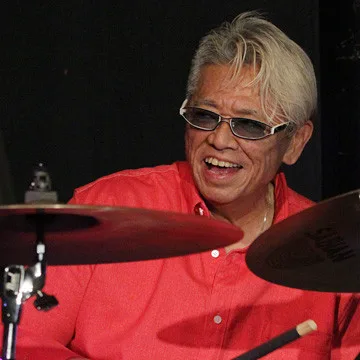
Shuichi "Ponta" Murakami (1951-2021), the famed Japanese session and fusion drummer known for his work with Kazumi Watanabe and countless others, performing live — used as a stand-in — no free-licensed (CC/public domain) photo of Murakami could be located on Wikimedia Commons after a genuine search; his own album cover art ("Introducing 'Ponta' Murakami") is abstract/illustrated rather than a photo of him. Standard copyright, all rights reserved — held by the photo's original rights holder (uncredited on Discogs). This is not a Creative Commons-licensed image; it is used here as an honestly-disclosed editorial stand-in for a real photo. — Downloaded directly from Shuichi Murakami's Discogs artist page (https://www.discogs.com/artist/529935-Shuichi-Murakami), hosted at i.discogs.com. Saved locally as portrait.jpg in this folder.
Shuichi Murakami, known throughout his career as "Ponta," is widely credited with playing on more than 14,000 recordings across roughly five decades — a figure that places him among the most-recorded drummers in Japanese music history. Born in Nishinomiya City, Hyogo Prefecture, on January 1, 1951, he initially studied French horn before switching to classical percussion as a teenager and settling on the drum kit. He joined the folk group Akai Tori ("Red Bird") in 1972 and began working as a session musician the following year.
His career ran on two tracks at once. He became a decades-long fixture of J-pop session recording, and simultaneously built a substantial jazz career as a first-call sideman through the 1970s and 1980s for Sadao Watanabe, Yosuke Yamashita, Kazumi Watanabe, Masayoshi Takanaka, Jun Fukamachi, Akira Sakata, and Takashi Kako. These were recurring working relationships, not isolated session credits.
He debuted as a leader with Introducing "Ponta" Murakami (1976) and kept releasing solo albums for the next four decades, through Drum Symphony (2019). His most fully realized band was Ponta Box, formed with bassist Masahiro Sayama and keyboardist Masatoshi Mizuno, which recorded three albums for JVC Victor and performed at the 1995 Montreux Jazz Festival — a rare booking for a Japanese fusion trio.
He died on March 9, 2021, in Tokyo, at 70, from thalamic bleeding. A year later, a tribute concert titled "One Last Live" was held at the Tokyo International Forum, drawing an array of prominent Japanese artists who had recorded with him over the decades.
Murakami's playing sits at the crossroads of jazz-fusion precision and the tight, song-serving discipline demanded by decades of pop session work — a combination that made him equally credible driving a Yosuke Yamashita free-jazz date and anchoring a J-pop studio session on the same week's schedule.
Shuichi "Ponta" Murakami: Full Discography
Discogs artist ID 529935 (村上秀一). Identity confirmed via matching Discogs profile facts plus a directly-fetched, successfully-read Wikipedia article corroborating and expanding on the record. 593 credits total across 6 pages — the largest total-credit count encountered in this project to date: 19 Main, 14 Producer, 3 Co-producer, and Appearance credits running well into the hundreds (64 on page 1 alone, with pages 2-3 each returning 100 further Appearance credits and no additional Main entries, confirming the project's known role-clustering pattern). This reflects the widely cited claim that he played on more than 14,000 recordings across his career — a figure Discogs's own catalog, substantial as it is, does not fully capture.
As Leader
| Album | Year | Label | Billed as | Notes | Listen | Buy |
|---|---|---|---|---|---|---|
| Introducing "Ponta" Murakami | 1976 | — | "Ponta" Murakami | Debut as a leader; the source of the stub's original cover reference (abstract/illustrated, not a photo) | Amazon | |
| Tokyo Fusion Night — Super Session Featuring Shuichi "Ponta" Murakami | 1978 | — | Shuichi "Ponta" Murakami | Amazon | ||
| Live Space Fantasy (ライブスペースファンタジー) | 1978 | — | Hideki Matsutake, Hiroki Inui, Jun Fukamachi, Kenji Enatsu, Kazumi Watanabe, Shigeru Okazawa, Shuichi Murakami | Fusion supergroup billing | Amazon | |
| Rhythm Ware — Byoki / Tight / Rock / Jungle | 1982 | Victor | Ponta + Kamiya | A four-part series | Amazon | |
| Padang Rumput | 1982 | — | Shuichi "Ponta" Murakami | Spotify | Amazon | |
| Welcome to My Life | 1998 | — | Shuichi "Ponta" Murakami | Amazon | ||
| A Big Train Coming | 2003 | JVC | Shuichi "Ponta" Murakami & Fusanosuke Kondo | Amazon | ||
| My Pleasure — Ponta 30 Years Anniversary | 2003 | — | Shuichi Murakami | Amazon | ||
| Here We Go Again | 2005 | JVC | Shuichi "Ponta" Murakami & Fusanosuke Kondo | Amazon | ||
| うたポン | 2006 | Victor | Shuichi "Ponta" Murakami | Amazon | ||
| Rhythm Designer | 2006 | 3 Views | Shuichi "Ponta" Murakami | Amazon | ||
| Rhythm Monster | 2012 | Universal Music | Shuichi Murakami | Spotify | Amazon | |
| The Night Flight | 2014 | GT Music | Junko Yagami with Tsugutoshi Goto, featuring Masaki Matsubara, Jun Sato & Shuichi "Ponta" Murakami | Amazon | ||
| 音楽境地 | 2018 | Fujipacific Music | Shuichi 'Ponta' Murakami | Amazon | ||
| Drum Symphony | 2019 | Sundown | Shuichi Murakami, Yoshiaki Kusaka | Amazon |
Ponta Box
| Release | Year | Label | Notes |
|---|---|---|---|
| Ponta Box | 1994 | — | Debut, self-titled; produced by Murakami |
| Dessert in the Desert (as Ponta Box II) | 1995 | JVC | |
| Live at the Montreux Jazz Festival | 1995 | — | A genuine milestone for a Japanese fusion trio (Spotify) |
| Ponta Box the Best | 1998 | JVC | Compilation |
| Ponta Box Meets Yoshida Minako | 1998 | — | |
| Multichannel Sound Best | 2003 | JVC / 3 Views | Compilation |
| Gosh (as Ponta Box Meets Yoshida Minako) | 2002 | — |
Sideman — this project's other artists
| Album | Year | Co-credited with |
|---|---|---|
| PCM Master Record Vol. 2 | 1976 | Hiromasa Suzuki |
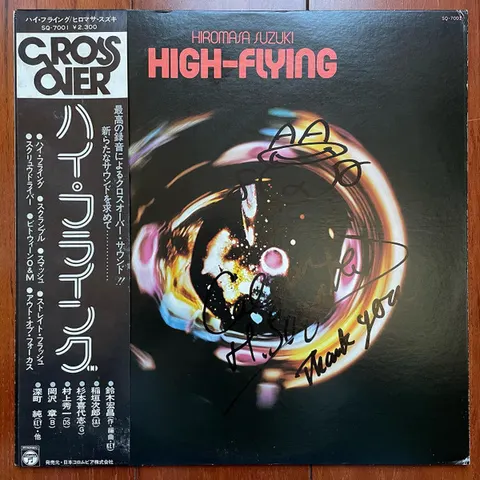
| High-Flying | 1976 | Hiromasa Suzuki |
| Live Space Fantasy | 1978 | Kazumi Watanabe |
Sideman — the jazz sideman years (per Wikipedia, not each individually catalogued)
Wikipedia names extensive recurring sideman work with Sadao Watanabe, Yosuke Yamashita, Kazumi Watanabe, Masayoshi Takanaka, Jun Fukamachi, Akira Sakata, and Takashi Kako through the 1970s-80s. Given the scale of his total catalog (593 credits, of which the large majority are Appearance-role J-pop and fusion session work), these relationships were not individually verified credit-by-credit against Discogs beyond the specific titles listed above.
Scale note
Discogs lists 593 total credits for this artist across 6 pages, all consistent with the widely cited claim that he played on more than 14,000 recordings during his career — a figure Discogs's own catalog, while substantial, does not fully capture (a known limitation of Discogs's coverage of Japanese session work from this era). Only page 1 was individually reviewed for Main/Producer credits and cross-references to this project's other artists; pages 2-6 were confirmed to contain no further Main entries (role-clustering pattern) but were not individually parsed name-by-name.
- Sadao Watanabe, Yosuke Yamashita, Kazumi Watanabe, Masayoshi Takanaka, Jun Fukamachi, Akira Sakata, Takashi Kako - Recurring jazz-sideman relationships through the 1970s-80s.
- Hiromasa Suzuki - Co-credited on PCM Master Record Vol. 2 and High-Flying (both 1976).
- Masahiro Sayama and Masatoshi Mizuno - Bandmates in Ponta Box.
- Fusanosuke Kondo - Co-billed on A Big Train Coming (2003) and Here We Go Again (2005).



More Jazz Fusion Artists
See all 262 Jazz Fusion artists →More Japanese Jazz Artists
See all 70 Japanese artists →- Shuichi "Ponta" Murakami's full profile on JazzProfiles.com
- r/JapaneseJazz
- Discogs artist page
- Spotify — Padang Rumput
- Shuichi Murakami — Wikipedia (fetched directly and successfully)
- Shuichi Murakami — Discogs artist 529935 (profile and partial paginated release list retrieved via the Discogs API)
- WebSearch synthesis of newsonjapan.com, drummingnewsnetwork.com, and organicmusic.jp (the 14,000-recordings figure and death coverage)
- Spotify Web API catalog lookups