 JAZZPROFILES lives in the music 1,146 Jazz Artists fully Profiled!
 Nahum Perferkovich
Last updated September 10, 2026
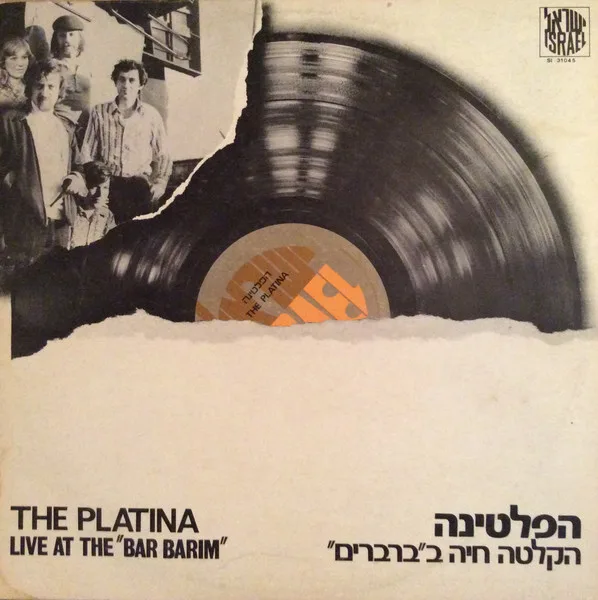
Cover art of *Live At The "Bar Barim"* (Isradisc SI 31045, 1973), the Platina album where Nahum Perferkovich is specifically credited on Fender piano. No CC-licensed or public-domain photograph of him could be found under any spelling of his name (Latin or Hebrew script); this cover is used as the only available image connected to him, per the site's disclosed album-cover fallback convention. A different Platina album cover (*Freedom*, 1974) is already used for Roman Kunsman's profile on this site, so this release was deliberately chosen instead to keep each Platina member's fallback image distinct. Saved locally as `portrait.jpg`. Album cover art (not a CC-licensed artist photo), used as the only available image connected to the artist. Copyright is held by Isradisc and/or the release's uncredited designer. This is an honestly disclosed editorial stand-in, not a free-licensed image. — Retrieved from the Discogs release page's image asset via the public Discogs API, https://api.discogs.com/releases/4827147. Release page: https://www.discogs.com/release/4827147-The-Platina-Live-At-The-Bar-Barim-%D7%94%D7%A7%D7%9C%D7%98%D7%94-%D7%97%D7%99%D7%94-%D7%91%D7%91%D7%A8%D7%91%D7%A8%D7%99%D7%9D.
Nahum Perferkovich was born in 1945 in Riga, to a musical mother and a chemical-engineer father, and started violin and piano at eight. By twelve he was drawn to jazz, Dixieland and mambo over the radio; at thirteen he was already working as a café pianist with a Jewish orchestra, and he doubled on viola in a military community-center symphony orchestra. By 1961, at sixteen, he was part of Riga's small jazz scene, performing with singer Lev Pilchuk. Drafted into the Soviet army in 1964, he formed an unofficial orchestra and taught himself clarinet in secret; in 1966 he was sent to help rebuild after the Tashkent earthquake, playing dance music there. After his 1968 discharge he joined saxophonist Boris Gamer's ensemble Combo, which placed first in Czech jazz-recording competitions and toured major Soviet festivals.
He immigrated to Israel in 1971, settling first in Nazareth Illit and then Jerusalem, and auditioned into Roman Kunsman's band Platina at Café Noga in Tel Aviv. In Platina he played electric and acoustic piano alongside Alona Turel on Hammond and Rhodes, and is separately credited on viola and melodica on other sessions of the period; the Discogs credits for Platina's two officially released albums list him only on keys, while prose biographies also describe him playing clarinet and viola in the band's live sets. Platina played New York's Avery Fisher Hall in 1974 as part of that year's Newport Jazz Festival programming. He left the band at the end of 1975, replaced by Kobi Arlik, and simultaneously held the principal viola chair in the Israel Radio symphony orchestra; a four-month stint arranging for the Israeli Air Force orchestra followed his 1975 draft into that service.
Through the mid-to-late 1970s he worked with singers Yehoram Gaon, Edna Goren, and Chava Alberstein. He is credited on melodica on a track of Meir Ariel's 1979 album and on viola on Yardena Arazi's 1987 album Gypsy Soul. From 1980 to 2013 he taught in the jazz department of the Jerusalem Academy of Music and Dance; after retiring from that post he continued teaching at Hed College and leading jazz and Dixieland ensembles. He appeared at a Platina-related event at Shabool club, Tel Aviv port, in October 2016, and a since-undated video shows him leading a jazz ensemble at a music school. His current status could not be confirmed.
Perferkovich's most distinctive credential is melodica: a Hebrew-language biography credits him as among the first to play jazz on the instrument, developing it while still in Latvia and later building a specialized method for teaching jazz through it — a claim that, while single-sourced, is corroborated by an actual melodica session credit on a Meir Ariel recording. His documented recording work otherwise sits squarely inside Platina's jazz-rock and fusion idiom, on Fender Rhodes and acoustic piano alongside Alona Turel's own keyboard work, with viola and clarinet as secondary instruments drawn from his classical training and Soviet-era big-band background.
- Live At The "Bar Barim" (1973, Isradisc, The Platina) — credited on Fender piano.
- Freedom (1974, Isradisc, The Platina) — credited on electric piano (Fender Rhodes) and acoustic piano.
- Chava Alberstein and The Platina (1974, CBS) — credited on viola and piano per catalog metadata.
- שירי חג ומועד ונופל (1979, Meir Ariel) — a melodica credit on one track, the clearest documentary evidence of his melodica work.
- Gypsy Soul (1987, Yardena Arazi) — a viola credit.
Nahum Perferkovich: Full Discography
Verified against the live Discogs API. Discogs artist ID 1187434 ("Nachum Perperkovich"; name variants: Nachum Pereferkovitch, Nahum Pereferkovitch, Nahum Perferkovitz, Nahum Perperkovich, plus Hebrew-script variants נ. פרפרקוביץ, נחום פרברקוביץ, נחום פרפקוביץ, נחום פרפרקוביץ, נחום פרפרקוביץ', נחום פרפרקוביץ׳). No Spotify artist ID could be found under his name — a "Platina Jazz" Spotify page is a modern, unrelated Swedish project and must not be confused with this band.
As Sideman (The Platina)
| Year | Title | Label | Catalog | Role | Notes |
|---|---|---|---|---|---|
| 1973 | Live At The "Bar Barim" | Isradisc | SI 31045 | Piano [Fender] | |
| 1974 | Freedom | Isradisc | SI 31051 | Electric Piano [Fender Rhodes], Piano [Acoustic] | |
| 1974 | Chava Alberstein and The Platina | CBS | — | Viola, Piano | Per Europeana catalog metadata; not independently re-verified against the live page, which returned an access error during research. |
As Sideman (Other Artists)
| Year | Title (Artist) | Label | Role | Notes |
|---|---|---|---|---|
| 1979 | שירי חג ומועד ונופל (Meir Ariel) | — | Melodica (track B2, "חבית הדגים") | Documentary evidence for the "pioneering jazz melodica" claim made in prose biographies. |
| 1987 | Gypsy Soul = נשמה צוענית (Yardena Arazi) | — | Viola |
Data hazards
- Freedom (1974) appears on his individual Discogs artist page but is not listed on The Platina's own Discogs group-entity release list (artist 1571702) — likely a Discogs cataloguing quirk (the release may be linked under a Hebrew-script variant of the group name) rather than a real absence, but unresolved.
- No Discogs or other recording credit corroborates the "clarinet in Platina" or general reed-instrument claims found in prose biographies (dudipedia, Hebrew Wikipedia) — every verified recording credit is on keys, melodica, or viola. Treat reed-instrument claims as prose-sourced only, not discography-confirmed.
- The "first to record jazz on melodica" claim is single-sourced to the dudipedia biographical article; no independent corroboration was found.
- No verified current living/active status; last independently dated activity found is October 2016.
- Roman Kunsman — Platina's co-founder and musical director, who auditioned him into the band at Café Noga.
- Alona Turel — Platina's other keyboardist, playing alongside him on Hammond organ, Fender Rhodes and piano.
- Aharon "Arale" Kaminsky — Platina's drummer and co-founder.
- Boris Gamer — leader of the Soviet-era ensemble Combo, which Perferkovich joined after his 1968 army discharge; likely the same figure documented on this site as Boris Gammer, though the connection is not independently confirmed beyond the shared name and era.
- Chava Alberstein, Yehoram Gaon, Edna Goren — singers he worked with through the mid-to-late 1970s.
More Jazz Fusion Artists
See all 221 Jazz Fusion artists →More Israeli (Soviet-born) Jazz Artists
See all 3 Israeli (Soviet-born) artists →- Discogs: Nachum Perperkovich (artist 1187434)
- dudipedia.wordpress.com: biographical profile (Hebrew)
- r/IsraelJazz
- dudipedia.wordpress.com, biographical profile, June 8, 2014, the fullest single account, also the only outside site linked from his own Discogs artist page
- Discogs: Nachum Perperkovich, artist 1187434
- Discogs: Live At The "Bar Barim" (1973) and Freedom (1974), checked for his specific instrument credits
- Discogs: Meir Ariel, שירי חג ומועד ונופל (1979), source for the melodica credit
- Discogs: Yardena Arazi, Gypsy Soul (1987), source for the viola credit
- Discogs: The Platina, group artist 1571702
- Hebrew Wikipedia: להקת הפלטינה (The Platina)