 JAZZPROFILES lives in the music 2,303 Jazz Artists fully Profiled!
Ike Quebec
Last updated November 1, 2026
Listen on Spotify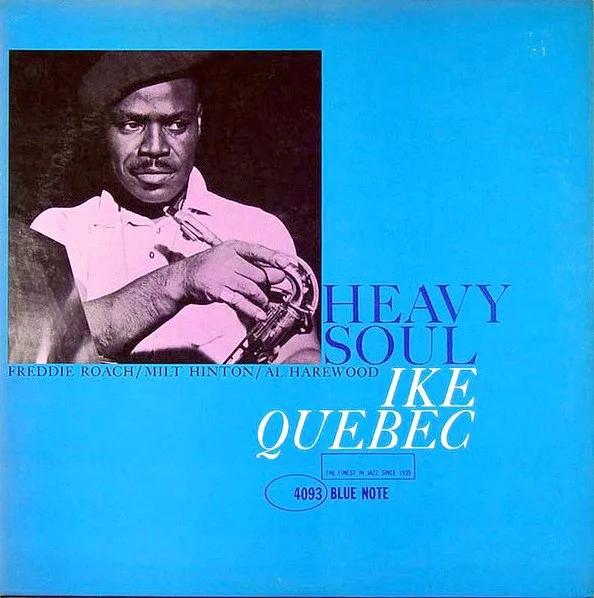
Ike Quebec on the cover of his album Heavy Soul (Blue Note BLP 4093, 1962) Album cover art (not a CC-licensed artist photo), used as the only available image showing the artist — Cover Art Archive (front cover of Blue Note BLP 4093) - https://coverartarchive.org/release/d9b5cfa4-f616-4766-82b5-493129f46626/16872267634.jpg

Ike Abrams Quebec was born on August 17, 1918, in Newark, New Jersey. In the late 1930s he danced with a touring revue called Harlem on Parade, and he was an able pianist; he later said that hearing Teddy Wilson persuaded him to put his energy into the tenor saxophone instead. His playing career began in 1940 with the Newark band the Barons of Rhythm, which broke up in 1941 when the United States entered World War II and never made a record.
In New York he spent time at Minton's Playhouse, where he became friendly with Thelonious Monk, Bud Powell and drummer Kenny Clarke. Through the early 1940s he worked with trumpeters Frankie Newton and Roy Eldridge, with Benny Carter, and in an orchestra backing Ella Fitzgerald directed by Eddie Barefield; his first recording date, in November 1943, was with Eldridge. In 1944 he joined Cab Calloway's orchestra as a leading tenor soloist, and he stayed with the band on and off until 1951. That same year, 1944, he made his first session as a leader for Blue Note with bassist Milt Hinton, drummer J.C. Heard, guitarist Tiny Grimes and pianist Ram Ramirez. It produced his slow blues "Blue Harlem," a jukebox favorite, and over the next two years he led swingtet and Swing Seven dates for Blue Note and Savoy, including a hit version of "If I Had You." For a time he was the label's biggest jukebox seller.
Quebec also worked for Blue Note off the bandstand. In the late 1940s he acted as an informal talent scout, urging Alfred Lion and Francis Wolff to record the new bebop generation, among them Monk, Powell and Tadd Dameron, and his fast sight-reading made him a source of uncredited arranging help on sessions. Monk's first date as a leader, in 1947, included Quebec's cousin Danny Quebec West on alto saxophone.
Heroin addiction kept Quebec from steady work for most of the 1950s. He served two short sentences at Rikers Island, recorded only sporadically, and is reported to have driven a cab in Manhattan, though he still played in clubs, including an appearance at the Café Bohemia in 1955. By the end of the decade he was back at Blue Note as an A&R man, supervising dates for Dexter Gordon and Jackie McLean and recommending the baritone saxophonist Leo Parker and the organist Freddie Roach, who made his recording debut on Quebec's own 1961 sessions.
His comeback as an artist began in July 1959 with a long run of short tracks made for the jukebox market, which continued until early 1962 and was later gathered as The Complete Blue Note 45 Sessions. The first of them, on July 1, 1959, was the last session held at Rudy Van Gelder's original studio in Hackensack, New Jersey. In 1960 he was a guest on organist Jimmy Smith's Open House and Plain Talk. Between November 1961 and October 1962 he then made the albums on which his reputation now rests: Heavy Soul (recorded November 26, 1961, with Roach, Hinton and drummer Al Harewood), It Might as Well Be Spring (December 9, 1961, same group), Blue & Sentimental (December 1961, with guitarist Grant Green), a sextet session with trombonist Bennie Green and saxophonist Stanley Turrentine that was shelved until the 1980s and became Congo Lament and Easy Living, and Bossa Nova Soul Samba, cut on October 5, 1962, with guitarist Kenny Burrell.
Quebec passed away on January 16, 1963, in New York City, of lung cancer, at the age of 44, about three and a half months after his last session. Some of what he recorded in 1961 and 1962 reached the public only later: It Might as Well Be Spring was issued in 1964, and the sextet session and a set of ballads did not appear until 1980 to 1987. He is buried at Woodland Cemetery in Newark, where in 1992 Blue Note paid for a headstone for his grave.
Quebec belonged to the big-toned school of Coleman Hawkins among tenor players, with Ben Webster's breathy warmth in his ballads and a trace of Illinois Jacquet's drive when the tempo rose. The critic Alex Henderson called him no innovator but a distinctive and instantly recognizable voice, equally convincing on down-home blues, slow romantic ballads and up-tempo swing. He put sound ahead of ideas, a conviction he voiced himself, and his slow readings of standards such as "Blue and Sentimental," "Lover Man" and "Willow Weep for Me" show why. A former pianist, he occasionally played piano on his own dates, as behind Green's solos on Blue & Sentimental. Though he came out of swing, his early-1960s records lean on the organ-trio and soul jazz idiom of the day and, at the very end, on bossa nova, a wave Stan Getz had set off. AllMusic's Steve Huey called Blue & Sentimental a quiet, sorely underrated masterpiece, and Richard Cook wrote in 2004 that it might be Quebec's best record. Writing in Jazz Journal, Gordon Jack placed him in a line of big-sounding tenors running from Hawkins and Webster toward Gene Ammons. Mosaic gathered his complete Blue Note 45s in a 1988 box set.
- Blue Harlem (recorded 1944, Blue Note) - The slow blues with Tiny Grimes from his first session as a leader, a jukebox hit that Blue Note later reissued as a 45.
- The Complete Blue Note 45 Sessions (recorded 1959-1962, compiled by Mosaic in 1988 and Blue Note in 2005) - Twenty-six jukebox-length tracks that began his comeback, with organists Edwin Swanston, Sir Charles Thompson and Earl Van Dyke. Spotify - The Complete Blue Note 45 Sessions Listen
- Heavy Soul (recorded 1961, Blue Note) - Organ-trio soul jazz with Freddie Roach, Milt Hinton and Al Harewood, cut on November 26, 1961. Spotify - Heavy Soul Listen
- It Might as Well Be Spring (recorded 1961, issued 1964, Blue Note) - A companion set of ballads and standards from December 9, 1961, with the same quartet; it was released after his death.
- Blue & Sentimental (recorded 1961, Blue Note) - A late-night ballad session with Grant Green, Paul Chambers and Philly Joe Jones that is widely ranked his best album. Spotify - Blue & Sentimental Listen
- Easy Living (recorded 1962, issued 1987, Blue Note) - Gathers the 1962 sextet session with Bennie Green, Stanley Turrentine, Sonny Clark, Milt Hinton and Art Blakey (first issued in part as Congo Lament in 1981) alongside quartet ballads.
- Bossa Nova Soul Samba (recorded 1962, Blue Note) - His last recording, made October 5, 1962, with Kenny Burrell, bassist Wendell Marshall, drummer Willie Bobo and Garvin Masseaux on chekere. Spotify - Bossa Nova Soul Samba Listen
- Open House and Plain Talk (1960, Blue Note) - Guest tenor on Jimmy Smith's organ sessions, his first extended jazz dates after his return to the studio.
Ike Quebec: Full Discography
Discogs artist ID 29964 ("Ike Quebec," real name Ike Abrams Quebec, born August 17, 1918, in Newark, New Jersey, died January 16, 1963, in New York City) lists about 450 entries, most of them compilations and reissues of the same Blue Note and Savoy sessions or track appearances on anthologies. His own band names are filed under separate Discogs entries (The Ike Quebec Swing Seven, The Ike Quebec Quintet, Ike Quebec Swingtet and Ike Quebec And His All Stars); these were checked and are folded into the table below. Quebec's output as a leader is compact, so the first table lists his leader albums and the principal compilations of his sessions; the second lists sideman and guest appearances of note. Catalog numbers are those of the original US Blue Note pressing where one exists; recording dates come from the sources named in the Notes column, and where sources disagree the Notes column says so.
As Leader / Co-Leader
| Album Title | Recording Date(s) | Release Date | Label | Catalog Number | Format(s) | Personnel | Role | Reissue History | Spotify | Buy | Notes |
|---|---|---|---|---|---|---|---|---|---|---|---|
| Ike Quebec Tenor Sax | July 1944 to 1945, New York | 1945 | Blue Note | BN 102 | Shellac, 10", Album (three-disc 78 rpm set) | Ike Quebec (tenor saxophone) with changing bands; the first session used Milt Hinton (bass), J.C. Heard (drums), Tiny Grimes (guitar) and Ram Ramirez (piano) | Leader | Later collected on the Mosaic box set of his 1940s Blue Note recordings (1984) and on several single-disc anthologies | — | — | Includes his hit "Blue Harlem." Discogs dates this album set 1946; MusicBrainz gives 1945. |
| The Complete Blue Note Forties Recordings of Ike Quebec and John Hardee | 1944 to 1946 | 1984 | Mosaic | MR4-107 | 4xLP, Compilation, Box Set | Ike Quebec (tenor saxophone) and John Hardee (tenor saxophone) with their respective swingtets and Swing Seven | Leader (shared with John Hardee) | Compiles every Blue Note side by both saxophonists from the 1940s; see Discogs master 832536 | — | — | The standard collection of his 1940s Blue Note sides. |
| From Hackensack to Englewood Cliffs | July 1 and July 20, 1959, Van Gelder Studio (Hackensack and Englewood Cliffs) | 2000 | Blue Note | 66083 | CD, Compilation | Ike Quebec (tenor saxophone), Edwin Swanston (organ), Clifton "Skeeter" Best (guitar), Charles "Sonny" Wellesley (bass), Les Jenkins (drums) | Leader | Eight of its ten tracks are also on The Complete Blue Note 45 Sessions | — | — | Jukebox-oriented pieces; July 1, 1959 was the last Blue Note session at Rudy Van Gelder's original Hackensack studio. Two tracks were previously unissued. |
| Heavy Soul | November 26, 1961, Van Gelder Studio, Englewood Cliffs | March 1962 | Blue Note | BLP 4093 (mono), BST 84093 (stereo) | Vinyl, LP, Album | Ike Quebec (tenor saxophone), Freddie Roach (organ), Milt Hinton (bass), Al Harewood (drums) | Leader | Reissued on CD in 1995 and in a Rudy Van Gelder edition in 2004; coupled with It Might as Well Be Spring on a 2018 reissue | Spotify - Heavy Soul | — | Organ-trio soul jazz; Roach and Harewood play on every track except "Nature Boy," and the CD adds a bonus track, "Blues for Ike." |
| It Might as Well Be Spring | December 9, 1961, Van Gelder Studio, Englewood Cliffs | 1964 | Blue Note | BLP 4105 (mono), BST 84105 (stereo) | Vinyl, LP, Album | Ike Quebec (tenor saxophone), Freddie Roach (organ), Milt Hinton (bass), Al Harewood (drums) | Leader | Reissued on CD in 1998 and 2006; coupled with Heavy Soul on a 2018 reissue | — | — | Recorded two weeks after Heavy Soul and issued in 1964; MusicBrainz lists a 1962 first release. |
| Blue & Sentimental | December 16 and 23, 1961, Van Gelder Studio, Englewood Cliffs | 1962 | Blue Note | BLP 4098 (mono), BST 84098 (stereo) | Vinyl, LP, Album | Ike Quebec (tenor saxophone, piano), Grant Green (guitar), Paul Chambers (bass), Philly Joe Jones (drums); on "Count Every Star" Sonny Clark (piano), Sam Jones (bass), Louis Hayes (drums) | Leader | Reissued on CD in 1988, 2000 (Japan) and 2008; the CD adds two tracks | Spotify - Blue & Sentimental | — | Quebec alternates between tenor and piano, playing piano behind Green's solos. English Wikipedia and MusicBrainz give 1962 for the release; Discogs dates the first pressing June 1963. |
| Easy Living | January 20, 1962, Van Gelder Studio, Englewood Cliffs | 1987 | Blue Note | BST 84103 (CD CDP 7 46846 2) | CD, Album | Ike Quebec (tenor saxophone), Bennie Green (trombone, tracks 1 to 5), Stanley Turrentine (tenor saxophone, tracks 1 to 5), Sonny Clark (piano), Milt Hinton (bass), Art Blakey (drums) | Leader | Five sextet tracks first appeared in 1981 on Congo Lament; the 1987 CD gathers them with the quartet ballads | — | — | A 1962 session first issued in full in 1987. English Wikipedia gives the session date as January 20, 1962; one Jazz Journal article places the sextet date in July 1962. |
| Congo Lament | 1962 | 1981 | Blue Note | LT-1089 | Vinyl, LP, Album | Ike Quebec (tenor saxophone), Bennie Green (trombone), Stanley Turrentine (tenor saxophone), Sonny Clark (piano), Milt Hinton (bass), Art Blakey (drums) | Leader | All five tracks were later included on Easy Living | — | — | Posthumous release of the sextet session. |
| Bossa Nova Soul Samba | October 5, 1962, Van Gelder Studio, Englewood Cliffs | 1962 | Blue Note | BLP 4114 (mono), BST 84114 (stereo) | Vinyl, LP, Album | Ike Quebec (tenor saxophone), Kenny Burrell (guitar), Wendell Marshall (bass), Willie Bobo (drums), Garvin Masseaux (chekere) | Leader | Reissued on CD in 1989 (Japan) and in a Rudy Van Gelder edition | Spotify - Bossa Nova Soul Samba | — | His final recording, made about three and a half months before his death. |
| With a Song in My Heart | 1959 to 1962 | 1980 | Blue Note | LT-1052 | Vinyl, LP, Album | Ike Quebec (tenor saxophone) with organ-led rhythm sections | Leader | All nine tracks were later included on The Complete Blue Note 45 Sessions | — | — | Drawn from the jukebox-single sessions. |
| The Complete Blue Note 45 Sessions | July 1, 1959; September 25, 1960; February 5 and 13, 1962, Van Gelder Studio | 1988 (Mosaic); October 4, 2005 (Blue Note) | Mosaic; Blue Note | MR3/MD2-121 (Mosaic); 0946 3 11441 2 7 (Blue Note) | 2xCD, Compilation | Ike Quebec (tenor saxophone) with Edwin Swanston (organ), Clifton "Skeeter" Best (guitar), Charles "Sonny" Wellesley (bass) and Les Jenkins (drums) in 1959; Sir Charles Thompson (organ), Milt Hinton (bass) and J.C. Heard (drums) in 1960; Earl Van Dyke (organ), Willie Jones (guitar), Wilbert Hogan (drums) and, on the last five tracks, Sam Jones (bass) in 1962 | Leader | Issued as a Tone Poet vinyl edition by Blue Note | Spotify - The Complete Blue Note 45 Sessions | — | Twenty-six jukebox tracks, most unavailable elsewhere; the Mosaic box and the Blue Note CD are the same material. |
| The Art of Ike Quebec | 1944 to 1962 | 1992 | Blue Note | 99178 | CD, Compilation | Ike Quebec (tenor saxophone) with various groups | Leader | — | — | — | Single-disc overview of his Blue Note years. |
| Ballads | 1959 to 1962 | 1997 | Blue Note | 56690 | CD, Compilation | Ike Quebec (tenor saxophone) with various groups | Leader | — | — | — | Nine ballad tracks drawn from Easy Living, Born to Be Blue (Grant Green), Heavy Soul, It Might as Well Be Spring, The Complete Blue Note 45 Sessions and With a Song in My Heart. |
As Sideman and Guest (selected)
| Year | Project (Leader) | Title | Label | Catalog | Role | Notes |
|---|---|---|---|---|---|---|
| 1943 | Roy Eldridge | Session including "The Gasser" (his first recording date, November 1943) | Not confirmed | Not confirmed | Tenor saxophone | Eldridge gave him a solo chorus on the session. |
| 1944 | Cab Calloway and His Orchestra | Live at the New Cafe Zanzibar 1944 | Magnetic Records | Not confirmed | Tenor saxophone | Radio broadcasts from a New York nightclub where the band was frequently resident; he was a featured soloist with Calloway from 1944 to 1951. |
| 1960 | Jimmy Smith | Open House | Blue Note | BST 84269 | Tenor saxophone (tracks 1 to 3, feature on track 2) | Recorded March 22, 1960 with Blue Mitchell (trumpet), Jackie McLean (alto saxophone), Quentin Warren (guitar) and Donald Bailey (drums); first released in 1968. |
| 1960 | Jimmy Smith | Plain Talk | Blue Note | BST 84296 | Tenor saxophone (tracks 1, 3 and 4, feature on track 4) | From the same March 22, 1960 session; first released in 1968. |
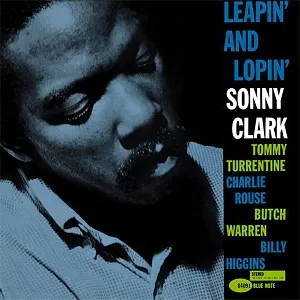
| 1961 | Sonny Clark | Leapin' and Lopin' | Blue Note | BLP 4091 | Guest tenor saxophone ("Deep in a Dream" only) | Recorded November 13, 1961 and released in May 1962, with Butch Warren (bass) and Billy Higgins (drums). |
| 1961 to 1962 | Grant Green | Born to Be Blue | Blue Note | BST 84432 | Tenor saxophone | Recorded December 23, 1961 and March 1, 1962 with Sonny Clark, Sam Jones and Louis Hayes; first released in 1985. |
| 1962 | Grant Green | The Latin Bit | Blue Note | BST 84111 | Tenor saxophone (two tracks) | Quebec plays on two tracks, which appear as bonus tracks on the CD, with Willie Bobo and Wendell Marshall; released May 1963. |
| 1962 | Dodo Greene | My Hour of Need | Blue Note | BLP 9001 (mono), BST 9001 (stereo) | Tenor saxophone | Recorded April 2 and 17, 1962 with Grant Green (guitar), organists Sir Charles Thompson and Edwin Swanston and varying rhythm sections; released in 1963. |
Quebec also appears on many 1940s sides for Blue Note and Savoy and on Cab Calloway broadcast material and later anthologies, which are not itemized here. His work as an A&R man for Blue Note carries no performance credits and is described in the biography.
- Cab Calloway - principal tenor soloist in his orchestra on and off from 1944 to 1951, including long stands at the Cafe Zanzibar in New York.
- Roy Eldridge - trumpeter on Quebec's first recording date in November 1943 and a bandleader he worked for in the early 1940s.
- Frankie Newton, Hot Lips Page, Trummy Young - trumpeters and a trombonist whose bands he recorded or performed with in the 1940s.
- Benny Carter - bandleader Quebec worked with in the early 1940s.
- Ella Fitzgerald - he played in an orchestra accompanying her in the early 1940s, directed by Eddie Barefield.
- Coleman Hawkins - his main early model; in 1944 Quebec shared a Fifty-Second Street bill with Hawkins's sextet.
- J.C. Heard - drummer on his 1940s Blue Note leader dates and on some of the 1960 jukebox sessions.
- Milt Hinton - bassist on his first Blue Note session in 1944 and on Heavy Soul, It Might as Well Be Spring and the 1962 sextet date.
- Tiny Grimes - guitarist on "Blue Harlem" in 1944.
- Alfred Lion and Francis Wolff - the founders of Blue Note, whom he urged to record Monk, Powell and Tadd Dameron and for whom he later worked as an A&R man.
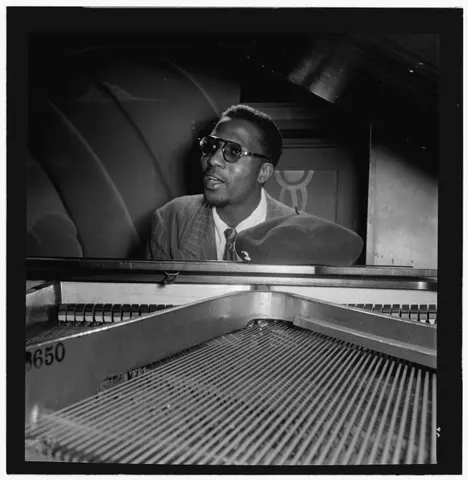
- Thelonious Monk - close friend from Minton's Playhouse; Quebec's cousin Danny Quebec West played alto on Monk's first Blue Note session in 1947.
- Bud Powell - another Minton's colleague whom Quebec helped bring to Blue Note.
- Dexter Gordon, Jackie McLean - saxophonists whose Blue Note dates he supervised in the late 1950s.
- Jimmy Smith - organist who led the 1960 sessions Open House and Plain Talk, on which Quebec was the guest tenor.
- Freddie Roach - organist recommended by Quebec, on Heavy Soul and It Might as Well Be Spring.
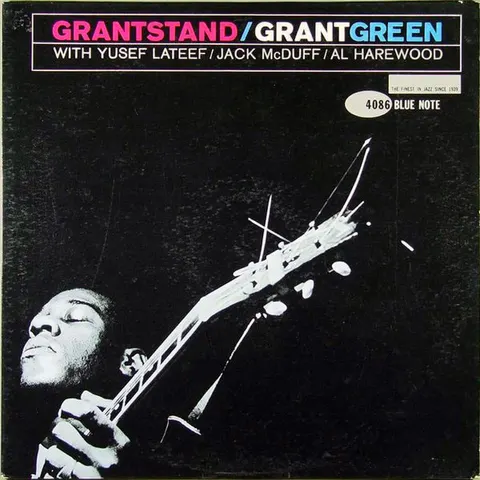
- Grant Green - guitarist on Blue & Sentimental; Quebec also plays on Green's Born to Be Blue (issued 1985).
- Paul Chambers, Philly Joe Jones - bassist and drummer on the main session for Blue & Sentimental in December 1961.
- Sonny Clark - pianist on the 1962 sextet date; Quebec in turn guested on one track of Clark's Leapin' and Lopin' (1961).
- Bennie Green, Stanley Turrentine, Art Blakey - trombonist, tenor saxophonist and drummer on the 1962 sextet recordings issued as Congo Lament and Easy Living.
- Kenny Burrell - guitarist on Bossa Nova Soul Samba, Quebec's final album.
- Willie Bobo - drummer on Bossa Nova Soul Samba.
- Rudy Van Gelder - engineer on nearly all of his Blue Note sessions of 1959 to 1962.
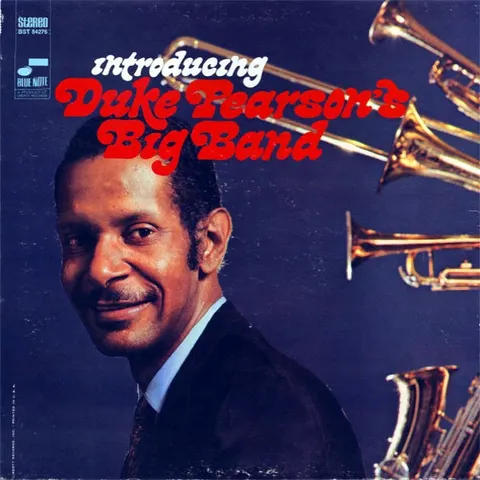
- Duke Pearson - pianist who succeeded Quebec as Blue Note's A&R man after his death.
More Swing Artists
See all 217 Swing artists →More American Jazz Artists
See all 820 American artists →- Wikipedia: Ike Quebec
- Wikipedia: Heavy Soul
- Wikipedia: Blue & Sentimental
- Wikipedia: Bossa Nova Soul Samba
- Wikipedia: It Might as Well Be Spring
- Wikipedia: Easy Living
- Wikipedia: The Complete Blue Note 45 Sessions
- Wikipedia: From Hackensack to Englewood Cliffs
- Jazz Journal: Ike Quebec, saying it with sound (Gordon Jack, 2021)
- AllMusic: Ike Quebec biography (Alex Henderson)
- Blue Note Records: Ike Quebec
- All About Jazz: Ike Quebec
- Discogs: Ike Quebec (artist 29964)
- MusicBrainz: Ike Quebec
- JazzProfiles.com: Thelonious Monk
- JazzProfiles.com: Sonny Clark
- JazzProfiles.com: Grant Green
- JazzProfiles.com: Duke Pearson