 JAZZPROFILES lives in the music 2,555 Jazz Artists fully Profiled!
Matelo Ferret
Last updated November 14, 2026
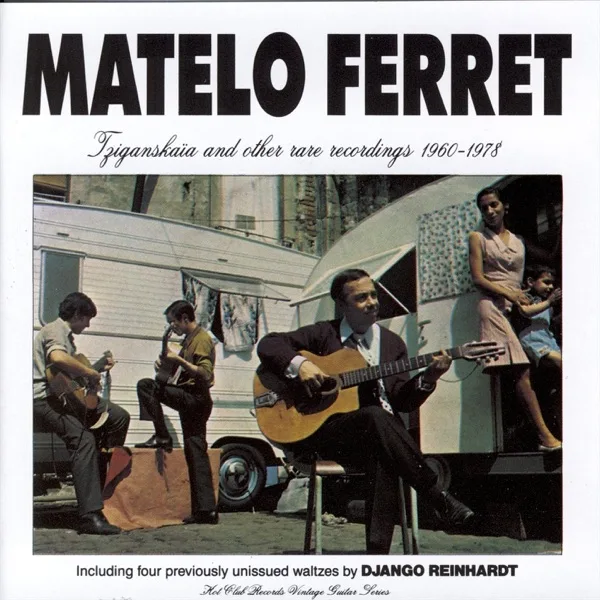
The cover of *Tziganskaia and Other Rare Recordings 1960-1978* (Hot Club Records, 1988), Matelo Ferret's own album, titled with his name and showing guitarists playing beside caravans. Standard copyright, all rights reserved, held by the rights holders of the release. This is not a Creative Commons or public-domain image; it is an album cover shown as an honestly disclosed editorial identification image. — Apple Music artwork for the album, https://music.apple.com/fr/album/tziganskaia-and-other-rare-recordings/296130531
Matelo Ferret was a French guitarist and composer of the manouche tradition, born on December 1, 1918 in Le Petit-Quevilly, beside Rouen, into a Romani family. He was the youngest of three guitar-playing brothers, with Baro and Sarane Ferret, and his nickname "Matelo" means sailor. Records credit him under many spellings, among them Matelot, Matlo, Jean Ferret, Pierre Ferret and, from the 1960s, Matelo Ferré, the form his sons later adopted for themselves. He passed away in Paris on January 24, 1989, at the age of 70.
As a child he played banjo at dances. In Paris he was hired by the accordionist Émile Vacher and then by Guérino's musette orchestra La Boîte à Matelots, and he soon turned to the guitar. The three brothers had come to the capital from Rouen and met Django Reinhardt in 1931, and Reinhardt's circle played often in the Russian cabarets of Paris, notably the Casanova and the Shéhérazade. While Reinhardt moved toward jazz, Matelo spent much of his time in those cabarets and built a personal guitar style that mixed Russian and Romanian Romani music, musette waltzes and swing. Between 1938 and 1943 he appeared on a run of Paris sessions: with the accordionist Gus Viseur in September and October 1938 and again in 1940, on guitar behind Django Reinhardt and Stéphane Grappelli in the Quintette du Hot Club de France's "Younger Generation" (June 30, 1939), in Le Trio Ferret with Baro and their cousin Challain Ferret on March 2, 1939, in Sarane Ferret's Swing Quintette de Paris in 1941 and 1942, and with the saxophonist André Ekyan on July 22, 1942. French Wikipedia adds that he joined the violinist Michel Warlop's string septet in 1941 and that American jazz musicians, Benny Carter among them, sought him out.
His own first sessions were cut in Paris on December 15, 1943, as Jean Ferret et son Sixtette, a sextet of clarinet, vibraphone, guitars, bass and percussion. After the war he became a leading name in swing musette, the style of Gus Viseur and Tony Murena, and he revived the gypsy waltz, which purist jazz fans had turned away from. He recorded only sporadically under his own name. The EP Musique pour deux no. 14 came out in 1955 under the billing Matelo Ferret et son Quartette, and a Vogue EP of 1960 was titled as a collection of unpublished pieces by Django Reinhardt. Marta (1965), billed to Matelo Ferré, put him with the vibraphonist Michel Terrioux, the guitarist Laro Sollero, the bassist Michel Gaudry and the drummer Andy Arpino. Much of his working life went into accompaniment: the accordionist Jo Privat's Manouche Partie, recorded in 1960 with Babik Reinhardt as second guitarist and described by French Wikipedia as the high point of his career, the singers Robert Ripa, Jean Ferrat and Antoine Ciosi, and the concert album La Nuit des Gitans à l'Olympia de Paris (1970).
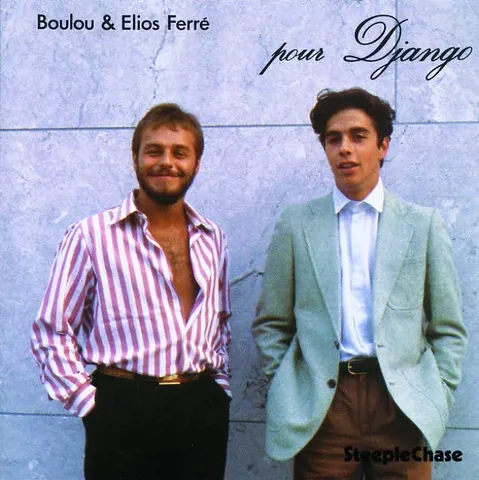
He lived long enough to see gypsy jazz return to favor and was counted among the great surviving players of the style. In the late 1970s he recorded the double LP Tziganskaia for Charles Delaunay, issued by Vogue, with his son Boulou on guitar, Michel Villas on cimbalom and Ernest Pseffer on double bass. In 1988 the Norwegian label Hot Club Records reissued it on CD as Tziganskaia and Other Rare Recordings, adding four waltzes by Reinhardt that Matelo had recorded in 1960. Tribute to Django (Esoldun, 1989), billed to Sarane and Matelo Ferret, gathers radio recordings made in Paris on April 16, 1967 and a performance at Samois on May 27, 1973. Two of his sons, Boulou and Elios Ferré, became well-known guitarists and record as the duo Boulou & Elios Ferré; a third son, Michel Ferré, known as Sarane after his uncle, also played and recorded with his father. In 2009 Frémeaux issued the three-CD set Les Frères Ferret: Les Gitans de Paris 1938-1956, which gathers the recordings of Matelo, Baro and Sarane from the years of the Paris cabarets and swing records.
Ferret's playing grew out of two Paris worlds that overlapped, the Russian cabarets and the musette dance halls, and he took from both. His guitar mixed Russian and Hungarian-flavored Romani song with the swing waltz and four-beat swing, with bold rhythmic figures that French Wikipedia says required considerable technique. The Tziganskaia programme shows the range: the Russian folk tune "Tziganskaia", the Hungarian "Sombre Dimanche", a Franz Lehar melody, Reinhardt's "Gagoug" and his own "Melle de Bucarest" and "Pouro Rom". French Wikipedia reports that around 1942 he called his swinging waltz style "valses-bebop", and the repertoire on Tribute to Django sets Reinhardt tunes beside Oscar Pettiford's "Blues in the Closet" and the standards "Out of Nowhere" and "The Man I Love". Much of his career was spent in the musette and cabaret world, so his output sits at the meeting point of manouche jazz and dance-hall music rather than in a purely jazz setting; the Gypsy Jazz and Swing tags reflect the jazz side of that work. English Wikipedia singles out the Russian and Hungarian influences in his style, and he is remembered above all as an interpreter of the gypsy waltz.
- Tziganskaia (1977, Vogue) - the double LP recorded for Charles Delaunay, his summing-up, with Boulou Ferré on guitar, Michel Villas on cimbalom and Ernest Pseffer on double bass. Apple Music - Tziganskaia and Other Rare Recordings Listen
- Tziganskaia and Other Rare Recordings (1988, Hot Club Records) - the CD edition, which adds four previously unissued Reinhardt waltzes recorded in 1960. Apple Music - Tziganskaia and Other Rare Recordings Listen
- Jean "Matelo" Ferret et sa guitare joue les inédits de Django Reinhardt (1960, Vogue) - a four-track EP titled as unpublished pieces by Reinhardt, with "En Verdine" and "Djalamichto" credited to him.
- Manouche Partie (Jo Privat, 1961, Columbia) - the accordionist's homage to Reinhardt, with Ferret and Babik Reinhardt on guitars. Apple Music - Manouche Partie Listen
- Musique pour deux no. 14 (1955) - a quartet EP under his own name, with "Out of Nowhere", "C'est magnifique", "Djoungalo" and "Pennies from Heaven". Apple Music - Musique pour deux, vol. 14 Listen
- Tribute to Django (1989, Esoldun) - radio recordings from Paris in 1967 and a 1973 performance at Samois, issued the year he passed away, with "Out of Nowhere" and "The Man I Love" among Ferret's tracks.
- Les Frères Ferret: Les Gitans de Paris 1938-1956 (2009, Frémeaux) - a three-CD set of the three brothers' recordings. Apple Music - Les Frères Ferret 1938-1956 Listen
Matelo Ferret: Full Discography
French manouche guitarist Matelo Ferret (born December 1, 1918 in Le Petit-Quevilly, died January 24, 1989 in Paris). Discogs files his releases under the artist entry Jean "Matlo" Ferret (artist 752929), with separate entries for several of his named groups: Jean Ferret Et Son Sixtette (1149888), Matelot Ferret Et Son Quartette (3240734), Matelot Ferret Et Son Ensemble (1149897), Matelo Ferret Trio (3812710) and Ensemble Matelo Ferret (4777157). Name variations on record include Matelot, Matlo, Matlow, Jean Ferret, Pierre Ferret, Pierre-Jean Ferret, Matelo Ferré and Matelot Ferré.
The leader list is drawn from those entries and from the release records for the Vogue, Typic, Pathe, Esoldun and Frémeaux issues, with labels, catalog numbers, recording dates and personnel read from the release pages. Where a catalog number, year or musician could not be confirmed, the cell says so. He was above all an accompanist and a sideman, and Discogs lists more than a hundred compilation appearances, which are not itemized here.
As leader and co-leader
| Album | Year | Label and catalog | Personnel | Notes | Listen | Buy |
|---|---|---|---|---|---|---|
| Jean Ferret et son Sixtette: Swing Guitare / Swing 42 (78 rpm single) | Not confirmed (session of December 15, 1943) | Pathé PA 2187 | Matelo Ferret (guitar), René Duchossoir (guitar), Camille Martin (vibraphone), André "Sylvio" Siobud (clarinet), Marcel Fabre (bass), Saki Bambos (drums) | Both sides are Django Reinhardt compositions. The same session is part of the three-CD Les Gitans de Paris set below. | not found | — |
| Musique pour deux no. 14 (billed Matelo Ferret et son Quartette; Italian edition Musica per due) | 1955 | Pathé (Italian edition 45E AQ 15, February 1957) | Quartet; the musicians are not listed on the release page. | EP with "Out of Nowhere", "Can-Can" ("C'est magnifique"), "Djoungalo" (a Ferret composition) and "Pennies from Heaven". | Apple Music | — |
| Jean "Matelo" Ferret et sa guitare joue les inédits de Django Reinhardt | 1960 | Disques Vogue EPL 7829 | Matelo Ferret (guitar); English Wikipedia adds Jacques Montagne and Sarane Ferret (guitars) | Four-track EP: "En Verdine" and "Djalamichto" (credited to Reinhardt), "Tchoucar Wago" and "Chpile T'chavo" (credited to Alferay). | not found | — |
| Marta (billed Matelot Ferré) | 1965 | Disques Typic G 385 LD | Matelo Ferret (guitar), Michel Terrioux (vibraphone), Laro Sollero (guitar), Michel Gaudry (double bass), Andy Arpino (drums), per English Wikipedia | Four-track EP: "Marta", "Desormais", "Como tu" and "Quisiera". Discogs lists no personnel for this release. | not found | — |
| Tziganskaia (double LP) | 1977 | Vogue DY. 21001 | Matelo Ferret (lead guitar), Boulou Ferré (guitar; lead guitar on A2 and C5), Michel Villas (cimbalom), Ernest Pseffer (double bass) | 24 tracks in a gatefold sleeve. Ferret's own pieces are "Melle de Bucarest", "Pouro Rom", "Soline", "Tchoucar Valsarie" and "Kleine Harmonica"; the rest range from Reinhardt's "Gagoug" and "Choti" through Sidney Bechet's "Petite Fleur" to Russian and Hungarian folk melodies. Discogs master 1070070. | Apple Music (CD edition) | — |
| Tziganskaia and Other Rare Recordings 1960-1978 | 1988 | Hot Club Records HCRCD 46 | Matelo Ferret (guitar); the 1970s tracks have the personnel of the double LP; the four 1960 tracks: not confirmed | CD edition of the double LP, with four Reinhardt waltzes recorded in 1960 added; 27 tracks on the streaming edition. | Apple Music | — |
| Tribute to Django (billed Sarane and Matelo Ferret) | 1989 | Esoldun FCD 124 | Tracks 1 to 5 (Paris, April 16, 1967): Etienne "Sarane" Ferret and Auguste Malla (guitars), Jean Tordo (clarinet), Alphonse Masselier (bass), Roger Paraboschi (drums). Tracks 6 to 9 (Paris, April 16, 1967): Matelo Ferret and Pierre-Jean Marre (guitars), Patrick Greussay (piano), Bernard Isselin (bass), Claude Delcloo (drums). Tracks 10 and 11 (Samois, May 27, 1973): Matelot Ferret et son Ensemble with Viviane Villerstein (violin) | The Ferret tracks include "Out of Nowhere", "The Man I Love", "What Is This Thing Called Love" and "Rhythm Futur"; the 1973 tracks are Reinhardt's "Valse manouche inédite" and "Hungaria". Discogs master 886730. | not found | — |
| Les Frères Ferret: Les Gitans de Paris 1938-1956 (3 CD, compilation) | 2009 | Frémeaux & Associés FA 5247 | Pierre "Baro", Etienne "Sarane" and Jean "Matlo" Ferret (guitars), with Gus Viseur, Jo Privat and Tony Murena (accordion), André Ekyan (clarinet, alto saxophone), Georges Effrosse's quintet and others | Sixty-five tracks from sessions between September 28, 1938 and the mid-1950s. Compiled by Claude Colombini and Patrick Frémeaux; discography by Pierre Lafargue. | Apple Music | — |
| Rare Recordings (billed Matelo Ferré, compilation) | 2014 | Hot Club Records HCR 352 (per English Wikipedia) | Not confirmed | Listed in English Wikipedia's partial discography; no matching release record was confirmed. | not found | — |
Recording sessions on Les Gitans de Paris 1938-1956
The dates below come from the recording-date notes on the Frémeaux release page; the roles are the credits on that page.
| Date | Billing | Matelo Ferret's role | Notes |
|---|---|---|---|
| September 28, 1938 | Gus Viseur's Music | Rhythm guitar | "Wind and Strings (Andalousie)", with Baro Ferret on lead guitar and Maurice Speilleux on bass. |
| October 20, 1938 | Albert Ferreri et Le Trio Ferret | Rhythm guitar | "Exactly Like You" and "Wind and Strings (Andalousie)". |
| March 2, 1939 | Le Trio Ferret | Rhythm guitar | "Ma Théo", "Gin Gin", "La Valse des Niglos" and "Ti-Pi-Tin", with Baro, cousin Challain Ferret and Speilleux. |
| June 30, 1939 | Quintette du Hot Club de France | Guitar | "Younger Generation" (Swing SW. 77), with Django Reinhardt, Baro Ferret, Stéphane Grappelli and Emmanuel Soudieux; read from the 78 rpm release page. |
| August 9, 1940 | Gus Viseur et son Orchestre | Lead guitar | "Swing Valse". |
| April 30 and June 23, 1941 | Sarane Ferret et le Swing Quintette de Paris | Rhythm guitar | "Miami", "Septembre", "Blue Guitare", "Swing Star", "Swing 39", "Cocktail-Swing", "Deux Guitares" and "Tiger Rag". |
| January 27, 1942 | Sarane Ferret et le Quintette de Paris, with Georges Effrosse | Rhythm guitar (credited either/or with Jean Maille) | "Royal Blue", "Surprise-Party", "Daphné" and "Hungaria". |
| December 1, 1942 | Sarane Ferret et le Quintette de Paris, with Georges Effrosse | Rhythm guitar | "Lucky", "Studio 28", "Folies-Bergère" and "Sex-Appeal". |
| July 22, 1942 | André Ekyan et son Swingtette | Lead guitar | "Standard Swing" and "Etude rythmique". |
| December 15, 1943 | Jean Ferret et son Sixtette | Leader and lead guitar | "Swing Guitare", "La Vipère du trottoir" and two further titles. |
| May 6, 1952 | Not itemized on the release page | Lead guitar | One track. |
| March 14, 1955 | Not itemized on the release page | Guitar | Four tracks; the other musicians are partly uncredited or given as possible on the release page. |
Other credited appearances
Discogs lists these releases under Matelo Ferret's entries. The release page was read for Manouche Partie; the other rows give the label named on the artist listing, and where the catalog number or his instrument was not read it says so.
| Year | Project (leader) | Title | Label | Catalog | Role | Notes |
|---|---|---|---|---|---|---|
| 1941 | Michel Warlop et son Septuor à cordes | Kermesse / Harmoniques | Swing | Not confirmed | Guitar (per French Wikipedia, string septet of 1941) | 78 rpm. |
| 1941 | Tony Murena et son Ensemble Swing | Express 113 / Gitan Swing | Not confirmed | Not confirmed | Credited, instrument not itemized | 78 rpm. |
| 1941 and 1942 | André Ekyan et son Swingtette | Caravane / Dinah and Tcha-Tcha / Ekyanologie | Not confirmed | Not confirmed | Credited, instrument not itemized | 78 rpm sides; the July 22, 1942 session also appears on the Frémeaux set above. |
| 1955 and 1956 | Robert Ripa | EPs including Chansons grises, chansons roses and Le Bidon | Disques Vogue | EPL 7136 and EPL 7252 (per English Wikipedia) | Credited (per English Wikipedia) | Song EPs by a singer, not jazz records. |
| 1961 | Jo Privat et Les Manouches de Paris | Manouche Partie (10-inch LP) | Columbia | FP 26.009 | Guitar | Jo Privat (accordion), Matelo Ferret (guitar), Babik Reinhardt (guitar), Jean-Baptiste "Mac Kac" Reilles (drums). Ten tracks including "Kalinka", "Les Yeux noirs", "Chez Jacquet", "Minor Swing" and "Nuages". Discogs master 729737. |
| 1962 | Jean Ferrat | Les Nomades (EP) | Decca | 451.160 (per English Wikipedia) | Credited, with Boulou Ferré (per English Wikipedia) | Song EP. |
| 1965 | Baro Ferret | Swing Valses d'hier et d'aujourd'hui | Not confirmed | Not confirmed | Guitar, with Jacques Montagne (per English Wikipedia) | Discogs master 1625756. |
| 1967 | Antoine Ciosi | En direct de l'Olympia | Not confirmed | Not confirmed | Credited, instrument not itemized | Discogs master 1190625. |
| 1971 | Gus Viseur | Swing Accordéon | Mode Serie (Discogs) | Not confirmed | Credited, instrument not itemized | Discogs release 10649961. |
| 1974 | Jo Privat | Dansez sur les plus belles chansons du monde | Disc'Az | Not confirmed | Credited, instrument not itemized | Double LP. |
- Baro Ferret and Sarane Ferret - his older brothers, with whom he recorded as Les Frères Ferret and in the 1941 and 1942 sessions of the Swing Quintette de Paris.
- Challain Ferret - cousin and fellow guitarist, with him in Le Trio Ferret on March 2, 1939.
- Gus Viseur - accordionist on the 1938 and 1940 Paris sessions.
- Jo Privat - accordionist and leader of Manouche Partie (1961), a regular partner in the Paris musette scene.
- Babik Reinhardt - Django's son, second guitarist on Manouche Partie.
- Michel Villas and Ernest Pseffer - cimbalom and double bass on Tziganskaia.
- Michel Warlop - violinist whose string septet he joined in 1941.
- André Ekyan - saxophonist with whom he recorded on July 22, 1942.
- Georges Effrosse - violinist in the 1942 Quintette de Paris sessions.
- Michel Terrioux, Laro Sollero, Michel Gaudry and Andy Arpino - vibraphone, guitar, bass and drums on the Marta EP (1965).
- Boulou & Elios Ferré - his sons; Boulou plays rhythm guitar on Tziganskaia.
More Gypsy Jazz Artists
More French Jazz Artists
See all 170 French artists →- Apple Music: Matelo Ferret
- Deezer: Matelo Ferret
- Discogs: Jean "Matlo" Ferret
- MusicBrainz: Matelo Ferret
- Wikipedia: Matelo Ferret
- French Wikipedia: Matelo Ferret
- BnF data: Matelo Ferret
- Matelo Ferret on JazzProfiles.com
- Wikipedia: Matelo Ferret, covering the family, the 1930s to 1940s sessions, the 1978 sessions and the partial discography
- French Wikipedia: Matelo Ferret, covering his birth and death details, early career, the 1941 and 1942 groups and style
- Discogs: Jean "Matlo" Ferret, with the release pages for the Vogue, Typic, Pathe and Frémeaux records
- Wikidata: Matelo Ferret, for birth and death dates and place
- MusicBrainz: Matelo Ferret
- Apple Music: Tziganskaia and Other Rare Recordings, for the track list and release dates
- Keep It Swinging: The Ferret brothers, guitarists in Paris, for biographical background