 JAZZPROFILES lives in the music 2,555 Jazz Artists fully Profiled!
Quintette du Hot Club de France
Last updated November 14, 2026
Listen on Spotify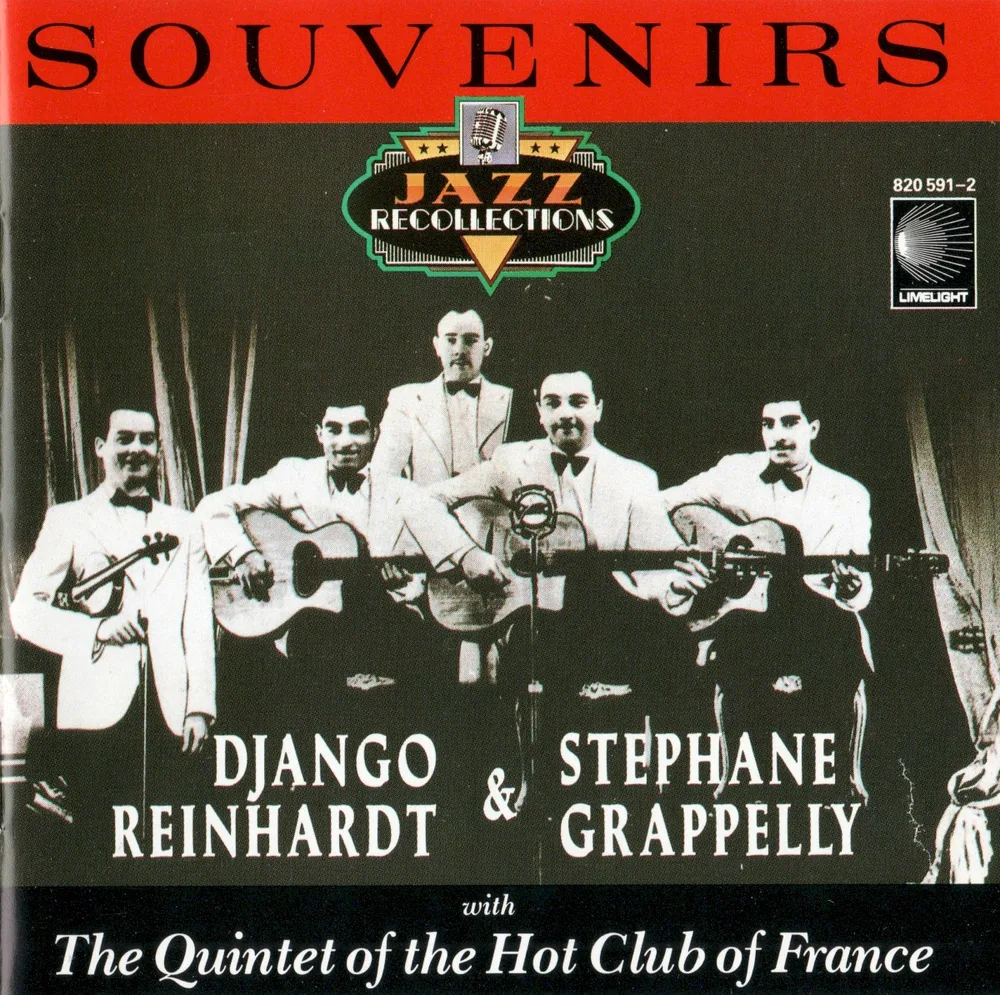
The quintet pictured on the cover of *Souvenirs* (Limelight 820 591-2, 1988), a compilation of the group's 1938 to 1946 recordings. The cover carries an archival stage photograph of five musicians with a violin, three guitars and a double bass, printed above the credit "Django Reinhardt & Stephane Grappelly with the Quintet of the Hot Club of France". Standard copyright, all rights reserved, held by the label. This is not a Creative Commons or public-domain image; it is an album cover shown as an honestly disclosed editorial identification image. — https://coverartarchive.org/release/414ef911-c830-428d-b6a8-6a9ee20e09e9/front-1200 (Cover Art Archive image for the MusicBrainz release "Souvenirs", Limelight 820 591-2, United Kingdom, 1988)
The Quintette du Hot Club de France was a Paris jazz group built around the guitarist Django Reinhardt and the violinist Stéphane Grappelli. It was formed in 1934 and stayed active in one form or another until 1948. Its instrumentation was its signature: a violin, a lead guitar, two rhythm guitars and a double bass, with no drums, horns or piano. Between 1934 and 1948 it recorded more than 130 titles for Ultraphone, Swing, Decca, HMV and other labels, among them "Djangology", "Minor Swing" and, in its wartime form, "Nuages". AllMusic's Thom Jurek counts it among the most original bands in recorded jazz.
The group came out of backstage jam sessions at the Hôtel Claridge on the Champs-Élysées in the summer of 1934, where Reinhardt and Grappelli both played in the orchestra of the double bassist Louis Vola. The guitarist Roger Chaput, also in Vola's band, joined the jams, and Reinhardt brought in his brother Joseph, known as Nin-Nin, as a second rhythm guitarist so that he could solo over a fuller rhythm section. Pierre Nourry and Charles Delaunay, who ran the Hot Club de France, the Paris society of jazz enthusiasts chaired by the critic Hugues Panassié, pressed the five to become a permanent group. In December 1934 they recorded for Ultraphone, and the first record, "Dinah" coupled with "Lady Be Good" (AP 1422), was issued under the name of the Quintette du Hot Club de France with Reinhardt's first name misspelled "Djungo" on the label.
From 1935 to 1939 the quintet toured Europe and was especially popular in Britain. In 1937 the singer Adelaide Hall opened the Montmartre club La Grosse Pomme and hired it as one of the house bands. That year Delaunay launched the Swing label, one of the first record labels devoted entirely to jazz, and on November 25, 1937 the group recorded "Minor Swing" in Paris with Reinhardt, Grappelli, Joseph Reinhardt, Eugène Vées and Vola; it came out as Swing SW. 23 and is credited to Reinhardt and Grappelli. Records for HMV and Decca ran alongside, including "Swing Guitars" (HMV B.8532, coupled with a vocal by Freddy Taylor on "Georgia on My Mind") and "Stomping at Decca" (Decca 23066 in the United States). The rhythm and bass chairs turned over: Discogs credits Pierre Ferret, Marcel Bianchi, Eugène Vées and Joseph Reinhardt on guitar, and Vola and Tony Rovira on bass, across the 1935 to 1939 sessions, and Reinhardt and Grappelli were the only constant members. Outside the quintet both also worked with visiting Americans, among them Coleman Hawkins and Benny Carter.
The original group ended in September 1939, when war was declared while the quintet was touring Britain. Reinhardt went back to France and Grappelli stayed in London. Reinhardt kept the name for a different band, built around the clarinettist Hubert Rostaing and a conventional rhythm section that included drums, often six players strong and sometimes billed as a new quintet. Wartime shortages limited its output, yet it made about seventy titles up to 1948, among them the first recording of "Nuages", issued in 1940 on Swing SW. 88 and coupled with "Les Yeux noirs". Discogs credits that record to Rostaing and Alix Combelle on clarinets, Tony Rovira on bass, Pierre Fouad on drums and Joseph Reinhardt on guitar, besides Reinhardt.
Grappelli spent the war years in Britain. In January and February 1946 Reinhardt joined him in London to record for EMI and Decca with an English rhythm section; the Decca single "Love's Melody" coupled with "Nuages" (F.8604) has Allan Hodgkiss and Jack Llewelyn on guitar and Coleridge Goode on bass. Back in France the two reunited intermittently under the Quintette name in the all-string format through 1947 and 1948, with a shifting cast of rhythm guitarists and bassists, while Reinhardt also led his clarinet-and-drums "new quintet". Swing issued "Ol' Man River" coupled with "Si tu savais" (SW. 270) in 1948. The group is generally dated to 1948 as its end. In early 1949 the two made a last run of recordings in Rome with an Italian rhythm section, and after 1950 Reinhardt stopped using the name and billed his bands as Django Reinhardt et son quintette. He passed away on May 16, 1953.
The records have stayed in circulation through reissues. Decca put the 1935 to 1946 sides out in a five-LP French set, Intégrale 1935-1946 (115.120/24), in 1972, and Mosaic gathered the Swing and HMV sessions of 1936 to 1948 in a six-CD box (MD6-190) in 2000. Through the 1950s and 1960s guitarists including Baro Ferret, Matelo Ferret, Étienne "Patotte" Bousquet and Tchan Tchou Vidal kept the style alive, in 1973 the British guitarist Diz Disley helped bring Grappelli back to an all-string group inspired by the quintet, and later players such as Fapy Lafertin, Raphaël Faÿs and Biréli Lagrène carried it round the world. A New Quintette du Hot Club de France that included Reinhardt's son Babik Reinhardt recorded an album in 1998, and in June 2024 the Hot Club de France gave the name to a new quintet led by the guitarist Duved Dunayevsky and the violinist Daniel Garlitsky, which played the Salle Cortot in Paris that December.
The quintet's sound followed from its instrumentation. Grappelli's violin and Reinhardt's lead guitar carried the melodies and solos over two rhythm guitars and a double bass, so the swing came from strummed guitar chords and a walking bass line rather than from drums. The repertoire mixed American standards, such as "Limehouse Blues", "After You've Gone", "Tiger Rag" and "Sweet Georgia Brown", with the two leaders' own pieces, notably "Djangology", "Minor Swing" and the wartime "Nuages". Wikipedia describes the group as combining jazz with the manouche style, and its records are the foundation of gypsy jazz, the jazz manouche tradition that guitarists have kept playing ever since. The next generation of French guitarists named above, and later Fapy Lafertin, Raphaël Faÿs and Biréli Lagrène, built their playing on its example, and Grappelli's own late-career all-string groups were modelled on it.
- Dinah / Lady Be Good (1934, Ultraphone AP 1422) - the first record issued under the group's name, from the December 1934 session; the companion single is "I Saw Stars" coupled with "Tiger Rag" (AP 1423).
- Some of These Days / Djangology (1935, Ultraphone AP 1548) - the first record of "Djangology", the Reinhardt and Grappelli original that later lent its name to a series of reissues.
- Limehouse Blues / China Boy (1935, Polydor 580.016) - recorded on October 13 and October 21, 1935, with Reinhardt, Grappelli, Joseph Reinhardt and Pierre Ferret, and Vola on bass for "Limehouse Blues" and Tony Rovira for "China Boy". Spotify - Limehouse Blues Listen
- Swing Guitars / Georgia on My Mind (1937, HMV B.8532) - the guitars-and-violin swing piece, with Freddy Taylor singing "Georgia on My Mind". Spotify - Georgia on My Mind Listen
- Minor Swing / Viper's Dream (recorded November 25, 1937, Swing SW. 23) - the quintet's best-known record, cut for Delaunay's Swing label. Spotify - Minor Swing Listen
- Nuages / Les Yeux noirs (1940, Swing SW. 88) - the wartime quintet with Rostaing and Combelle on clarinets, and the first recording of Reinhardt's "Nuages". Spotify - Les Yeux noirs Listen
- Souvenirs (1988, Decca and London 820 591-2) - a single-disc compilation of the 1938 to 1946 sides, from "Honeysuckle Rose" and "Stomping at Decca" to "Love's Melody" and "Nuages".
- The Complete Django Reinhardt and Quintet of the Hot Club of France Swing/HMV Sessions 1936-1948 (2000, Mosaic MD6-190) - the fullest collection of the Swing and HMV sessions, in a six-CD limited edition.
Quintette du Hot Club de France: Full Discography
French all-string jazz quintet formed in Paris in 1934 around Django Reinhardt and Stéphane Grappelli, active until 1948. Discogs artist 355185 (Quintette Du Hot Club De France).
The group's records are mostly 78 rpm singles from 1934 to 1948 and the reissues built from them since, so this is a curated list of the original records and the principal collections, not an itemization of every pressing. Discogs files 703 entries under this name, including reissues, compilations and appearances. Personnel is given as listed in the Discogs credits of each record; where no credits are listed it says so.
Name variations on record: Quintette Du Hot Club De France, Quintet Of The Hot Club Of France, Quintette Of The Hot Club Of France, Le Quintette Du HCF, QHCF, Le Nouveau Quintette Du Hot Club De France. Discogs also lists the alias Orchestre "Swing".
Original 78 rpm records, 1934 to 1948
| Record | Year | Label and catalog number | Personnel | Notes | Listen | Buy |
|---|---|---|---|---|---|---|
| "Dinah" / "Lady Be Good" | 1934 | Ultraphone AP 1422 (France) | No credits listed on Discogs; the founding lineup was Django Reinhardt (guitar), Stéphane Grappelli (violin), Joseph Reinhardt and Roger Chaput (rhythm guitars) and Louis Vola (double bass) | Recorded in Paris in December 1934. The first record issued under the group's name; the label gives the lead guitarist's first name as "Djungo". Issued in Britain on Oriole LV.100. | — | — |
| "I Saw Stars" / "Tiger Rag" | 1934 | Ultraphone AP 1423 (France) | As for AP 1422; no credits listed on Discogs | From the same session. Issued in Britain on Oriole LV.101 and in Czechoslovakia on Ultraphon B 14287. | — | — |
| "Lily Belle May June" / "Sweet Sue, Just You" | 1935 | Ultraphone AP 1444 (France) | Vocal by Jerry Mengo; no other credits listed | Matrix 77240 and 77241. | — | — |
| "Ton Doux Sourire" / "Ultrafox" | 1935 | Ultraphone AP 1484 (France) | No credits listed | Ultraphone single. | — | — |
| "Some of These Days" / "Djangology" | 1935 | Ultraphone AP 1548 (France) | No credits listed | "Djangology" is credited to Reinhardt and Grappelli. Matrix P-77539 and P-77540. | — | — |
| "China Boy" / "Limehouse Blues" | 1935 | Polydor 580.016 (France) | Reinhardt (guitar), Grappelli (violin), Joseph Reinhardt and Pierre Ferret (guitars); Tony Rovira (bass) on "China Boy", Louis Vola (bass) on "Limehouse Blues" | "Limehouse Blues" recorded October 13, 1935 and "China Boy" October 21, 1935. | Spotify - Limehouse Blues | — |
| "After You've Gone" / "Oriental Shuffle" | 1936 | His Master's Voice B.8479 (UK) | Django Reinhardt (guitar), Stéphane Grappelli (violin); no other credits listed | Reissued in Britain in 1946; issued in Germany on Electrola E.G. 3776. | Spotify - After You've Gone | — |
| "Nagasaki" / "Sweet Chorus" | 1936 | Disque "Gramophone" K-7843 (France); His Master's Voice B.8518 (UK, 1937) | Reinhardt (guitar), Grappelli (violin), Joseph Reinhardt and Pierre Ferret (guitars), Louis Vola (bass), vocal by Eddie Taylor | Joseph Reinhardt, Ferret and Vola are marked as uncredited on the label in the Discogs listing. | — | — |
| "Swing Guitars" / "Georgia on My Mind" | 1937 | His Master's Voice B.8532 (UK) | Reinhardt (guitar), Grappelli (violin), Freddie Taylor (vocal on "Georgia on My Mind") | Pressed again in Britain in 1943 and 1948. | Spotify - Georgia on My Mind | — |
| "Runnin' Wild" / "Miss Annabelle Lee" | 1937 | His Master's Voice B.8614 (UK) | Reinhardt (guitar), Grappelli (violin), Marcel Bianchi and Pierre Ferret (guitars), Louis Vola (bass) | Also issued in Australia and in Germany on Electrola. | — | — |
| "Minor Swing" / "Viper's Dream" | 1937 | Swing SW. 23 (France); Victor 26218 (US, 1939) | Reinhardt (guitar), Grappelli (violin), Joseph Reinhardt and Eugène Vées (guitars), Louis Vola (bass) | "Minor Swing" was recorded in Paris on November 25, 1937 and is credited to Reinhardt and Grappelli. Also issued in France on La Voix de son Maître SG. 367. | Spotify - Minor Swing | — |
| "Swinging with Django" / "Paramount Stomp" | 1937 | Swing SW. 40 (France); Victor 27272 (US and Canada, 1941) | Reinhardt (guitar), Grappelli (violin), Joseph Reinhardt and Eugène Vées (guitars), Louis Vola (bass) | Billed "avec Michel Warlop". | Spotify - Swinging with Django | — |
| "Honeysuckle Rose" / "Stomping at Decca" | 1938 | Decca 23066 (US) | Reinhardt (guitar), Grappelli (violin), Eugène Vées and Roger Chaput (guitars, uncredited on the label), Louis Vola (bass, uncredited on the label) | Pressed again in the United States in 1942. | — | — |
| "Three Little Words" / "Appel indirect" | 1938 | Decca F.6875 (France); Brunswick 505.277 (France) | No credits listed | Issued in Britain on Decca F.6875 as "Appel Direct". | — | — |
| "H.C.Q. Strut" / "The Man I Love" | 1939 | Decca F.7390 (UK) | No credits listed | Also issued in the Netherlands, Belgium and Italy. | — | — |
| "Nuages" / "Les Yeux noirs" | 1940 | Swing SW. 88 (France) | Reinhardt (guitar), Joseph Reinhardt (guitar), Hubert Rostaing and Alix Combelle (clarinets), Tony Rovira (bass), Pierre Fouad (drums) | The wartime quintet; the first record of "Nuages". Pressed again in 1947 and reissued by Pathé as PG 532 in 1952. | Spotify - Les Yeux noirs | — |
| "Love's Melody" / "Nuages" | 1946 | Decca F.8604 (UK) | Reinhardt (guitar), Grappelli (violin), Allan Hodgkiss and Jack Llewelyn (guitars, uncredited on the label), Coleridge Goode (bass, uncredited on the label) | Recorded in London after the war; issued in Spain as "Nubes" / "La Melodía del Amor". | — | — |
| "Danse norvégienne" / "Django's Blues" | 1947 | Blue Star B.S. 38 (France) | Reinhardt (electric guitar), Hubert Rostaing (clarinet), André Jourdan (drums); supervised by Eddie Barclay | A record of the 1940s quintet with clarinet and drums. | — | — |
| "Ol' Man River" / "Si tu savais" | 1948 | Swing SW. 270 (France) | No credits listed | Billed to Django Reinhardt and the Quintette du Hot Club de France with Grappelli. | — | — |
Reissues and collections (selected)
| Release | Year | Label and catalog number | Notes | Listen | Buy |
|---|---|---|---|---|---|
| Intégrale 1935-1946, Volumes I à V | 1972 | Decca 115.120/24 (France) | Five-LP box of the 1935 to 1946 sides, with a ten-page booklet. The five volumes also appeared singly the same year, from 1935-1938 Vol. 1 to 1939-1946 Vol. 5. | — | — |
| Swing '35-'39 | 1970 | Eclipse ECM 2051 (UK); GNP Crescendo GNP 9019 (US, 1973, titled Django '35-'39) | Fourteen sides from "Limehouse Blues" and "I Got Rhythm" to "Swing 39". | — | — |
| Souvenirs (billed to Django Reinhardt and Stéphane Grappelly with the Quintet of the Hot Club of France) | 1988 | London 820 591-2 (US) and Decca 820 591-2 (Europe); Limelight 820 591-2 (UK) | Twenty tracks, from "Honeysuckle Rose" and "Stomping at Decca" to "Love's Melody" and "Nuages". The bass chair is credited to Louis Vola, Emmanuel Soudieux, Roger Grasset and Coleridge Goode across the tracks. | — | — |
| The Complete Django Reinhardt and Quintet of the Hot Club of France Swing/HMV Sessions 1936-1948 | 2000 | Mosaic MD6-190 (US) | Six-CD limited, numbered box. Disc one opens with "I'se a Muggin'" and "I Can't Give You Anything but Love"; disc three opens with "Minor Swing" and "Viper's Dream". | — | — |
Related records filed under other names
- Django Reinhardt et son quintette: the bands Reinhardt led after 1950, filed on Discogs as a separate artist (738660), with Pierre Michelot, Hubert Fol, Raymond Fol and others.
- New Quintette du Hot Club de France (1998): a different band, with Didier Lockwood, Babik Reinhardt and Romane among its members, that recorded one album in June 1998 (Discogs artist 427047).
- Quintette du Hot Club de France (2024): the new quintet led by Duved Dunayevsky and Daniel Garlitsky that took the name in 2024 is a separate band from the 1934 to 1948 group.
- Rome, 1949: the last Reinhardt and Grappelli recordings, made with an Italian rhythm section and issued under the two leaders' names.
- Decca single, 1948: the single "Red-O-Ray" / "Yellow House Stomp" (F.8917) is filed under this name on Discogs, but its credits show Grappelli with the pianist George Shearing and an English rhythm section, so it is not a record of the quintet.
The group's full list of pressings, including every reissue, is on Discogs: https://www.discogs.com/artist/355185-Quintette-Du-Hot-Club-De-France
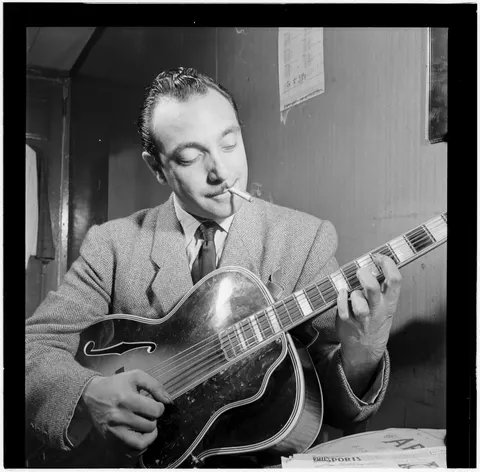
- Django Reinhardt - lead guitar and co-founder, in the group from its formation in 1934 to its end in 1948.
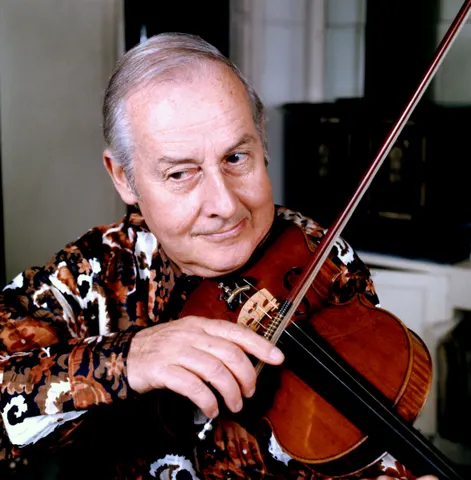
- Stéphane Grappelli - violin and co-founder; in the group from 1934 to 1939, then again after the war in 1946 to 1948.
- Joseph Reinhardt (1912-1982) - Django's younger brother, rhythm guitar, a member from the 1934 start and on most of the pre-war records; he also played in the wartime quintet.
- Roger Chaput (1909-1994) - rhythm guitar from 1934, drawn from Vola's orchestra at the Claridge; he left in 1938, and Discogs lists him, without a label credit, on the 1938 "Honeysuckle Rose" and "Stomping at Decca" session.
- Louis Vola (1902-1990) - double bass and leader of the Claridge orchestra in which the group began; on the early Ultraphone and Swing sides.
- Eugène Vées - rhythm guitar on "Minor Swing", "Swinging with Django" and "Paramount Stomp" (1937), and on the 1938 "Stomping at Decca".
- Pierre "Baro" Ferret and Marcel Bianchi - rhythm guitarists credited on 1935 to 1937 records, including "China Boy", "Nagasaki" and "Runnin' Wild".
- Tony Rovira - double bass on "China Boy" (1935) and, in the wartime band, on "Nuages" (1940).
- Hubert Rostaing (1918-1990) - clarinettist who took Grappelli's place in Reinhardt's wartime quintet, heard on "Nuages", "Dinette" and "Swing 42", and still alongside Reinhardt in 1947.
- Alix Combelle - tenor saxophonist and clarinettist billed with the quintet on "Nuages" (1940).
- Pierre Fouad and André Jourdan - the drummers on the 1940 "Nuages" and the 1947 "Danse Norvégienne" and "Django's Blues".
- Michel Warlop - violinist billed with the quintet on "Swinging with Django" (1937).
- Freddy Taylor - singer on "Georgia on My Mind" (HMV, 1937).
- Coleridge Goode, Allan Hodgkiss and Jack Llewelyn - the English bassist and guitarists on the London session of "Love's Melody" and "Nuages" (Decca, 1946).
- Pierre Nourry and Charles Delaunay - Hot Club de France organizers who pressed for a permanent group and arranged its first records; Delaunay founded the Swing label in 1937.
- Coleman Hawkins and Benny Carter - American visitors with whom Reinhardt and Grappelli recorded in Paris in the 1930s, outside the quintet's own records.
More Gypsy Jazz Artists
See all 36 Gypsy Jazz artists →More French Jazz Artists
See all 170 French artists →- Spotify artist page
- Discogs: Quintette Du Hot Club De France
- MusicBrainz: Quintette du Hot Club de France
- Wikipedia (English): Quintette du Hot Club de France
- Wikipedia (French): Quintette du Hot Club de France
- AllMusic: Quintette du Hot Club de France
- Quintette du Hot Club de France on JazzProfiles.com
- Wikipedia (English): Quintette du Hot Club de France
- Wikipedia (French): Quintette du Hot Club de France
- Wikipedia (English): Hot Club de France
- Wikipedia (English): Minor Swing (composition)
- Wikipedia (English): Nuages (song)
- Wikipedia (English): Stéphane Grappelli
- Wikipedia (English): Louis Vola
- Wikipedia (English): Roger Chaput
- Wikipedia (English): Joseph Reinhardt
- Wikipedia (French): Hubert Rostaing
- Discogs: Quintette Du Hot Club De France, artist 355185
- Discogs: Quintette Du Hot Club De France, Minor Swing / Viper's Dream (Swing SW. 23)
- Discogs: Nuages / Les Yeux Noirs (Swing SW. 88)
- Discogs: Dinah / Lady Be Good (Ultraphone AP 1422)
- Discogs: The Complete Django Reinhardt And Quintet Of The Hot Club Of France Swing/HMV Sessions 1936-1948 (Mosaic MD6-190)
- Discogs: Intégrale 1935-1946 Volumes I à V (Decca 115.120/24)
- MusicBrainz: Quintette du Hot Club de France
- AllMusic: Quintette du Hot Club de France
- Guarneri Hall: Django Reinhardt
- Syncopated Times: History and Rebirth of the Quintette du Hot Club de France
- Sortir à Paris: Le retour du Quintette du Hot Club de France à la Salle Cortot