 JAZZPROFILES lives in the music 3,006 Jazz Artists fully Profiled!
Géo Daly
Last updated November 15, 2026
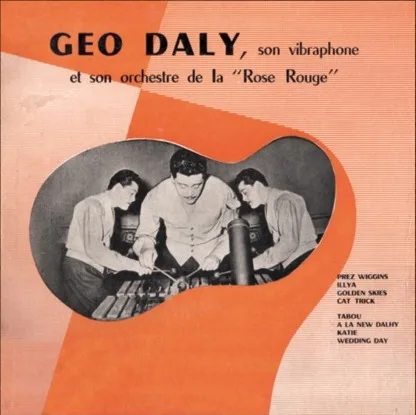
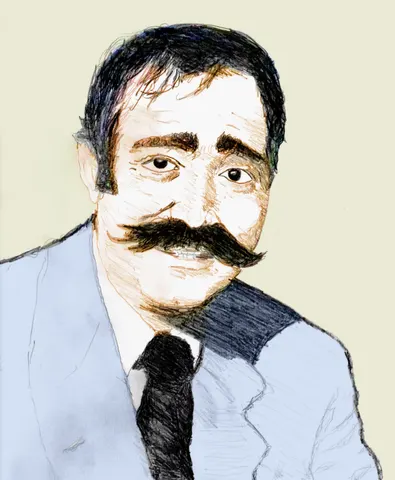
Géo Daly at the vibraphone, between two band members, from the sleeve of *Géo Daly et son orchestre de la "Rose Rouge"* (Vogue Productions, L.D. 184), as shown on the artwork of the 2026 Fresh Sound CD reissue (FSR-CD 1086). Cropped to the left-hand sleeve of the two-album reissue cover. Standard copyright, all rights reserved, held by the original sleeve's rights holder and the reissuing label. This is not a Creative Commons or public-domain image; it is an album cover shown as an honestly disclosed editorial identification image. — https://music.apple.com/us/album/6771290809 (Apple Music artwork, 1000 x 1000 pixel version of the reissue cover, cropped to 416 x 415 pixels)
Géo Daly (Discogs gives his real name as Georges Dalibon) was a French vibraphonist, accordionist and bandleader. He was born on April 16, 1923, in Bois-Colombes, northwest of Paris, and passed away on June 1, 1999, in Sète, on the Mediterranean coast, where he had retired. Both Wikipedia editions, the BnF authority record and MusicBrainz give the same dates.
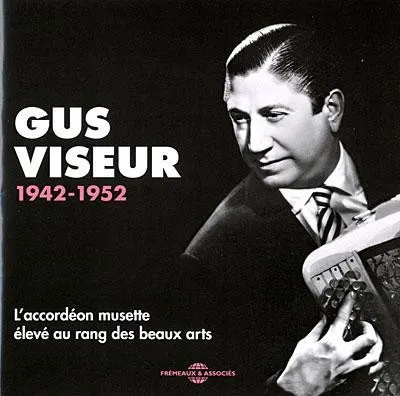
He began on the accordion. French Wikipedia says he discovered the playing of Gus Viseur as a teenager, and that he later heard Benny Goodman's quartet with Lionel Hampton on vibraphone. English Wikipedia dates his professional accordion work from 1939 to 1947. In 1945 he bought a vibraphone, and he finished his military service leading the orchestra of a theatre run for American forces at the Club interallé; afterwards he toured with his own orchestra in France, Germany, Belgium and Switzerland, according to French Wikipedia.
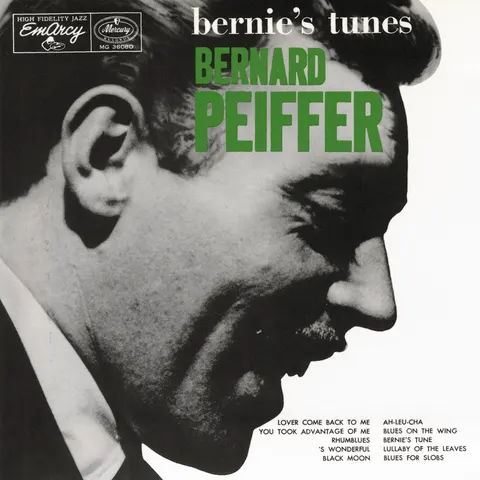
In the late 1940s he played with Don Byas, Bill Coleman and Bernard Peiffer. The reissue notes for his Vogue sessions say he and the baritone saxophonist Michel de Villers joined the Edwards Band in the autumn of 1948 and then moved to the cabaret La Rose Rouge in Saint-Germain-des-Prés, where their group stayed about six years with a rhythm section of the pianist Christian Chevallier (from 1951), the bassist Alix Bret and the drummer Bernard Planchenault. English Wikipedia adds that in 1952 he became house vibraphonist at the Club Saint-Germain, where over the following decade he worked with Marcel Bianchi, Claude Bolling, de Villers, Roy Eldridge, Duke Ellington, André Persiany, Dave Pochonet and Lester Young. French Wikipedia records that he met Lionel Hampton at the Club Saint-Germain in 1951 and that the two became friends.
His first records under his own name came out on the Swing label. On Discogs, "Nine O'Clock Jump" and "Moonglow" (SW. 329) was recorded on November 24, 1949, with Peiffer, the bassist Jean Bouchéty and the drummer Roger Paraboschi, and was issued in 1950. A second Swing single with the same rhythm section followed (SW. 343), then "Odalisque" and "Sunkiss" (SW. 348, recorded April 17, 1950, with Raymond Fol on piano), then "Sonny House" and "Farewell Glance" (SW. 367, recorded November 15, 1950, with Persiany and the tenor saxophonist André Ross). He is also the vibraphonist on the all-star "Blues 1950" (SW. 331, recorded December 15, 1949) with Hubert Rostaing, Hubert Fol and Aimé Barelli. Vogue issued two Don Byas 78s billed to "Don Byas et ses rythmes avec Géo Daly" in 1952 and 1953, and the Rose Rouge group's 10-inch LP (Vogue L.D. 184), whose ten tracks were recorded in Paris in April 1953.
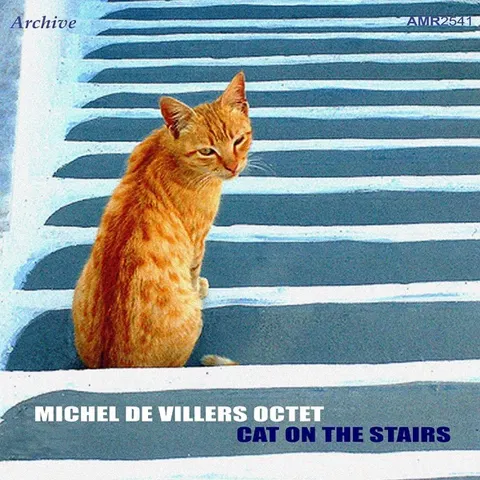
Through the mid 1950s he was a first-call Paris vibraphonist on other leaders' dates: Jack Diéval's 10-inch LPs for La Voix de son Maître (1954), a Columbia EP by the tenor saxophonist Guy Lafitte (1955), de Villers's Decca EP Cat on the Stairs (recorded in 1954, where he is uncredited on the sleeve) and the 1958 Vega tribute LP Notre ami Django. His own Columbia 10-inch LP of 1955, Son trio et son grand orchestre, pairs a trio side, with the guitarist René Duchossoir and Bret, with two large-orchestra pieces, "The Night of a Cat" and "The Day of a Dog", recorded on June 27, 1955. The Columbia Jazz Stars Series EP of 1956 puts him with Lafitte and the guitarist Jean-Pierre Sasson. For the label President he made Musique dans la nuit (1958), with a sleeve note by Maurice Chevalier. His vibraphone is also on Michel Magne's experimental Musique tachiste (1959), in the "Concertino Triple".
From the early 1960s a large part of his output was light and library music: Discogs lists a run of Sonorop LPs and EPs under his name or as the Orchestre Géo Daly, among them Géo Daly joue Géo Daly (shared with the saxophonist Jean-Claude Fohrenbach), Vibra, Marimba, Clavecin and C° and the 1966 EP Flying Home, and a 1964 Gala des Variétés record, Succès. In 1966 he played vibraphone on Baro Ferret's EP Swing valses d'hier et d'aujourd'hui (Vogue). On September 15 and 16, 1977, he was recorded live at the Méridien in Paris on a date led by Moustache with Michel Attenoux. English Wikipedia lists him in the late 1970s as a member of Les Petits Français, a group with Moustache and Attenoux that is the credited ensemble on Georges Brassens's jazz albums of 1979 and 1980; his own name is not itemized on those releases. French Wikipedia also records that he was Rhoda Scott's guest of honour at the Olympia in 1978 and that he had heart surgery in 1981 before retiring to Sète; it credits him with more than 150 recorded titles.
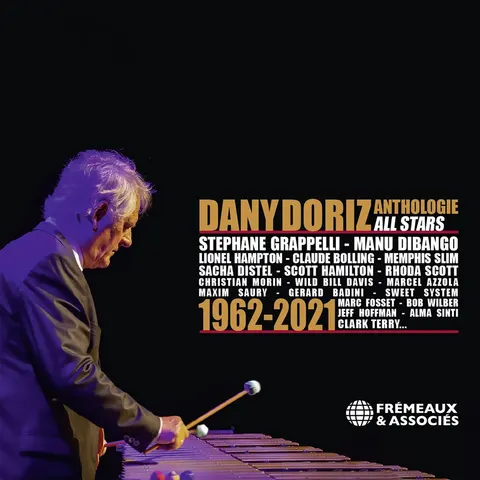
Dany Doriz, a younger Paris vibraphonist, studied with Daly. In 2026 the label Fresh Sound reissued the Rose Rouge LP together with a second album on one CD.
Daly took the Goodman quartet records and Hampton as his starting point, and French Wikipedia notes that Hampton called him "My Brother". Fresh Sound's reissue notes call him the leading French vibraphonist of the late 1940s and one of the more distinctive voices of postwar French jazz, and Discogs files his Swing singles of 1949 and 1950 under bop and swing. His repertoire ran from Goodman-era standards ("Moonglow", "Flying Home") through his own lines such as "Odalisque" and "Cat Trick" to Paris variety songs and film themes. Much of his later output is light music for dancing and library use, so his jazz reputation rests mainly on the Swing and Vogue sides of 1949 to 1953 and on his sideman work through the 1950s. The two subgenre tags reflect the styles Discogs assigns to the sessions he led in those years.
- "Nine O'Clock Jump" / "Moonglow" (Swing SW. 329, recorded November 24, 1949) - his first record as a leader, a quartet with Peiffer, Bouchéty and Paraboschi.
- "Odalisque" / "Sunkiss" (Swing SW. 348, recorded April 17, 1950) - a quartet record with Raymond Fol on piano; "Odalisque" is credited to Daly as writer on the release.
- Géo Daly et son orchestre de la Rose Rouge (Vogue L.D. 184, ten tracks recorded April 1953) - the Rose Rouge band with Chevallier, de Villers, Ross and the trombonist Bill Tamper, now on CD. Apple Music - Rose Rouge reissue
- Son trio et son grand orchestre (Columbia 33 FP 1059, June 1955) - his trio and large orchestra on one 10-inch LP, including "The Night of a Cat" and "The Day of a Dog". Apple Music - The Day of a Dog Listen
- Jazz Stars Series (Columbia ESDF 1125, 1956) - an EP with Lafitte, Sasson, the pianist Jean-Claude Pelletier, the bassist Paul Rovère and the drummer Christian Garros. Apple Music - Jazz Stars Series
- Musique dans la nuit (President KV 17, 1958) - a 10-inch LP of standards and French songs with the tenor saxophonist Georges Bessière, Sasson, Bret and the drummer Tony Cossu. Apple Music - the same tracks, titled Musique de neige Listen
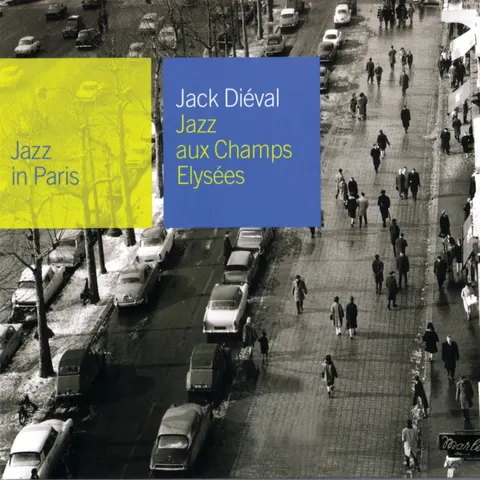
- Jack Diéval, Jazz aux Champs-Élysées (La Voix de son Maître FFLP 1030, 1954) - a ten-piece session with Hubert Fol, Fohrenbach, Pierre Michelot and Benny Vasseur on which he plays vibraphone.
- Jazz Session au Méridien-Paris (Disques EPS E 770405, recorded September 15 and 16, 1977) - a live set led by Moustache with Attenoux and Daly.
Géo Daly: Full Discography
French vibraphonist, accordionist and bandleader, born in Bois-Colombes on April 16, 1923, who passed away in Sète on June 1, 1999. Discogs files his records under artist 481278 (https://www.discogs.com/artist/481278) and lists about a hundred entries, a large share of them library-music LPs and singles, appearances on compilations, and records of other leaders. The billings Géo Daly Et Son Quartet (3126218), Géo Daly Et Son Trio (6871957), Géo Daly Et Son Quintette (9336142), Orchestre Géo Daly (5547136) and two Rose Rouge billings (12892379 and 13874476) sit under separate Discogs entries; the records listed here were taken from the main entry and from the master and release records that carry his name, and each row was read from the individual release record. Release years are the years Discogs gives; where Discogs gives none, or where the personnel is not listed on the release record, the cell says "Not confirmed" or "Not listed". Compilation appearances, reissues and further Sonorop library records are not itemized.
Role key: Leader means the record is billed to Daly or to a group named for him. Sideman rows give the instrument credited on the release record.
Records billed to Daly
| Album | Recording Date(s) | Release Date | Label | Catalog Number | Format | Personnel | Role | Notes | Listen | Buy |
|---|---|---|---|---|---|---|---|---|---|---|
| "Nine O Clock Jump" / "Moonglow" (Géo Daly et son quartet) | November 24, 1949 | 1950 | Swing | SW. 329 | 10-inch 78 rpm | Daly (vibraphone), Bernard Peiffer (piano), Jean Bouchéty (bass), Roger Paraboschi (drums) | Leader | Filed by Discogs under bop. | Not found | — |
| "Cross Winds" / "Cobra" (Orchestre Géo Daly) | Not confirmed | 1950 | Swing | SW. 343 | 10-inch 78 rpm | Daly (vibraphone), Peiffer (piano), Bouchéty (bass), Paraboschi (drums) | Leader | Same four players as SW. 329. | Not found | — |
| "Odalisque" / "Sunkiss" (Géo Daly et son quartet) | April 17, 1950 | 1950 | Swing | SW. 348 | 10-inch 78 rpm | Daly (vibraphone), Raymond Fol (piano), Bouchéty (bass), Bernard Planchenault (drums) | Leader | "Odalisque" is credited to Daly as writer. | Not found | — |
| "Sonny House" / "Farewell Glance" (Géo Daly et son quartet) | November 15, 1950 | 1951 | Swing | SW. 367 | 10-inch 78 rpm | Daly (vibraphone), André Persiany (piano), Alix Bret (bass), Planchenault (drums), André Ross (tenor saxophone) | Leader | Billed as a quartet; five players are credited. | Not found | — |
| "Old Man River" / "Body and Soul" (Géo Daly et son quartette de la Rose Rouge) | Not confirmed | Not confirmed | Vogue Productions | V. 3221 | 10-inch 78 rpm | Daly (vibraphone), Persiany (Hammond organ), Alphonse Masselier (bass), Planchenault (drums) | Leader | Not found | — | |
| "Nice Work If You Get It" / "I'm in the Mood for Love" (Don Byas et ses rythmes, with Géo Daly) | Not confirmed | 1952 | Vogue Productions | V. 3466 | 10-inch 78 rpm | Not listed | Co-billed | Personnel is not listed on the release record. | Not found | — |
| "C'est mon gigolo" / "Can't Help Lovin' Dat Man" (Don Byas et ses rythmes, with Géo Daly) | Not confirmed | 1953 | Vogue Productions | V. 3268 | 10-inch 78 rpm | Not listed | Co-billed | Personnel is not listed on the release record. | Not found | — |
| Géo Daly et son orchestre de la "Rose Rouge" | April 1953 (the ten tracks as dated on the 2026 CD reissue) | Not confirmed | Vogue Productions | L.D. 184 | 10-inch LP | Daly (vibraphone), Michel de Villers (baritone saxophone), André Ross (tenor saxophone), Bill Tamper (trombone), Christian Chevallier (piano), Bret (bass), Planchenault (drums) | Leader | "Prez Wiggins", "Illya", "Golden Skies", "Cat Trick", "Tabou", "A la new Dalhy", "Katie", "Wedding Day". Reissued in 2026 by Fresh Sound (FSR-CD 1086) with the album Dancing-Party à Saint-Germain-des-Prés. | Apple Music - 2026 reissue | — |
| Musique pour deux n° 6 (Orchestre Géo Daly, EP) | Not confirmed | 1955 | La Voix de son Maître | 7 EMF 50 | 7-inch EP | Not listed | Leader | "Silver Moon", "Smile", "Farewell Glance", "Three Coins in the Fountain". | Not found | — |
| Son trio et son grand orchestre (Orchestre Géo Daly) | June 27 and June 29, 1955, Paris | 1955 | Columbia | 33 FP 1059 | 10-inch LP | Daly (vibraphone), René Duchossoir (guitar), Bret (bass); on "The Night of a Cat" and "The Day of a Dog": Planchenault (drums), Raymond Le Sénéchal (piano), saxophones Ross, Francis Weiss, Marcel Cauvin and Pierre Guillotin, trombones André Paquinet, Benny Vasseur, Charles Verstraete and Gabriel Vilain | Leader | Side A, four standards, was recorded on June 29 and side B, the two orchestra pieces, on June 27. | Apple Music - The Day of a Dog | — |
| Musique pour deux n° 11 (Géo Daly et son quartet, EP) | Not confirmed | Not confirmed | Columbia | ESDF 1042 | 7-inch EP | Daly (vibraphone, leader) with an unnamed electric guitarist, bassist, organist and drummer | Leader | "Si tu es jolie", "Mister Sandman", "Un homme est parti", "Merci Monsieur Schubert". | Not found | — |
| Jazz Stars Series (EP, shared billing) | Not confirmed | 1956 | Columbia | ESDF 1125 | 7-inch EP | Daly (vibraphone), Guy Lafitte (tenor saxophone), Jean-Pierre Sasson (electric guitar), Jean-Claude Pelletier (piano), Paul Rovère (bass), Christian Garros (drums) | Co-leader | "Dans un vieux livre", "Flying Back", "What a Funny Moon", "Partnership Boys". | Apple Music - Jazz Stars Series | — |
| Musique pour deux n° 17 (EP) | Not confirmed | 1957 | Columbia | ESDF 1138 | 7-inch EP | Not listed | Leader | "Encore", "Amoureux de l'amour", "A Woman in Love", "Tu me vois". | Not found | — |
| Musica per due (Géo Daly, il suo vibrofono e la sua orchestra, EP) | Not confirmed | 1957 | La Voce del Padrone | 7E MQ 24 | 7-inch EP | Not listed | Leader | Italian issue; "Le Rififi", "September Song", "Magic Tango", "Garden Lane". | Not found | — |
| Musique dans la nuit (10-inch LP) | Not confirmed | 1958 | President Records | KV 17 | 10-inch LP | Daly (vibraphone), Georges Bessière (tenor saxophone), Jean-Pierre Sasson (guitar), Bret (bass), Tony Cossu (drums) | Leader (billed Géo Daly et son quintette) | Sleeve note by Maurice Chevalier. Ten tracks including "Louise", "C'était écrit" and "C'est mon gigolo". | Apple Music - same tracks, titled Musique de neige | — |
| En attendant minuit | Not confirmed | Not confirmed | President Records | KVP 167 | LP | Not listed (Sasson is credited on guitar and vocals) | Leader (billed Géo Daly et son quintette) | Eleven tracks including "Stomping at the Savoy", "Moonglow" and "Flying Home". | Not found | — |
| Géo Daly joue Géo Daly / Jean-Claude Fohrenbach joue Jean-Claude Fohrenbach: Mouvements rapides | Not confirmed | Not confirmed | Sonorop | SONO 3007 | LP | Not listed | Leader (shared) | Library-music LP; Daly wrote the A side and Fohrenbach the B side. | Not found | — |
| Géo Daly joue Géo Daly: Blues / Géo Daly joue... En douceur | Not confirmed | Not confirmed | Sonorop | SONO 3010 | LP | Not listed | Leader | Library-music LP; Daly is credited as writer. | Not found | — |
| Baroque Up to Date (Orchestre Géo Daly, shared with an orchestra billed as Stéphane Grappelli's) | Not confirmed | Not confirmed | Sonorop | SONO 3032 | LP | Not listed | Leader (shared) | Library-music LP. | Not found | — |
| Vibra, Marimba, Clavecin and C° (Orchestre Géo Daly) | Not confirmed | Not confirmed | Sonorop | SONO 3040 | LP | Not listed | Leader | Library-music LP. | Not found | — |
| Succès | Not confirmed | 1964 | Gala des Variétés | G-346 | 7-inch, 33 rpm | Not listed | Leader | Instrumental versions of pop songs of the day, including "Can't Buy Me Love". | Not found | — |
| Flying Home (Orchestre Géo Daly, EP) | Not confirmed | 1966 | Sonorop | SONO 4001 | 7-inch EP | Jean Tordo (baritone saxophone), Paul Rovère (bass), Marcel Blanche (drums), Roger Bourdin (flute), Jean-Claude Pelletier (piano), Michel Attenoux (saxophone), André "Cousin" Rosenfeld and Jean-Claude Fohrenbach (tenor saxophones) | Leader | Daly's own instrument is not itemized on the release record. | Not found | — |
| Jazz Session au Méridien-Paris (enregistrement public) (Moustache, Michel Attenoux, Géo Daly) | September 15 and 16, 1977 | 1977 | Disques EPS | E 770405 | LP | Daly (vibraphone), Michel Attenoux (soprano and alto saxophones), Patrice Authier (piano), Daniel Amelot (bass), Teddy Martin (drums, violin), Moustache (drums) | Co-leader | Recorded live at the Méridien de Paris. | Not found | — |
As sideman (selected credits)
| Year | Project (Leader) | Title | Label | Catalog | Role | Notes |
|---|---|---|---|---|---|---|
| 1950 (recorded December 15, 1949) | All Star Français 1950 | "Blues 1950" | Swing | SW. 331 | Vibraphone | Hubert Fol (alto saxophone), Michel de Villers (baritone saxophone), Hubert Rostaing (clarinet), Jean-Claude Fohrenbach (tenor saxophone), Benny Vasseur (trombone), Aimé Barelli (trumpet), Léo Chauliac (piano), Bouchéty (bass), Paraboschi (drums), José Bartel (vocals). |
| 1953 | Don Byas | This Is ... Don Byas | Vogue Productions | L.D. 109 | Vibraphone (uncredited), tracks A1 and B1 | "Nice Work If You Can Get It" and "I'm in the Mood for Love", with Christian Chevallier (piano). |
| 1954 | Jack Diéval | Jack Diéval, son sextette et l'orchestre de jazz de la télévision sarroise (10-inch LP) | La Voix de son Maître | FFLP 1026 | Vibraphone | Diéval (piano), Emmanuel Soudieux (bass), Pierre Lemarchand (drums), Jean-Claude Fohrenbach and Maurice Meunier (tenor saxophones). |
| 1954 | Jack Diéval | Jazz aux Champs-Élysées (10-inch LP) | La Voix de son Maître | FFLP 1030 | Vibraphone | Hubert Fol (alto saxophone), Maurice Meunier (clarinet), Fohrenbach (tenor saxophone), Benny Vasseur (trombone), Pierre Michelot and Soudieux (bass), Lemarchand (drums). |
| 1955 | Guy Lafitte et son quartette | If I Could Be With You (EP) | Columbia | ESDF 1043 | Vibraphone | André Persiany (piano), Jacques Medvedko (bass), Teddy Martin (drums). |
| 1955 | Michel de Villers et son orchestre | Cat on the Stairs (EP) | Decca | EFS 450511 | Vibraphone (uncredited) | Recorded in Paris in 1954; Fol, Persiany, Bret, Planchenault, Meunier and Charles Verstraete also uncredited on the sleeve. |
| 1958 | Henri Crolla, André Ekyan, Stéphane Grappelli, Hubert Rostaing and others | Notre ami Django | Vega | V 30 S 805 | Vibraphone | Tribute LP with Maurice Vander and René Urtreger (piano), Soudieux (bass), Pierre Lemarchand and Al Levitt (drums). |
| 1958 | Gérard Badini et les Swingers | Making Whoopee (EP) | Pretoria | 45 J. 3001 | Vibraphone (uncredited) | Badini (clarinet). |
| 1959 (compiled 2007) | Michel Magne | Le Monde expérimental de Michel Magne (CD compilation, includes Musique tachiste) | Universal Music Jazz France | 530 394 5 | Vibraphone, tracks 1 to 7 | The "Concertino Triple" and four other pieces, with Paul Castanier (piano), Janine de Waleyne (ondes Martenot), Lionel Gali (violin) and Christiane Legrand (vocals). |
| 1960 (recorded October 2) | Michel Attenoux et son orchestre | Jazztime Paris (10-inch LP) | Deutscher Schallplattenclub | D-031 | Vibraphone | Recorded in Stuttgart; Attenoux (alto and soprano saxophones), Persiany (piano). |
| 1961 | Tony Murena et son ensemble | Valses de Paris (10-inch LP) | Barclay | BB 13 | Vibraphone (uncredited) | Murena (accordion). |
| 1966 | Pierre "Baro" Ferret | Swing valses d'hier et d'aujourd'hui (EP) | Disques Vogue | EPL 8442 | Vibraphone | Jean-Claude Pelletier (organ) on B1 and B2. |
| Not confirmed | Marcel Bianchi | "Big Bang Blues" / "Petite Fleur" | Vogue Productions | V. 3275 | Vibraphone | 10-inch 78 rpm; the year is not given on the release record. |
| Not confirmed | André Persiany Quintet and Jean-Pierre Sasson et son quartet | Style (10-inch LP compilation) | EKO | LV 1 | Vibraphone, tracks A1 to A4 | Persiany (piano), Alix Bret (bass), Planchenault (drums). |
| 1979 | Georges Brassens, Moustache and Les Petits Français | Georges Brassens joue avec Moustache et Les Petits Français, Volume 2 | Philips | 9101 280 | Ensemble member per English Wikipedia | Les Petits Français is the ensemble credited on the release record; Daly's own name and instrument are not itemized there. |
Discogs also lists him on anthologies of Paris bebop, European cool jazz and Django Reinhardt tributes, and on further Sonorop library records; those compilation appearances are not itemized here.
- Bernard Peiffer - pianist on Daly's 1949 Swing records SW. 329 and SW. 343.
- Jean Bouchéty - bassist on the Swing records of 1949 and 1950.
- Raymond Fol - pianist on "Odalisque" / "Sunkiss" (SW. 348, April 1950).
- André Persiany - pianist on SW. 367 (November 1950) and on Lafitte's 1955 EP.
- Michel de Villers - baritone saxophonist and partner in the Edwards Band and the Rose Rouge orchestra.
- Christian Chevallier - pianist in the Rose Rouge rhythm section from 1951.
- Jack Diéval - pianist whose two 1954 LPs for La Voix de son Maître include Daly.
- Guy Lafitte - tenor saxophonist; the 1955 EP If I Could Be With You and the 1956 Jazz Stars Series EP.
- Hubert Rostaing, Hubert Fol, Jean-Claude Fohrenbach and Aimé Barelli - fellow players on "Blues 1950" (SW. 331, recorded December 15, 1949).
- Michel Attenoux and Moustache - the 1977 Méridien live date and, per English Wikipedia, Les Petits Français of the late 1970s.
- Don Byas - American tenor saxophonist; the 1952 and 1953 Vogue 78s billed to "Don Byas et ses rythmes avec Géo Daly".
- Gérard Badini - clarinettist; Daly is the uncredited vibraphonist on his 1958 EP Making Whoopee.
- Dany Doriz - vibraphonist who studied with him.
- Lionel Hampton - the vibraphonist he admired; the two became friends in 1951, per French Wikipedia.
More Swing Artists
See all 363 Swing artists →More French Jazz Artists
See all 511 French artists →- Apple Music artist page
- Discogs
- MusicBrainz
- Wikipedia (English)
- Wikipedia (French)
- Wikidata
- BnF data
- Fresh Sound Records artist page
- Géo Daly on JazzProfiles.com
- Wikipedia (English): Geo Daly
- Wikipedia (French): Geo Daly
- Wikidata: Géo Daly (Q1558920)
- BnF data: Geo Daly (1923-1999)
- MusicBrainz: Géo Daly
- Discogs: Géo Daly, artist 481278
- Fresh Sound Records: Géo Daly
- Discogs: Nine O Clock Jump / Moonglow, Swing SW. 329
- Discogs: Odalisque / Sunkiss, Swing SW. 348
- Discogs: Géo Daly Et Son Orchestre De La "Rose Rouge", Vogue L.D. 184
- Discogs: Son Trio Et Son Grand Orchestre, Columbia 33 FP 1059
- Discogs: Jazz Aux Champs-Élysées, FFLP 1030
- Discogs: Jazz Session Au Méridien-Paris, EPS E 770405
- Apple Music: Géo Daly