 JAZZPROFILES lives in the music 3,006 Jazz Artists fully Profiled!
Jean Bouchéty
Last updated November 15, 2026
Listen on Spotify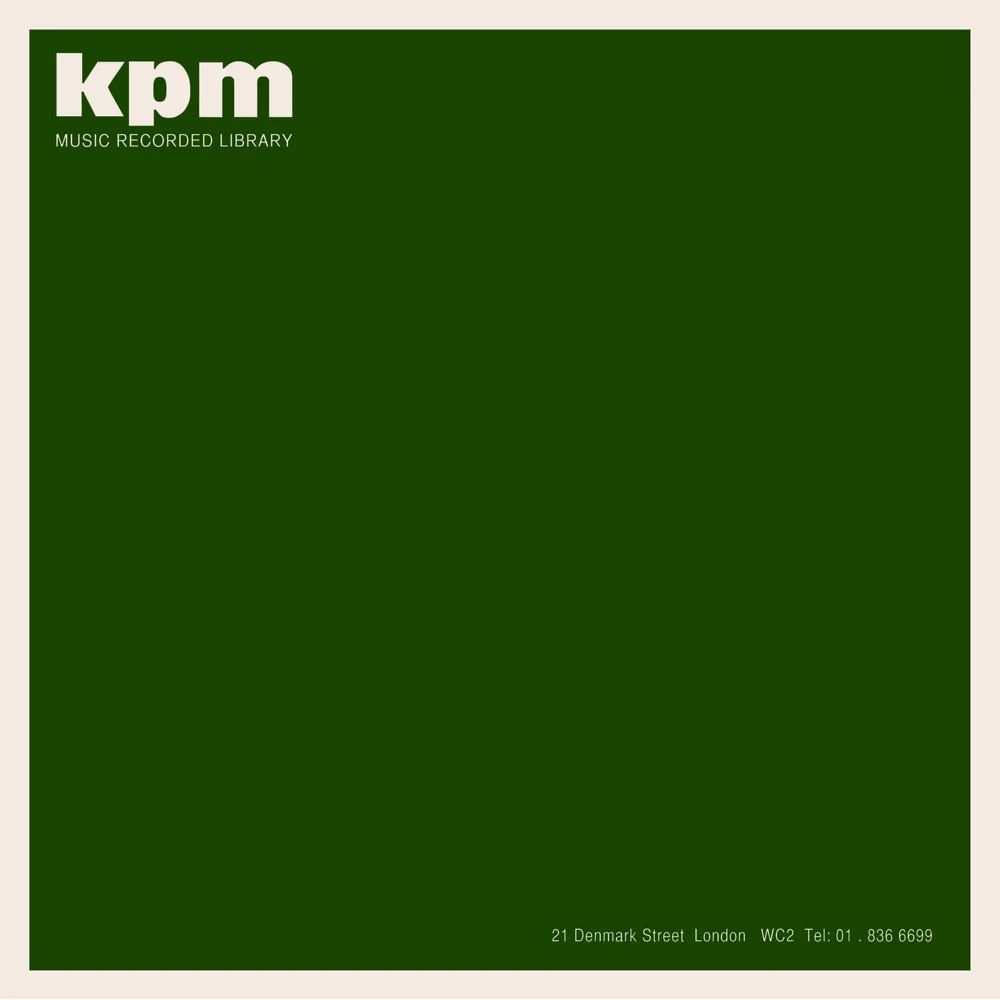
Cover of *The Magic of Bouchety* (Jean Bouchéty, KPM Music, KPM 1109, 1972), one of the albums in the Key Recordings list. The sleeve is a plain library-music design with the KPM logo and address and does not show the artist. Standard copyright, all rights reserved, held by KPM Music Ltd. This is not a Creative Commons or public-domain image; it is an album cover shown as an honestly disclosed editorial identification image. — https://music.apple.com/gb/album/kpm-1000-series-the-magic-of-bouchety/1189703500 (Apple Music artwork, 1000 x 1000 pixel version)
Jean Bouchéty (born Jean Marcel Bouchéty) was a French double bassist, arranger and conductor. He was born on March 1, 1920, in L'Étang-la-Ville, west of Paris in what was then the Seine-et-Oise department, and passed away in Paris on July 19, 2006, at the age of 86. The BnF catalogue calls him a conductor and jazz double bassist and records a pseudonym, Johnny Glider. His working life falls into two parts: from the mid-1940s to the late 1950s he was a bassist on Paris jazz sessions, and from the late 1950s into the 1980s he arranged and conducted for French singers and films.
The sources checked say nothing about his training or his first years as a musician. The earliest jazz session found is a Don Byas Quartet date recorded on December 4, 1946, on which Discogs credits him on bass beside the pianist Billy Taylor and the drummer Buford Oliver (Swing SW. 241, "Body and Soul" and "I'm Beginning to See the Light"). He is credited on bass on the Dial 10-inch LP Saxophone Moods, which collects Byas sides recorded at Studio Technisonor in Paris on January 27 and June 12, 1947, with Taylor, Oliver, the guitarist Jean-Jacques Tilché and, on four tracks, the trombonist Tyree Glenn. In 1947 he is also on a trio single led by the pianist Bernard Peiffer ("That Good Old Fats" and "Bernie's Blues", Swing SW. 238, with the drummer Dany Kane) and on the saxophonist Alix Combelle's "Jam-Session" No. 1 (Swing SW. 227), whose line-up also has Michel de Villers on alto saxophone, the trumpeter Christian Bellest, the pianist Jack Diéval, the guitarist Roger Chaput and the drummer Jerry Mengo.
The densest run of credits is 1949. On January 5 he was in the rhythm section, with Peiffer and the drummer Roger Paraboschi, of trumpeter Bill Coleman's orchestra with Byas as the tenor soloist (Swing SW. 295, "What Is This Thing Called Love?" and "Blues at Noon"). On October 29 he recorded "Iambic Pentameter" and "Robbin's Nest" with the alto saxophonist Hubert Fol's Be-Bop Minstrels and the drummer Kenny Clarke (Swing SW. 325), and on November 24 he was on bass for the vibraphonist Geo Daly's quartet with Peiffer and Paraboschi ("Nine O'Clock Jump" and "Moonglow", SW. 329). French Wikipedia describes that quartet as Daly's first 78 rpm record. A second Daly record, "Cross Winds" and "Cobra" (SW. 343, under Daly's orchestra billing), carries the same bass, piano and drums. On December 15 he took part in two Swing sessions: the sextet of the clarinetist Hubert Rostaing with the baritone saxophonist William Boucaya and the trombonist Benny Vasseur ("The Hucklebuck" and "Half Century Blues", SW. 335), and an all-star date billed as All Star Français 1950, "Blues 1950" (SW. 331), with Fol, Rostaing, Michel de Villers, Jean-Claude Fohrenbach, the trumpeter Aimé Barelli, Daly, the pianist Léo Chauliac and the singer José Bartel. Discogs also credits him on bass for the 1949 recordings on André Hodeir's 10-inch LP of film music (Swing M. 33.343), alongside Rostaing, Byas, Peiffer, Clarke, Daly and the trumpeter Jo Boyer. The BnF lists him as a member of Rostaing's sextet and also names a group called Jet quartet, which the sources checked do not describe further.
Later jazz credits are fewer. On September 20, 1950 he recorded "Why Was I Born" and "All the Things You Are" with the American pianist Gerald Wiggins's trio and Chico Hamilton on drums (Vogue V. 5071). In 1954 he arranged four of the five pieces on a 10-inch LP by Jack Diéval's sextet and the jazz orchestra of Saarland television (La Voix de son Maïtre FFLP 1026), and is credited as writer of one of them, "Sunkiss". In 1957 he is credited on bass on an EP by the saxophonist André Ekyan's ensemble for Vega (V 45 P 1634) with Maurice Vander on piano, and, uncredited on the sleeve, on the second side of Ekyan's Vega 10-inch LP.
From the late 1950s the credits are mostly for pop and film work. French Wikipedia lists him as arranger or conductor for Hugues Aufray (1958), Jean Philippe (1959), Eddy Mitchell (1961 to 1968), Claude François (1963), Michel Polnareff (1966 and 1967), Nicoletta, Mireille Mathieu (1970 and 1971), Michel Fugain and Le Big Bazar (1972), Dalida (1974) and, from 1973 to 1983, Éric Vincent. Discogs confirms two of the earliest: Jean Philippe's 10-inch LP À nos amours (Barclay 80 112, October 1959), on which Bouchéty is credited as accompanist, and Aufray's EP "Tucumcari" (Barclay 70 390, 1961), billed as accompanied by Jean Bouchéty et son orchestre. He also wrote or arranged for the cinema: the BnF and French Wikipedia list the scores of Roger Vadim's La Curée (1966, with Jean-Pierre Bourtayre, released in English-speaking markets as The Game Is Over), the orchestrations for Pierre Étaix's Yoyo (1965), Max Pecas's Belles, blondes et bronzées (1981, with Roger Candy) and Roger Coggio's Le Bourgeois gentilhomme (1982), for which a Trema LP credits him as composer, conductor and producer.
Under his own name he recorded light orchestral singles for Barclay in 1968 and 1969, the library-music LP The Magic of Bouchety (KPM 1109, 1972) and, with Steve Gray and Duncan Lamont, the Bruton library LP Television Today (BRG 30, 1985). Wikidata describes his orchestra, Jean Bouchéty et son orchestre, as a French light orchestra.
No interviews, reviews or liner notes describing his playing turned up, so this section stays with what the credits show. In the 1946 to 1950 sessions he is the bassist in the rhythm sections behind Byas, Coleman and Combelle, and on the Be-Bop Minstrels, Daly and Rostaing dates that Discogs files under bop; he was part of the small group of Paris players, among them Peiffer, Paraboschi and Clarke, who kept turning up together on Swing-label records of those years. After 1957 his name belongs to arrangements for singers, film scores and library music, a body of work that is far larger than his jazz output and is not jazz. AllMusic lists his genre as International and MusicBrainz tags him pop and production music, which reflect that later career. This profile therefore centres on the decade from 1946 to 1957, when he was a working jazz bassist. The two subgenre tags, Bebop and Swing, follow the way Discogs files the sessions listed here.
- Don Byas Quartet, "Body and Soul" / "I'm Beginning to See the Light" (Swing SW. 241, recorded December 4, 1946) - his earliest dated jazz session found, with Billy Taylor on piano and Buford Oliver on drums. Apple Music - American Swinging In Paris Listen
- Don Byas, Saxophone Moods (Dial 216, 10-inch LP of sides recorded in Paris on January 27 and June 12, 1947) - Byas with Taylor, Oliver, Jean-Jacques Tilché and, on four tracks, Tyree Glenn; Bouchéty is credited on bass.
- Bill Coleman and his orchestra, "What Is This Thing Called Love?" / "Blues at Noon" (Swing SW. 295, recorded January 5, 1949) - Coleman and Byas out front over Peiffer, Bouchéty and Paraboschi. Apple Music - American Swinging In Paris Listen
- Hubert Fol et ses Be-Bop Minstrels avec Kenny Clarke, "Iambic Pentameter" / "Robbin's Nest" (Swing SW. 325, recorded October 29, 1949) - a bop quintet with Fol, Nat Peck, Peiffer, Bouchéty and Clarke. Apple Music - Iambic Pentameter Listen
- Geo Daly et son quartet, "Nine O'Clock Jump" / "Moonglow" (Swing SW. 329, recorded November 24, 1949) - vibraphone, piano, bass and drums, with Peiffer and Paraboschi.
- Hubert Rostaing et son sextette, "The Hucklebuck" / "Half Century Blues" (Swing SW. 335, recorded December 15, 1949) - clarinet, baritone saxophone, trombone, piano, bass and drums.
- Alix Combelle, "Jam-Session" No. 1 (Swing SW. 227, 1947) - a septet date with Chaput on guitar and Diéval on piano; the recording date is not confirmed.
- The Magic of Bouchety (KPM 1109, 1972) - a library-music LP of orchestral themes credited to Bouchéty as composer, the best-documented record under his own name. Apple Music - The Magic of Bouchety Listen
Jean Bouchéty: Full Discography
French double bassist, arranger and conductor, born in L'Étang-la-Ville on March 1, 1920, who passed away in Paris on July 19, 2006. Discogs files his records under artist 2410562 (https://www.discogs.com/artist/2410562), which lists more than a thousand entries, the large majority of them records by singers whom he accompanied, arranged for or conducted, plus film soundtracks and library music. His jazz credits are concentrated in 1946 to 1957 and are listed in the second table, drawn from the individual release records on Discogs. The billings Jean Bouchéty Et Son Orchestre (2410535), Jean Bouchéty Et Son Ensemble (3017439) and Jean Bouchéty Et Ses Twistmen (3155113) sit under separate Discogs entries and are not itemized here. Where a date, catalog number or personnel list could not be confirmed, the cell says so.
Role key: Leader means the record is billed to Bouchéty. Sideman rows give the instrument credited on the release record. Arranger and accompanist rows give the credit as written on the release record.
Records billed to Bouchéty
| Album | Recording Date(s) | Release Date | Label | Catalog Number | Format | Personnel | Role | Notes | Listen | Buy |
|---|---|---|---|---|---|---|---|---|---|---|
| Bande originale du film de Roger Vadim La Curée (Jean-Pierre Bourtayre, Jean Bouchéty) | Not confirmed | 1966 | Barclay | 71 026 | 7-inch EP | Not confirmed | Composer (music by, with Jean-Pierre Bourtayre) | Six tracks including the title music and "La Serre". Issued in English-speaking markets as The Game Is Over. | Not found | — |
| "Moving Shades of Light" (single) | Not confirmed | 1968 | Barclay (Sonoplay in Spain) | SN-20174 | 7-inch single | Not confirmed | Leader (orchestra) | Light orchestral versions of "El gran amor" and "Conocerle es amarle", the second a Phil Spector song. | Not found | — |
| Barclay and other singles of 1969 ("Love...Forever Love", "Plaisir d'amour / Get Back", "Ritmos Sonidos Melodias de Jean Bouchety", and "Bouchety, Beethoven, Beatles" on Movieplay) | Not confirmed | 1969 | Barclay, Movieplay, Major Minor | Not confirmed | 7-inch singles | Not confirmed | Leader (orchestra) | Listed on Discogs under his name; the release records were not checked one by one. | Not found | — |
| The Magic of Bouchety | Not confirmed | 1972 | KPM Music | KPM 1109 | LP | Not confirmed | Composer (library music) | Fourteen orchestral themes including "Superstar", "The Great Love Affair", "Chicago Generator" and "Taking Off". Discogs credits him as composer only. | Apple Music - The Magic of Bouchety | — |
| Les Fourberies de Scapin (film soundtrack) | Not confirmed | 1981 | Polydor | Not confirmed | LP | Not confirmed | Composer | Also issued as 7-inch singles; the LP release record was not checked. | Not found | — |
| Le Bourgeois gentilhomme (film soundtrack) | Not confirmed | 1982 | Trema | 310 120 | LP | Not confirmed | Composer, conductor, producer | Thirty-one tracks built on Molière's text; the opening track credits Roger Coggio and Michel Sardou. | Not found | — |
| Television Today (Steve Gray, Duncan Lamont, Jean Bouchéty) | Not confirmed | 1985 | Bruton Music | BRG 30 | LP | Not confirmed | Composer (library music, shared) | Upbeat orchestral library music; the Apple Music edition is dated 1984. | Apple Music - Television Today | — |
As sideman (selected credits)
Every row below was checked against the release record on Discogs. The Discogs release records for these Swing 78s carry the instrument but no track restriction, so each is read as a credit for both sides unless noted.
| Year | Project (Leader) | Title | Label | Catalog | Role | Notes |
|---|---|---|---|---|---|---|
| 1946 (recorded December 4, released 1947) | Don Byas Quartet | "Body and Soul" / "I'm Beginning to See the Light" | Swing | SW. 241 | Bass | Don Byas (tenor saxophone), Billy Taylor (piano), Buford Oliver (drums). |
| 1947 | Don Byas | Saxophone Moods (10-inch LP, issued 1950) | Dial | 216 | Bass | Sides recorded at Studio Technisonor, Paris, on January 27 and June 12, 1947. Byas (tenor saxophone), Billy Taylor (piano), Buford Oliver (drums), Jean-Jacques Tilché (guitar), Tyree Glenn (trombone, tracks B1 to B4). |
| 1947 | Bernard Peiffer | "That Good Old Fats" / "Bernie's Blues" | Swing | SW. 238 | Bass | Peiffer (piano), Dany Kane (drums). Recording date not confirmed. |
| 1947 | Alix Combelle | "Jam-Session" No. 1 ("Look Out There" / "Take That Last Note") | Swing | SW. 227 | Bass | Combelle (tenor saxophone), Michel de Villers (alto saxophone), Christian Bellest (trumpet), Jack Diéval (piano), Roger Chaput (guitar), Jerry Mengo (drums). Recording date not confirmed. |
| 1949 (recorded January 5) | Bill Coleman and his orchestra | "What Is This Thing Called Love?" / "Blues at Noon" | Swing | SW. 295 | Bass | Bill Coleman (trumpet), Don Byas (tenor saxophone), Bernard Peiffer (piano), Roger Paraboschi (drums). |
| 1949 (recorded October 29, released 1950) | Hubert Fol et ses Be-Bop Minstrels avec Kenny Clarke | "Iambic Pentameter" / "Robbin's Nest" | Swing | SW. 325 | Bass | Hubert Fol (alto saxophone), Nat Peck (trombone), Bernard Peiffer (piano), Kenny Clarke (drums). |
| 1949 (recorded November 24, released 1950) | Geo Daly et son quartet | "Nine O'Clock Jump" / "Moonglow" | Swing | SW. 329 | Bass | Geo Daly (vibraphone), Bernard Peiffer (piano), Roger Paraboschi (drums). |
| 1950 | Orchestre Geo Daly | "Cross Winds" / "Cobra" | Swing | SW. 343 | Bass | Same four players as SW. 329. Recording date not confirmed. |
| 1949 (recorded December 15, released 1950) | Hubert Rostaing et son sextette | "The Hucklebuck" / "Half Century Blues" | Swing | SW. 335 | Bass | Hubert Rostaing (clarinet), William Boucaya (baritone saxophone), Benny Vasseur (trombone), Armand Motta (piano), Roger Paraboschi (drums). |
| 1949 (recorded December 15, released 1950) | All Star Français 1950 | "Blues 1950" | Swing | SW. 331 | Bass (credited as contrabass) | Hubert Fol (alto saxophone), Michel de Villers (baritone saxophone), Hubert Rostaing (clarinet), Jean-Claude Fohrenbach (tenor saxophone), Benny Vasseur (trombone), Aimé Barelli (trumpet), Geo Daly (vibraphone), Léo Chauliac (piano), Roger Paraboschi (drums), José Bartel (vocals). |
| 1949 side (LP issued in the mid-1950s) | André Hodeir | 10-inch LP of film music including Autour d'un récif | Swing | M. 33.343 | Bass (first side, recorded 1949) | First side: Hubert Rostaing (alto saxophone, clarinet), Don Byas (tenor saxophone), Jo Boyer (trumpet), Geo Daly (vibraphone), Bernard Peiffer (piano), Kenny Clarke (drums), Hodeir (conductor). The second side, recorded in 1952, has a different rhythm section and Pierre Michelot on bass. |
| 1950 (recorded September 20) | Gerald Wiggins Trio | "Why Was I Born" / "All the Things You Are" | Vogue Productions | V. 5071 | Bass | Gerald Wiggins (piano), Chico Hamilton (drums). |
| 1957 | André Ekyan et son ensemble | My Funny Valentine (EP) | Vega | V 45 P 1634 | Bass (credited as contrabass) | André Ekyan (saxophone), Maurice Vander (piano), Victor Apicella (guitar), Arthur Motta (drums). |
| 1957 | André Ekyan | André Ekyan (10-inch LP) | Vega | V 35 S 741 | Bass (uncredited), tracks B1 to B5 | Alphonse Masselier is credited on bass for the first side. |
As arranger or accompanist
| Year | Project (Leader) | Title | Label | Catalog | Role | Notes |
|---|---|---|---|---|---|---|
| 1954 | Jack Diéval et son sextet, with the jazz orchestra of Saarland television | 10-inch LP | La Voix de son Maïtre | FFLP 1026 | Arranger (four of five pieces) | Arranges "Jazz Concerto", "April in Paris", "Sonny Boy" and "Sunkiss", and is credited as writer of "Sunkiss". He is not credited as a player; Emmanuel Soudieux is the bassist. |
| 1959 | Jean Philippe | À nos amours | Barclay | 80 112 | Accompanied by | 10-inch LP, October 1959. Includes "Oui, oui, oui" and "Ce serait dommage". |
| 1961 | Hugues Aufray | "Tucumcari" (EP) | Barclay | 70 390 | Accompanied by (Jean Bouchéty et son orchestre) | Four songs including "Tucumcari" and a Boris Vian text. |
Discogs also lists him as producer or arranger on records by Michel Polnareff (1966 and 1967), Mireille Mathieu (1970), Michel Fugain and Le Big Bazar (1970 to 1975), Nicoletta, Jacqueline Dulac, Jean Bertola (1983) and others, and on a large number of further singles and EPs of the 1950s to 1980s. Those entries are credits in non-jazz recordings and are not itemized here.
- Don Byas - American tenor saxophonist; Bouchéty is the bassist on the Byas Quartet date of December 4, 1946, on Saxophone Moods (1947 sessions), on Bill Coleman's date of January 5, 1949 and on the 1949 recordings of Hodeir's LP.
- Bernard Peiffer - pianist in the rhythm section on Bouchéty's 1949 Coleman, Fol, Daly and Hodeir sessions, and leader of the 1947 trio single SW. 238.
- Alix Combelle - tenor saxophonist and bandleader; "Jam-Session" No. 1 (SW. 227).
- Bill Coleman - American trumpeter; the January 5, 1949 session (SW. 295).
- Kenny Clarke - drummer on the Be-Bop Minstrels record of October 29, 1949 and on the 1949 Hodeir recordings.
- Hubert Fol - alto saxophonist and leader of the Be-Bop Minstrels (SW. 325); also on "Blues 1950" (SW. 331).
- Geo Daly - vibraphonist; the quartet and orchestra records SW. 329 and SW. 343, and the Hodeir and "Blues 1950" sessions.
- Roger Paraboschi - drummer on the Coleman, Daly and Rostaing sessions of 1949 and on "Blues 1950".
- Hubert Rostaing - clarinetist; his sextet record SW. 335 and the BnF's listing of Bouchéty as a sextet member.
- André Hodeir - composer and conductor of the film-music LP with the 1949 recordings.
- Chico Hamilton and Gerald Wiggins - drummer and pianist of the trio date of September 20, 1950 (Vogue V. 5071).
- Roger Chaput and Jack Diéval - guitarist and pianist on Combelle's "Jam-Session" No. 1; Diéval's 1954 LP carries four Bouchéty arrangements.
- André Ekyan and Maurice Vander - saxophonist and pianist of the 1957 Vega records.
- Billy Taylor - pianist on the Byas Quartet date of 1946 and on Saxophone Moods.
- Michel de Villers, Jean-Claude Fohrenbach and Aimé Barelli - saxophonists and trumpeter on "Blues 1950" (SW. 331); de Villers is also on "Jam-Session" No. 1.
- Hugues Aufray, Jean Philippe, Eddy Mitchell, Michel Fugain and other singers - artists he accompanied, arranged for or conducted from 1958 (see Biography).
More Bebop Artists
More French Jazz Artists
- Spotify artist page
- Apple Music artist page
- Discogs
- AllMusic
- MusicBrainz
- Wikipedia (English)
- Wikipedia (French)
- BnF catalogue
- Jean Bouchéty on JazzProfiles.com
- Wikipedia (English): Jean Bouchéty
- Wikipedia (French): Jean Bouchéty
- Wikidata: Jean Bouchéty (Q3170875)
- BnF catalogue: Bouchéty, Jean (1920-2006)
- MusicBrainz: Jean Bouchéty
- AllMusic: Jean Bouchety
- Discogs: Jean Bouchéty, artist 2410562
- Discogs: Body And Soul / I'm Beginning To See The Light, Swing SW. 241
- Discogs: Saxophone Moods, Dial 216
- Discogs: What Is This Thing Called Love? / Blues At Noon, Swing SW. 295
- Discogs: Iambic Pentameter / Robbin's Nest, Swing SW. 325
- Discogs: Nine O Clock Jump / Moonglow, Swing SW. 329
- Discogs: The Hucklebuck / Half Century Blues, Swing SW. 335
- Discogs: Blues 1950, Swing SW. 331
- Discogs: "Jam-Session" No. 1, Swing SW. 227
- Discogs: The Magic Of Bouchety, KPM 1109