 JAZZPROFILES lives in the music 2,059 Jazz Artists fully Profiled!
Julie London
Last updated October 28, 2026
Listen on Spotify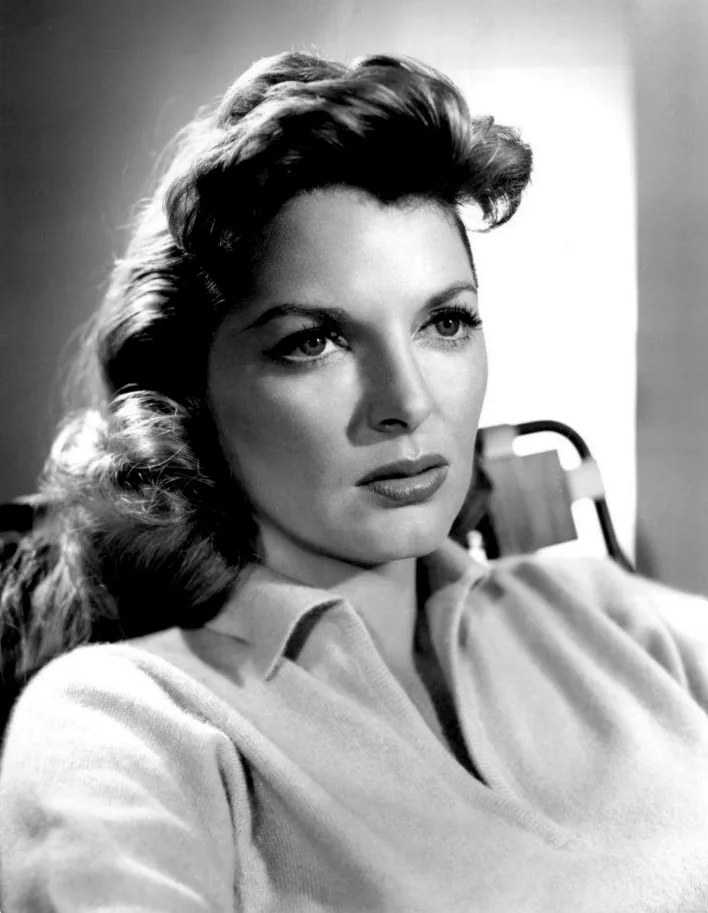
Julie London in a 1958 CBS Television publicity photograph from a guest appearance on The Garry Moore Show (photo dated December 23, 1958) Public domain (United States publicity photograph from 1958, published without a copyright notice; Wikimedia Commons template PD-Pre1978) — Wikimedia Commons: https://commons.wikimedia.org/wiki/File:Julie_London_1958.JPG (credited to CBS Television)

Julie London was born Nancy Gayle Peck in Santa Rosa, California, on September 26, 1926, the only child of Jack and Josephine Peck, a vaudeville song-and-dance team. The family moved to San Bernardino in 1929, where she made her singing debut at three on her parents' radio program, and to Hollywood in 1941. She and her mother both admired Billie Holiday. In 1943, as a teenager working as an elevator operator at a clothing store on Hollywood Boulevard, she was noticed by the talent agent Sue Carol, who arranged a screen test. She made her film debut under the name Julie London in Nabonga (1944) while still in high school, graduated from Hollywood Professional School in 1945, and after a Warner Bros. contract that brought Task Force (1949) and Return of the Frontiersman (1950) took the lead in The Fat Man (1951).
In 1947 she married the actor and producer Jack Webb, who went on to create Dragnet. The two shared a love of jazz, had two daughters, Stacy and Lisa, and divorced in 1954. Webb directed and starred in Pete Kelly's Blues (1955), a film about a 1920s jazz bandleader with Peggy Lee and Ella Fitzgerald in the cast, and London had helped her old schoolmate Arthur Hamilton get work writing for Webb's production company. For that film Hamilton wrote a song for Fitzgerald. Webb objected to one word in the lyric, Hamilton would not change it, and the song was dropped. A few nights later Hamilton played it for London at her house, and she asked to record it. It was "Cry Me a River."
After the divorce she tried singing for a living. The jazz pianist and songwriter Bobby Troup, whom she would marry in 1959, helped book her into a small Hollywood club in the summer of 1955, without an audition. Barney Kessel played guitar behind her, and the bassist Ray Leatherwood, who took over from Ralph Pena partway through the run, completed a trio with no drums and no piano. Si Waronker, who had just started the Los Angeles label Liberty Records, came to hear her and signed her as one of the label's first artists. Troup produced the first sessions, held in Hollywood in August 1955. "Cry Me a River" went on at the end of one session as the only new song among the standards from her club set. Neither Kessel nor Leatherwood had seen the music, and the arrangement was sketched on the spot. Liberty issued it as a single in the fall of 1955, backed with "S'Wonderful." A four-song EP for Bethlehem Records, with Troup's own quintet accompanying her, also dates from 1955. The Liberty single stayed on the pop singles chart for five months, was the label's first hit, reached No. 9 in the United States and, in 1957, No. 22 in the United Kingdom, and by the Library of Congress's count sold more than 800,000 copies.
The album, Julie Is Her Name (Liberty LRP-3006, December 1955), kept the same instrumentation of voice, guitar and bass and reached No. 2 on Billboard's album chart. Billboard named her the most popular female vocalist of 1955, 1956 and 1957. She sang "Cry Me a River" on screen in The Girl Can't Help It (1956) and made her New York nightclub debut in January 1956. Troup went on to produce most of her Liberty albums of the decade and supplied songs, among them the title track of Lonely Girl (1956) and "The Meaning of the Blues," which she recorded on About the Blues (1957) and which Miles Davis cut the same year with Gil Evans's orchestra on Miles Ahead. That album used an eighteen-piece band arranged by Russ Garcia, whose listed players include Willie Smith on alto saxophone, Maynard Ferguson on trumpet, Kessel on guitar and Shelly Manne on drums. Julie (1957), with Jimmy Rowles conducting the orchestra, is credited with players including Benny Carter, Buddy Collette, Bud Shank, Georgie Auld, Pete Candoli and Jack Sheldon, and Leatherwood on bass. Julie Is Her Name, Volume II (1958) paired her with the guitarist Howard Roberts and Red Mitchell on bass, and on Swing Me an Old Song (1959) she was accompanied by Rowles and his orchestra. Calendar Girl (1956), Make Love to Me (1957) and London by Night (1958) used larger orchestral settings, and the provocative covers of those albums drew as much attention as the music.
In March 1960 she recorded Julie...At Home in her own living room, with Rowles on piano, Al Viola on guitar, Don Bagley on bass, Earl Palmer on drums and Emil Richards on vibraphone, and Bob Flanigan of the Four Freshmen sitting in on trombone for two tracks. Around Midnight, cut that August at Capitol Studios with Dick Reynolds arranging and conducting, put a larger band behind a program of "'Round Midnight," "Lush Life," "Misty" and "Black Coffee." Both albums are listed in the reference book 1,000 Recordings to Hear Before You Die.
Through the 1960s Liberty steered her toward the pop market under producers such as Snuff Garrett, though the jazz players kept turning up. Kessel played guitar on "I Loves You, Porgy" on Love Letters (1962). The End of the World (1963) reached No. 127 and The Wonderful World of Julie London (1963) No. 136 on Billboard's album chart, her last albums to chart there. In April 1964 she recorded In Person at the Americana at The Royal Box supper club in New York, with arrangements by Bagley, Jerome Richardson on reeds and Sal Salvador on guitar. In July 1965 she returned to a jazz setting for All Through the Night: Julie London Sings the Choicest of Cole Porter (issued in early 1966), recorded at Pacific Jazz Studios in Los Angeles over three days with the Bud Shank Quintet: Shank on alto saxophone and flute, Joe Pass on guitar, Monty Budwig on bass, Russ Freeman on piano and arrangements, and Colin Bailey on drums. Her last studio album, Yummy, Yummy, Yummy (1969), was a set of 1960s pop songs arranged by Tommy Oliver, and its title track reached No. 25 on Billboard's Bubbling Under chart. After it she stopped singing professionally, having lost much of her vocal control to years of heavy smoking and drinking.
In 1972 Webb, by then her ex-husband and still a close friend, cast her and Troup in Emergency!, which he produced. She played the nurse Dixie McCall and Troup played Dr. Joe Early, and she received a Golden Globe nomination in 1974. The series ran for six years and 128 episodes before it was cancelled in 1977, with television movies following through 1979. Her last recording was "My Funny Valentine" for the film Sharky's Machine (1981). She and Troup had three children, Kelly and the twins Jody and Reese. Troup passed away on February 7, 1999. London suffered a stroke in 1995, declined treatment after a lung cancer diagnosis in late 1999, and passed away on October 18, 2000, aged 74. She is buried beside Troup at Forest Lawn Hollywood Hills.
"Cry Me a River" was inducted into the Grammy Hall of Fame in 2001, was added to the Library of Congress's National Recording Registry, and ranks No. 48 on NPR's list of the 50 greatest jazz vocals. London has a star on the Hollywood Walk of Fame for her recordings. Lana Del Rey and Billie Eilish have named her as an influence.
London is a crossover case in the plainest sense: a film actress turned torch singer whose catalog divides between jazz-inflected small-group records and orchestrated traditional pop, with a run of 1960s pop covers at the end. AllMusic's biographer wrote that she lacked the range of Ella Fitzgerald or Sarah Vaughan and made up for it with restraint, softness and subtlety. She sang in a low, breathy contralto and, by her own account, needed to stay close to the microphone, a technique the engineers on her first sessions built into the sound. Her early records are famous for their sparseness: guitar and bass, sometimes a piano or a small band, and room around the voice.
The jazz side is documented in the people on the sessions. Barney Kessel and Ray Leatherwood on the debut, Howard Roberts and Red Mitchell on Volume II, Rowles and Bagley and Palmer on At Home, Bud Shank, Joe Pass and Russ Freeman on the Cole Porter album, and a repertoire that took in "Lush Life," "'Round Midnight," "Misty," "Basin Street Blues" and "I Loves You, Porgy." Her husband Bobby Troup was a working jazz pianist and the composer of "(Get Your Kicks on) Route 66," and he produced and wrote for her through the 1950s. She grew up admiring Billie Holiday, and the Library of Congress's essay on "Cry Me a River" notes that she was the only leading female vocalist of the 1950s without a big-band background, which left her free to sing the way she had on the club stand: quietly, and close in.
- Julie Is Her Name (1955, Liberty) - The debut, with Barney Kessel on guitar and Ray Leatherwood on bass, produced by Bobby Troup, and the home of "Cry Me a River." Reached No. 2 on Billboard's album chart. Spotify - Julie Is Her Name Listen · Buy
- About the Blues (1957, Liberty) - An eighteen-piece band arranged by Russ Garcia, with Barney Kessel, Maynard Ferguson and Shelly Manne among the listed players, and Troup's "The Meaning of the Blues." Buy
- Julie Is Her Name, Volume II (1958, Liberty) - The sequel in the same sparse setting, with Howard Roberts on guitar and Red Mitchell on bass. Buy
- Julie...At Home (1960, Liberty) - Recorded in her living room with a Los Angeles jazz rhythm section, Jimmy Rowles on piano and Emil Richards on vibraphone. Buy
- Around Midnight (1960, Liberty) - A larger band under Dick Reynolds on a late-night program that includes songs by Thelonious Monk, Billy Strayhorn and Erroll Garner. Spotify - Around Midnight Listen · Buy
- Love Letters (1962, Liberty) - Pop-leaning production, but it carries Barney Kessel's guitar on "I Loves You, Porgy." Spotify - Love Letters Listen · Buy
- All Through the Night: Julie London Sings the Choicest of Cole Porter (1966, Liberty) - The one late album recorded as a straight jazz date, with the Bud Shank Quintet including Joe Pass on guitar and Russ Freeman on piano. Buy
Julie London: Full Discography
Discogs artist: Julie London (36863) · Real name Nancy Gayle Peck · Born September 26, 1926, Santa Rosa, California · Passed away October 18, 2000, Encino, California
London made 29 studio albums for Liberty Records between 1955 and 1969, along with a live album, a record-club issue, many compilations and 29 singles. The tables list every studio album with its original catalog numbers, recording dates where documented, producers, arrangers and the accompanists named in the sleeve credits and album references. Where a record lists a rhythm section or horn players, they are given; many of her orchestral albums name only the arranger. Chart peaks are US Billboard unless stated.
Leader: Studio Albums
| Album | Year | Label | Personnel & Notes | Charts | Listen | Buy |
|---|---|---|---|---|---|---|
| Julie Is Her Name | 1955 | Liberty (LRP-3006) | Recorded in Hollywood in August 1955. Barney Kessel (guitar) and Ray Leatherwood (bass) are the only accompanists; produced by Bobby Troup, engineered by John Neal. Contains "Cry Me a River," issued as a single in the fall of 1955 (Liberty 55006). Stereo reissue LST-7027 (May 25, 1960). Reissued on CD together with Julie Is Her Name, Volume II (1992) | No. 2 Billboard | Spotify | Amazon |
| Lonely Girl | 1956 | Liberty (LRP-3012) | Recorded April 1956 in Hollywood. Al Viola (guitar); produced by Bobby Troup, who wrote the title song. Rechanneled stereo issue LST-7029 (1959) | No. 16 Billboard | not found | Amazon |
| Calendar Girl | 1956 | Liberty (SL-9002) | A concept album with twelve songs that name a month in the title, plus "Thirteenth Month"; Bobby Troup wrote two of them and produced. Arranged and conducted by Pete King. Selected personnel: Dick Nash (trombone), Buddy Cole (piano), Al Hendrickson (guitar), Red Callender (bass), Milt Holland (drums) | No. 18 Billboard | not found | Amazon |
| About the Blues | 1957 | Liberty (LRP-3043; stereo LST-7012, 1958) | Recorded 1956 to 1957 at Radio Recorders, Hollywood. Eighteen-piece band arranged and conducted by Russ Garcia; listed players include Willie Smith (alto saxophone), Maynard Ferguson (trumpet), Barney Kessel (guitar) and Shelly Manne (drums). Includes two Troup songs, one of them "The Meaning of the Blues," which Miles Davis recorded the same year on Miles Ahead. Produced by Bobby Troup | No. 15 Billboard | not found | Amazon |
| Make Love to Me | 1957 | Liberty (LRP-3060; stereo LST-7060, 1959) | Russ Garcia and His Orchestra with Al Viola (guitar). Producer credited as Simon Jackson | not found | Amazon | |
| Julie | 1957 | Liberty (LRP-3096; stereo LST-7004, 1958) | Recorded October 1957 at Liberty Studios, Hollywood. Jimmy Rowles conducts the orchestra. Credited players include Georgie Auld (tenor saxophone), Benny Carter (alto saxophone), Pete Candoli and Jack Sheldon (trumpet), Buddy Collette and Bud Shank (reeds), Al Hendrickson (guitar) and Ray Leatherwood (bass). Produced by Bobby Troup; engineer Ted Keep. The cover was nominated for Best Album Cover at the first Grammy Awards | not found | Amazon | |
| Julie Is Her Name, Volume II | 1958 | Liberty (LRP-3100; stereo LST-7100) | Recorded July 1958 in Hollywood. Howard Roberts (guitar) and Red Mitchell (bass) as the accompanists; produced by Bobby Troup | not found | Amazon | |
| London by Night | 1958 | Liberty (LRP-3105; stereo LST-7105) | Pete King and His Orchestra. Selected personnel: Howard Roberts and Al Viola (guitar), Red Callender (bass), Felix Slatkin (violin), Eleanor Slatkin (cello). Produced by Bobby Troup. Some sources date the release to January 1959 | not found | Amazon | |
| Swing Me an Old Song | 1959 | Liberty (LRP-3119; stereo LST-7119) | Recorded April to May 1959. Billed with Jimmy Rowles and His Orchestra; Jack Sheldon (trumpet) and Al Viola (guitar) among the players. Produced by Bobby Troup | not found | Amazon | |
| Your Number Please | 1959 | Liberty (LRP-3130) | Recorded August to September 1959. Arranged and conducted by Andre Previn; produced by Bobby Troup | not found | Amazon | |
| Julie...At Home | 1960 | Liberty (LRP-3152; stereo LST-7152) | Recorded in London's Los Angeles living room on March 4, 1960. Produced by Si Waronker. Jimmy Rowles (piano, and author of the sleeve notes), Al Viola (guitar), Don Bagley (bass), Earl Palmer (drums), Emil Richards (vibraphone) and Bob Flanigan (trombone on two tracks). Included in the reference book 1,000 Recordings to Hear Before You Die | not found | Amazon | |
| Around Midnight | 1960 | Liberty (LRP-3164; stereo LST-7164) | Recorded August 1960 at Capitol Studios, Los Angeles. Arranged and conducted by Dick Reynolds; produced by Si Waronker. Includes "'Round Midnight," "Lush Life," "Misty" and "Black Coffee". Included in 1,000 Recordings to Hear Before You Die | Spotify | Amazon | |
| Send for Me | 1961 | Liberty (LRP-3171) | Recorded late 1960. Jimmy Rowles conducts the orchestra and chorus; produced by Si Waronker | not found | Amazon | |
| Whatever Julie Wants | 1961 | Liberty (LRP-3192) | Produced by Felix Slatkin. Opens with "Why Don't You Do Right?" | not found | Amazon | |
| Sophisticated Lady | 1962 | Liberty (LRP-3203) | Arranged and conducted by Ernie Freeman with Felix Slatkin; produced by Si Waronker | Spotify | Amazon | |
| Love Letters | 1962 | Liberty (LRP-3231; stereo LST-7231) | Produced by Snuff Garrett; Ernie Freeman arranged three songs. Barney Kessel plays guitar on "I Loves You, Porgy." One track dates from 1958 and the rest from March 1962 | Spotify | Amazon | |
| Love on the Rocks | 1963 | Liberty (LRP-3249; stereo LST-7249) | Basic tracks cut in Liberty's Chicago studio in three late-night sessions after her sets at Mister Kelly's; orchestral overdubs by Pete King in Los Angeles. Jack Sheldon (trumpet), John Gray (guitar), Chuck Berghofer (bass), Kenny Hume (drums). Produced by Snuff Garrett | not found | Amazon | |
| Latin in a Satin Mood | 1963 | Liberty (LRP-3278) | Arranged by Ernie Freeman; produced by Snuff Garrett | not found | Amazon | |
| The End of the World | 1963 | Liberty (LRP-3300; stereo LST-7300) | Ernie Freeman arranged and conducted; produced by Snuff Garrett. Her first album to reach the Billboard 200 in six years. Contains "I Left My Heart in San Francisco" and "Desafinado" (Slightly Out of Tune) | No. 127 Billboard | not found | Amazon |
| The Wonderful World of Julie London | 1963 | Liberty (LRP-3324; stereo LST-7324) | Ernie Freeman arranged and conducted; produced by Snuff Garrett. Her last album to chart on Billboard | No. 136 Billboard | not found | Amazon |
| You Don't Have to Be a Baby to Cry | 1964 | Liberty (LST-7342) | Ernie Freeman arranged; produced by Snuff Garrett | not found | Amazon | |
| Our Fair Lady | 1965 | Liberty (LRP-3392; stereo LST-7392) | Mostly previously issued material. Four new tracks were cut on October 9 and 10, 1964, arranged by Richard Wess with Paul Horn (flute), Ernie Freeman (piano), Red Callender (bass) and Earl Palmer (drums); Freeman arranged the remainder. Produced by Snuff Garrett | No. 11 Canada (RPM) | Spotify | Amazon |
| Feeling Good | 1965 | Liberty (LRP-3416; stereo LST-7416) | Produced by Richard Bock; arranged by Gerald Wilson. According to Leonard Feather's liner notes the players are Jack Wilson (piano and organ), Teddy Edwards (saxophone), John Gray (guitar), Jimmy Bond (bass) and Earl Palmer (drums); engineer Bones Howe | not found | Amazon | |
| All Through the Night: Julie London Sings the Choicest of Cole Porter | 1966 | Liberty (LRP-3434; stereo LST-7434) | Recorded July 12, 13 and 16, 1965 at Pacific Jazz Studios, Los Angeles; issued in early 1966. Billed with the Bud Shank Quintet: Bud Shank (alto saxophone, flute), Joe Pass (guitar), Monty Budwig (bass), Russ Freeman (piano, arrangements) and Colin Bailey (drums). Produced by Richard Bock. All songs by Cole Porter | not found | Amazon | |
| For the Night People | 1966 | Liberty (LRP-3478; stereo LST-7478) | Arranged by Don Bagley; produced by Calvin Carter. Includes "I Got It Bad (And That Ain't Good)" and "God Bless the Child" | not found | Amazon | |
| Nice Girls Don't Stay for Breakfast | 1967 | Liberty (LRP-3493; stereo LST-7493) | Arranged by Don Bagley, who also plays bass; Bob Cooper (tenor saxophone), Jack Sheldon (trumpet), John Gray (guitar). Produced by Calvin Carter. Recorded late 1966; some sources date the release to that year | not found | Amazon | |
| With Body & Soul | 1967 | Liberty (LRP-3514; stereo LST-7514) | Kirk Stuart on piano and as arranger; produced by Calvin Carter | not found | Amazon | |
| Easy Does It | 1968 | Liberty (LRP-3546; stereo LST-7546) | Recorded October to November 1967. Kirk Stuart (piano, organ, arrangements), John Gray (guitar), Don Bagley (bass, arrangements), Earl Palmer (drums); Allyn Ferguson also arranged. Produced by Calvin Carter | not found | Amazon | |
| Yummy, Yummy, Yummy | 1969 | Liberty (LST-7609) | Her last studio album, recorded August to September 1968: pop songs of the late 1960s including material by Laura Nyro, the Beatles, the Doors and Bob Dylan. Produced, arranged and conducted by Tommy Oliver. Players listed in her biography include Bill Perkins (reeds), Jim Horn (reeds), Al Casey, Mike Deasy and Lou Morell (guitars), Lyle Ritz (electric bass), and John Guerin and Hal Blaine (drums). The title track reached No. 25 on Billboard's Bubbling Under chart | not found | Amazon |
Live and Club Issues
| Album | Year | Label | Personnel & Notes | Charts | Listen | Buy |
|---|---|---|---|---|---|---|
| In Person at the Americana | 1964 | Liberty (LRP-3375; stereo LST-7375) | Recorded live at The Royal Box supper club in the Americana Hotel, New York, in April 1964. Arranged and conducted by Don Bagley; Jerome Richardson (reeds), Sal Salvador (guitar), Don Bagley (bass), Ken Albers (vocal arrangements); engineers Tom Dowd and David Hassinger. Produced by Snuff Garrett | Spotify | Amazon | |
| By Myself | 1965 | Liberty for the Columbia House record club (MCR-1; stereo SCR-1) | Issued through a mail-order record club; ten tracks drawn from her Liberty catalog | not found | Amazon |
Early EPs
Her first record was a four-song EP, Julie London (Bethlehem BEP-133, 1955), with the Bobby Troup Quintet accompanying her on "A Foggy Day," "You're Blase," "Sometimes I Feel Like a Motherless Child" and "Don't Worry About Me." Four tracks from the same sessions appear on the Bethlehem compilation Bethlehem's Girl Friends (BCP-6006, 1956), shared with Chris Connor and Carmen McRae. Liberty then issued three-part EP editions of her first albums between 1955 and 1957, and London Records issued EPs in Britain, among them Julie Sings Film Songs (1957), Make Love to Me (1958) and Julie (1959).
Selected Singles
| Year | Title | Label | Charts | Album |
|---|---|---|---|---|
| 1955 | "Cry Me a River" / "S'Wonderful" | Liberty 55006 | No. 9 US, No. 22 UK (1957), No. 46 Italy | Julie Is Her Name |
| 1956 | "Lonely Girl" | Liberty | Lonely Girl | |
| 1957 | "The Meaning of the Blues" / "Now! Baby, Now!" | London | About the Blues | |
| 1958 | "Blue Moon" | Liberty | Julie Is Her Name, Volume II | |
| 1959 | "Makin' Whoopee" | Liberty | Your Number Please | |
| 1962 | "Desafinado" | Liberty | No. 110 | The End of the World |
| 1963 | "I'm Coming Back to You" | Liberty | No. 118 | The Wonderful World of Julie London |
| 1965 | "Girl Talk" | Liberty | Feeling Good | |
| 1968 | "Yummy Yummy Yummy" | Liberty | No. 125 (Bubbling Under) | Yummy, Yummy, Yummy |
| 1969 | "Like to Get to Know You" | Liberty | No. 15 Adult Contemporary | Yummy, Yummy, Yummy |
Compilations
The Best of Julie (Liberty, 1962) · The Very Best of Julie London (EMI, 1975) · The Best of Julie London: The Liberty Years (1988) · Time for Love: The Best of Julie London (Rhino, 1991) · Julie Is Her Name / Julie Is Her Name, Volume II (EMI, 1992) · Lonely Girl / Make Love to Me (EMI, 2003) · Ultra-Lounge: Wild, Cool & Swingin' (Capitol, 1999) · The Very Best of Julie London (EMI/Capitol, 2005) · The Ultimate Collection (EMI, 2006).
Other Recordings
Her last recording was "My Funny Valentine" for the soundtrack of the film Sharky's Machine (1981). She sang "Cry Me a River" and two other songs on screen in The Girl Can't Help It (1956).
Honors
| Year | Honor | Work | Result |
|---|---|---|---|
| 1955, 1956, 1957 | Billboard most popular female vocalist | Named | |
| 1959 | Grammy Award, Best Album Cover | Julie (art director Charles Ward) | Nominee |
| 1974 | Golden Globe Award, television actress (for Emergency!) | Nominee | |
| 2001 | Grammy Hall of Fame | "Cry Me a River" (Liberty, 1955) | Inducted |
| 2015 selections, announced 2016 | Library of Congress National Recording Registry | "Cry Me a River" (Liberty, 1955) | Selected |
- Bobby Troup - jazz pianist, songwriter and her producer on most of her Liberty albums of the 1950s, whose quintet accompanied her on a four-song Bethlehem EP in 1955; the two married in 1959 and acted together on Emergency!. He passed away in 1999.
- Barney Kessel - guitarist on her debut and "Cry Me a River," on the listed personnel of About the Blues (1957) and on "I Loves You, Porgy" (1962).
- Ray Leatherwood - bassist on her debut and on "Cry Me a River"; also on Julie (1957).
- Si Waronker - founder of Liberty Records, who signed her in 1955 and produced several of her later albums.
- Jimmy Rowles - conductor of the orchestra on Julie (1957) and Send for Me (1961), orchestra leader on Swing Me an Old Song (1959), pianist on At Home (1960) and the writer of its sleeve notes.
- Red Mitchell and Howard Roberts - bass and guitar on Julie Is Her Name, Volume II (1958).
- Russ Garcia - arranger and conductor of About the Blues and Make Love to Me (1957).
- Bud Shank, Joe Pass, Monty Budwig, Russ Freeman and Colin Bailey - the quintet on her 1965 Cole Porter album.
- Al Viola, Don Bagley, Earl Palmer and Emil Richards - members of the Los Angeles rhythm section on several of her small-group albums, including At Home.
- Arthur Hamilton - songwriter of "Cry Me a River" and her old schoolmate.
- Jack Webb - her first husband, a jazz enthusiast and the producer of Emergency!.
More Vocal Jazz Artists
See all 220 Vocal Jazz artists →More American Jazz Artists
See all 646 American artists →- Wikipedia: Julie London
- Wikipedia: Julie London discography
- Wikipedia: Cry Me a River (Arthur Hamilton song)
- Wikipedia: Julie Is Her Name
- Wikipedia: About the Blues
- Wikipedia: Julie...At Home
- Wikipedia: Around Midnight (Julie London album)
- Wikipedia: All Through the Night: Julie London Sings the Choicest of Cole Porter
- Library of Congress: "Cry Me a River" essay by Cary O'Dell
- Michael Owen on Julie London and "Cry Me a River" (Jazz Profiles blog)
- The Irish Times: review of Michael Owen's Go Slow: The Life of Julie London
- AllMusic: Julie London biography
- Discogs: Julie London
- Michael Owen, Go Slow: The Life of Julie London (Chicago Review Press, 2017)