 JAZZPROFILES lives in the music 2,303 Jazz Artists fully Profiled!
Bola Sete
Last updated November 7, 2026
Listen on Spotify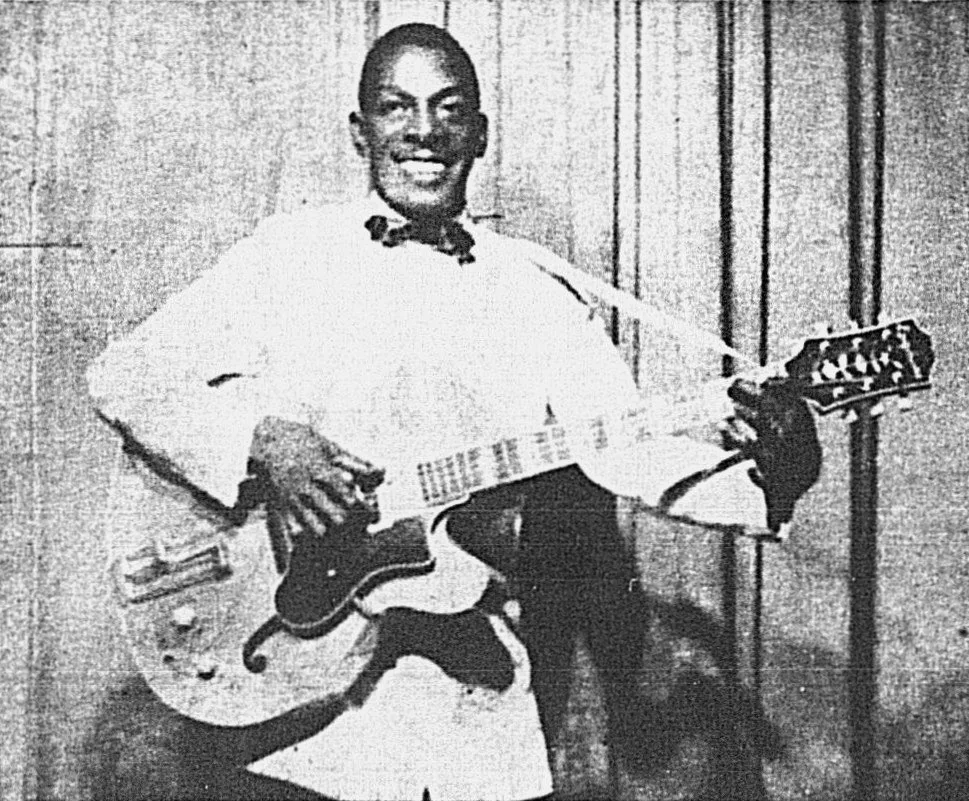
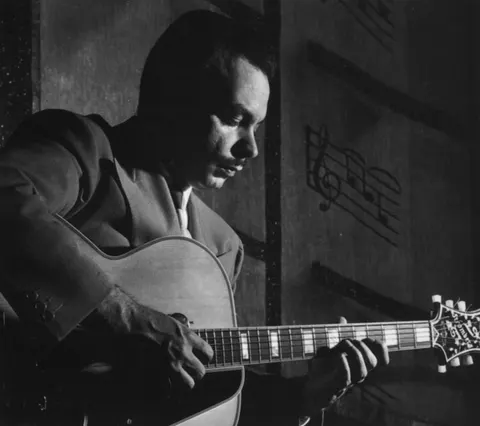
Bola Sete with his guitar, from the March 23, 1954 issue of the Brazilian magazine A Noite Ilustrada Public domain (published by the Brazilian government press before 1957; Wikimedia Commons template PD-BrazilGov) — Wikimedia Commons — https://commons.wikimedia.org/wiki/File:Bola_Sete_(1954).jpg — original: A Noite Ilustrada, year XXIV, issue 1308, page 18, Brazilian National Library digital archive, http://memoria.bn.br/DocReader/120588/48701

Bola Sete was born Djalma de Andrade on July 16, 1923, in Rio de Janeiro, the only son in a poor family of seven children in which everyone played an instrument. He taught himself on a cavaquinho he found at home, and he received his first guitar for Christmas in 1932. At ten he was taken in by a well-off couple who sent him to school and introduced him to classical music; they hoped he would study law, and during World War II they sent him into the Brazilian interior to keep him out of military service. He chose music anyway, studying guitar at the National School of Music in Rio and then at a conservatory in São Paulo. His stage name is Portuguese for the seven ball in snooker, the only black ball on the table, a nickname he picked up as the only Black member of a small jazz group.
By the mid-1940s he was working steadily. In 1945 he won a guitar contest run by Rio's Rádio Transmissora, which hired him, and he spent three years in its Trem da Alegria show at the João Caetano Theater. At the end of the 1940s he formed his own group, Bola Sete e Seu Conjunto, whose singer for a time was Dolores Duran, later a celebrated Brazilian singer and songwriter. In 1952 he went to Italy to play clubs and hotels, then led an orchestra on tours of South America, and he recorded for Odeon in Rio, including Aqui Está o Bola Sete (1957) and Ritmolândia (1958). Those are Brazilian samba, choro and dance-band sessions; his documented jazz recordings begin only after he reached the United States.
He reached the United States with a Sheraton Hotels engagement, playing at the Park Sheraton in New York and then the Tudor Room cocktail lounge of the Sheraton Palace in San Francisco. This was the bossa nova moment, when the music was in demand as classy background for hotel dining rooms, and he spent his early American years in exactly that role. In early 1962 Dizzy Gillespie, who had met him in Rio years earlier, heard him at the Palace and returned with his pianist Lalo Schifrin, who had played with Sete in Argentina. Gillespie put him on his album New Wave! (Philips, 1963), where he plays guitar on three tracks recorded in New York in 1962, and in the autumn of 1962 brought him to the Monterey Jazz Festival, where he was received with great enthusiasm. Sete toured with Gillespie, and in October 1962 he recorded his Fantasy Records debut, Bossa Nova, at RCA Studios in New York, with the bassist Ben Tucker and the drummer Dave Bailey, before settling again in San Francisco.
Fantasy paired him with the San Francisco pianist Vince Guaraldi. Vince Guaraldi, Bola Sete and Friends appeared in January 1964, the first of three albums they made together; Guaraldi's trio had a sixteen-week residency at the Trois Couleurs club in San Francisco, and Sete joined it for the last twelve weeks. From All Sides followed in February 1965, and Live at El Matador in October 1966, Guaraldi's last record for Fantasy, with Sete joining the trio for the closing set. During these years Sete also recorded his own Fantasy albums, including Tour de Force, The Incomparable Bola Sete and The Solo Guitar of Bola Sete, and Down Beat named him guitarist of the year. After a couple of years with Guaraldi he formed his own trio with the Brazilian bassist Sebastião Neto and the drummer Paulinho Magalhães, which played the Monterey Jazz Festival in 1966; the live album Bola Sete at the Monterey Jazz Festival (Verve, 1967) reached No. 20 on the Billboard jazz chart. Seattle club tapes of the trio from 1966 to 1968 were issued in 2021 as Samba in Seattle.
After a two-year retirement he came back in 1971 with Shebaba for Fantasy, and he also recorded for Paramount and then Columbia (Goin' to Rio, 1973). He turned toward solo guitar, sometimes on a thirteen-string instrument of his own design that he called the lutar, adapted from a Brazilian folk instrument, the alaude. He also practiced yoga and meditation, performed in the lotus position, and in 1979 played with John Handy's Rainbow band, an American and Indian group that included Ali Akbar Khan, L. Subramaniam and Zakir Hussain. He became a friend of the guitarist John Fahey, an admirer, whose Takoma label issued the solo set Ocean in 1975. His last album in his lifetime, Jungle Suite, was produced by George Winston for Winston's Dancing Cat label and came out in 1985. Sete had been fighting lung cancer through the 1980s, and he passed away on February 14, 1987, at Marin General Hospital in Greenbrae, California, of complications of pneumonia and cancer, at the age of 63. His widow, Anne Sete, started the Samba Moon label for reissues and archival releases, among them a concert recorded at Grace Cathedral in San Francisco and, in 2008, Windspell, drawn from his final recordings.
Sete was a bossa nova and samba guitarist who became a jazz musician in the United States, and both halves of that description are part of his story. He arrived as a hotel-lounge bossa nova player and was first heard by American audiences in the 1962 to 1964 enthusiasm for Brazilian music; his jazz standing rests on documented work with Dizzy Gillespie and on his three albums with Vince Guaraldi, a repertoire that ran from Brazilian sambas and choros to Latin-flavored American standards. His approach was a fingerstyle one, with independent lines closer to a pianist's than to a plectrum guitarist's, and AllMusic describes a highly improvisational style that wedded Brazilian idioms to flamenco, classical, jazz, American folk, bossa nova and pop. German Wikipedia names Django Reinhardt, Charlie Christian, Barney Kessel and Oscar Moore of the Nat King Cole Trio among the jazz guitarists who shaped him, alongside the Brazilian choro tradition.
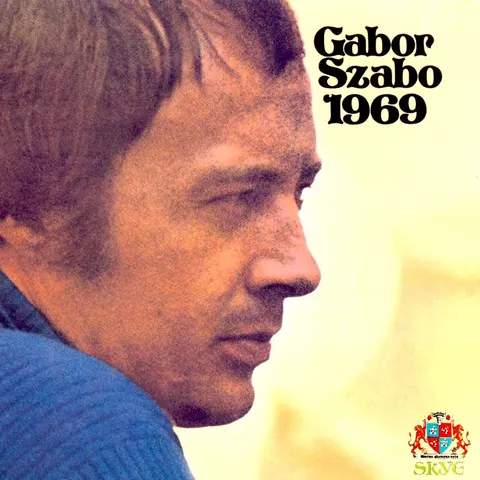
His reputation among other guitarists has outlasted the bossa nova fashion. Leonard Feather's Encyclopedia of Jazz in the Sixties called him one of the most innovative and eclectic guitarists in jazz history, and Carlos Santana has grouped him with Wes Montgomery and Gábor Szabó as a trinity of guitar greats. John Fahey said that hearing him for the first time changed him. The unaccompanied records of the 1970s and 1980s, especially Ocean, are often cited as forerunners of the New Age solo-guitar music that Windham Hill popularized, and the lutar and the lotus-position performances belong to the same contemplative turn. His early-1970s albums for Paramount and Fantasy, including Workin' on a Groovy Thing, mix his own writing with pop and rock songs by the Beatles, George Harrison, Joni Mitchell, Crosby, Stills and Nash and others, and the pop and Latin entertainment side of his career runs alongside the jazz throughout. A Tribe Called Quest sampled his composition "Bettina."
- New Wave! (1963, Philips) - Dizzy Gillespie's album, produced by Quincy Jones, with Bola Sete on guitar for three tracks recorded in New York in 1962 alongside Lalo Schifrin and Leo Wright: his entry into American jazz.
- Bossa Nova (1962, Fantasy) - His American debut as a leader, recorded at RCA Studios in New York on October 22 to 26, 1962 with Ben Tucker on bass and Dave Bailey on drums, at the height of the bossa nova craze.
- Vince Guaraldi, Bola Sete and Friends (1964, Fantasy) - The first and most consistent of the three Guaraldi collaborations, recorded in 1963 with Fred Marshall and Jerry Granelli and including "Days of Wine and Roses" and "Star Song"; now on CD coupled with Live at El Matador as Vince & Bola. Spotify - Vince & Bola Listen
- From All Sides (1965, Fantasy) - Guaraldi and Sete's second album, mixing Latin jazz, bossa nova and American standards, with "Ginza Samba" and a bossa arrangement of "A Taste of Honey." Spotify - From All Sides (Remastered 2026) Listen
- Tour de Force (1964, Fantasy) - A trio date recorded in San Francisco on June 18, 1963 with Freddie Schreiber on bass and Johnny Rae on drums, with "Moon River," "Asturias" and the Luiz Bonfá theme "Samba de Orfeu." Spotify - Tour de Force Listen
- Bola Sete at the Monterey Jazz Festival (1967, Verve) - Recorded live at the festival in September 1966 with Sebastião Neto and Paulinho Magalhães and produced by Creed Taylor; it charted at No. 20 on the Billboard jazz albums chart. Spotify - At the Monterey Jazz Festival Listen
- Shebaba (1971, Fantasy) - The comeback album, which AllMusic calls a Latin jazz classic: Sete plays electric guitar and the lutar and sings, with horns arranged by Luis Gasca, and sets his own pieces beside songs by the Beatles and George Harrison.
- Ocean (1975, Takoma) - The unaccompanied guitar record produced by Doug Decker and John Fahey for Fahey's label, often named as an early New Age landmark.
Bola Sete: Full Discography
Discogs artist: Bola Sete (179053) · Real name Djalma de Andrade · Born July 16, 1923, Rio de Janeiro · Died February 14, 1987, Greenbrae, California
Bola Sete is a leader and co-leader, not a sideman: his catalogue splits into the Brazilian dance-band and samba records he made in Rio de Janeiro in the 1950s, the Fantasy albums of the 1960s that made his American reputation, the three records with Vince Guaraldi, and the solo guitar work of the 1970s and 1980s, with a long run of archival releases since his death in 1987. Discogs files his credits under several entities (Bola Sete, Bola Sete and His New Brazilian Trio, Bola Sete e Seu Conjunto, Bola Sete and His Trio), and all are included here. Catalog numbers are those of the original LP where one is confirmed.
Leader: Brazil, 1950s and early 1960s
| Album | Year | Label | Personnel & Notes | Charts | Listen | Buy |
|---|---|---|---|---|---|---|
| Aqui Está o Bola Sete | 1957 | Parlophone (PMCJ 9) | Twelve-track collection of Brazilian and Latin dance-band material including "Aquarela do Brasil," "Copacabana" and "Czardas" | — | Spotify | — |
| Bola Sete e 4 Trombones | 1958 | Odeon | Bola Sete with four trombones | — | — | — |
| Travessuras do Bola Sete | 1958 | Odeon | Billed to Bola 7 e Seu Conjunto | — | — | — |
| Ritmolândia | 1958 | Odeon (MOFB 3.065) | Twelve dance-band tracks including "Tico-Tico no Fubá" and "Frenesi"; labels read Bola 7 | — | — | — |
| Carnival in Rio | 1958 | Puchito | Issued under Bola Sete y Su Conjunto | — | — | — |
| Bola Sete em Hi-Fi | 1958 | Odeon | Billed to Bola Sete y su Conjunto | — | Spotify | — |
| É a Bola da Vez | 1959 | Odeon (MOFB 3146) | Twelve tracks including "Ma Griffe" and "Batucando Mesmo" | — | — | — |
| O Extraordinário Bola Sete | 1962 | Odeon (SMOFB 3275) | Samba, twist and standards, including "On the Street Where You Live" and "Piel Canela" | — | Spotify | — |
Leader: United States, 1962 to 1985
| Album | Year | Label | Personnel & Notes | Charts | Listen | Buy |
|---|---|---|---|---|---|---|
| Bossa Nova | 1962 | Fantasy (3349 mono, 8349 stereo) | Recorded at RCA Studios, New York, October 22 to 26, 1962. Ben Tucker (bass), Dave Bailey (drums), Carmen Costa and J. D. Paula (percussion). His American debut; tracks include "Samba in the Perrotque!," "Manhã de Carnaval" and "Brazilian Bossa Galore" | — | — | — |
| Tour de Force | 1964 | Fantasy (8358) | Recorded at Coast Recorders, San Francisco, June 18, 1963. Freddie Schreiber (bass), Johnny Rae (drums). Includes "Baccara," "Moon River," "Asturias," "Samba de Orfeu" (by Luiz Bonfá) and the title piece. Liner notes by Ralph J. Gleason | — | Spotify | — |
| The Incomparable Bola Sete | 1965 | Fantasy (8364) | Monty Budwig (bass), Paul Horn (flute), Johnny Rae (percussion); Vince Guaraldi credited as A&R. Includes "Voodoo Village" and "Be-Bossa" | — | Spotify | — |
| The Solo Guitar of Bola Sete | 1965 | Fantasy (3369) | Unaccompanied guitar, subtitled "Choros and Preludes"; includes "Spanish Dance No. 5," "Choro da Saudade" and "Flamenco Fantasy" | — | — | — |
| Songs of the Carrillons (Sons de Carrilhões) | 1965 | Fantasy | Listed on Discogs; contents not itemized | — | — | — |
| Autentico! | 1966 | Fantasy (8375) | Billed to Bola Sete and His New Brazilian Trio; includes "Brejeiro," "Soul Samba" and "Pau de Arara." Personnel not itemized | — | — | — |
| Going South | 1967 | Fantasy | Billed to Bola Sete and His Trio; contents not itemized | — | — | — |
| Bola Sete at the Monterey Jazz Festival | 1967 | Verve (V-8689) | Recorded live at the Monterey Jazz Festival, September 1966. Sebastião Neto (bass), Paulinho Magalhães (drums). Produced by Creed Taylor; liner notes by Herb Wong. Includes a "Black Orpheus" medley and "Soul Samba" | No. 20 Billboard jazz albums | Spotify | — |
| Workin' on a Groovy Thing | 1971 | Paramount (PAS 5011) | Acoustic guitar with José Marino (bass), Claudio Slon (drums), Frank Obligacion (congas) and strings arranged by Milton Rogers; produced by Tom Mack. Pop and rock repertoire including "Little Green Apples," "Both Sides Now," "With a Little Help from My Friends" and his own "Bettina" | — | Spotify | — |
| Shebaba | 1971 | Fantasy (8417) | Bola Sete on 13-string lutar, six-string electric guitar, percussion and vocals; produced by Jim Stern. Luis Gasca (trumpet, horn arrangements), Hadley Caliman (tenor saxophone), Nathan Rubin (violin, string arrangements), Dwight Dickenson (keyboards). Mostly his own compositions, with "Polythene Pam / She Came In Through the Bathroom Window" and George Harrison's "My Sweet Lord" | — | — | — |
| Goin' to Rio | 1973 | Columbia (KC 32375) | Orchestral and solo pieces composed, arranged and produced by Bola Sete, with Milton Rogers co-arranging and conducting; includes "Sunrise in Manaus" and "Rain Forest" | — | Spotify | — |
| Ocean | 1975 | Takoma (C-1049) | Solo guitar, "Solo Guitar Volume 1" on the cover. Produced by Doug Decker and John Fahey, recorded by Jim Stern; includes "Guitar Lamento," "Macumba" and "Jongo." Reissued in 1980 by Windham Hill | — | — | — |
| Jungle Suite | 1985 | Dancing Cat (DC-3005) | Solo guitar, recorded July 17, 1982 at Different Fur, San Francisco; produced by George Winston. Seven pieces, all composed by Bola Sete. His last album released in his lifetime | — | — | — |
Co-led with Vince Guaraldi
| Album | Year | Label | Personnel & Notes | Charts | Listen | Buy |
|---|---|---|---|---|---|---|
| Vince Guaraldi, Bola Sete and Friends | 1964 | Fantasy (3356 mono, 8356 stereo) | Recorded 1963. Vince Guaraldi (piano), Bola Sete (guitar), Fred Marshall (bass), Jerry Granelli (drums). Five tracks: "Days of Wine and Roses," "Star Song," "Mambossa," "Moon Rays," "Casaba." Liner notes by Ralph J. Gleason | — | see Vince & Bola below | — |
| From All Sides | 1965 | Fantasy (3362 mono, 8362 stereo) | Recorded late 1964. Guaraldi, Sete, Fred Marshall or Monty Budwig (bass), Jerry Granelli or Nick Martinez (drums). Includes "Choro," "Ginza Samba," "The Girl from Ipanema," "A Taste of Honey" and Sete's "Mambeando" and, with Eva Konrad, "Little Fishes" | — | Spotify (Remastered 2026) | — |
| Live at El Matador | 1966 | Fantasy (3371 mono, 8371 stereo) | Recorded live at El Matador, San Francisco. Guaraldi's last album for Fantasy; Sete joins the Guaraldi trio for the closing set ("Favela," "Black Orpheus Suite") | — | see Vince & Bola below | — |
| Vince & Bola | 2000 | Fantasy (FCD-24756-2) | CD coupling of Vince Guaraldi, Bola Sete and Friends (1963 recordings) and Live at El Matador (1966 recordings); remastered by Kirk Felton | — | Spotify | — |
| Ralph J. Gleason's Jazz Casual (Two Original Shows on One CD) | 2001 | Koch Jazz | Television performances from the Jazz Casual series, shared with Paul Winter | — | — | — |
| The Navy Swings | 2010 | VAG Publishing | Radio programs from the U.S. Navy's The Navy Swings series, first issued in 1965, with Don Wilson | — | — | — |
Archival and posthumous releases
| Album | Year | Label | Notes | Listen | Buy |
|---|---|---|---|---|---|
| The Bola Sete Trios: Tour de Force | 2001 | Fantasy (FCD-24766-2) | Single-CD reissue of Bossa Nova (1962 recordings) and Tour de Force (1963 recordings), remastered by Joe Tarantino | — | — |
| Ocean Memories | 1999 | Samba Moon | Samba Moon edition listed on Discogs under the same master as Ocean | — | — |
| Live at Grace Cathedral | 2004 | Samba Moon | Concert recording from San Francisco's Grace Cathedral | — | — |
| Voodoo Village | 2004 | Fantasy | Fantasy-era compilation | — | — |
| Windspell | 2008 | Samba Moon (10292008) | Thirteen pieces recorded at his home studio in Marin County, California, in 1986 and 1987, plus two live tracks from The Boarding House, San Francisco, September 1971; produced with George Winston | — | — |
| Crystal Garden | 2011 | Samba Moon | Archival recordings | — | — |
| The Kitchen Tapes | 2014 | Samba Moon | Home recordings | — | — |
| Samba in Seattle: Live at the Penthouse 1966 to 1968 | 2021 | Tompkins Square | Previously unreleased live recordings by his Brazilian trio at Seattle's Penthouse club | — | — |
| Concert at Monterey Bay, November 1972 | 2022 | Samba Moon | Live concert recording | Spotify (Concert at Monterey Bay) | — |
As sideman (selected credits)
| Year | Project (Leader) | Title | Label | Catalog | Role | Notes |
|---|---|---|---|---|---|---|
| 1963 | Dizzy Gillespie | New Wave! | Philips | PHM 200-070 | Guitar | Recorded 1962 with Leo Wright, Lalo Schifrin, Chris White and Rudy Collins; produced by Quincy Jones. Sete is on three tracks recorded in New York in July 1962 ("In a Shanty in Old Shanty Town," "Careless Love," "Gee Baby, Ain't I Good to You") |
Awards and chart notes
Down Beat named him guitarist of the year. Bola Sete at the Monterey Jazz Festival peaked at No. 20 on the Billboard jazz albums chart.
- Dizzy Gillespie - heard him at the Sheraton Palace in San Francisco in 1962, recorded him on New Wave!, took him to the Monterey Jazz Festival that autumn and toured with him.
- Vince Guaraldi - his duo partner from 1963 to 1966 on Vince Guaraldi, Bola Sete and Friends, From All Sides and Live at El Matador; Fred Marshall (bass) and Jerry Granelli (drums) play on most of the first two.
- Quincy Jones - producer of Gillespie's New Wave!, the album that introduced Sete to American jazz listeners.
- Creed Taylor - producer of the Verve live album from Monterey in 1966.
- Ben Tucker and Dave Bailey - bassist and drummer on his New York debut for Fantasy, Bossa Nova, in October 1962.
- Lalo Schifrin - Gillespie's pianist, who knew Sete from Argentina and was in the group on New Wave!.
- Sebastião Neto and Paulinho Magalhães - the Brazilian bassist and drummer of his own trio in the mid-1960s.
- Dolores Duran - singer with Bola Sete e Seu Conjunto in Rio at the end of the 1940s.
- John Fahey - guitarist and Takoma Records founder, a friend and admirer who issued Ocean in 1975.
- George Winston - pianist and founder of Dancing Cat, producer of Jungle Suite (1985).
- Paul Winter - shared a televised Jazz Casual program with Sete and Guaraldi, issued by Koch in 2001.
- John Handy, Ali Akbar Khan, L. Subramaniam and Zakir Hussain - the Rainbow band of the late 1970s.
- Anne Sete - his wife and, after his death, the keeper of his archive through the Samba Moon label.
More Latin Jazz Artists
See all 212 Latin Jazz artists →More Brazilian Jazz Artists
See all 35 Brazilian artists →- Wikipedia: Bola Sete
- Wikipedia: Vince Guaraldi, Bola Sete and Friends
- Wikipedia: From All Sides
- Wikipedia: Live at El Matador
- Wikipedia: New Wave! (Dizzy Gillespie album)
- Wikipedia (German): Bola Sete
- AllMusic: Bola Sete
- The Guardian: "I was transformed": the power of Brazilian jazz legend Bola Sete (Beatriz Miranda, August 14, 2023)
- Encyclopedia.com: Sete, Bola
- Discogs: Bola Sete
- Bola Sete official website