 JAZZPROFILES lives in the music 2,059 Jazz Artists fully Profiled!
Astrud Gilberto
Last updated October 29, 2026
Listen on Spotify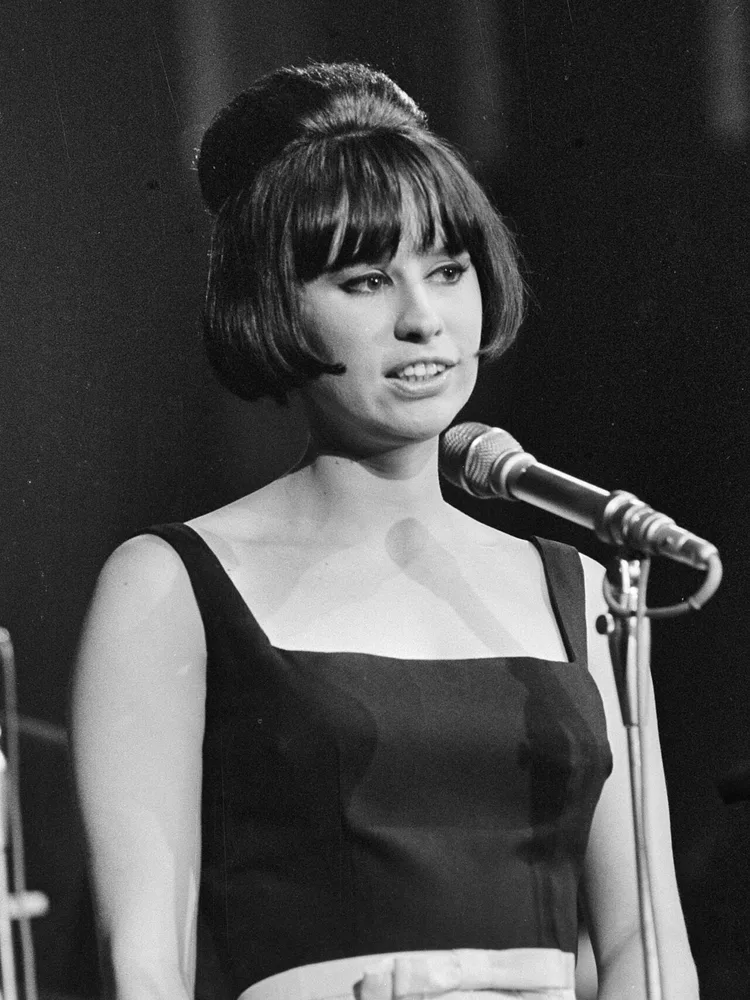
Astrud Gilberto performing at the Grand Gala du Disque, Concertgebouw, Amsterdam, October 2, 1966 CC0 1.0 (public domain dedication) — Wikimedia Commons - https://commons.wikimedia.org/wiki/File:Astrud_Gilberto_1966_(cropped).jpg - Ron Kroon / Anefo, Dutch National Archives

Astrud Gilberto was born Astrud Evangelina Weinert on March 29, 1940, in Salvador, Bahia, one of three daughters of a Brazilian mother, Evangelina (née Lobão), and Fritz Weinert, a German immigrant who taught German and English and painted on the side. The language lessons at home left her fluent in several languages, which turned out to matter more to her career than any vocal training. The family moved to Rio de Janeiro in 1947 and settled in Copacabana, and by the late 1950s she was part of the young crowd around the new bossa nova scene. She met the guitarist and singer João Gilberto in 1959 and married him in early 1960. Their son, João Marcelo, was born that year. Her first public performance came on May 20, 1960, at the festival A noite do amor, do sorriso e da flor, where she sang "Lamento" and "Brigas Nunca Mais" with João on guitar in front of an audience of about 3,000.
João Gilberto began touring the United States in 1962, and after a bossa nova concert at Carnegie Hall on November 21, 1962 he and Antonio Carlos Jobim were invited to record with Stan Getz for Verve in New York. Astrud went along as her husband's interpreter, since he spoke no English. The sessions took place on March 18 and 19, 1963. On the second day Norman Gimbel handed over English lyrics for "The Girl from Ipanema," and producer Creed Taylor, after briefly weighing the song as a vehicle for Sarah Vaughan, settled on adding an English vocal to João's Portuguese one. João could not sing in English and Getz did not want to, so Astrud sang it. Accounts differ on whose idea that was: she credited João, the historian Ruy Castro credited her, and others credit Getz or Taylor. Taylor and Getz thought her accented, unaffected delivery suited the song perfectly, and she also sang the English passage on "Corcovado."
Taylor held the album back for a year. Getz/Gilberto appeared in March 1964, naming her only in the cover text rather than among the musicians, and she was reportedly paid a flat $120 for the session with no royalties. The single, edited to drop João's Portuguese verses and credited to her as a full performer, sold more than a million copies and earned a gold disc. At the 7th Grammy Awards, in 1965, Getz/Gilberto won Album of the Year and "The Girl from Ipanema" won Record of the Year, credited to Gilberto and Getz. She was also nominated for Best Vocal Performance, Female.
Getz hired her for his band. A two-week engagement at the Carter Barron Amphitheatre in Washington, D.C. grew into a six-month tour in 1964, and the live album Getz Au Go Go, taken from the Cafe Au Go Go in New York on May 22, 1964 and Carnegie Hall on October 9, has her vocals on six of its ten tracks, with Gary Burton on vibraphone and Kenny Burrell added on guitar for the Carnegie Hall material. She and Getz also appeared in the 1964 film Get Yourself a College Girl. The tour ended that December in a dispute over her pay, which she later described as a "slave salary." Her divorce from João was announced at a press conference in Mexico on December 28, 1964. She and Getz worked together again on a 1966 European tour, where she insisted on her own backing band and a separate set, and in 1983, when she toured with her own group and joined his band for an encore.
Her first solo record, The Astrud Gilberto Album (Verve, 1965), had Jobim on guitar, arrangements by Marty Paich and a studio band that included João Donato, Bud Shank and Stu Williamson; it reached No. 41 on the Billboard 200. The Shadow of Your Smile (1965), arranged by Don Sebesky, Claus Ogerman and João Donato, reached No. 66. Look to the Rainbow (1966) was arranged by Gil Evans and Al Cohn. A Certain Smile, a Certain Sadness was cut in September 1966 with the organist Walter Wanderley's trio, and Beach Samba (1967) was arranged by Eumir Deodato and Sebesky. Windy (1968), I Haven't Got Anything Better to Do (1969) and September 17, 1969 (1970) closed out the Verve run, with a growing share of pop songs among the bossa nova and standards. In 1965 she sang in São Paulo, her first appearance in Brazil since moving to the United States. The Brazilian press was harsh, and she never performed there again. In 1966 she married Nick Lasorsa, a Philadelphia bar owner, and settled in the Philadelphia suburbs, where she lived on and off for the rest of her life. Her touring slowed, and most of her concerts were in Europe and Japan.
Her one CTI album, Gilberto with Turrentine (1971), paired her with the tenor saxophonist Stanley Turrentine, who plays tenor saxophone on four of its tracks, with Eumir Deodato arranging and conducting and a band that included Ron Carter, Hubert Laws, Airto Moreira, Gene Bertoncini and Toots Thielemans on harmonica. It was recorded at Van Gelder Studio in Englewood Cliffs, New Jersey between January and April 1971 and reached No. 16 on the Billboard jazz albums chart. Now (Perception, 1972) set four of her own songs beside material by Jorge Ben and Milton Nascimento and leaned toward tropicalismo. After it, her releases and appearances became sporadic, and by her own account there was a stretch of about six years in which she did not sing at all. That Girl from Ipanema, recorded in 1977, included a disco treatment of the title song and "Far Away," a duet with Chet Baker, who plays trumpet and sings on it.
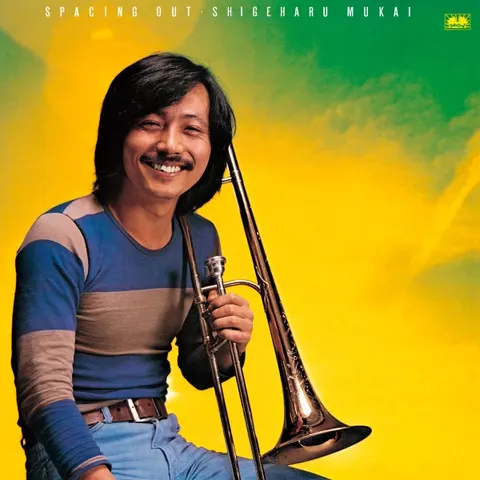
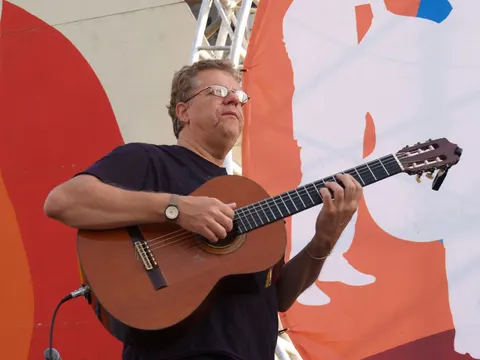
After separating from Lasorsa she returned to nightclub work in 1980, which she called her "third life," and lived in Manhattan for most of the 1980s and 1990s. Her son Marcelo joined her group as bassist in 1982 and toured with her for more than a decade. In 1983 she recorded So & So with the Japanese trombonist Shigeharu Mukai, first issued in Japan, and in 1986 she made Plus with the German bandleader James Last. Romero Lubambo worked with her first after arriving in New York in 1985. In 1996 she sang "Desafinado" with George Michael on the benefit album Red Hot + Rio and a French and Portuguese duet, "Les bords de Seine," with Étienne Daho; the live album Live in New York followed that year and Temperance in 1997, both released in Asia. Her last record was Jungle (2002), on her own Magya label and sold at first only through her website. She announced an indefinite break from performing in 2002, and her website said she did not give interviews.
Astrud Gilberto passed away at her home in Philadelphia on June 5, 2023, at the age of 83. She had received the Latin Jazz USA Award for Lifetime Achievement in 1992, was inducted into the International Latin Music Hall of Fame in 2002 and received the Latin Grammy Lifetime Achievement Award in 2008.
Gilberto sang with a light, whispery voice and a steady, unforced delivery that owed nothing to the mannerisms of a trained singer, and the Portuguese accent on her English lyrics became part of the sound that made "The Girl from Ipanema" a worldwide hit. Fans called her the Queen of Bossa Nova. She recorded in Portuguese, English, Spanish, Italian, French, German and Japanese, and she was especially popular in Japan.
Her place in jazz comes from the company and the repertoire rather than from improvisation: Stan Getz and his quartet in 1964, arrangers such as Gil Evans, Marty Paich, Don Sebesky and Eumir Deodato, producer Creed Taylor's Verve and CTI sessions, and a steady supply of American standards beside Brazilian songs. Her pop side is just as plain on the record. The late Verve albums lean on current pop songs, and Now and the later records mix her own compositions with tropicalismo and, on That Girl from Ipanema, disco. Her lineage runs back to the first bossa nova generation around João Gilberto and Antonio Carlos Jobim, and forward to singers who borrowed her manner, among them Basia, who named a track on her 1987 debut album after her. Her recordings keep turning up elsewhere: "Fly Me to the Moon" on the soundtrack of Down with Love (2003), "Once I Loved" in the film Juno (2007), and "Who Can I Turn To?" sampled by the Black Eyed Peas on "Like That" (2005).
- Getz/Gilberto (1964, Verve) - The Stan Getz and João Gilberto album, with Jobim, that carries her vocals on "The Girl from Ipanema" and "Corcovado." It won Album of the Year and made her a star. Spotify - Getz/Gilberto Listen
- Getz Au Go Go (1964, Verve) - Live with the New Stan Getz Quartet, with her singing on six of ten tracks. A document of the 1964 tour that followed the hit.
- The Astrud Gilberto Album (1965, Verve) - Her first solo record, with Jobim on guitar and Marty Paich's arrangements. Spotify - The Astrud Gilberto Album Listen
- The Shadow of Your Smile (1965, Verve) - Arrangements by Don Sebesky, Claus Ogerman and João Donato. Spotify - The Shadow of Your Smile Listen
- Look to the Rainbow (1966, Verve) - Gil Evans and Al Cohn arranging, with a trumpet solo by Johnny Coles on "I Will Wait for You."
- A Certain Smile, a Certain Sadness (1966, Verve) - With the organist Walter Wanderley's trio, produced by Creed Taylor.
- Beach Samba (1967, Verve) - Arranged by Eumir Deodato and Don Sebesky, with Ron Carter and Hubert Laws among the credited players.
- Gilberto with Turrentine (1971, CTI) - Her one CTI album, with Stanley Turrentine and Deodato's arrangements, recorded at Van Gelder Studio.
Astrud Gilberto: Full Discography
Discogs artist: Astrud Gilberto (8699) · Real name Astrud Evangelina Weinert · Born March 29, 1940, Salvador, Bahia · Passed away June 5, 2023, Philadelphia
Her catalogue is dominated by the Verve albums of 1965 to 1970. Catalog numbers below are those of the original US pressings; charts are Billboard peaks unless noted.
Leader: Studio Albums
| Album | Year | Label | Personnel & Notes | Charts | Listen | Buy |
|---|---|---|---|---|---|---|
| The Astrud Gilberto Album | 1965 | Verve (V-8608) | Her first solo album. Antonio Carlos Jobim (guitar, and vocal on one track), Marty Paich (arrangements), Joe Mondragon (bass), Bud Shank (alto saxophone, flute), João Donato (piano), Stu Williamson (trumpet), Milt Bernhart (trombone), Guildhall String Ensemble | No. 41 US | Spotify | — |
| The Shadow of Your Smile | 1965 | Verve (V6-8629) | Produced by Creed Taylor. Arranged by Don Sebesky, Claus Ogerman and João Donato; mastered by Rudy Van Gelder | No. 66 US | Spotify | — |
| Look to the Rainbow | 1966 | Verve (V-8643) | Produced by Creed Taylor. Arranged and conducted by Gil Evans, with two tracks arranged by Al Cohn; Johnny Coles (trumpet solo on "I Will Wait for You"), Dom Um Romão (percussion on "Berimbau") | — | — | |
| A Certain Smile, a Certain Sadness | 1966 | Verve (V6-8673) | Co-billed with Walter Wanderley. Recorded September 1966. Walter Wanderley (organ), José Marino (bass), Claudio Slon (drums), Bobby Rosengarden (percussion); produced by Creed Taylor | — | — | |
| Beach Samba | 1967 | Verve (V6-8708) | Produced by Creed Taylor. Arranged by Don Sebesky (seven tracks) and Eumir Deodato (five tracks). Credited players include Ron Carter (bass), Hubert Laws (flute), Toots Thielemans (harmonica, guitar), Marcos Valle (guitar) and Grady Tate (drums) | — | — | |
| Windy | 1968 | Verve (V6-8754) | Arranged by Eumir Deodato, Don Sebesky and Patrick Williams; produced by Pete Spargo. Includes a duet with her son Marcelo on "The Bare Necessities" | — | — | |
| I Haven't Got Anything Better to Do | 1969 | Verve (V6-8776) | Arranged and conducted by Al Gorgoni; produced by Brooks Arthur | — | — | |
| September 17, 1969 | 1970 | Verve (V6-8793) | Arranged and conducted by Al Gorgoni; produced and engineered by Brooks Arthur | — | — | |
| Gilberto with Turrentine | 1971 | CTI (CTI 6008) | Co-billed with Stanley Turrentine (tenor saxophone on four tracks). Produced by Creed Taylor; arranged and conducted by Eumir Deodato, who also plays electric piano. Recorded at Van Gelder Studio, Englewood Cliffs, New Jersey, January 13 to April 6, 1971. Credited players include Ron Carter, Hubert Laws, Airto Moreira, Gene Bertoncini, Sivuca, Dom Um Romão and Toots Thielemans (harmonica on two tracks) | No. 16 US Jazz | — | — |
| Now | 1972 | Perception (PLP 29) | Recorded at Blue Rock Studio, New York. Arranged by Eumir Deodato; she is credited as producer. Credited players include Ron Carter, Bob Cranshaw (bass), Billy Cobham, Mickey Roker (drums) and Airto Moreira. Four of the ten tracks are her own compositions | — | — | |
| That Girl from Ipanema | 1977 | Image (IM-305) | Produced by Astrud Gilberto and Vincent Montana Jr.; arrangements by Don Sebesky, Al Gorgoni, Ben Aronov and Montana. Includes a disco version of the title song and "Far Away," a duet with Chet Baker (trumpet, vocals). Credited players include Ron Carter (bass) and Gene Bertoncini (guitar) | — | — | |
| So & So: Mukai Meets Gilberto | 1983 | Better Days (YF-7065-BD) | Co-billed with Shigeharu Mukai; she sings on three of its eight tracks. Recorded in New York, first issued in Japan | Spotify | — | |
| Plus (Astrud Gilberto Plus James Last Orchestra) | 1986 | Polygram | With the James Last Orchestra. Issued in the United States as Astrud Gilberto Plus James Last Orchestra | No. 42 Netherlands | — | — |
| Live in New York | 1996 | Pony Canyon | Live album recorded in 1989; released in Asia only | — | — | |
| Temperance | 1997 | Pony Canyon | Released in Asia only; her son Gregory Lasorsa plays guitar on "Beautiful You" | — | — | |
| Jungle | 2002 | Magya Productions | Recorded in Philadelphia in the summer of 2001; she produced it and wrote most of the songs. Sold at first only through her own website | — | — |
With Stan Getz
| Album | Year | Label | Personnel & Notes | Charts | Listen | Buy |
|---|---|---|---|---|---|---|
| Getz Au Go Go | 1964 | Verve (V-8600) | Billed to The New Stan Getz Quartet featuring Astrud Gilberto. Recorded at the Cafe Au Go Go, New York (May 22, 1964) and Carnegie Hall (October 9, 1964). Stan Getz (tenor saxophone), Astrud Gilberto (vocals on six of ten tracks), Gary Burton (vibraphone), Kenny Burrell (guitar, Carnegie Hall tracks), Gene Cherico and Chuck Israels (bass), Helcio Milito and Joe Hunt (drums) | No. 24 US | — | — |
| Getz/Gilberto | 1964 | Verve (V-8545) | Billed to Stan Getz and João Gilberto, featuring Antonio Carlos Jobim; recorded March 18 and 19, 1963 in New York and released in March 1964. She sings on "The Girl from Ipanema" and "Corcovado." Won the Grammy for Album of the Year in 1965 | Spotify | — |
Singles
| Single | Year | Label | Notes | Charts |
|---|---|---|---|---|
| "The Girl from Ipanema" (with Stan Getz) | 1964 | Verve | Edited single without João Gilberto's Portuguese vocal; gold disc; Grammy for Record of the Year, 1965 | No. 5 Billboard Hot 100; No. 1 Easy Listening (two weeks); No. 29 UK |
Selected Regional Releases and Compilations
Her catalogue also includes many compilations and regional releases; this is a selection of the principal ones.
The Girl from Ipanema (Polydor, 1966, Germany) · Canta in Italiano (Verve, 1968, Italy and Japan) · Gilberto Golden Japanese Album (Verve, 1969, Japan) · The Very Best of Astrud Gilberto (Verve, 1971) · The Essential Astrud Gilberto (Verve, 1984, UK) · Compact Jazz (Verve, 1987) · The Silver Collection (Verve, 1991) · Verve Jazz Masters 9 (Verve, 1994) · Astrud Gilberto's Finest Hour (Verve, 2001) · The Genius of Astrud Gilberto (Verve, 2003, 2-CD) · The Very Best of Astrud Gilberto (Verve, 2006) · Non-Stop to Brazil (Verve, 2006) · Gold (Verve, 2008, 2-CD).
Guest Appearances and Screen Work
| Year | Project | Title | Notes |
|---|---|---|---|
| 1964 | Film | Get Yourself a College Girl | Appears with Stan Getz and sings "The Girl from Ipanema" |
| 1964 | Television | The Hanged Man | Appears with Stan Getz |
| 1996 | Various artists | Red Hot + Rio | Sings "Desafinado" as a duet with George Michael |
| 1996 | Étienne Daho | Eden | Sings "Les bords de Seine," a duet in French and Portuguese |
Awards and Honors
| Year | Category | Work | Result |
|---|---|---|---|
| 1965 | Record of the Year | "The Girl from Ipanema" (with Stan Getz) | Winner |
| 1965 | Best Vocal Performance, Female | "The Girl from Ipanema" | Nominee |
| 1966 | Best Vocal Performance, Female | The Astrud Gilberto Album | Nominee |
| 1992 | Latin Jazz USA Award for Lifetime Achievement | Winner | |
| 2002 | International Latin Music Hall of Fame | Inducted | |
| 2008 | Latin Grammy Lifetime Achievement Award | Winner |
- Stan Getz - her featured partner on Getz/Gilberto (1964), and bandleader on the 1964 tour and Getz Au Go Go. They toured again in 1966 and 1983.
- Antonio Carlos Jobim - composer of "The Girl from Ipanema" and "Corcovado," and her guitarist on The Astrud Gilberto Album (1965).
- João Gilberto - her first husband, the guitarist and singer on Getz/Gilberto; the marriage ended in 1964.
- Creed Taylor - produced Getz/Gilberto and her Verve and CTI albums of the 1960s and early 1970s.
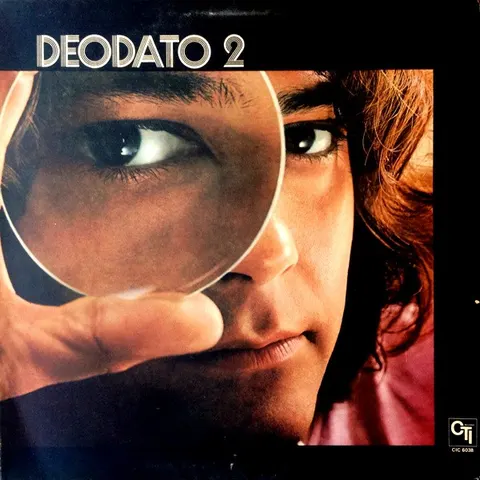
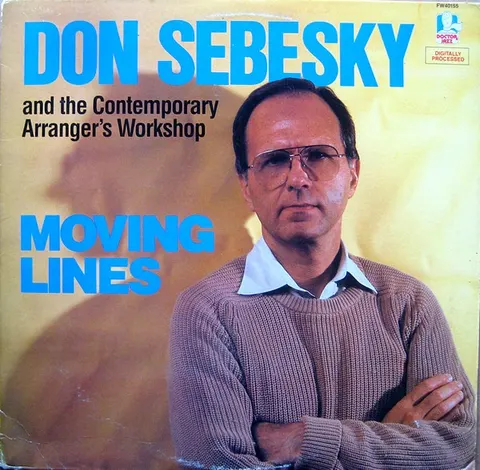
- Eumir Deodato and Don Sebesky - arrangers of Beach Samba (1967) and Windy (1968); Deodato also arranged Gilberto with Turrentine (1971) and Now (1972).
- Gil Evans and Al Cohn - arrangers of Look to the Rainbow (1966).
- Marty Paich - arranger of The Astrud Gilberto Album (1965).
- Stanley Turrentine - co-billed on Gilberto with Turrentine (1971).
- Gary Burton and Kenny Burrell - in the quartet behind her on Getz Au Go Go (1964).
- Walter Wanderley - organist on A Certain Smile, a Certain Sadness (1966).
- Chet Baker - sings and plays trumpet on "Far Away" from That Girl from Ipanema (1977).
- Shigeharu Mukai - Japanese trombonist and co-billed partner on So & So (1983).
- Ron Carter, Hubert Laws, Airto Moreira and Gene Bertoncini - session players credited on her CTI-era and Verve records.
- Stu Williamson - trumpet on The Astrud Gilberto Album.
- Romero Lubambo - guitarist who worked with her first on moving to New York in 1985.
- Outside jazz: James Last (Plus, 1986), George Michael ("Desafinado," 1996) and Étienne Daho ("Les bords de Seine," 1996).
More Samba-Jazz Artists
See all 56 Samba-Jazz artists →More Brazilian Jazz Artists
See all 25 Brazilian artists →- Wikipedia: Astrud Gilberto
- Wikipedia: Astrud Gilberto discography
- Wikipedia: Getz/Gilberto
- Wikipedia: The Girl from Ipanema
- Wikipedia: Getz Au Go Go
- Wikipedia: Gilberto with Turrentine
- Wikipedia: The Astrud Gilberto Album
- Wikipedia: Look to the Rainbow (Astrud Gilberto album)
- Wikipedia: 7th Annual Grammy Awards
- Discogs: Astrud Gilberto
- Associated Press obituary, via the Anchorage Daily News
- The Irish Times: Astrud Gilberto obituary
- Shigeharu Mukai on JazzProfiles.com
- Romero Lubambo on JazzProfiles.com