JAZZPROFILES lives in the music 2,555 Jazz Artists fully Profiled!
Jutta Hipp
Last updated November 9, 2026
Listen on Spotify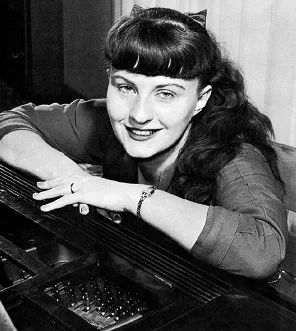
Jutta Hipp at a piano, undated photograph by her brother Hajo Hipp (published in Jazz Podium, July 2006) GNU Free Documentation License (GFDL); the copyright holder's permission is on file with the Wikimedia Foundation's volunteer response team — Wikimedia Commons — https://commons.wikimedia.org/wiki/File:Wiki_Jutta_Hipp_Piano.png

Jutta Hipp was born on February 4, 1925, in Leipzig, the daughter of Karl Julius Hipp and Hulda Elisabeth Grassmann, in a middle-class Protestant family. She began classical piano lessons at nine and gave them up around 1939 after a strict teacher drained her enthusiasm, and she trained as a graphic artist at Leipzig's Academy of Graphic Arts. About 1940 an art-school friend, Ingfried Henze, took her to a meeting of the city's Hot Club, where banned jazz records and foreign radio broadcasts circulated even during air raids. She began collecting records and transcribing tunes off the radio, taking Teddy Wilson, Fats Waller, and Art Tatum as her models. In 1946, after she refused to design propaganda posters for the Soviet-run authorities, she and her family crossed into the American zone and settled in Munich. Her son Lionel was born in 1948, and she placed him in a children's home because she could not support him while playing American army clubs.
Music started as a living rather than a calling. She played officers' clubs at Tegernsee with the guitarist Thomas Buhé and her fiancé, the drummer Teddie Neubert, and then in Munich with Freddie Brocksieper, Charlie Tabor, and the tenor saxophonist Hans Koller. From 1951 she worked in Koller's group, moving with him to Frankfurt in 1952; its New Jazz Stars lineup included the trombonist Albert Mangelsdorff, the bassist Franz "Shorty" Roeder, and the drummers Rudi Sehring and Karl Sanner, and in March 1953 it opened for Dizzy Gillespie in Frankfurt. She was voted Germany's best pianist in jazz polls in 1952 and 1954, ahead of Paul Kuhn. In 1953 she formed her own quintet with the alto saxophonist Emil Mangelsdorff, the tenor saxophonist Joki Freund, the bassist Hans Kresse, and Sanner, adding Albert Mangelsdorff, the trumpeter Carlo Bohländer, or the guitarist Attila Zoller as guests. The group played the first German Jazz Festival in 1953 and took its cue from the cool jazz of Lennie Tristano, Lee Konitz, and Warne Marsh. Radio-archive recordings of her trio and quintet sets from 1952 to 1955 were issued decades later as The German Recordings 1952-1955.
In January 1954 the critic and producer Leonard Feather, in Germany with the Jazz Club USA tour that featured Billie Holiday and the clarinetist Buddy DeFranco, went to the Bohème club in Duisburg to hear the quintet he had first known from a tape. He arranged an April 1954 session in Frankfurt, and the music appeared in the United States on Blue Note's New Faces - New Sounds series as New Faces - New Sounds from Germany. In January 1955 she recorded in Sweden with the baritone saxophonist Lars Gullin for the Karusell label. After a final German concert in Hanover in October 1955, she emigrated to New York in November 1955 with Feather's help, billed in the American press as the First Lady of European Jazz. She became the first European jazz musician signed by Blue Note.
In March 1956 Feather placed her at the Hickory House on 52nd Street, where she stayed about six months, filling in for Marian McPartland, who was away on tour, with the bassist Peter Ind and the drummer Ed Thigpen. The set she recorded there live on April 5, 1956, was released by Blue Note that June as two volumes, At the Hickory House, produced by Alfred Lion. On July 28, 1956, at Rudy Van Gelder's studio in Hackensack, New Jersey, she led a quintet with the tenor saxophonist Zoot Sims, the trumpeter Jerry Lloyd, the bassist Ahmed Abdul-Malik, and Thigpen for Jutta Hipp with Zoot Sims, issued in February 1957. She also played the 1956 Newport Jazz Festival and worked in New York with the drummer Paul Motian, and her playing hardened under the influence of Horace Silver, a shift Feather disliked. Her relationship with Feather broke down by 1957 after she declined to record his compositions. Severe stage fright and heavy drinking were wearing on her, and in 1957 she toured the American South with the rhythm and blues saxophonist Jesse Powell, a trip she later called the most enjoyable of her career.
By 1958 she had stopped playing. She took work in a clothing factory, joined the Wallachs clothing company in 1960, and stayed 35 years, until it dissolved in 1995, while returning to the drawing, watercolor, and photography she had trained in; her caricatures of jazz musicians ran in the German magazine Jazz Podium in 1995. She became a United States citizen in 1999 and never went back to Germany. Blue Note had lost track of her and could not deliver her royalties until 2000, when the label found her through Lee Konitz and his wife Gundula, living in an apartment in Queens without a piano; in 2001 its representatives brought her a check for $40,000. She passed away on April 7, 2003, of pancreatic cancer, in her apartment in Sunnyside, Queens, and her ashes were scattered in Long Island Sound. A street in Leipzig, the Jutta-Hipp-Weg, was named for her in 2011, the Berlin Jazz Festival opened in 2012 with a tribute titled Remembering Jutta Hipp, and the six-CD set Hipp Is Cool: The Life and Art of Jutta Hipp appeared in 2015.
Hipp began as a pianist in the cool-jazz idiom of the Tristano school, steered there by Hans Koller, whose devotion to Lester Young also shaped her lines, and by her Frankfurt circle, though she later said she never especially favored the style. In New York she moved toward a percussive, swinging hard-bop touch in the manner of Horace Silver. Duke Ellington and Lennie Tristano both came to hear her at the Hickory House. AllMusic's reviewers describe the Hickory House sets as lightly swinging small-group jazz drawing on hard bop and soul-jazz, and call the album with Zoot Sims so well executed that her sudden departure from music is hard to explain. Her recording career in the United States lasted barely a year, and the three Blue Note albums remain her American legacy; the 1950s German recordings document the earlier phase, in which she led a quintet that introduced bebop and cool jazz to a country just out of the Nazi era.
- New Faces - New Sounds from Germany (recorded 1954, Blue Note) - The Jutta Hipp Quintet recorded in Frankfurt on April 24, 1954, the date Leonard Feather arranged after hearing her in Duisburg; it introduced her to American listeners and led to her Blue Note contract.
- Jutta Hipp with Lars Gullin (1955, Karusell) - An EP with the Swedish baritone saxophonist Lars Gullin, recorded in January 1955 during her Swedish tour.
- At the Hickory House, Volume 1 (1956, Blue Note) - Live trio set recorded April 5, 1956, with Peter Ind and Ed Thigpen, the first of two volumes drawn from her Hickory House residency. Spotify - Jutta Hipp at The Hickory House, Vol. 1 Listen
- At the Hickory House, Volume 2 (1956, Blue Note) - The second volume from the same night, including her own composition "Horacio."
- Jutta Hipp with Zoot Sims (1957, Blue Note) - Her only American studio album, recorded July 28, 1956, with Zoot Sims and the trumpeter Jerry Lloyd; it was her last recording. Spotify - Jutta Hipp With Zoot Sims (Expanded Edition) Listen
- The German Recordings 1952-1955 (2013, Jazzhaus) - Radio-archive trio, quartet, and quintet recordings from Koblenz, Baden-Baden, and Stuttgart with Hans Koller, Albert Mangelsdorff, Joki Freund, and Attila Zoller.
- Hipp Is Cool: The Life and Art of Jutta Hipp (2015, BE! Jazz) - A six-CD and DVD biographical set covering her recordings and her life and artwork.
Jutta Hipp: Full Discography
Discogs artist ID 924522 ("Jutta Hipp," born February 4, 1925, in Leipzig, died April 7, 2003, in Queens, New York) lists 95 entries, mostly compilations and track appearances on Blue Note and women-in-jazz anthologies. Her own bands are filed under separate Discogs entries, which were checked and reconciled here: "Jutta Hipp Quintet" (artist ID 1818169), "Jutta Hipp Combo" (2896751), "Jutta Hipp And Her German Jazzmen" (4974409), "Jutta Hipp Trio" (4661257), and "Jutta Hipp Quintett/Sextett" (4658736). A separate entry, "Jutta Hipp (2)" (5390060), is a different person credited on an audio-drama CD and is not included. Her leader catalogue is small, so the first table lists her own releases and the main compilations of them; the many multi-artist anthologies that carry one or two of her Blue Note tracks are not itemized. Catalog numbers are those of the first or best-documented pressing; each personnel list is taken from the release's credits on Discogs, and where Discogs and Wikipedia differ on a year the Notes column says so.
As Leader / Co-Leader
| Album Title | Recording Date(s) | Release Date | Label | Catalog Number | Format(s) | Personnel | Role | Reissue History | Spotify | Buy | Notes |
|---|---|---|---|---|---|---|---|---|---|---|---|
| New Faces - New Sounds from Germany | April 24, 1954, Frankfurt | 1954 (Discogs) | Blue Note | BLP 5056 | Vinyl, 10", Album, Mono | Jutta Hipp (piano), Emil Mangelsdorff (alto saxophone), Joki Freund (tenor saxophone), Hans Kresse (bass), Karl Sanner (drums) | Leader (billed as the Jutta Hipp Quintet) | Tracks reissued on The Legendary Jutta Hipp Quintet: Frankfurt Special - 1954 (Fresh Sound, 2006); see Discogs master 591917 | — | — | Her first record to reach American listeners, supervised by Horst Lippmann with liner notes by Leonard Feather. One Wikipedia list gives 1956 for the release; Discogs gives 1954. |
| Europe's First Lady of Jazz: Jutta Hipp and Her Combo | July 28, 1954 | 1954 | mod Records | BMEP 06015 | Vinyl, 7", 45 RPM, EP | Jutta Hipp (piano), Emil Mangelsdorff (alto saxophone), Joki Freund (tenor saxophone), Hans Kresse (bass), Karl Sanner (drums) | Leader | Included on Cool Jazz Made in Germany (Jazz Realities, 2000) | — | — | Four tracks: "Frankfurt Special," "Don't Worry About Me," "Simone," and "Morning Fun." Sleeve notes by Gigi Campi. |
| Jutta Hipp Trio with Lars Gullin | January 1955, Sweden | 1955 | Karusell | KSEP 3018 | Vinyl, 7", EP | Jutta Hipp (piano), Lars Gullin (baritone saxophone), Simon Brehm (bass), Bosse Stoor (drums) | Leader (billed with Lars Gullin) | Reissued on Gullin's CD 1954/55 Vol 3 Late Summer (Dragon, 1994) | — | — | Four standards: "Always," "Man Lover," "All the Things You Are," and "Yesterdays." |
| Leonard Feather Presents Cool Europe | 1953 to 1954 (Wikipedia) | 1955 | MGM | E3157 (LP); X282 (7" EP) | Vinyl, LP, Album, Mono; 7" EP | Side A: Jutta Hipp (piano) and Her German Jazzmen, with Emil Mangelsdorff (alto saxophone), Hans Kresse and Shorty Roeder (bass), Karl Sanner (drums). Side B: Mike Nevard's British Jazzmen | Leader (side A of a split album) | See Discogs master 981292 | — | — | Hipp's side was supervised by Horst Lippmann; the second side is by the British group. |
| At the Hickory House, Volume 1 | April 5, 1956, Hickory House, New York | 1956 (June, per Wikipedia) | Blue Note | BLP 1515 | Vinyl, LP, Album, Mono | Jutta Hipp (piano), Peter Ind (bass), Ed Thigpen (drums) | Leader | Reissued in a Japanese two-LP set with Volume 2 (Blue Note DBLP-057/58, 2014) and in Three Classic Albums (Real Gone Music, 2015); see Discogs master 406700 | Spotify - Jutta Hipp at The Hickory House, Vol. 1 | — | Live trio set produced by Alfred Lion, recorded by Rudy Van Gelder, with a cover photograph by Francis Wolff and liner notes by Leonard Feather. |
| At the Hickory House, Volume 2 | April 5, 1956, Hickory House, New York | 1956 (June, per Wikipedia) | Blue Note | BLP 1516 | Vinyl, LP, Album, Mono | Jutta Hipp (piano), Peter Ind (bass), Ed Thigpen (drums) | Leader | Reissued in the Japanese two-LP set and in Three Classic Albums; see Discogs master 406703 | — | — | Second volume from the same night; includes her composition "Horacio." |
| Jutta Hipp with Zoot Sims | July 28, 1956, Van Gelder Studio, Hackensack, New Jersey | February 1957 | Blue Note | BLP 1530 | Vinyl, LP, Album, Mono | Jutta Hipp (piano), Zoot Sims (tenor saxophone), Jerry Lloyd (trumpet), Ahmed Abdul-Malik (bass), Ed Thigpen (drums) | Leader (billed with Zoot Sims) | Reissued on CD in 1996 (Blue Note CDP 7243 8 52439 2 9) and as an expanded edition in 2008; see Discogs master 81653 | Spotify - Jutta Hipp With Zoot Sims (Expanded Edition) | — | The last album she recorded. The Spotify link is the expanded edition, which adds "These Foolish Things" and "'S Wonderful." |
| Cool Dogs & Two Oranges (1954) | 1954 (exact dates not confirmed) | 1980 | L+R Records | LR 41.006 | Vinyl, LP, Album, Remastered, Mono | Jutta Hipp (piano), Emil Mangelsdorff (alto saxophone), Joki Freund (tenor saxophone), Hans Kresse (bass), Karl Sanner (drums) | Leader (billed as the Jutta Hipp Quintet) | See Discogs master 520836 | — | — | German issue of 1954 quintet recordings; produced by Horst Lippmann, with a 1955 liner note by Leonard Feather. |
| The Legendary Jutta Hipp Quintet: Frankfurt Special - 1954 | April 13 and April 24, 1954, Frankfurt; July 28, 1954, Cologne; June 1954 German Jazz Festival | 2006 | Fresh Sound Records | FSR-CD 421 | CD, Compilation | Jutta Hipp (piano), Emil Mangelsdorff (alto saxophone), Joki Freund (tenor saxophone), Hans Kresse (bass), Karl Sanner (drums) | Leader (billed as the Jutta Hipp Quintet) | — | — | — | Twenty tracks collecting the 1954 German quintet recordings. |
| The German Recordings 1952-1955 | November 30, 1952, Koblenz; June 1953, Baden-Baden; June 28, 1955, Stuttgart | 2013 | Jazzhaus / SWR Music / Arthaus Musik | 101723 | CD, Album, Remastered | Jutta Hipp (piano) with Shorty Roeder (bass, tracks 1 to 13), Harry Schell (bass, tracks 14 to 17), Karl Sanner (drums, tracks 1 to 10 and 14 to 17), Rudi Sehring (drums, tracks 11 to 13), Hans Koller (tenor saxophone, tracks 3 to 13), Albert Mangelsdorff (trombone, tracks 8 to 13), Joki Freund (tenor saxophone, tracks 14 and 17), Attila Zoller (guitar, tracks 14 and 17) | Leader | See Discogs master 724853 | — | — | Radio-archive recordings from the Southwest German and Stuttgart broadcasters. Wikipedia dates the release 2012; Discogs and MusicBrainz give 2013. |
| Hipp Is Cool: The Life and Art of Jutta Hipp | Multiple sessions; see Discogs for track-level dates | October 20, 2015 | BE! Jazz | BE! 6103-09 | 6 CD plus DVD, box set, limited edition | Jutta Hipp (piano) with Shorty Roeder, Peter Ind, Ahmed Abdul-Malik, Hans Kresse, and Harry Schell (bass), Emil Mangelsdorff (alto saxophone), Hans Koller and Joki Freund (tenor saxophone), Lars Gullin (baritone saxophone), Rolf Kühn (clarinet), and others across the discs | Leader (compilation) | — | — | — | Biographical box set combining German radio and studio recordings, and the Blue Note albums, with a DVD. |
As Sideman (selected major credits)
She was a leader or co-leader on nearly all of her releases; this is a short list of recordings under another leader's name, taken from Discogs credits.
| Year | Project (Leader) | Title | Label | Catalog | Role | Notes |
|---|---|---|---|---|---|---|
| 1954 | Hans Koller Quartet | Hans Is Hip | Discovery Records | DL 2005 | Piano | Recorded May 20, 1952, in Munich with Koller (tenor saxophone), Shorty Roeder (bass), and Karl Sanner (drums); supervised by Leonard Feather. Includes her feature "Jutta Is Hipp." Discogs dates this 10-inch US issue 1954 |
| Not confirmed | Hans Koller | Hans Across the Sea 1952-55 | RST Records | 903 2913 | Piano (side A) | Side A is the 1952 Koller quartet material with Hipp; side B, recorded in 1955, has Roland Kovac on piano. Release year not confirmed |
| 1989 | Mary Lou Williams, Jutta Hipp with Hans Koller, Beryl Booker Trio, Don Byas | First Ladies of Jazz | Savoy Jazz | SJL 1202 | Piano on six tracks | Her six tracks are the May 20, 1952, Koller quartet recordings; Williams and Booker supply the other sides |
| 2022 | David Amram | Live in Germany 1954-2013 | After The Fall Records | ATF-002 | Piano on one track | She plays piano on track A6, "Dave's Blues," from the Armed Forces Network broadcast recorded in Frankfurt in autumn 1954; the other side is a 2013 anniversary concert. Limited edition of 200 copies |
- Hans Koller - tenor saxophonist and bandleader; she played piano in his group from 1951, moved with him to Frankfurt in 1952, and recorded with his quartet in Munich in May 1952 (Hans Is Hip) and on radio sessions in 1952 and 1953.
- Albert Mangelsdorff and Emil Mangelsdorff - trombonist and alto saxophonist brothers; Albert played in Koller's group and as a guest in her own, and Emil was the altoist in her 1953 quintet.
- Joki Freund - tenor saxophonist in her Frankfurt quintet and on the 1954 sessions.
- Attila Zoller - guitarist in her 1954-1955 groups and her fiancé before she left for the United States; they stayed in touch in later years.
- Leonard Feather - critic and producer who heard her in Duisburg in January 1954, arranged her Frankfurt session, brought her to the United States, and managed her until their break.
- Lars Gullin - Swedish baritone saxophonist, her partner on the January 1955 Karusell EP.
- Peter Ind and Ed Thigpen - bassist and drummer of the Hickory House trio; Thigpen also played on the Zoot Sims album.
- Zoot Sims - tenor saxophonist who played with her at the Hickory House and led the front line on her 1956 Blue Note quintet date.
- Jerry Lloyd and Ahmed Abdul-Malik - trumpeter and bassist on Jutta Hipp with Zoot Sims.
- Paul Motian - drummer who worked with her in New York in 1956.
- David Amram - French horn player on an Armed Forces Network radio broadcast from Frankfurt in autumn 1954, issued in 2022 as part of Live in Germany 1954-2013, on which she plays piano on one track alongside Albert Mangelsdorff, Attila Zoller, bassist Harry Schell, and drummer Karl Sanner.
- Lee Konitz - saxophonist from the Tristano school whose example shaped her early style and who stayed in touch with her for the rest of her life; he and his wife Gundula helped Blue Note locate her in 2000.
- Jesse Powell - rhythm and blues saxophonist whose 1957 tour of the American South she joined.
- Rolf Kühn and Dan Morgenstern - the clarinetist who tried without success to arrange a comeback for her, and the writer who remained a friend.