JAZZPROFILES lives in the music 2,303 Jazz Artists fully Profiled!
Klaus Doldinger
Last updated November 3, 2026
Listen on Spotify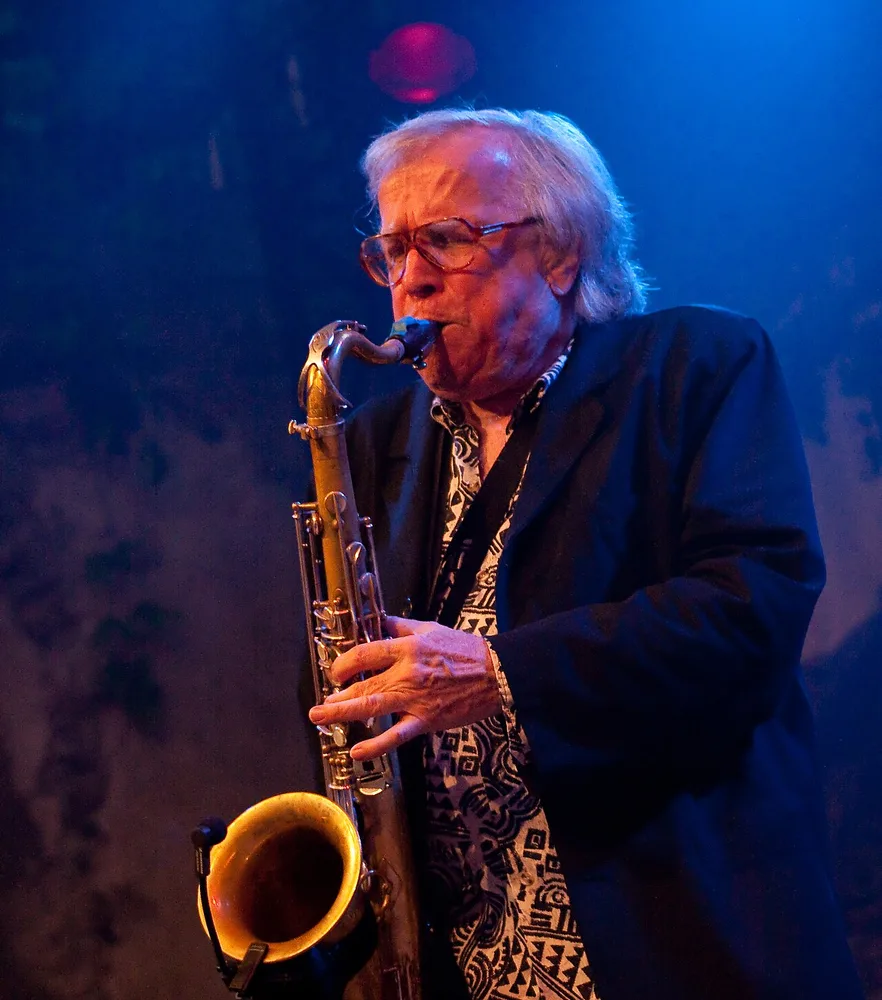
Klaus Doldinger playing tenor saxophone on stage, 2009 CC BY 3.0 — Wikimedia Commons - https://commons.wikimedia.org/wiki/File:Klaus-doldinger-on-stage.jpg - Stephan Wirwalski

Klaus Doldinger was born in Berlin on May 12, 1936. The family moved to Vienna when he was four, and his mother later took him and his brother to Schrobenhausen in Bavaria, where he first heard jazz as a child, played by American soldiers. The family was reunited in Düsseldorf, where he entered the conservatory in 1947 to study piano and switched to clarinet in 1952, the year he heard his first jazz concert, by the Lionel Hampton big band. After his Abitur in 1957 he studied musicology and Tonmeister (the German sound-engineering and production degree) at the same conservatory. Alongside his studies he played soprano saxophone in Düsseldorf bars and clarinet with a Dixieland band, the Feetwarmers, with whom he made his first recordings in 1955.
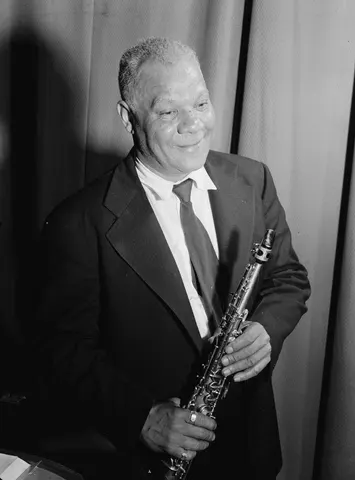
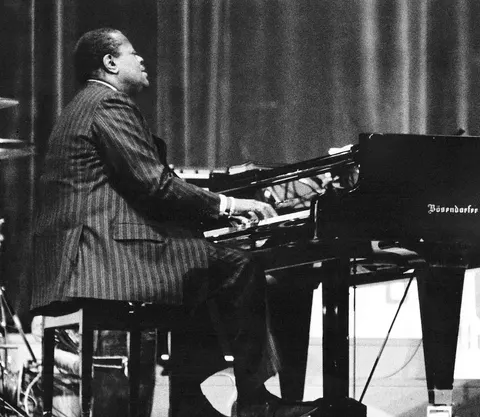
That same year he founded Oscar's Trio, named for and modeled on the group of Oscar Peterson. The trio won first prize, the Coup Sidney Bechet (named for Sidney Bechet, the clarinetist and soprano saxophonist whose recordings had steered Doldinger toward the clarinet), at the Brussels jazz festival, and its version of "Muss i' denn zum Städtele hinaus" brought an invitation to play in the United States in 1960. On that first American trip he was made an honorary citizen of New Orleans. Through the early 1960s he worked with American musicians then living in Europe, among them Kenny Clarke, Donald Byrd, Johnny Griffin, Benny Bailey, Idrees Sulieman and Don Ellis.
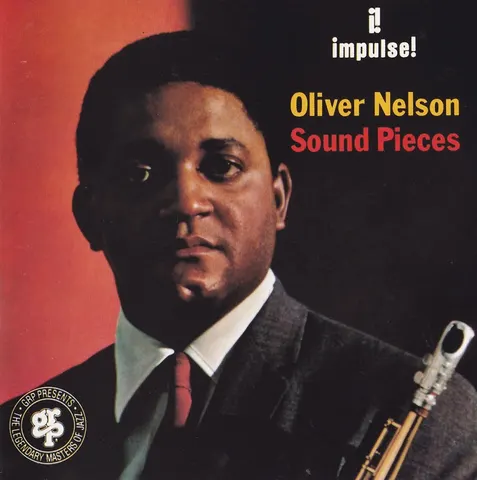
In 1962 he formed the Klaus Doldinger Quartet with the organist Ingfried Hoffmann, the bassist Helmut Kandlberger and the drummer Klaus Weiss. Their first album, Jazz Made in Germany (Philips, 1963), was produced by Siggi Loch and won the group an audience well beyond Germany, because it sounded like a working modern-jazz band rather than an imitation of American records. Live at Blue Note Berlin, recorded in the Berlin club the same year, followed in 1964. Doldinger played tenor saxophone, with soprano saxophone on some tracks. The quartet's lineup changed (the bassist Peter Trunk and the drummer Cees See came in by 1965), and the records moved through Latin and Brazilian material on Doldinger in Südamerika (1965, with the guitarist Attila Zoller), the organ-driven Doldinger Goes On (1967), and the Blues Happening and The Ambassador albums of 1969, which reached toward free jazz and African rhythms. He toured for the Goethe-Institut as an ambassador of German jazz, visiting some forty countries, and drew heavily on Moroccan and Brazilian music. In October 1965 he sat in the saxophone section of Rita Reys Meets Oliver Nelson (Philips, Netherlands), arranged and conducted by Oliver Nelson, with Lee Konitz and Art Farmer among the players.
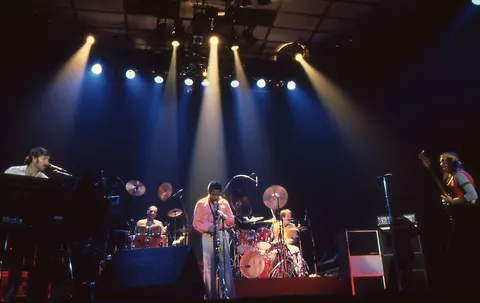
By the end of the decade he was working in a second, commercial register. He released dance and rock records under the pseudonym Paul Nero, wrote advertising jingles (Nescafé, Fa, Pril), and formed Motherhood in 1969, a rock-and-soul band that made two albums for United Artists and Liberty. In 1971 he founded Passport, a fusion group whose first lineup included the drummer Udo Lindenberg, later a major German rock singer, and the bassist Lothar Meid. Passport recorded for Atlantic Records, reportedly the first German band signed to the label, and its second album, Second Passport (1972), was a chart success in Germany. The lineup that carried the band to international prominence from 1973 paired Doldinger with the drummer Curt Cress, the bassist and guitarist Wolfgang Schmid and the keyboardist Kristian Schultze. Their live Doldinger Jubilee Concert (1974) added the organist Brian Auger and the tenor saxophonist Johnny Griffin, among others, and Cross-Collateral (1975) was released the same day in Germany and the United States, followed by a seven-week American tour. Passport was sometimes called the European Weather Report, a comparison to the American group Weather Report, and under that name Doldinger made more than thirty albums with changing lineups over the following decades. He won the Deutscher Schallplattenpreis for his Passport work in 1976 and again in 1981.
Far more people heard his music on television and in cinemas than on jazz records. In 1970 he wrote the theme for the crime series Tatort, with Lindenberg playing drums on the recording, and it has opened the show ever since. Themes for Ein Fall für zwei, Liebling Kreuzberg, Wolffs Revier and Alles außer Mord followed. His score for Wolfgang Petersen's submarine drama Das Boot (1981) made him known worldwide, and he also composed the score to Petersen's The NeverEnding Story (1984); for the version released outside Germany, Giorgio Moroder wrote the English theme song and rescored several scenes. He also scored Andrew Birkin's Salt on Our Skin (1993). Respected as a jazz musician, he was best known to the general public as a film and television composer.
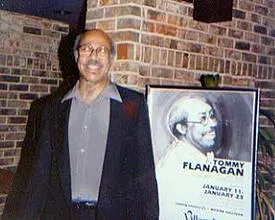
He returned to acoustic jazz in New York twice. Doldinger in New York: Street of Dreams (WEA, 1994) paired him with the pianist Tommy Flanagan, the bassist Charnett Moffett and the drummer Victor Lewis, with the vibraphonist Roy Ayers and the percussionist Don Alias as guests, and Back in New York (also issued as Blind Date, 1999) brought in the pianist Kevin Hays, the guitarist Peter Bernstein, the bassist Ira Coleman and Lewis again, with the vibraphonist Stefon Harris as a guest. In 2005 he toured Morocco with Passport and the Gnawa musician Majid Bekkas, a collaboration documented on Passport to Morocco (2006). The compilation The First 50 Years of Passport appeared in 2021, and his autobiography, Made in Germany, in September 2022. His honors included the Order of Merit of the Federal Republic of Germany (1978), a lifetime-achievement Echo Jazz (1996), the Grimme Prize special honor (2005), the Goldene Kamera (2007), the Bavarian Order of Merit (2007) and the Bavarian Maximilian Order for Science and Art (2023).
Doldinger married Inge Beck in 1960, and they had three children. From 1968 the family lived in Icking, south of Munich, where he later ran his own recording studio. He passed away at home in Icking on the evening of October 16, 2025, at the age of 89, after a period of poor health. Germany's president, Frank-Walter Steinmeier, described him as a living jazz legend whose work had given improvised music new forms of expression for decades.
Doldinger's reputation rests on two different bodies of work, and both are part of the record. As a jazz player he was a tenor saxophonist of the hard-bop and soul-jazz school, working with organ rhythm sections in the 1960s, later adding soprano saxophone, flute and keyboards. His early models were Sidney Bechet and Oscar Peterson, and AllMusic lists his styles as film score, fusion, post-bop and jazz-funk. With Passport he built a durable fusion sound out of doubled saxophones and long melodic lines over a strong groove, borrowing Brazilian, Moroccan and Latin American rhythms and early synthesizers. The band stood between jazz complexity and rock directness, and it earned a place on the American jazz charts in the late 1970s. At the same time he was a working composer of advertising music, television themes and film scores, and for most listeners outside the jazz world those scores are the music they know him by.
- Jazz Made in Germany (1963, Philips) - The quartet's debut with Ingfried Hoffmann on organ, produced by Siggi Loch, and the record that first carried Doldinger's name abroad. Spotify - Jazz Made in Germany Listen
- Live at Blue Note Berlin (1964, Philips) - The quartet in the Berlin club in which it was recorded, playing standards and originals as a working band. Spotify - Live at Blue Note Berlin Listen
- Doldinger in Südamerika (1965, Philips) - Brazilian and Latin American repertoire with the guitarist Attila Zoller, Doldinger on tenor and soprano saxophone.
- Doldinger Goes On (1967, Philips) - An expanded septet with the guitarist Volker Kriegel and the percussionist Fats Sadi, playing soul-jazz originals with Doldinger on tenor and soprano saxophone. Spotify - Doldinger Goes On Listen
- Doldinger Jubilee Concert (1974, Atlantic) - A live Passport set with Brian Auger, Johnny Griffin, Alexis Korner, Volker Kriegel and Pete York as guests.
- Cross-Collateral (1975, Atlantic) - The Doldinger, Cress, Schmid and Schultze lineup at its peak and the album that opened the United States to the band. Spotify - Cross-Collateral Listen
- Das Boot (1981, WEA) - The film score that made him known worldwide, with the main theme as its center. Spotify - Das Boot Listen
- Doldinger in New York: Street of Dreams (1994, WEA) - The return to acoustic jazz, with Tommy Flanagan, Charnett Moffett and Victor Lewis.
Klaus Doldinger: Full Discography
Discogs artist: Klaus Doldinger (41201) · Real name Klaus Erich Dieter Doldinger · Born May 12, 1936, Berlin · Died October 16, 2025, Icking · Also filed on Discogs under Passport (179059), Klaus Doldinger Quartett (595610), Motherhood (804721) and Orchester Klaus Doldinger (668748); the pseudonym Paul Nero is a separate Discogs entry
This is a selection built around the jazz records, the Passport albums and the best-known soundtracks. He appears on several hundred releases, including a large number of compilations, singles and library-music collections that are not itemized here. The full list is on Discogs. Years follow the first release; a few Wikipedia and AllMusic dates differ by one year.
Leader: the quartet years, 1963 to 1969
| Album | Year | Label (catalog) | Personnel & Notes | Listen | Buy |
|---|---|---|---|---|---|
| Jazz Made in Germany | 1963 | Philips (P 48 024 L) | Klaus Doldinger Quartet: Doldinger (tenor saxophone), Ingfried Hoffmann (organ), Helmut Kandlberger (bass), Klaus Weiss (drums). Produced by Siggi Loch, liner notes by Joachim Ernst Berendt. Includes "Bluesy Toosy," "Solar," "Well, You Needn't" and "Stars Fell on Alabama" | Spotify | — |
| Live at Blue Note Berlin | 1964 | Philips (840 444 PY) | Recorded at the Berlin club in 1963. Doldinger (tenor saxophone), Hoffmann (organ), Kandlberger (bass) and Weiss (drums) on most tracks, with Peter Trunk on bass on the closing track | Spotify | — |
| Doldinger in Südamerika | 1965 | Philips (843 728 PY) | Billed to the Klaus Doldinger Quartet plus the guitarist Attila Zoller. Doldinger (tenor and soprano saxophones), Hoffmann (organ, piano), Trunk (bass), Cees See (drums, percussion). Produced by Siggi Loch. Includes "Insensatez," "Recado," "Subo" and "Malaguena" | — | — |
| Doldinger Goes On | 1967 | Philips (843 966 PY) | Doldinger (tenor saxophone, soprano on two tracks), Hoffmann (organ, piano), Kandlberger (bass, bass guitar), Trunk (bass), See (drums), Volker Kriegel (guitar), Fats Sadi (percussion). Doldinger wrote the program, including "Shakin' the Blues" | Spotify | — |
| Blues Happening | 1969 | Liberty (LBS 83 167 I) | Billed to the Klaus Doldinger Quartet. Produced by Siggi Loch. The first side is post-bop, the second a suite that draws on free jazz and rock | — | — |
| The Ambassador | 1969 | Liberty | Double album: studio recordings and a live set from Munich's Domicile club, with Spanish and Moorish colors and the long piece "Sahara" | — | — |
Leader: Motherhood, 1969 to 1970
| Album | Year | Label (catalog) | Personnel & Notes | Listen | Buy |
|---|---|---|---|---|---|
| I Feel So Free | 1969 | United Artists (UAS 69 173 I) | Credited to the Motherhood. Produced by Siggi Loch. Includes "Soul Tiger," "Lady Madonna" and "Wade in the Water." Personnel is not itemized in the credits | — | — |
| Motherhood | 1970 | Liberty (LBS 83426 I) | Credited to Doldinger's Motherhood. Doldinger (tenor, alto and soprano saxophones, clarinet, piano, organ; producer), Lothar Meid (bass guitar), Paul Vincent (guitar) | Spotify | — |
Leader: Passport on Atlantic, 1971 to 1982
| Album | Year | Label (catalog) | Personnel & Notes | Charts | Listen | Buy |
|---|---|---|---|---|---|---|
| Passport | 1971 | Atlantic (ATL 40 299) | Doldinger (tenor, alto and soprano saxophones, Moog synthesizer, electric piano), Olaf Kübler (tenor saxophone, flute), Jimmy Jackson (organ), Lothar Meid (electric bass), Udo Lindenberg (drums) | — | — | |
| Second Passport | 1972 | Atlantic (ATL 40 417) | Doldinger (tenor and soprano saxophones, Moog, electric piano), John Mealing (electric piano, organ), Wolfgang Schmid (bass guitar, electric guitar), Bryan Spring (drums) | — | — | |
| Looking Thru | 1973 | Atlantic (ATL 50 024) | Doldinger (tenor and soprano saxophones, Moog, electric piano, Mellotron), Kristian Schultze (electric piano, organ), Schmid (bass, guitar), Curt Cress (drums, percussion). All pieces composed by Doldinger | — | — | |
| Hand Made | 1973 | Atlantic (ATL 40 483) | Doldinger, Frank Roberts (electric piano, organ), Schmid, Cress | — | — | |
| Doldinger Jubilee Concert | 1974 | Atlantic (ATL 50 070) | Live. Passport with guests Brian Auger (organ), Johnny Griffin (tenor saxophone), Alexis Korner, Volker Kriegel and Pete York. Doldinger on soprano and tenor saxophones, Schmid on bass. Produced by Siggi Loch. Includes "Handmade," "Freedom Jazz Dance" and "Rock Me Baby" | — | — | |
| Doldinger Jubilee '75 | 1975 | Atlantic (SD 18162, US) | Live. Passport with Les McCann, Philip Catherine (guitar), Johnny Griffin (tenor saxophone), Buddy Guy (guitar) and Pete York (drums). Includes "Compared to What" and "I Just Want to Make Love to You" | — | — | |
| Cross-Collateral | 1975 | Atlantic (ATL 50 111) | Doldinger (tenor and soprano saxophones, Moog, electric piano, Mellotron), Schultze (electric piano, organ), Schmid (bass, guitar), Cress (drums, percussion). Includes "Homunculus," "Jadoo" and "Albatros Song" | No. 137 US | Spotify | — |
| Infinity Machine | 1976 | Atlantic (ATL 50 254) | Doldinger (tenor and soprano saxophones, Moog, keyboards, voice), Schultze (keyboards), Schmid (bass, guitar), Cress (drums, percussion). Includes "Ju-Ju-Man" | — | — | |
| Iguaçu | 1977 | Atlantic (ATL 50 341) | Doldinger (tenor and soprano saxophones, organ, flute), Schultze, Schmid, Cress (drums, berimbau), Roy Louis (guitar), Elmer Louis (percussion). A Brazilian-flavored album | No. 191 US, No. 23 US Jazz | — | — |
| Ataraxia (released in the US as Sky Blue) | 1978 | Atlantic (ATL 50 456) | Doldinger (flute, saxophones, keyboards), Hendrik Schaper (keyboards), Dieter Petereit (bass), Willy Ketzer (drums), Roy Louis (guitar), Elmer Louis and Guillermo Marchena (percussion) | No. 140 US, No. 12 US Jazz | Spotify | — |
| Garden of Eden | 1979 | Atlantic (ATL 50 586) | Doldinger (saxophone, clarinet, keyboards), Schaper, Petereit, Ketzer, Kevin Mulligan (guitar, vocals), Kathy Bartney (vocals). Lyrics by Richard Palmer-James | No. 17 US Jazz | — | — |
| Lifelike | 1980 | Atlantic (ATL 60 150) | Double album credited to Klaus Doldinger and Passport, reworking pieces from the band's catalog. Doldinger (tenor and soprano saxophones, vocoder, keyboards, synthesizer), Petereit, David Crigger (drums), Mulligan, Schaper. One track produced by Arif Mardin | — | — | |
| Oceanliner | 1980 | Atlantic (ATL 50 688) | Doldinger (saxophones, keyboards, vocoder, Lyricon), Schaper, Petereit, Crigger, Mulligan | No. 163 US, No. 14 US Jazz | — | — |
| Blue Tattoo | 1981 | Atlantic (SD 19304, US) | Doldinger (saxophone, keyboards, synthesizer, Lyricon, vocoder), Schaper, Petereit, Crigger, Mulligan. Cover by Klaus Voormann | No. 175 US, No. 14 US Jazz | — | — |
| Earthborn | 1982 | Atlantic (ATL 50913) | Doldinger (saxophone, flute, keyboards), Petereit, Cress, Mulligan, Hermann Weindorf (keyboards, vocals) | No. 40 US Jazz | — | — |
Leader: Passport on WEA and Warner, 1983 to 2021
| Album | Year | Label | Notes | Listen | Buy |
|---|---|---|---|---|---|
| Man in the Mirror | 1983 | WEA | — | — | |
| Running in Real Time | 1985 | WEA | — | — | |
| Heavy Nights | 1986 | WEA | — | — | |
| Talk Back | 1988 | WEA | — | — | |
| Balance of Happiness | 1990 | WEA | Spotify | — | |
| Blues Roots | 1991 | WEA | A 1991 single, "Inner City Blues," featured the blues singer and guitarist Johnny Copeland | — | — |
| Down to Earth | 1993 | WEA | — | — | |
| Passport to Paradise | 1996 | WEA | — | — | |
| Move | 1998 | WEA | — | — | |
| Live | 2000 | WEA | Live album with Wolfgang Haffner (drums), Patrick Scales (bass), Peter O'Mara (guitar), Roberto Di Gioia (keyboards), Biboul Darouiche and Ernst Ströer (percussion). Doldinger on flute, soprano and tenor saxophones | — | — |
| Back to Brazil | 2003 | Warner | Spotify | — | |
| Passport to Morocco | 2006 | Warner | Documents the 2005 Moroccan tour with the Gnawa musician Majid Bekkas | — | — |
| On Stage | 2008 | Warner | Two-CD set | — | — |
| Inner Blue | 2011 | Warner | — | — | |
| Symphonic Project | 2011 | Warner | Spotify | — | |
| En Route | 2015 | Warner | — | — | |
| Doldinger | 2016 | Warner | New recordings of Passport pieces. Includes players from several eras: Cress, Schmid, Lothar Meid and Udo Lindenberg alongside Patrick Scales, Christian Lettner, Martin Scales, Michael Hornek, Roberto Di Gioia, Ernst Ströer and Biboul Darouiche | Spotify | — |
| Motherhood | 2020 | Warner | New recordings of pieces from the Motherhood period | — | — |
Leader: acoustic jazz in New York
| Album | Year | Label (catalog) | Personnel & Notes | Listen | Buy |
|---|---|---|---|---|---|
| Doldinger in New York: Street of Dreams | 1994 | WEA (4509-97577-2) | Doldinger (tenor and soprano saxophones), Tommy Flanagan (piano), Charnett Moffett (bass), Victor Lewis (drums), Don Alias (percussion on three tracks), Roy Ayers (vibraphone on four tracks). Includes "Skylark," "Alone Together," "Well You Needn't," "Speak Low" and "All Blues" | — | — |
| Back in New York (also issued as Blind Date) | 1999 | WEA (3984 26922-2) | Doldinger (tenor and soprano saxophones; wrote most of the program), Kevin Hays (piano), Ira Coleman (bass), Victor Lewis (drums), Peter Bernstein (guitar on five tracks), Stefon Harris (vibraphone on three tracks), Don Ernesto (percussion on two tracks) | — | — |
Film and television music
| Title | Year | Label (catalog) | Notes | Listen | Buy |
|---|---|---|---|---|---|
| Negresco: Eine tödliche Affäre | 1968 | Liberty | His first film soundtrack, credited to Orchester Klaus Doldinger | — | — |
| Das Boot (Die Original Filmmusik) | 1981 | WEA (WEA 58 366) | Score for Wolfgang Petersen's film. Doldinger composed, arranged and conducted | Spotify | — |
| Die unendliche Geschichte: Das Album | 1984 | German release of the NeverEnding Story score, Doldinger's orchestral music alone | Spotify | — | |
| The NeverEnding Story (Original Motion Picture Soundtrack) | 1984 | EMI America (ST-17139) | International release shared with Giorgio Moroder, who wrote the first five tracks; Doldinger wrote the rest | Spotify | — |
| Nonni und Manni | 1988 | Score for the television series | — | — | |
| Salz auf unserer Haut | 1992 | Virgin | Score for Andrew Birkin's film Salt on Our Skin | — | — |
| Peterchens Mondfahrt | 1992 | Electrola | Score for the ZDF television series | — | — |
Guest and sideman appearances (selected)
| Year | Project (Leader) | Title | Label | Catalog | Role | Notes |
|---|---|---|---|---|---|---|
| 1957 | The Feetwarmers | The Feetwarmers | Brunswick | Member of the Dixieland band | Doldinger made his first recordings with the Düsseldorf group in 1955; the instrument is not itemized on the release | |
| 1964 | George Gruntz Quintet | Bach Humbug! or Jazz Goes Baroque | Philips | 840 476 PY | Clarinet, soprano saxophone | Jazz arrangements of Baroque pieces, with Gruntz (harpsichord), Emil Mangelsdorff (flute), Peter Trunk (bass), Klaus Weiss (drums) |
| 1965 | Rita Reys and Oliver Nelson | Rita Reys Meets Oliver Nelson | Philips (Netherlands) | 840 381 PY | Tenor saxophone | Recorded in October 1965. Nelson arranged and conducted; the players included Lee Konitz (alto saxophone), Art Farmer (flugelhorn), Benny Bailey (trumpet), Sahib Shihab (baritone saxophone, flute) and Pim Jacobs (piano). Doldinger is credited on side A tracks 1 to 4 and side B tracks 1 and 5 |
Compilations and anthologies
| Title | Year | Label | Notes | Listen | Buy |
|---|---|---|---|---|---|
| So Much Doldinger | 1964 | Philips / Deutscher Schallplattenclub (E-033) | Club edition drawn from the early quartet records | — | — |
| Doldinger | 1973 | United Artists | Double-LP compilation | — | — |
| Attention! Doldinger! | 1975 | Fontana | Compilation | — | — |
| Seine erfolgreichsten Film- und Fernsehmelodien | 1987 | WEA | His best-known screen themes | Spotify | — |
| Works & Passion 1955 to 2000 | 2001 | Warner | Four-CD retrospective | — | — |
| Early Doldinger: The Complete Philips Sessions | 2006 | Philips / Boutique | Four CDs covering the 1960s quartet and related Philips recordings | — | — |
| The First 50 Years of Passport | 2021 | Warner | Remastered anniversary collection | Spotify | — |
Awards
- 1964: named jazz musician of the year in Germany
- 1976 and 1981: Deutscher Schallplattenpreis for Passport
- 1978: Order of Merit of the Federal Republic of Germany
- 1996: Echo for lifetime achievement; also Echo Jazz in 2010 as instrumentalist of the year (saxophone and woodwinds) and in 2017 for lifetime achievement
- 1997: Bavarian Film Prize, honorary award
- 2005: Adolf Grimme Prize, special honor
- 2007: Goldene Kamera, for the anniversary of Das Boot; Bavarian Order of Merit
- 2016: Deutscher Filmpreis
- 2022: lifetime honor from the German Academy for Television
- 2023: Bavarian Maximilian Order for Science and Art
- Ingfried Hoffmann, Helmut Kandlberger, Klaus Weiss - the organist, bassist and drummer of the original quartet (1962 to 1965), heard on Jazz Made in Germany and Live at Blue Note Berlin. Hoffmann stayed with Doldinger for decades.
- Peter Trunk, Cees See, Attila Zoller, Volker Kriegel - later quartet and septet members and guests of the middle 1960s.
- Siggi Loch - the producer of the quartet's first records and of the Motherhood and Passport albums, and a lifelong friend.
- Udo Lindenberg and Lothar Meid - the drummer and bassist on the first Passport album (1971) and on Motherhood. Lindenberg also played on the first recording of the Tatort theme.
- Curt Cress, Wolfgang Schmid and Kristian Schultze - the core of Passport from 1973 to 1977.
- Wolfgang Haffner, Roberto Di Gioia, Peter O'Mara, Patrick Scales, Ernst Ströer, Biboul Darouiche, Christian Lettner, Michael Hornek - later Passport members across the decades.
- Brian Auger - guest organist on the live Doldinger Jubilee Concert (1974), alongside Johnny Griffin, Alexis Korner, Volker Kriegel and Pete York.
- Les McCann, Johnny Griffin, Buddy Guy, Philip Catherine, Pete York - guests on Doldinger Jubilee '75, recorded with Passport.
- Oliver Nelson, Lee Konitz, Art Farmer, Benny Bailey, Rita Reys - the arranger and fellow players on Rita Reys Meets Oliver Nelson (1965), on which Doldinger played tenor saxophone.
- George Gruntz and Emil Mangelsdorff - fellow players on Jazz Goes Baroque (1964), on which Doldinger played clarinet and soprano saxophone.
- Tommy Flanagan, Charnett Moffett, Victor Lewis, Roy Ayers, Don Alias - the New York musicians on Doldinger in New York (1994).
- Kevin Hays, Peter Bernstein, Ira Coleman, Victor Lewis, Stefon Harris - the New York musicians on Back in New York (1999).
- Wolfgang Petersen - the director of Das Boot and The NeverEnding Story, and a frequent collaborator.
- Giorgio Moroder - wrote the English-language theme and several rescored cues for the international release of The NeverEnding Story.
- Majid Bekkas - the Gnawa musician who toured with Passport in Morocco in 2005.