 JAZZPROFILES lives in the music 1,002 Jazz Artists fully Profiled!
 Joe Pass
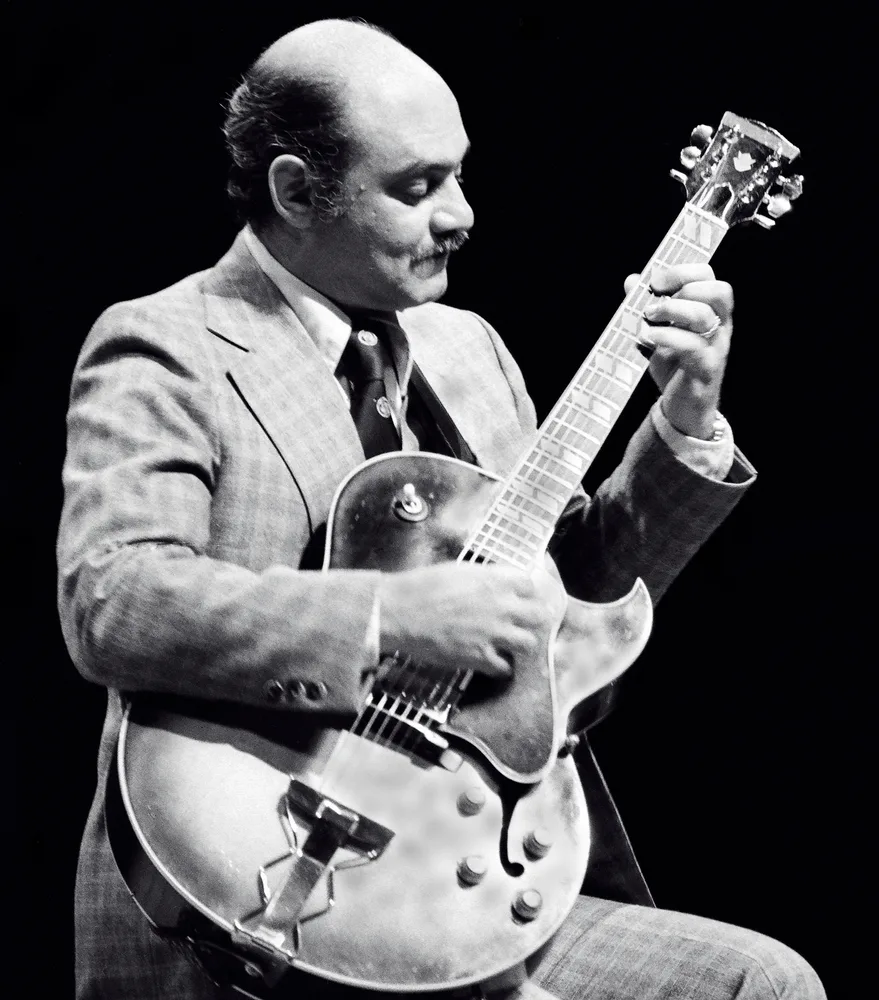
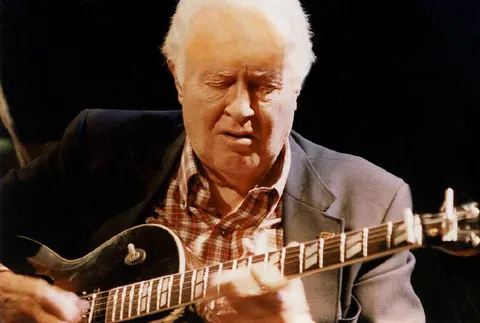
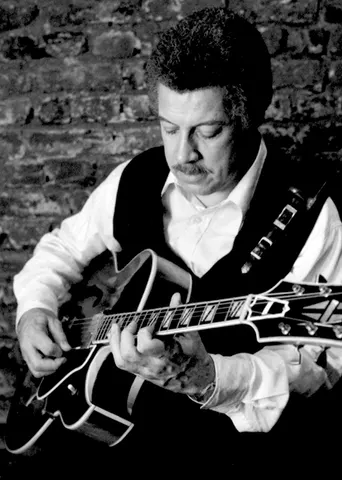
Joe Pass in performance, 1975, photographed by Tom Marcello (cropped portrait version of the original frame) CC BY-SA 2.0 (Creative Commons Attribution-Share Alike 2.0) - attribution required to Tom Marcello, Webster, New York, USA — Wikimedia Commons - https://commons.wikimedia.org/wiki/File:Joe_Pass_(jazz)_(cropped).jpg
_(cropped).jpg)
Joe Pass was born Joseph Anthony Jacobi Passalacqua on January 13, 1929, in New Brunswick, New Jersey, the son of a Sicilian-born steel-mill worker, Mariano Passalacqua. The family moved to Johnstown, Pennsylvania, and it was there, after seeing Gene Autry play guitar in the 1940 Western Ride, Tenderfoot, Ride, that he asked for an instrument of his own. He was given a Harmony guitar at nine, took weekly lessons from a local teacher for six to eight months, and practiced as much as six hours a day. He was working paid dances and weddings around Johnstown by fourteen, and by the mid-1940s he was traveling with touring bands, including work associated with Tony Pastor and Charlie Barnet, before moving to New York City. He kept playing with big bands until 1947, when he enlisted in the military.
The decade that followed nearly ended the career before it started. Pass developed a heroin addiction after his service, spent a year in New Orleans playing bebop in strip clubs, and later described a breakdown there brought on by unrestricted access to drugs. Most of the 1950s went to arrests, convictions and prison time. His own summary was blunt: staying high came first, playing came second. In 1960, with no guitar of his own and by his account thirteen cents in his pocket, he checked himself into Synanon, the Santa Monica drug rehabilitation community, and stayed two and a half years, playing constantly the whole time.
He came out of Synanon with a recording contract. Sounds of Synanon, cut for Richard Bock's Pacific Jazz label and released on July 1, 1962, was made with fellow residents of the facility, and Pass played it on a borrowed solid-body electric because he still did not own an instrument. Leonard Feather reviewed it in the July 5, 1962 issue of DownBeat and wrote that the album did more than present a group of good musicians, it unveiled a star. Pass took the New Star award in DownBeat's eleventh annual Critics Poll the following year. Pacific Jazz kept him busy: Catch Me! with pianist Clare Fischer in 1963, For Django in 1964 with second guitarist John Pisano, and Simplicity in 1967. A February 1964 quartet session with pianist Mike Wofford went unissued for seventeen years before Blue Note released it as Joy Spring in 1981.
Through the middle and late 1960s Pass was largely a Los Angeles studio player. He appeared on Pacific Jazz dates for Gerald Wilson, Bud Shank, Les McCann and organist Richard "Groove" Holmes, worked in television orchestras, and spent 1965 to 1967 as a member of the George Shearing Quintet. His one record of the period made outside that ecosystem is among his best: Intercontinental, taped at the MPS studio in Villingen, West Germany in June 1970 with bassist Eberhard Weber and drummer Kenny Clare, an unusual document of Weber playing straight-ahead standards.
Everything changed when Norman Granz built Pablo Records around a roster of veteran players and put Pass at the center of it. His first date for the label was Duke Ellington's Duke's Big 4, recorded in Los Angeles on January 8, 1973 with Ray Brown and Louie Bellson. On a single day, August 28, 1973, Pass recorded two of the records he is still best known for: the duo session with Ella Fitzgerald that became Take Love Easy, and an unaccompanied solo program that Pablo issued as Virtuoso. That solo album, forty minutes of standards played with melody, bass line and chord voicings running at once and no overdubs, became the reference point for the entire idea of solo jazz guitar, and Pass extended it into a numbered series that ran to Virtuoso No. 4 and, posthumously, Virtuoso in New York.
The Pablo years put him in nearly every combination Granz could assemble. The Trio, taped at the London House in Chicago in May 1973 with Oscar Peterson and the Danish bassist Niels-Henning Ørsted Pedersen, won the 1975 Grammy Award for Best Jazz Performance by a Group, and the Peterson partnership continued in duo (Porgy and Bess, 1976), trio and festival settings into the 1980s. He made four studio duo albums with Fitzgerald across thirteen years. He recorded with Milt Jackson and Ray Brown as The Big 3 and, with Mickey Roker added, as Quadrant; with fellow guitarist Herb Ellis for both Pablo and the young Concord Jazz label; with Zoot Sims on the duo record Blues for 2; with pianist Jimmy Rowles on Checkmate; and on Jazz at the Philharmonic and Pablo jam dates alongside Benny Carter, Clark Terry, Roy Eldridge, Dizzy Gillespie and Count Basie. The one full detour was Tudo Bem! in May 1978, a Brazilian session with percussionist Paulinho da Costa and guitarist Oscar Castro-Neves.
Pass was diagnosed with liver cancer in 1992. He responded to treatment at first and kept working into 1993, but the illness forced him to cancel a planned tour with the classical and flamenco guitarists Pepe Romero and Paco Peña and the fingerstyle player Leo Kottke. The last two studio projects were an all-acoustic solo album recorded in Hollywood in August 1992 and released as Songs for Ellen, its title track a ballad written for his wife, and a set of Hank Williams songs cut with country guitarist Roy Clark on January 26 and 27, 1994, his final session. He played in public for the last time on May 7, 1994, at a Los Angeles club, with John Pisano beside him; Pisano told Guitar Player that afterward Pass said he could not play anymore. He passed away in Los Angeles sixteen days later, on May 23, 1994, at 65. Two signature instruments carry his name: the Ibanez JP20 archtop, introduced in 1982, and the Epiphone Joe Pass Emperor II, released in 1994 shortly before his death and produced until 2015.
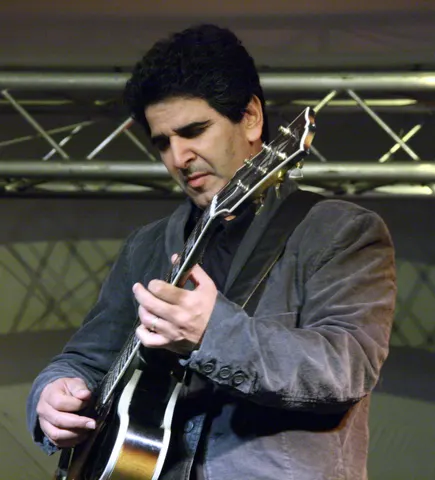
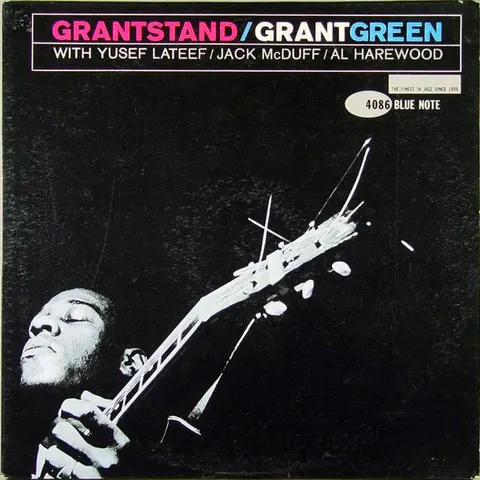
Pass built a solo style out of a bebop single-line player's vocabulary and a pianist's sense of harmony, and the combination is what made the unaccompanied records possible: melody, moving bass line and chord voicings sounding at once, in tempo or freely, without loops, overdubs or effects. His technique was conventional in the sense that nothing exotic was involved, only fingerpicking, hybrid picking and flatpicking used interchangeably at very high speed, and a tone that writers reached for wind instruments to describe. The educator Wolf Marshall called his playing "hornlike," with single-note improvisations running like a saxophonist's stream of consciousness, and a tougher blues-and-R&B streak surfaces in his string bends, double stops and partial chords. Only three of the players he named as influences were guitarists: Charlie Christian, Django Reinhardt and Wes Montgomery. The rest were horn players and pianists, Dizzy Gillespie, Charlie Parker, Art Tatum and Coleman Hawkins early on, and later Oscar Peterson. Scott Yanow has called him the ultimate bebop guitarist and the epitome of virtuoso guitarists, and Miles Kington, writing in The Times in October 1974, singled out the solo half of his sets, where without a rhythm section he could orchestrate a tune entirely by himself. His reach into the next generations of guitarists is direct and often stated: the Israeli-American guitarist Roni Ben-Hur, for one, names Pass alongside Wes Montgomery, Grant Green, Jim Hall and Kenny Burrell as the American guitar tradition he grew up listening to.
- Virtuoso (1974, Pablo) - Recorded solo in Los Angeles on August 28, 1973, with no accompaniment and no overdubs, and still the record most often named when the subject is solo jazz guitar. Apple Music - Virtuoso Listen
- The Trio (1974, Pablo) - Taped live at the London House in Chicago in May 1973 with Oscar Peterson and Niels-Henning Ørsted Pedersen; winner of the 1975 Grammy Award for Best Jazz Performance by a Group. Apple Music - The Trio
- Take Love Easy (1974, Pablo) - The first of four studio duo albums with Ella Fitzgerald, cut the same day as Virtuoso and reduced to voice and one guitar. Apple Music - Take Love Easy Listen
- For Django (1964, Pacific Jazz) - His Django Reinhardt tribute quartet date with John Pisano, Jim Hughart and Colin Bailey, and the sharpest surviving portrait of the early plectrum-era Pass. Apple Music - For Django Listen
- Catch Me! (1963, Pacific Jazz) - His second album and the one that made the case for him as a bebop soloist, with Clare Fischer on piano and organ. Apple Music - Catch Me! Listen
- Intercontinental (1970, MPS) - Recorded in Villingen in June 1970 with Eberhard Weber and Kenny Clare, a trio record that catches him between the studio years and the Pablo years. Spotify - Intercontinental Listen
- I Remember Charlie Parker (1979, Pablo Today) - Solo guitar readings of ballads associated with Parker, produced by Norman Granz, who also wrote the liner notes. Apple Music - I Remember Charlie Parker Listen
- Portraits of Duke Ellington (1975, Pablo) - A trio date from June 21, 1974 with Ray Brown and Bobby Durham, working entirely through Ellington's book. Apple Music - Portraits Of Duke Ellington
Joe Pass: Full Discography
Identity confirmed via the live Discogs API: artist ID 104673 (realname given there as "Joseph Anthony Jacobi Passalaqua," born January 13, 1929 in New Brunswick, New Jersey, died May 23, 1994 in Los Angeles). Discogs credits Pass on several hundred releases across five decades; the overwhelming majority are reissues, foreign pressings, festival anthologies and guest appearances rather than distinct sessions, and Pablo Records alone accounts for dozens of titles. This is a curated list of his significant leader and co-leader dates plus a representative set of major sideman credits, not an exhaustive reproduction of the release list.
Recording dates, locations and personnel below were taken from individual Discogs release pages fetched one at a time, and cross-checked against the JazzDisco.org session-by-session listings for Pablo Records, which are more precise about session dates than any release-level source. Where the two disagree, both readings are given rather than one being picked silently. Spotify's catalogue could not be searched for Pass, so a Spotify URL is asserted only where one could be confirmed independently; every other cell reads the same placeholder as the Buy column.
As Leader / Co-Leader
| Album Title | Recording Date(s) | Release Date | Label | Catalog Number | Format(s) | Personnel | Role | Reissue History | Spotify | Buy | Notes |
|---|---|---|---|---|---|---|---|---|---|---|---|
| Sounds of Synanon | 1962, Pacific Jazz Studios, Hollywood | July 1, 1962 | Pacific Jazz | PJ-48 / ST-48 | Vinyl, LP, Album | Joe Pass (guitar), Arnold Ross (piano), Ronald Clark (bass), Bill Crawford (drums), Dave Allen (trumpet), Greg Dykes (baritone horn), Candy Latson (bongos); produced by Richard Bock | Leader | Reissued on Pacific Jazz vinyl in 1978; Liberty and Fontana pressings in Japan, the Netherlands and New Zealand | — | — | His debut, recorded with fellow residents of the Synanon rehabilitation community. Pass owned no instrument at the time and played a borrowed solid-body electric. Leonard Feather's DownBeat review of July 5, 1962 called it the unveiling of a star |
| Catch Me! | 1963, Pacific Jazz Studios, Hollywood | 1963 | Pacific Jazz | PJ-73 / ST 73 | Vinyl, LP, Album, Stereo | Joe Pass (guitar), Clare Fischer (piano, organ), Albert Stinson (bass, most tracks), Ralph Peña (bass, three tracks), Colin Bailey (drums, most tracks), Larry Bunker (drums, three tracks); produced by Richard Bock, engineered by Dino Lappas, liner notes by John William Hardy | Leader | CD reissues on Pacific Jazz in Japan (2007); Japanese vinyl reissue 1979 | — | — | Billed on the sleeve as "Joe Pass Featuring Clare Fischer." Two separate rhythm sections split the album, confirmed from the track-level Discogs credit block |
| Joy Spring | February 6, 1964, Los Angeles | 1981 | Blue Note | LT-1103 | Vinyl, LP, Album | Joe Pass (guitar), Mike Wofford (piano), Jim Hughart (bass), Colin Bailey (drums); original session produced by Richard Bock, prepared for release by Pete Welding | Leader | CD reissue on Pacific Jazz, 1995 | — | — | Recorded for Pacific Jazz in 1964 and shelved; unissued for seventeen years until Blue Note's Classic series released it. Some secondary discographies date the album 1964, which is the session, not the release |
| For Django | 1964, Pacific Jazz Studios, Hollywood | 1964 | Pacific Jazz | 85 / ST-85 | Vinyl, LP, Album, Stereo | Joe Pass (guitar), John Pisano (guitar), Jim Hughart (bass), Colin Bailey (drums); produced by Richard Bock, sleeve notes by Mort Fega | Leader | Reissued on vinyl and CD in Japan (1978, 2006, 2014) and Argentina; Fontana and Victor pressings abroad | — | — | A Django Reinhardt tribute and the best-regarded of the Pacific Jazz quartet dates |
| A Sign of the Times | 1965 | 1965 | World Pacific | WP-1844 (not independently confirmed) | Vinyl, LP, Album | Full personnel not confirmed | Leader | Reissued on CD paired with Simplicity by Euphoria Records, 2002 | — | — | Catalog number could not be verified at release level and is flagged rather than asserted |
| The Stones Jazz | July 1966, Los Angeles | 1967 | World Pacific | Not confirmed | Vinyl, LP, Album | Full personnel not confirmed | Leader | None found | — | — | An album of Rolling Stones material, cut during his tenure with the George Shearing Quintet |
| Simplicity | 1967 | 1967 | World Pacific | WP-1865 (mono) / WPS-21865 (stereo) | Vinyl, LP, Album | Joe Pass (guitar); produced by Jack Tracy, engineered by Jack Hunt, liner notes by Jim Gosa, cover photography by David Gooley. The Discogs credit block lists production and art staff but no sidemen, so the band is not confirmed here | Leader | Pacific Jazz vinyl reissue 1981; Japanese CD reissue 2011; paired with A Sign of the Times on CD by Euphoria, 2002 | — | — | The credit block on this release has a personnel gap rather than a solo-guitar program; absence of sidemen on Discogs is not evidence there were none |
| Intercontinental | June 1970, MPS-Tonstudio, Villingen, West Germany | 1970 | MPS Records | MPS 15 279 ST | Vinyl, LP, Album | Joe Pass (guitar), Eberhard Weber (bass), Kenny Clare (drums); produced by Hans Georg Brunner-Schwer, engineered by Rolf Donner, recording supervision by Willi Fruth | Leader | Pausa "DBX" encoded pressing 1974; MPS reissues in Spain, Mexico, the UK and Australia; Japanese CD 2000 | Spotify - Intercontinental | — | Mostly swing and Latin standards, plus the country-pop hit "Ode to Billie Joe." A rare document of Eberhard Weber playing straight-ahead standards |
| The Trio (with Oscar Peterson and Niels-Henning Ørsted Pedersen) | May 1973, the London House, Chicago | 1974 | Pablo | 2310 701 / 2310-701 | Vinyl, LP, Album, Stereo | Oscar Peterson (piano), Joe Pass (guitar), Niels-Henning Ørsted Pedersen (bass); produced by Norman Granz, liner notes by Benny Green, cover photograph by Jean-Pierre Leloir | Co-leader | CD reissues on Pablo from 1989; cassette and European pressings | — | — | Won the Grammy Award for Best Jazz Performance by a Group in 1975. Wikipedia's article on the album dates the sessions to May 16 to 19, 1973; the Discogs release page says only "the London House, Chicago, 1973" |
| Virtuoso | August 28, 1973, Los Angeles | 1974 | Pablo | 2310 708 / 2310-708 | Vinyl, LP, Album | Joe Pass (solo guitar); produced by Norman Granz, engineered by Dennis Sands | Leader | Reissued repeatedly on vinyl and CD from 1987; French, Japanese and US pressings; 2025 remaster | — | — | Solo guitar, no overdubs. The reference recording for the entire solo-jazz-guitar idea. Wikipedia's album article dates the release 1973, but both Discogs and the JazzDisco Pablo session listings put the LP in 1974 |
| Take Love Easy (with Ella Fitzgerald) | August 28, 1973, Los Angeles | 1974 | Pablo | 2310 702 / 2310-702 | Vinyl, LP, Album | Ella Fitzgerald (vocals), Joe Pass (guitar); produced by Norman Granz, engineered by Raphael Valentin, liner notes by Benny Green, photography by Phil Stern | Co-leader (duo) | CD reissues in Japan from 1985 and the US thereafter; Scandinavian vinyl 1983 | — | — | Recorded the same day as Virtuoso. The first of four studio duo albums with Fitzgerald |
| Jazz/Concord (with Herb Ellis, Ray Brown, Jake Hanna) | 1974, Wally Heider Studios, Los Angeles | 1974 | Concord Jazz | CJS-1 | Vinyl, LP, Album, Stereo | Herb Ellis (guitar), Joe Pass (guitar), Ray Brown (bass), Jake Hanna (drums); produced by the Concord Summer Festival Association, liner notes by Philip Elwood | Co-leader | Reissued on vinyl in Italy and Japan; CD reissues on Concord Jazz | — | — | The first release in the Concord Jazz catalog, catalog number 1 |
| Seven, Come Eleven (with Herb Ellis) | July 29, 1973, live at Concord Boulevard Park, Concord, California | 1974 | Concord Jazz | CJ-2 | Vinyl, LP, Album, Stereo | Herb Ellis (guitar), Joe Pass (guitar), Ray Brown (bass), Jake Hanna (drums); recorded, mixed and mastered by Phil Edwards, liner notes by Philip Elwood | Co-leader | CD reissue on Concord Jazz (CCD-6002); Japanese and Australian pressings | — | — | Recorded live at the Concord Summer Festival a year before its release, and the label's catalog number 2 |
| Two for the Road (with Herb Ellis) | January 30 to February 20, 1974 | 1974 | Pablo | 2310-714 | Vinyl, LP, Album | Herb Ellis (guitar), Joe Pass (guitar); produced by Norman Granz | Co-leader (duo) | Original Jazz Classics CD reissue | — | — | Session dates per the JazzDisco Pablo listings |
| Portraits of Duke Ellington | June 21, 1974 | 1975 | Pablo | 2310 716 / 2310-716 | Vinyl, LP, Album, Stereo | Joe Pass (guitar), Ray Brown (bass), Bobby Durham (drums); produced by Norman Granz, liner notes by Benny Green, photography by Phil Stern | Leader | Vinyl reissue 1987; Japanese CD reissues 1985 and 1991; German Pablo Live pressing | — | — | An all-Ellington trio program |
| Live at Donte's | December 8 and 9, 1974, Donte's, North Hollywood | 1981 | Pablo Live | 2620-114 | Vinyl, LP, Album (gatefold, 2LP) | Joe Pass (guitar), Jim Hughart (Fender bass), Frank Severino (drums); engineered by Angel Balestier and Dennis Sands, liner notes by Joe Pass and Norman Granz | Leader | CD reissue 1986 and 2002; Canadian and German pressings | — | — | Held back seven years before release. A second night from the same December 1974 residency was issued in 2000 as Resonance |
| Oscar Peterson et Joe Pass à Salle Pleyel | March 17, 1975, Salle Pleyel, Paris | 1975 | Pablo | 2625-705 | Vinyl, 2LP, Album | Oscar Peterson (piano), Joe Pass (guitar) | Co-leader (duo) | Original Jazz Classics reissues | — | — | The first full duo concert record with Peterson |
| Joe Pass at the Montreux Jazz Festival 1975 | July 17 and 18, 1975, Montreux Jazz Festival | 1975 | Pablo | 2310-752 | Vinyl, LP, Album | Joe Pass (solo guitar); produced by Norman Granz | Leader | Original Jazz Classics CD reissue | — | — | Solo guitar in front of a festival audience, the live counterpart to the Virtuoso studio series |
| The Big 3 (with Milt Jackson and Ray Brown) | August 25, 1975, Cherokee Studios, Los Angeles | February 1976 | Pablo | 2310-757 | Vinyl, LP, Album, Stereo | Milt Jackson (vibraphone), Joe Pass (guitar), Ray Brown (bass); produced by Norman Granz, liner notes by Benny Green, photography by Phil Stern, cover and layout by Gribbitt! | Co-leader | Original Jazz Classics reissues; Japanese, Canadian, French and German pressings | — | — | A drummerless trio, and the format Granz returned to repeatedly across the Pablo years |
| Porgy and Bess (with Oscar Peterson) | January 26, 1976, RCA Studios, Los Angeles | 1976 | Pablo | 2310-779 | Vinyl, LP, Album | Oscar Peterson (clavichord), Joe Pass (guitar) | Co-leader (duo) | Original Jazz Classics reissues | — | — | Peterson plays clavichord rather than piano throughout |
| Fitzgerald & Pass... Again (with Ella Fitzgerald) | January 29 and 30 and February 8, 1976, RCA Studios, Los Angeles | 1976 | Pablo | 2310-772 | Vinyl, LP, Album, Stereo | Ella Fitzgerald (vocals), Joe Pass (guitar); produced by Norman Granz, liner notes by Benny Green, photography by Phil Stern, layout by Gribbitt! | Co-leader (duo) | CD reissue on Pablo (PACD-2310-772-2), 1988; Spanish, French and UK pressings | Spotify - Fitzgerald & Pass...Again | — | The second Fitzgerald duo album |
| Virtuoso No. 2 | September 14 and October 26, 1976, RCA Studios, Los Angeles | 1977 | Pablo | 2310-788 | Vinyl, LP, Album | Joe Pass (solo guitar); produced by Norman Granz | Leader | Original Jazz Classics reissues | — | — | Second in the solo series |
| Quadrant (with Milt Jackson, Ray Brown, Mickey Roker) | February 4, 1977, Sunwest Recording Studios, Los Angeles | 1979 | Pablo | 2310-837 / 2310 837 | Vinyl, LP, Album | Milt Jackson (vibraphone), Joe Pass (guitar), Ray Brown (bass), Mickey Roker (drums); produced by Norman Granz, engineered by Val Valentin, liner notes by Benny Green | Co-leader | Original Jazz Classics CD (OJCCD-498-2), 1990; cassette and remastered vinyl 1990 | — | — | Credited on some pressings to the band name Quadrant. Held two years between session and release |
| Montreux '77 | July 15, 1977, Mountain Studios, Montreux Jazz Festival | 1977 | Pablo Live | 2308-212 | Vinyl, LP, Album | Joe Pass (solo guitar) | Leader | Original Jazz Classics OJC-382 / OJCCD-382-2, 1989 | — | — | A second solo Montreux set, two years after the first |
| Tudo Bem! (with Paulinho da Costa) | May 8, 1978, Los Angeles | 1978 | Pablo | 2310 824 | Vinyl, LP, Album, Stereo | Joe Pass (guitar), Oscar Castro-Neves (guitar), Don Grusin (keyboards), Octavio Bailly (bass), Claudio Slon (drums), Paulinho da Costa (percussion); produced by Norman Granz, engineered by Val Valentin | Co-leader | Original Jazz Classics CD (OJCDD 685-2), 1992; Japanese CD 1985; Brazilian, German and UK vinyl | — | — | His one full Brazilian session. Personnel taken from the JazzDisco Pablo session listing; the Discogs credit blocks for the Brazilian and UK pressings carry the production staff but no band |
| Chops (with Niels-Henning Ørsted Pedersen) | November 19, 1978, Chappell Recording Studios, London | 1979 | Pablo | 2310 830 | Vinyl, LP, Album | Joe Pass (guitar), Niels-Henning Ørsted Pedersen (bass); produced by Norman Granz | Co-leader (duo) | Original Jazz Classics CD (OJCCD-786-2), 1993; vinyl reissues 2014 and 2015 | — | — | Guitar and bass with no other instruments |
| I Remember Charlie Parker | February 1979, Los Angeles | 1979 | Pablo Today | 2312 109 | Vinyl, LP, Album | Joe Pass (solo guitar); produced by Norman Granz, who also wrote the liner notes and did the layout; engineered by Val Valentin, photography by Phil Stern | Leader | Original Jazz Classics CD (OJCCD 602-2), 1990 and 1995 | — | — | Solo ballad readings of Parker-associated material. The Discogs release page gives the session as February 19, 1979 at Group IV, Hollywood; the JazzDisco Pablo listing gives February 17, 1979. The discrepancy is unresolved and neither date is asserted alone |
| Northsea Nights (with Niels-Henning Ørsted Pedersen) | July 14, 1979, North Sea Jazz Festival, The Hague | 1980 | Pablo Live | 2308-221 | Vinyl, LP, Album | Joe Pass (guitar), Niels-Henning Ørsted Pedersen (bass) | Co-leader (duo) | Original Jazz Classics reissues | — | — | The live counterpart to Chops |
| All Too Soon: The Duke Ellington Album | January 21, 1980, Group IV Studios, Los Angeles | 1980 | Pablo Today | 2312-117 | Vinyl, LP, Album | Milt Jackson (vibraphone), Joe Pass (guitar), Ray Brown (bass), Mickey Roker (drums) | Co-leader | Original Jazz Classics reissues | — | — | The Quadrant band returning to Ellington repertoire |
| Checkmate (with Jimmy Rowles) | January 12, 1981, Spectrum Studios, Venice, California | 1981 | Pablo | 2310-865 | Vinyl, LP, Album | Jimmy Rowles (piano), Joe Pass (guitar) | Co-leader (duo) | Original Jazz Classics reissues | — | — | Piano and guitar duo |
| Ira, George and Joe | November 23, 1981, Los Angeles | 1981 | Pablo Today | 2312-133 | Vinyl, LP, Album | Joe Pass (guitar), John Pisano (rhythm guitar), Jim Hughart (bass), Shelly Manne (drums) | Leader | Original Jazz Classics reissues | — | — | A Gershwin program. Shelly Manne's only documented session with Pass as leader |
| Blues for 2 (with Zoot Sims) | March 6 and June 23, 1982, RCA Studios, New York | 1983 | Pablo | 2310-879 / D2310879 | Vinyl, LP, Album | Zoot Sims (saxophone), Joe Pass (guitar, liner notes); produced by Norman Granz, engineered by Mike Moran, photography by Phil Stern | Co-leader (duo) | Original Jazz Classics OJC-635, 1991; Japanese CD 1985; limited numbered vinyl reissue 2025 | — | — | Tenor saxophone and guitar with no rhythm section. Pass wrote the liner notes himself |
| Eximious (with Niels-Henning Ørsted Pedersen) | May 25 and July 8, 1982, Group IV Studios, Los Angeles | 1982 | Pablo | 2310-877 | Vinyl, LP, Album | Joe Pass (guitar), Niels-Henning Ørsted Pedersen (bass), Martin Drew (drums) | Co-leader | Original Jazz Classics reissues | — | — | The Ørsted Pedersen duo expanded to a trio |
| Virtuoso No. 4 | November 1973, MGM Studios, Los Angeles | 1983 | Pablo Live | 2640-102 | Vinyl, 2LP, Album | Joe Pass (solo guitar); produced by Norman Granz | Leader | Remastered CD 1993 | — | — | Recorded a decade before release, weeks after the original Virtuoso session, and issued last in the numbered series |
| Speak Love (with Ella Fitzgerald) | 1983 | 1983 | Pablo | 2310-888 (not independently confirmed) | Vinyl, LP, Album | Ella Fitzgerald (vocals), Joe Pass (guitar) | Co-leader (duo) | CD reissues on Pablo | — | — | Third Fitzgerald duo album. Catalog number not verified at release level and flagged rather than asserted |
| Whitestone | February 28 and March 1, 1985, Studio Sound Recorders, North Hollywood | 1985 | Pablo | 2310-912 | Vinyl, LP, Album | Joe Pass (guitar), John Pisano (rhythm guitar, associate producer), Don Grusin (keyboards), Abraham Laboriel (bass, five tracks), Nathan East (bass, three tracks), Harvey Mason (drums), Paulinho da Costa (percussion); produced by Bob Edmondson, engineered by Steve Mitchell | Leader | CD and cassette issues on Pablo, Germany; Japanese vinyl 1985 | — | — | His most production-heavy record, with a Los Angeles session rhythm section. The two bassists split the album track by track, confirmed from the Discogs credit block |
| Easy Living (with Ella Fitzgerald) | 1986 | 1986 | Pablo | Not confirmed | CD, Album | Ella Fitzgerald (vocals), Joe Pass (guitar) | Co-leader (duo) | CD reissues on Pablo | — | — | The last of the four Fitzgerald duo albums |
| After Hours (with André Previn and Ray Brown) | 1989 | 1989 | Telarc | Not confirmed | CD, Album | André Previn (piano), Joe Pass (guitar), Ray Brown (bass) | Co-leader | None found | — | — | One of very few Pass records made outside the Pablo system in his later years |
| Joe Pass Quartet Live at Yoshi's | January 30 and 31 and February 1, 1992, Yoshi's, Oakland, California | 1993 | Pablo | PACD-2310-951-2 | CD, Album | Joe Pass (guitar), John Pisano (acoustic and electric guitar), Monty Budwig (bass), Colin Bailey (drums); produced by Eric Miller, engineered by David Luke, mastered by George Horn, liner notes by Jeff Levenson | Leader | Japanese CD 1994; European and US pressings | — | — | Budwig died not long after these nights. A second volume, Nuages, was drawn from the same run and issued posthumously in 1997 |
| Songs for Ellen | August 7, 11 and 20, 1992, Hollywood | 1994 | Pablo | PACD 2310-955-2 | CD, Album | Joe Pass (acoustic guitar, solo); produced by Eric Miller, recorded and engineered by Angel Balestier, digital editing and transfer by David Luke, liner notes by Josef Woodard | Leader | European pressing (CD 2310.955) | — | — | All-acoustic solo guitar, recorded direct to digital in the same August 1992 run that produced Unforgettable. The title track is a ballad written for his wife. Released posthumously |
| Roy Clark & Joe Pass Play Hank Williams (with Roy Clark) | January 26 and 27, 1994 | 1994 | Buster Ann Music | 1001-CD | CD, Album | Roy Clark (electric guitar), Joe Pass (electric guitar), John Pisano (rhythm guitar), Jim Hughart (bass), Colin Bailey (drums); produced by Ralph Jungheim, engineered by Jim Mooney, liner notes by Kirk Silsbee | Co-leader | Reissued on Ranwood (1014-2), 1995 | — | — | Pass's final recording session, four months before his death, per the Discogs release notes |
As Sideman (selected major credits, not exhaustive)
| Year | Project (Leader) | Title | Label | Catalog | Role | Notes |
|---|---|---|---|---|---|---|
| 1962 | Richard "Groove" Holmes | After Hours | Pacific Jazz | Not confirmed | Guitar | One of several Pacific Jazz organ-combo dates Pass played early on; Somethin' Special followed the same year |
| 1962 | Les McCann | On Time | Pacific Jazz | Not confirmed | Guitar | |
| 1962 | Gerald Wilson | Moment of Truth | Pacific Jazz | Not confirmed | Guitar | The first of four Gerald Wilson big-band albums Pass appears on, through Everywhere in 1968 |
| 1962 | Johnny Griffin | Grab This! | Riverside | Not confirmed | Guitar | |
| 1963 | Bud Shank and Clare Fischer | Brasamba! | Pacific Jazz | Not confirmed | Guitar | Co-billed on some pressings, which is why Wikipedia's discography files it under leader dates |
| 1965 | Julie London | All Through the Night: Julie London Sings the Choicest of Cole Porter | Liberty | Not confirmed | Guitar | A studio date from his Los Angeles session years |
| 1970 | Chet Baker | Blood, Chet and Tears | Verve | Not confirmed | Guitar | |
| 1972 | Carmen McRae | The Great American Songbook | Atlantic | Not confirmed | Guitar | It Takes a Whole Lot of Human Feeling followed in 1973 |
| 1974 | Duke Ellington | Duke's Big 4 | Pablo | 2310 703 | Guitar | Recorded January 8, 1973 in Los Angeles with Ray Brown (bass) and Louis Bellson (drums). Pass's first Pablo session and one of Ellington's last small-group dates |
| 1974 | Ella Fitzgerald | Ella in London | Pablo | Not confirmed | Guitar | Recorded live at Ronnie Scott's; Fine and Mellow comes from the same year |
| 1975 | Dizzy Gillespie | Dizzy Gillespie's Big 4 | Pablo | 2310-719 | Guitar | Recorded September 17 to 19, 1974 at Cherokee Studios, Los Angeles, with Ray Brown and Mickey Roker |
| 1975 | Roy Eldridge | Happy Time | Pablo | 2310-746 | Guitar | Recorded June 4, 1975 in New York with Oscar Peterson, Ray Brown and Eddie Locke |
| 1975 | Zoot Sims | Zoot Sims and the Gershwin Brothers | Pablo | 2310-744 | Guitar | Recorded June 6, 1975 at RCA Studios, New York, with Oscar Peterson, George Mraz and Grady Tate |
| 1975 | Oscar Peterson | The Oscar Peterson Big 6 at Montreux | Pablo | 2310-747 | Guitar | Recorded July 16, 1975 with Toots Thielemans, Milt Jackson, Niels-Henning Ørsted Pedersen and Louis Bellson |
| 1976 | Benny Carter | The King | Pablo | 2310-768 | Guitar | Recorded February 11, 1976 at RCA Studios, Los Angeles, with Milt Jackson, Tommy Flanagan, John B. Williams and Jake Hanna |
| 1976 | Benny Carter and Dizzy Gillespie | Carter, Gillespie Inc. | Pablo | 2310-781 | Guitar | Recorded April 27, 1976 with Tommy Flanagan, Al McKibbon and Mickey Roker |
| 1977 | Count Basie | Basie Jam #2 | Pablo | 2310-786 | Guitar | Recorded May 6, 1976 with Clark Terry, Al Grey, Benny Carter, Eddie "Lockjaw" Davis, John Heard and Louis Bellson |
| 1978 | Sarah Vaughan | How Long Has This Been Going On? | Pablo | Not confirmed | Guitar | With Oscar Peterson, Ray Brown and Louis Bellson |
| 1979 | Oscar Peterson and Stéphane Grappelli | Skol | Pablo Live | 2308-232 | Guitar | Recorded July 6, 1979 at the Tivoli Concert Hall, Copenhagen, with Niels-Henning Ørsted Pedersen and Mickey Roker |
| 1980 | Clark Terry | Memories of Duke | Pablo | Not confirmed | Guitar | The Alternate Blues, with Freddie Hubbard, Dizzy Gillespie and Oscar Peterson, comes from the same period |
| 1983 | Count Basie | Mostly Blues... and Some Others | Pablo | Not confirmed | Guitar | |
| 1986 | Oscar Peterson and Benny Carter | Benny Carter Meets Oscar Peterson | Pablo | Not confirmed | Guitar | One of a cluster of mid-1980s Peterson albums Pass appears on, alongside Time After Time and the Harry Edison and Eddie "Cleanhead" Vinson session |
| 1988 | Benny Carter | My Kind of Trouble | Pablo | Not confirmed | Guitar |
Notes on coverage
Pass's Pablo catalog is large enough that a complete listing would run to well over a hundred entries once live albums, Jazz at the Philharmonic anthologies, Montreux festival sets and Original Jazz Classics reissues are counted. Titles deliberately left out of the tables above include the later solo and small-group Pablo albums Blues for Fred (1988), One for My Baby (1988), Summer Nights (1990), Appassionato (1991), Duets with John Pisano (1991), Virtuoso Live! (1991) and My Song (Telarc, 1993); the Polytone albums with accordionist Tommy Gumina; the posthumous Pablo releases Nuages (1997), Unforgettable (1998), Resonance (2000), What Is There to Say (2001), Meditation: Solo Guitar (2002) and Virtuoso in New York (2004); and the many Pablo jam-session and festival records on which he is one name among eight or ten. Catalog numbers marked "Not confirmed" are ones no individual release page could verify, and are left unstated rather than copied from a secondary list.
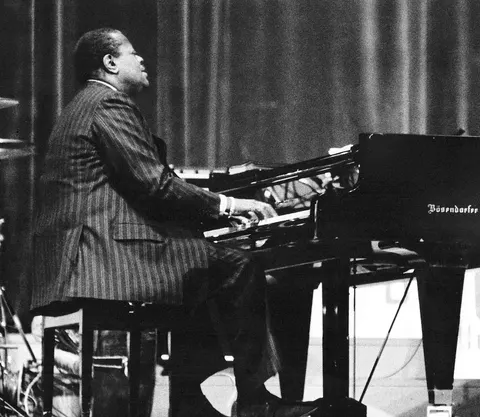
- Oscar Peterson (piano) - The longest and most productive of his partnerships, from The Trio (recorded May 1973) through the Salle Pleyel duo concert of March 17, 1975, the clavichord-and-guitar Porgy and Bess of January 26, 1976, The Paris Concert of October 5, 1978 and a long run of Pablo festival and jam dates into the 1980s.
- Ella Fitzgerald (vocals) - Four studio duo albums for Pablo: Take Love Easy (recorded August 28, 1973), Fitzgerald & Pass... Again (January and February 1976), Speak Love (1983) and Easy Living (1986), plus her Pablo group and live records of the mid-1970s.
- Niels-Henning Ørsted Pedersen (bass) - The third voice in the Peterson trio and Pass's own duo partner on Chops (Chappell Studios, London, November 19, 1978) and Northsea Nights (July 14, 1979), and part of the trio on Eximious (1982).
- Ray Brown (bass) - On Duke's Big 4 (January 1973), Portraits of Duke Ellington (June 1974), The Big 3 (August 1975), Quadrant (February 1977), All Too Soon (January 1980), the Concord dates with Herb Ellis, and the Telarc trio album After Hours (1989).
- Herb Ellis (guitar) - Two-guitar partner on Jazz/Concord and the live Seven, Come Eleven (recorded July 29, 1973 at Concord Boulevard Park), both foundational releases for the Concord Jazz label, and on Pablo's Two for the Road (1974).
- Milt Jackson (vibraphone) - The Big 3 with Ray Brown (Cherokee Studios, August 25, 1975), Quadrant with Brown and Mickey Roker (February 4, 1977), and All Too Soon: The Duke Ellington Album (January 21, 1980).
- Duke Ellington (piano) - Duke's Big 4, Los Angeles, January 8, 1973, with Ray Brown and Louie Bellson. Pass's first Pablo session and one of Ellington's last small-group dates.
- Zoot Sims (tenor saxophone) - The saxophone-and-guitar duo album Blues for 2, recorded at RCA Studios in New York on March 6 and June 23, 1982, and the earlier Zoot Sims and the Gershwin Brothers (June 6, 1975) with Oscar Peterson and George Mraz.
- Dizzy Gillespie (trumpet) - Dizzy Gillespie's Big 4, Cherokee Studios, September 17 to 19, 1974, with Ray Brown and Mickey Roker, plus the Benny Carter co-led Carter, Gillespie Inc. (April 27, 1976).
- John Pisano (guitar) - The second guitar on For Django (1964) and a recurring rhythm-guitar presence across three decades, through Ira, George and Joe (1981), Whitestone (1985), the Yoshi's quartet of 1992 and the final Hank Williams session of January 1994. He was on stage with Pass at his last performance.
- Jimmy Rowles (piano) - The piano-and-guitar duo album Checkmate, recorded at Spectrum Studios in Venice, California on January 12, 1981.
- Norman Granz (producer) - Producer of virtually every Pass record from 1973 to the mid-1980s, and the person who put him inside the Pablo circle of Ellington, Fitzgerald, Peterson, Basie, Carter, Jackson and Gillespie.
- Richard Bock (producer) - Ran Pacific Jazz and produced Pass's first four albums, beginning with Sounds of Synanon in 1962.
- Colin Bailey and Jim Hughart (drums, bass) - His most frequent early rhythm section, on Catch Me!, For Django, the shelved Joy Spring session of February 1964, the Donte's trio of December 1974, and, thirty years on, the Yoshi's quartet and the Roy Clark date.
- Paulinho da Costa (percussion) - Co-billed on the Brazilian session Tudo Bem!, recorded in Los Angeles on May 8, 1978 with Oscar Castro-Neves, Don Grusin, Octavio Bailly and Claudio Slon.
- Wikipedia: Joe Pass
- Wikipedia: Joe Pass discography
- Wikipedia: Sounds of Synanon
- Wikipedia: Virtuoso (Joe Pass album)
- Wikipedia: The Trio (1973 album)
- Wikipedia: Songs for Ellen
- Wikipedia: Epiphone Joe Pass Emperor II
- Discogs: Joe Pass (artist 104673), plus individual release pages fetched one by one through the Discogs API for personnel, catalog numbers and recording dates
- JazzDisco.org: Pablo Records discography, 1973 to 1982, session by session recording dates, locations and personnel
- Encyclopedia.com: Pass, Joe, used to corroborate the birth name and dates independently of Wikipedia
- Jerry Jazz Musician: "Remembering Joe Pass: Versatile Jazz Guitar Virtuoso," by Kenneth Parsons
- Mosaic Records: Joe Pass
- MusicBrainz artist relations, used to confirm the Spotify artist page; the Apple Music album links were checked one by one against the keyless iTunes Lookup API. AllMusic refuses automated fetches and contributed nothing beyond its artist URL.