 JAZZPROFILES lives in the music 2,059 Jazz Artists fully Profiled!
Sérgio Mendes
Last updated October 29, 2026
Listen on Spotify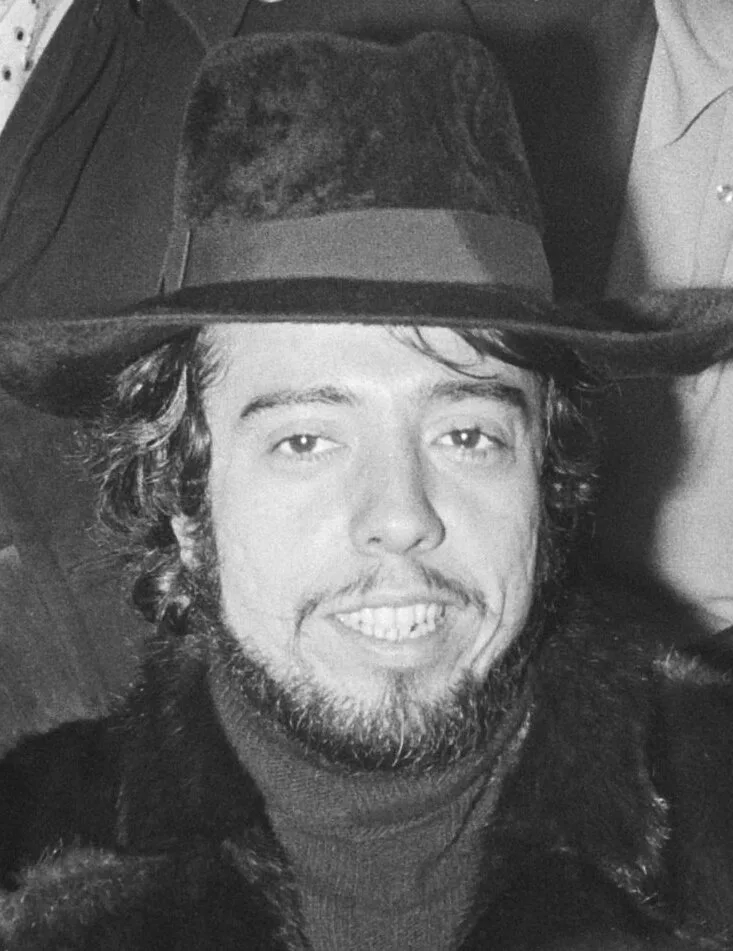
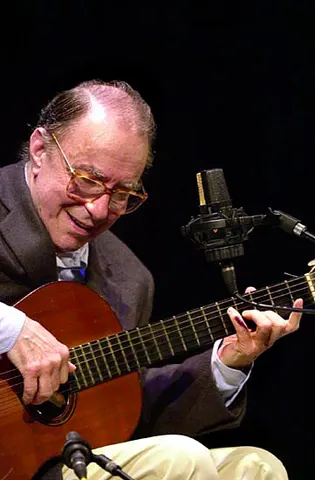
Sérgio Mendes at Schiphol Airport, the Netherlands, March 5, 1971 CC0 (Creative Commons Zero public domain dedication) — Wikimedia Commons, https://commons.wikimedia.org/wiki/File:Sergio_Mendes_1971.jpg, Fotograaf onbekend / Anefo, from the Nationaal Archief (Dutch National Archives) Anefo photo collection

Sérgio Santos Mendes was born on February 11, 1941, in Niterói, across Guanabara Bay from Rio de Janeiro. As he related in the 2020 documentary Sergio Mendes in the Key of Joy, he wore a cast for three years as a child because of osteomyelitis; his father was a doctor, and Mendes was one of the first people in Brazil to be given penicillin. He studied classical music at the local conservatory in the hope of becoming a concert pianist, but his interest moved to jazz, and by the late 1950s he was playing in nightclubs just as bossa nova, a jazz-inflected offshoot of samba, was emerging.
He played with Antonio Carlos Jobim, whom he regarded as a mentor, and with the American jazz musicians who came through Brazil; Variety's obituary names Charlie Byrd, Stan Getz, Dizzy Gillespie and Herbie Mann among them. His own group, the Sexteto Bossa Rio, made its first album in 1961, the instrumental Dance Moderno (Philips), which set Brazilian tunes beside Cole Porter's "Love for Sale" and "What Is This Thing Called Love?", Duke Ellington's "Satin Doll" and Horace Silver's "Nica's Dream." In 1962 Mendes came to New York for the bossa nova festival at Carnegie Hall, which he has described as his first visit to the United States, and the sextet played Birdland on a double bill with Cannonball Adderley. Adderley invited him to record, and the Bossa Rio musicians backed the saxophonist on Cannonball's Bossa Nova (made in New York in 1962 and issued by Riverside in 1963), with Mendes at the piano and his tune "Groovy Samba" on the program. The same year he played piano on two tracks of Herbie Mann's Do the Bossa Nova with Herbie Mann (Atlantic), recorded in Rio de Janeiro.
Mendes moved to the United States in 1964. As Sergio Mendes & Brasil '65 and the Sergio Mendes Trio he recorded for Atlantic and Capitol, among them the Atlantic albums In Person at El Matador and The Swinger from Rio, and, according to Variety, did session work with American jazz players such as Art Farmer. The Atlantic jazz albums sold poorly. Richard Adler, who had helped him form Brasil '65, proposed that the group sing in English as well as Portuguese and add two American women singers who could manage both languages, and he arranged an audition for Herb Alpert and Jerry Moss, the founders of A&M Records. They signed the new group, named Brasil '66, and Atlantic's Ahmet Ertegun released Mendes from his Atlantic jazz contract.
What followed was a pop career, and a very large one. Alpert produced the A&M albums and took the group on tour with him. Their first single, "Mas que nada," a song by Jorge Ben, reached No. 47 on the Billboard Hot 100 and No. 4 on the Easy Listening chart in 1966, and the album Herb Alpert Presents Sergio Mendes & Brasil '66 went platinum and was inducted into the Grammy Hall of Fame in 2011. The original Brasil '66 was Mendes on piano, vocalists Lani Hall and Bibi Vogel, Bob Matthews on bass, José Soares on percussion and João Palma on drums, with John Pisano on guitar. On Look Around, Dave Grusin and Dick Hazard wrote orchestrations; its single "The Look of Love," which the group performed on the April 1968 Academy Awards telecast, reached No. 4 on the Hot 100 and No. 2 on the adult contemporary chart, overshadowing Dusty Springfield's version from the film Casino Royale. "The Fool on the Hill" followed to No. 6 (and No. 1 on adult contemporary) and "Scarborough Fair" to No. 16. Mendes played the White House for Lyndon Johnson and Richard Nixon, and the group appeared at Expo '70 in Osaka in June 1970.
He changed the lineup often. Karen Philipp took over the second vocal chair from Janis Hansen, who had replaced Vogel; percussionists Dom Um Romão and Rubens Bassini, drummer Claudio Slon, bassist Sebastião Neto and guitarist Oscar Castro-Neves gave the group a more orchestral sound, and by 1971 it was billed as Brasil '77. Lani Hall left in the early 1970s for a solo career and married Alpert, and Gracinha Leporace, whom Mendes later married, performed with him from the early 1970s. His American career stalled in the middle of the decade, though he stayed popular in South America and Japan. After two albums for Bell in 1973 and 1974 he recorded for Elektra from 1975, including Brasil '88 (1978), and worked with soul writers such as Stevie Wonder, who wrote his minor hit "The Real Thing."
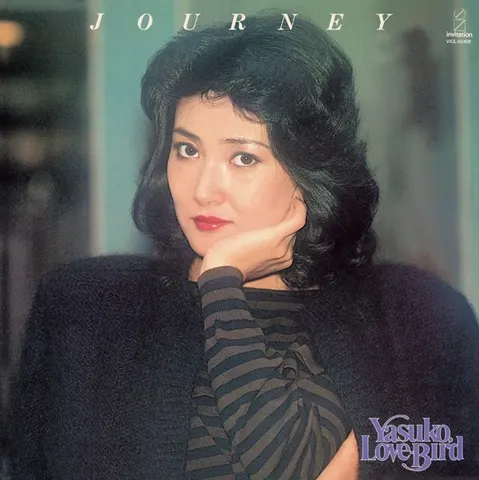
He returned to A&M in 1983. "Never Gonna Let You Go," a Barry Mann and Cynthia Weil ballad sung by Joe Pizzulo and Leeza Miller, matched "The Look of Love" at No. 4 on the Hot 100 and spent four weeks at No. 1 on the adult contemporary chart; Confetti (1984) added "Olympia," used as a theme for that year's Olympic Games, and "Alibis." In the same decade he produced Lani Hall's vocal on the title song of the James Bond film Never Say Never Again, produced Sarah Vaughan's final album, Brazilian Romance (1987), which includes "So Many Stars," a song he co-wrote, and produced Yasuko Agawa's Ouro do Manaus (1988).
Brasileiro (Elektra, 1992), made with Carlinhos Brown, Hermeto Pascoal, songs by Ivan Lins and a studio band that included Nathan East and the drummer Jeff Porcaro, won the Grammy Award for Best World Music Album at the 1993 ceremony. Timeless (Concord, 2006), produced by will.i.am, set Mendes beside the Black Eyed Peas, Erykah Badu, Jill Scott, John Legend, Justin Timberlake, Q-Tip and Stevie Wonder; its remake of "Mas que nada" with the Black Eyed Peas reached No. 6 on the UK singles chart, and the album won the Latin Grammy for Best Brazilian Contemporary Pop Album, as Bom Tempo did again in 2010. With Carlinhos Brown and the lyricist Siedah Garrett he co-wrote "Real in Rio" for the animated film Rio (2011), a nominee for the Academy Award for Best Original Song, and he co-produced the soundtracks for Rio and its 2014 sequel. Magic (Okeh, 2014) and In the Key of Joy (Concord, 2020) were his last albums.
Mendes gave his final concerts in November 2023, in Paris, London and Barcelona. He passed away on September 5, 2024, at a hospital in Los Angeles, at the age of 83, from complications of long COVID. His wife and musical partner of more than five decades, Gracinha Leporace, was with him.
Mendes is best understood as a pianist and bandleader who began in jazz and became one of the most commercially successful Brazilian pop artists of his generation, and the two halves of his career are best kept distinct. The early records, from Dance Moderno through the Atlantic albums and his dates with Cannonball Adderley and Herbie Mann, are piano-led bossa nova by a jazz-trained player, mixing Brazilian originals with American standards, and he made a jazz album again with Sergio Mendes' Favorite Things (Atlantic, 1968) while the A&M hits were running. From 1966 the formula was different: English-language pop and rock songs (the Beatles, Burt Bacharach, Joni Mitchell, Buffalo Springfield) set over Brazilian percussion, with a lead female voice that Herb Alpert double-tracked in the manner of Les Paul and Mary Ford. By the 1980s the records were adult contemporary pop, and in the 2000s they were collaborations with hip-hop and neo-soul artists. The subgenre tags above are the nearest canonical ones, and they describe a crossover career, not a straight-ahead one.
Antonio Carlos Jobim was the formative influence, and the visiting American players he accompanied in Rio de Janeiro and New York in the early 1960s are where his jazz credentials were made. His clearest mark on the jazz repertoire is "So Many Stars," which he wrote with Alan and Marilyn Bergman for Look Around; singers including Sarah Vaughan, Tony Bennett and Stacey Kent have recorded it. The late-1990s lounge revival brought fresh attention to the Brasil '66 albums.
- Dance Moderno (1961, Philips) - His debut with the Sexteto Bossa Rio, an instrumental set of bossa nova and jazz standards that shows the pianist before the pop years.
- Cannonball's Bossa Nova (1962, Riverside; Cannonball Adderley, leader) - Adderley with Mendes's Bossa Rio musicians, recorded in New York; the record that set the Brazilian pianist beside an American jazz star, and it includes his tune "Groovy Samba."
- Do the Bossa Nova with Herbie Mann (1962, Atlantic; Herbie Mann, leader) - Mann's Rio de Janeiro session, with Mendes on piano for two of the eight tracks.
- Herb Alpert Presents Sergio Mendes & Brasil '66 (1966, A&M) - The platinum debut with "Mas que nada," produced by Herb Alpert and the start of the pop career. Spotify - Herb Alpert Presents Sergio Mendes & Brasil '66 · Spotify - "Mas Que Nada" Listen
- Look Around (1968, A&M) - The album of "The Look of Love" and "So Many Stars," with orchestrations by Dave Grusin and Dick Hazard. Spotify - Look Around · Spotify - "The Look of Love"
- Sergio Mendes (1983, A&M) - The comeback album, containing "Never Gonna Let You Go." Spotify - Sergio Mendes (1983) · Spotify - "Never Gonna Let You Go" Listen
- Brasileiro (1992, Elektra) - Made with Carlinhos Brown and a studio band that included Nathan East; winner of the Grammy Award for Best World Music Album.
- Timeless (2006, Concord) - The will.i.am-produced collaboration album with the Black Eyed Peas, Erykah Badu, Jill Scott and Stevie Wonder. Spotify - Timeless Listen
Sérgio Mendes: Full Discography
Discogs artist: Sérgio Mendes (27986) · Born February 11, 1941, Niterói, Brazil · Died September 5, 2024, Los Angeles
Mendes made albums from 1961 to 2020 under a series of billings: Sérgio Mendes & Bossa Rio, the Sergio Mendes Trio, Sergio Mendes & Brasil '65, Brasil '66, Brasil '77, Brasil '88 and, increasingly, his own name alone. Discogs lists those under separate artist entries; the table below brings them together in order of release. Catalog numbers are those of an original pressing (United States, Brazil, Japan or the United Kingdom, as noted). Listen links appear where the album page was confirmed.
Leader: Albums
| Album | Year | Label (catalog) | Billing | Personnel & Notes | Listen | Buy |
|---|---|---|---|---|---|---|
| Dance Moderno | 1961 | Philips (P 630.491 L) | Sexteto Bossa Rio | His first album, released in Brazil: an all-instrumental set of bossa nova and jazz standards, including "Love for Sale," "What Is This Thing Called Love?," "Satin Doll," "On Green Dolphin Street" and Horace Silver's "Nica's Dream." | — | — |
| Você Ainda Não Ouviu Nada! | 1964 | Philips (P632.701L) | Sérgio Mendes & Bossa Rio | Brazilian LP with arrangements by Mendes, Antonio Carlos Jobim, Moacir Santos and João Theodoro Meirelles; Sebastião Neto (bass), Edison Machado (drums), Hector Costita and Aurino Ferreira (tenor saxophone), Edson Maciel (trombone) and Raul de Souza (valve trombone). Reissued in the United States as The Beat of Brazil (Atlantic, 1967). | — | — |
| The Swinger from Rio (also issued as Bossa Nova York) | 1965 | Atlantic (1434) | Sergio Mendes Trio | One of the Atlantic jazz albums of the Brasil '65 period; the same album was issued as Bossa Nova York under the Sergio Mendes Trio name. | — | — |
| In Person at El Matador | 1965 | Atlantic (8112) | Sergio Mendes & Brasil '65 | Atlantic album of the Brasil '65 period. | — | — |
| Brasil '65 (also issued as In the Brazilian Bag) | 1965 | Capitol (ST 2294) | Sérgio Mendes Trio introducing Wanda de Sá, with Rosinha de Valença | Capitol release from the Brasil '65 period, with the vocalist Wanda Sá and the guitarist Rosinha de Valença. | — | — |
| The Great Arrival | 1966 | Atlantic (SD 1466) | Sérgio Mendes | Instrumental album with arrangements and conducting by Clare Fischer, Bob Florence and Richard Hazard. Includes "Monday, Monday," "Carnaval," "Here's That Rainy Day" and Jobim's "Bonita." | — | — |
| Herb Alpert Presents Sergio Mendes & Brasil '66 | 1966 | A&M (SP 4116) | Sergio Mendes & Brasil '66 | The A&M debut, produced by Herb Alpert, with "Mas que nada." Platinum; Grammy Hall of Fame, 2011. Mendes (piano, backing vocals, keyboards, arrangements), Lani Hall (lead vocals), Bibi Vogel (backing vocals), Bob Matthews (bass), José Soares (percussion), João Palma (drums). | Spotify | — |
| Equinox | 1967 | A&M (SP 4122) | Sergio Mendes & Brasil '66 | Contains "Constant Rain" (No. 71 Hot 100, No. 11 adult contemporary), "Night and Day" (No. 82) and "For Me" (No. 98). | Spotify | — |
| Look Around | 1968 | A&M (SP 4137) | Sergio Mendes & Brasil '66 | Contains "The Look of Love" (No. 4 Hot 100), "So Many Stars" and "With a Little Help from My Friends." Orchestrations by Dave Grusin and Dick Hazard; Mendes (organ, piano, arrangements), John Pisano (guitar), Bob Matthews (bass), João Palma (drums), José Soares (percussion), Lani Hall and Janis Hansen (vocals). | Spotify | — |
| Quiet Nights | 1968 | Philips (PHS 600-263) | Sergio Mendes | Philips release. | — | — |
| Sérgio Mendes' Favorite Things | 1968 | Atlantic (SD 8177) | Sergio Mendes | A jazz-oriented Atlantic album made while the A&M hits were running. | — | — |
| Fool on the Hill | 1968 | A&M (SP 4160) | Sergio Mendes & Brasil '66 | Contains "The Fool on the Hill" (No. 6 Hot 100, No. 1 adult contemporary) and "Scarborough Fair" (No. 16). The fourth Brasil '66 album, recorded after a major change of personnel. | Spotify | — |
| Crystal Illusions | 1969 | A&M (SP 4197) | Sergio Mendes & Brasil '66 | Contains "Pretty World" and "(Sittin' On) The Dock of the Bay." | Spotify | — |
| Ye-Me-Lê | 1969 | A&M (SP 4236) | Sergio Mendes & Brasil '66 | Contains "Wichita Lineman" and "Norwegian Wood." | Spotify | — |
| Live at Expo '70 | 1970 | A&M (AMLS 989) | Sergio Mendes & Brasil '66 | Recorded at the Osaka World Expo; issued in Japan and the United Kingdom, not released in the United States. | — | — |
| Stillness | 1970 | A&M (SP 4284) | Sergio Mendes & Brasil '66 | Contains "For What It's Worth" and "Chelsea Morning." | Spotify | — |
| País Tropical | 1971 | A&M (SP 4315) | Sergio Mendes & Brasil '77 | First album under the Brasil '77 name. | — | — |
| Primal Roots | 1972 | A&M (SP 4353) | Sergio Mendes & Brasil '77 | Traditional Brazilian material (issued in Brazil as Raízes). | — | — |
| In Concert | 1973 | A&M | Sergio Mendes & Brasil '77 | Live album. | — | — |
| Love Music | 1973 | Bell (1119) | Sergio Mendes & Brasil '77 | First of two Bell albums. | — | — |
| Vintage 74 | 1974 | Bell (BELL 1305) | Sergio Mendes & Brasil '77 | Second Bell album. | — | — |
| Sérgio Mendes | 1975 | Elektra (7E-1027) | Sérgio Mendes | First Elektra album (issued in Brazil as I Believe). | Spotify | — |
| Homecooking | 1976 | Elektra (7E-1055) | Sergio Mendes & Brasil '77 | Elektra album with the single "Tell Me in a Whisper." | — | — |
| Sergio Mendes & the New Brasil '77 | 1977 | Elektra (7E-1102) | Sergio Mendes & the New Brasil '77 | Contains "The Real Thing," written by Stevie Wonder. | — | — |
| Pelé (original motion picture soundtrack) | 1977 | Atlantic | Sergio Mendes | Soundtrack for the film about the footballer Pelé. | — | — |
| Brasil '88 | 1978 | Elektra (6E-134) | Sergio Mendes & Brasil '88 | Contains "Waters of March" and "Midnight Lovers." | — | — |
| Horizonte Aberto (also issued as Alegria) | 1979 | Som Livre (403 6200) | Sergio Mendes | Brazilian release. | — | — |
| Magic Lady | 1979 | Elektra (6E-214) | Sergio Mendes & Brasil '88 | Contains "I'll Tell You" and "Let It Go." | — | — |
| Sergio Mendes | 1983 | A&M (SP-4937) | Sergio Mendes | The comeback album: "Never Gonna Let You Go" (No. 4 Hot 100, four weeks at No. 1 adult contemporary), sung by Joe Pizzulo and Leeza Miller, and "Rainbow's End" (No. 52). | Spotify | — |
| Confetti | 1984 | A&M (SP-4984) | Sergio Mendes | Contains "Olympia" (the 1984 Olympic Games theme) and "Alibis" (No. 29 Hot 100, No. 5 adult contemporary). | — | — |
| Brasil '86 | 1986 | A&M (SP-5135) | Sergio Mendes | Includes "No Place to Hide" with Lani Hall and the singles "Take This Love" and "Nonstop." | — | — |
| Arara | 1989 | A&M (SP 5250) | Sergio Mendes | Includes a new recording of "Mas que nada." | — | — |
| Brasileiro | 1992 | Elektra (7559-61315-2) | Sergio Mendes | Winner, Grammy Award for Best World Music Album (1993). Produced by Mendes; with Carlinhos Brown, Hermeto Pascoal, Gracinha Leporace, Kevyn Lettau, Joe Pizzulo, Jeff Porcaro (drums), Nathan East (bass), Paul Jackson Jr. (guitar), Russell Ferrante (keyboards) and songs by Ivan Lins, João Bosco and Guinga. Includes "Magalenha." | — | — |
| Oceano | 1996 | Verve Forecast (314 532 441-2) | Sergio Mendes | Verve Forecast release. | — | — |
| Timeless | 2006 | Concord (CCD-2263-2) | Sergio Mendes | Produced by will.i.am; guests include the Black Eyed Peas, Erykah Badu, Jill Scott, John Legend, Justin Timberlake, Q-Tip, India.Arie, Black Thought, Chali 2na, Pharoahe Monch and Stevie Wonder. The remake of "Mas que nada" reached No. 6 on the UK singles chart. Winner, Latin Grammy for Best Brazilian Contemporary Pop Album. | Spotify | — |
| Encanto | 2008 | Concord (CCD-30278) | Sergio Mendes | Released June 10, 2008. | Spotify | — |
| Bom Tempo | 2010 | Concord (CRE-31575-02) | Sergio Mendes | Winner, Latin Grammy for Best Brazilian Contemporary Pop Album (2010); nominated for a Grammy Award for Best Contemporary World Music Album. | — | — |
| Magic | 2014 | OKeh (88843066322) | Sergio Mendes | Nominated for the Grammy Award for Best World Music Album. Guests include John Legend and Carlinhos Brown. | — | — |
| In the Key of Joy | 2020 | Concord (CRE01134) | Sergio Mendes | His last studio album, with guests including Common and João Donato; released the same year as the documentary Sergio Mendes in the Key of Joy. | — | — |
Singles
United States chart positions for the singles that reached the Billboard Hot 100 or the adult contemporary chart.
| Year | Single | Hot 100 | Adult Contemporary | Album |
|---|---|---|---|---|
| 1966 | "Mas que nada" | 47 | 4 | Herb Alpert Presents Sergio Mendes & Brasil '66 |
| 1966 | "Constant Rain" | 71 | 11 | Equinox |
| 1967 | "Night and Day" | 82 | 8 | Equinox |
| 1967 | "For Me" | 98 | 16 | Equinox |
| 1967 | "The Frog" | 126 | 21 | Look Around |
| 1968 | "Say a Little Prayer" | 106 | 21 | Sérgio Mendes' Favorite Things |
| 1968 | "With a Little Help from My Friends" | 31 | Look Around | |
| 1968 | "The Look of Love" | 4 | 2 | Look Around |
| 1968 | "The Fool on the Hill" | 6 | 1 | Fool on the Hill |
| 1968 | "Scarborough Fair" | 16 | 2 | Fool on the Hill |
| 1969 | "Pretty World" | 62 | 4 | Crystal Illusions |
| 1969 | "(Sittin' On) The Dock of the Bay" | 66 | 12 | Crystal Illusions |
| 1969 | "Wichita Lineman" | 95 | 34 | Ye-Me-Lê |
| 1970 | "Norwegian Wood" | 107 | 32 | Ye-Me-Lê |
| 1970 | "For What It's Worth" | 101 | 10 | Stillness |
| 1970 | "Chelsea Morning" | 21 | Stillness | |
| 1973 | "Love Music" | 113 | 24 | Love Music |
| 1973 | "Where Is the Love" | 36 | Love Music | |
| 1983 | "Never Gonna Let You Go" | 4 | 1 | Sergio Mendes (1983) |
| 1983 | "Rainbow's End" | 52 | 6 | Sergio Mendes (1983) |
| 1984 | "Olympia" | 58 | 18 | Confetti |
| 1984 | "Alibis" | 29 | 5 | Confetti |
| 1984 | "Real Life" | 17 | Confetti | |
| 1985 | "Let's Give a Little More This Time" | 33 | Confetti | |
| 1986 | "Take This Love" | 14 | Brasil '86 | |
| 1987 | "What Do We Mean to Each Other" | 19 | Brasil '86 |
Guest, sideman and producer credits (selected)
Mendes's work as a pianist for other leaders, and as a producer and composer for other artists, from the Discogs credits for each release.
| Year | Project (Leader) | Title | Label | Catalog | Role | Notes |
|---|---|---|---|---|---|---|
| 1962 | Herbie Mann | Do the Bossa Nova with Herbie Mann | Atlantic | 1397 | Piano (tracks A2 and B2) | Recorded in Rio de Janeiro; the two Mendes tracks are "Menina Feia" and "The Blues Walk." Antonio Carlos Jobim plays piano and sings on other tracks. |
| 1963 | Cannonball Adderley with the Bossa Rio Sextet of Brazil | Cannonball's Bossa Nova | Riverside | RM 455 | Piano | Recorded in New York. Mendes with Durval Ferreira (guitar), Octavio Bailly Jr. (bass), Dom Um Romão (drums), Pedro Paulo (trumpet) and Paulo Moura (alto saxophone); Mendes wrote "Groovy Samba." |
| 1964 | Herbie Mann | Latin Fever | Atlantic | SD 1422 | Composer ("Groovy Samba") | Built from the 1962 Rio de Janeiro sessions plus later New York dates. Wikipedia's personnel list also puts Mendes on piano for two of the Rio tracks. |
| 1970 | Edu Lobo | Sergio Mendes Presents Lobo | A&M | SP-3035 | Producer, presenter, orchestration (one track) | Mendes is credited as presenter as well as producer. |
| 1972 | Art Farmer | Gentle Eyes | Mainstream | MRL 371 | Composer ("Song of No Regrets") | Farmer recorded a Mendes composition. |
| 1974 | Stevie Wonder | Fulfillingness' First Finale | Tamla | T6-332S1 | Portuguese lyrics for "Bird of Beauty" | |
| 1976 | Cal Tjader | Amazonas | Fantasy | F-9502 | Composer ("Noa Noa") | |
| 1979 | Gilberto Gil | Nightingale | Elektra | 6E-167 | Producer; synthesizer and percussion on selected tracks | |
| 1981 | Helen Merrill | Casa Forte | Inner City | IC 1125 | Composer ("So Many Stars") | One of many recordings of the song. |
| 1983 | Lani Hall | "Never Say Never Again" (single) | A&M | AMS 9734 | Producer | Title song of the James Bond film Never Say Never Again. |
| 1987 | Sarah Vaughan with Milton Nascimento | Brazilian Romance | CBS | FM 42519 | Producer; co-writer of "So Many Stars" | Vaughan's last album. |
| 1988 | Yasuko Agawa | Ouro do Manaus | Invitation | VIH-28323 | Producer; vocals, acoustic piano, percussion | Japanese release, March 9, 1988. |
| 1988 | Dori Caymmi | Dori Caymmi | Elektra Musician | 9 60790-2 | Producer; synthesizer (one track) | |
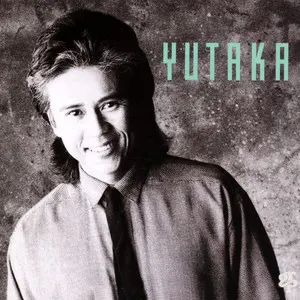
| 1993 | Yutaka Yokokura | Another Sun | GRP | GRD-9693 | Producer (tracks 4, 6 and 9) | |
| 2011 | Various artists | Rio (music from the motion picture) | Interscope | B0015466-02 | Soundtrack album producer; composer of "Real in Rio" | "Real in Rio" was nominated for the Academy Award for Best Original Song. |
| 2014 | Various artists | Rio 2 (music from the motion picture) | Atlantic | 541362-2 | Soundtrack album producer; vocals |
Compilations
Greatest Hits (A&M, 1970) · The Sergio Mendes and Brasil '66 Foursider (A&M, 1972) · Masquerade (1980) · The Very Best (1986) · Classics Volume 18 (A&M, 1987) · The Essential Sergio Mendes (1999) · Celebration: A Musical Journey (2011).
Awards
| Year | Award | Category | Work | Result |
|---|---|---|---|---|
| 1969 | Grammy Award | Best Pop Performance by a Duo or Group with Vocals | "The Fool on the Hill" | Nominee |
| 1993 | Grammy Award | Best World Music Album | Brasileiro | Winner |
| 2007 | Grammy Award | Best Urban/Alternative Performance | "Mas que nada" (with the Black Eyed Peas) and "That Heat" (with Erykah Badu and will.i.am) | Nominee (two entries) |
| 2011 | Grammy Award | Best Contemporary World Music Album | Bom Tempo | Nominee |
| 2015 | Grammy Award | Best World Music Album | Magic | Nominee |
| 2006 | Latin Grammy Award | Best Brazilian Contemporary Pop Album | Timeless | Winner |
| 2006 | Latin Grammy Award | Record of the Year | "Mas que nada" (with the Black Eyed Peas) | Nominee |
| 2008 | Latin Grammy Award | Best Brazilian Song | "Acode" (with Vanessa da Mata) | Nominee |
| 2010 | Latin Grammy Award | Best Brazilian Contemporary Pop Album | Bom Tempo | Winner |
| 2012 | Academy Award | Best Original Song (84th Academy Awards) | "Real in Rio" (with Carlinhos Brown and Siedah Garrett) | Nominee |
| 2011 | Grammy Hall of Fame | Album inducted | Herb Alpert Presents Sergio Mendes & Brasil '66 | Inducted |
- Antonio Carlos Jobim - his mentor in Rio de Janeiro; Mendes joined Jobim's band at the start of the bossa nova years.
- Cannonball Adderley - invited Mendes to record after the 1962 Carnegie Hall festival; Cannonball's Bossa Nova (1962) features Mendes and the Bossa Rio musicians (guitarist Durval Ferreira, bassist Octavio Bailly Jr., drummer Dom Um Romão, trumpeter Pedro Paulo, alto saxophonist Paulo Moura).
- Herbie Mann - recorded with Mendes in Rio de Janeiro in 1962 for Do the Bossa Nova with Herbie Mann.
- Herb Alpert and Jerry Moss - founders of A&M Records, who signed Brasil '66; Alpert produced the group's A&M albums and toured with Mendes.
- Richard Adler - American producer who partnered with Mendes in forming Brasil '65 and steered the move to English-language material.
- Lani Hall, Bibi Vogel, Janis Hansen, Karen Philipp - the vocalists of Brasil '66, in order of tenure; Hall later married Alpert, and Mendes produced her vocal on "Never Say Never Again" (1983).
- Gracinha Leporace - vocalist in Mendes's groups from the early 1970s and his wife; she sings on the 2006 "Mas que nada" remake.
- Bob Matthews, José Soares, João Palma, John Pisano - the rhythm section and guitarist of the original Brasil '66.
- Claudio Slon, Dom Um Romão, Rubens Bassini, Sebastião Neto, Oscar Castro-Neves - later Brasil '66 and Brasil '77 players.
- Dave Grusin and Dick Hazard - orchestrators on Look Around; the 1966 instrumental The Great Arrival was arranged by Clare Fischer, Bob Florence and Richard Hazard.
- Tom Scott - reed player and arranger on Mendes albums across two decades: flute and saxophones on Sergio Mendes' Favorite Things (1968), bass flute on Stillness (1970), string and horn arrangements on Love Music (1973), saxophone solos on Magic Lady (1979), and solos on Brazilian Romance (1987).
- Stevie Wonder - wrote "The Real Thing" for Mendes and appears on Timeless (2006).
- Sarah Vaughan - Mendes produced her final album, Brazilian Romance (1987), and co-wrote its song "So Many Stars."
- Yasuko Agawa and Yutaka Yokokura - Mendes produced Agawa's Ouro do Manaus (1988) and co-produced three tracks of Yokokura's Another Sun (1993); Yokokura played keyboards in Mendes's touring band from 2006.
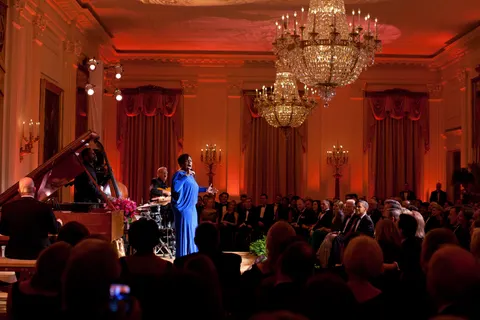
- Dianne Reeves - toured internationally with Mendes beginning in 1981.
- Leny Andrade - sang at the Bacará club in Rio de Janeiro with an early trio led by Mendes.
- Carlinhos Brown, Hermeto Pascoal, Ivan Lins and Nathan East - writers and players on Brasileiro (1992); Brown also co-wrote "Real in Rio" with Mendes and Siedah Garrett.
- will.i.am, the Black Eyed Peas, Erykah Badu, Jill Scott, John Legend - producer and guests on Timeless (2006).
- Shelly Manne and Bud Shank - West Coast jazz musicians who helped enrol the Brasil '65 players in the Los Angeles musicians' union.
More Samba-Jazz Artists
See all 56 Samba-Jazz artists →More Brazilian Jazz Artists
See all 25 Brazilian artists →- Spotify artist page
- Sergio Mendes & Brasil '66 on Spotify
- Official website
- Discogs
- His profile on jazzprofiles.com
- r/CrossoverJazz
- Wikipedia: Sérgio Mendes
- Wikipedia: Sérgio Mendes discography
- Wikipedia: Dance Moderno
- Wikipedia: Cannonball's Bossa Nova
- Wikipedia: Do the Bossa Nova with Herbie Mann
- Wikipedia: Herb Alpert Presents Sergio Mendes & Brasil '66
- Wikipedia: Look Around (Sérgio Mendes album)
- Wikipedia: Brasileiro
- Wikipedia: Timeless (Sérgio Mendes album)
- Wikipedia: Mas que nada
- Wikipedia: Never Gonna Let You Go (Barry Mann and Cynthia Weil song)
- Wikipedia: Brazilian Romance
- Variety: Sergio Mendes, Brazilian Bossa Nova Music Innovator, Dies at 83
- Deadline: Sergio Mendes Dies
- Discogs: Sérgio Mendes
- MusicBrainz: Sérgio Mendes
- Official website