 JAZZPROFILES lives in the music 2,303 Jazz Artists fully Profiled!
Jelly Roll Morton
Last updated November 7, 2026
Listen on Spotify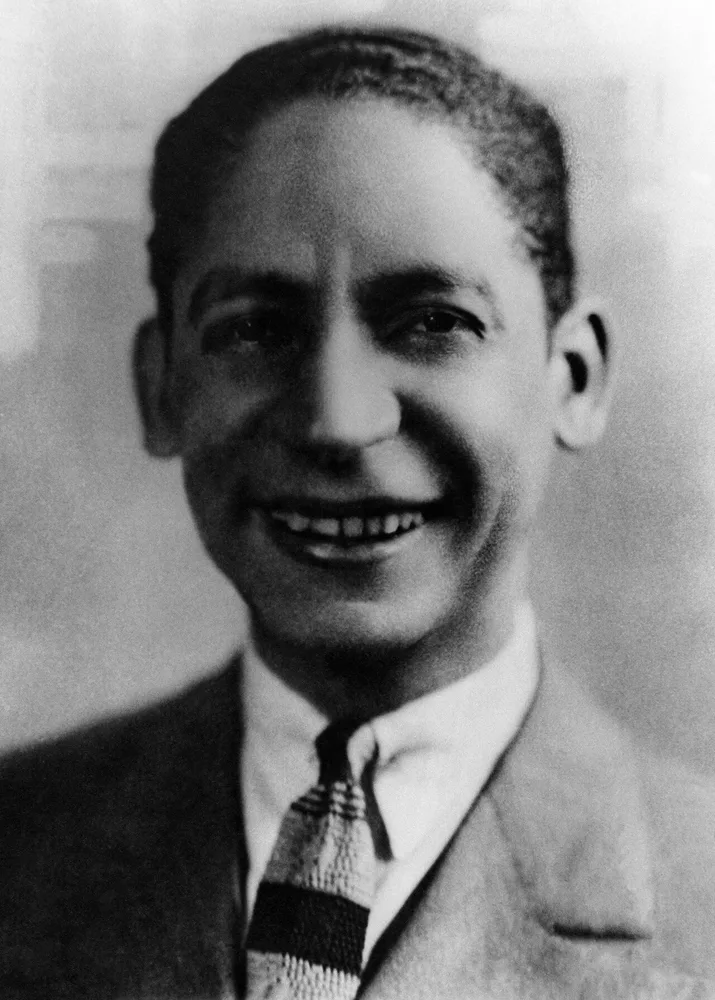
Jelly Roll Morton, publicity photograph taken at the Bloom photograph studio, Chicago, circa 1927 Public Domain (United States publicity photograph from about 1927, tagged PD-US-expired on Wikimedia Commons) — Wikimedia Commons — https://commons.wikimedia.org/wiki/File:Jelly_Roll_Morton_(c._1927).jpg

Ferdinand Joseph LaMothe was born in the Creole community of the Faubourg Marigny in New Orleans, the son of Edward Joseph LaMothe, a bricklayer and occasional trombonist, and Louise Monette, a domestic worker. His parents were never legally married, no birth certificate was ever issued, and the date of his birth is unsettled: a baptismal register at St. Joseph's Church records October 20, 1890, with baptism on April 25, 1891, while Morton told Alan Lomax he was born in 1885 and gave 1884 on his 1918 draft registration card. After his mother married William Mouton in 1894 he took the anglicized surname Morton. At about fourteen he began playing piano in a brothel in the Storyville district, where he took the nickname Jelly Roll, and his churchgoing great-grandmother, who had believed he worked as a night watchman, disowned him when she found out.
Around 1904 he began touring the South with minstrel shows such as Will Benbow's Chocolate Drops, gambling and composing; "Jelly Roll Blues," "New Orleans Blues," "Frog-I-More Rag," "Animule Dance," and "King Porter Stomp" all date from this period. The stride pianists James P. Johnson and Willie "The Lion" Smith heard him play in Chicago in 1910 and in New York in 1911. He toured vaudeville with his girlfriend Rosa Brown in 1912 to 1914, lived in Chicago for about three years, and by 1914 was writing his compositions down; "Jelly Roll Blues," published in 1915, is counted among the first published jazz compositions. In 1917 he went to California with the bandleader William Manuel Johnson and Johnson's sister Anita Gonzalez, played the Hotel Patricia in Vancouver, and spent years as an itinerant pianist, vaudeville performer and gambler. He returned to Chicago in 1923 to claim authorship of "The Wolverines," which had become popular as "Wolverine Blues."
His recording career began that year. "King Porter Stomp" was first recorded as a piano solo in 1923, and on July 17 and 18, 1923 he joined the New Orleans Rhythm Kings for Gennett sessions, an early example of a racially mixed recording date. In 1924 he recorded a duet version of "King Porter Stomp" with the cornetist King Oliver. In 1926 he signed with the Victor Talking Machine Company, which let him bring a rehearsed band into its Chicago studio to play his arrangements. Jelly Roll Morton and His Red Hot Peppers recorded "Black Bottom Stomp" on September 15, 1926, "Dead Man Blues" on September 21, and "Original Jelly-Roll Blues" and "Doctor Jazz" on December 16, with a pool of New Orleans players including Kid Ory, Omer Simeon, George Mitchell, Johnny St. Cyr, Barney Bigard, Johnny Dodds and Baby Dodds. He married the showgirl Mabel Bertrand in November 1928 and moved to New York, where he kept recording for Victor with horn players such as Bubber Miley, Henry "Red" Allen, Albert Nicholas and Zutty Singleton, though he had trouble finding musicians who wanted to play his style and the New York sessions produced no hit.
Victor did not renew his contract for 1931, a casualty in part of the Depression, and Morton struggled financially, with a brief radio show in 1934 and a stint in a burlesque band. In 1935 his three-decade-old "King Porter Stomp," arranged by Fletcher Henderson, became Benny Goodman's first hit and a swing-era standard, and Morton earned no royalties from it. That year he moved to Washington, D.C., to manage and play piano at a U Street bar variously called the Music Box and the Jungle Inn, where the folklorist Alan Lomax heard him. Lomax invited him to the Library of Congress, and the sessions in the Coolidge Auditorium began on May 23, 1938 and grew into more than eight hours of talk and piano about Storyville, early jazz and his own career, later the basis of Lomax's 1950 book Mister Jelly Roll. Some of the bawdier songs stayed unreleased until 2005. In 1938 he was stabbed by an associate of the club's owner and was refused treatment at a nearby whites-only hospital, and he never fully recovered. After a spell in a New York hospital for asthma he recorded again in 1939 and 1940, including a Victor date on September 14, 1939 with Sidney Bechet on soprano saxophone, and then travelled to Los Angeles to restart his career. He passed away at Los Angeles County General Hospital on July 10, 1941, after an eleven-day stay. Kid Ory, Mutt Carey, Fred Washington and Ed Garland were pallbearers at a funeral that few prominent musicians attended; Duke Ellington and Jimmie Lunceford were both in Los Angeles at the time but absent.
Recognition came mostly after his death. The 2005 Rounder set of the Lomax recordings won two Grammy Awards at the 2006 ceremony, for Best Historical Album and Best Album Notes, and Morton was in the 2005 class of Grammy Lifetime Achievement Award recipients. His 1928 Victor single "Kansas City Stomps" and the album The Saga of Mr. Jelly Lord are in the Grammy Hall of Fame, "Black Bottom Stomp" and the 1938 Lomax interviews are in the Library of Congress National Recording Registry, and he is in the Rock and Roll Hall of Fame and the Louisiana Music Hall of Fame (2008) and is a charter member of the Gennett Records Walk of Fame. The musical Jelly's Last Jam, built on his music and life, reached Broadway in 1992 and earned him a posthumous Tony Award nomination for Best Original Score.
Morton is often called jazz's first arranger, the man who showed that a music rooted in improvisation could keep its character when written down. His piano style grew out of early ragtime and the "shout" tradition and sat close to barrelhouse; he often carried the melody with his right thumb while the fingers laid a harmony above it, walked the left hand in sixths rather than tenths or octaves, and swung with both hands. His band writing balanced composed passages against solo space, with breaks, stop-time choruses, collective improvisation and a stomping final strain, and he insisted that real jazz needed what he called the Spanish tinge, the habanera and tango rhythmic flavor audible in "Original Jelly-Roll Blues" and "Black Bottom Stomp." He also claimed to have invented jazz in 1902, a boast critics have debated: Scott Yanow argued it hurt his posthumous reputation, while Gunther Schuller held that his achievements made it credible. His music passed into the swing era through Fletcher Henderson's arrangement of "King Porter Stomp" for Benny Goodman, and later arrangers returned to it, among them Gil Evans on a 1975 version, while Henry Threadgill's trio Air devoted the 1979 album Air Lore to Morton and Scott Joplin. The pianist Dick Hyman and the composer Reginald Robinson are named as carrying his influence forward, and the melody of his 1926 "Sweet Peter" appears to be the source of the 1931 hit "All of Me."
- Jelly Roll Morton 1923/24 (1974, Milestone) - The early Gennett piano solos from 1923 and 1924, with "King Porter Stomp," "Wolverine Blues," "The Pearls," "Jelly Roll Blues," "Perfect Rag" and "Kansas City Stomp," made before he had a Victor band behind him. Spotify - Jelly Roll Morton 1923/24 Listen
- Birth of the Hot: The Classic Chicago "Red Hot Peppers" Sessions (1926-1927) (1995, RCA Bluebird) - The Victor sides that set the standard for small-group jazz, among them "Black Bottom Stomp," "The Chant," "Dead Man Blues," "Doctor Jazz" and "Original Jelly-Roll Blues."
- The Pearls (1988, RCA Bluebird) - A 23-track survey of his Victor years from 1926 to 1928, running from "Black Bottom Stomp" and "Steamboat Stomp" to "Kansas City Stomps," "Georgia Swing" and "Winin' Boy Blues."
- The Jelly Roll Morton Centennial: His Complete Victor Recordings (1990, RCA Bluebird) - The full Victor output, from the Chicago Red Hot Peppers dates through the New York sessions that followed.
- Jelly Roll Morton: The Complete Library of Congress Recordings (2005, Rounder) - The 1938 Lomax sessions, eight CDs of Morton talking, singing and playing his way through New Orleans music history; a double Grammy winner.
- "King Porter Stomp" (1923, Gennett) - His first recording of the tune he said he wrote in 1906, a piano solo later recast as a swing standard by Fletcher Henderson and Benny Goodman.
Jelly Roll Morton: Full Discography
Discogs artist ID 309976 ("Jelly Roll Morton," real name Ferdinand Joseph LaMothe, died July 10, 1941, in Los Angeles, California) was read in full through the live Discogs listing: about 3,700 entries, of which only a few hundred are billed to him as the main artist, and nearly all of those are shellac singles and posthumous compilations of the same 1923 to 1940 sessions. Morton recorded for Gennett, Paramount, Victor, General and the Library of Congress and never made a studio album in the modern sense, so the "albums" below are retrospective sets and the original issues are 78 rpm records. Discogs also files some of his band billings under separate entries, among them Jelly Roll Morton's Red Hot Peppers, Jelly Roll Morton Trio, New Orleans Jazzmen, Hot Six, Hot Seven, Orchestra, Stomp Kings and Quartet. Because the catalog is huge and endlessly reissued, the leader table is a curated selection of 18 landmark releases and series rather than an exhaustive list. Catalog numbers are those of the first or best-documented pressing on Discogs; recording dates come from Discogs release notes, Wikipedia and Lawrence Gushee's and Laurie Wright's research as collected by the Doctor Jazz site, and where sources differ the Notes column says so.
As Leader / Co-Leader
| Album Title | Recording Date(s) | Release Date | Label | Catalog Number | Format(s) | Personnel | Role | Reissue History | Spotify | Buy | Notes |
|---|---|---|---|---|---|---|---|---|---|---|---|
| New Orleans Memories | December 1939 to January 1940, New York | 1940 | General | G 11 | Shellac, 5x10", 78 RPM, Album | Jelly Roll Morton (piano, vocals) | Leader | Reissued on Commodore in 1950 as a ten-inch LP; the pressing history is on Discogs master 880279 | — | — | Solo piano and vocal sides, ten tracks on five discs, made late in his life. |
| The Saga of Mister Jelly Lord (Volumes I to XII) | May 23 to June 12 and December 14, 1938, Coolidge Auditorium, Library of Congress, Washington, D.C. | 1950 | Circle | L 14001 to L 14012 | Vinyl, 12xLP, Compilation, Mono | Jelly Roll Morton (piano, vocals, speech), Alan Lomax (interviewer) | Leader | Issued as twelve separate albums from 1947; the twelve-LP box is Discogs release 5304983 | — | — | The first commercial release of the Lomax interviews; the set was inducted into the Grammy Hall of Fame in 1980. |
| Rediscovered: Jelly Roll Morton Solos | Not itemized | 1953 | Riverside | RLP 1018 | Vinyl, LP, 10", Album | Jelly Roll Morton (piano) | Leader | Reissued many times; see Discogs master 1655328 | — | — | Six-track ten-inch LP of early piano solos. |
| The King of New Orleans Jazz | Not itemized | January 1959 | RCA Victor | LPM-1649 | Vinyl, LP, Compilation, Mono | Jelly Roll Morton (piano) with his Victor groups | Leader | Reissued on CD by RCA in 1994; see Discogs master 441825 | — | — | The standard long-playing introduction to the Victor band sides for a generation of listeners. |
| The Incomparable Jelly Roll Morton (His Rarest Recordings) | Not itemized | 1959 | Riverside | RLP 12-128 | Vinyl, LP, Compilation, Mono | Jelly Roll Morton (piano) with various groups | Leader | See Discogs release 5196719 | — | — | Early Gennett and Paramount sides, including band tracks. |
| Mr. Jelly Lord | Not itemized | 1967 | RCA Victor | LPV-546 | Vinyl, LP, Compilation, Mono | Jelly Roll Morton (piano) with his Victor groups | Leader | See Discogs master 727890 | — | — | Sixteen Victor sides in RCA's Vintage series. |
| Jelly Roll Morton 1923/24 | 1923 to 1924, Chicago and Richmond, Indiana | 1974 | Milestone | M-47018 | Vinyl, 2xLP, Compilation, Remastered, Stereo | Jelly Roll Morton (piano) | Leader | Reissued on CD by Milestone in 1992 (MCD-47018-2); see Discogs master 297339 | Spotify - Jelly Roll Morton 1923/24 | — | Opens with "King Porter" and includes "Wolverine Blues," "The Pearls," "Jelly Roll Blues" and "Perfect Rag." |
| The Complete Jelly Roll Morton, Volumes 1/2 to 7/8 | 1926 to 1940 | 1979 to 1983 | RCA | PM 42405 (Volumes 1/2) and following | Vinyl, 2xLP per volume, Compilation | Jelly Roll Morton (piano) with his Red Hot Peppers, trios, orchestra and solo | Leader | Reissued on CD by RCA from 1994; see Discogs master 1346923 | — | — | Series of four double albums gathering the Victor output in order. |
| Birth of the Hot: The Classic Chicago "Red Hot Peppers" Sessions (1926-1927) | September 15, 1926 to June 1927, Chicago | 1995 | RCA Bluebird | 07863-66641-2 | CD, Compilation | Jelly Roll Morton (piano), George Mitchell (cornet), Kid Ory (trombone), Omer Simeon (clarinet), Johnny St. Cyr (banjo), John Lindsay (bass), Andrew Hilaire (drums), with Barney Bigard, Johnny Dodds and Baby Dodds on other dates | Leader | See Discogs master 1569974 | — | — | Twenty-three tracks including "Black Bottom Stomp," "The Chant," "Dead Man Blues" and "Doctor Jazz." Wikipedia dates this title to 1985. |
| The Pearls | September 15, September 21 and December 16, 1926 and June 1927, Chicago | 1988 | RCA Bluebird | 6588-1-RB (LP); 6588-2-RB (CD) | Vinyl, LP, Compilation, Remastered; also CD | Jelly Roll Morton (piano) with his Red Hot Peppers | Leader | The CD edition runs to 23 tracks; see Discogs master 786367 | — | — | A 1926 to 1928 survey of the Victor sides. |
| The Jelly Roll Morton Centennial: His Complete Victor Recordings | 1926 to 1930, Chicago and New York | 1990 | RCA Bluebird | ND82361(5) | CD, 5xCD, Compilation, Box Set, Remastered | Jelly Roll Morton (piano) with the Red Hot Peppers, trios, orchestra and solo | Leader | A three-disc US edition appeared as BMG 2361-2-RB; see Discogs master 1233710 | — | — | The full Victor output in one box. |
| Jelly Roll Morton, Volumes 1 to 3 (The Pianist and Composer; Chicago: The Red Hot Peppers; New York, Washington, and the Rediscovery) | 1923 to 1939 | 1991 | Smithsonian Collection | RD 043, RD 044, RD 045 | CD, Compilation, Mono | Jelly Roll Morton (piano) with various groups | Leader | See Discogs release 2171318, 14779636 and 29789572 | — | — | Three CDs arranged by period: solos and early bands, the Chicago Peppers, and the New York and Washington years. |
| The Complete Piano Solos 1923-1939 | 1923 to 1939 | 1991 | Music Memoria | 34000 | CD, 2xCD, Compilation | Jelly Roll Morton (piano) | Leader | See Discogs release 12055470 | — | — | Forty-six solo tracks. |
| The Chronological Classics: Jelly-Roll Morton (seven volumes, 1923-1924 to 1939-1940) | 1923 to 1940 | 1991 to 1992 | Classics | 584, 599, 612, 627, 642, 654, 668 | CD, Compilation | Jelly Roll Morton (piano) with various groups | Leader | Seven CDs issued in France from 1991 to 1992 | — | — | A complete chronological run of his recordings in seven volumes. |
| Kansas City Stomp: The Library of Congress Recordings, Volume 1 | May 23 to June 7, 1938, Coolidge Auditorium, Library of Congress, Washington, D.C. | 1993 | Rounder | Rounder CD 1091 | CD, Compilation | Jelly Roll Morton (piano, vocals, speech), Alan Lomax (interviewer) | Leader | The first of four Rounder CDs, followed by Anamule Dance, The Pearls and Winin' Boy Blues; superseded by the 2005 box | — | — | A 37-track first selection from the Lomax sessions. |
| Last Sessions: The Complete General Recordings | December 14, 1939 to January 1940, New York | 1997 | Commodore | CMD-403 | CD, Compilation | Jelly Roll Morton (piano, vocals) | Leader | See Discogs master 1418303 | — | — | Twenty-five solo piano and vocal tracks from his final studio sessions. |
| Jelly Roll Morton: The Complete Library of Congress Recordings by Alan Lomax | May 23 to June 12 and December 14, 1938, Coolidge Auditorium, Library of Congress, Washington, D.C. | September 27, 2005 | Rounder | ROUNDER 11661-1888-2 | CD, 8xCD, Box Set, Enhanced | Jelly Roll Morton (piano, vocals, speech), Alan Lomax (interviewer) | Leader | See Discogs master 651198 | — | — | Eight discs in a piano-shaped box; won the Grammy Awards for Best Historical Album and Best Album Notes at the 2006 ceremony. |
| 'Jelly Roll' Morton Rarities (The Rare Band and Blues Sides, 1923-1930) | June 1923 to 1930, Chicago | 2011 | Jazz Oracle | BDW 8065 | CD, Compilation, Mono | Jelly Roll Morton (piano) with various groups | Leader | See Discogs release 9372785 | — | — | Twenty-six lesser-known band and blues sides. |
As Sideman and Band Credits (selected)
| Year | Project (Leader) | Title | Label | Catalog | Role | Notes |
|---|---|---|---|---|---|---|
| 1923 | New Orleans Rhythm Kings | Gennett sessions of July 17 and 18, 1923 | Gennett | Various singles | Guest pianist | Compiled on the 1975 Milestone double LP New Orleans Rhythm Kings and Jelly Roll Morton (Discogs release 35908540). |
| 1924 | King Oliver | "King Porter Stomp" | Not itemized | Not itemized | Pianist | Piano and cornet duet recorded in 1924. |
| 1935 | Fletcher Henderson (arranger), Benny Goodman and His Orchestra | "King Porter Stomp" / "Sometimes I'm Happy" | Victor | 25090 | Composer | Recorded July 1, 1935 and released July 31; Morton's composition in Henderson's arrangement became Goodman's first hit. |
| 1939 | Jelly Roll Morton's New Orleans Jazzmen | Victor session of September 14, 1939 with Sidney Bechet on soprano saxophone | Victor | Not itemized | Leader and pianist | The session is also listed on Sidney Bechet's profile. |
- King Oliver - cornetist who joined him on a 1924 duet recording of "King Porter Stomp" and is the credited composer of "Doctor Jazz," which Morton recorded with the Red Hot Peppers in December 1926.
- New Orleans Rhythm Kings - the Chicago band with whom he recorded for Gennett on July 17 and 18, 1923.
- Kid Ory, Omer Simeon, George Mitchell, Johnny St. Cyr, Andrew Hilaire, John Lindsay - core Red Hot Peppers players on the first Chicago Victor sessions in September and December 1926, including "Black Bottom Stomp" and "Original Jelly-Roll Blues."
- Barney Bigard, Johnny Dodds, Baby Dodds, Darnell Howard, Bud Scott, Stump Evans - clarinetists, drummer and rhythm players who joined him on other Chicago Victor dates from 1926 to 1927.
- Bubber Miley, Henry "Red" Allen, Albert Nicholas, Zutty Singleton, Pops Foster, Paul Barbarin, Cozy Cole, Russell Procope - horn and rhythm players on his New York Victor sessions from 1928.
- Sidney Bechet - soprano saxophonist on Morton's September 14, 1939 New Orleans Jazzmen session for Victor, per his profile.
- Alan Lomax - Library of Congress folklorist who recorded and interviewed him in 1938 and wrote the 1950 biography Mister Jelly Roll.
- Fletcher Henderson - arranged "King Porter Stomp" for the 1935 Benny Goodman recording that made the song a swing standard.
- William Manuel Johnson, Anita Gonzalez - bandleader and his sister, with whom Morton travelled to California in 1917; Gonzalez was a long-term companion.
- Mabel Bertrand - showgirl he married in November 1928 in Gary, Indiana.
- Luther Henderson - credited with Morton for the music of the musical Jelly's Last Jam.
More Trad Jazz Artists
See all 31 Trad Jazz artists →More American Jazz Artists
See all 820 American artists →- Wikipedia: Jelly Roll Morton
- Wikipedia: Red Hot Peppers
- Wikipedia: King Porter Stomp
- Wikipedia: Black Bottom Stomp
- Wikipedia: Jelly Roll Blues
- Wikipedia: Mister Jelly Roll
- Wikipedia: New Orleans Rhythm Kings
- Wikipedia: National Recording Registry
- Wikipedia: Grammy Lifetime Achievement Award
- Wikipedia: 48th Annual Grammy Awards
- Wikipedia: List of Grammy Hall of Fame Award recipients (J-P)
- Doctor Jazz: Jelly Roll Morton biography and research pages
- MusicBrainz: Jelly Roll Morton
- Discogs: Jelly Roll Morton (artist 309976)
- JazzProfiles.com: Fletcher Henderson
- JazzProfiles.com: Benny Goodman
- JazzProfiles.com: Sidney Bechet
- JazzProfiles.com: James P. Johnson
- JazzProfiles.com: Henry Threadgill
- JazzProfiles.com: Claude Bolling
- JazzProfiles.com: Evan Christopher