 JAZZPROFILES lives in the music 1,572 Jazz Artists fully Profiled!
 Gary McFarland
Last updated September 5, 2026
Listen on Spotify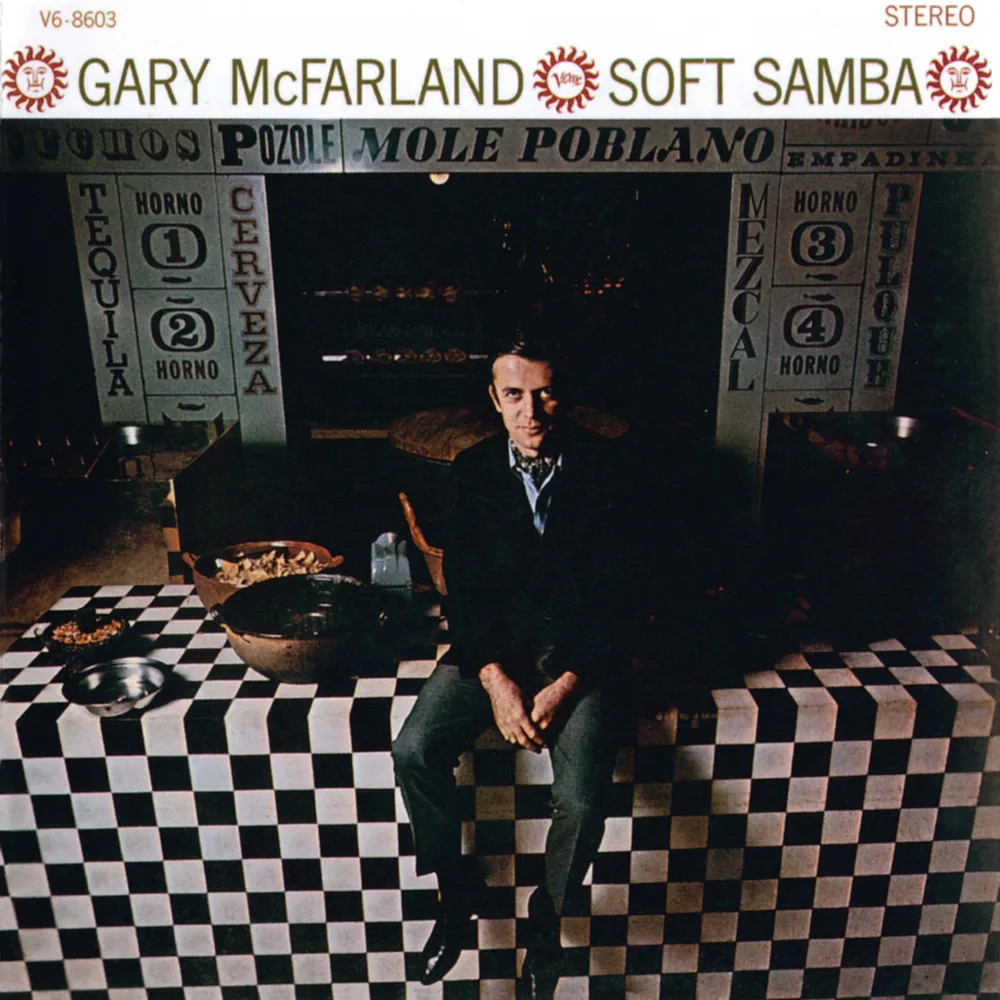
Cover art for Gary McFarland's "Soft Samba" (1964, Verve Records), featuring a photograph of McFarland — used as a stand-in — no free-licensed photo of McFarland could be located after a genuine search. Standard copyright, all rights reserved — held by Verve Records / Universal Music Group. This is not a Creative Commons–licensed image; it is used here as an honestly-disclosed editorial stand-in for a real photo. — Downloaded directly from the Apple Music/iTunes artwork CDN (https://music.apple.com), full-resolution cover scan. Saved locally as portrait.jpg in this folder.
Gary Ronald McFarland was born October 23, 1933, in Los Angeles, California, and moved with his family to Grants Pass, Oregon, at fifteen. He discovered jazz there through records by Miles Davis, Lester Young, and Woody Herman, but he came to music late and almost sideways: while serving in the Army he grew interested in jazz and tried, without much success, to play trumpet, trombone, and piano. He didn't pick up the vibraphone — the instrument he'd become known for — until 1955, and by his own account he was self-taught on it and as a composer-arranger. A chance 1957 encounter with a guitarist named Santiago Gonzales, who encouraged his melodic instincts, pushed him to teach himself music notation from scratch.
That unconventional path led, improbably, to a scholarship at the Lenox School of Jazz in 1959 and a single semester at the Berklee School of Music the same year, where he wrote for Herb Pomeroy's big band and came under the wing of pianist John Lewis. Lewis steered him away from performance and toward large-ensemble arranging — advice that shaped the rest of his career. Because McFarland never went through conventional conservatory training, his orchestration developed without the usual guardrails; the jazz educator Rayburn Wright later identified his signature move as the "grind," layered major and minor seconds that thickened Duke Ellington's harmonic language into something distinctly McFarland's own.
The break came in 1961, when valve trombonist Bob Brookmeyer heard two of McFarland's compositions, "Weep" and "Chuggin'," and championed them to Gerry Mulligan for the Concert Jazz Band. Mulligan recorded them for Gerry Mulligan Presents a Concert in Jazz (1961, Verve) and Gerry Mulligan '63, and the connection opened doors fast: that same year McFarland arranged Bob Brookmeyer's own Gloomy Sunday and Other Bright Moments and worked on Johnny Hodges' Blue Hodge. Producer Creed Taylor at Verve became his most important patron, giving McFarland's name equal billing as "The Gary McFarland Orchestra" on Anita O'Day's All the Sad Young Men (1962) and on his first outing as a billed leader, The Jazz Version of "How to Succeed in Business Without Really Trying" (1962) — an inventive reworking of the Frank Loesser Broadway score featuring an all-star lineup that included Phil Woods, Clark Terry, Doc Severinsen, Jim Hall, Kenny Burrell, and Hank Jones.
1962 also brought the record most people still associate with his name: fresh off the success of Jazz Samba, Stan Getz asked the 28-year-old McFarland to arrange and conduct a big-band bossa nova session. Big Band Bossa Nova, produced by Taylor and recorded at CBS's 30th Street Studio, became one of the defining records of the bossa nova boom and cemented McFarland's reputation as an arranger who could handle Brazilian idiom inside a jazz big-band frame without flattening either. The following January he recorded what many critics still consider his most significant work as a leader: The Gary McFarland Orchestra Featuring Special Guest Soloist: Bill Evans (1963, Verve), six original compositions scored for an eleven-piece chamber ensemble with two violas and two cellos, built around Evans's piano and featuring Jim Hall on guitar and Phil Woods on clarinet — described by one biographer as sublime, evocative music built from deceptive simplicity.
By the mid-1960s McFarland was pulling in two directions at once. He assembled a touring small group featuring the young guitarist Gábor Szabó and reedman Sadao Watanabe, heard on The In Sound (1965), while also chasing commercial crossover with Soft Samba (1965), a collection of pop and bossa covers that sold well but was savaged by critics — DownBeat gave it one star and called it "cheap and trivial... musical self-pollution," and Melody Maker named it the least memorable record of the year. McFarland didn't flinch from the tension; Soft Samba Strings (1967) doubled down on the string-laden pop-jazz sound, while Profiles (1966), a live big-band date recorded at Lincoln Center's Philharmonic Hall with Clark Terry, Bob Brookmeyer, Zoot Sims, and Szabó, and The October Suite (1967) — six through-composed movements written for pianist Steve Kuhn, with Ron Carter on bass — pushed in the opposite direction, toward a more ambitious, classically inflected jazz. McFarland also recorded two duo/co-billed records with Szabó in 1966: Simpático, trading originals and unlikely covers of the Beatles' "Norwegian Wood" and "The Word," and Gypsy '66, billed to "Gábor Szabó with Gary McFarland & Co.," on which McFarland played marimba and handled the arrangements rather than leading outright. He also scored the 1966 MGM thriller Eye of the Devil, starring David Niven and Deborah Kerr, though the soundtrack went unreleased commercially until a 2008 limited pressing.
In 1968 McFarland co-founded Skye Records with music executive Norman Schwartz, Szabó, and vibraphonist Cal Tjader — a label pitched, per a Billboard report at the time, at "established artists who are unhappy with their present record company affiliation." McFarland served as one of its principal creative forces, arranging and producing for other Skye artists (including Lena Horne and Szabó's Lena & Gabor) in addition to his own Does the Sun Really Shine on the Moon? (1968), the ambitious orchestral suite America the Beautiful (An Account of Its Disappearance) (1969) — scored for a huge ensemble including Randy Brecker, Hubert Laws, and Joe Farrell — and Today (1970), featuring Ron Carter on bass and Airto Moreira on percussion. Skye lasted less than two years and folded into bankruptcy in 1970 after roughly twenty-one releases. McFarland spent his last year pursuing Broadway and film work, scoring the 1971 film Who Killed Mary What's 'Er Name?, and recorded Butterscotch Rum (1971, Buddah), a sunshine-pop vocal collaboration with lyricist and political cartoonist Peter Smith.
McFarland never got the chance to build on any of it. On the afternoon of November 2, 1971, he was at Bar 55 on Christopher Street in Greenwich Village with two friends, drummer Gene Gammage and writer David Burnett, when liquid methadone was mixed into their drinks. McFarland went into cardiac arrest and died; Burnett fell into a coma and died several days later; Gammage survived but never publicly discussed what happened. No police investigation was conducted, and whether the poisoning was accidental or deliberate has never been established. McFarland was 38. He was survived by his wife, Gail Evelyn Frankel, whom he married in 1963, and their children Milo and Kerry. A posthumous compilation, Requiem for Gary McFarland, appeared on Cobblestone Records in 1972. His reputation dimmed for decades after his death, overshadowed by the commercial projects of his final years, but musicians never entirely forgot him: Brookmeyer said McFarland "didn't know enough to be like anybody else," and in 2002 the Mark Masters Ensemble recorded previously unheard McFarland compositions on the tribute album Wish Me Well. A 2014 documentary, This Is Gary McFarland, revived interest in his catalog further.
McFarland cited Duke Ellington, Billy Strayhorn, Gil Evans, and Miles Davis as his primary influences, and his arranging vocabulary shows all four: Ellington and Strayhorn's harmonic density (extended, per Rayburn Wright, through McFarland's own "grinds" of stacked major and minor seconds), Gil Evans's textural patience, and a Davis-like preference for space over clutter. Because he came to orchestration self-taught rather than through conservatory training, his writing avoided the reflexive habits of formally schooled arrangers — Steve Kuhn noted that his string and woodwind writing succeeded "despite limited formal training in scoring," built instead around an instinct for what specific musicians did well and a willingness to let an ensemble breathe rather than filling every bar. That same restlessness kept him moving between idioms most arrangers would have picked one lane within: big-band bossa nova, chamber-scored modern jazz, live all-star big-band writing, and unabashedly commercial vocal pop, sometimes within the same eighteen-month stretch. It made him hard to pin down critically in his lifetime, and it's a big reason he's remembered today as much for individual records — Big Band Bossa Nova, the Bill Evans collaboration, The October Suite — as for a single consistent style.
- Big Band Bossa Nova (1962, Verve) - Stan Getz, arranged and conducted by McFarland, produced by Creed Taylor. The defining record of the big-band side of the bossa nova boom and still McFarland's most widely heard work. Spotify - Big Band Bossa...
- The Gary McFarland Orchestra Featuring Special Guest Soloist: Bill Evans (1963, Verve) - Six originals for an 11-piece chamber ensemble with Evans on piano and Jim Hall on guitar; widely cited as his most significant work as a leader. Spotify - The Gary McFarland... Listen
- The In Sound (1965, Verve) - The record that showcases his working small group with Gábor Szabó and Sadao Watanabe, produced by Creed Taylor. Spotify - The In Sound Listen
- The October Suite (1967, Impulse!) - A six-movement suite written for pianist Steve Kuhn, with Ron Carter on bass; the fullest statement of McFarland's more classically inflected side. Spotify - The October Suite Listen
- Soft Samba (1965, Verve) - His best-known commercial pivot toward pop and bossa covers: a chart entry that critics loathed at the time and that later listeners have reassessed as a genuine crossover artifact. Spotify - Soft Samba Listen
Gary McFarland: Full Discography
Identity confirmed via Discogs artist ID 281440 ("Gary McFarland"). 453 total release credits found on Discogs (36 billed "Main"/leader credits, 29 producer credits, 293 guest/compilation appearances, 82 track-level appearances). Personnel, catalog numbers, and dates below are pulled from Discogs release-level data (not just the master listing) for every entry marked "Discogs-verified"; a small number of thinly documented releases are marked accordingly rather than filled in with guesses.
As Leader / Co-Leader
| Album Title | Recording Date(s) | Release Date | Label | Catalog Number | Format(s) | Personnel | Role | Reissue History | Spotify | Buy | Notes |
|---|---|---|---|---|---|---|---|---|---|---|---|
| The Jazz Version Of "How To Succeed In Business Without Really Trying" | Nov 1961 | 1962 | Verve Records | V-8443 | Vinyl, LP, Album, Mono | Billed "The Gary McFarland Orchestra." Gary McFarland (vibraphone, arranger), Phil Woods (alto sax, clarinet), Jim Hall (guitar), Kenny Burrell (guitar), Hank Jones (piano), George Duvivier/Joe Benjamin (bass), Mel Lewis/Osie Johnson (drums), Bob Brookmeyer/Billy Byers/Willie Dennis (trombone), Clark Terry/Doc Severinsen/Joe Newman/Bernie Glow/Herb Pomeroy (trumpet), Al Cohn/Oliver Nelson (tenor sax), Sol Schlinger (baritone sax); Creed Taylor producer | Leader | None found | Spotify - How to Succeed... | — | McFarland's debut as a billed leader. Reworks Frank Loesser's Broadway score |
| The Gary McFarland Orchestra Featuring Special Guest Soloist: Bill Evans | Jan 24, 1963 | 1963 | Verve Records | V6-8518 | Vinyl, LP, Album, Stereo | Gary McFarland (composer, vibraphone), Bill Evans (piano), Jim Hall (guitar), Phil Woods (clarinet), Richard Davis (bass), Ed Shaughnessy (drums), Spencer Sinatra (flute), plus 2 cellos + 2 violas; Creed Taylor producer | Leader | None found | Spotify - The Gary McFarland... | — | 6 originals for an 11-piece chamber ensemble; widely cited as McFarland's most significant leader date |
| The Dreamer | Not specified in Discogs data | 1964 | Prestige | PR 45-331 | Vinyl, 7", 45 RPM, Single | Gary McFarland (vibraphone, lead vocals), Antonio Carlos Jobim (acoustic guitar), Don Payne (bass), Arnold Wise (drums), Spencer Sinatra (flute), Willie Rodriguez (percussion); Carl Lampley producer | Leader | None found | — | — | Single; not confirmed on Spotify |
| Soft Samba | Jun/Sep/Oct 1964 | 1965-02 | Verve Records | V6-8603 | Vinyl, LP, Album, Stereo | Gary McFarland (leader, arranger, vibraphone, conductor), Antonio Carlos Jobim (guitar), Kenny Burrell (guitar), Richard Davis (bass), Willie Bobo/Sol Gubin/Arnold Wise (percussion), Jimmy Cleveland (trombone), Seldon Powell/Spencer Sinatra (flute); recorded by Rudy Van Gelder | Leader | None found | Spotify - Soft Samba | — | Commercial pop/bossa covers pivot. DownBeat gave it 1 star ("cheap and trivial... musical self-pollution"); sold well despite the reviews |
| The In Sound | Not specified in Discogs data | 1965-11 | Verve Records | V6-8632 | Vinyl, LP, Album, Stereo | Gary McFarland (vibraphone, arranger, conductor), Gábor Szabó (guitar), Kenny Burrell (guitar), Sadao Watanabe (flute, tenor sax), Bob Brookmeyer (trombone), Candido (bongos, congas), Grady Tate/Sol Gubin (drums), Richard Davis/Bob Bushnell (bass); Creed Taylor producer | Leader | None found | Spotify - The In Sound | — | Showcase for his mid-60s touring small group |
| Profiles | Recorded live Feb 6, 1966, Philharmonic Hall, Lincoln Center | 1966 | Impulse! | AS-9112 | Vinyl, LP, Album, Stereo | Gary McFarland (conductor, vibraphone, marimba, composer), Clark Terry/Joe Newman/Bernie Glow/Jay McAllister/John Frosk (brass), Bob Brookmeyer/Jimmy Cleveland/Robert Northern/Bill Berry (brass), Phil Woods/Jerome Richardson/Jerry Dodgion/Richie Kamuca/Zoot Sims (reeds), Gábor Szabó (guitar, percussion), Richard Davis (bass, percussion), Willis Conover (narrator); Bob Thiele producer | Leader | None found | Not confirmed on Spotify | — | Live big-band date; narrated by Willis Conover |
| Simpático | May 18 & 20, 1966, Van Gelder Studio | 1966-08 | Impulse! | AS-9122 | Vinyl, LP, Album, Stereo | Gary McFarland (vibraphone, producer, written-by), Gábor Szabó (guitar, written-by), Sam Brown (guitar), Bob Cranshaw/Richard Davis (bass), Joe Cocuzzo (drums); Bob Thiele producer; covers include Lennon-McCartney's "The Word" | Co-leader (duo, w/ Gábor Szabó) | None found | Spotify - Simpático | — | |
| The October Suite | Recorded 1966 | 1967-01 | Impulse! | A-9136 | Vinyl, LP, Album, Stereo | Gary McFarland (conductor, composer, arranger), Steve Kuhn (piano), Ron Carter (bass), Marty Morell (drums), Corky Hale (harp), Alfred Brown (cello), Isidore Cohen/Matthew Raimondi (violin), Charles McCracken (viola); Bob Thiele producer; recorded by Phil Ramone | Leader/Composer (written for Steve Kuhn) | None found | Spotify - The October Suite | — | Six-movement suite; billed on some reissues as "Steve Kuhn / Gary McFarland" |
| Soft Samba Strings | Oct/Nov 1966, Van Gelder Studio + CTS Studios, London | 1967 | Verve Records | V6-8682 | Vinyl, LP, Album, Stereo | Gary McFarland (arranger, vibraphone, vocals), Jack Parnell (conductor); Creed Taylor producer | Leader | None found | Spotify - Soft Samba Strings | — | |
| Eye Of The Devil (Original Motion Picture Soundtrack) | Score for the 1966 MGM film | 2008-03 (reissue; no commercial release at time of the film) | Film Score Monthly | FSM Vol. 11 No. 1 | CD, Ltd (3,000 copies) | Gary McFarland (composer), Jack Parnell (conductor) | Leader/Composer | First commercial release was this 2008 limited reissue, 42 years after the film | Not confirmed on Spotify | — | Score for the David Niven/Deborah Kerr thriller; went unreleased for over four decades |
| Does The Sun Really Shine On The Moon? | Jan 29-31, 1968, A&R Recording Studios, NYC | 1968 | Skye Records | SK-2 | Vinyl, LP, Album, Stereo | Billed "Gary McFarland & Co." Gary McFarland (vibraphone), Richard Davis/Chuck Rainey (bass), Grady Tate/Donald MacDonald (drums), Sam Brown (guitar), Warren Bernhardt (organ), Jerome Richardson (soprano sax, flute), Marvin Stamm (flugelhorn) | Leader | None found | Spotify - Does the Sun... | — | First release on his own Skye label |
| Scorpio And Other Signs | Not specified in Discogs data | 1968 | Verve Records | V6-8738 | Vinyl, LP, Album | Gary McFarland (composer, arranger); Esmond Edwards producer | Leader | None found | Spotify - Scorpio and Other... | — | Zodiac-themed concept album; Discogs lists no session personnel beyond McFarland and production crew |
| America The Beautiful (An Account Of Its Disappearance) | Not specified in Discogs data | 1969 | Skye Records | SK-8 | Vinyl, LP, Album, Stereo | Gary McFarland (composer, conductor), Randy Brecker/Ernie Royal/Marvin Stamm/Bernie Glow/Snooky Young/Richard Williams (trumpet), Garnett Brown (trombone), Hubert Laws/Joe Farrell/Jerome Richardson (reeds), Eric Gale (guitar), Chuck Rainey/Jerry Jemmott (bass guitar), Bernard Purdie/Bill Lavorgna (drums), Warren Bernhardt (piano), large string/brass section | Leader | None found | Spotify - America The Beautiful... | — | Large-ensemble, socially themed orchestral concept work |
| Today | Not specified in Discogs data | 1970 | Skye Records | SK14 | Vinyl, LP, Album, Stereo | Gary McFarland (vibraphone, voice), Ron Carter/Chet Amsterdam (bass), Grady Tate/Sol Gubin (drums), Hubert Laws (flute), Sam Brown (guitar), Curtis Fuller (trombone), Airto Moreira (percussion); Norman Schwartz executive producer | Leader | None found | Spotify - Today | — | |
| Butterscotch Rum | Not specified in Discogs data | 1971 | Buddah Records | BDS 95001 | Vinyl, LP, Album | Billed "Gary McFarland & Peter Smith." No session personnel itemized on Discogs beyond the two credited principals | Co-leader (w/ lyricist Peter Smith) | None found | Spotify - Butterscotch Rum | — | Sunshine-pop vocal collaboration; his final album released in his lifetime |
| Requiem For Gary McFarland | Not specified in Discogs data | 1972 | Cobblestone | CST 9019 | Vinyl, LP, Album | No performer credits itemized on Discogs beyond mastering/cover art crew | Posthumous release | None found | Not confirmed on Spotify | — | Posthumous release; Discogs data is thin and does not specify whether this is new material, outtakes, or a compiled tribute — flagged rather than guessed at |
Co-billed / arranger credit corrected from the previous version of this profile
- Gypsy '66 (Gábor Szabó with Gary McFarland & Co.; recorded 1965, released Feb 1966, Impulse! A-9105) — the earlier version of this profile listed this as an unqualified "Key Recording," implying it was McFarland's own leader date. Discogs release data (id 991579) confirms it is billed to Gábor Szabó, with McFarland's own credit limited to marimba and arranger. Gary McFarland (marimba, arranger), Gábor Szabó (guitar), Sadao Watanabe (flute), Albert Stinson/Richard Davis (bass), Grady Tate (drums). Spotify - Gypsy '66
As Arranger / Sideman / Guest (selected, Discogs-verified)
| Year | Project (Leader/Artist) | Title | Label | Catalog | Role | Notes |
|---|---|---|---|---|---|---|
| 1961 | The Concert Jazz Band (Gerry Mulligan) | Gerry Mulligan Presents A Concert In Jazz | Verve Records | V6-8415 | Composer/Arranger | Contributed "Weep" and "Chuggin'," championed to Mulligan by Bob Brookmeyer; the record that launched McFarland's New York career |
| 1961 | Bob Brookmeyer Orchestra | Gloomy Sunday And Other Bright Moments | (label not fully captured in Discogs data) | — | Arranger | |
| 1961 | Johnny Hodges | Blue Hodge | (label not fully captured in Discogs data) | — | Arranger | |
| 1962 | Anita O'Day / The Gary McFarland Orchestra | All The Sad Young Men | Verve Records | V-8442 | Arranger | Recorded Oct 16, 1961; Creed Taylor producer |
| 1962 | Stan Getz / The Gary McFarland Orchestra | Big Band Bossa Nova | Verve Records | V6-8494 | Arranger, Conductor | Recorded Aug 27-28, 1962, CBS 30th Street Studio; Creed Taylor producer; Jim Hall on guitar |
| 1963 | The Concert Jazz Band (Gerry Mulligan) | Gerry Mulligan '63 | Verve Records | (Discogs: various pressings) | Composer/Arranger contributions | |
| 1963 | Orchestra U.S.A. (John Lewis, musical director) | Debut | (label not fully captured in Discogs data) | — | Member/Arranger | |
| 1969-1970 | Lena Horne & Gábor Szabó | Watch What Happens / Lena & Gabor | Skye Records | (Discogs: various pressings) | Arranger/Producer | Part of McFarland's A&R work at Skye Records |
Skye Records (1968-1970)
Co-founded by McFarland with music executive/manager Norman Schwartz, guitarist Gábor Szabó, and vibraphonist Cal Tjader, per an April 6, 1968 Billboard report describing the label's aim to attract "established artists who are unhappy with their present record company affiliation." The label released roughly 21 albums before folding into bankruptcy in 1970. McFarland's own Skye leader albums are listed in the table above; he also arranged and produced for other artists on the roster.
Compilations & posthumous reissues (not new leader recordings — excluded from the table above)
- The Great Arrangers (1978) — joint Gil Evans / Gary McFarland compilation.
- How To Succeed In Business Without Really Trying + Bob Brookmeyer: Gloomy Sunday And Other Bright Moments (1995, Verve, CD reissue pairing two separate 1961-62 albums on one disc).
- Latin Lounge (1998, Verve/Motor Music, compilation).
- America The Beautiful / Does The Sun Really Shine On The Moon? (2005, Él Records, ACMEM41CD, reissue pairing two Skye-era albums).
- Sketch For Summer (2008, Él Records / Cherry Red, reissue) — billed "Gary McFarland & Gábor Szabó."
- This Is Gary McFarland (2014, Century 67 Films, DVD + CD) — documentary companion release.
- The In Sound & Soft Samba (2018, Ace Records, 2-on-1 CD reissue).
- Soft Samba Live! Jazz From The Penthouse (2023, Century 67 Records, limited mono LP).
- Encounters (2025, Musica Jazz, CD).
Singles (standalone or promo-only — not full albums)
| Year | Title | Label | Catalog | Format | Notes |
|---|---|---|---|---|---|
| 1965 | A Hard Day's Night / And I Love Her | (label not fully captured in Discogs data) | — | 7" | Beatles covers |
| 1965 | Fried Bananas / Wine And Bread | (label not fully captured in Discogs data) | — | 7" | |
| 1966 | Winter Samba | Impulse! | 45-IMP-250 | 7", 45 RPM | |
| 1969 | Libra - Leo / Aries Geminis | Verve Records | (Discogs id 23661530) | 7" | |
| 1969 | Slaves (Instrumental) / Slaves | (label not fully captured in Discogs data) | — | 7" | |
| 1970 | Get Back / Because | Skye Records | (Discogs id 7389631) | 7", Promo | Beatles cover |
| 1970 | And I Love Her / I Want To Hold Your Hand | Verve Records | (Discogs id 17694619) | 7", Single, Mono |
Scope note
This discography prioritizes McFarland's leader/co-leader catalog and his most significant arranging credits (Mulligan, Getz, O'Day, Brookmeyer, Hodges), all confirmed at the release level via the Discogs API rather than taken from the master-listing summary alone. Discogs logs 293 additional "Appearance" credits and 82 "TrackAppearance" credits for this artist ID — largely later compilation and reissue appearances of the albums already itemized above, plus scattered European/Japanese reissue pressings — which are not itemized individually here.
- Bill Evans - guest soloist on The Gary McFarland Orchestra (1963, Verve), widely regarded as McFarland's finest hour as a leader.
- Gerry Mulligan - McFarland's compositions "Weep" and "Chuggin'," championed by Bob Brookmeyer, launched his New York career via Mulligan's Concert Jazz Band (1961, 1963).
- Stan Getz - commissioned and recorded Big Band Bossa Nova (1962), McFarland's best-known arranging credit; profiled separately on JazzProfiles.com.
- Gábor Szabó - guitarist in McFarland's mid-1960s touring group and co-billed partner on Simpático and Gypsy '66 (both 1966); later co-founded Skye Records alongside McFarland. Not profiled on JazzProfiles.com at this time.
- Bob Brookmeyer, Johnny Hodges, John Lewis, Anita O'Day, Steve Kuhn - major arranging clients and collaborators across the 1961-1967 stretch of his career. None are currently profiled on JazzProfiles.com.
- Creed Taylor - producer on the majority of McFarland's Verve output (How to Succeed, Big Band Bossa Nova, The Gary McFarland Orchestra, Soft Samba Strings), the key label relationship of his career. A JazzProfiles.com profile folder exists for Creed Taylor but has not yet been built out with a final profile.
- Jim Hall - guitarist on three key McFarland-associated Verve dates: How to Succeed in Business Without Really Trying (1962), Big Band Bossa Nova (1962), and The Gary McFarland Orchestra (1963); profiled separately on JazzProfiles.com.
- Ron Carter - bassist on The October Suite (1967) and Today (1970); profiled separately on JazzProfiles.com.
- Norman Schwartz, Cal Tjader - co-founders with McFarland and Szabó of Skye Records (1968-1970), where McFarland also arranged and produced for other artists on the roster.
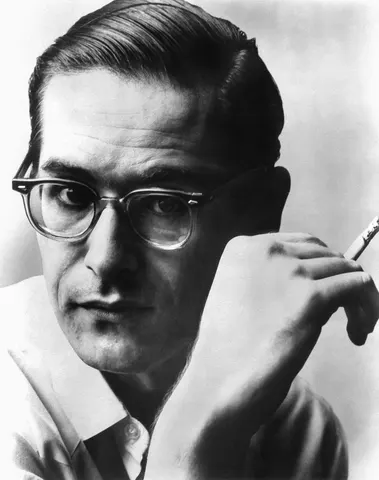
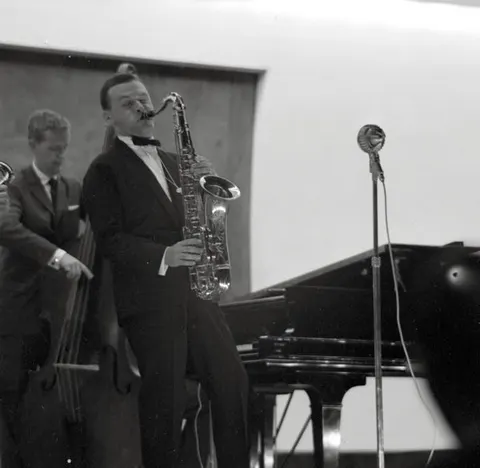
More Orchestral Jazz Artists
See all 62 Orchestral Jazz artists →More American Jazz Artists
See all 567 American artists →- Spotify - The Gary McFarland Orchestra
- This Is Gary McFarland (documentary site)
- Discogs: Gary McFarland
- Wikipedia: Gary McFarland
- Wikipedia: The Gary McFarland Orchestra
- Wikipedia: Skye Records
- Wikipedia: The October Suite
- Wikipedia: Big Band Bossa Nova (Stan Getz album)
- AllMusic: Gary McFarland biography
- This Is Gary McFarland: About Gary McFarland
- JazzProfiles (Steven Cerra's blog, unrelated to this project): Jazz Literature on the Career of Gary McFarland
- Discogs: Gary McFarland
- On his death: multiple sources (Wikipedia; This Is Gary McFarland documentary site) describe the November 2, 1971 methadone poisoning at Bar 55, 55 Christopher Street, Greenwich Village, that killed McFarland and, days later, his friend David Burnett; the Discogs artist profile text lists the death date as November 3 — the majority-sourced and more fully detailed account (November 2) is used here, per the same judgment call made in this profile's original research pass.