 JAZZPROFILES lives in the music 3,006 Jazz Artists fully Profiled!
Michel Warlop
Last updated November 15, 2026
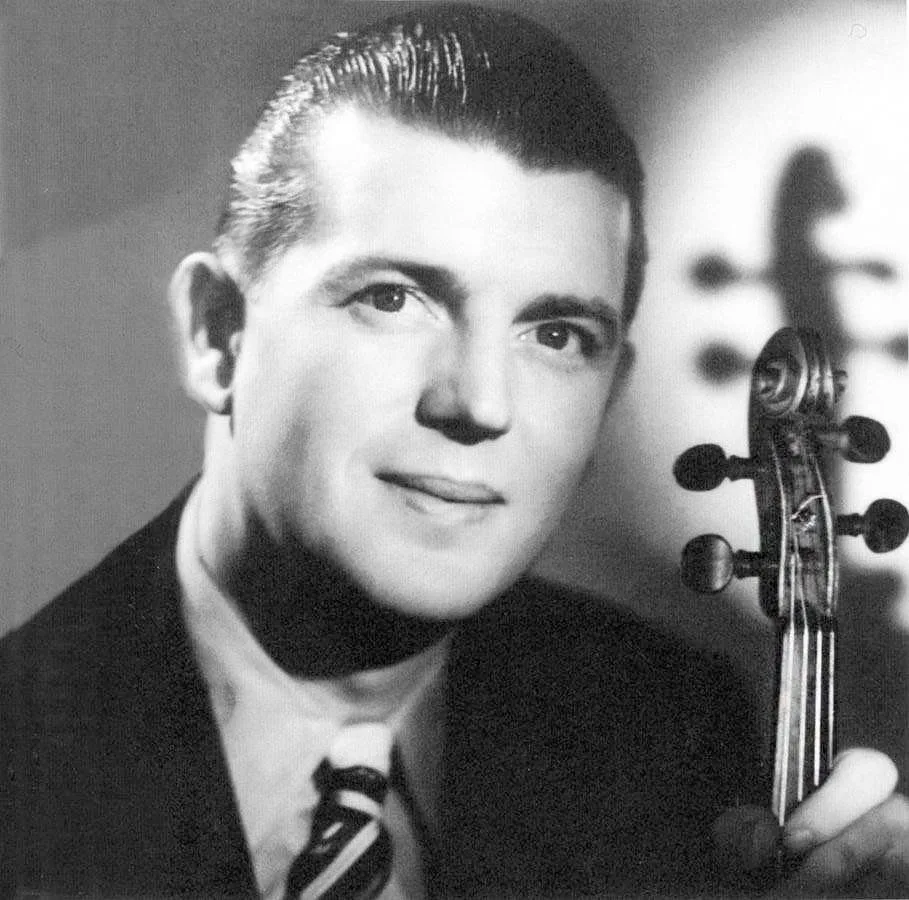
Michel Warlop holding his violin, a studio portrait dated 1938 on Wikimedia Commons. Public domain. Wikimedia Commons tags the file PD-France and PD-anon-70-EU: an anonymous photograph from 1938, more than 70 years old. — Wikimedia Commons, File:MichelWarlop-1938.png - https://commons.wikimedia.org/wiki/File:MichelWarlop-1938.png (also the image property on Wikidata item Q933106)

Michel Warlop was the other great French swing violinist of the 1930s, the nervous, fast-living counterpart to the smoother Stéphane Grappelli, and the man who led the string septet that was one of Paris jazz's most original ideas of the Occupation years. He was born on January 23, 1911, in Douai, in the north of France, to a pastry-maker father and a mother who taught piano. She started his lessons, and he entered the Douai conservatoire at six as a pupil of Victor Gallois. English Wikipedia says he gave his first public concert at seven and played in Paris at eight, in a 1919 benefit for war victims. He moved to the Lille conservatoire at about ten and to the Paris Conservatoire at thirteen. French Wikipedia records that he studied with Jules Boucherit and took a first prize there in 1928, and that he was on course for a classical career.
Jazz took over almost at once. His first records, in 1930 according to French Wikipedia, were made in the dance orchestra of Grégor et ses Grégoriens, and by 1933 he was working as a studio violinist: the Discography of American Historical Recordings lists him on Jean Sablon's "Je suis sex-appeal" for Columbia, recorded in April 1933. In 1934 and 1935 he accompanied the singers Maurice Chevalier and Germaine Sablon, and Discogs, French Wikipedia and the Django Reinhardt history site place him behind a long list of popular singers of the decade, among them Charles Trénet, Mireille, André Claveau and Joséphine Baker. He also led a studio band of his own. The first sides on a Pathé compilation of his work date from August 1934 ("All for the Swing" and "Crazy Fiddle"), and the reed players of the mid-1930s sessions included Alix Combelle and André Ekyan, with Grappelli on piano on several of them.
His long association with Django Reinhardt began in 1934, on a session with Jean Sablon, according to the guitarist's own history site. Reinhardt is on the guitar in Warlop's orchestra on the Polydor sides of April 17, 1936 ("Cloud Castles", "Magic Strings", "Crazy Strings", "Novel Pets" and others, with Django's brother Joseph Reinhardt on rhythm guitar and the bassist Louis Vola), and Warlop in turn was the violinist in the December 1937 sessions that made his best-known records. On December 7, 1937 he joined the Quintette du Hot Club de France as a second violin beside Grappelli for "Swinging with Django" and "Paramount Stomp" (Swing SW. 40), a record billed to the quintet with Warlop. On December 21 his orchestra recorded "Serenade for a Wealthy Widow" and "Taj Mahal" for the Swing label (SW. 28) with Reinhardt, Vola and a front line of three clarinettists, and on December 27 a trio of Warlop, Reinhardt and Vola cut "Christmas Swing" and "Tea for Two" (SW. 13). AllMusic adds that in 1937 he played in a group with Grappelli and the American violinist Eddie South, and that in 1938 he worked as a duo with the expatriate American pianist Garland Wilson.
American visitors to Paris used him too. On March 2, 1935 his orchestra, with Arthur Briggs on trumpet, backed Coleman Hawkins on four sides, "Avalon", "Blue Moon", "What a Difference a Day Made" and "Star Dust", the session AllMusic singles out among his American collaborations.
The war changed the shape of his career. In mid-1939 he joined the orchestra of the bandleader Raymond Legrand, father of the composer Michel Legrand, and was called up that September. He became a prisoner of war and was released in February 1941 because of tuberculosis. Back in Paris he returned to Legrand's band, appeared as one of its three violinists in the film Mademoiselle Swing (1942) and, with other players from the orchestra, recorded the jazz septet for which he is now best remembered. His Septuor à Cordes had four violins (Warlop, Emile Chavannes, Paulette Izoard and Sylvio Schmidt) with two guitars and a bass; on its 1941 single "Kermesse" and "Harmoniques" the guitarists are Gaston Durand and Matelo Ferret and the bassist is Francis Luca, and on the 1942 and 1943 singles the guitarists are Emile Feldman and Louis Gasté, with Pierre Spiers on harp. Warlop wrote and arranged nearly all of its repertory, a blend of classical string writing and jazz that English Wikipedia calls very unusual. His largest piece, the Swing Concerto for jazz and symphony orchestra, was recorded in 1942 but not released until a 1989 CD, and in the same period he made "Kiboula" and "Modernistic" with a band billed as his fifteen jazz soloists (Rythme, recorded November 17, 1942).
After the war he did not play in Paris again, according to English Wikipedia, and worked as a touring soloist and with small groups in the south of France. His last engagement was with the pianist Jimmy Réna's group at the Grand Hôtel at Superbagnères, above Luchon in the Pyrenees. He passed away in the hospital at Bagnères-de-Luchon on March 6, 1947, at the age of 36; English and French Wikipedia both name tuberculosis. He is buried in Luchon. A street in Douai bears his name, and Pierre Guingamp's biography Michel Warlop (1911-1947): génie du violon swing was published by L'Harmattan in 2011.
Warlop trained as a classical violinist, and it shows in a bright, fast, technically secure tone that he used for swing: Discogs describes him as the temperamental opposite of Grappelli, exalted and nervy where Grappelli was gentle, and pairs the two with Eddie South as the leading swing violinists of the period. The reference points listed on the Django Reinhardt history site are the American violinists Joe Venuti and Eddie South and the guitarist Eddie Lang, and he listened closely to the American players who came through Paris, among them Benny Carter, Coleman Hawkins and Bill Coleman. Besides playing, he arranged and composed, and his string septet and his Swing Concerto were early attempts to fuse a classical string sound with jazz. The critic Hugues Panassié is quoted on that site as saying he never had the reputation he deserved.
- Michel Warlop Quintessence: Paris 1933-1943 (Frémeaux & Associés FA 295, 2013) - a two-disc survey from the Grégoriens and the Chicago Syncopators through the Septuor à Cordes and the Swing Concerto. Apple Music - Quintessence, Paris 1933-1943 Listen
- Michel Warlop et son orchestre, "Serenade for a Wealthy Widow" / "Taj Mahal" (Swing SW. 28, recorded December 21, 1937) - the orchestra with Django Reinhardt and Louis Vola. Apple Music - Taj Mahal Listen
- Michel Warlop, "Christmas Swing" / "Tea for Two" (Swing SW. 13, recorded December 27, 1937) - the trio of violin, guitar and bass. Apple Music - Serenade for a Wealthy Widow Listen
- Quintette du Hot Club de France avec Michel Warlop, "Swinging with Django" / "Paramount Stomp" (Swing SW. 40, recorded December 7, 1937) - Warlop as second violin with the Quintette du Hot Club de France and Grappelli.
- Coleman Hawkins avec l'orchestre Michel Warlop (recorded March 2, 1935) - "Avalon", "Blue Moon", "What a Difference a Day Made" and "Star Dust", with Arthur Briggs on trumpet.
- Michel Warlop et son Septuor à Cordes, "Kermesse" / "Harmoniques" (Swing SW. 124, 1941) - the string septet with Matelo Ferret on guitar.
- Special Michel Warlop 1934-1943 (EMI Pathé Marconi 251272-2, 1989) - a Pathé CD with liner notes by Daniel Nevers that includes the first release of the Swing Concerto (parts I and II, recorded 1942).
- Django Reinhardt and Michel Warlop, Two of a Kind (Saga 066 451-2, 2003) - a 24-track collection of their sessions of 1934 to 1943.
Michel Warlop: Full Discography
French swing violinist, bandleader and arranger, born in Douai on January 23, 1911, who passed away in Bagnères-de-Luchon on March 6, 1947. Discogs files his releases under artist 334082 (https://www.discogs.com/artist/334082), which lists about 208 entries, most of them later compilations of Django Reinhardt, Coleman Hawkins and Charles Trénet material that includes his playing. His own bands sit under separate Discogs entries: Michel Warlop Et Son Orchestre (752911), Michel Warlop Et Son Septuor À Cordes (4065782), the Michel Warlop Trio (1496982), Michel Warlop Et Ses Solistes De Jazz (3827372), Michel Warlop Et Son Ensemble (3095528) and Michel Warlop And His Big Band (2301001). His leader work is a short run of 78 rpm singles for the Swing, Columbia and Rythme labels from 1936 to 1943, which are gathered on later CDs; he made no long-playing records in his lifetime. Where a catalog number, date or personnel list could not be confirmed, the cell says so.
Role key: Leader means the record is billed to Warlop or his band. Co-billed means his name appears beside another leader's on the sleeve. Sideman rows give what the release record or the Discography of American Historical Recordings shows.
Leader and co-billed releases (78 rpm singles)
| Album | Recording Date(s) | Release Date | Label | Catalog Number | Format | Personnel | Role | Notes | Listen | Buy |
|---|---|---|---|---|---|---|---|---|---|---|
| Michel Warlop et son orchestre, "All the Time" / "Harlem Hurricane" | Not confirmed | 1936 | Columbia | DF 2040 | 10-inch 78 rpm | Not itemized on the release record | Leader | Discogs gives 1936 for the release. | — | — |
| Michel Warlop, "Christmas Swing" / "Tea for Two" | December 27, 1937 | 1938 | Swing | SW. 13 | 10-inch 78 rpm | Michel Warlop (violin), Django Reinhardt (guitar), Louis Vola (bass) | Leader | Trio record. | — | — |
| Michel Warlop et son orchestre, "Serenade for a Wealthy Widow" / "Taj Mahal" | December 21, 1937 | 1938 | Swing | SW. 28 | 10-inch 78 rpm | Michel Warlop (violin), Django Reinhardt (guitar), Louis Vola (bass), Pierre Zepilli (piano), Georges Paquay (drums), André Lamory, Charles Schaaf and Jean Magnien (clarinets) | Leader | Apple Music - Taj Mahal, Apple Music - Serenade for a Wealthy Widow | — | |
| Quintette du Hot Club de France avec Michel Warlop, "Swinging with Django" / "Paramount Stomp" | December 7, 1937 | 1937 | Swing | SW. 40 | 10-inch 78 rpm | Stéphane Grappelli (violin), Michel Warlop (violin, as listed by the Discography of American Historical Recordings), Django Reinhardt, Joseph Reinhardt and Eugène Vées (guitars), Louis Vola (bass) | Co-billed | The Discogs credit block lists Grappelli and the rhythm section; Warlop is named in the title and listed on the matrices by the Discography of American Historical Recordings. | — | — |
| Michel Warlop / Michel Warlop et son orchestre, "Sweet Sue" / "Organ Grinder's Swing" | Not confirmed | 1938 | Not confirmed | Not confirmed | 10-inch 78 rpm | Not confirmed | Leader | Discogs files the pair under a master dated 1938. | — | — |
| Michel Warlop et son orchestre, "Retour" / "Nandette" | Not confirmed | 1940 | Swing | SW. 100 | 10-inch 78 rpm | Michel Warlop (violin), Paulette Izoard, Sylvio Schmidt and Emile Chavannes (violins), Charles Louis (piano), Antonio Rovira (bass), Armand Molinetti (drums), Alix Combelle (conductor) | Leader | Discogs dates the single February 22, 1940. Warlop is credited as composer. | — | — |
| Michel Warlop et son Septuor à Cordes, "Kermesse" / "Harmoniques" | Not confirmed | 1941 | Swing | SW. 124 | 10-inch 78 rpm | Michel Warlop, Emile Chavannes, Paulette Izoard and Sylvio Schmidt (violins), Gaston Durand and Jean "Matelo" Ferret (guitars), Francis Luca (bass) | Leader | — | — | |
| Michel Warlop et son Septuor à Cordes, "Aisément" / "Tempête sur les cordes" | Not confirmed | 1941 | Not confirmed | Not confirmed | 10-inch 78 rpm | Not confirmed | Leader | Discogs files the pair under a master dated 1941. | — | — |
| Michel Warlop et son Septuor à Cordes, "Sur quatre cordes" / "Nite" | Not confirmed | 1942 | Swing | SW. 139 | 10-inch 78 rpm | Michel Warlop, Emile Chavannes, Paulette Izoard and Sylvio Schmidt (violins), Emile Feldman and Louis Gasté (guitars), Pierre Spiers (harp), Francis Luca (bass) | Leader | — | — | |
| Michel Warlop et son Septuor à Cordes, "Poker" / "Mi la ré sol" | Not confirmed | 1942 | Swing | SW. 152 | 10-inch 78 rpm | Michel Warlop and Emile Chavannes and Sylvio Schmidt (violins), Emile Feldman and Louis Gasté (guitars), Pierre Spiers (harp), Francis Luca (bass) | Leader | Warlop is credited as composer. | — | — |
| Michel Warlop et ses solistes de jazz, "Kiboula" / "Modernistic" | November 17, 1942 | 1942 | Rythme | D 2136 | 10-inch 78 rpm | Not itemized on the release record | Leader | Billed to a fifteen-piece group of soloists. Recorded in Paris. | — | — |
| Michel Warlop et son Septuor à Cordes, "Oui" / "Mickey" | Not confirmed | 1943 | Swing | SW. 167 | 10-inch 78 rpm | Michel Warlop, Emile Chavannes, Raymond Goutard and Sylvio Schmidt (violins), Emile Feldman and Louis Gasté (guitars), Pierre Spiers (harp), Francis Luca (bass) | Leader | — | — | |
| Coleman Hawkins avec l'orchestre Michel Warlop, "Blue Moon" / "What a Difference a Day Made" | March 2, 1935 | Not confirmed | His Master's Voice | X.4497 | 10-inch 78 rpm | Coleman Hawkins (tenor saxophone), Arthur Briggs (trumpet), Michel Warlop et son orchestre | Co-billed | The same session produced "Avalon" and "Star Dust", which Discogs files under separate masters. The date comes from the release notes, which cite Paul Vernon's bio-discography of Django Reinhardt. | — | — |
Later collections of his own recordings
| Album | Year | Label | Catalog Number | Format | Contents | Notes | Listen | Buy |
|---|---|---|---|---|---|---|---|---|
| Tea for Two | 1964 | La Voix de son Maître | Not confirmed | LP | Not itemized | The earliest collection under his name found on Discogs. | — | — |
| Michel Warlop 1934-1938 avec Django Reinhardt, Tome 1 | 1983 | Pathé | 1727281 | LP | 16 tracks from "All for the Swing" and "Crazy Fiddle" (August 1, 1934) to "Limehouse Blues" | Research and liner notes by Daniel Nevers, with matrix dates for each side. | — | — |
| Special Michel Warlop 1934-1943 | 1989 | EMI Pathé Marconi | 251272-2 | CD | 25 tracks, including the first release of the Swing Concerto (parts I and II, recorded 1942) | Liner notes by Daniel Nevers. | — | — |
| Modernistic 1933/1943 | 1994 | EPM | Not confirmed | CD | Not itemized | AllMusic dates this collection 1996; Discogs gives 1994. | — | — |
| Two of a Kind (Django Reinhardt and Michel Warlop) | 2003 | Saga | 066 451-2 | CD | 24 tracks recorded in Paris from 1934 to 1943 | Includes the April 17, 1936 orchestra sides, the December 1937 sessions and the 1943 "Mélodie au crépuscule". | — | — |
| Michel Warlop Quintessence: Paris 1933-1943 (Discogs title Paris 1933-1943) | 2013 | Frémeaux & Associés | FA 295 | 2 CD | Two discs from "Fantaisie grégorienne" to the 1943 septet sides | The fullest single overview of his career. | Apple Music | — |
As sideman and accompanist (selected credits)
Recordings made as a studio violinist accompanying singers and other bandleaders. Years follow Discogs unless the Discography of American Historical Recordings (DAHR) gives a recording date.
| Year | Project (Leader) | Title | Label | Catalog | Role | Notes |
|---|---|---|---|---|---|---|
| 1933 | Jean Sablon | "Je suis sex-appeal" | Columbia (UK) | CL4258 | Violin | Recorded April 4, 1933, the earliest recording date DAHR gives for him. |
| 1934 | Maurice Chevalier | "Si je lui dis non" / "Ce n'est pas très très bien" | Gramophone | Not confirmed | Appearance listed on Discogs | Instrument not itemized. |
| 1934 | Germaine Sablon | "La berceuse du marin" / "La mauvaise prière" | Gramophone | Not confirmed | Appearance listed on Discogs | Instrument not itemized. |
| 1935 | Léon Monosson | "Deux cigarettes dans l'ombre" and "Tout le jour... toute la nuit" | Columbia (UK) | CL5220, CL5221 | Violin | Recorded February 9, 1935, with a jazz quartet. |
| 1935 | André Pasdoc, accompanied by L'Orchestre Vola | "Vivre pour toi" / "Un violon dans la nuit" | Polydor | 512.467 | Violin | Recorded October 1935, with Louis Vola (bass), Django Reinhardt (guitar, side A) and Stéphane Grappelli (violin). |
| 1938 | Mireille | "Dine et din" / "Et voilà, voilà les hommes" | Columbia | Not confirmed | Appearance listed on Discogs | Instrument not itemized. |
| 1938 | Stéphane Grappelli | "Tornerai", "If I Had You", "It Had to Be You", "Nocturne" | Decca | DTB 3531 to 3534 | Violin, as listed by DAHR | DAHR lists him on these matrices of February 1, 1938; not checked against a release credit. |
| 1939 | Max Geldray | "Limehouse Blues" / "Mouth Organ Swing No. 1" | Swing | SW. 49 | Violin | With Jean-Louis Janson (violin), Henri Schaap and Roger Chaput (guitars), Louis Vola (bass). |
| 1941 | Guy Paquinet et son orchestre | "Fumées" / "Ida" | Swing | Not confirmed | Appearance listed on Discogs | Instrument not itemized. |
| 1942 | Pierre Mingand, accompanied by Michel Warlop et son orchestre | "Si tu me dis oui" / "Ils sont zazous" | Rythme | Not confirmed | Orchestra leader | |
| 1943 | Marius Coste and Irène de Trébert | "On n'attend plus que vous" | Columbia (UK) | CL7710 | Violin | Recorded January 14, 1943 (DAHR). |
Discogs also lists his playing on compilations of Charles Trénet (Frémeaux's Intégrale volumes 2 to 5), Joséphine Baker (1927-1939), André Claveau and Jean Tranchant, on dozens of Django Reinhardt anthologies and on Coleman Hawkins collections such as The Hawk in Europe 1934-1937; the instrument and the individual tracks are not itemized there.
- Django Reinhardt - guitarist on Warlop's orchestra and trio sides of 1934 to 1937, including the December 1937 recordings of "Taj Mahal", "Christmas Swing" and "Tea for Two".
- Stéphane Grappelli - fellow violinist; pianist on several of Warlop's sessions of the mid-1930s, and in a violin group with Eddie South in 1937.
- Coleman Hawkins - tenor saxophonist featured with Warlop's orchestra in Paris on March 2, 1935.
- Arthur Briggs - trumpeter on the Hawkins sides with Warlop's orchestra on March 2, 1935.
- Louis Vola - bassist on the April 1936 orchestra sides and the December 1937 trio and orchestra recordings, and on a Polydor single of 1935 that accompanies the singer André Pasdoc with Reinhardt, Grappelli and Warlop.
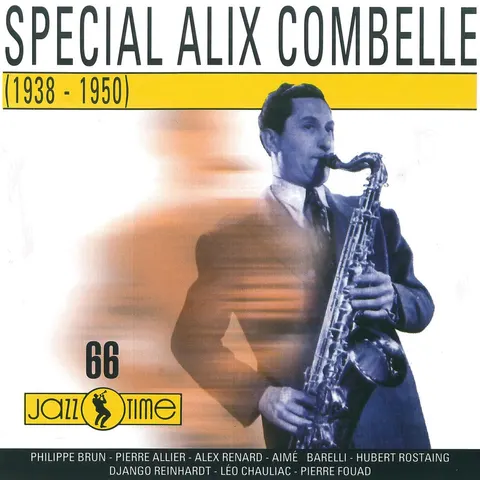
- Alix Combelle - saxophonist and clarinettist in Warlop's studio orchestra in 1934 to 1936.
- André Ekyan - clarinettist and alto saxophonist in Warlop's studio orchestra in 1934 to 1936.
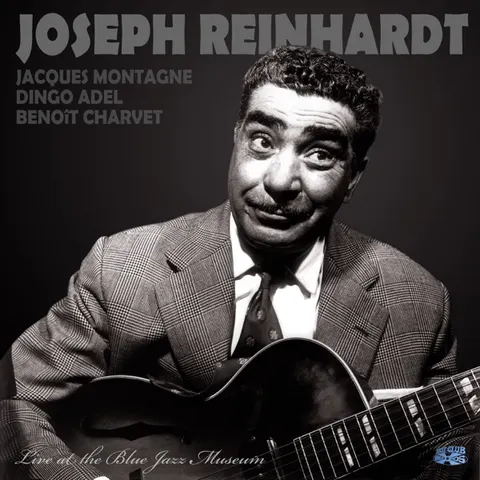
- Joseph Reinhardt - rhythm guitarist on the April 1936 orchestra sides and on "Swinging with Django" with the Quintette du Hot Club de France in December 1937; he also recorded with Warlop's trio in 1941 and 1942.
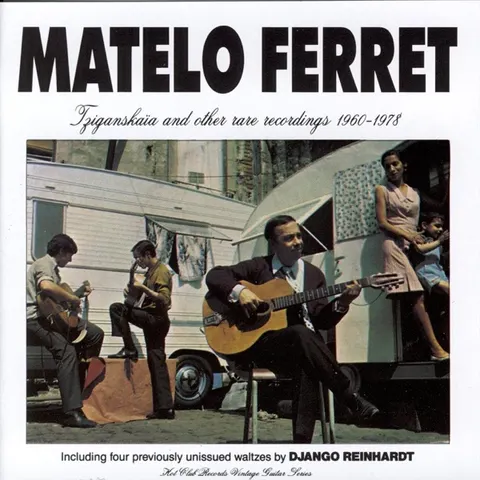
- Matelo Ferret - guitarist in the Septuor à Cordes on its 1941 single "Kermesse" and "Harmoniques".
- Roger Chaput - guitarist on the 1939 Swing single of the harmonica player Max Geldray with Warlop on violin.
- Raymond Legrand - bandleader whose orchestra Warlop joined in mid-1939 and again after his release in 1941.
- Max Geldray - harmonica player on the 1939 Swing single "Limehouse Blues", with Warlop and Jean-Louis Janson on violins, Vola on bass and Chaput on guitar.
- Eddie South and Garland Wilson - the American violinist and pianist with whom AllMusic says Warlop played in 1937 and 1938.
- Emile Chavannes, Paulette Izoard and Sylvio Schmidt - the other violinists of the Septuor à Cordes.
- Gaston Durand, Emile Feldman, Louis Gasté, Pierre Spiers and Francis Luca - guitarists, harpist and bassist of the Septuor à Cordes on its singles of 1941 to 1943.
- Jean Sablon, Germaine Sablon and Maurice Chevalier - singers Warlop accompanied from 1933 to 1935.

More Swing Artists
See all 363 Swing artists →More French Jazz Artists
See all 511 French artists →- Discogs
- MusicBrainz
- AllMusic
- Wikipedia (English)
- Wikipedia (French)
- Wikidata
- BnF data
- Discography of American Historical Recordings
- Apple Music: Michel Warlop
- Django Reinhardt site: Michel Warlop
- Michel Warlop on JazzProfiles.com
- Wikipedia (English): Michel Warlop
- Wikipedia (French): Michel Warlop
- Discogs: Michel Warlop, artist 334082
- Discogs: Michel Warlop Et Son Orchestre, artist 752911
- Discogs: Michel Warlop Et Son Septuor À Cordes, artist 4065782
- Discogs: Christmas Swing / Tea For Two, Swing SW. 13
- Discogs: Serenade For A Wealthy Widow / Taj Mahal, Swing SW. 28
- Discogs: Kermesse / Harmoniques, Swing SW. 124
- Discogs: Kiboula / Modernistic, Rythme D 2136
- Discogs: Special Michel Warlop 1934-1943, EMI Pathé Marconi
- Discogs: Two Of A Kind, Saga 066 451-2
- Discogs: Michel Warlop 1934-1938 Avec Django Reinhardt, Tome 1, Pathé
- Discography of American Historical Recordings: Michel Warlop
- AllMusic: Michel Warlop, biography by Chris Kelsey
- Django Reinhardt site: Michel Warlop, biography
- MusicBrainz: Michel Warlop
- Wikidata: Michel Warlop
- JazzProfiles.com: Arthur Briggs
- JazzProfiles.com: Roger Chaput
- JazzProfiles.com: André Ekyan