 JAZZPROFILES lives in the music 3,006 Jazz Artists fully Profiled!
Art Simmons
Last updated November 15, 2026
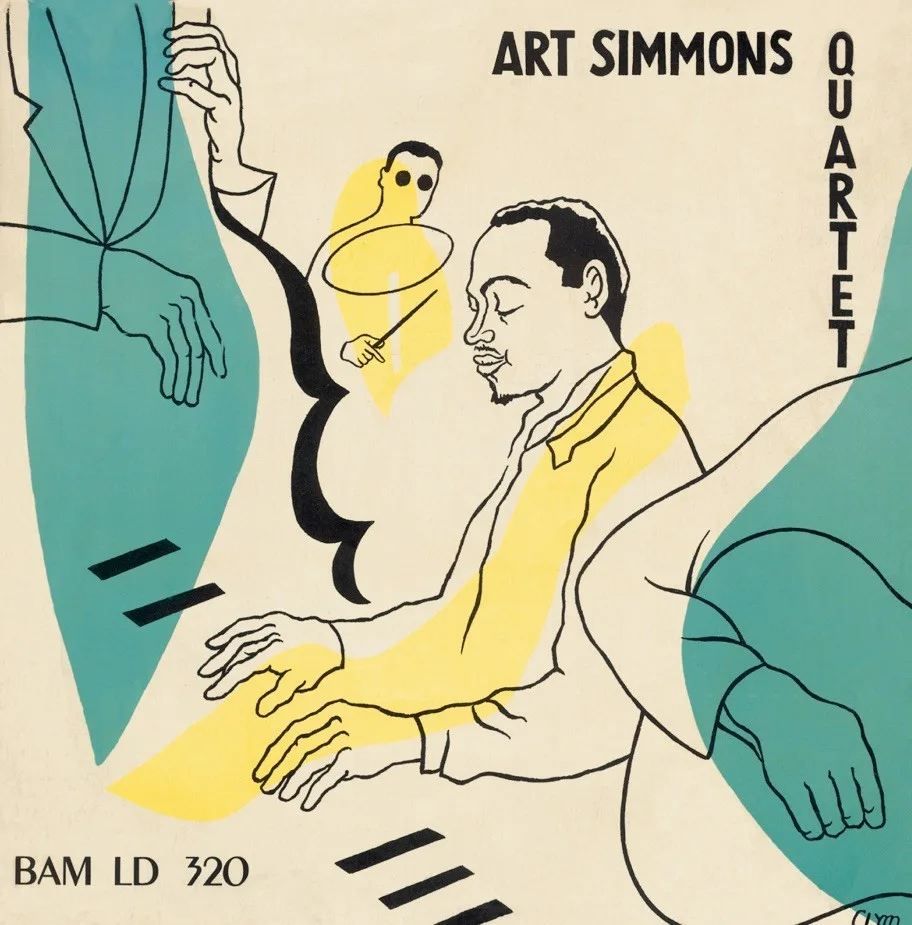
Cover of *Art Simmons Quartet* (Boîte à Musique BAM LD 320, 1956), his own leader album: an ink-and-colour illustration of a pianist at the keyboard, with a bassist's hand and a drummer's figure behind him. It is an illustration, not a photograph of the artist. The image is cropped on the right to remove the "Jazz in Paris collector's edition" strip of the reissue artwork. Standard copyright, all rights reserved, held by the label or its successors. This is not a Creative Commons or public-domain image; it is an album cover shown as an honestly disclosed editorial identification image. — Apple Music album artwork for Quartet (Art Simmons) - https://music.apple.com/fr/album/quartet/1442509030
Art Simmons (Arthur Eugene Simmons) was born on February 5, 1926 in Glen White, in Raleigh County, West Virginia, and passed away on April 23, 2018 at his home in Beckley, West Virginia, at the age of 92. He was a pianist, arranger and accompanist, American by birth and upbringing, whose working jazz life belongs to France. He settled in Paris in 1949, when he was 23, and stayed until about 1971, some twenty-two years in which he led trios in its clubs, recorded for its labels and played with the American musicians who passed through the city. Only after that did he return to West Virginia, where he retired.
He was the eldest child of the Reverend Albert E. Simmons and Hettie Bennett Simmons. He began piano at four with a Beckley teacher, Bessie Smoot, finished Stratton High School at sixteen and went on to classical study at Bluefield State College and West Virginia University. Drafted into the US Army in February 1944, at eighteen, he conducted and played in the 17th Special Services Band and took part in goodwill tours that entertained troops in Europe and Africa; French Wikipedia says he served alongside the saxophonist James Moody. After the war he stayed on in Germany as a jazz pianist, arranger and accompanist and formed a group called the Four Stars Quartet.
His first recordings were made in Switzerland. On April 30, 1949 in Lausanne he was the pianist in Moody's quartet, with Alvin "Buddy" Banks on bass, Clarence Terry on drums and the singer Al Edwards, which produced "Stardust" and "Moody and Soul", later collected on the Prestige 10-inch New Sounds From France (1953); Discogs also credits him on Moody's Hot House 78 for Vogue. That year he moved to Paris, where he studied at the Paris Conservatoire and the École Normale de Musique, and his obituary says he played the Paris Jazz Festival with Charlie Parker and Kenny Clarke. English Wikipedia names the pianist Aaron Bridgers, the saxophonist Don Byas, Robert Mavounzy and the trumpeter Nelson Williams among his early Paris associates. In 1951 he became the regular pianist at the Ringside Club, which later became the Blue Note, leading a trio there.
On March 25, 1952 he was the pianist on six sides that Dizzy Gillespie recorded at the Théâtre des Champs-Élysées for the Blue Star label, with Byas on tenor saxophone, Joe Benjamin on bass, Bill Clark on drums and Humberto Canto on congas: "Cocktails for Two", "Cognac Blues", "Moon Nocturne", "Sabla Y Blu", "Blue and Sentimental" and "Just One More Chance". Arnold Ross played piano on the April sessions that followed. The six were reissued in 2003 on The Great Blue Star Sessions 1952-1953, and Atlantic's American 10-inch Dizzy (Volume I) lists him, uncredited, on four of them. Discogs lists a run of Don Byas releases from 1950 to 1957 among his credits, which are not itemised here. He made his own records in these years too: Boogie Woogie for Mercury Wing, a set of boogie-woogie piano pieces that also names Maurice Vander on piano, with Clarke on drums, and the Art Simmons Quartet 10-inch on Boîte à Musique, recorded on March 13, 1956 with the bassist Bill Crow, the drummer Dave Bailey and the guitarist Terry Donoughue. The same label's Jazz Singer has the singer Bertice Reading accompanied by his quartet, and English Wikipedia says he toured London with singers such as Reading.
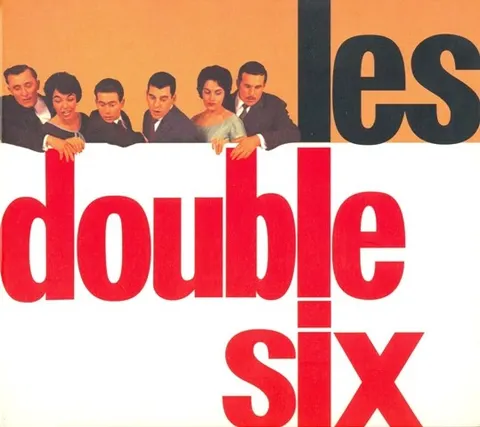
By 1958 he was the resident pianist at the Mars Club, on rue Robert-Estienne in the 8th arrondissement of Paris, where his trio played nightly from eleven until four in the morning for the visiting Americans. The bassist Michel Gaudry joined it after meeting him on a radio show, the guitarist chair passed from Pierre Cullaz to Elek Bacsik, and Jimmy Gourley played the newly opened club with him in spring 1958. He accompanied touring singers there, among them Carmen McRae and, in 1958, Billie Holiday. In January and February 1960 he recorded at Studio Thorens in Paris with Clark Terry, the trombonist Quentin Jackson, Gaudry, Bacsik and Clarke. The sessions produced two Ducretet Thomson EPs, and the first, No Problem, is billed to Simmons and marked on its sleeve as coming from the film Les Liaisons dangereuses. In 1960 he was also the pianist on Les Double Six Meet Quincy Jones (Columbia), the vocal group's first record, recorded at the Théâtre des Champs-Élysées with Gaudry, Pierre Michelot, Christian Garros, Daniel Humair and Clarke sharing the rhythm chairs.
The early 1960s brought a duo with the drummer Art Taylor, and then the Living Room, a club near the Champs-Élysées that he ran with Aaron Bridgers; he also made arrangements for Barclay Records. In 1965 he helped organize a Paris Jazz Stars benefit concert that raised money for the American civil rights movement, among the beneficiaries the Southern Christian Leadership Conference, and from 1967 to 1971 he wrote for the Paris column of Jet magazine. His two-piano records with Jack Diéval, Ambiance pour 2 pianos (Polydor, 1966, with the bassist Jimmy Woode and the drummer Franco Manzecchi) and Pianos Duet (Columbia, 1969, with Gaudry and Humair), date from this period. He wrote the liner notes for Michel Sardaby's quintet album Five Cat's Blues (Président, 1970).
After an engagement in Spain in 1971 he returned to the United States and retired to Beckley. In September 2016, then 90, he was among more than eighty musicians honored at the West Virginia All Black Schools Sports and Academics Hall of Fame's celebration of the arts, and he told a local television station he was glad to be back in his home state. Though he was born and died in West Virginia, almost all of his recording career as a jazz pianist took place in Paris.
No interview in which he names his influences was found, so this section sticks to what the records show. A club pianist and accompanist of the bebop era, he recorded everything from swing standards to boogie-woogie and spirituals. His own quartet date of 1956 mixes standards ("My Funny Valentine", "Too Marvellous for Words", "The Lady Is a Tramp", "Nice Work If You Can Get It") with two pieces credited to him, "Art's Blues" and "Hommage to Neal Hefti", and Discogs files its 2001 reissue under hard bop, bop and cool jazz. The Boogie Woogie album, which Discogs places under boogie-woogie and piano blues, shows a different side, and the 1966 duets with Jack Diéval, which Discogs files under cool jazz and swing, play standards and French songs such as "La Vie en rose" and "Les Feuilles mortes" on two pianos.
Much of his work was in support of others: the singers at the Mars Club, Bertice Reading, Billie Poole and the singer Al "Fats" Edwards on Negro Spirituals, and the instrumental leaders of the Paris sessions, from Moody and Gillespie to Terry and Byas. What the records show is a pianist trusted to keep a rhythm section moving for visiting soloists and to hold a trio together through a night of sets, more than a bandleader with a large catalogue of his own.
- Art Simmons Quartet (1956, Boîte à Musique BAM LD 320) - his leader date, recorded on March 13, 1956 with Bill Crow, Dave Bailey and Terry Donoughue. Apple Music - Quartet Listen
- Piano aux Champs-Élysées (2001, Gitanes Jazz Productions / EmArcy 014 059-2) - the Jazz in Paris reissue of the 1956 quartet date, paired with a 1958 session by the pianist Ronnell Bright. Apple Music - Piano aux Champs-Élysées Listen
- Dizzy Gillespie, The Great Blue Star Sessions 1952-1953 (2003, Universal Music Jazz France) - the Paris sides of 1952 and 1953; Simmons is the pianist on the six titles of March 25, 1952. Apple Music - The Great Blue Star Sessions 1952-1953 Listen
- Les Double Six, Meet Quincy Jones (1960, Columbia FPX 188) - the vocal group's first record, with Simmons on piano. Apple Music - Meet Quincy Jones Listen
- No Problem (1960, Ducretet Thomson 450 V 254) - the EP from the sessions with Clark Terry, Kenny Clarke, Elek Bacsik and Michel Gaudry, tied to the film Les Liaisons dangereuses. Apple Music - No Problem Listen
- Jack Diéval and Art Simmons, Ambiance pour 2 pianos (1966, Polydor 658 006) - twelve standards and French songs on two Steinway pianos, with Jimmy Woode and Franco Manzecchi.
- Bertice Reading, Jazz Singer (1956, Boîte à Musique BAM LD 321) - the singer accompanied by the Art Simmons Quartet.
- Al "Fats" Edwards, Art Simmons and Paul Rovère, Negro Spirituals (G.E.M. GEM 5) - a ten-inch album of spirituals for voice, piano and bass. Apple Music - Negro Spirituals Listen
Art Simmons: Full Discography
American-born jazz pianist, arranger and accompanist, born February 5, 1926 in Glen White, West Virginia, who lived and worked in Paris from 1949 to about 1971 and died on April 23, 2018 in Beckley, West Virginia. Discogs artist 365517; his own quartet is a separate group entry on Discogs (Art Simmons Quartet, 2664144). His discography is mostly sideman work and shared billing, with a small number of records under his own name: the leader and co-leader releases are listed first, then EPs, then a selection of sideman credits.
Name variations on record: A. Simmons, Art Simons, Art. Simmons, Arthur Simmons, Arts Simons, Simmons.
Group affiliations on Discogs: Art Simmons Quartet, Dizzy Gillespie Quintet, Don Byas and His Orchestra, James Moody Quartet, Jack Dieval and His Quartet, Nelson Williams' All Stars, Bill Coleman et son ensemble.
Namesake note: Discogs also attaches credits under this name to compilations of American big-band material from the 1930s and 1940s (Fletcher Henderson, Bunny Berigan, Louis Armstrong) and to some songbook compilations. A pianist born in 1926 cannot be on those, and they are not listed here.
As Leader / Co-Leader
| Album Title | Recording Date(s) | Release Date | Label | Catalog Number | Format(s) | Personnel | Role | Reissue History | Listen | Buy | Notes |
|---|---|---|---|---|---|---|---|---|---|---|---|
| Art Simmons Quartet | March 13, 1956, Paris (Pathé-Marconi sound) | 1956 | Boîte à Musique | LD 320 | 10-inch LP | Art Simmons (piano), Terry Donoughue (guitar), Bill Crow (bass), Dave Bailey (drums) | Leader | Reissued in 2001 on Piano aux Champs-Élysées (Jazz in Paris, Gitanes Jazz Productions 014 059-2); also on Apple Music as the Jazz in Paris collector's edition Quartet | Apple Music, Quartet | - | Seven tracks: "Art's Blues" and "Hommage to Neal Hefti" (both written by Simmons), "My Funny Valentine", "Too Marvellous for Words", "The Lady Is a Tramp", "What Is This Thing Called Love?" and "Nice Work If You Can Get It". |
| Jazz Singer (Bertice Reading, accompanied by the Art Simmons Quartet) | Not confirmed | 1956 | Boîte à Musique | LD 321 | 10-inch LP | Bertice Reading (vocals), Art Simmons (piano); the rest of the quartet is not itemised on Discogs | Accompanist, billed | None found | - | - | Eight tracks including "Black Coffee", "Love for Sale" and "Left Bank Blues" (written by Bill Crow). Liner notes by Daniel Filipacchi. |
| Piano aux Champs-Élysées (Jazz in Paris, Art Simmons and Ronnell Bright) | Simmons: March 13, 1956; Bright: June 5, 1958, Paris | 2001 | Gitanes Jazz Productions / EmArcy / Universal | 014 059-2 | CD (compilation, reissue, remastered) | Tracks 1 to 7: Art Simmons (piano), Terry Donoughue (guitar), Bill Crow (bass), Dave Bailey (drums). Tracks 8 to 15: Ronnell Bright (piano), Richard Davis (bass), Art Morgan (drums) | Co-leader (shared billing) | Reissues the Boîte à Musique 10-inch LD 320 and a Polydor LP by Ronnell Bright | Apple Music | - | Digipak with an eight-page booklet in French and English; liner notes by Alain Tercinet. |
| Boogie Woogie | Not confirmed | Not confirmed (English Wikipedia gives 1955) | Mercury Wing | MGW 12150 | LP | Art Simmons (piano), Maurice Vander (piano), Emmanuel Soudieux (bass), Kenny Clarke (drums), Jean-Baptiste "Mac Kac" Reilles (drums) | Leader | None found | - | - | Eleven tracks including "St. Louis Blues Boogie", "Cow Cow Boogie", "Pine Top's Boogie" and "Night Train". Discogs credits both pianists on the record without saying which tracks each plays. Cover by Emmett McBain. |
| Negro Spirituals (Al "Fats" Edwards, Art Simmons and Paul Rovère) | Not confirmed | Not confirmed | G.E.M. | GEM 5 | 10-inch LP | Al "Fats" Edwards (vocals), Art Simmons (piano), Paul Rovère (bass) | Co-leader (shared billing) | Issued digitally on Apple Music | Apple Music | - | Eleven spirituals including "When the Saints Go Marchin' In", "Deep River" and "Nobody Knows the Trouble I've Seen". |
| Ambiance pour 2 pianos (Jack Diéval and Art Simmons) | Not confirmed | 1966 | Polydor | 658 006 | LP | Jack Diéval (piano), Art Simmons (piano), Jimmy Woode (bass), Franco Manzecchi (drums) | Co-leader | None found | - | - | Twelve tracks recorded on Steinway pianos, among them "Summertime", "Tea for Two", "La Vie en rose", "Les Feuilles mortes", "Body and Soul" and "C'est si bon"; liner notes by Claude Samuel. Discogs files it under cool jazz and swing. The year follows Discogs. |
| Pianos Duet (Jack Diéval and Art Simmons) | Not confirmed | 1969 | Columbia | SCTX 340.726 | LP | Jack Diéval (piano), Art Simmons (piano), Michel Gaudry (bass), Daniel Humair (drums) | Co-leader | None found | - | - | Eleven tracks including "Night and Day", "How High the Moon", "September Song" and "My Funny Valentine", and two French songs, "La Madrague" and "Barcelone". |
EPs and singles
| Year | Title | Label | Catalog | Personnel | Notes |
|---|---|---|---|---|---|
| 1960 | No Problem (Art Simmons) | Ducretet Thomson | 450 V 254 | Art Simmons (piano), Clark Terry (trumpet), Eric Dixon (flute, tenor saxophone), Elek Bacsik (guitar), Michel Gaudry (bass), Kenny Clarke (drums), Billie Poole (vocals) | Three tracks, "No Problem", "Don't Ever Leave Me" and "Et tu me regardes"; the sleeve notes it as from the film Les Liaisons dangereuses (1960). Recorded at Studio Thorens, Paris, in January 1960 according to the notes of the 1985 compilation Paris 1960. Issued digitally on Apple Music as a single: Apple Music. |
| 1966 | Deux heures du matin (Georges Jouvin, with Art Simmons at the piano) | La Voix de son Maître | EGF 879 | Art Simmons (piano) is the only credit Discogs itemises | Four tracks: "Roses de Picardie", "Old Man River", "Ma Mie" and "Arbres". Discogs files it under easy listening. |
As Sideman (selected major credits)
| Year | Project (Leader) | Title | Label | Catalog | Role | Notes |
|---|---|---|---|---|---|---|
| 1949 | James Moody and His Orchestra | "Hot House" (Parts I and II) | Vogue Productions | 5008 | Piano | 78 rpm 10-inch single. With Moody and Sandy Scott (tenor saxophones), Marshall Allen (alto saxophone), Trummy Young (trumpet), Frank Hooks (trombone), Alvin Banks (bass) and Clarence Terry (drums). Recording date not confirmed. |
| 1949 (recorded April 30, Lausanne) | James Moody | New Sounds From France (Jack Diéval and his Quartet with James Moody and Annie Ross) | Prestige | PRLP 157 (10-inch LP, 1953) | Piano on "Stardust" and "Moody and Soul" | Quartet of Moody (tenor saxophone), Simmons, Alvin "Buddy" Banks (bass), Clarence Terry (drums) and Al Edwards (vocals). The other six tracks are Paris sessions of 1950 with Jack Diéval at the piano. |
| 1952 | Dizzy Gillespie | The Great Blue Star Sessions 1952-1953 | Universal Music Jazz France | 980 986 3 (2003 reissue of the Blue Star 78s) | Piano on six tracks | Recorded March 25, 1952 at the Théâtre des Champs-Élysées, Paris: "Cocktails for Two", "Cognac Blues", "Moon Nocturne", "Sabla Y Blu", "Blue and Sentimental" and "Just One More Chance", with Don Byas (tenor saxophone), Joe Benjamin (bass), Bill Clark (drums) and Humberto Canto (congas). Arnold Ross is the pianist on the April 1952 sessions on the same set, and Wade Legge on those of February 1953. Apple Music |
| 1952 | Dizzy Gillespie | Dizzy (Volume I) | Atlantic | ALR 138 | Piano (uncredited) on "Just One More Chance", "Sa-Blu-E-Be Blues", "Blue and Sentimental" and "Moon Nocturne" | American 10-inch LP of the March 25, 1952 session; Arnold Ross plays on the other four tracks. |
| 1960 | Clark Terry, Quentin Jackson, Martial Solal and Kenny Clarke | Paris 1960 (1985 compilation) | Disques Swing | SW 8406 | Piano on side A and the first two tracks of side B | Studio Thorens, Paris, January and February 1960, with Clark Terry (trumpet), Quentin Jackson (trombone), Eric Dixon (flute, tenor saxophone), Elek Bacsik (guitar), Michel Gaudry (bass) and Kenny Clarke (drums). Collects the Ducretet Thomson EPs 450 V 254 and 450 V 255; Martial Solal plays on the rest of the second side. |
| 1960 | Les Double Six | Meet Quincy Jones | Columbia | FPX 188 | Piano | Recorded at the Théâtre des Champs-Élysées, Paris; music by Quincy Jones; vocals by Mimi Perrin, Christiane Legrand, Claude Germain, Jacques Denjean, Jean-Claude Briodin and Ward Swingle; Michel Gaudry and Pierre Michelot (bass); Christian Garros, Daniel Humair and Kenny Clarke (drums). Cover sticker for the Grand Prix du Disque of the Académie Charles Cros. Apple Music |
Non-performing credit
| Year | Project (Leader) | Title | Label | Catalog | Role | Notes |
|---|---|---|---|---|---|---|
| 1970 | Michel Sardaby Quintet | Five Cat's Blues | Président | KVP 232 | Liner notes | Simmons wrote the sleeve notes; he does not play on the record. |
Other credits on Discogs, not itemised
Discogs also lists him, without instrument or track detail, on a run of releases by Don Byas and His Orchestra (1950 to 1957), on Vogue singles by Nelson Williams' All Stars (1951), and on albums or singles by Bill Coleman (a 1951-1952 collection), Lou Bennett (1964), Nancy Holloway (1964), Kitty White (1966), Sylvia Desayles (1967), Sonny Grey (1968) and Henri Salvador (a 2017 reissue of 1958 material). These are not described here because the credit on each release was not checked down to the track.
- Michel Gaudry - bassist in Simmons's trio at the Mars Club in the late 1950s; the two are together on the 1960 Ducretet Thomson sessions, on Les Double Six Meet Quincy Jones (1960) and on Pianos Duet (Columbia, 1969).
- Jimmy Gourley - guitarist who played the newly opened Mars Club with Simmons and Gaudry in spring 1958.
- Jack Diéval - co-leader of the two-piano albums Ambiance pour 2 pianos (1966) and Pianos Duet (1969).
- Les Double Six - the vocal group whose Meet Quincy Jones (1960) he played on.
- Kenny Clarke - drummer on Boogie Woogie, on the 1960 sessions with Clark Terry and on Meet Quincy Jones; Simmons's obituary also names him at the Paris Jazz Festival.
- Dizzy Gillespie - Simmons was his pianist on six Paris sides recorded on March 25, 1952.
- James Moody - leader of the quartet with which Simmons recorded in Lausanne on April 30, 1949, and of the Vogue Hot House 78.
- Clark Terry - trumpeter on the Ducretet Thomson sessions of early 1960 with Simmons at the piano.
- Pierre Michelot - bassist on the last two tracks of Meet Quincy Jones (1960), with Simmons at the piano.
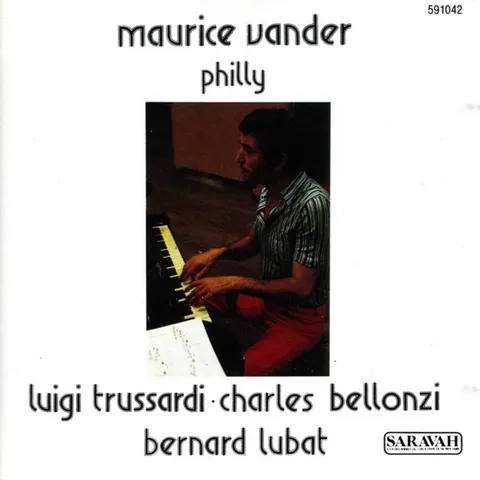
- Maurice Vander - pianist who shares the credits on Boogie Woogie with Simmons.
- Daniel Humair - drummer on Pianos Duet (1969) and on part of Meet Quincy Jones.
- Franco Manzecchi - drummer on Ambiance pour 2 pianos (1966).
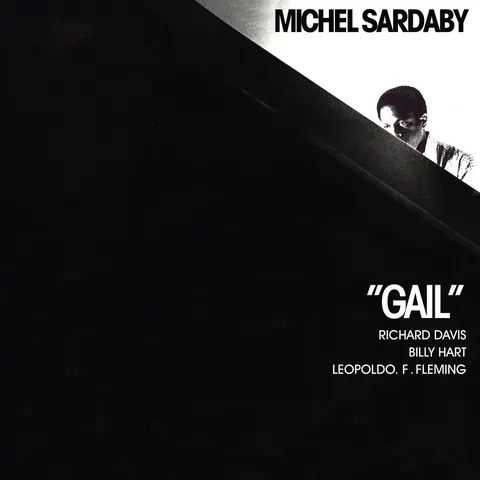
- Michel Sardaby - pianist whose quintet album Five Cat's Blues (1970) carries liner notes by Simmons.
- Carmen McRae and Billie Holiday - singers he accompanied in Paris, Holiday in 1958, according to his obituary and Wikipedia.
- Bertice Reading - singer accompanied by his quartet on Jazz Singer (1956).
- Elek Bacsik and Pierre Cullaz - guitarists in his Mars Club trio, and Bacsik is also on the 1960 sessions.
- Aaron Bridgers - fellow pianist, with whom he ran the Living Room in the 1960s.
- Art Taylor - drummer, in a duo with Simmons in the early 1960s.
More Bebop Artists
See all 285 Bebop artists →More French Jazz Artists
- Apple Music artist page
- Discogs: Art Simmons
- MusicBrainz: Art Simmons
- Wikipedia (English): Art Simmons
- Wikipedia (French): Art Simmons
- Bibliothèque nationale de France: Art Simmons
- Jazz Hot: Art Simmons, 1926-2018
- Obituary: Mr. Arthur Eugene Simmons, Ritchie & Johnson Funeral Parlor
- Art Simmons on JazzProfiles.com
- Wikipedia (English): Art Simmons
- Wikipedia (French): Art Simmons
- Wikidata: Art Simmons
- MusicBrainz: Art Simmons
- Jazz Hot: Art Simmons, 1926-2018
- Obituary: Mr. Arthur Eugene Simmons, Ritchie & Johnson Funeral Parlor
- WCHS Eyewitness News: Over 80 West Virginian musicians honored (September 16, 2016)
- Discogs: Art Simmons, artist 365517
- Discogs: Art Simmons Quartet, BAM LD 320
- Discogs: Piano Aux Champs Elysées, 014 059-2
- Discogs: The Great Blue Star Sessions 1952-1953
- Discogs: Les Double Six, Meet Quincy Jones, Columbia FPX 188
- Discogs: Paris 1960, Disques Swing SW 8406
- Discogs: Jack Diéval and Art Simmons, Ambiance Pour 2 Pianos, Polydor 658 006
- Discogs: Jack Diéval and Art Simmons, Pianos Duet, Columbia SCTX 340.726
- Discogs: Jack Diéval and his Quartet with James Moody and Annie Ross, New Sounds From France, Prestige PRLP 157
- Discogs: Michel Sardaby Quintet, Five Cat's Blues, Président KVP 232