 JAZZPROFILES lives in the music 3,006 Jazz Artists fully Profiled!
Christiane Legrand
Last updated November 15, 2026
Listen on Spotify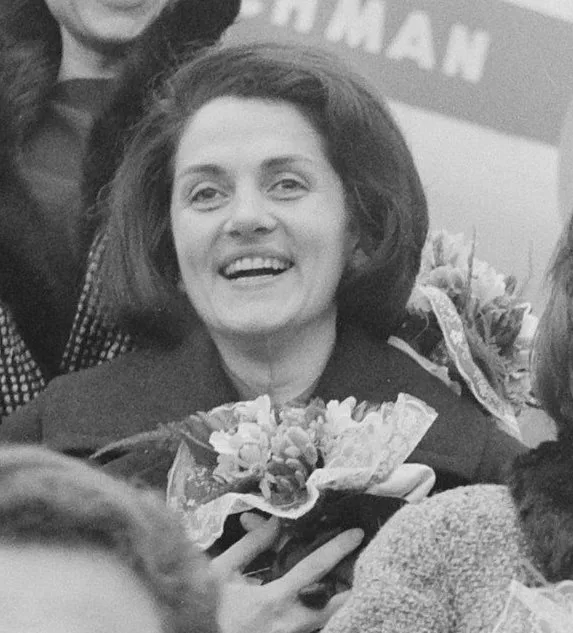
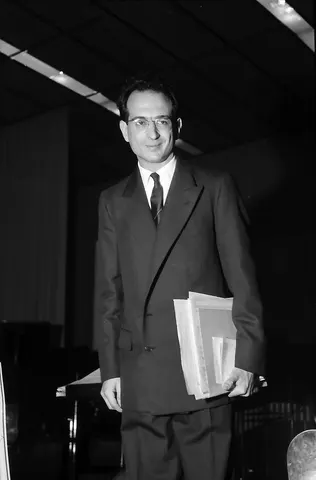
Christiane Legrand with the Swingle Singers on their arrival at Schiphol Airport in the Netherlands, March 4, 1964 (cropped from a group photograph of the singers, who had come for an AVRO broadcast). CC0 1.0 Universal (public domain dedication). The Nationaal Archief, named on the Commons file page as rights holder, published the photograph to Wikimedia Commons, and the file page carries the CC0 template. — Wikimedia Commons, https://commons.wikimedia.org/wiki/File:Christiane_Legrand_(1964).jpg (original file https://upload.wikimedia.org/wikipedia/commons/f/fa/Christiane_Legrand_%281964%29.jpg)


Christiane Legrand was a French soprano and one of the voices that shaped French vocal jazz in the late 1950s and the 1960s. She sang in the Blue Stars, in Les Double Six, and as the original lead soprano of the Swingle Singers, and she was the singing voice behind several of Jacques Demy's films. She was born on August 21, 1930 in Aix-les-Bains, in Savoie, the daughter of the bandleader and composer Raymond Legrand and the older sister of Michel Legrand. She passed away in Paris on November 1, 2011, at the age of 81, on the same day as the composer André Hodeir, whose Jazz Cantata she had sung.
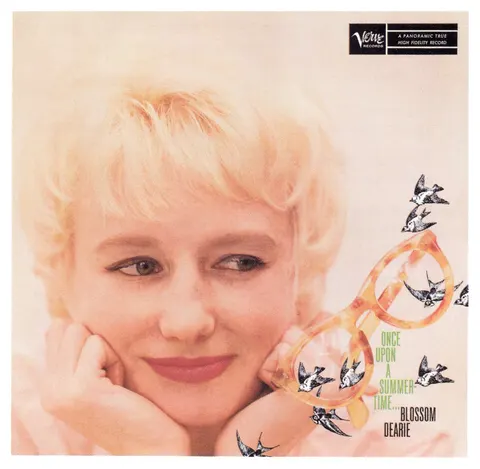
She began piano and classical study at the age of four. Her early professional years were spent in vocal groups and studios. French Wikipedia dates her time as a soprano in the Blue Stars to 1954 to 1956; this was the Paris vocal group formed around the American pianist and singer Blossom Dearie, whose members also included Bob Dorough, and Discogs lists her among its members. Discogs lists the group's 1955 Barclay record Octuor. In 1957 she sang with Les Fontana on Jazz Panorama, a Philips album by her brother's big band, alongside Ward Swingle and Jean-Claude Briodin, two singers she would work with again. English Wikipedia says that Hodeir discovered her that year, and French Wikipedia describes the rest of the decade as session work, as a lead or featured backing voice behind singers such as Francis Lemarque and Yves Montand.
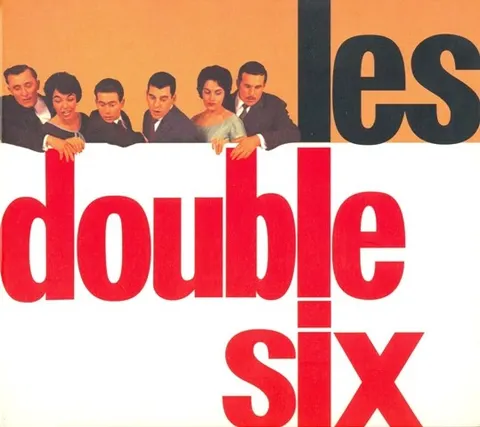
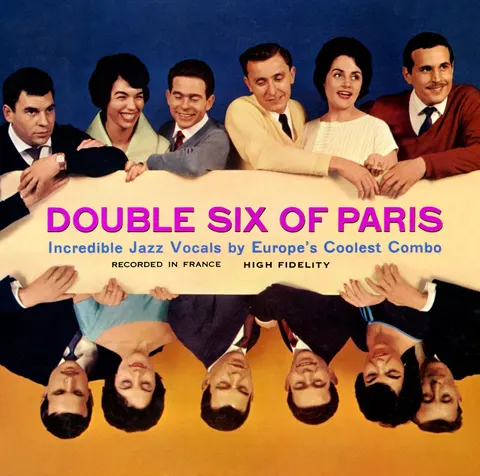
The jazz work of 1960 to 1963 is what places her in the history of the music. In 1960 she was the soprano soloist on Hodeir's Jazz Cantata, a seven-part work for voice and jazz ensemble on the Fontana album Jazz et Jazz, where the players included the bassist Pierre Michelot, the trumpeter Roger Guérin and the drummer Christian Garros. French Wikipedia dates her membership of Les Double Six, the vocalese sextet of Mimi Perrin, to 1960 to 1963. Discogs credits her with vocals on the group's first two albums, Les Double Six Meet Quincy Jones (1960) and Les Double Six (1962), and on Dizzy Gillespie + The Double Six of Paris (1963). The first of these was a collection of Quincy Jones pieces with French lyrics, and the third paired the group with Dizzy Gillespie. The group is described on its own page: Les Double Six.
When Swingle left the Double Six, he founded a smaller group of session singers in Paris around 1962. English Wikipedia names her as its original lead soprano, in a first lineup with Anne Germain, Claude Germain, Jeanette Baucomont, Claudine Meunier, Jean-Claude Briodin and Jean Cussac. The singers had found that Bach's keyboard music swung when sight-read, and the record they made of it, Jazz Sébastien Bach (Philips, 1963), was taken up by radio and led to the albums that made the Swingle Singers an international act. French Wikipedia lists eleven albums with her from 1963 to 1969, ten on Philips and one on Columbia Masterworks: the two Jazz Sébastien Bach volumes, Going Baroque, Swinging Mozart, Swingling Telemann, Les Romantiques, Place Vendôme with the Modern Jazz Quartet, Sounds of Spain, the Christmas record Noëls sans passeport, American Look, and in 1969 Luciano Berio's Sinfonia, recorded with the New York Philharmonic. Her voice also appears on Berio's Laborintus II.
Her second career as the voice of film and studio recordings ran alongside the jazz. For Demy and her brother she was a singing voice in Les Parapluies de Cherbourg (1964), where she sings for the character of Madame Emery, in Les Demoiselles de Rochefort (1967), where she sings for Judith, and in Peau d'âne (1970), where she sings for Delphine Seyrig's Lilac Fairy. She sang for Kay Kendall in the Hollywood musical Les Girls (1957), recorded the lead on the French-language Mary Poppins soundtrack, and in later decades dubbed songs for French versions of Charlie mon héros (1989) and La Belle et la Bête (2002). Under her own name she made a run of Barclay singles and EPs from 1960 to 1962, one of them with Michel Legrand's orchestra, directed the studio vocal group Les Barclay, and recorded Le Brésil de Christiane Legrand (AMI, 1972), a record of Brazilian songs with French words. She was the featured soprano on "Fires (Which Burn Brightly)" on Procol Harum's 1973 album Grand Hotel, and she sang works by Berio, Marius Constant, Morton Subotnick and Edgard Varèse.
In 1976 she formed and directed the vocal group Quire, whose RCA Victor album of that year gives jazz standards such as "Misty", "Take the 'A' Train" and "Lullaby of Birdland" a four-voice treatment, with the drummer Daniel Humair and the vibraphonist Christian Chevallier in the band. According to the Swing FM biography she taught jazz singing in the 1980s and taught at the SACEM school for variety music in 1990. Her later work included the trio record Nul ne sait (1989), the stage show Zazou at the Théâtre national de Chaillot (1989), a sung show with Véronique Le Berre in 2000, and the 1994 album Chansons d'amour. French Wikipedia says that she was married to the studio sound engineer Pierre Fatosme.
Legrand was a classically trained soprano who worked in jazz, and what she contributed was a clear, exact lead voice for group singing: the top line of the Blue Stars, the Double Six and the Swingle Singers, where jazz phrasing was sung by voices in place of instruments, and the soprano of Hodeir's jazz-and-voice writing. Her records under her own name are mostly chanson, children's songs and film music, and a large share of her career was spent as an uncredited or lightly credited voice on other people's records, so the jazz identity rests on the groups and on a handful of sessions rather than on a long run of leader albums. French Wikipedia lists her among French jazz singers and Wikidata gives her genre as jazz, while English Wikipedia calls her a soprano. The records that carried her voice furthest were the Swingle Singers' Bach albums and the Demy soundtracks, and her reputation among listeners and critics rests on those and on the Double Six sessions.
- Les Double Six Meet Quincy Jones (1960, Columbia FPX 188) - the first Double Six album, French lyrics on Quincy Jones pieces, with Legrand credited on vocals. Apple Music - Les Double Six (1999 compilation containing the album) Listen
- Les Double Six (1962, Columbia FPX 202) - the group's second album, with Legrand credited on vocals. Apple Music - Les Double Six (1999 compilation) Listen
- Dizzy Gillespie + The Double Six of Paris (1963, Philips) - the Gillespie repertoire sung in French, with Legrand credited among the voices. Apple Music - Dizzy Gillespie and the Double Six of Paris Listen
- André Hodeir, Jazz et Jazz (1960, Fontana 680.208 ML) - the album with the seven-part Jazz Cantata, on which Legrand is the soprano soloist. Apple Music - Jazz et Jazz Listen
- The Swingle Singers, Jazz Sébastien Bach (1963, Philips) - the Bach album that launched the group, with Legrand as original lead soprano. Apple Music - Jazz Sebastian Bach (Remastered) Listen
- The Swingle Singers, Les Romantiques (1965, Philips P 70.305 L) - one of the group's Philips albums of the mid-1960s, with Legrand credited on soprano vocals.
- Quire (1976, RCA Victor BGL1-1700) - the album by the vocal group she formed and directed, singing jazz standards with a rhythm section.
- Le Brésil de Christiane Legrand (1972, AMI 33 007) - her own record of Brazilian songs with French lyrics.
Christiane Legrand: Full Discography
French soprano and jazz vocal-group singer, born August 21, 1930 in Aix-les-Bains and passed away in Paris on November 1, 2011. Discogs artist 311164. She made few records under her own name; most of her recorded work is as a member of vocal groups (the Blue Stars, Les Double Six, the Swingle Singers, Quire), as a session and guest voice, and as the singing voice in film soundtracks. Three further Discogs entries cover groups billed under her name: Le Quatuor Vocal Christiane Legrand (3551054, children's songs on the Chansons dorées de notre enfance series), Ensemble Vocal Christiane Legrand (5687165, a 1959 film EP) and Christiane Legrand Trio (5683347, the 1989 album Nul ne sait). Her Discogs entry also lists her as a member of Les Fontana, Les Angels, Les Barclay, Grasse Matinée, Le Groupe J.M.S. and Jacques Hélian's orchestra.
Name variations on record: C. Legrand, Christiane, Christiane Legrand et les choeurs, Christianne Legrand, Christine Legrand. Not to be confused with her father Raymond Legrand or her brother Michel Legrand, who have their own entries. Catalog numbers and dates that are not confirmed in the sources checked are marked "Not confirmed".
Under her own name
| Album Title | Recording Date(s) | Release Date | Label | Catalog Number | Format(s) | Personnel | Role | Reissue History | Listen | Buy | Notes |
|---|---|---|---|---|---|---|---|---|---|---|---|
| Le Brésil de Christiane Legrand | Not confirmed | 1972 | AMI Records | 33 007 | LP | Christiane Legrand (vocals); no other personnel listed | Leader | Not confirmed | — | — | Eleven Brazilian songs with French lyrics, including "Avec des je avec des ja" ("Você e eu"), "Cent mille poissons dans ton filet" ("O Cafona"), "Vai" ("Canto de Ossanha") and "Deux camarades" ("Morro velho"). Discogs tags it as bossa nova and chanson. |
| Quire | Studio Davout, Paris, summer 1975; remixed at Olympic Studios, London | 1976 | RCA Victor | BGL1-1700 | LP | Quire: Christiane Legrand, Claudine Meunier, José Germain, Michel Barouille (voices); Christian Chevallier (vibraphone, arrangements); Daniel Humair and Martin Drew (drums); Guy Pedersen and Chris Laurence (bass); Francis Lemauger (guitar) | Director, producer, member of the vocal group | Not confirmed | — | — | Eleven jazz standards: "Blue Rondo à la Turk", "Misty", "Ain't Misbehavin'", "Django", "Take the 'A' Train", "Honky Tonk Train Blues", "Lullaby of Birdland", "Waltz for Debby", "Teach Me Tonight", "Dancers in Love" and "Body and Soul". Legrand is credited as director, producer and liner-note writer. Nat Shapiro was executive producer. |
| Nul ne sait | Not confirmed | 1989 | NTI (per English Wikipedia) | Not confirmed | Not confirmed | Christiane Legrand Trio: Christiane Legrand, Patrice Peyrieras, Marc Michel (instruments not confirmed) | Leader | Not confirmed | — | — | Filed on Discogs under the separate entry Christiane Legrand Trio. |
| Chansons d'amour | Not confirmed | 1994 | Columbia | Not confirmed | CD, album | Christiane Legrand (vocals); other personnel not listed | Leader | Not confirmed | — | — | Love songs; French Wikipedia gives the label as Sony Music, Discogs as Columbia. |
| Elle et ils | Not confirmed | 2000 | Barclay | Not confirmed | CD, compilation | Christiane Legrand (vocals); other personnel not listed | Leader | Compilation of her earlier Barclay recordings; contents not confirmed | — | — | Listed on Discogs as a compilation. |
Singles, EPs and children's records billed to her
| Title | Year | Label | Catalog Number | Notes |
|---|---|---|---|---|
| "Le Grand Lustucru" / "Le Roi d'Aquitaine" | 1958 | Philips | Not confirmed | 7-inch mono single billed to Les Quatre Barbus and Christiane Legrand. |
| "Cha cha du cœur" | 1960 | Barclay | Not confirmed | 7-inch single, with an orchestra. |
| N'attends pas | 1960 | Barclay | Not confirmed | EP; French Wikipedia says she is accompanied by Gérard Levesque and his orchestra. |
| Les Citrons de Tel-Aviv | 1961 | Barclay | Not confirmed | EP, with Gérard Levesque and his orchestra. |
| Le Poisson dans l'eau | 1962 | Barclay | Not confirmed | EP; French Wikipedia says she is accompanied by Michel Legrand and his orchestra. |
| Le lion est mort ce soir | 1962 | Odéon | Not confirmed | EP and single issued under Hubert Rostaing and his orchestra and listed on Discogs among her main releases. Hubert Rostaing led the orchestra. |
| Mary Poppins (French recording) | 1963 and 1965 as dated on Discogs | Le Petit Ménestrel; Buena Vista Records | Not confirmed | Two 7-inch EPs with Bob Martin, one a Le Petit Ménestrel release and one billed Mary Poppins (Version française). The film was released in 1964; the earlier year on Discogs is not confirmed. |
| Le Départ | 1967 | Philips | Not confirmed | EP of the film music of Krzysztof Komeda, billed to Komeda and Christiane Legrand. |
| "Avec des je avec des ja" / "HLM et ciné roman" | 1972 | AMI Records | Not confirmed | 7-inch single from Le Brésil de Christiane Legrand. |
| "Mélodie pour toi et moi" | 1975 | Barclay | Not confirmed | 7-inch single; theme of Dimitris Kollatos's film Le Banquet. |
| "Misty" / "Ain't Misbehavin'" | 1976 | RCA Victor | Not confirmed | Promotional 7-inch single from the Quire album. |
| Chansons dorées de notre enfance, vol. 1 | 1984 | Disques Adès | Not confirmed | Cassette of children's songs with Anne Germain. |
| "Supercalifragilisticexpiadelilicieux" / "Quel beau jour vraiment" | 1995 | Walt Disney Records | Not confirmed | Promotional CD single of French Mary Poppins songs, with Bob Martin. |
| Le Secret d'Eva L. | 2003 | Grasse Matinée (self-released) | Not confirmed | CD album with school choirs; Discogs lists her under the group Grasse Matinée. |
| Les Chansons de "Blanche-Neige"; Jeux d'écoute | Not confirmed | Le Petit Ménestrel; Rideau Rouge | Not confirmed | A children's EP with Jean Cussac and a cassette; no year on Discogs. |
With the Blue Stars
| Year | Title | Label | Catalog | Role | Notes |
|---|---|---|---|---|---|
| 1955 | Octuor (Les Blue Stars) | Barclay | 80004 | Member of the group (per Discogs) | Eight tracks, among them "Légende du pays aux oiseaux", "Embrasse-moi bien", "Mambo italiano" and "Tout bas". Blossom Dearie is credited as conductor. French Wikipedia dates her time in the group to 1954 to 1956. |
| Not confirmed | Pardon My English and later compilations | Not confirmed | Not confirmed | Credited on Discogs | Discogs lists her under reissues and compilations of the Blue Stars' recordings; her part on individual tracks is not confirmed. |
With Les Double Six
The group's own page carries the full personnel of every record: Les Double Six. Discogs credits her with vocals on the first three albums below.
| Year | Title | Label | Catalog | Role | Notes |
|---|---|---|---|---|---|
| 1960 | Les Double Six Meet Quincy Jones | Columbia (France) | FPX 188 | Vocals | French lyrics on Quincy Jones pieces; written by Mimi Perrin. |
| 1962 | Les Double Six | Columbia (France) | FPX 202; 33 FPX 202 | Vocals | The group's second album. |
| 1963 | Dizzy Gillespie + The Double Six of Paris | Philips | 852 038 BY (Netherlands) | Vocals (The Double Six) | With Dizzy Gillespie. |
| 1964 | The Double Six of Paris Sing Ray Charles | Philips | Not confirmed | Credited on Discogs | Her part on individual tracks is not confirmed; French Wikipedia dates her membership of the group to 1960 to 1963. |
With the Swingle Singers
French Wikipedia lists these albums with her, all on Philips unless noted; English Wikipedia calls her the original lead soprano. Catalog numbers not shown were not confirmed.
| Year | Title | Label | Catalog | Role | Notes |
|---|---|---|---|---|---|
| 1963 | Jazz Sébastien Bach | Philips | Not confirmed | Lead soprano | The group's first album. |
| 1964 | Going Baroque (De Bach aux baroques) | Philips | 840.555 PY (France) | Soprano vocals | Discogs lists her uncredited on the French sleeve. |
| 1965 | Swinging Mozart | Philips | Not confirmed | Soprano | |
| 1965 | Les Romantiques | Philips | P 70.305 L | Soprano vocals | Credited on Discogs. |
| 1966 | Swingling Telemann | Philips | Not confirmed | Soprano | |
| 1966 | Place Vendôme | Philips | Not confirmed | Soprano | With the Modern Jazz Quartet. |
| 1967 | Sounds of Spain: Concerto d'Aranjuez | Philips | Not confirmed | Soprano | |
| 1968 | Noëls sans passeport | Philips | Not confirmed | Soprano | |
| 1968 | Jazz Sébastien Bach, vol. 2 | Philips | Not confirmed | Soprano | |
| 1969 | American Look | Philips | Not confirmed | Soprano | |
| 1969 | Sinfonia (Luciano Berio) | Columbia Masterworks | Not confirmed | Soprano | Berio conducting the New York Philharmonic with the Swingle Singers. |
As guest and session singer (selected)
| Year | Project (Leader) | Title | Label | Catalog | Role | Notes |
|---|---|---|---|---|---|---|
| 1957 | Michel Legrand et sa Grande Formation | Jazz Panorama | Philips | 432.162 BE; 432.162 NE | Vocals (Les Fontana) | Les Fontana: Christiane Legrand, Jean-Claude Briodin, Jeannine Wells, Rita Castel, Roger Berthier and Ward Swingle, with Roger Guérin among the trumpets. Eleven standards and spirituals including "West End Blues", "Tiger Rag" and "Moonlight Serenade". |
| 1958 | Catherine Sauvage, Les Quatre Barbus, Yves Robert | Songs of Kurt Weill | Philips | Not confirmed | Vocals | Listed on Discogs and French Wikipedia. |
| 1958 | Jacques Hélian et son orchestre | Vendanges à Madeira | Match Records | Not confirmed | Guest vocal (per French Wikipedia) | |
| 1958 | Francis Lemarque | Marjolaine | Fontana | Not confirmed | Guest vocal (per French Wikipedia) | |
| 1959 | Yves Montand | Dansez avec Yves Montand n° 2 | Philips | Not confirmed | Guest vocal (per French Wikipedia) | Sings on "Je sais que vous êtes jolie". |
| 1959 | Michel Magne | Musique tachiste | Paris | Not confirmed | Guest vocal (per French Wikipedia) | "Larmes en sol pleureur". |
| 1960 | André Hodeir (Le Jazz Groupe de Paris) | Jazz et Jazz | Fontana | 680.208 ML | Soprano vocals | Soloist on the seven-part Jazz Cantata, with Pierre Gossez, Armand Migiani, Pierre Michelot, Christian Garros, Georges Grenu, André Paquinet, Christian Bellest, Roger Guérin and Jean-Pierre Drouet. See André Hodeir. |
| 1964 | Michel Legrand | Les Parapluies de Cherbourg (soundtrack) | Not confirmed | Not confirmed | Singing voice of Madame Emery | Film by Jacques Demy; role per French Wikipedia. |
| 1967 | Michel Legrand | Les Demoiselles de Rochefort (soundtrack) | Not confirmed | Not confirmed | Singing voice of Judith | Film by Jacques Demy; role per French Wikipedia. |
| 1967 | François de Roubaix | Les Aventuriers (soundtrack) | Not confirmed | Not confirmed | Wordless vocals (per French Wikipedia) | Discogs also lists a single by Alain Delon and Christiane Legrand. |
| 1969 | Luciano Berio | Laborintus II | Not confirmed | Not confirmed | Vocals | Listed on Discogs; named on English Wikipedia. |
| 1970 | Michel Legrand | Peau d'âne (soundtrack) | Not confirmed | Not confirmed | Singing voice of the Lilac Fairy (Delphine Seyrig) | Film by Jacques Demy; role per French Wikipedia. |
| 1972 | Stan Getz with Michel Legrand | Communications '72 | Verve | V6-8807 | Credited on Discogs and listed on English Wikipedia | The original LP credit block on Discogs does not name her, so her part is not confirmed. See Stan Getz. |
| 1973 | Procol Harum | Grand Hotel | Chrysalis | Not confirmed | Featured soprano | On "Fires (Which Burn Brightly)". |
| 1973 | Luís Cília | Contra a ideia da violência, a violência da ideia | Le Chant du Monde | Not confirmed | Guest vocal (per French Wikipedia) | |
| 1977 | Egberto Gismonti | Carmo | Not confirmed | Not confirmed | Credited on Discogs | Role not confirmed. |
| 1980 | Alan Stivell | Symphonie celtique (Tir na n-Og) | Not confirmed | Not confirmed | Credited on Discogs | Role not confirmed. |
| 1981 | Mercedes Sosa | Cuando me acuerdo de mi país | Not confirmed | Not confirmed | Credited on Discogs | Role not confirmed. |
| 2006 | Yánnis Spanós | To Simposio | Minos | Not confirmed | Guest vocal (per French Wikipedia) |
Film and television voice work
French Wikipedia gives these credits. She sang for Kay Kendall in Les Girls (1957, George Cukor); in Adieu Philippine (1964, Jacques Rozier) she played a Corsican singer; she was the singing voice of Madame Emery in Les Parapluies de Cherbourg (1964), of Judith in Les Demoiselles de Rochefort (1967) and of the Lilac Fairy in Peau d'âne (1970), all by Jacques Demy with music by Michel Legrand; she voiced Pimprenelle on the children's record Bonne nuit les petits (1963); and she dubbed song parts in Charlie mon héros (1989) and the French redub of La Belle et la Bête (2002).
Sources
Discogs artist 311164 and the releases cited above, read at credit level for the Double Six, Hodeir, Michel Legrand (Jazz Panorama), Swingle Singers and Quire entries; French and English Wikipedia for the discography lists and roles; MusicBrainz and the Swing FM biography. Dates and catalog numbers not found in those sources are marked "Not confirmed".
- Michel Legrand - her brother; she sang with Les Fontana on his big-band album Jazz Panorama (1957), and she sang the music of his scores for the Jacques Demy films of the 1960s and 1970s. His orchestra accompanied her on her 1962 Barclay EP Le poisson dans l'eau.
- André Hodeir - the composer and critic who, according to English Wikipedia, discovered her in 1957; she was the soprano soloist on his Jazz Cantata (1960).
- Mimi Perrin - founder and leader of Les Double Six, which Legrand joined in 1960; Perrin also sang in the Blue Stars circle.
- Les Double Six - the vocalese group in which she sang on the Quincy Jones, 1962 and Dizzy Gillespie albums, beside Ward Swingle, Claude Germain, Jean-Claude Briodin and others.
- Eddy Louiss - sang and played vibraphone with her in Les Double Six.
- Blossom Dearie and Bob Dorough - fellow singers in the Blue Stars.
- Ward Swingle, Claude Germain, Jean-Claude Briodin, Anne Germain, Jeanette Baucomont, Claudine Meunier and Jean Cussac - the singers of the first Swingle Singers; Swingle directed the group.
- Pierre Michelot and Roger Guérin - bassist and trumpeter in the ensemble on Hodeir's Jazz Cantata; Guérin also played on Jazz Panorama.
- Dizzy Gillespie and Quincy Jones - the leader and the composer whose music the Double Six sang on the 1963 and 1960 albums.
- Hubert Rostaing - the clarinettist and bandleader whose Odeon record Le lion est mort ce soir (1962) is billed with her.
- Daniel Humair and Christian Chevallier - drummer and vibraphonist and arranger on the Quire album (1976).
- Luciano Berio - the Italian composer for whom she sang Laborintus II and Sinfonia.
More Vocal Jazz Artists
See all 295 Vocal Jazz artists →More French Jazz Artists
- Spotify artist page
- Discogs
- Wikipedia (English): Christiane Legrand
- Wikipedia (French): Christiane Legrand
- MusicBrainz
- Bibliothèque nationale de France
- Swing FM: Christiane Legrand
- Les Double Six on JazzProfiles.com
- Christiane Legrand on JazzProfiles.com
- Wikipedia (English): Christiane Legrand
- Wikipedia (French): Christiane Legrand
- Wikipedia (English): The Swingle Singers
- Wikidata: Christiane Legrand (Q466056)
- MusicBrainz: Christiane Legrand
- Bibliothèque nationale de France: Christiane Legrand
- Swing FM: Christiane Legrand
- Qobuz: Christiane Legrand est morte
- Dans l'ombre des studios: Hommage à Christiane Legrand (1930-2011)
- Discogs: Christiane Legrand, artist 311164
- Discogs: Les Double Six, Meet Quincy Jones (Columbia FPX 188)
- Discogs: Les Double Six, Les Double Six (Columbia FPX 202)
- Discogs: Dizzy Gillespie + The Double Six Of Paris (Philips 852 038 BY)
- Discogs: André Hodeir, Jazz et Jazz (Fontana 680.208 ML)
- Discogs: Quire, Quire (RCA Victor BGL1-1700)
- Wikimedia Commons: Christiane Legrand (1964).jpg