 JAZZPROFILES lives in the music 3,006 Jazz Artists fully Profiled!
Aaron Bridgers
Last updated November 16, 2026
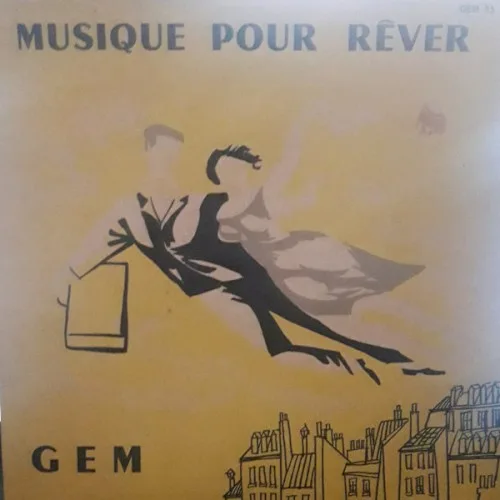
Cover of *Musique pour rêver* (G.E.M. GEM 35), the album credited to Aaron Bridgers et ses rythmes: a yellow cover with an ink illustration of a dancing couple over Paris rooftops. It is an illustration, not a photograph of the artist. Standard copyright, all rights reserved, held by the label or its successors. This is not a Creative Commons or public-domain image; it is an album cover shown as an honestly disclosed editorial identification image. — Cover Art Archive, MusicBrainz release 4fdfdf0f-8e63-4396-bbeb-523c91aa2b22 - https://coverartarchive.org/release/4fdfdf0f-8e63-4396-bbeb-523c91aa2b22
Aaron Bridgers was born on January 10, 1918 in Winston-Salem, North Carolina, and passed away on November 3, 2003 in Paris, at the age of 85. He was an African-American pianist and composer, American by birth and upbringing, whose working life as a musician belongs to France: he left the United States in 1947 and spent the remaining fifty-six years of his life in Paris, where he became a French citizen in 1974. He grew up in Winston-Salem, learned piano there and met Duke Ellington in his home town in 1939. He had studied classical piano, and until he left for France he earned his living outside music; the Guardian's obituary says it was hearing Art Tatum that turned him toward jazz, and that he became Tatum's pupil. French Wikipedia adds that he also studied with Teddy Wilson in 1942.
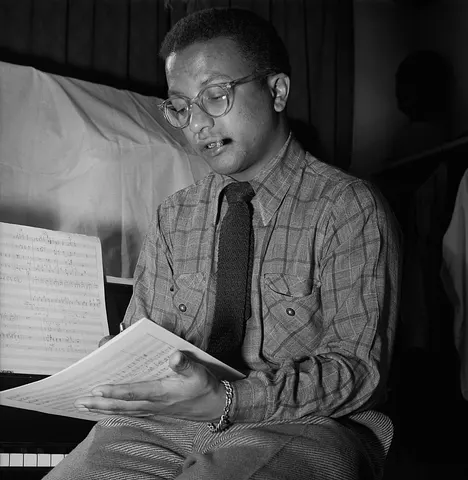
In New York in 1939 he met Billy Strayhorn, through the Ellington circle. They became close at once, shared a love of France and the French language, and lived together until Bridgers left for Paris in 1947. Strayhorn remained his friend: whenever he was in Paris he gravitated to Bridgers, and Bridgers later made a piece for him that is the last thing he recorded.
In Paris he became a pianist of the bars and late-night rooms, one of many black American musicians who found the city more congenial than home. The Guardian names the Ringside, Le Bœuf sur le Toit, the Living Room and the Mars Club among his haunts; French Wikipedia has him at the Mars Club near the Champs-Élysées in the late 1950s and early 1960s, playing between the sets of Art Simmons's trio, and later for many years at the Concorde Lafayette. The two pianists also ran the Living Room together in the 1960s. He played on radio and television, worked in Copenhagen, Venice and Capri, and appeared in a handful of films, among them Paris Blues (1961), where he is credited only as "Pianist".
His discography is small. The 1950s brought a 45-rpm EP of Porgy and Bess selections for Symphonium (1957), an album of Gershwin, Ellington and Strayhorn tunes issued as Musique pour rêver (also known as Music for Dreaming), and the piano accompaniment on the singer Jimmy Davis's Paris album Chante Jimmy "Loverman" Davis (1959). As musical tastes changed the work dried up, and he retired in 1995. His last recording came in 1999, when he was one of eleven French pianists on the Tissendier Septet's Ellington tribute for Frémeaux, contributing "Phil", a piece dedicated to Strayhorn and inspired by a philodendron Strayhorn once gave him. He wrote an autobiography, Piano in the Background, which found no publisher; he said the publishers wanted something more sensational. In 2021 the Paris pianist Philippe Baudoin gave a talk on him at the Sunside club under the title "ambassador in Paris of the Grand Duchy of Ellingtonia".
Bridgers played a swing-rooted, harmonically rich piano in the Tatum and Ellington manner, suited to the intimate rooms where he worked. A talk given about him in Paris describes his habit of generously handing out harmonic ideas, which younger pianists found hard to copy because of his very large hands, and the Guardian calls him a gentle, urbane man and one of the last links to the elegant musical world of Ellington and Strayhorn. The tunes on his own album show the world he worked in: Gershwin's Porgy and Bess songs, Ellington's "In a Sentimental Mood" and "Perdido", Strayhorn's "Lush Life" and "A Flower Is a Lovesome Thing", and a French song, "L'amour est venu sous mon toit". He was above all a bar and club pianist, and his recorded legacy is slight; the tags above name the style he worked in rather than a body of albums.
- Musique pour rêver (G.E.M. GEM 35, year not confirmed) - his album, credited to Aaron Bridgers et ses rythmes: eight Gershwin pieces from Porgy and Bess and standards on one side, Ellington, Strayhorn and other tunes on the other, including "Lush Life" and "Perdido". Discogs release
- Summertime (Extraits de Porgy and Bess) (1957, Symphonium SEP 5) - a four-track 45-rpm EP of Gershwin's Porgy and Bess with Bridgers credited on piano. Discogs release
- Jimmy Davis, Chante Jimmy "Loverman" Davis (1959, G.E.M. GEM 149) - the co-writer of "Lover Man" singing, accompanied by Bridgers on piano, with Michel de Villers on clarinet and saxophone, Heinz Grah on bass and Bernard Planchenault on drums. Discogs release
- Tissendier Septet, French Pianists - Ellington Mood (1999, Frémeaux & Associés FA 433) - Claude Tissendier's septet with eleven pianists, one per piece; Bridgers plays on "Phil", his last recording. Discogs release
- Barbara Sommers, Chicago (Fidsound 20771, year not confirmed) - a four-track EP accompanied by Bridgers with François Rabbath on bass and Marcel Sabiani on drums. Discogs release
Aaron Bridgers: Full Discography
American-born jazz pianist and composer, born January 10, 1918 in Winston-Salem, North Carolina, who lived and worked in Paris from 1947 and died there on November 3, 2003. Discogs artist 1212833; his album is filed under a second entry, Aaron Bridgers Et Ses Rythmes (10204636). His recorded output is small: one album and one EP under his own name, then a few sideman credits. Because the data is thin, only credits read from a release record are listed.
Name variations on record: Aaron Bridgers et ses rythmes; "Aaron Bridges" (misspelling on the 1999 Frémeaux release).
Namesake note: none found for the pianist. Discogs does not attach other musicians' credits to his entry.
As Leader / Co-Leader
| Album Title | Recording Date(s) | Release Date | Label | Catalog Number | Format(s) | Personnel | Role | Reissue History | Listen | Buy | Notes |
|---|---|---|---|---|---|---|---|---|---|---|---|
| Musique pour rêver (billed Aaron Bridgers et ses rythmes; also known as Music for Dreaming) | Paris, second half of the 1950s (French Wikipedia); not confirmed on a release record | Not confirmed | G.E.M. | GEM 35 | LP | Aaron Bridgers (piano); no other personnel are credited on Discogs, and French Wikipedia names Terry Donoughue and Herbert Marchl | Leader | None found | - | - | Sixteen tracks. Side A: "Summertime", "It Ain't Necessarily So", "Bess You Is My Woman Now", "I've Got Plenty O' Nuttin'", "I Loves You Porgy", "My Man's Gone Now", "The Man I Love", "Somebody Loves Me". Side B: "Caravane", "In a Sentimental Mood", "Black Butterfly", "Lush Life", "A Flower Is a Lovesome Thing", "L'amour est venu sous mon toit", "Lover Man", "Perdido". Listed on Discogs under the group entry Aaron Bridgers Et Ses Rythmes (artist 10204636), master 2046760. |
| Summertime (Extraits de Porgy and Bess) | Not confirmed | 1957 | Symphonium | SEP 5 | EP (vinyl) | Aaron Bridgers (piano); "Summertime" and the other Gershwin pieces are credited to George Gershwin as composer | Leader (billed Aaron Bridgers) | None found | - | - | Four tracks: "Summertime", "It Ain't Necessarily So", "I've Got Plenty O' Nothin'", "I Loves You Porgy". |
As Sideman (all documented credits)
| Year | Project (Leader) | Title | Label | Catalog | Role | Notes |
|---|---|---|---|---|---|---|
| 1959 | Jimmy Davis | Chante Jimmy "Loverman" Davis | G.E.M. | GEM 149 | Piano (album-wide credit; Discogs gives no track restriction) | Davis on vocals, with Michel de Villers (clarinet, saxophone), Heinz Grah (bass) and Bernard Planchenault (drums); ten tracks including "Loverman". |
| Not confirmed | Barbara Sommers | Chicago | Fidsound | 20771 | Piano | Four-track EP with François Rabbath (bass) and Marcel Sabiani (drums), direction musicale by Derry Hall. Discogs gives no year. |
| 1999 | Tissendier Septet | French Pianists - Ellington Mood | Frémeaux & Associés | FA 433 | Piano, track 10 ("Phil") | Claude Tissendier's septet with a different guest pianist on each of eleven pieces; his last recording. Discogs spells his name "Aaron Bridges" on this release; the track is the piece he dedicated to Billy Strayhorn. |
Film
| Year | Title | Credit | Notes |
|---|---|---|---|
| 1961 | Paris Blues (film) | Credited as "Pianist" | Film appearance, not a record release. |
Not itemised
Discogs also lists him on two compilations of film and jazz material (a 2008 Italian issue and a 2012 Moochin' About release). Track-level credit was not established for either, so they are left out of the tables above. French Wikipedia also mentions a piano-score book, Aaron Bridgers plays Duke Ellington (Salabert, 1985), which is not a recording.
Billy Strayhorn - his partner from 1939 until Bridgers left for Paris in 1947, and a lifelong friend who visited him in Paris; the 1999 piece "Phil" was dedicated to him.
Duke Ellington - met Bridgers in Winston-Salem in 1939 and the Ellington circle brought him together with Strayhorn; his and Strayhorn's music was central to Bridgers's repertoire.
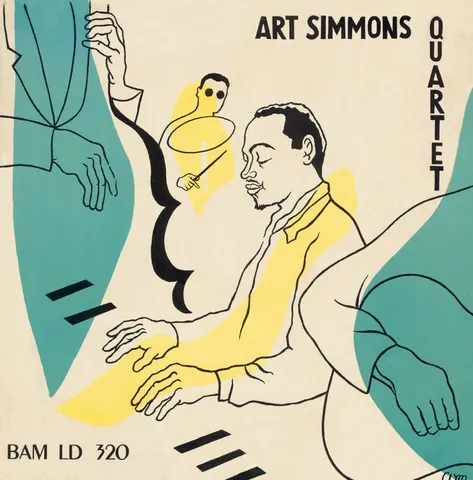
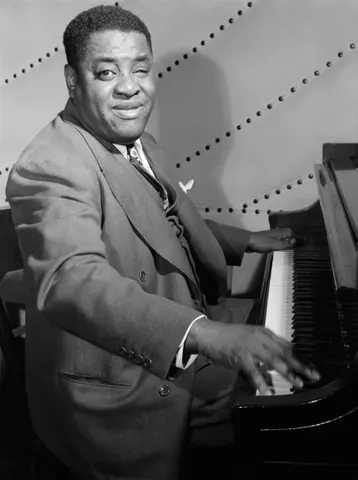
Art Simmons - the Mars Club pianist whose trio Bridgers played between, and with whom he ran the Living Room in the 1960s.
Jimmy Davis - the singer for whom Bridgers played piano on the 1959 Chante Jimmy "Loverman" Davis, with Michel de Villers in the band.
Barbara Sommers - the singer on the Fidsound EP Chicago, with Bridgers on piano.
Claude Tissendier - the saxophonist and arranger who led the 1999 septet date; the other pianists on it include Claude Bolling, Georges Arvanitas, Alain Jean-Marie, André Persiany and Henri Renaud.
More Mainstream Jazz Artists
See all 674 Mainstream Jazz artists →More French Jazz Artists
See all 511 French artists →The Guardian: Aaron Bridgers, obituary by Kevin Henriques, December 22, 2003
Maison du Duke: conference on Aaron Bridgers, Sunside, Paris
Discogs: Summertime (Extraits de Porgy and Bess), Symphonium SEP 5
Discogs: Jimmy Davis, Chante Jimmy "Loverman" Davis, G.E.M. GEM 149
Discogs: Tissendier Septet, French Pianists - Ellington Mood, FA 433