 JAZZPROFILES lives in the music 1,572 Jazz Artists fully Profiled!
 Marsha Frazier
Last updated September 5, 2026
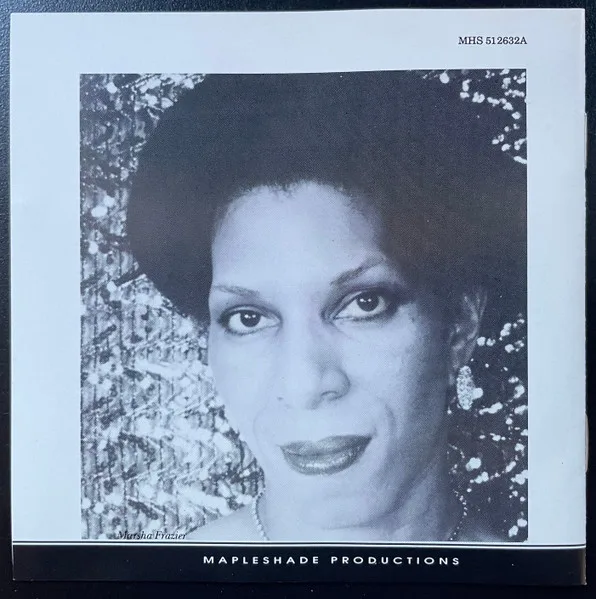
Marsha Frazier, portrait photograph reproduced on the sleeve of the Marsha Frazier Quintet's *Blasé* (Jazz Heritage / Mapleshade Productions MHS 512632A, 1990), captioned "Marsha Frazier" in the image itself. Recorded July 18 and 19, 1988 at Mapleshade Studio; the front cover of the album is typographic, and this portrait panel is the only image of Frazier on the release. Photographer not credited on the scan. Album cover art (not a CC-licensed artist photo) — used as the only available image showing the artist. No free or public-domain photograph of Marsha Frazier exists on Wikimedia Commons (searched 2026-08-30, no results), and she has no Wikipedia article. — Discogs, release page for Marsha Frazier Quintet, Blasé (Jazz Heritage MHS 512632A, 1990) — https://www.discogs.com/release/24699014-Marsha-Frazier-Quintet-Blas%C3%A9 (image file: https://i.discogs.com/EIqovHFwEgMNY0BvfPyfUB9nHMy4bMtDhsxtw90yHU4/rs:fit/g:sm/q:90/h:600/w:596/czM6Ly9kaXNjb2dz/LWRhdGFiYXNlLWlt/YWdlcy9SLTI0Njk5/MDE0LTE2NjQ3Mjgx/ODktNzc2OC5qcGVn.jpeg)

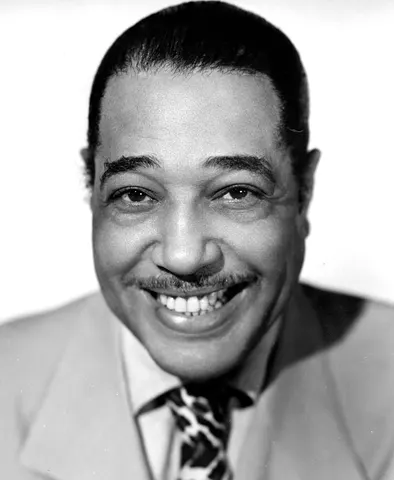
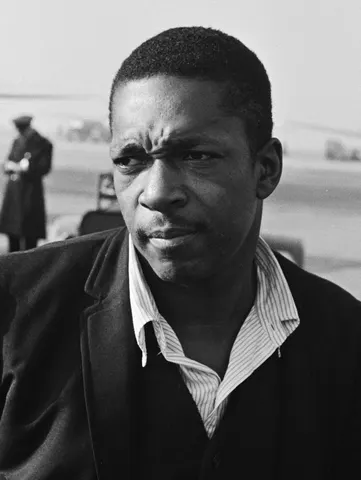
Marsha Frazier grew up in Houston, Texas, playing classical, church and soul piano and studying flute alongside it. At eighteen she heard John Coltrane's My Favorite Things and switched to jazz, and she became an accompanist on the Texas circuit for touring leaders passing through: Sonny Stitt, Harry "Sweets" Edison, Eddie "Lockjaw" Davis, the Houston tenor saxophonist Arnett Cobb, Eddie Harris, Eddie "Cleanhead" Vinson, and the Duke Ellington band. That account comes from her own album's booklet, written by producer Pierre M. Sprey for the 1990 Mapleshade release Blasé, which is the only published biographical sketch of her located for this profile.
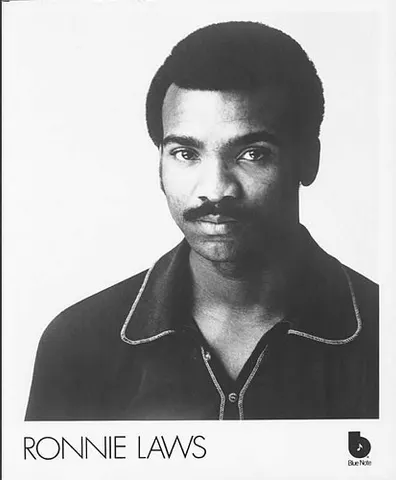
Her recorded career starts with drummer Bubbha Thomas's Houston band. Thomas had led the Lightmen since the late 1960s; when Frazier joined on keyboards the group renamed itself the Lightmen Plus One, and she is the "Plus One" of the title. She played electric piano and flute on Fancy Pants, cut at Soundville in Houston on September 5 and October 10, 1971 and issued on the local Judnell label, and wrote its title track. She was also in the rhythm section of Tribute (Advent LP-1001, 1972), the Texas Southern University Jazz Ensemble album that introduced singer Anita Moore, playing Fender Rhodes and flute and taking the piano solos on "Willow Weep for Me," opposite Arnett Cobb's guest tenor, and on Doug Harris's "Sorrow, Bitterness, and Revolution." Saxophonist Ronnie Laws, another Houston player who had passed through the Lightmen, solos on the same record.
The Lightmen Plus One's Energy Control Center, recorded at Nashville Sound Studios in Houston in September and October 1972 and released on Thomas's own Lightin' Records in 1973, is the group's best-known record and the one that carries Frazier's largest footprint. She plays acoustic and electric piano across the album, flute on "The Phantom," and African thumb piano on "Jupiter's Child," which is her own composition; she is also credited as co-producer with Thomas and altoist Virgil Solomon. In 1972 and 1973 she studied with Rahsaan Roland Kirk, whom Sprey's booklet describes as her mentor.
Frazier turns up in New York in the middle of the decade. On a July 1976 night at Ali's Alley, the club drummer Rashied Ali ran out of his own loft at 77 Greene Street in SoHo, she played piano behind the vocalese singer Eddie Jefferson with Ali's quintet: Ali on drums, James Vass and Marvin Blackman on saxophones, and Benny Wilson on bass. The tape sat for three decades before Blue Music Group issued it in 2009 as Eddie Jefferson At Ali's Alley. Sprey's 1990 booklet gives 1980 as the year she moved to New York while separately naming Jefferson, who was killed in May 1979, among the established masters she had played with, so her work with him necessarily predates the move. The Ali's Alley recording is the surviving document of it.
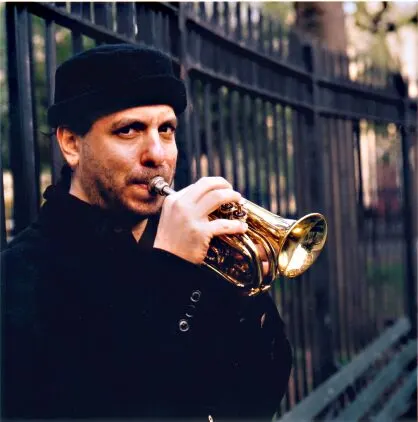
Once settled in New York she attached herself to the Brooklyn scene built around bassist and guitarist Gerry Eastman's Williamsburgh Music Center, which Eastman had opened in 1981. She is the pianist on the Contemporary Composers' Orchestra's Vol. 1 (Williamsburgh Music Center WMC 3098, 1984), a sixteen-piece date whose cast included Joe Ford, John Betsch, Jason Kao Hwang and vocalist Jessica Cleaves, and she plays piano on two tracks and flute on one of Eastman's My Real Self (WMC-3619, 1986), the same LP that carries Frank London on trumpet and Robin Eubanks on trombone. Sprey's booklet lists the players she worked with in those years: Lonnie Plaxico, Lewis Nash, Joe Ford, Ralph Peterson, Ronnie Burrage and Roland Alexander among the newer musicians, and Connie Kay and Charles Davis among the older ones.
Her one album as a leader came out of a chance hearing. Sprey caught her playing solo in a bar on Connecticut Avenue in Washington, D.C., and a month and a half later she drove down from New York with her quintet for two days at Mapleshade Studio, July 18 and 19, 1988. Blasé was released in 1990 on Jazz Heritage, the Musical Heritage Society's jazz imprint, as MHS 512632A, with Joe Ford on alto and soprano saxophone, Lance Bryant on tenor, James King on bass and Rudy Walker on drums. Frazier sings as well as playing piano and flute across a program of Ellington, Miles Davis, Coltrane, Roland Kirk and Joe Ford. No further recordings under her name have been traced. The Houston vocalist Tianna Hall credits "Duke Ellington Orchestra pianist Marsha Frazier" as one of two mentors who shaped her career from 2004 onward, which places a musician of that name and description back in Houston in the 2000s, though no source consulted for this profile confirms the two as the same person. No death notice was found.
Frazier is a pianist who also sings, and Sprey's booklet puts her in the line of jazz pianists turned singers running from Nat King Cole through Nina Simone and Shirley Horn, players whose keyboard training shapes their vocal harmony and phrasing. He describes an earthy contralto that moves from church to jazz club, and hears her range on Blasé as running from Aretha Franklin to Sarah Vaughan, with the ballads as the album's strongest performances: she turns the title song, a piece of 1930s show material, into a flat appeal for love, and reads "Sophisticated Lady" against nothing but alto saxophone and bass. Her flute tone he calls warm and breathy. As a writer she is documented by two pieces, both for the Lightmen: "Fancy Pants," the title track of the 1971 album, and "Jupiter's Child" on Energy Control Center, the latter built on her own African thumb piano. Her instrumental range across the Houston years, acoustic and Fender Rhodes piano, flute and mbira, sits squarely inside the spiritual-jazz vocabulary the Lightmen were working in, and it is that catalogue rather than her leader date that has kept her name in circulation, through Now-Again's reissue program and Stones Throw's The Funky 16 Corners.
- Energy Control Center (recorded September and October 1972; released 1973, The Lightmen Plus One, Lightin' Records) - The Houston band's landmark spiritual-jazz LP, with Frazier on piano, electric piano, flute and African thumb piano, credited as co-producer and writing "Jupiter's Child." Spotify - Energy Control Center Listen
- Blasé (recorded July 18 and 19, 1988; released 1990, Marsha Frazier Quintet, Jazz Heritage / Mapleshade) - Her only album as a leader, with Joe Ford, Lance Bryant, James King and Rudy Walker, and the source of nearly everything documented about her life. Not confirmed on Spotify.
- Fancy Pants (recorded September and October 1971; released 1971, The Lightmen Plus One, Judnell) - The album that renamed the band around her, with Frazier on electric piano and flute and writing the title track. Spotify - Fancy Pants (Stereo) Listen
- Eddie Jefferson At Ali's Alley (recorded July 1976; released 2009, Rashied Ali Quintet Featuring Eddie Jefferson, Blue Music Group) - Frazier on piano behind Eddie Jefferson at Rashied Ali's SoHo loft club, released from the tape thirty-three years later. Not confirmed on Spotify.
- Tribute (1972, TSU Jazz Ensemble Introducing Anita Moore, Advent Records) - Frazier on Fender Rhodes and flute with the Texas Southern University big band, taking the piano solo opposite Arnett Cobb on "Willow Weep for Me." Not confirmed on Spotify.
- Vol. 1 (1984, Contemporary Composers' Orchestra, Williamsburgh Music Center) - Her first documented Brooklyn date, a sixteen-piece Gerry Eastman project she plays piano on. Not confirmed on Spotify.
- My Real Self (1986, Gerry Eastman Featuring Joe Ford With The Williamsburgh All Stars, Williamsburgh Music Center) - Frazier plays piano on two tracks and flute on one, sharing the piano chair with Sumi Tonooka. Not confirmed on Spotify.
Marsha Frazier: Full Discography
Marsha Frazier led one recording session of her own, the two days at Mapleshade Studio in July 1988 that produced Blasé, and the rest of her documented output is sideman and production work. Both tables below are complete rather than selective: they cover every credit attached to her on Discogs, plus the compilations and reissues that carry her performances.
Verified against the live Discogs API, artist ID 902321, whose profile field reads "American pianist and flutist" and whose name variations are "Frazier" and "M. Frazier." The group entities filed under her were each checked separately for hidden leader dates: Marsha Frazier Quintet (15321846, one release, Blasé, listed below), Bubbha Thomas & The Lightmen Plus One (136480), Contemporary Composers' Orchestra (3956334, one release), The Williamsburgh All Stars (7961432, one release) and Rashied Ali Quintet (1096321). Note that Discogs files Blasé, a genuine leader date billed to her own quintet, under role "Appearance" rather than "Main" on her artist page; the role flag is not a reliable guide to who led the session.
The Buy column is - throughout: no affiliate programme is set up.
As Leader
| Album Title | Recording Date(s) | Release Date | Label | Catalog Number | Format(s) | Personnel | Role | Reissue History | Spotify | Buy | Notes |
|---|---|---|---|---|---|---|---|---|---|---|---|
| Blasé | Mapleshade Studio, Upper Marlboro, Maryland, July 18 and 19, 1988 | 1990 | Jazz Heritage (a division of the Musical Heritage Society) / Mapleshade Records | MHS 512632A | CD, Album, Stereo | Marsha Frazier (vocals, piano, flute), Joe Ford (alto and soprano saxophone), Lance Bryant (tenor saxophone), James King (bass), Rudy Walker (drums) | Leader, billed "Marsha Frazier Quintet" | None found; no LP pressing and no later CD edition traced | Not confirmed on Spotify (searched by album title, by artist, and by the combination) | - | Produced and engineered by Pierre M. Sprey; digital master by Bob Katz at Digital Domain, NYC; executive producer Claudia Polley; design by Lynn Springer / Design Lines Studio. Total time 55:06 on the tray card, 55:55 on the disc face. Recorded direct with no filtering, compression, equalization, noise reduction, multitracking or overdubbing, mastered at 15 ips and digitized on a custom converter at 5,645 K samples per second, per the technical note printed on the tray card. Programme: "Blasé" (Sievier / Hamilton), "Sophisticated Lady" (Ellington / Mills / Parish), "All Blues" (Miles Davis), "Daze" (Joe Ford), "Funk Underneath" (see note below), "It Don't Mean a Thing" (Ellington / Mills), "Every Day I Have the Blues" (Chatman), "Moment's Notice" (John Coltrane). Amazon lists the disc under the misspelling "Martha Frazier Quintet" |
Composer-credit discrepancy on "Funk Underneath." The Blasé tray card credits the tune to "C. Jordan," that is Clifford Jordan. The album's own booklet, on the facing page, calls it a piece "by her mentor, Rahsaan Roland Kirk." Kirk is correct: "Funk Underneath" is a Roland Kirk composition first recorded for Kirk's Work with Jack McDuff on July 11, 1961 and later used as the title of that album's reissue. The tray card credit appears to be a printing error, and Discogs reproduces it.
As Sideman and Producer
| Year | Project (Leader) | Title | Label | Catalog | Role | Notes |
|---|---|---|---|---|---|---|
| Recorded September 5 and October 10, 1971 at Soundville, Houston; released 1971 | The Lightmen Plus One (Bubbha Thomas) | Fancy Pants | Judnell | LP-1002 | Electric piano; flute on "On the Road Home"; composer of the title track | The band renamed itself "Plus One" on her joining, per the Black Grooves review of the Now-Again reissue. Reissued by Now-Again in 2017-18 in separate mono and stereo editions on 2xLP and 2xCD, and present on Spotify as Fancy Pants (Mono) and Fancy Pants (Stereo), both billed to Bubbha Thomas & The Lightmen |
| 1972 | TSU Jazz Ensemble Introducing Anita Moore (co-directed by Lanny Steele and Howard Harris) | Tribute | Advent Records | LP-1001 | Rhythm section: electric piano (Fender Rhodes) and flute; piano soloist on "Willow Weep for Me" and "Sorrow, Bitterness, and Revolution" | Texas Southern University big band, produced by the TSU Ex-Students Association, recorded by Bill Holford. Arnett Cobb guests on tenor saxophone, soloing opposite Frazier on "Willow Weep for Me"; Ronnie Laws solos on "Ju-ju Jones"; Hugh Ragin and Barrie Lee Hall, Jr. are in the trumpet section. Not confirmed on Spotify |
| Recorded September and October 1972 at Nashville Sound Studios, Houston; released 1973 | The Lightmen Plus One (Bubbha Thomas) | Energy Control Center | Lightin' Records | LP-2001 | Acoustic and electric piano; flute on "The Phantom"; African thumb piano on "Jupiter's Child"; composer of "Jupiter's Child"; co-producer with Bubbha Thomas and Virgil Solomon | The group's best-known album. Reissued on CD by P-Vine / Groove-Diggers with Now-Again in 2007, and on LP and CD by Now-Again in 2018 (including a Vinyl Me, Please club edition). On Spotify in three editions, including the 2018 Now-Again master |
| Recorded live at Ali's Alley, 77 Greene Street, SoHo, New York, July 1976; released 2009 | Rashied Ali Quintet Featuring Eddie Jefferson | Eddie Jefferson At Ali's Alley | Blue Music Group | Digital only, no catalog number | Piano | 10 tracks, FLAC album. Eddie Jefferson (vocals), Rashied Ali (drums), James Vass and Marvin Blackman (saxophones), Frazier (piano), Benny Wilson (bass). The label's own page spells the saxophonist "Jimmy Vass." Per Blue Music Group, the group played two nights in July 1976 and the later of the two is released here unedited, remastered from a reel. The Bandcamp page carries "released July 15, 1976," which is the performance date entered into the release-date field, not a 1976 release. Not confirmed on Spotify |
| 1978 | Bubbha Thomas & The Lightmen | The Best Of Bubbha Thomas & The Lightmen | Lightin' Records | LP-2003 | Performer and composer, via the reused Fancy Pants master | Compilation. Her composition "Fancy Pants" is track B4, published by Lightmen & Judnell Pub. Corp. (BMI). Not confirmed on Spotify |
| 1984 | Contemporary Composers' Orchestra (Gerry Eastman, Williamsburgh Music Center) | Vol. 1 | Williamsburgh Music Center, Inc. | WMC 3098 | Piano | Sixteen-piece ensemble including Joe Ford, Reynold Scott, Eileen Folson, John Betsch, Newman Baker, Gerry Eastman, Longineu Parsons, Ambrose Jackson, Jason Kao Hwang (misprinted on the sleeve as "Jason Hwong") and vocalist Jessica Cleaves. Not confirmed on Spotify |
| 1986 | Gerry Eastman Featuring Joe Ford With The Williamsburgh All Stars | My Real Self | Williamsburgh Music Center, Inc. | WMC-3619 | Piano on "My Real Self" and "Chipo's Song"; flute on "Chipo's Song" | All four pieces composed and arranged by Gerry Eastman. Sumi Tonooka plays piano on the other two tracks. Also present: Joe Ford, Zane Massey, Robin Eubanks, Frank London, Nasar Abadey and Newman Baker. Not confirmed on Spotify |
| 2001 | Various (compiled by Egon for Stones Throw) | The Funky 16 Corners | Stones Throw Records | Various pressings | Producer credit, via a licensed Lightmen track | Compilation of rare 1970s funk 45s and LP cuts. Frazier's Discogs credit here is the production credit carried over from the Lightmen recording |
| 2007 | Madlib & Peanut Butter Wolf | The Other Side (Los Angeles) | Deaf Dumb & Blind | CD / DVD | Producer credit, via a sampled or mixed Lightmen track | DJ mix. As above, the credit is inherited from the Lightmen master rather than being new work |
Checked and not found
- No leader dates hidden under a group entity. All five group entities Discogs files under her were fetched individually. Four carry a single release each, already listed above; the fifth, Bubbha Thomas & The Lightmen Plus One, carries the Lightmen catalogue, none of it billed to her.
- No Survival Records credit. The Survival Records (2) label listing (Discogs label ID 45889, 51 entries) was read in full. Frazier appears on none of it. Rashied Ali's two 1975 quintet dates for the label, Moon Flight (SR 109) and N.Y. Ain't So Bad (SR 111), have Charles Eubanks on piano, not Frazier. Her only recording in Ali's orbit is the 2009 Blue Music Group release of the 1976 Ali's Alley tape.
- No 45s or singles under her name in the Discogs database.
- No Spotify artist page can be matched. A search for the bare name returns nothing relevant, and the two of her albums that are on the service, Fancy Pants and Energy Control Center, are filed under the band's name. Everything else is marked "not confirmed on Spotify" above rather than declared absent.
- No composer registration confirmed. BMI's Songview and the ASCAP ACE repertory are both behind interfaces that could not be queried from here (ASCAP returned HTTP 403, BMI returned only its data disclaimer). The publishing information reported above, Lightmen & Judnell Pub. Corp. and Lightmen Pub. Co., both BMI, is taken from the printed credits on the Lightmen releases themselves, not from a repertory lookup.
- Bubbha Thomas - Houston drummer and bandleader. Frazier's addition to his Lightmen produced the name Lightmen Plus One, and she recorded two albums with the group (1971, 1972-73) and co-produced Energy Control Center.
- Virgil Solomon - alto saxophonist and flutist in the Lightmen, and her fellow co-producer on Energy Control Center.
- Rahsaan Roland Kirk - named in the Blasé booklet as her mentor; she studied with him in 1972 and 1973 and recorded his "Funk Underneath" on her own album.
- Rashied Ali - drummer and owner of Ali's Alley. Frazier played piano in his quintet on the July 1976 night with Eddie Jefferson that Blue Music Group released in 2009.
- Eddie Jefferson - the vocalist she accompanied at Ali's Alley, and one of the "established masters" the Blasé booklet says she worked with.
- James Vass, Marvin Blackman and Benny Wilson - the rest of Ali's quintet on the Ali's Alley tape. Blue Music Group's own credits spell the saxophonist "Jimmy Vass"; Discogs files him as James Vass.
- Gerry Eastman - bassist, guitarist and founder of the Williamsburgh Music Center, who employed her on both of the Center's LPs, Vol. 1 (1984) and My Real Self (1986).
- Joe Ford - alto and soprano saxophonist, formerly of McCoy Tyner's band. The single most persistent collaborator in her discography: the Contemporary Composers' Orchestra (1984), My Real Self (1986) and her own Blasé (1988), whose "Daze" he wrote.
- Lance Bryant, James King and Rudy Walker - tenor saxophone, bass and drums in the Marsha Frazier Quintet on Blasé.
- Lewis Nash, Lonnie Plaxico, Ralph Peterson, Ronnie Burrage, Roland Alexander, Connie Kay and Charles Davis - named in the Blasé booklet as the players she worked with during her Brooklyn years in the 1980s. No recordings with any of them have been traced.
- Pierre M. Sprey - producer and engineer of Blasé and author of its booklet, and the person who heard her in a Washington bar and brought her to Mapleshade.
More Spiritual Jazz Artists
See all 46 Spiritual Jazz artists →More American Jazz Artists
See all 567 American artists →- Discogs: Marsha Frazier
- Discogs: Marsha Frazier Quintet
- Bandcamp: Eddie Jefferson at Ali's Alley (Blue Music Group)
- Pierre M. Sprey, booklet essay and musician biographies, Blasé, Marsha Frazier Quintet, Jazz Heritage / Mapleshade MHS 512632A (1990), pages 3 to 7, read from the booklet scans on the Discogs release page below
- Discogs: Marsha Frazier Quintet, Blasé (Jazz Heritage / Mapleshade MHS 512632A, 1990)
- Discogs: Marsha Frazier (artist 902321)
- Discogs: The Lightmen Plus One, Energy Control Center (Lightin' LP-2001, 1973)
- Discogs: The Lightmen Plus One, Fancy Pants (Judnell LP-1002, 1971)
- Discogs: TSU Jazz Ensemble Introducing Anita Moore, Tribute (Advent LP-1001, 1972)
- Discogs: Contemporary Composers' Orchestra, Vol. 1 (Williamsburgh Music Center WMC 3098, 1984)
- Discogs: Gerry Eastman Featuring Joe Ford With The Williamsburgh All Stars, My Real Self (WMC-3619, 1986)
- Discogs: Rashied Ali Quintet Featuring Eddie Jefferson, Eddie Jefferson At Ali's Alley (Blue Music Group, 2009)
- Black Grooves (Archives of African American Music and Culture, Indiana University): The Lightmen Plus One, Energy Control Center
- Now-Again Records: The Lightmen Plus One, Energy Control Center
- JazzRockSoul.com: Lightmen Plus One
- Blue Music Group: Eddie Jefferson at Ali's Alley
- Tianna Hall, official site biography
- Williamsburg Music Center: About Us, Gerry Eastman
- Wikipedia: Kirk's Work (source for the authorship of "Funk Underneath")