 JAZZPROFILES lives in the music 1,002 Jazz Artists fully Profiled!
 Idris Muhammad
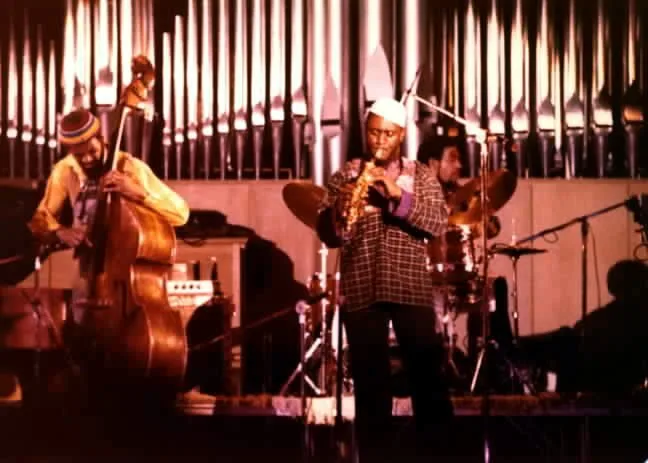
Idris Muhammad on drums, behind Pharoah Sanders and Reggie Workman, circa 1978 CC BY-SA 3.0 (dual-licensed GFDL 1.2+) — Wikimedia Commons, photographer Einar Einarsson Kvaran - https://commons.wikimedia.org/wiki/File:PharoahSanders.jpg

Idris Muhammad was born Leo Morris in New Orleans on November 13, 1939, and grew up in the city's 13th Ward next door to a dry cleaner's shop. He credited the sound of that shop's steam presser with shaping his hi-hat technique, which is as literal an account of where a musician's sound came from as any drummer has given.
He was working before he was ten. A Mardi Gras parade at 9, then a spot on The Hawketts' "Mardi Gras Mambo" at 14, then, two years later, the drums on Fats Domino's "Blueberry Hill." When he asked the veteran New Orleans drummer Paul Barbarin to teach him to read music, Barbarin declined on the grounds that he was already good enough not to need it.
Joe Jones introduced him to Sam Cooke, and Cooke took him on the road. Chicago followed, with Jerry Butler and Curtis Mayfield, and then New York in the mid-1960s, where he joined the Apollo Theatre house band and began working with Kenny Dorham, Horace Silver, Betty Carter and Lou Donaldson. The Donaldson association became the longest of his career: twelve albums between 1965 and 1981, among them Alligator Bogaloo (Blue Note, 1967), recorded on April 7, 1967 at Van Gelder Studio with Lonnie Smith on organ and a 24-year-old George Benson on guitar. He is credited on that sleeve under his birth name. He converted to Islam and took the name Idris Muhammad during these same Donaldson years.
In 1967 he took the drum chair in the orchestra of the original off-Broadway production of Hair, wrote the show's drum parts, and stayed with it when it moved to Broadway, four years in all. He left to tour with Roberta Flack and worked with her for much of the following decade.
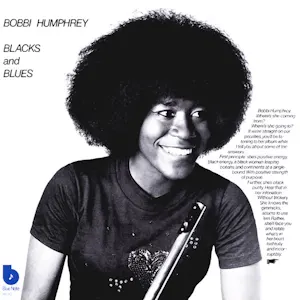
Alongside that he was the house drummer at Prestige, and he made more than 150 recordings for Prestige, Blue Note and CTI. Rudy Van Gelder took particular care with his drum sound, a working relationship that runs across most of the important records here. The credits from those years amount to a survey of how jazz became commercial: Paul Desmond's Summertime (A&M/CTI, 1968), George Benson's Goodies (1968) and The Other Side of Abbey Road (1969), Donald Byrd's Fancy Free (Blue Note, 1969), Charles Earland's Black Talk! (Prestige, 1969), Bobbi Humphrey's debut Flute-In (Blue Note, 1971), Grover Washington Jr.'s debut Inner City Blues (Kudu, 1971), and three Kudu albums with Hank Crawford between 1972 and 1975.
His own leader career began at Prestige with Black Rhythm Revolution! in 1971 and Peace and Rhythm in 1972, both of them New Orleans parade figures worked through a soul-jazz rhythm section, with Melvin Sparks on guitar and Bob Porter supervising. Then came Kudu, Creed Taylor's R&B-leaning sister label to CTI, where he made four albums. Power of Soul (1974) is the best known: recorded in March 1974 at Van Gelder Studio with Bob James arranging and conducting, Grover Washington Jr. on saxophones, Randy Brecker on trumpet, Joe Beck on guitar and Ralph MacDonald on percussion, with four tracks by Jimi Hendrix, James, Beck and Washington. AllMusic gives it five stars.
House of the Rising Sun followed in 1976, with a young David Sanborn on alto and Eric Gale on guitar and bass. Then Turn This Mutha Out in 1977, produced and arranged by David Matthews rather than Creed Taylor and aimed squarely at the R&B and disco charts. It yielded two pop and R&B hits, the title track and "Could Heaven Ever Be Like This," and it split the critics: the Bay State Banner wrote in June 1977 that "Muhammad is another jazz artist who has succumbed to the lure of money via the disco sound," and the Rolling Stone Jazz Record Guide later gave it two stars out of five. "Could Heaven Ever Be Like This" went on to become one of the most sampled records in the genre, taken up by Jamiroquai on "Alright" (1996), by Onyx on "I'm So 90's," and by Jamie xx and Romy Madley Croft on "Loud Places" (In Colour, 2015).
After a move to Fantasy for You Ain't No Friend of Mine! (1978), Foxhuntin' (1979) and Make It Count (1980), he made the sharpest turn of his career in the same year as that last record: Kabsha on Theresa, a piano-less quartet with George Coleman and Pharoah Sanders both on tenor and Ray Drummond on bass, engineered by Van Gelder.
At the end of the 1970s he joined Johnny Griffin's band and began a long association with Pharoah Sanders that produced Journey to the One (1980), Heart Is a Melody (1983), Shukuru (1985) and Africa (1987). He moved to Europe in the 1980s and stayed through that decade, recording with Randy Weston, Chico Freeman, Nathan Davis and the Paris Reunion Band. Returning to New York in the 1990s, he worked with John Hicks, Dr. Lonnie Smith, John Scofield, Monty Alexander, Archie Shepp, David Murray, Sonny Rollins and Ahmad Jamal, whose trio he held down across nine albums between 1995 and 2010. His own Right Now (Cannonball, 1998), with Gary Bartz, George Coleman and Joe Lovano, was his last studio album as a leader.
He returned to New Orleans in 2011 and published his autobiography, Inside the Music: The Life of Idris Muhammad, in 2012. Istanbul Agop, whose cymbals he endorsed, produced a 22-inch Idris Muhammad signature ride. He passed away on July 29, 2014, at 74, of kidney failure, and was buried according to Islamic tradition in Fort Lauderdale, Florida.
The foundation is New Orleans: second-line and parade rhythms, learned in the street before they were learned anywhere else, and carried into every context he played in afterward. What made him valuable to producers was that he could deliver those figures inside a studio arrangement without ever crowding it. His playing sits low and stays there, and the groove is the point rather than the display.
The hi-hat is the signature. He described it as coming from the steam presser at the dry cleaner's next door to his childhood home, a hissing, exhaling pulse on the offbeat that is recognisable across records made thirty years apart. It is also the reason his records became sampling material: the pattern is complete on its own and loops without needing anything around it.
He worked in an unusually wide range for a player so identified with one sound. The same drummer is on Lou Donaldson boogaloo dates, Pharoah Sanders spiritual jazz, Kudu disco crossover, Ahmad Jamal trio records and Sonny Rollins's Global Warming. Talking to Modern Drummer about the risk of changing his name, he said the recognition never depended on the billing: "Everybody knew right away that it was me, because of my style of playing."
- Alligator Bogaloo (1967, Lou Donaldson, Blue Note) - Recorded in one afternoon at Van Gelder Studio with Lonnie Smith and George Benson, and one of the records that turned soul jazz into a commercial format. He is credited here as Leo Morris. Spotify - Alligator Bogaloo Listen
- Black Rhythm Revolution! (1971, Prestige) - The leader debut, and the album where the New Orleans parade rhythms sit closest to the surface. Spotify - Black Rhythm Revolution! Listen · Buy
- Power of Soul (1974, Kudu) - The Kudu peak, with Bob James arranging, Grover Washington Jr. and Randy Brecker on horns, and a Jimi Hendrix title track. Five stars at AllMusic and the album most often named first when his work comes up. Spotify - Power of Soul Listen · Buy
- House of the Rising Sun (1976, Kudu) - David Sanborn on the title track and Eric Gale on guitar, arranged by Dave Matthews and Tom Harrell. Spotify - House of the Rising Sun Listen · Buy
- Turn This Mutha Out (1977, Kudu) - The disco-facing record that drew the harshest reviews of his career and produced "Could Heaven Ever Be Like This," which outlived every criticism of it. Spotify - Turn This Mutha Out Listen · Buy
- Kabsha (1980, Theresa) - Two tenors, bass and drums, no piano, with George Coleman and Pharoah Sanders. The clearest statement that the crossover records were a choice rather than a limit. YouTube - Kabsha Listen · Buy
- Right Now (1998, Cannonball) - His last leader date, with Gary Bartz, George Coleman and Joe Lovano. YouTube - Right Now Listen · Buy
Idris Muhammad: Full Discography
Idris Muhammad, born Leo Morris (November 13, 1939, New Orleans, Louisiana, to July 29, 2014, Fort Lauderdale, Florida). Drums, percussion, log drum. Early credits appear under his birth name, Leo Morris.
Leader Albums
| Album | Year | Label | Personnel | Notes | Listen | Buy |
|---|---|---|---|---|---|---|
| Black Rhythm Revolution! | 1971 | Prestige PRST-10005 | Idris Muhammad (drums), Virgil Jones (trumpet), Clarence Thomas (tenor and soprano sax, arranger), Harold Mabern (electric piano), Melvin Sparks (guitar), Jimmy Lewis (Fender bass), Buddy Caldwell (congas) | Leader debut. Produced and supervised by Bob Porter, who also wrote the liner notes. Rudy Van Gelder engineered and cut the lacquer. New Orleans parade figures worked through a Prestige soul-jazz rhythm section | Spotify | Amazon |
| Peace and Rhythm | 1972 | Prestige PR 10036 | Idris Muhammad (drums, cowbell, cabasa, gong, auto horn), Virgil Jones (trumpet), Clarence Thomas (tenor and soprano sax, flute, arranger), Kenny Barron (electric piano), Melvin Sparks and Alan Fontaine (guitar), Ron Carter (bass), Jimmy Lewis (Fender bass), Buddy Caldwell (congas), Angel Allende (percussion, timbales), Willie Bivens (vibraphone), Sakinah Muhammad (vocals) | Supervised by Bob Porter, engineered by Rudy Van Gelder, cover photography by Burt Goldblatt. Sakinah Muhammad on vocals is his wife, the former Dolores "LaLa" Brooks of The Crystals | Spotify | Amazon |
| Power of Soul | 1974 | Kudu KU-17 | Idris Muhammad (drums), Grover Washington Jr. (soprano and tenor sax), Randy Brecker (trumpet, flugelhorn), Bob James (keyboards, arranger, conductor), Joe Beck (guitar), Gary King (bass), Ralph MacDonald (percussion) | Recorded March 1974 at Van Gelder Studio, Englewood Cliffs. Produced by Creed Taylor, engineered and lacquer-cut by Rudy Van Gelder. Four tracks, 34:20, written by Jimi Hendrix, Bob James, Joe Beck and Grover Washington Jr., all arranged by James. Five stars at AllMusic. His most sampled and most reissued record after Turn This Mutha Out | Spotify | Amazon |
| House of the Rising Sun | 1976 | Kudu KUDU 27 | Idris Muhammad (drums, log drum), David Sanborn (alto sax), Ronnie Cuber (baritone sax), Eric Gale (guitar, bass), Hugh McCracken and Joe Beck (guitar), Wilbur Bascomb and Will Lee (bass), Don Grolnick and Leon Pendarvis (piano), George Devens (percussion), Alan Shulman, Charles McCracken and Seymour Barab (cello) | Recorded at Van Gelder Studio in June and September to October 1975, released January 1976, produced by Creed Taylor. Arrangements by Dave Matthews and Tom Harrell. David Sanborn takes the alto on the title track | Spotify | Amazon |
| Turn This Mutha Out | 1977 | Kudu KU-940 | Idris Muhammad (drums, tom tom), Wilbur Bascomb (bass), Hiram Bullock (guitar solo), Charlie Brown (guitar), Rubens Bassini and Sue Evans (percussion), with further personnel varying track by track | Recorded December 1976 to February 1977. Produced and arranged by David Matthews rather than Creed Taylor, one of the few Kudu albums Taylor did not produce. Seven tracks, 37:14, all written by Matthews with Tony Sarafino. Two pop and R&B hits: the title track and "Could Heaven Ever Be Like This" (8:37) | Spotify | Amazon |
| Boogie to the Top | 1978 | Kudu KU 943 | Idris Muhammad (drums), with a Dave Matthews studio band | Written and produced by Dave Matthews and Tony Sarafino, the same team behind Turn This Mutha Out. The last of his four Kudu leader albums | YouTube | Amazon |
| You Ain't No Friend of Mine! | 1978 | Fantasy F-9566 | Idris Muhammad (drums), Hiram Bullock (guitar), Clifford Carter (keyboards), Lincoln Goines (bass) | First album for Fantasy. Produced by William S. Fischer, recorded and remixed by Steve Williams, mastered by Ted Jensen | YouTube | Amazon |
| Foxhuntin' | 1979 | Fantasy F-9581 | Idris Muhammad (drums), Hiram Bullock (guitar), Wilbur Bascomb (bass), Clifford Carter (keyboards, synthesizer), Ronnie Cuber (baritone sax), Phil Bodner (clarinet), Danny Cahn (trumpet), Sammy Figueroa (percussion), Gloria Agostini (harp) | Arranged, composed and produced by Dave Matthews and Tony Sarafino. Mastered by Bob Ludwig | YouTube | Amazon |
| Make It Count | 1980 | Fantasy F-9598 | Idris Muhammad (drums), Herb Jimmerson (keyboards, producer, arranger), Nathaniel Phillips (bass), James Wirrick and Roland Bautista (guitar), Claytoven Richardson (lead vocals), Jerry Hey, Bill Reichenbach, Larry Hall and Carlberg Jones (horns), Julia Tillman Waters, Maxine Willard Waters, Clydene Jackson, Pat Henderson and Paul Smith (backing vocals) | The furthest he went toward straight R&B and vocal soul as a leader. Produced by Herb Jimmerson and Phil Kaffel | YouTube | Amazon |
| Kabsha | 1980 | Theresa Records TR 110 | Idris Muhammad (drums, producer), George Coleman (tenor sax), Pharoah Sanders (tenor sax), Ray Drummond (bass) | A hard turn back to acoustic jazz in the same year as Make It Count, and a piano-less quartet with two tenors. Engineered by Rudy Van Gelder, mastered by John Golden, liner notes by Ed Williams | YouTube | Amazon |
| My Turn | 1990 | Lipstick Records LIP 890021 | Idris Muhammad (drums), Hiram Bullock (guitar), with a European studio band | Recorded during his Europe years. Streaming editions carry a 1993 date | Spotify | Amazon |
| Right Now | 1998 | Cannonball Records CBD 27105 | Idris Muhammad (drums, log drum, arranger, producer, lyrics), Gary Bartz (alto and soprano sax), George Coleman (tenor sax), Joe Lovano (tenor sax), Curtis Lundy (bass), Ron Levy (producer) | His last studio album as a leader, and the strongest jazz personnel of any of them. Liner notes by Bill Milkowski | YouTube | Amazon |
Singles and EPs as Leader
| Release | Year | Label | Notes | Listen | Buy |
|---|---|---|---|---|---|
| "Express Yourself" / "Super Bad" | 1970 | Prestige | Early leader single | not found | Amazon |
| "I'm A Believer" | 1972 | Prestige | Featuring Sakinah Muhammad on vocals on later pressings | not found | Amazon |
| "Baia (Boogie Bump)" | undated | Kudu | Kudu-era single, year unknown | not found | Amazon |
| "House of the Rising Sun" / "Theme for New York City" | 1976 | Kudu | Single edit from the album | not found | Amazon |
| "Could Heaven Ever Be Like This" | 1977 | Kudu | The hit single. Also issued in Spain on Kudu/Hispavox backed with Saint Tropez | Spotify | Amazon |
| "Boogie Boots" / "Foxhuntin'" | 1979 | Fantasy | Twelve-inch from the Fantasy period | not found | Amazon |
| "Dancing in the Land of Lovely Ladies" | 1979 | Fantasy | not found | Amazon | |
| "For Your Love" | 1980 | Fantasy | Also issued in Italy on Fantasy/Traccia and Fantasy/Cetra as split singles | not found | Amazon |
| "New Orleans" / "I'm So Glad" | 1980 | Fantasy | not found | Amazon | |
| "I Believe In You" / "I'm So Glad" | 1980 | Fantasy | not found | Amazon | |
| "Could Heaven Ever Be Like This" (Walker & Royce and Chris Lorenzo Remix) | 2022 | Ultra Records | Licensed dance remix issued 45 years after the original | not found | Amazon |
Co-Leader and Co-Billed Albums
| Album | Year | Label | Co-billed with | Personnel | Notes | Listen | Buy |
|---|---|---|---|---|---|---|---|
| My Mother's Eyes | 1978 | Muse | Etta Jones (billed with the full band) | Etta Jones (vocals), Houston Person (tenor sax), Sonny Phillips (organ), Jimmy Ponder (guitar), Rufus Reid (bass), Idris Muhammad (drums), Lawrence Killian, George Devens (percussion) | Discogs credits the whole septet on the cover rather than a single leader | not found | Amazon |
| Some Other Time | 1981 | Theresa | John Hicks, Walter Booker | John Hicks (piano), Walter Booker (bass), Idris Muhammad (drums) | First of several trio records with Hicks | not found | Amazon |
| Inc.1 | 1985 | Theresa | John Hicks, Walter Booker | John Hicks (piano), Walter Booker (bass), Idris Muhammad (drums) | not found | Amazon | |
| Africa | 1987 | Timeless | Pharoah Sanders, John Hicks, Curtis Lundy | Pharoah Sanders (tenor sax), John Hicks (piano), Curtis Lundy (bass), Idris Muhammad (drums) | Credited on Discogs to all four men jointly | not found | Amazon |
| Stefan Pelzl's Juju Featuring Idris Muhammad | 1990 | Rst | Stefan Pelzl's Juju | From the Europe years | not found | Amazon | |
| From Tunisia With Love | 1992 | 52e Rue Est | Mamdouh Bahri, Horace Parlan, Riccardo Del Fra | Mamdouh Bahri (guitar), Horace Parlan (piano), Riccardo Del Fra (bass), Idris Muhammad (drums) | not found | Amazon | |
| Hello Mr. Bennett | 1993 | Nova | Ximo Tebar, Lou Bennett | Ximo Tebar (guitar), Lou Bennett (organ), Idris Muhammad (drums) | First of four records with Spanish guitarist Ximo Tebar | not found | Amazon |
| Tales of Sisyphos | 1994 | Rst | Stefan Pelzl's Juju | not found | Amazon | ||
| Mating Call (The Chartbusters on Prestige) | 1996 | Prestige | The Chartbusters | Craig Handy, Donald Harrison (saxes), Randy Brecker (trumpet), Dr. Lonnie Smith (organ), David Fiuczynski (guitar), Idris Muhammad (drums) | An all-star soul-jazz session assembled around the Prestige catalogue he helped build | not found | Amazon |
| Newklear Music: The Songs of Sonny Rollins | 1997 | Milestone | Keystone Trio (John Hicks, George Mraz) | John Hicks (piano), George Mraz (bass), Idris Muhammad (drums) | not found | Amazon | |
| Solid! | 1998 | Milestone | Eric Alexander, John Hicks, George Mraz | Eric Alexander (tenor sax), John Hicks (piano), George Mraz (bass), Idris Muhammad (drums) | not found | Amazon | |
| Goes Blue | 2001 | Omix | Ximo Tebar, Dr. Lonnie Smith, featuring Lou Donaldson | Ximo Tebar (guitar), Dr. Lonnie Smith (organ), Idris Muhammad (drums), Lou Donaldson (alto sax) | Reunites him with Donaldson and Lonnie Smith, 34 years after Alligator Bogaloo | not found | Amazon |
| Live in Baalbeck | 2004 | Birdology | Ahmad Jamal, James Cammack | Ahmad Jamal (piano), James Cammack (bass), Idris Muhammad (drums) | not found | Amazon | |
| The Champs | 2004 | Omix | Ximo Tebar, Joey DeFrancesco | Ximo Tebar (guitar), Joey DeFrancesco (organ), Idris Muhammad (drums) | not found | Amazon |
Compilations Under His Own Name
| Release | Year | Label | Notes | Listen | Buy |
|---|---|---|---|---|---|
| Black Rhythm Revolution / Peace & Rhythm | 1992 | BGP Records | Both Prestige leader albums on one CD | not found | Amazon |
| Legends of Acid Jazz | 1996 | Prestige | Prestige's acid-jazz reissue series entry for him | not found | Amazon |
| Boogie to the Top (The Very Best of Idris Muhammad) | 2015 | Robinsongs / Cherry Red | Career retrospective assembled the year after he passed away | not found | Amazon |
Sideman Work: Chronology
Discogs lists 660 releases carrying his name across all roles. What follows is the credited-artist work, decade by decade.
1960s
| Year | Artist | Album | Notes |
|---|---|---|---|
| 1961 | Ernie K-Doe | Mother-In-Law | Early New Orleans session work, credited as Leo Morris |
| 1961 | Joe Jones | You Talk Too Much | Jones is the singer who introduced him to Sam Cooke |
| 1966 | Sonny Forriest | Tuff Pickin' | |
| 1967 | Lou Donaldson | Blowing in the Wind | Cadet. The start of the longest working relationship of his career |
| 1967 | Lou Donaldson | Alligator Bogaloo | Blue Note. Recorded April 7, 1967 at Van Gelder Studio with Lonnie Smith, George Benson and Melvin Lastie. Credited as Leo Morris |
| 1967 | Vladimir and His Orchestra | New Sound in Latin Jazz | |
| 1968 | George Benson | Shape of Things to Come | A&M |
| 1968 | Lou Donaldson | Mr. Shing-A-Ling | Blue Note |
| 1968 | Lou Donaldson | Midnight Creeper | Blue Note |
| 1968 | Stanley Turrentine featuring Shirley Scott | Common Touch | Blue Note |
| 1969 | Donald Byrd | Fancy Free | Blue Note |
| 1969 | Galt MacDermot | Hair Cuts | Instrumental readings of the Hair score by its composer, made while Muhammad was in the pit band |
| 1969 | George Benson | Tell It Like It Is | A&M |
| 1969 | George Benson | Goodies | Verve |
| 1969 | Harold Mabern | Workin' and Wailin' | Prestige |
| 1969 | Lonnie Smith | Turning Point | Blue Note |
| 1969 | Lou Donaldson | Say It Loud! | Blue Note |
| 1969 | Lou Donaldson | Hot Dog | Blue Note |
| 1969 | Nat Adderley | Calling Out Loud | CTI |
| 1969 | Paul Desmond | Summertime | A&M/CTI |
| 1969 | Reuben Wilson | Love Bug | Blue Note |
1970s
The Prestige house-band years, running straight into the CTI and Kudu crossover era.
| Year | Artist | Album | Notes |
|---|---|---|---|
| 1970 | Charles Earland | Black Talk! | Prestige. One of the records that turned the organ trio into a commercial format |
| 1970 | Fats Theus | Black Out | CTI |
| 1970 | Galt MacDermot's First Natural Hair Band | Galt MacDermot's First Natural Hair Band | |
| 1970 | George Benson | The Other Side of Abbey Road | A&M |
| 1970 | Grant Green | Carryin' On | Blue Note |
| 1970 | Grant Green | Green Is Beautiful | Blue Note |
| 1970 | Harold Mabern | Greasy Kid Stuff! | Prestige |
| 1970 | Horace Silver | That Healin' Feelin' | Blue Note |
| 1970 | Lou Donaldson | Everything I Play Is Funky | Blue Note |
| 1970 | Lou Donaldson | Live: Fried Buzzard | Cadet |
| 1970 | Melvin Sparks | Sparks! | Prestige |
| 1970 | Pharoah Sanders | Jewels of Thought | Impulse! |
| 1970 | Rusty Bryant | Soul Liberation | Prestige |
| 1971 | Bobbi Humphrey | Flute-In | Blue Note. Her debut |
| 1971 | Charles Kynard | Wa-Tu-Wa-Zui | Prestige |
| 1971 | Gene Ammons | The Black Cat! | Prestige |
| 1971 | Gene Ammons | My Way | Prestige |
| 1971 | Grant Green | Visions | Blue Note |
| 1971 | Grant Green | Alive! | Blue Note |
| 1971 | Grover Washington Jr. | Inner City Blues | Kudu. Washington's leader debut |
| 1971 | Houston Person | Person to Person! | Prestige |
| 1971 | Leon Spencer | Sneak Preview! | Prestige |
| 1971 | Leon Spencer | Louisiana Slim | Prestige |
| 1971 | Lou Donaldson | Cosmos, Pretty Things, Ha' Mercy | Blue Note |
| 1971 | Melvin Sparks | Spark Plug | Prestige |
| 1971 | Rusty Bryant | Fire Eater | Prestige |
| 1971 | Sonny Stitt | Turn It On! | Prestige |
| 1971 | Walter Bishop Jr. | Coral Keys | Black Jazz |
| 1972 | Gene Ammons and Sonny Stitt | You Talk That Talk! | Prestige |
| 1972 | Hank Crawford | Help Me Make It Through the Night | Kudu |
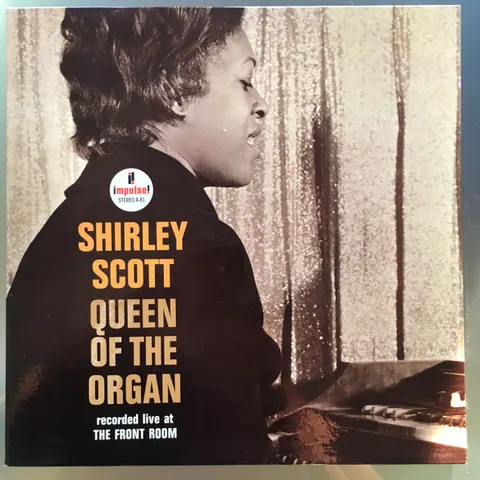
| 1972 | Shirley Scott | Lean On Me | Cadet |
| 1972 | Amiri Baraka | It's Nation Time: African Visionary Music | Motown/Black Forum |
| 1972 | Esther Marrow | Sister Woman | Fantasy |
| 1972 | Melvin Sparks | Akilah! | Prestige |
| 1972 | Leon Spencer | Bad Walking Woman | Prestige |
| 1972 | Rusty Bryant | Wild Fire | Prestige |
| 1972 | Sonny Stitt | Goin' Down Slow, Black Vibrations | Prestige |
| 1972 | Ceasar Frazier | Hail Ceasar! | Eastbound |
| 1972 | Bill Mason | Gettin' Off | Eastbound |
| 1972 | Gary Chandler | Outlook | Eastbound |
| 1973 | Eric Gale | Forecast | Kudu |
| 1973 | Gene Ammons | Got My Own, Big Bad Jug | Prestige |
| 1973 | Grover Washington Jr. | Soul Box, Soul Box Vol. 1, Soul Box Vol. 2 | Kudu |
| 1973 | Hank Crawford | Wildflower | Kudu |
| 1973 | Houston Person | The Real Thing | Eastbound |
| 1973 | Luiz Bonfá | Jacaranda | Ranwood |
| 1973 | Melvin Sparks | Texas Twister | Eastbound |
| 1973 | Morgana King | New Beginnings | Paramount |
| 1973 | Roberta Flack | Killing Me Softly | Atlantic |
| 1973 | Stanley Turrentine | Don't Mess With Mister T. | CTI |
| 1973 | Leon Spencer | Where I'm Coming From | Prestige |
| 1974 | Bob James | One | CTI. James's leader debut, made the same year as Power of Soul |
| 1974 | Hank Crawford | Don't You Worry 'Bout a Thing | Kudu |
| 1974 | Tyrone Washington | Do Right | Prestige |
| 1975 | Gabor Szabo | Macho | Salvation |
| 1975 | Gene McDaniels | Natural Juices | Ode |
| 1975 | Hank Crawford | I Hear a Symphony | Kudu |
| 1975 | Merry Clayton | Keep Your Eye on the Sparrow | Ode |
| 1975 | Roberta Flack | Feel Like Makin' Love | Atlantic |
| 1975 | Stanley Turrentine | The Sugar Man | CTI |
| 1976 | Stanley Turrentine | The Man With the Sad Face | Fantasy |
| 1977 | Dexter Wansel | What the World Is Coming To | Philadelphia International |
| 1977 | Pee Wee Ellis | Home in the Country | Savoy |
| 1977 | Roberta Flack | Blue Lights in the Basement | Atlantic |
| 1977 | Walter Bishop Jr. | Bish Bash | Xanadu, recorded 1968 |
| 1978 | Bob James | Touchdown | Tappan Zee/Columbia |
| 1978 | Ralph MacDonald | The Path | Marlin |
| 1978 | David "Fathead" Newman | Concrete Jungle, Keep the Dream Alive | Prestige |
| 1978 | The George Coleman Octet | Revival | |
| 1978 | Willis Jackson | Bar Wars | Muse |
| 1978 | Richard "Groove" Holmes | Shippin' Out | Muse |
| 1978 | Houston Person | Wild Flower | Muse |
| 1978 | Don Patterson | Why Not... | Muse |
| 1978 | Kazumi Watanabe with Manhattan Blaze | Village in Bubbles | |
| 1979 | Bob James | Lucky Seven | Tappan Zee/Columbia |
| 1979 | Eric Gale | Part of You | Columbia |
| 1979 | Etta Jones | If You Could See Me Now | Muse |
| 1979 | Gato Barbieri | Euphoria | A&M |
| 1979 | Hilton Ruiz | Fantasia | |
| 1979 | Mongo Santamaria | Red Hot | Columbia |
| 1979 | Wilbert Longmire | Champagne | Tappan Zee |
1980s
The Europe decade. The commercial studio work thins out and the acoustic jazz work takes over.
| Year | Artist | Album | Notes |
|---|---|---|---|
| 1980 | Charles Earland | Burners | Prestige |
| 1980 | Eric Gale | Touch of Silk | Columbia |
| 1980 | Grover Washington Jr. | Skylarkin' | Motown |
| 1980 | Johnny Griffin | NYC Underground | Galaxy |
| 1980 | Johnny Lytle | Fast Hands | Muse |
| 1980 | Pharoah Sanders | Journey to the One | Theresa |
| 1980 | Houston Person | Suspicions | Muse |
| 1980 | Richard "Groove" Holmes | Good Vibrations | Muse |
| 1980 | Martha Reeves | Gotta Keep Moving | Fantasy |
| 1980 | Bob James | Mr. New York | Japanese release |
| 1981 | Bob James | All Around the Town | Tappan Zee/Columbia |
| 1981 | Fania All Stars | Social Change | Fania |
| 1981 | Jimmy McGriff | City Lights | JAM |
| 1981 | Lou Donaldson | Sweet Poppa Lou | Muse |
| 1981 | John Kaizan Neptune | West of Somewhere | |
| 1982 | Charles Earland | In the Pocket... | Muse |
| 1982 | Johnny Griffin | To the Ladies | Galaxy |
| 1982 | Johnny Lytle | Good Vibes | Muse |
| 1982 | Melvin Sparks | Sparkling | Muse |
| 1982 | Pharoah Sanders | Live... | Theresa |
| 1983 | Bob James | The Genie: Themes and Variations from the TV Series "Taxi" | Columbia |
| 1983 | Nathan Davis | Faces of Love | |
| 1983 | Pharoah Sanders | Heart Is a Melody | Theresa |
| 1985 | Dick Griffin | A Dream for Rahsaan | |
| 1985 | George Coleman | Manhattan Panorama | Theresa |
| 1985 | Pharoah Sanders featuring Leon Thomas | Shukuru | Theresa |
| 1986 | Art Davis Quartet | Life | Soul Note |
| 1986 | Esther Phillips | Set Me Free | |
| 1986 | James Moody | Something Special | Novus |
| 1986 | John Hicks | In Concert | Theresa |
| 1986 | Nathan Davis | Jazz at Pitt | |
| 1987 | Freddie Hubbard | Life Flight | Blue Note |
| 1987 | Paris Reunion Band | For Klook | |
| 1987 | Steve Turre | Viewpoint | Stash |
| 1987 | Kamal Abdul Alim | Dance | |
| 1988 | John Hicks | Inc.1 | Theresa |
| 1988 | John Hicks Trio | I'll Give You Something to Remember Me By... | Limetree |
| 1988 | Paris Reunion Band | Hot Licks | |
| 1988 | Bob Stewart | First Line | JMT |
| 1988 | Tisziji Munoz | Visiting This Planet | Anami |
| 1988 | George Benson | Witchcraft (Live Recording) | |
| 1989 | Benny Bailey | For Heaven's Sake | |
| 1989 | Doc Cheatham | Dear Doc... | |
| 1989 | Ernie K-Doe | Burn, K-Doe, Burn! | |
| 1989 | Tony Coe | Canterbury Song | Hot House |
1990s
Back to New York, and the busiest acoustic-jazz decade of his life.
| Year | Artist | Album | Notes |
|---|---|---|---|
| 1990 | Randy Weston | Portraits of Thelonious Monk, Portraits of Duke Ellington, Self Portraits | Verve. A three-album Weston project recorded together |
| 1990 | Larry Williams | Bad Boy | |
| 1990 | Junior Cook Quartet / George Coleman Octet | Stablemates | Affinity |
| 1991 | John Hicks Trio | Is That So? | Timeless |
| 1992 | Randy Weston | The Spirits of Our Ancestors | Antilles |
| 1992 | Randy Weston | African Sunrise | Antilles |
| 1992 | David Murray Quartet + 1 | Fast Life | DIW |
| 1992 | Tete Montoliu Trio | Catalonian Rhapsody | |
| 1993 | David Murray | Ballads for Bass Clarinet | DIW |
| 1993 | Eladio Reinon Quintet featuring Tete Montoliu | Es La Historia De Un Amor | Fresh Sound New Talent |
| 1993 | The Lou Bennett Quartet | Now Hear My Meaning | Mas I Mas |
| 1994 | Chico Freeman Quintet featuring Arthur Blythe | The Unspoken Word | |
| 1994 | Harold Mabern | Wailin' | Prestige |
| 1994 | John Hicks | Some Other Time | |
| 1994 | Tisziji Munoz | Hearing Voices | Anami |
| 1995 | Ahmad Jamal | The Essence Part 1 | Birdology. The start of a fifteen-year association |
| 1995 | John Scofield | Groove Elation | Blue Note |
| 1995 | David Murray Quartet | For Aunt Louise | DIW |
| 1995 | Walter Bishop Jr. Trio | That's the Way It Is | |
| 1996 | Ahmad Jamal | Big Byrd (The Essence Part 2) | Birdology |
| 1996 | Archie Shepp Quartet | Blue Ballads | Venus |
| 1996 | David Murray Quartet | Love and Sorrow | DIW |
| 1996 | Ernest Ranglin | Below the Bassline | Island Jamaica Jazz |
| 1996 | Hank Crawford | Tight | Milestone |
| 1996 | Larry Goldings | Big Stuff | Warner Bros. |
| 1996 | Keystone Trio | Heart Beats | Milestone |
| 1996 | Ron Levy's Wild Kingdom | Zim Zam Zoom (Acid Blues on B3) | |
| 1996 | Tom Browne | Another Shade of Browne | |
| 1996 | Ingrid Schroeder | Not a Day Goes By, Bee Charmer | |
| 1996 | La La Brooks | Lala Brooks and Friends | RCA |
| 1997 | Archie Shepp | Something to Live For | Timeless |
| 1997 | Archie Shepp Quartet | True Ballads, True Ballads II | Venus |
| 1997 | Roy Hargrove's Crisol | Habana | Verve |
| 1997 | Hiram Bullock | Late Night Talk | |
| 1997 | Etta Jones | My Mother's Eyes | |
| 1997 | Hamiet Bluiett and Concept | Live at Carlos 1, Another Night | Just A Memory |
| 1997 | Houston Person | Lost and Found | 32 Jazz |
| 1997 | Luiz Bonfá | Manhattan Strut (The N.Y. Acid Sessions) | Paddle Wheel |
| 1997 | Melvin Sparks | I'm A 'Gittar' Player | |
| 1997 | The Essence All Stars | Jackie's Blues Bag, Bongobop | Hip Bop Essence |
| 1998 | Sonny Rollins | Global Warming | Milestone |
| 1998 | Ahmad Jamal | Nature: The Essence Part III | Birdology |
| 1998 | Charles Earland | ESPM/The Reunion: Live at Akbar Hall | Nectar |
| 1998 | Etta Jones | Doin' What She Does Best | 32 Jazz |
| 1998 | Bobby Watson and Curtis Lundy | Project | Sound Hills |
| 1998 | Ximo Tebar | Homepage | WEA |
| 1998 | The Randy Johnston Trio | Riding the Curve | J-Curve |
| 1999 | Joe Lovano and Greg Osby | Friendly Fire | Blue Note |
| 1999 | Benjamin Herman | Get In | |
| 1999 | David Hillyard and the Rocksteady Seven | Playtime | Hellcat |
| 1999 | Houston Person | A Little Houston on the Side | |
| 1999 | Various guitarists | We Remember Tal: A Tribute to Tal Farlow | J-Curve |
2000s and after
| Year | Artist | Album | Notes |
|---|---|---|---|
| 2000 | Andrew Hill | Grass Roots | Blue Note, recorded 1968 |
| 2000 | Ahmad Jamal with Dr. O.C. Smith | Picture Perfect | |
| 2001 | Ahmad Jamal | A L'Olympia | Dreyfus |
| 2001 | Freddie Hubbard featuring The New Jazz Composers Octet | New Colors | Hip Bop |
| 2001 | Bobby Broom | Modern Man | Delmark |
| 2001 | Joe Lovano | Flights of Fancy: Trio Fascination Edition Two | Blue Note |
| 2001 | Rodney Jones | Soul Manifesto | Blue Note |
| 2001 | Stefon Harris and Jacky Terrasson | Kindred | Blue Note |
| 2002 | Andy McKee | One World | Consolidated Artists |
| 2002 | Junior Mance Trio with Eric Alexander | Groovin' Blues | |
| 2003 | Ahmad Jamal | In Search of Momentum | Dreyfus |
| 2003 | Joe Beck Trio | Girl Talk | |
| 2003 | John Hicks | John Hicks | |
| 2004 | Junior Mance Trio | Soul Eyes | |
| 2005 | Ahmad Jamal | After Fajr | Dreyfus |
| 2007 | Wil Blades | Sketchy | Doodlin' |
| 2008 | Ahmad Jamal | It's Magic | Dreyfus |
| 2008 | Raul De Souza | Soul and Creation | PAO |
| 2010 | Roberto Magris Quintet | Mating Call | JMood |
| 2012 | Jarek Smietana Trio | Flowers in Mind | JSR |
| 2012 | Ximo Tebar Jazz Guitar Trios | Jazz Swing and Ballads | Omix |
| 2013 | La La Brooks | All or Nothing | Norton |
| 2023 | Pharoah Sanders Quartet | Live at Fabrik Hamburg 1980 | Jazzline, archival release from the Theresa years |
Sample-Based Appearances
Records where his playing appears as a sample rather than as a session.
| Year | Artist | Release | Source track |
|---|---|---|---|
| 1993 | Private Investigators | Re-Act Like Ya Knew | |
| 1994 | Shyheim | A.K.A. The Rugged Child | |
| 1995 | Prince Markie Dee | Crunchtime | |
| 1996 | Jamiroquai | "Alright," from Travelling Without Moving | "Could Heaven Ever Be Like This" |
| 1997 | Fatboy Slim | Better Living Through Chemistry, Santa Cruz | |
| 1998 | MC Lyte | Seven and Seven | |
| 1999 | The Notorious B.I.G. | Born Again | |
| 2012 | Fatboy Slim | Big Beach Bootique 5 | |
| 2015 | Jamie xx featuring Romy Madley Croft | "Loud Places," from In Colour | "Could Heaven Ever Be Like This" |
| Undated | Onyx | "I'm So 90's" | "Could Heaven Ever Be Like This" |
Longest-Running Relationships by Credit Count
| Artist | Credits | Span |
|---|---|---|
| Lou Donaldson | 21 | 1965 to 2001 |
| Pharoah Sanders | 14 | 1970 to 2023 |
| Grant Green | 13 | 1970 to 2018 |
| George Benson | 12 | 1968 to 2001 |
| Melvin Sparks | 9 | 1970 to 1997 |
| Gene Ammons | 9 | 1971 to 2008 |
| Ahmad Jamal | 9 | 1995 to 2010 |
| Bob James | 8 | 1974 to 2009 |
| Houston Person | 7 | 1971 to 1999 |
| Grover Washington Jr. | 7 | 1971 to 2001 |
| Stanley Turrentine | 7 | 1973 to 1997 |
| Hank Crawford | 6 | 1972 to 2014 |
| Sonny Stitt | 6 | 1971 to 2003 |
| Rusty Bryant | 6 | 1970 to 1996 |
| Randy Weston | 6 | 1990 to 1992 |
| Charles Earland | 5 | 1970 to 2000 |
| Paris Reunion Band | 5 | 1987 to 2005 |
| Roberta Flack | 4 | 1973 to 2012 |
| John Hicks | 4 | 1986 to 2003 |
| Galt MacDermot | 4 | 1969 to 2023 |
Other Work
- The drum chair for Hair, from the 1967 off-Broadway production through four years on Broadway. He wrote the show's drum parts.
- Autobiography: Inside the Music: The Life of Idris Muhammad (Xlibris, 2012).
- Endorsed Istanbul Agop Cymbals, who produced a 22-inch Idris Muhammad signature ride.
- Lou Donaldson (1965 to 2001) - drums; twelve studio albums plus reissues and compilations, the longest working relationship of his career. Alligator Bogaloo, Mr. Shing-A-Ling, Midnight Creeper, Say It Loud!, Hot Dog, Everything I Play Is Funky, Cosmos, Pretty Things, The Scorpion, Sweet Poppa Lou.
- Pharoah Sanders (1970 to 1987, with archival releases since) - drums; Jewels of Thought, Journey to the One, Live..., Heart Is a Melody, Shukuru, Africa, and the co-led Kabsha.
- Grant Green (1970 to 1971) - drums; Carryin' On, Green Is Beautiful, Visions, Alive!
- George Benson (1967 to 1988) - drums; Shape of Things to Come, Goodies, Tell It Like It Is, The Other Side of Abbey Road, and the Alligator Bogaloo session under Donaldson's name.
- Bob James (1974 to 1983) - drums; James arranged and conducted Power of Soul, and Muhammad played on One, Touchdown, Lucky Seven, All Around the Town and The Genie.
- Grover Washington Jr. (1971 to 1980) - drums; Inner City Blues, the Soul Box albums, Skylarkin', and Washington's playing and writing on Power of Soul.
- Hank Crawford (1972 to 1996) - drums; Help Me Make It Through the Night, Wildflower, Don't You Worry 'Bout a Thing, I Hear a Symphony, Tight.
- Stanley Turrentine (1968 to 1976) - drums; Common Touch, Don't Mess With Mister T., The Sugar Man, The Man With the Sad Face.
- Ahmad Jamal (1995 to 2010) - drums; The Essence Parts 1 to 3, Picture Perfect, À L'Olympia, In Search of Momentum, After Fajr, It's Magic, and the co-billed Live in Baalbeck.
- John Hicks (1981 to 2003) - drums; the Theresa trio records with Walter Booker, the Keystone Trio with George Mraz, and Solid! with Eric Alexander.
- George Coleman (1978 to 1998) - drums; Revival, Manhattan Panorama, Kabsha, Right Now.
- Melvin Sparks (1970 to 1997) - drums; nine records together, from Sparks! through I'm A 'Gittar' Player.
- Roberta Flack (1973 to 1977) - drums and touring drummer; Killing Me Softly, Feel Like Makin' Love, Blue Lights in the Basement.
- Creed Taylor and Rudy Van Gelder - producer and engineer on most of the Kudu and CTI work, including Power of Soul, House of the Rising Sun and Kabsha.
- Further long associations with Gene Ammons, Sonny Stitt, Houston Person, Rusty Bryant, Charles Earland, Randy Weston, the Paris Reunion Band and Galt MacDermot; the full list with dates is in
discography-full.md.

- Spotify artist page
- YouTube
- Discogs: Idris Muhammad
- Idris Muhammad on JazzProfiles.com
- r/CrossoverJazz
- Wikipedia: Idris Muhammad
- Wikipedia: Power of Soul
- Wikipedia: Turn This Mutha Out
- Wikipedia: Alligator Bogaloo
- Percussive Arts Society: Idris Muhammad
- JazzTimes: Idris Muhammad, Drummer Who Crossed Genre Lines, Dies at 74
- Modern Drummer: Idris Muhammad Dies at Age 74
- The New York Times: Idris Muhammad, Drummer Whose Beat Still Echoes, Dies at 74
- 64 Parishes: The Power of Soul
- The Second Disc: Robinsongs Collects The Best of Idris Muhammad
- AllMusic: Idris Muhammad
- Discogs: Idris Muhammad