 JAZZPROFILES lives in the music 1,002 Jazz Artists fully Profiled!
 Hank Crawford
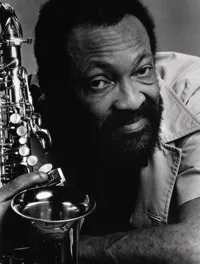
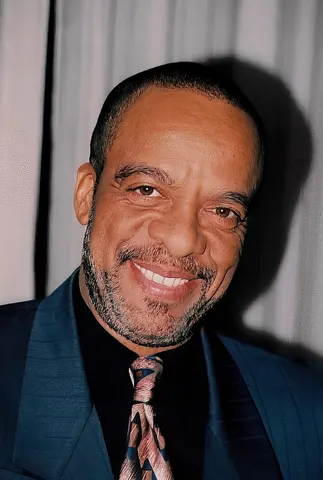
Hank Crawford, alto saxophonist and arranger Public domain (copyright holder released the work into the public domain, granting use for any purpose without conditions) — Wikimedia Commons, File:Hankcrawford.jpg, uploaded by TiffanyDyme as own work, 21 September 2008 (https://commons.wikimedia.org/wiki/File:Hankcrawford.jpg)

Bennie Ross Crawford Jr. was born in Memphis on December 21, 1934. He began on piano at nine, playing for his church choir, and picked up the alto saxophone only because he wanted into the band at Manassas High School and his father owned one. The name that stuck came later, at Tennessee State University in Nashville, where bandmates decided he resembled a local saxophonist called Hank O'Day.
Memphis gave him an early start. In 1952, at seventeen, he played on a session for B.B. King alongside Ben Branch and Ike Turner. His hometown contemporaries were Phineas Newborn Jr., Booker Little and George Coleman. At Tennessee State he majored in music, studied theory and composition, played alto and baritone in the Tennessee State Jazz Collegians, and led a rock and roll quartet called Little Hank and the Rhythm Kings on the side. He named Charlie Parker, Louis Jordan, Earl Bostic and Johnny Hodges as his early influences.
Ray Charles heard him at Tennessee State in 1958 and hired him on baritone saxophone. Crawford moved to alto in 1959 and became musical director of the Ray Charles orchestra that year, at twenty-four, holding the post until 1963. The band's output during those years includes The Genius Hits the Road (1960) and Modern Sounds in Country and Western Music (1962), a record that took a Black rhythm and blues singer through Nashville material with strings and a choir and spent fourteen weeks at number one on the Billboard album chart. Writing charts inside that operation was Crawford's education in how a jazz musician reaches a mainstream audience without playing down.
Atlantic signed him as a leader while he was still on the payroll. More Soul was cut on October 7, 1960, arranged by Crawford and Charles together, supervised by Nesuhi Ertegun and engineered by Tom Dowd. Ralph J. Gleason reviewed it in DownBeat as "one of the very best small-band albums in years." Eleven more Atlantic LPs followed through 1970, among them Soul of the Ballad (1963) with the Marty Paich Orchestra, the big-band Dig These Blues (1965) with liner notes by Nat Hentoff, Mr. Blues (1967), and Mr. Blues Plays Lady Soul (1969), an entire album of Aretha Franklin material arranged and conducted by Arif Mardin. Crawford left Ray Charles in 1963 to lead his own septet and kept a working band on the road from then on.
It's a Funky Thing to Do (Cotillion, 1971) marked the turn. In place of his own horn section, the record put him in front of the New York studio players who defined the sound of the decade: Richard Tee, Cornell Dupree, Eric Gale, Chuck Rainey, Ron Carter and Bernard Purdie. One year later Creed Taylor signed him to Kudu, the CTI subsidiary built for records meant to sell.
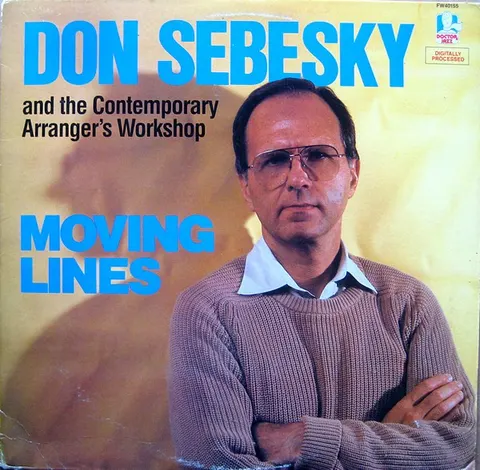
The eight Kudu albums between 1972 and 1978 are the core of his crossover work. Help Me Make It Through the Night (1972) opened the run with a Kris Kristofferson song, arranged by Don Sebesky and engineered by Rudy Van Gelder. We Got a Good Thing Going (1972) put Bob James on electric piano and George Benson on guitar. Wildflower (1973), recorded across two days that June at Van Gelder's studio with James arranging and conducting, is the album most listeners start with. Don't You Worry 'Bout a Thing (1974) took on Stevie Wonder, and I Hear a Symphony (1975) took on the Supremes and reached number 11 on the jazz chart and number 159 on the pop chart, the highest either figure ever went for him. Hank Crawford's Back (1976), Tico Rico (1977) and Cajun Sunrise (1978) closed the sequence, the last of them the final Kudu release and the only Crawford album on which he sings lead.
After a four-year gap and one album for Buddah with Memphis guitarist Calvin Newborn, he signed to Milestone in 1982 and spent the next eighteen years there. Bob Porter produced nearly all of it, and the band settled into a fixed cast: David "Fathead" Newman on tenor, Howard Johnson on baritone, Dr. John at the piano and organ, Melvin Sparks on guitar and Bernard Purdie on drums. Midnight Ramble (1983) began the run and The World of Hank Crawford (2000) ended it. Alongside those twelve leader dates he made seven co-billed albums with organist Jimmy McGriff, beginning with Soul Survivors (recorded 1980, released 1986) and running through Crunch Time (1998), most of them cut at Van Gelder's studio.
A stroke in 2000 effectively ended his playing career. He passed away in Memphis on January 29, 2009, at seventy-four, from complications of that stroke.
He never had a signature radio hit under his own name. What he had instead was a sound that other saxophonists took as a starting point, most visibly David Sanborn, who named Crawford as the source of his own tone throughout his career and built the 2008 album Here & Gone (Decca, produced by Phil Ramone) around Crawford's music, including his composition "Stoney Lonesome." Sanborn's alto in turn became the default sound of pop and crossover saxophone through the 1980s. Crawford's records also crossed into hip-hop: "Wildflower" is the sample under Kanye West's "Drive Slow," from Late Registration (2005).
Crawford played alto with a wide, vocal, blues-centred tone that owed more to gospel phrasing and Memphis rhythm and blues than to bebop line-running. He named Charlie Parker, Louis Jordan, Earl Bostic and Johnny Hodges as his models, and the Hodges influence is the audible one: long notes, heavy vibrato, melody stated plainly and inflected rather than decorated.
The arranging side of his work is as important as the playing. He wrote charts for Ray Charles before he was thirty, arranged most of his own Milestone records, and thought in terms of section voicings rather than solo choruses. That is why his records sound organised even at their most commercial: the horn writing is doing real work behind the alto.
His crossover records rest on a specific method. Take material the audience already knows, from country songs to Motown to Stevie Wonder, hand it to an arranger who can write for strings and horns, and then play the melody straight with enough blues inflection that it stops being a cover version. He kept improvising throughout, which is the line that separates his Kudu records from the later smooth jazz format they are sometimes filed beside.
His own influence runs through David Sanborn most directly, and through Sanborn into a generation of pop and session alto playing.
- More Soul (1961, Atlantic) - His first album as leader, recorded while he was still Ray Charles's musical director, arranged by Crawford and Charles together. The blueprint for everything after. Spotify - More Soul Listen · Buy
- Mr. Blues Plays Lady Soul (1969, Atlantic) - An entire album of Aretha Franklin material, arranged and conducted by Arif Mardin, with Eric Gale, Chuck Rainey and Bernard Purdie in the band. The clearest statement of what his alto does with a well-known melody. Spotify - Mr. Blues Plays Lady Soul Listen · Buy
- Help Me Make It Through the Night (1972, Kudu) - The first Kudu album and the start of the crossover run, with Don Sebesky arrangements and Rudy Van Gelder engineering. Spotify - Help Me Make It Through the Night Listen · Buy
- Wildflower (1973, Kudu) - Bob James arranging and conducting, Creed Taylor producing, thirty-two minutes of melody played straight. The best single entry point, and the record Kanye West later sampled. Spotify - Wildflower Listen · Buy
- I Hear a Symphony (1975, Kudu) - His highest-charting album, with Steve Gadd, Eric Gale, Ralph MacDonald and Patti Austin on the session. Spotify - I Hear a Symphony Listen · Buy
- Soul Survivors (1986, Milestone) - The first of seven co-billed albums with organist Jimmy McGriff, with George Benson guesting on guitar. The start of his warmest late partnership. Spotify - Soul Survivors Listen · Buy
Hank Crawford - Full Discography
Bennie Ross “Hank” Crawford Jr., 21 December 1934 to 29 January 2009. Alto saxophone, baritone saxophone, piano, arrangement. Roughly forty albums as leader or co-leader across Atlantic, Cotillion, Kudu, Buddah, Milestone and Telarc, spanning 1961 to 2000.
Leader: Atlantic and Cotillion years, 1961 to 1971
Twelve albums for Atlantic and its Cotillion subsidiary, cut with the small band he built out of the Ray Charles orchestra.
| Album | Year | Label | Personnel | Notes | Listen | Buy |
|---|---|---|---|---|---|---|
| More Soul | 1961 | Atlantic SD 1356 | Hank Crawford (alto sax, piano), David “Fathead” Newman (tenor sax), Leroy Cooper (baritone sax), Phillip Guilbeau (trumpet), John Hunt (trumpet, flugelhorn), Edgar Willis (bass), Milt Turner (drums) | Debut as leader, recorded 7 October 1960 while he was still Ray Charles's musical director. Arranged by Crawford and Ray Charles, supervised by Nesuhi Ertegun, engineered by Tom Dowd and Phil Iehle. Cover photo by Lee Friedlander. | Spotify | Amazon |
| The Soul Clinic | 1961 | Atlantic SD 1372 | Crawford (alto sax, piano), David “Fathead” Newman (tenor sax), Leroy Cooper (baritone sax), Phillip Guilbeau and John Hunt (trumpets), Edgar Willis (bass), Bruno Carr and Milt Turner (drums) | Second leader date with the same Ray Charles small-band nucleus. Engineered by Tom Dowd. | Spotify | Amazon |
| From the Heart | 1962 | Atlantic SD 1387 | Crawford (alto sax), Newman (tenor sax), Leroy Cooper (baritone sax), Phillip Guilbeau and John Hunt (trumpets), Sonny Forriest (guitar), Edgar Willis (bass), Bruno Carr (drums) | Contains “The Peeper” and “Stoney Lonesome,” two Crawford originals that stayed in his book for the rest of his life. “Stoney Lonesome” is the tune David Sanborn cut on his 2008 Crawford tribute album. | Spotify | Amazon |
| Soul of the Ballad | 1963 | Atlantic 1405 | Crawford (alto sax) with the Marty Paich Orchestra, Marty Paich conducting | All-ballad programme with a full orchestra: “Blueberry Hill,” “Stormy Weather,” “Stardust,” “Whispering Grass.” Engineered by Bill Putnam. | not found | not found |
| True Blue | 1964 | Atlantic SD 1418 | Crawford (alto sax) with his own septet | Fifth leader album, drawn from 1963 and 1964 sessions. | Spotify | Amazon |
| Dig These Blues | 1965 | Atlantic SD 1436 | Crawford (alto sax, piano), Leroy Cooper and Howard Johnson (baritone saxes), Wilbur Brown, Abdul Bari and Wendell Harrison (tenor saxes), Marcus Belgrave, Jimmy Owens, Phillip Guilbeau, John Hunt, Julius Brooks and Oliver Beener (trumpets), Edgar Willis, Charlie Green and Ali Mohammed (bass), Bruno Carr and Milt Turner (drums) | Big-band blues date. Liner notes by Nat Hentoff, supervised by Arif Mardin and Nesuhi Ertegun. | Spotify | Amazon |
| After Hours | 1966 | Atlantic SD 1455 | Crawford (alto sax) with septet and expanded horn section | Seventh leader album, from 1964 and 1965 sessions. | Spotify | Amazon |
| Mr. Blues | 1967 | Atlantic SD 1470 | Crawford (alto sax) with septet | Recorded 1965 and 1966. The nickname “Mr. Blues” followed him for the rest of his career. | not found | not found |
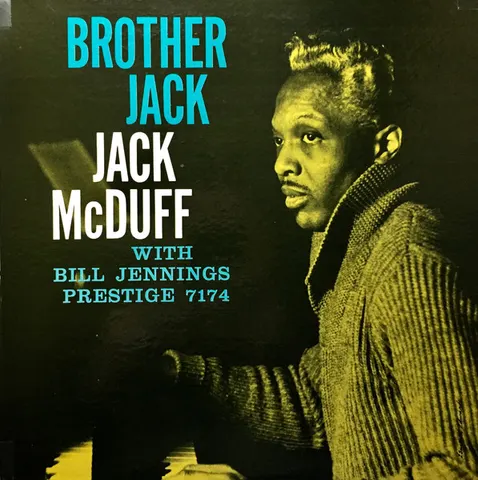
| Double Cross | 1968 | Atlantic SD 1503 | Crawford (alto sax, piano), Newman and Wendell Harrison (tenor saxes), Pepper Adams and Alenzo C. Shaw (baritone saxes), Joe Newman, John Hunt, Melvin Lastie and Fielder Floyd (trumpets), Tony Studd (trombone), Brother Jack McDuff (piano), Carl Lynch (guitar), Charles Green (bass), Jimmy Tyrell (Fender bass), Bruno Carr and Wilbert Hogan (drums) | Produced by Joel Dorn and Arif Mardin. Organist Jack McDuff appears here on piano. | Spotify | Amazon |
| Mr. Blues Plays Lady Soul | 1969 | Atlantic SD 1523 | Crawford and Frank Wess (alto saxes), Newman (tenor sax, flute), Seldon Powell (tenor sax), Pepper Adams (baritone sax), Bernie Glow, Ernie Royal, Joe Newman and Snooky Young (trumpets), Jimmy Cleveland and Benny Powell (trombones), Paul Griffin (organ, piano), Eric Gale (guitar), Chuck Rainey, Jerry Jemmott and Ron Carter (bass), Bernard Purdie (drums) | An album of Aretha Franklin material, arranged and conducted by Arif Mardin, produced by Joel Dorn. All tenor and flute solos are Newman's. | Spotify | Amazon |
| It's a Funky Thing to Do | 1971 | Cotillion SD 18003 | Crawford (saxophone), Pee Wee Ellis (electric piano), Richard Tee (piano), Eric Gale and Cornell Dupree (guitars), Chuck Rainey and Ron Carter (electric bass), Bernard Purdie (drums) | The pivot record: a New York session-band lineup on an Atlantic subsidiary, one year before Kudu. The title track was later sampled by Salt-N-Pepa on “Step.” | Spotify | Amazon |
Leader: Kudu and CTI years, 1972 to 1978
Eight albums for Creed Taylor's Kudu, the CTI subsidiary built for commercially accessible jazz. Most were cut at Rudy Van Gelder's studio in Englewood Cliffs, with Bob James, Don Sebesky or Dave Matthews writing the charts.
| Album | Year | Label | Personnel | Notes | Listen | Buy |
|---|---|---|---|---|---|---|
| Help Me Make It Through the Night | 1972 | Kudu KU-06 | Crawford (alto sax), Richard Tee (organ, piano), Cornell Dupree (guitar, soloist), Ron Carter (bass), Bernard Purdie (drums), Phil Kraus (vibes), Margaret Ross (harp), plus a twelve-piece string section | First Kudu album. Recorded at Van Gelder Studio in January 1972, with one track from August 1971. Produced by Creed Taylor, arranged by Don Sebesky, engineered by Rudy Van Gelder. The title track is the Kris Kristofferson song. | Spotify | Amazon |
| We Got a Good Thing Going | 1972 | Kudu KU-08 | Crawford (alto sax), Bob James (electric piano), Richard Tee (electric piano, organ), Cornell Dupree and George Benson (guitars), Ron Carter and Gordon Edwards (bass), Bernard Purdie (drums), Arthur Jenkins (congas), Phil Kraus (vibes), Margaret Ross (harp), full string section | Recorded at Van Gelder Studio in September and October 1972. Produced by Creed Taylor, arranged and conducted by Bob James and Don Sebesky. George Benson plays guitar throughout. | Spotify | Amazon |
| Wildflower | 1973 | Kudu KU-15 | Crawford (alto sax), Richard Tee (piano, organ), Joe Beck (guitar, bass), Bob Cranshaw (bass), Idris Muhammad (drums), Ralph MacDonald, Rubens Bassini, Arthur Jenkins, David Friedman, George Devens and Phil Kraus (percussion), Bernie Glow, Alan Rubin and Marvin Stamm (trumpets), Wayne Andre, Paul Faulise and Tony Studd (trombones), Jim Buffington and Brooks Tillotson (french horns) | Recorded 28 and 29 June 1973 at Van Gelder Studio. Produced by Creed Taylor, arranged and conducted by Bob James. The title track, a Skylark cover, was sampled by Kanye West for “Drive Slow” on Late Registration (2005). | Spotify | Amazon |
| Don't You Worry 'Bout a Thing | 1974 | Kudu KU-19 | Crawford (alto sax), Bob James and Richard Tee (keyboards), Hugh McCracken (electric guitar), Ron Carter and Gary King (bass), Bernard Purdie and Idris Muhammad (drums), Ralph MacDonald (percussion), Randy Brecker, Jon Faddis and Alan Rubin (trumpets and flugelhorns), Joe Farrell, Jerry Dodgion and Phil Bodner (reeds), Pepper Adams (baritone sax), David Taylor (bass trombone), strings | Recorded June 1974 at Van Gelder Studio. Produced by Creed Taylor, arranged and conducted by Bob James. Two Stevie Wonder covers plus “Sho Is Funky,” co-written by Crawford and James. | Spotify | Amazon |
| I Hear a Symphony | 1975 | Kudu KU-26 | Crawford (alto sax), Leon Pendarvis (electric piano), Eric Gale (guitar), Gary King (bass), Steve Gadd (drums), Ralph MacDonald (percussion), Jon Faddis, Alan Rubin, John Frosk and Robert Millikan (trumpets and flugelhorns), Fred Wesley and Barry Rogers (trombones), Patti Austin, Hilda Harris, Maeretha Stewart, Deborah McDuffie and Frank Floyd (vocals), strings | Recorded June and July 1975 at Van Gelder Studio. Produced by Creed Taylor, arranged by Dave Matthews. His highest-charting record: number 11 on the jazz chart and number 159 on the pop chart. The title track is the Supremes song. | Spotify | Amazon |
| Hank Crawford's Back | 1976 | Kudu KU-33 | Crawford (alto sax), Richard Tee (electric piano solos), Eric Gale (guitar, soloist), Jeremy Steig (flute, soloist), Fred Wesley (trombone, soloist), Anthony Jackson and Gary King (bass), Steve Gadd and Andy Newmark (drums), Nicky Marrero (percussion) | Recorded at Mediasound, New York, in 1976. Produced by Creed Taylor, arranged by Dave Matthews, mixed and mastered by Rudy Van Gelder. Out of print and absent from streaming services. | not found | not found |
| Tico Rico | 1977 | Kudu KU-35 | Crawford (saxophone), Dave Matthews and Clifford Carter (keyboards), Eric Gale (guitar), Gary King (bass), Steve Gadd (drums), Nicky Marrero and Sue Evans (percussion), Randy Brecker and Jon Faddis (trumpets), Michael Brecker (tenor sax) | Recorded at A&R Studios in November 1976, overdubbed at Mediasound, mixed at Electric Lady in May 1977. Produced by Creed Taylor, arranged by Dave Matthews. | Spotify | Amazon |
| Cajun Sunrise | 1978 | Kudu KU-39 | Crawford (alto sax, lead vocals), Clifford Carter and Steve Robbins (keyboards), Hiram Bullock and Joe Caro (guitars), Will Lee (bass), Steve Gadd (drums), Sue Evans (percussion), Randy Brecker (trumpet), Fred Wesley (trombone), Ronnie Cuber (baritone sax), Lani Groves, Ullanda McCullough and Vivian Cherry (backing vocals) | Recorded February and March 1978. Produced by Creed Taylor, arranged by Dave Matthews. The last Kudu release, and the only Crawford album on which he sings lead. | Spotify | Amazon |
Leader: Milestone years, 1983 to 2000
Twelve albums for Milestone, nearly all produced by Bob Porter, built around a stable band of David “Fathead” Newman, Howard Johnson, Dr. John, Melvin Sparks and Bernard Purdie.
| Album | Year | Label | Personnel | Notes | Listen | Buy |
|---|---|---|---|---|---|---|
| Midnight Ramble | 1983 | Milestone M-9112 | Crawford (alto sax, electric piano), David “Fathead” Newman (tenor sax), Howard Johnson (baritone sax), Dr. John (piano, organ), Calvin Newborn (guitar), Charles Green (bass), Bernard Purdie (drums), Waymon Reed and Charlie Miller (trumpets), Dick Griffin (trombone) | First Milestone album, after a four-year gap. Produced by Bob Porter, engineered by Malcolm Addey. The Newman, Dr. John and Purdie core carried most of the 1980s run. | Spotify | Amazon |
| Indigo Blue | 1983 | Milestone M-9119 | Crawford (alto sax, electric piano), Newman (tenor sax), Howard Johnson (baritone sax), Dr. John (piano, organ), Melvin Sparks (guitar), Wilbur Bascomb (bass), Bernard Purdie (drums), Danny Moore and Martin Banks (trumpets) | Recorded 22 and 23 August 1983 at JAC Studio, New York. Arranged and conducted by Crawford, produced by Bob Porter. | Spotify | Amazon |
| Down on the Deuce | 1984 | Milestone M-9129 | Crawford (alto sax), Newman (tenor sax), Howard Johnson (baritone sax), Cedar Walton (piano, electric piano), Jimmy Ponder and Melvin Sparks (guitars), Wilbur Bascomb (bass), Bernard Purdie (drums), Danny Moore and Martin Banks (trumpets) | Recorded 18 and 19 June 1984 at JAC Studio, New York. Cedar Walton at the piano is the notable substitution in this band. | Spotify | Amazon |
| Roadhouse Symphony | 1985 | Milestone M-9140 | Crawford and Newman (alto saxes), Newman and Houston Person (tenor sax soloists), Howard Johnson (baritone sax), Dr. John (piano, organ, vocals), Melvin Sparks (guitar), Wilbur Bascomb (bass), Bernard Purdie (drums), Randy Brecker and Alan Rubin (trumpets) | Produced by Bob Porter. Houston Person guests on tenor and Dr. John sings. | Spotify | Amazon |
| Mr. Chips | 1987 | Milestone M-9149 | Crawford (alto sax, horn arrangements), Newman (tenor sax, flute), Howard Johnson (baritone sax), Richard Tee (keyboards), Cornell Dupree (guitar), Wilbur Bascomb (bass), Bernard Purdie (drums), Randy Brecker and Alan Rubin (trumpets), Leon Thomas (vocals) | A digital recording, produced by Bob Porter. Leon Thomas sings and Crawford wrote the horn charts. | Spotify | Amazon |
| Night Beat | 1989 | Milestone M-9168 | Crawford (alto sax, electric piano, horn arrangements), Newman (tenor sax, flute), Howard Johnson (baritone sax), Dr. John (piano, organ), Melvin Sparks (guitar), Wilbur Bascomb (bass), Bernard Purdie (drums, percussion), Lew Soloff and Alan Rubin (trumpets) | Recorded September and October 1988 at Van Gelder Studio. Produced by Bob Porter, engineered by Rudy Van Gelder. | Spotify | Amazon |
| Groove Master | 1990 | Milestone M-9182 | Crawford (alto sax) with his working band | Recorded January and March 1990 at Giant Studios, New York. | Spotify | Amazon |
| Portrait | 1991 | Milestone MCD-9192-2 | Crawford (alto sax), Johnny “Hammond” Smith (organ), Jimmy Ponder (guitar), Vance James (drums) | Recorded direct to two-track digital, produced by Bob Porter. The organ chair goes to Johnny Hammond rather than Jimmy McGriff. | not found | not found |
| South-Central | 1993 | Milestone MCD-9201-2 | Crawford (alto sax, string arrangements), Stan Hope (piano), Melvin Sparks (guitar), Peter Martin Weiss (bass), Grady Tate (drums) | Recorded 11 and 27 August 1992 at Nola Sound Studios, New York, direct to two-track digital by Malcolm Addey. One track dates from a February 1990 session. | Spotify | Amazon |
| Tight | 1996 | Milestone MCD-9259-2 | Crawford (alto sax, arrangements), Newman (tenor sax, flute), Howard Johnson (baritone sax), Danny Mixon (piano, organ), Melvin Sparks (guitar), Stanley Banks (bass), Idris Muhammad (drums), Alan Rubin and Earl Gardner (trumpets) | Recorded 8 and 29 April and 13 May 1996 at Van Gelder Studio. Includes a reading of George Benson's “Breezin'.” | Spotify | Amazon |
| After Dark | 1998 | Milestone MCD-9279-2 | Crawford (alto sax) with his working band | Recorded 23 and 24 February 1998 at Van Gelder Studio. Closes with “Beale Street After Dark,” a nod home to Memphis. | Spotify | Amazon |
| The World of Hank Crawford | 2000 | Milestone MCD-9304-2 | Crawford (alto sax) with his working band | Recorded 8 and 9 February 2000 at Van Gelder Studio. His last album as leader; a stroke later that year effectively ended his recording career. | Spotify | Amazon |
Co-Leader
Ten co-billed albums, seven of them with organist Jimmy McGriff between 1986 and 1998.
| Album | Year | Label | Co-billed with | Personnel | Notes | Listen | Buy |
|---|---|---|---|---|---|---|---|
| Centerpiece | 1980 | Buddah BDS 5730 | Calvin Newborn (guitar) | Crawford (alto sax, Rhodes), Newborn (electric guitar), Alex Foster (tenor sax), Howard Johnson (baritone sax), Joe Shepley and Mike Lawrence (trumpets), Janice Robinson (trombone), Warren Chiasson (vibraphone), Charles Green (electric bass), Billy Kaye (drums) | Recorded October and November 1978 at Columbia Recording Studios, New York. Crawford produced, arranged and conducted. Newborn was the brother of Phineas Newborn Jr., Crawford's Memphis contemporary. Includes a cover of Benson's “Breezin'.” | Spotify | Amazon |
| Soul Survivors | 1986 | Milestone M-9142 | Jimmy McGriff (organ) | Crawford (alto sax), McGriff (organ, synthesizer), George Benson and Jim Pittsburgh (guitars), Bernard Purdie (drums), Mel Lewis (drums, special guest) | Recorded 29 and 30 January 1980 at Van Gelder Studio and released in 1986. The first Crawford and McGriff co-billed album, and the start of a partnership that ran to 1998. George Benson guests on guitar. | Spotify | Amazon |
| Steppin' Up | 1987 | Milestone M-9153 | Jimmy McGriff (organ) | Crawford (alto sax), McGriff (organ), Billy Preston (piano), Jimmy Ponder (guitar), Vance James (drums) | Recorded direct-to-digital two-track at Van Gelder Studio, 15 and 16 June 1987. Billy Preston plays piano. | Spotify | Amazon |
| Soul Brothers | 1989 | Milestone MX 9171 | Jimmy McGriff (organ) | Compiled from the Crawford and McGriff Milestone sessions | A compilation drawing on Soul Survivors and Steppin' Up. Engineered by Rudy Van Gelder, produced by Bob Porter. | not found | not found |
| On the Blue Side | 1990 | Milestone M-9177 | Jimmy McGriff (organ) | Crawford (alto sax), McGriff (organ), Jimmy Ponder (guitar), Vance James (drums) | Recorded April and August 1989 at Van Gelder Studio. | Spotify | Amazon |
| Bossa International | 1990 | Milestone MCD-9180-2 | Richie Cole (alto sax) | Crawford and Richie Cole (saxophones), Emily Remler (guitar), Marshall Hawkins (bass), Victor Jones (drums) | Recorded live in Nimes, France, on 16 July 1987, direct to VHS digital. Produced by Richie Cole. Emily Remler appears courtesy of Concord Records. | not found | not found |
| Right Turn on Blue | 1994 | Telarc CD-83329 | Jimmy McGriff (organ) | Crawford (alto sax), McGriff (organ), with the Jimmy McGriff and Hank Crawford Quartet | First of two Telarc albums for the duo. | Spotify | Amazon |
| Blues Groove | 1996 | Telarc CD-83381 | Jimmy McGriff (organ) | Crawford (alto sax), McGriff (Hammond XB-3 organ), Wayne Boyd (guitar), Vance James (drums) | Second Telarc album. Includes readings of “All Blues” and Jimmy Smith's “The Sermon.” | Spotify | Amazon |
| Road Tested | 1997 | Milestone MCD-9274-2 | Jimmy McGriff (organ) | Crawford (alto sax), McGriff (organ), with quartet | Recorded at Van Gelder Studio. Back on Milestone after the Telarc pair. | Spotify | Amazon |
| Crunch Time | 1998 | Milestone MCD-9287-2 | Jimmy McGriff (organ) | Crawford (alto sax), McGriff (organ), with quartet | Recorded in 1998 at Van Gelder Studio and released in March 1999. The last Crawford and McGriff album. | Spotify | Amazon |
Guest and sideman appearances (selected)
He played on more than three hundred other people's records across five decades. The original-session credits that matter for tracing his career:
| Leader | Album | Year | Label | Crawford's role | Listen | Buy |
|---|---|---|---|---|---|---|
| Ray Charles | The Genius Hits the Road | 1960 | ABC-Paramount | Alto and baritone saxophone in the orchestra | not found | Amazon |
| Ray Charles | Modern Sounds in Country and Western Music | 1962 | ABC-Paramount | In the orchestra during his tenure as musical director | not found | Amazon |
| David “Fathead” Newman | Fathead Comes On | 1962 | Atlantic | Alto and baritone saxophone | not found | Amazon |
| Ray Charles | Drown in My Own Tears | 1962 | Atlantic | Orchestra | not found | Amazon |
| The Howard Roberts Quartet | Color Him Funky | 1963 | Capitol | Saxophone | not found | Amazon |
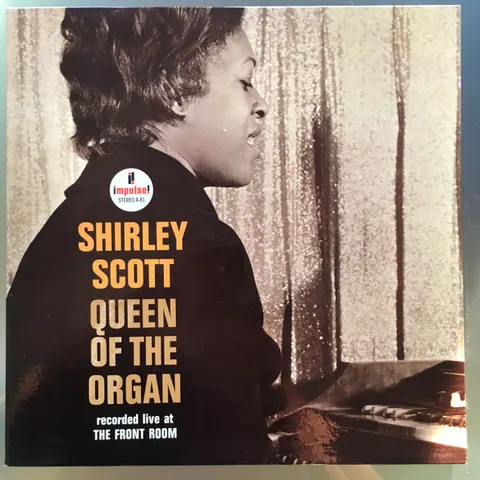
| Shirley Scott | Shirley Scott & the Soul Saxes | 1969 | Atlantic | One of the three saxophones, alongside David Newman and King Curtis | not found | Amazon |
| Esther Phillips | From a Whisper to a Scream | 1971 | Kudu | Alto saxophone on Creed Taylor's first Kudu release | not found | Amazon |
| Johnny Hammond | Breakout | 1971 | Kudu | Alto saxophone | not found | Amazon |
| Esther Phillips | Alone Again, Naturally | 1972 | Kudu | Alto saxophone | not found | Amazon |
| Ray Charles | Live | 1973 | Atlantic | Archival live material from his tenure | not found | Amazon |
| Johnny Hammond | Higher Ground | 1974 | Kudu | Alto saxophone | not found | Amazon |
| Eddie Jefferson | Still on the Planet | 1976 | Muse | Alto saxophone | not found | Amazon |
| CTI All-Stars | CTI Summer Jazz at the Hollywood Bowl | 1977 | CTI | Alto saxophone in the label's touring all-star band | not found | Amazon |
| B.B. King | There Must Be a Better World Somewhere | 1981 | MCA | Horn section | not found | Amazon |
| Ruth Brown | Blues on Broadway | 1989 | Fantasy | Alto saxophone | not found | Amazon |
| Eric Clapton | Journeyman | 1989 | Duck / Reprise | Horn section | not found | Amazon |
| Lou Rawls | It's Supposed to Be Fun | 1990 | Blue Note | Alto saxophone | not found | Amazon |
| Clarence “Gatemouth” Brown | No Looking Back | 1992 | Alligator | Alto saxophone | not found | Amazon |
| Etta James | The Right Time | 1992 | Elektra | Alto saxophone | not found | Amazon |
| Grady Tate | Body & Soul | 1993 | Milestone | Alto saxophone | not found | Amazon |
| Jimmy Scott | Mood Indigo | 2000 | Milestone | Alto saxophone | not found | Amazon |
Sampled in hip-hop
| Sampling artist | Track | Album | Year | Source |
|---|---|---|---|---|
| Kanye West featuring Paul Wall and GLC | “Drive Slow” | Late Registration | 2005 | Samples “Wildflower” (Kudu, 1973) |
| Salt-N-Pepa | “Step” | A Salt with a Deadly Pepa | 1988 | Samples “It's a Funky Thing to Do” (Cotillion, 1971) |
Additional Main-role titles
Beyond the leader and co-leader albums tabled above, his catalog also carries singles, reissues and compilations, including The Best of Hank Crawford (1970), The Art of Hank Crawford: The Atlantic Years (1973), Just the Way I Am (CTI, 1982), Heart and Soul: The Hank Crawford Anthology (Rhino, 1994, two discs), Memphis, Ray and a Touch of Moody (32 Jazz, 1997), Low Flame High Heat (Label M, 2000), Introducing Hank Crawford (Warner Jazz / Rhino, 2008), More Soul + The Soul Clinic (2012), Wildflower & Don't You Worry 'Bout a Thing (Robinsongs, 2014) and Three Classic Albums Plus (Avid Jazz, 2019).
- Ray Charles (1958-1963) - baritone then alto saxophone, and musical director from 1959. On The Genius Hits the Road (1960), Modern Sounds in Country and Western Music (1962) and the live recordings of that era.
- David "Fathead" Newman - his longest musical relationship, from the Ray Charles band through the Atlantic albums and on to nearly every Milestone record from 1983 to 1996. Crawford also appears on Newman's own Fathead Comes On (1962).
- Jimmy McGriff (organ) - seven co-billed albums between 1986 and 1998: Soul Survivors, Steppin' Up, On the Blue Side, Right Turn on Blue, Blues Groove, Road Tested and Crunch Time.
- Creed Taylor - produced all eight Kudu albums, 1972 to 1978.
- Bob James - arranged and conducted We Got a Good Thing Going, Wildflower and Don't You Worry 'Bout a Thing, and co-wrote "Sho Is Funky" with Crawford.
- Don Sebesky - arranged Help Me Make It Through the Night and part of We Got a Good Thing Going.
- Dave Matthews (arranger) - wrote the charts for I Hear a Symphony, Hank Crawford's Back, Tico Rico and Cajun Sunrise.
- Rudy Van Gelder - engineered the Kudu albums and, later, most of the Milestone and McGriff sessions.
- Bernard Purdie - drums on almost everything from 1969 to 1989, across Atlantic, Kudu and Milestone.
- Eric Gale - guitar on Mr. Blues Plays Lady Soul, It's a Funky Thing to Do, I Hear a Symphony, Hank Crawford's Back and Tico Rico.
- George Benson - guitar on We Got a Good Thing Going (1972) and Soul Survivors (recorded 1980).
- Randy Brecker - trumpet on Don't You Worry 'Bout a Thing, Tico Rico, Cajun Sunrise, Roadhouse Symphony and Mr. Chips; his brother Michael Brecker plays tenor on Tico Rico.
- Ralph MacDonald - percussion on Wildflower, Don't You Worry 'Bout a Thing and I Hear a Symphony.
- Dr. John - piano and organ on the Milestone albums from 1983 to 1989, and vocals on Roadhouse Symphony.
- Richard Tee, Cornell Dupree, Chuck Rainey, Ron Carter, Steve Gadd, Gary King, Idris Muhammad, Melvin Sparks, Howard Johnson - the recurring rhythm and horn personnel across the Cotillion, Kudu and Milestone runs.
- Shirley Scott - one of the three horns on Shirley Scott & the Soul Saxes (1969), alongside David Newman and King Curtis.
- Jack McDuff - piano on Double Cross (1968).
- Esther Phillips and Johnny Hammond - fellow Kudu artists whose records he played on: From a Whisper to a Scream (1971), Alone Again, Naturally (1972), Breakout (1971) and Higher Ground (1974).
- Guest credits outside jazz - B.B. King's There Must Be a Better World Somewhere (1981), Eric Clapton's Journeyman (1989), Ruth Brown, Etta James, Lou Rawls, Clarence "Gatemouth" Brown and Jimmy Scott.
- Wikipedia: Hank Crawford
- NPR: Hank Crawford, Memphis Rhythm King
- All About Jazz: Hank Crawford, Saxophonist for Ray Charles, Dies
- SFGate: Hank Crawford, bluesy alto saxophonist, dies
- All About Jazz: CTI Celebrates the Kudu Legacy
- DownBeat: David Sanborn obituary
- Wikipedia: Here and Gone (David Sanborn)
- WhoSampled: Kanye West "Drive Slow" sampling Hank Crawford "Wildflower"
- Discogs: Hank Crawford